Valdemar Psilander (1884-1917) was the most popular star of the Danish cinema of the 1910s. Psilander took the German, Russian and Hungarian audiences by storm. At Nordisk, he would play in 83 films in six years.

Austrian postcard by Projektograph, Vienna / Nordisk Films Compagni. Design by Theo Matejko, Wien (Vienna).

Austrian postcard by Projectograph Aktiengesellschaft, Wien. Photo: Nordisk. Card mailed in 1914.
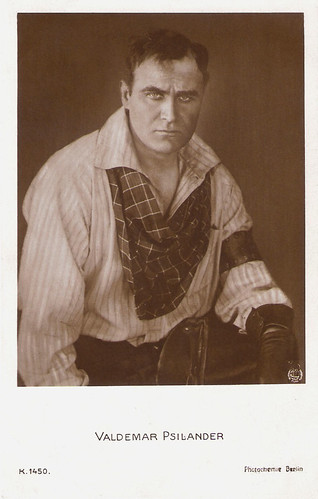
German postcard by Photochemie, Berlin, no. K. 1450. Photo: Nordisk. Publicity still for Manden uden Fremtid / The Man Without A Future (Holger-Madsen, 1916).
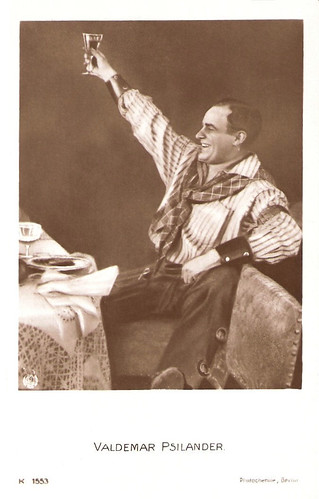
German postcard by Photochemie, Berlin, no. K. 1553. Photo: Nordisk. Publicity still for Manden uden Fremtid / The Man Without A Future (Holger-Madsen, 1916). The German title was Prinz im Exil.
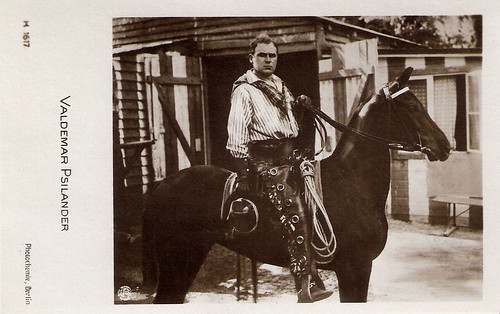
German postcard by Photochemie, Berlin, no. K. 1617. Photo: Nordisk. Publicity still for Manden uden Fremtid / The Man Without A Future (Holger-Madsen, 1916).
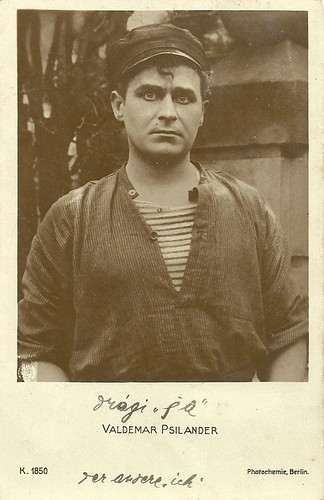
German postcard by Photochemie, Berlin, no. K. 1850. Photo: Nordisk. Still for Das zweite Ich / Lykken / The Road to Happiness (Holger-Madsen, 1918).

German postcard by Photochemie, Berlin, no. K. 1914. Photo: Nordisk Films. Valdemar Psilander in Sfinxens Hemmelighed / The Secret of the Sphinx (Robert Dinesen, 1918). The German title was Das Geheimnis des Sphinx.
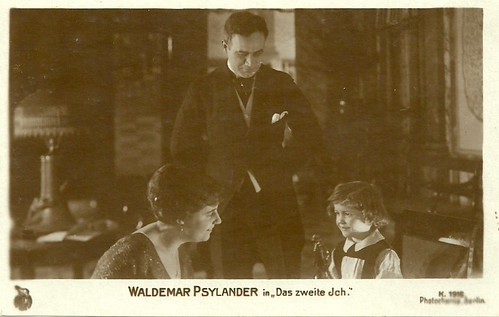
German postcard by Photochemie Berlin, no. K. 1916. Photo: Nordisk. Still for Das zweite Ich / Lykken / The Road to Happiness (Holger-Madsen, 1918) with Ebba Thomsen.

German postcard by Photochemie Berlin, no. K. 1921. Photo: Nordisk. Still for Das zweite Ich / Lykken / The Road to Happiness (Holger-Madsen, 1918).

German postcard by Photochemie, Berlin, no. K. 2627. Photo: Nordisk. Valdemar Psylander and Gudrun Houlberg-Nissen in Kærlighedsleg / Love Game (A.W. Sandberg, 1918). The German title was Der ewige Rausch.
Valdemar Psilander was born in Copenhagen, Denmark, in 1884. His family originated from Greece, and one of his ancestors was named Psilandros. They later lived in Sweden. Already at the age of 16, he played small parts on stage. Eventually, he got leads as a stage actor, but in 1910, he decided to finish his stage career and move over to the burgeoning cinema.
Psilander debuted in the fall of 1910 for the small company Regia Art Film, with the title role in the Oscar Wilde adaptation Dorian Grays Portræt / The Portrait of Dorian Gray (Axel Strøm, 1910) with Clara Wieth, credited as Clara Pontoppidan, co-starring.
Shortly thereafter, he was engaged by Nordisk Film. There he rose to stardom thanks to his role in the successful film Ved faenglets port / The Temptations of the Big City (August Blom, 1911) again opposite Clara Wieth. It was his first production at Nordisk, and he became the company's highest-paid actor.
Despite his imposing size and posture, we see him often vulnerable in this film: kneeling to mothers and girlfriends, begging for mercy for his behaviour. Striking is his habit of looking directly towards the spectator, as if he is begging the spectator as well.
Psilander took the German, Russian and Hungarian audiences by storm. The next six years, he would play in 83 films for Nordisk. Even when the film had a mediocre screenplay, it was - at least in the public's eyes - an attraction simply because of the charismatic star.

Danish postcard. Photo: Nordisk.

German postcard by Jarcho & Bening. Photo: Nordisk. Valdemar Psilander and Else Fröhlich in En lektion / Avia tikeren og journalistens hustru / The Aviator and the Journalist's Wife (August Blom, 1911). It was Fröhlich's film debut. The German written release title was Der Aviatiker und die Frau des Journalisten. This card was made for publicity for the Hamburg-based cinema Park-Kino, Eidelstedtlerweg 9, owned by Karl Steigerwald. According to Filmmuseum Hamburg, Park-Kino was active in the years 1913-1921, so either the cinema showed a film that was at least two years old (not uncommon), or there was another Park-Kino in Hamburg before 1913.
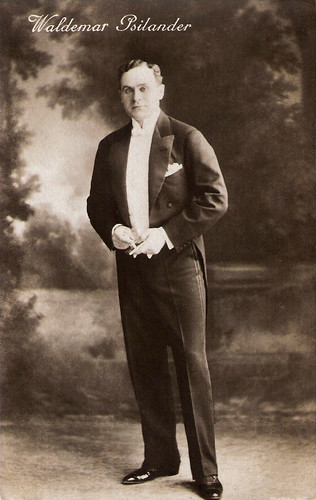
German postcard by Photochemie, Berlin.
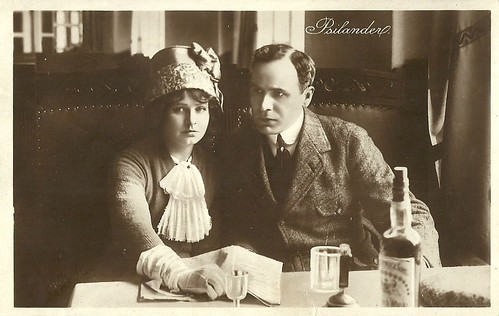
Austrian postcard by BKWI, no. 2. Photo: Projektograph Aktiengesellschaft, Vienna, distributor of Nordisk Films Co., Copenhagen. Valdemar Psilander and Ellen Aggerholm in Højt Spil / A Dash for Liberty (August Blom, 1913).
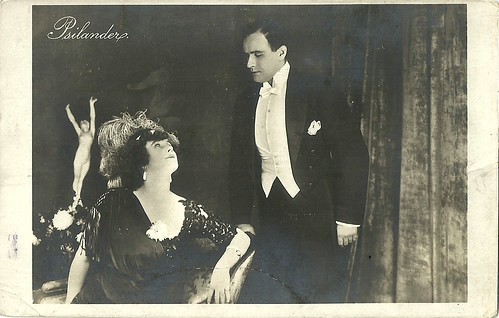
Austrian postcard by BKWI, no. 3. Photo: Projektograph Aktiengesellschaft, Vienna, distributor of Nordisk Films Co, Copenhagen. Publicity still for Gæstespillet / One Life, One Love (Eduard Schnedler-Sørensen, 1913) with Else Fröhlich.
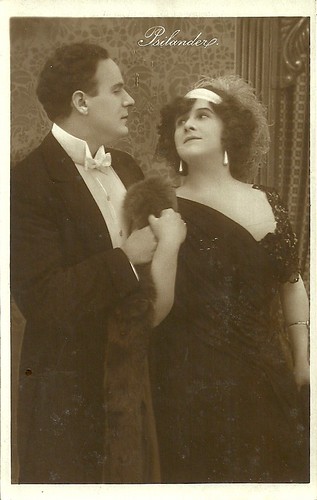
Austrian postcard by Postkartenverlag Brüder Kohn, Vienna, 1916. Publicity still for Gæstespillet / One Life, One Love (Eduard Schnedler-Sørensen, 1913) with Else Fröhlich.

German postcard by Photochemie, no. K. 1554. Photo: Nordisk. Valdemar Psilander in Manden uden Fremtid / The Man without a Future (Holger-Madsen 1916). The German title was Prinz im Exil.
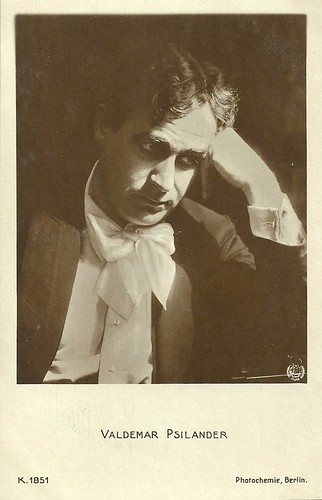
German postcard by Photochemie, no. K. 1851. Photo: Nordisk Films.

Hungarian postcard by Rubens, Budapest, no. 9. Photo: Strelisky, 1915.

Hungarian postcard by Rubens, Budapest. Photo: Strelisky, 1915. The back refers to the showing of a Psilander film at the Royal Orfeum in Budapest.
In the same year, 1911, Valdemar Psilander played opposite the new female star of the Danish cinema, Asta Nielsen, in Den sorte drom / The Black Dream (Urban Gad, 1911). Director Urban Gad had also directed Nielsen in her film debut, Afgrunden / Abyss (Urban Gad, 1910), and he would soon marry his diva.
In Den sorte drom, Psilander again showed his character's vulnerability, this time using humour (clumsy mistakes). Asta Nielsen made another film with Psilander, Balletdanserinden / Ballet Dancer (August Blom, 1911), and then left with Gad for Berlin. She would have a prolific career there.
Valdemar Psilander stayed in Denmark and continued to appear in such films as Et drama paa havet / The Great Ocean Disaster (Eduard Schnedler-Sørensen, 1912), Den sorte Kansler / The Black Chancellor (August Blom, 1912), Evangeliemandens Liv / A Preacher's Life (Holger-Madsen, 1915), Pro Patria (August Blom, 1916), and Klovnen / The Clown (A.W. Sandberg, 1917).
Before and during the First World War, the Danish company Nordisk gained enormously, thanks to Psilander's success. Psilander earned 100.000 Danish crowns in 1915. In comparison, his colleague Olaf Fönss only gained 14.000 crowns that year. In 1916, Nordisk, however, refused him when he called for a raise to 250.000 Danish crowns, so he quit at the end of 1916. Psilander founded his own production company, Psilander-Film. But before it had really started, he suddenly died.
Only 32 years old, Valdemar Psilander passed away in 1917. At the peak of his career. Some say he died of a cardiac affliction, others say it was suicide. Valdemar Psilander had been married to actress Edith Buemann. She afterwards said that he had been on drugs and was warned by doctors not to combine this with alcohol. Yet another version, more apt to his film roles, was that a Russian rival in love had come from St. Petersburg to shoot him. After Valdemar Psilander's death, Nordisk still had so many of his films on the shelves that they continued to release new films with him until 1920.
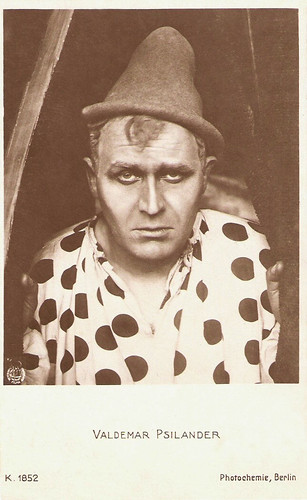
German postcard by Photochemie, Berlin, no. K. 1852. Photo: Nordisk. Publicity still for Klovnen / The Clown (A.W. Sandberg, 1917).
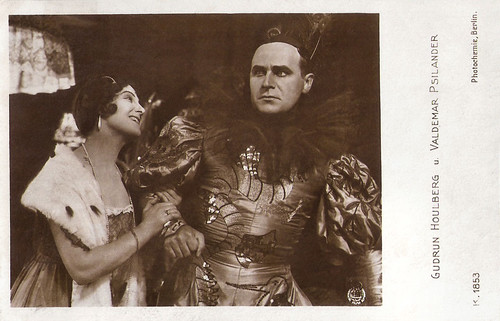
German postcard by Photochemie, Berlin, no. K. 1853. Photo: Nordisk. Valdemar Psilander and Gudrun Houlberg in Klovnen / The Clown (A.W. Sandberg, 1917).
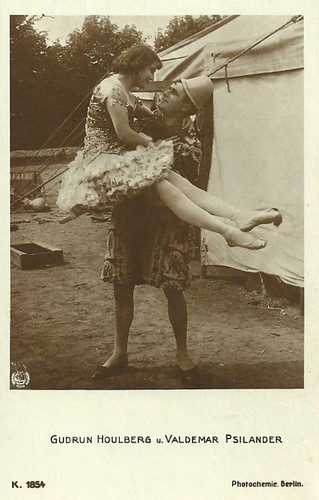
German postcard by Photochemie, Berlin, no. K. 1854. Photo: Nordisk. Valdemar Psilander and Gudrun Houlberg in Klovnen / The Clown (A.W. Sandberg, 1917).
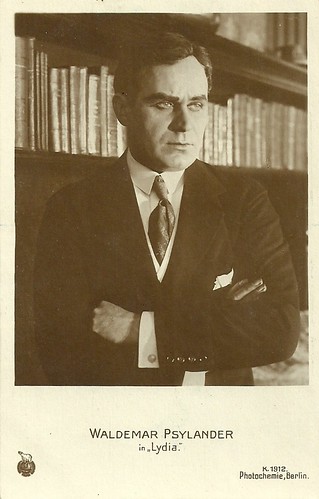
German postcard by Photochemie, Berlin, no. K. 1912. Photo: Nordisk. Valdemar Psilander in Lydia (Holger Madsen, 1918).

German postcard by Photochemie, Berlin, no. K. 1918. Photo: Nordisk Film Co. Valdemar Psilander in Favoriten (Robert Dinesen, 1917), released in Germany as Der tote Automobilist.
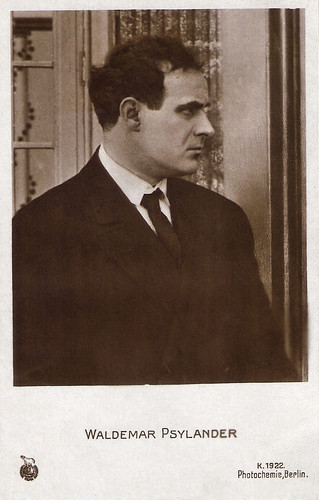
German postcard by Photochemie, Berlin, no. K. 1922. Photo: Nordisk.
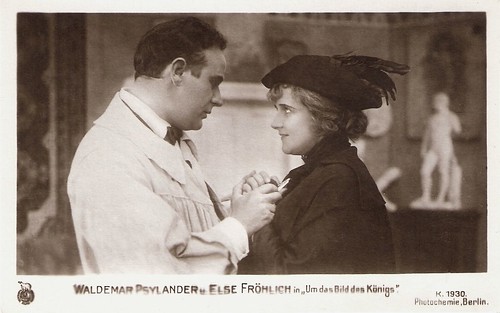
German postcard by Photochemie, Berlin, no. K. 1930. Photo: Nordisk. Valdemar Psilander and Else Fröhlich in Rytterstatuen / For the King's Statue (A.W. Sandberg, 1919). Its German release title was Um das Bild des Königs.

German postcard by Photochemie, Berlin, no. K. 1932. Photo: Nordisk. Valdemar Psilander in Lydia (Holger-Madsen, 1918).
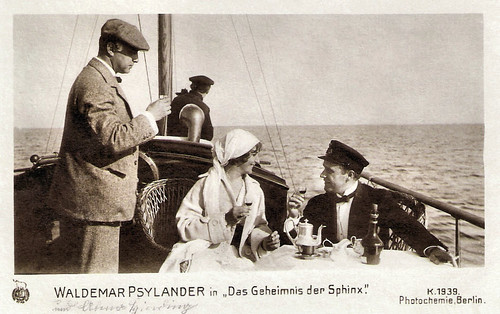
German postcard by Photochemie, Berlin, no. K. 1939. Photo: Nordisk. Alma Hinding and Valdemar Psilander in Das geheimnis des Sphinx, the German release title for the Danish silent film Sfinxens Hemmelighed / The Secret of the Sphinx (Robert Dinesen, 1918).
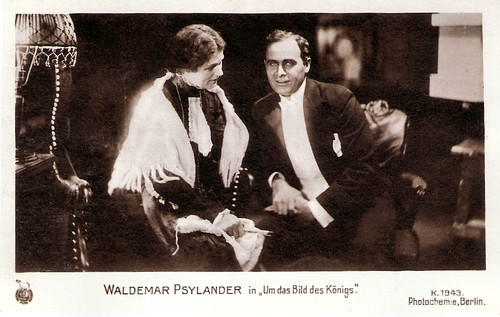
German postcard by Photochemie, Berlin, no. K. 1943. Photo: Nordisk. Valdemar Psilander in Rytterstatuen / For the King's Statue (A.W. Sandberg, 1919). Its German release title was Um das Bild des Königs. The woman is Augusta Blad, who played the mother of Psilander's character.
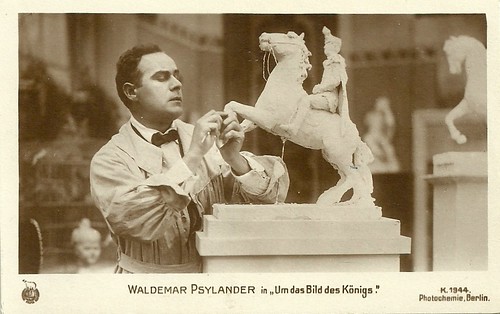
German postcard by Photochemie, Berlin, no. K. 1944. Photo: Nordisk. Valdemar Psilander in Rytterstatuen / For the King's Statue (A.W. Sandberg, 1919).
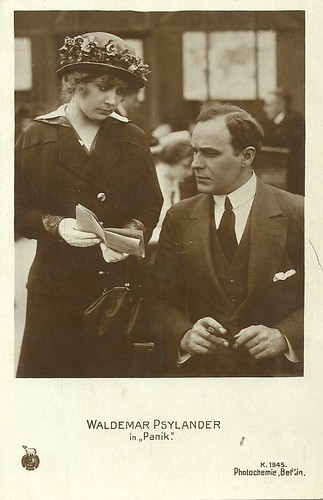
German postcard by Photochemie, Berlin, no. K. 1945. Photo: Nordisk Films. Valdemar Psilander in Hans store Chance / Jernaktierne / His Big Breakthrough (Hjalmar Davidsen, 1919), released in Germany as Panik. The actress might be Johanne Blom Fritz-Petersen.

German postcard by Photochemie, Berlin, no. K. 1960. Photo: Nordisk.

German postcard by Photochemie, Berlin, no. K. 2626. Photo: Nordisk Films, Copenhagen. Gudrun Houlberg-Nissen and Valdemar Psylander in Kærlighedsleg / Love Game (A.W. Sandberg, 1918). The German film title was Der ewige Rusch.
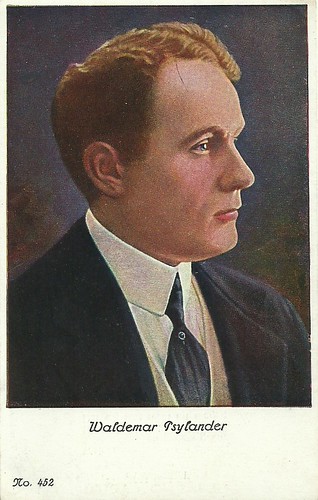
German postcard by MMB, no. 452. Photo: F.J. Wesselsky. The card has on the back Dutch publicity for J. Bijloos, Eau de Cologne.
Sources: Det Danske Filminstitut (Danish), Schiave bianche allo specchio. Le origini del cinema in Scandinavia 1896-1918, Thomas Staedeli (Cyranos) and IMDb.
Austrian postcard by Projektograph, Vienna / Nordisk Films Compagni. Design by Theo Matejko, Wien (Vienna).
Austrian postcard by Projectograph Aktiengesellschaft, Wien. Photo: Nordisk. Card mailed in 1914.
German postcard by Photochemie, Berlin, no. K. 1450. Photo: Nordisk. Publicity still for Manden uden Fremtid / The Man Without A Future (Holger-Madsen, 1916).
German postcard by Photochemie, Berlin, no. K. 1553. Photo: Nordisk. Publicity still for Manden uden Fremtid / The Man Without A Future (Holger-Madsen, 1916). The German title was Prinz im Exil.
German postcard by Photochemie, Berlin, no. K. 1617. Photo: Nordisk. Publicity still for Manden uden Fremtid / The Man Without A Future (Holger-Madsen, 1916).
German postcard by Photochemie, Berlin, no. K. 1850. Photo: Nordisk. Still for Das zweite Ich / Lykken / The Road to Happiness (Holger-Madsen, 1918).
German postcard by Photochemie, Berlin, no. K. 1914. Photo: Nordisk Films. Valdemar Psilander in Sfinxens Hemmelighed / The Secret of the Sphinx (Robert Dinesen, 1918). The German title was Das Geheimnis des Sphinx.
German postcard by Photochemie Berlin, no. K. 1916. Photo: Nordisk. Still for Das zweite Ich / Lykken / The Road to Happiness (Holger-Madsen, 1918) with Ebba Thomsen.
German postcard by Photochemie Berlin, no. K. 1921. Photo: Nordisk. Still for Das zweite Ich / Lykken / The Road to Happiness (Holger-Madsen, 1918).
German postcard by Photochemie, Berlin, no. K. 2627. Photo: Nordisk. Valdemar Psylander and Gudrun Houlberg-Nissen in Kærlighedsleg / Love Game (A.W. Sandberg, 1918). The German title was Der ewige Rausch.
Kneeling and begging
Valdemar Psilander was born in Copenhagen, Denmark, in 1884. His family originated from Greece, and one of his ancestors was named Psilandros. They later lived in Sweden. Already at the age of 16, he played small parts on stage. Eventually, he got leads as a stage actor, but in 1910, he decided to finish his stage career and move over to the burgeoning cinema.
Psilander debuted in the fall of 1910 for the small company Regia Art Film, with the title role in the Oscar Wilde adaptation Dorian Grays Portræt / The Portrait of Dorian Gray (Axel Strøm, 1910) with Clara Wieth, credited as Clara Pontoppidan, co-starring.
Shortly thereafter, he was engaged by Nordisk Film. There he rose to stardom thanks to his role in the successful film Ved faenglets port / The Temptations of the Big City (August Blom, 1911) again opposite Clara Wieth. It was his first production at Nordisk, and he became the company's highest-paid actor.
Despite his imposing size and posture, we see him often vulnerable in this film: kneeling to mothers and girlfriends, begging for mercy for his behaviour. Striking is his habit of looking directly towards the spectator, as if he is begging the spectator as well.
Psilander took the German, Russian and Hungarian audiences by storm. The next six years, he would play in 83 films for Nordisk. Even when the film had a mediocre screenplay, it was - at least in the public's eyes - an attraction simply because of the charismatic star.
Danish postcard. Photo: Nordisk.
German postcard by Jarcho & Bening. Photo: Nordisk. Valdemar Psilander and Else Fröhlich in En lektion / Avia tikeren og journalistens hustru / The Aviator and the Journalist's Wife (August Blom, 1911). It was Fröhlich's film debut. The German written release title was Der Aviatiker und die Frau des Journalisten. This card was made for publicity for the Hamburg-based cinema Park-Kino, Eidelstedtlerweg 9, owned by Karl Steigerwald. According to Filmmuseum Hamburg, Park-Kino was active in the years 1913-1921, so either the cinema showed a film that was at least two years old (not uncommon), or there was another Park-Kino in Hamburg before 1913.
German postcard by Photochemie, Berlin.
Austrian postcard by BKWI, no. 2. Photo: Projektograph Aktiengesellschaft, Vienna, distributor of Nordisk Films Co., Copenhagen. Valdemar Psilander and Ellen Aggerholm in Højt Spil / A Dash for Liberty (August Blom, 1913).
Austrian postcard by BKWI, no. 3. Photo: Projektograph Aktiengesellschaft, Vienna, distributor of Nordisk Films Co, Copenhagen. Publicity still for Gæstespillet / One Life, One Love (Eduard Schnedler-Sørensen, 1913) with Else Fröhlich.
Austrian postcard by Postkartenverlag Brüder Kohn, Vienna, 1916. Publicity still for Gæstespillet / One Life, One Love (Eduard Schnedler-Sørensen, 1913) with Else Fröhlich.
German postcard by Photochemie, no. K. 1554. Photo: Nordisk. Valdemar Psilander in Manden uden Fremtid / The Man without a Future (Holger-Madsen 1916). The German title was Prinz im Exil.
German postcard by Photochemie, no. K. 1851. Photo: Nordisk Films.
Hungarian postcard by Rubens, Budapest, no. 9. Photo: Strelisky, 1915.
Hungarian postcard by Rubens, Budapest. Photo: Strelisky, 1915. The back refers to the showing of a Psilander film at the Royal Orfeum in Budapest.
Asta Nielsen
In the same year, 1911, Valdemar Psilander played opposite the new female star of the Danish cinema, Asta Nielsen, in Den sorte drom / The Black Dream (Urban Gad, 1911). Director Urban Gad had also directed Nielsen in her film debut, Afgrunden / Abyss (Urban Gad, 1910), and he would soon marry his diva.
In Den sorte drom, Psilander again showed his character's vulnerability, this time using humour (clumsy mistakes). Asta Nielsen made another film with Psilander, Balletdanserinden / Ballet Dancer (August Blom, 1911), and then left with Gad for Berlin. She would have a prolific career there.
Valdemar Psilander stayed in Denmark and continued to appear in such films as Et drama paa havet / The Great Ocean Disaster (Eduard Schnedler-Sørensen, 1912), Den sorte Kansler / The Black Chancellor (August Blom, 1912), Evangeliemandens Liv / A Preacher's Life (Holger-Madsen, 1915), Pro Patria (August Blom, 1916), and Klovnen / The Clown (A.W. Sandberg, 1917).
Before and during the First World War, the Danish company Nordisk gained enormously, thanks to Psilander's success. Psilander earned 100.000 Danish crowns in 1915. In comparison, his colleague Olaf Fönss only gained 14.000 crowns that year. In 1916, Nordisk, however, refused him when he called for a raise to 250.000 Danish crowns, so he quit at the end of 1916. Psilander founded his own production company, Psilander-Film. But before it had really started, he suddenly died.
Only 32 years old, Valdemar Psilander passed away in 1917. At the peak of his career. Some say he died of a cardiac affliction, others say it was suicide. Valdemar Psilander had been married to actress Edith Buemann. She afterwards said that he had been on drugs and was warned by doctors not to combine this with alcohol. Yet another version, more apt to his film roles, was that a Russian rival in love had come from St. Petersburg to shoot him. After Valdemar Psilander's death, Nordisk still had so many of his films on the shelves that they continued to release new films with him until 1920.
German postcard by Photochemie, Berlin, no. K. 1852. Photo: Nordisk. Publicity still for Klovnen / The Clown (A.W. Sandberg, 1917).
German postcard by Photochemie, Berlin, no. K. 1853. Photo: Nordisk. Valdemar Psilander and Gudrun Houlberg in Klovnen / The Clown (A.W. Sandberg, 1917).
German postcard by Photochemie, Berlin, no. K. 1854. Photo: Nordisk. Valdemar Psilander and Gudrun Houlberg in Klovnen / The Clown (A.W. Sandberg, 1917).
German postcard by Photochemie, Berlin, no. K. 1912. Photo: Nordisk. Valdemar Psilander in Lydia (Holger Madsen, 1918).
German postcard by Photochemie, Berlin, no. K. 1918. Photo: Nordisk Film Co. Valdemar Psilander in Favoriten (Robert Dinesen, 1917), released in Germany as Der tote Automobilist.
German postcard by Photochemie, Berlin, no. K. 1922. Photo: Nordisk.
German postcard by Photochemie, Berlin, no. K. 1930. Photo: Nordisk. Valdemar Psilander and Else Fröhlich in Rytterstatuen / For the King's Statue (A.W. Sandberg, 1919). Its German release title was Um das Bild des Königs.
German postcard by Photochemie, Berlin, no. K. 1932. Photo: Nordisk. Valdemar Psilander in Lydia (Holger-Madsen, 1918).
German postcard by Photochemie, Berlin, no. K. 1939. Photo: Nordisk. Alma Hinding and Valdemar Psilander in Das geheimnis des Sphinx, the German release title for the Danish silent film Sfinxens Hemmelighed / The Secret of the Sphinx (Robert Dinesen, 1918).
German postcard by Photochemie, Berlin, no. K. 1943. Photo: Nordisk. Valdemar Psilander in Rytterstatuen / For the King's Statue (A.W. Sandberg, 1919). Its German release title was Um das Bild des Königs. The woman is Augusta Blad, who played the mother of Psilander's character.
German postcard by Photochemie, Berlin, no. K. 1944. Photo: Nordisk. Valdemar Psilander in Rytterstatuen / For the King's Statue (A.W. Sandberg, 1919).
German postcard by Photochemie, Berlin, no. K. 1945. Photo: Nordisk Films. Valdemar Psilander in Hans store Chance / Jernaktierne / His Big Breakthrough (Hjalmar Davidsen, 1919), released in Germany as Panik. The actress might be Johanne Blom Fritz-Petersen.
German postcard by Photochemie, Berlin, no. K. 1960. Photo: Nordisk.
German postcard by Photochemie, Berlin, no. K. 2626. Photo: Nordisk Films, Copenhagen. Gudrun Houlberg-Nissen and Valdemar Psylander in Kærlighedsleg / Love Game (A.W. Sandberg, 1918). The German film title was Der ewige Rusch.
German postcard by MMB, no. 452. Photo: F.J. Wesselsky. The card has on the back Dutch publicity for J. Bijloos, Eau de Cologne.
Sources: Det Danske Filminstitut (Danish), Schiave bianche allo specchio. Le origini del cinema in Scandinavia 1896-1918, Thomas Staedeli (Cyranos) and IMDb.
No comments:
Post a Comment