The 40th edition of Il Cinema Ritrovato pays tribute to Luchino Visconti, a filmmaker whose legacy the Cineteca di Bologna has helped preserve through the restoration of some of his greatest masterpieces, Senso, The Leopard / Il gattopardo, and Rocco and His Brothers. We wish to celebrate him in 2026, marking the 120th anniversary of his birth and the 50th anniversary of his death. For today's post, we selected a few of our postcards of Visconti's films and stage plays. The section is curated by Caterina d’Amico.
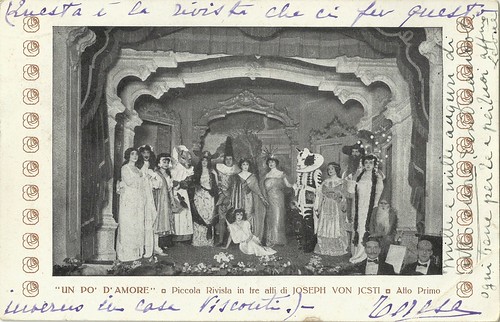
Italian postcard by Officine G. Ricordi e Co., Milano. Luchino Visconti (born 1906) was raised with theatre and staging from a very young age. His father, Duke Giuseppe Visconti di Modrone, staged his own stage plays. Under the pseudonym of Joseph von Jcsti (Von Jcsti is an anagram of Visconti), he directed plays at his home theatre in Palazzo Visconti in Milan. This is a postcard for the play Un po' d'amore (A Little Love), a revue in three acts. A lady named Teresa writes on the card that it is the revue she saw last winter in Casa Visconti. This must have been Winter 1912-1913, as the card is dated 2 September 1913.

French postcard in the Collection Cinéma by Éditions La Malibran, Paris, 1990, no. CI 15. Luchino Visconti and Anna Magnani in Bellissima / The Most Beautiful (Luchino Visconti, 1951).

American postcard by Pomegranate, Corde Madera, CA. / Black Box Collotype Continuous Tone Printers, Chicago, IL, no. 35-5136. Photo: Sanford Roth. Caption: Visconti, Rome, 1954.
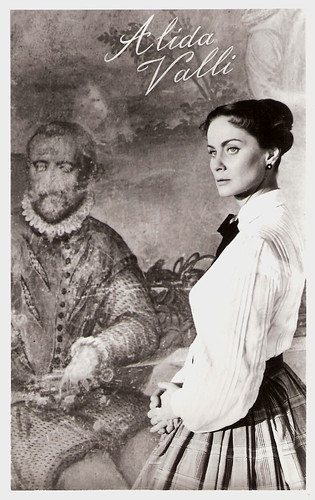
Dutch postcard by Takken, Utrecht, no. 1683. Photo: publicity still for Senso (Luchino Visconti, 1954) with Alida Valli. The picture was taken at Villa Godi Malinverni, Lugo di Vicenza, the first villa designed by Andrea Palladio. The murals were by painters from the School of Veronese.
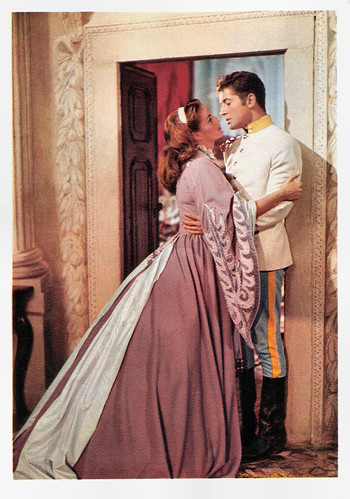
Italian postcard by Rotocalco Dagnino, Torino. Photo: Lux Film. Alida Valli and Farley Granger as Countess Livia Serpieri and Lt. Franz Mahler in Luchino Visconti's historical film Senso (1954). Visconti refers here to the famous romantic painting by Francesco Hayez, 'Il Bacio' (The Kiss, 1859).
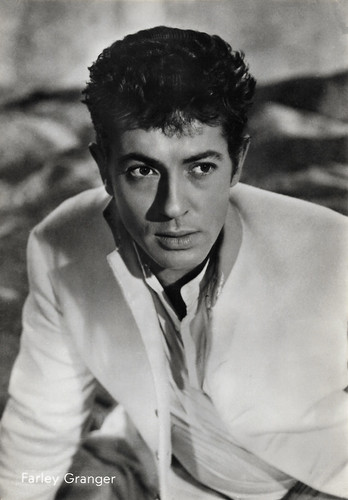
Italian postcard by Bromostampa, Milano, no. 7. Photo: Publicity still of Farley Granger in Senso (1954).
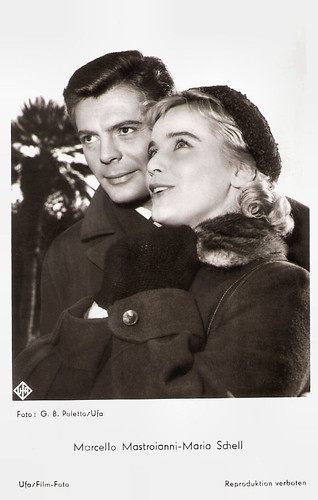
German postcard by Ufa, Berlin-Tempelhof, no. FK 3486. Photo: G.B. Poletto. Publicity still for Le notti bianche / White Nights (Luchino Visconti, 1957) with Marcello Mastroianni and Maria Schell.
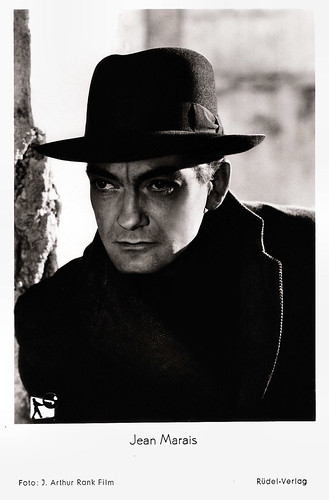
German postcard by Rüdel-Verlag, Hamburg-Bergedorf, no. 2141. Photo: J. Arthur Rank Film. Publicity still for Le notti bianche / White Nights (Luchino Visconti, 1957) with Jean Marais.
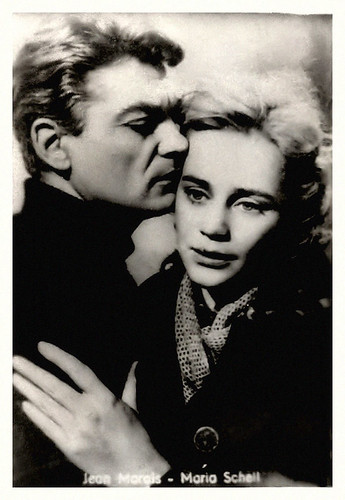
Photocard. Publicity still for Le notti bianche / White Nights (Luchino Visconti, 1957) with Jean Marais and Maria Schell.
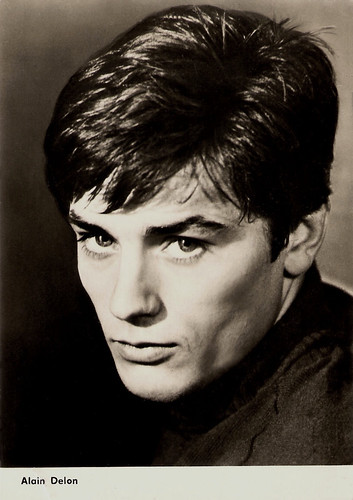
East German postcard by VEB Progress Film-Vertrieb, Berlin, 1967. retail price: 0,20 MDN.Photo: publicity still for Rocco e i suoi fratelli/Rocco and His Brothers (Luchino Visconti, 1960), featuring Alain Delon as Rocco.
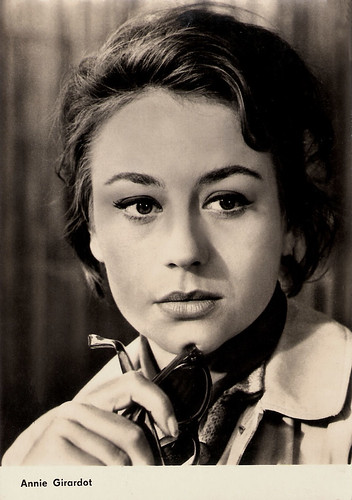
East German postcard by VEB Progress Filmvertrieb, Berlin, no. 1696, 1962. Photo: publicity still for Rocco e i suoi fratelli / Rocco and his brothers (Luchino Visconti, 1960) with Annie Girardot as Nadia.
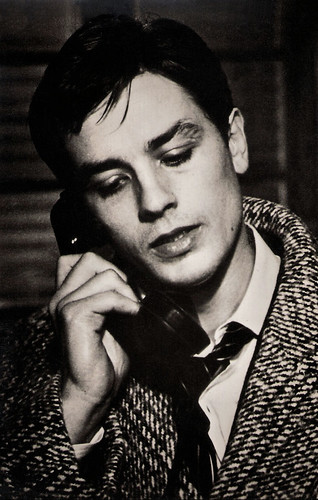
Spanish postcard by Archivo Bermejo, no. 7363. Photo: Radio Films, 1961. Publicity still for Rocco e i suoi fratelli / Rocco and His Brothers (Luchino Visconti, 1960) with Alain Delon.
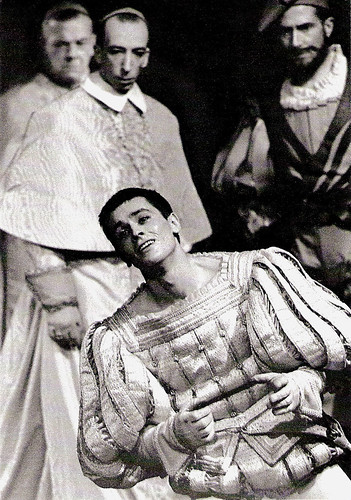
French postcard by the Bibliothèque Nationale de Paris / Imp. Bussière A.G., Paris, 1990. Photo: Roger Pic. Alain Delon in the play 'Dommage qu'elle soit une p... (It's a pity she's a whore), written by John Ford and directed by Luchino Visconti (1961) in Paris.
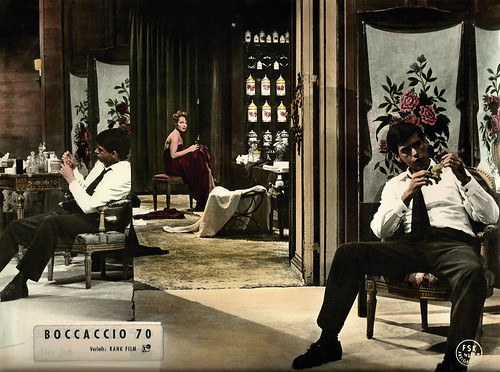
Publicity still used in Germany, distributed by Rank, mark of the German censor FSK. Tomas Milian and Romy Schneider in Luchino Visconti's episode Il lavoro in the film Boccaccio '70 (1962). Milian plays a bored aristocrat, caught in a scandal with call girls. Schneider plays his rich and equally bored Austrian wife, who tries to seduce her husband and make him pay for love, just like he did with his call girls. It works, but leaves the woman with bitterness. The set of the film was terribly costly because of all the authentic, valuable objects present.
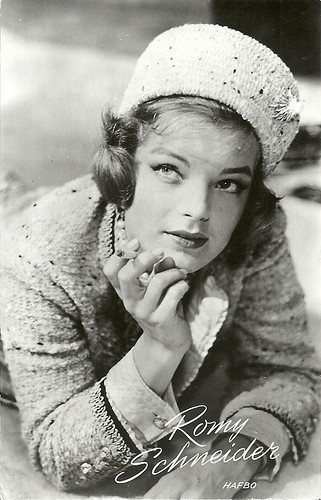
Dutch postcard. Photo: HAFBO. Romy Schneider dressed in Chanel in the episode Il lavoro / The Job (1961) by Luchino Visconti, an episode of the anthology film Boccaccio '70. Schneider was a big fan of Chanel's fashion herself.

Swiss postcard by News Productions, Baulmes, no. 55668. Photo: Michelangelo Durazzo / ANA Paris / Musée de l'Elysée, Lausanne. Caption: Luchino Visconti directing the scene of 'Te Deum' in Il Gattopardo / The Leopard, 1963.
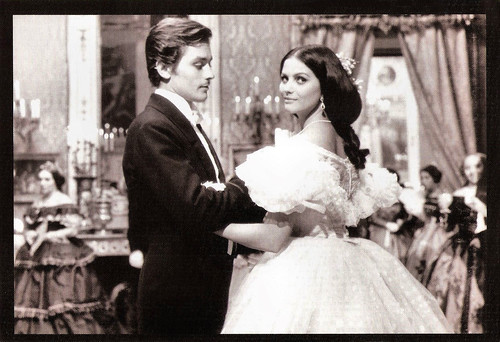
Vintage card. Photo: publicity still for Il Gattopardo / The Leopard (Luchino Visconti, 1963) with Alain Delon and Claudia Cardinale.
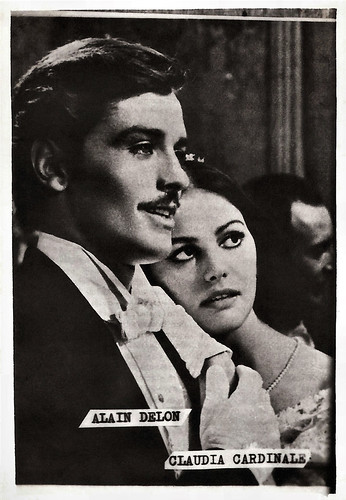
Small Romanian collector card. Photo: publicity still for Il Gattopardo / The Leopard (Luchino Visconti, 1963) with Alain Delon and Claudia Cardinale.
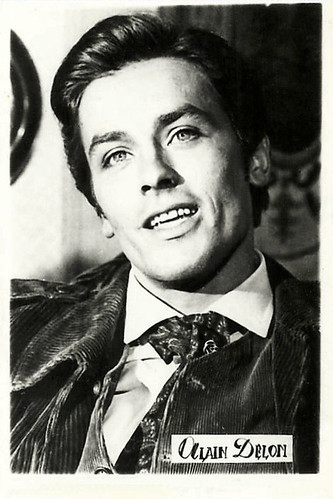
Small Romanian collectors card. Photo: Alain Delon as Tancredi Falconieri in Il Gattopardo / The Leopard (Luchino Visconti, 1963).

French postcard by Éditions Cahiers du cinéma, Paris, 1997. Photo: Traverso. Luchino Visconti, Claudia Cardinale and Burt Lancaster with a leopard at the 1963 Cannes Film Festival.
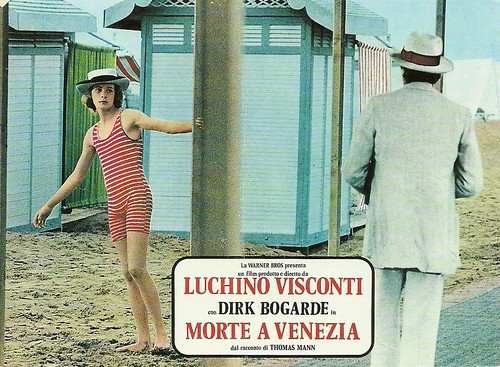
Dutch postcard, using an original poster of Morte a Venezia/Death in Venice, for a Dutch rerelease of the film. Photo: Björn Andresen and Dirk Bogarde in Morte a Venezia/Death in Venice (Luchino Visconti, 1972).
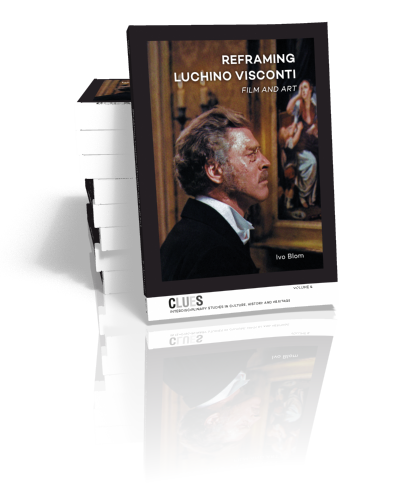 Where does the visual splendour of Visconti’s films come from? In the first part of his Reframing Luchino Visconti: film and art, Ivo Blom tells how the visual arts (painting, sculpture, photography) served in set and costume design (e.g. as props and as sources of inspiration). The second part of the book focuses on (deep) staging, framing, mobile framing and mirroring.
Ivo's study deals with the ways in which Luchino Visconti appropriated the visual arts and the cinema of previous filmmakers in his own films. Whilst much has been written about literary and theatrical influences upon Visconti’s work – besides being a film-maker, he was also a leading theatre and opera director – there has been a lot of speculation about but little hard corroboration of pictorial influences in his films. Ivo's book goes deeply into set and costume design and cinematography. The book is based on extensive archival research, interviews with Visconti’s collaborators and secondary literature, and is richly illustrated with pictures obtained from museums, photo services and films.
Sources: Ivo Blom (personal blog) and Sidestone Press.
Italian postcard by Officine G. Ricordi e Co., Milano. Luchino Visconti (born 1906) was raised with theatre and staging from a very young age. His father, Duke Giuseppe Visconti di Modrone, staged his own stage plays. Under the pseudonym of Joseph von Jcsti (Von Jcsti is an anagram of Visconti), he directed plays at his home theatre in Palazzo Visconti in Milan. This is a postcard for the play Un po' d'amore (A Little Love), a revue in three acts. A lady named Teresa writes on the card that it is the revue she saw last winter in Casa Visconti. This must have been Winter 1912-1913, as the card is dated 2 September 1913.
French postcard in the Collection Cinéma by Éditions La Malibran, Paris, 1990, no. CI 15. Luchino Visconti and Anna Magnani in Bellissima / The Most Beautiful (Luchino Visconti, 1951).
American postcard by Pomegranate, Corde Madera, CA. / Black Box Collotype Continuous Tone Printers, Chicago, IL, no. 35-5136. Photo: Sanford Roth. Caption: Visconti, Rome, 1954.
Dutch postcard by Takken, Utrecht, no. 1683. Photo: publicity still for Senso (Luchino Visconti, 1954) with Alida Valli. The picture was taken at Villa Godi Malinverni, Lugo di Vicenza, the first villa designed by Andrea Palladio. The murals were by painters from the School of Veronese.
Italian postcard by Rotocalco Dagnino, Torino. Photo: Lux Film. Alida Valli and Farley Granger as Countess Livia Serpieri and Lt. Franz Mahler in Luchino Visconti's historical film Senso (1954). Visconti refers here to the famous romantic painting by Francesco Hayez, 'Il Bacio' (The Kiss, 1859).
Italian postcard by Bromostampa, Milano, no. 7. Photo: Publicity still of Farley Granger in Senso (1954).
German postcard by Ufa, Berlin-Tempelhof, no. FK 3486. Photo: G.B. Poletto. Publicity still for Le notti bianche / White Nights (Luchino Visconti, 1957) with Marcello Mastroianni and Maria Schell.
German postcard by Rüdel-Verlag, Hamburg-Bergedorf, no. 2141. Photo: J. Arthur Rank Film. Publicity still for Le notti bianche / White Nights (Luchino Visconti, 1957) with Jean Marais.
Photocard. Publicity still for Le notti bianche / White Nights (Luchino Visconti, 1957) with Jean Marais and Maria Schell.
East German postcard by VEB Progress Film-Vertrieb, Berlin, 1967. retail price: 0,20 MDN.Photo: publicity still for Rocco e i suoi fratelli/Rocco and His Brothers (Luchino Visconti, 1960), featuring Alain Delon as Rocco.
East German postcard by VEB Progress Filmvertrieb, Berlin, no. 1696, 1962. Photo: publicity still for Rocco e i suoi fratelli / Rocco and his brothers (Luchino Visconti, 1960) with Annie Girardot as Nadia.
Spanish postcard by Archivo Bermejo, no. 7363. Photo: Radio Films, 1961. Publicity still for Rocco e i suoi fratelli / Rocco and His Brothers (Luchino Visconti, 1960) with Alain Delon.
French postcard by the Bibliothèque Nationale de Paris / Imp. Bussière A.G., Paris, 1990. Photo: Roger Pic. Alain Delon in the play 'Dommage qu'elle soit une p... (It's a pity she's a whore), written by John Ford and directed by Luchino Visconti (1961) in Paris.
Publicity still used in Germany, distributed by Rank, mark of the German censor FSK. Tomas Milian and Romy Schneider in Luchino Visconti's episode Il lavoro in the film Boccaccio '70 (1962). Milian plays a bored aristocrat, caught in a scandal with call girls. Schneider plays his rich and equally bored Austrian wife, who tries to seduce her husband and make him pay for love, just like he did with his call girls. It works, but leaves the woman with bitterness. The set of the film was terribly costly because of all the authentic, valuable objects present.
Dutch postcard. Photo: HAFBO. Romy Schneider dressed in Chanel in the episode Il lavoro / The Job (1961) by Luchino Visconti, an episode of the anthology film Boccaccio '70. Schneider was a big fan of Chanel's fashion herself.
Swiss postcard by News Productions, Baulmes, no. 55668. Photo: Michelangelo Durazzo / ANA Paris / Musée de l'Elysée, Lausanne. Caption: Luchino Visconti directing the scene of 'Te Deum' in Il Gattopardo / The Leopard, 1963.
Vintage card. Photo: publicity still for Il Gattopardo / The Leopard (Luchino Visconti, 1963) with Alain Delon and Claudia Cardinale.
Small Romanian collector card. Photo: publicity still for Il Gattopardo / The Leopard (Luchino Visconti, 1963) with Alain Delon and Claudia Cardinale.
Small Romanian collectors card. Photo: Alain Delon as Tancredi Falconieri in Il Gattopardo / The Leopard (Luchino Visconti, 1963).
French postcard by Éditions Cahiers du cinéma, Paris, 1997. Photo: Traverso. Luchino Visconti, Claudia Cardinale and Burt Lancaster with a leopard at the 1963 Cannes Film Festival.
Reframing Luchino Visconti: film and art
Where does the visual splendour of Visconti’s films come from? In the first part of his Reframing Luchino Visconti: film and art, Ivo Blom tells how the visual arts (painting, sculpture, photography) served in set and costume design (e.g. as props and as sources of inspiration). The second part of the book focuses on (deep) staging, framing, mobile framing and mirroring.Ivo's study deals with the ways in which Luchino Visconti appropriated the visual arts and the cinema of previous filmmakers in his own films. Whilst much has been written about literary and theatrical influences upon Visconti’s work – besides being a film-maker, he was also a leading theatre and opera director – there has been a lot of speculation about but little hard corroboration of pictorial influences in his films. Ivo's book goes deeply into set and costume design and cinematography. The book is based on extensive archival research, interviews with Visconti’s collaborators and secondary literature, and is richly illustrated with pictures obtained from museums, photo services and films.
Sources: Ivo Blom (personal blog) and Sidestone Press.
No comments:
Post a Comment