Ugo Piperno (1862-1922) was a renowned Italian stage actor and director. From 1914, he also played several parts in the Italian silent cinema for Roman film companies such as Cines, Caesar, Celio, and Tiber Film.
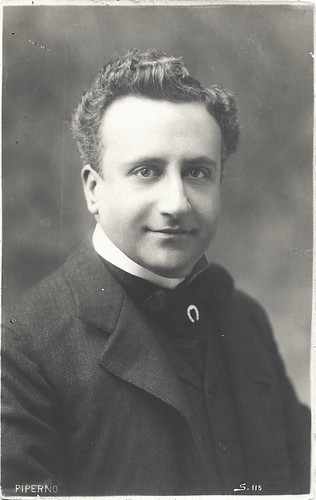
Italian postcard, no. 115. Photo: Sciutto, Genova.
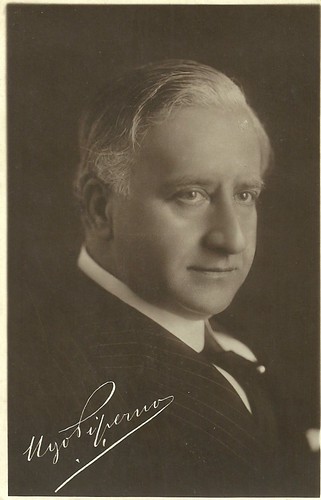
Italian postcard by Fotocelere.
Ugo Piperno was born in Livorno in 1870 (though IMDb claims in 1862).
He debuted on stage in 1891 with the company of C. Rossi. In 1896, he played with Ermete Zacconi, later also with Ruggero Ruggeri. In 1898, Piperno played with the company Lorenzo-Andò, e.g. in the Enrico Annibale Butti play 'La fine di un ideale' (The end of an ideal).
Around 1900, he acted at the stage company Talli-Grammatica-Calabresi company, e.g. in 'Lucifero' (Lucifer) by Enrico Annibale Butti in 1900-1901.
In 1912, he founded with Lyda Borelli and Antonio Gandusio the Drammatica Compagnia Italiana Borelli-Gandusio-Piperno, in which also Wanda Capodaglio, Lola Braccini, Tullio Carminati, Memo Benassi, Luigi Almirante, and a young Renzo Ricci acted.
In Rome, the company acted at the Teatro Valle. In 1914, the company did a Latin American tour but got stuck in New York when the First World War broke out. Eventually, they managed to get back. Borelli left the company in 1915 but returned in 1916-1918. Around 1918, Piperno led the so-called Compagnia di Propaganda per le Terre Redente.

Italian postcard, no. 45. Photo: Sciutto.

Italian postcard. Photo: Unione Cinematografica Italiana.
In the 1910s, Ugo Piperno worked at the Roman Cines film studio. In 1914, he debuted on screen in the Maria Carmi drama Retaggio d'odio / The Inheritance of Hate (Nino Oxilia, 1914), also with Bruto Castellani and Pina Menichelli.
In La donna nuda / The Naked Truth (Carmine Gallone, 1914), Piperno played the old painter Rouchard opposite - now film diva - Lyda Borelli as the model Lolette, Lamberto Picasso as the young painter Pierre Bernier who cheats on her, and Wanda Capodaglio as the flirtatious princess who steals Pierre, and drives Lolette to madness.
After La casa di nessuno / The House of Nobody (Enrico Guazzoni, 1915) with Pina Menichelli, Piperno again acted opposite Lyda Borelli in La storia dei tredici / The Thirteenth Man (Carmine Gallone, 1917), after Honoré de Balzac, and today one of the few lost films of Borelli. Then followed Il tesoro di Isaaco / Isaac's Treasure (Mario Caserini, 1918), Primerose (Caserini, 1919) with Elena Sangro, La notte del 24 aprile / The Night of 24 April (N.N., 1919) with Thea (Teresa Termini), and L'odissea di San Giovanni / The Odyssey of San Giovanni (Vasco Salvini, 1919).
Italian postcard, no. 115. Photo: Sciutto, Genova.
Italian postcard by Fotocelere.
Stuck in New York
Ugo Piperno was born in Livorno in 1870 (though IMDb claims in 1862).
He debuted on stage in 1891 with the company of C. Rossi. In 1896, he played with Ermete Zacconi, later also with Ruggero Ruggeri. In 1898, Piperno played with the company Lorenzo-Andò, e.g. in the Enrico Annibale Butti play 'La fine di un ideale' (The end of an ideal).
Around 1900, he acted at the stage company Talli-Grammatica-Calabresi company, e.g. in 'Lucifero' (Lucifer) by Enrico Annibale Butti in 1900-1901.
In 1912, he founded with Lyda Borelli and Antonio Gandusio the Drammatica Compagnia Italiana Borelli-Gandusio-Piperno, in which also Wanda Capodaglio, Lola Braccini, Tullio Carminati, Memo Benassi, Luigi Almirante, and a young Renzo Ricci acted.
In Rome, the company acted at the Teatro Valle. In 1914, the company did a Latin American tour but got stuck in New York when the First World War broke out. Eventually, they managed to get back. Borelli left the company in 1915 but returned in 1916-1918. Around 1918, Piperno led the so-called Compagnia di Propaganda per le Terre Redente.
Italian postcard, no. 45. Photo: Sciutto.
Italian postcard. Photo: Unione Cinematografica Italiana.
Piperno and the film divas
In the 1910s, Ugo Piperno worked at the Roman Cines film studio. In 1914, he debuted on screen in the Maria Carmi drama Retaggio d'odio / The Inheritance of Hate (Nino Oxilia, 1914), also with Bruto Castellani and Pina Menichelli.
In La donna nuda / The Naked Truth (Carmine Gallone, 1914), Piperno played the old painter Rouchard opposite - now film diva - Lyda Borelli as the model Lolette, Lamberto Picasso as the young painter Pierre Bernier who cheats on her, and Wanda Capodaglio as the flirtatious princess who steals Pierre, and drives Lolette to madness.
After La casa di nessuno / The House of Nobody (Enrico Guazzoni, 1915) with Pina Menichelli, Piperno again acted opposite Lyda Borelli in La storia dei tredici / The Thirteenth Man (Carmine Gallone, 1917), after Honoré de Balzac, and today one of the few lost films of Borelli. Then followed Il tesoro di Isaaco / Isaac's Treasure (Mario Caserini, 1918), Primerose (Caserini, 1919) with Elena Sangro, La notte del 24 aprile / The Night of 24 April (N.N., 1919) with Thea (Teresa Termini), and L'odissea di San Giovanni / The Odyssey of San Giovanni (Vasco Salvini, 1919).
Piperno acted opposite diva Francesca Bertini in Spiritismo / His Friend's Wife (Camillo De Riso, 1919) and La contessa Sara / Countess Sara (Roberto Roberti, 1920), shot for Bertini Film/Caesar Film. Piperno had the title role in Papà Lebonnard / Dear Old Dad (1920) by Mario Bonnard, with whom he had also collaborated in La stretta / The Grip (1919). Opposite Hesperia, Piperno acted in Chimere (Baldassarre Negroni, 1920).
His final film was again with Mario Bonnard, the latter's Stendhal adaptation Il rosso e il nero / The Red and the Black (Mario Bonnard, 1920). Two years later, in 1922, Ugo Piperno died in Casalecchio di Reno, near Bologna. He was 60.

Italian postcard by Ed. A. Traldi, Milano, no. 21. Photo: Badodi, Milano.

Spanish cromo / collector card by Chocolate Imperiale, no. 3 of 6 cards. Photo: Cines / distr. J. Muntañola, Barcelona. Ugo Piperno in La storia dei tredici (Carmine Gallone, 1917), after a script by Lucio D'Ambra based on Honoré de Balzac's tripartite novel 'L'histoire des treize' (1833-39), published as 'Ferragus', 'La duchesse de Langeais' and 'La fille aux yeux d'or'.
Sources: Roberto Galimberti (Blog dell' Arco Reale - Rito di York - Italian), and IMDb.
This post was last updated on 11 April 2026.

No comments:
Post a Comment