Showing posts with label Charles Chaplin. Show all posts

04 April 2019

The Kid (1921)

The Kid (1921) is one of the greatest films of the silent era. The comedy-drama was written, produced and directed by Charlie Chaplin. He also stars in it with Jackie Coogan as his adopted son and sidekick. Chaplin's first full-length film as a director was a huge success, and was the second-highest-grossing film in 1921.

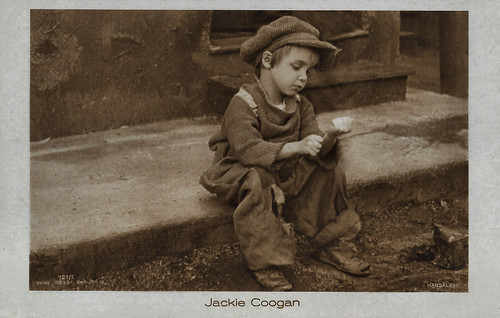
Jackie Coogan in The Kid (1921)
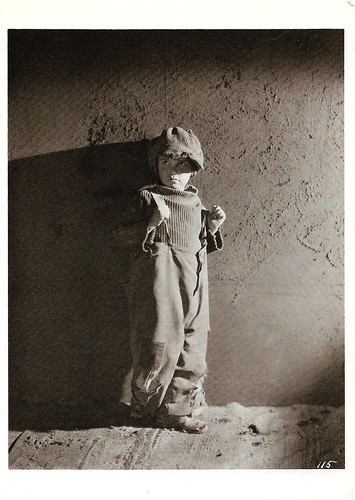
German postcard by Ross Verlag, no. 721/1. Photo: Hansaleih. Publicity still for The Kid (Charles Chaplin, 1921) with Jackie Coogan.

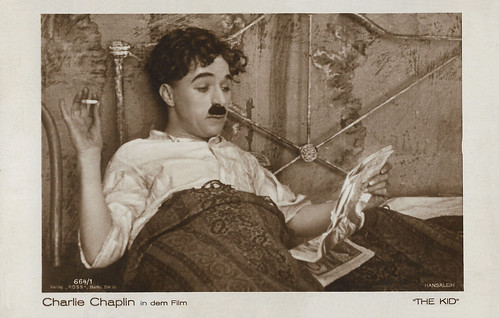
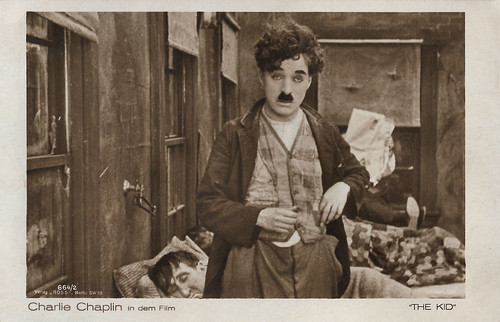
Charlie Chaplin in The Kid (1921)
German postcard by Ross Verlag, no. 664/2. Photo: Hansaleih. Publicity still for The Kid (Charles Chaplin, 1921) with Charlie Chaplin.

Abandonned in the back seat of an expensive automobile


The Kid (Charles Chaplin, 1921)  starts off with inter-titles, "A picture with a smile - and perhaps a tear," followed by "The woman whose sin was motherhood". An unknown woman (Edna Purviance) leaves a charity hospital carrying her newborn son. An artist (Carl Miller), the apparent father, is shown with the woman's photograph. When it falls into the fireplace, he first picks it up, then throws it back in to burn up.

The woman decides to abandon her child in the back seat of an expensive automobile with a handwritten note imploring the finder to care for and love the baby. However, the car is stolen. When the two thieves discover the child, they dump him in a garbage can on the street.

The Tramp (Charlie Chaplin) notices the baby wrapped in a blanket. First, Charlie tries to pass it off to someone else, but after stumbling upon a note which reads, "Please love and care for this orphan child", he decides to raise the child himself. He names the boy John. Elsewhere, the woman has an apparent change of heart and returns for the baby, but is heartbroken and faints upon learning of the baby having been taken away.

Five years pass, and the child (Jackie Coogan) becomes the Tramp's partner in minor crime, throwing stones to break windows that the Tramp, working as a glazier, can then repair. Meanwhile, the woman becomes a wealthy opera star. She spends her spare time with charitable work handing out gifts to the children of poor districts to fill the void left by her missing child. By chance, the paths of the kid and his mother meet on numerous occasions, unaware of each other's identities.

When the boy becomes seriously ill,  a middle-aged country doctor comes to see him. He discovers that the Tramp is not the boy's father. The Tramp shows him the note left by the mother, but the doctor merely takes it and notifies the authorities of the County Orphan Asylum  to take the child away.

Two men come to take the boy to the orphanage, but after a fight and a chase, the Tramp steals the boy back just before he arrives at the Orphan Asylum. When the woman comes back to see how the boy is doing, the doctor tells her what has happened, then shows her the note, which she recognises.

Now fugitives, the Tramp and the boy spend the night in a flophouse, but the manager (Henry Bergman), having read of the $1,000 reward offered for the child, takes him to the police station to be united with his ecstatic mother. When the Tramp wakes up, he searches frantically for the missing boy, then returns to doze beside the now-locked doorway to their humble home.

In his sleep, he enters 'Dreamland', with angels in residence and devilish interlopers. He is awakened by a kind policeman (Tom Wilson), who places the Tramp in a car and rides with him to a mansion. When the door opens, the woman and John emerge, reuniting the elated adoptive father and son. The policeman, who is happy for the family, shakes the Tramp's hand and leaves, before the woman welcomes the Tramp into her home.

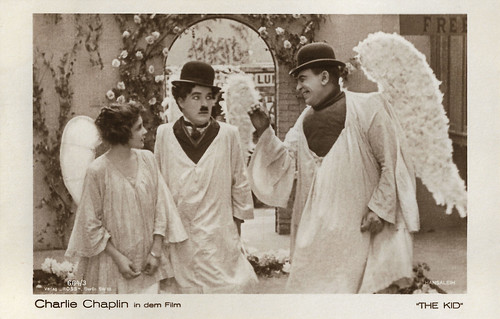
Charlie Chaplin and Lita Grey in The Kid (1921)
German postcard by Ross Verlag, no. 664/3. Photo: Hansaleih. Publicity still for The Kid (Charles Chaplin, 1921) with Charlie Chaplin, Lita Grey and Charles Reisner.

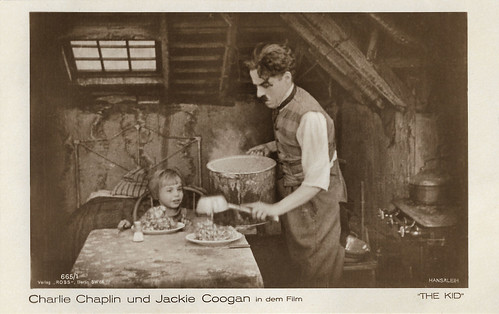
Charlie Chaplin and Jackie Coogan in The Kid (1921)
German postcard by Ross Verlag, no. 665/1. Photo: Hansaleih. Publicity still for The Kid (Charles Chaplin, 1921) with Charlie Chaplin and Jackie Coogan.

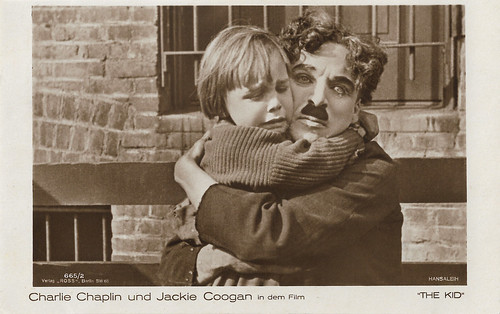
Charlie Chaplin and Jackie Coogan in The Kid (1921)
German postcard by Ross Verlag, no. 665/2. Photo: Hansaleih. Publicity still for The Kid (Charles Chaplin, 1921) with Charlie Chaplin and Jackie Coogan.

The first major child star of the cinema


The Kid (Charles Chaplin, 1921) is notable for combining comedy and drama. As the opening title says: "A picture with a smile—and perhaps, a tear". The most famous and enduring sequence in the film is the Tramp's desperate rooftop pursuit of the agents from the orphanage who had taken the child, and their emotional reunion.

The film made Jackie Coogan, then a vaudeville performer, into the first major child star of the cinema. Many of the Chaplin biographers have attributed the relationship portrayed in the film to have resulted from the death of Chaplin's firstborn infant son just ten days before the production began.

J. Spurlin at IMDb: "Jackie Coogan (about five in this film), with his charming manners, his talents as a mimic and his adeptness at physical comedy, is one of the all-time great child actors. Want more evidence of Chaplin's genius? Coogan doesn't steal the film from him. This is true even though Chaplin, as producer, star and director, makes every evident attempt to spotlight the boy's talents. Coogan is even better here than he is in his own vehicles, like My Boy and Oliver Twist."

The portrayal of poverty and the cruelty of welfare workers are also directly reminiscent of Chaplin's own childhood in London. Several of the street scenes were filmed on Los Angeles's famed Olvera Street, almost 10 years before it was converted into a Mexican-themed tourist attraction.

Another IMDb reviewer, Lugonian, notes: "Chaplin, who constructs his gags to perfection, has one difficult scene that comes off naturally, this being where Charlie cuts out diapers from a sheet for the infant as he's lying beside him in a miniature hammock crying out for his milk. The baby immediately stops after Charlie directs the nipple attached to a coffee pot (a substitute for a baby bottle) back into his mouth. Another classic moment, on a serious nature, is when Charlie is being held back by authorities, being forced to watch his crying 'son' taken away from him. Charlie breaks away and goes after the truck as he's being chased by a policeman from the slanted roof-tops. The close-up where father and son tearful reunite is as touching as anything ever captured on film."

After production was completed in 1920, the film was caught up in the divorce actions of Chaplin's first wife Mildred Harris, who sought to attach Chaplin's assets. Chaplin and his associates smuggled the raw negative to Salt Lake City, reportedly packed in coffee cans, and edited the film in a room at the Hotel Utah. Before releasing the film Charlie Chaplin negotiated for and received an enhanced financial deal for the film with his distributor, First National Corporation, based on the success of the final film. Twelve-year-old Lita Grey, who portrays an angel in the film, would become Chaplin's second wife from 1924 to 1927.

In 1971, Charles Chaplin edited and reissued the film and he composed a new musical score.

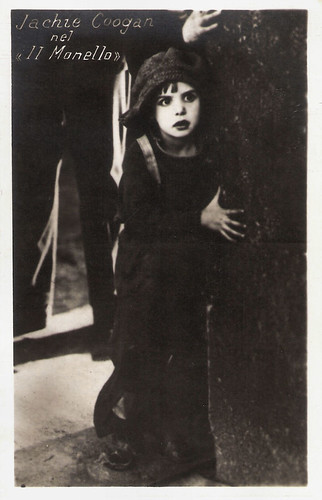
Jackie Coogan in The Kid (1921)
Italian postcard. Photo: publicity still for The Kid (Charles Chaplin, 1921) with Jackie Coogan.

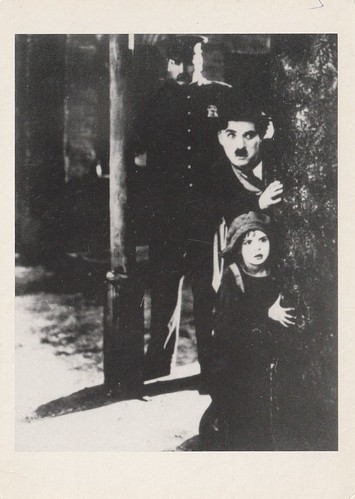
Charlie Chaplin and Jackie Coogan in The Kid (1921)
Postcard by Palm Pictures, no. C 23. Photo: publicity still for The Kid (Charles Chaplin, 1921) with Charlie Chaplin and Jackie Coogan. Collection: Daniël van der Aa. Tom Wilson is probably the cop in the background.

Jackie Coogan
Jackie Coogan. Modern American postcard by Fotofolio. Photo: James Abbe, 1921.

Sources: J. Spurlin (IMDb), Lugonian (IMDb),  Wikipedia and IMDb.

31 August 2014

Chaplin (1992)

Last Sunday, 24 August 2014, Richard Attenborough (1923-2014) passed away at the age of 90. In honour of this great English actor, film director and producer, this film special is on his film Chaplin (Richard Attenborough, 1992), which featured Robert Downey Jr. as Charles Spencer Chaplin. All the postcards are from a series of French postcards to promote the film, published by Editions Mercuri.

Chaplin (1992)
French postcard by Editions Mercuri, no. 813. Photo: Tri-Star Pictures. Publicity still for Chaplin (Richard Attenborough, 1992).

Chaplin (1992)
French postcard by Editions Mercuri, no. 814. Photo: Tri-Star Pictures. Publicity still for Chaplin (Richard Attenborough, 1992).

Chaplin (1992)
French postcard by Editions Mercuri, no. 815. Photo: Tri-Star Pictures. Publicity still for Chaplin (Richard Attenborough, 1992).

Haunted by a sense of loss


Chaplin (Richard Attenborough, 1992) is the biography of British comedian Charlie Chaplin, filmmaker extraordinaire.

It was produced and directed by Richard Attenborough and stars Robert Downey, Jr., Paul Rhys as Charlie's brother Sydney Chaplin, John Thaw as the British music-hall impresario Fred Karno, Marisa Tomei as film star Mabel Normand, and Penelope Ann Miller as Chaplin's frequent co-star Edna Purviance.

It also features Chaplin's real-life daughter, Geraldine Chaplin in the role of her own paternal grandmother, the mentally ill Hannah Chaplin.

The film was adapted by William Boyd, Bryan Forbes and William Goldman from the books My Autobiography by Chaplin and Chaplin: His Life and Art by film critic David Robinson.

The film is structured around lengthy flashbacks as the elderly Charlie Chaplin, now living in Switzerland, recollects moments from his life during a conversation with the editor of his autobiography (played by Anthony Hopkins).

Chaplin's recollections begin with his childhood of extreme poverty, from which he escapes by immersing himself in the world of the London music halls, after which he relocates to the United States.

While his screen characters were extremely hilarious, Chaplin shows that the man behind 'The Little Tramp' was constantly haunted by a sense of loss.

Highlighted works such as The Gold Rush (1925) and The Great Dictator (1940) illustrate significant turning points in Chaplin's prolific filmography.

There are references to his many romantic episodes, his professional collaboration with early Hollywood film producer Mack Sennett (Dan Aykroyd) and friendship with Douglas Fairbanks (Kevin Kline), and to J. Edgar Hoover (Kevin Dunn) whose US Federal Bureau of Investigation accused Chaplin of communist sympathies and forced him to leave the USA.

The film ends with Chaplin returning to the United States to accept an Honorary Award at the 1972 Academy Awards ceremony.

Richard Attenborough's director's cut was 147 minutes, 12 minutes longer than the version shown in cinemas. Attenborough later said that the cuts damaged the film.

Michael DeZeburia at IMDb: "Robert Downey Jr., first of all, portrays Chaplin with amazing accuracy. Some parts of this performance are particularly memorable, such as his invention of the famous tramp's walk just after having feverishly picked out the outfit, the astonishingly accurate depiction of Charlie as an old man, and of course, the many parts of the film that involve parts of his life where he was working on his own films."

Lisa Kropiewnicki at AllMovie: "The film is a thoughtful mixture of melancholy and humor, juxtaposing Chaplin's private loneliness and loss with his professional comedic talents and fortitude. Spanning a period of nearly 80 years in the actor's life, the film has been criticized for trying to cover too much narrative ground, but given the enormity of Chaplin's contribution to his art and the personal obstacles he overcame, this is an enjoyable, emotional, and authentic film."

Chaplin (1992)
French postcard by Editions Mercuri, no. 816. Photo: Tri-Star Pictures. Publicity still for Chaplin (Richard Attenborough, 1992).

Chaplin (1992)
French postcard by Editions Mercuri, no. 817. Photo: Tri-Star Pictures. Publicity still for Chaplin (Richard Attenborough, 1992) with Dan Aykroyd as Mack Sennett and Robert Downey Jr. as Charlie Chaplin, between Sennett's Bathing Beauties.

Chaplin (1992)
French postcard by Editions Mercuri, no. 819. Photo: Tri-Star Pictures. Publicity still for Chaplin (Richard Attenborough, 1992).

Sources: Lisa Kropiewnicki (AllMovie), Wikipedia and IMDb.

27 June 2014

Charles Chaplin

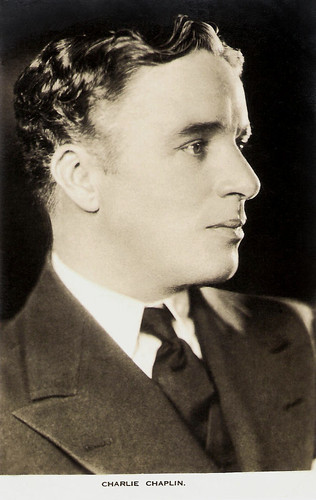
Tomorrow the Gates of Heaven will open for cinema lovers: the XXVIII edition of Il Cinema Ritrovato film festival starts at 28 June 2014! Actually, the festival is preceded from 25 till 28 June by The Birth of Tramp Celebration to celebrate the 100th anniversary of The Tramp. This iconic character of Charles ‘Charlie’ Chaplin (1889-1977) is one of the most creative and influential personalities of the silent-film era. The Tramp with his toothbrush moustache, undersized bowler hat and bamboo cane is little man who struggles to survive while keeping his dignity in a world with great social injustice. Chaplin used mime, slapstick and other visual comedy routines, and he not only starred in his films, but also directed, wrote and produced them, and composed the music as well. His working life in entertainment spanned over 75 years, from the Victorian stage and the music hall in the United Kingdom as a child performer, until his last work close to his death at the age of 88.

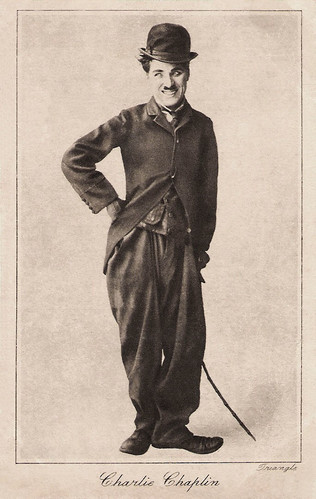
Charlie Chaplin
Vintage postcard. Photo: Triangle.

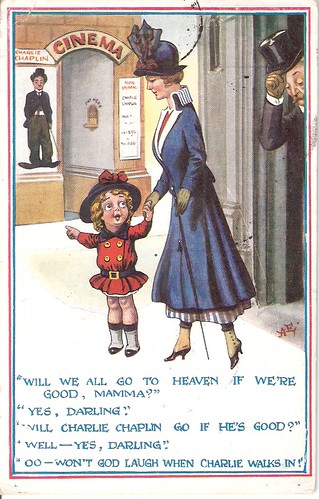
Chaplin cartoon, British 1910s
British postcard in the H. B. Series., 'Entire British Production', London E.C., sent by mail on 30.7.1917. Signature: AEI.

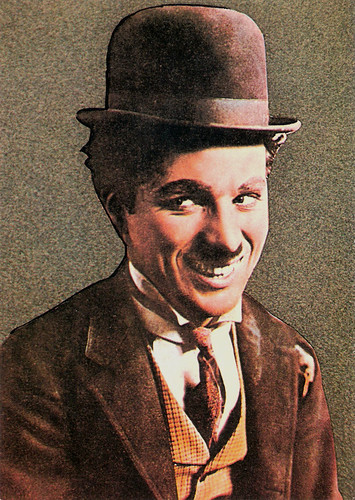
Charlie Chaplin
French postcard by Editions Nugeron, no. 76.

Music Hall Tradition


Charles Spencer Chaplin was born in 1889, in London, England. His parents were both entertainers in the Music Hall tradition; his father, Charles Spencer Chaplin Sr., was a vocalist and actor and his mother, Hannah Chaplin, a singer and actress with the the stage name Lilly Harley.

They separated before Charlie was three. Charlie lived with his mother and his older half-brother Sydney. Chaplin Sr. was an alcoholic and had little contact with his son, though Charlie and Sydney briefly lived with their father and his mistress, while their mentally ill mother lived at an asylum.

Hannah's first crisis came in 1894 when she was performing at The Canteen, a theatre in Aldershot, mainly frequented by rioters and soldiers. Hannah was injured by the objects the audience threw at her and she was booed off the stage. Backstage, she cried and argued with her manager.

Meanwhile, the five-year old Chaplin went on stage alone and sang a well-known tune at that time, Jack Jones. The young Chaplin brothers forged a close relationship in order to survive. They gravitated to the Music Hall while still very young, and both of them proved to have considerable natural stage talent.

At eight Charlie toured in a musical, The Eight Lancaster Lads. Nearly 11, he appeared in Giddy Ostende at London's Hippodrome. Chaplin's early years of desperate poverty were a great influence on his film characters. His films would later re-visit the scenes of his childhood deprivation in Lambeth.

In 1901, his father died of cirrhosis of the liver when Charlie was twelve. His mother died in 1928 in Hollywood, seven years after having been brought to the US by her sons.

Unknown to Charlie and Sydney until years later, they had a half-brother through their mother. The boy, Wheeler Dryden, was raised abroad by his father but later connected with the rest of the family and went to work for Chaplin at his Hollywood studio.

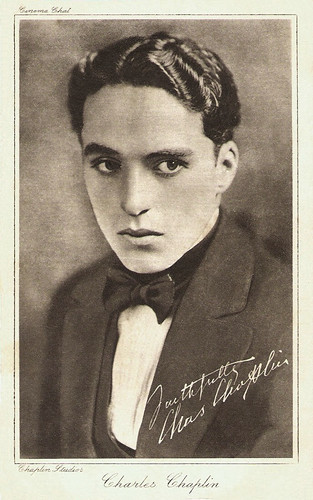
Charlie Chaplin
Vintage postcard. Photo: Chaplin Studios.

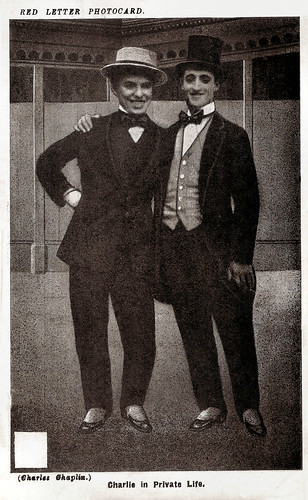
Charlie Chaplin
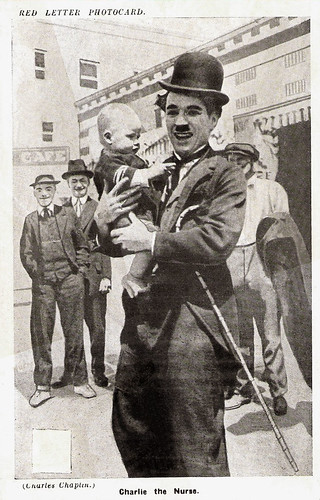
British postcard by Red Letter Photocard. Photo: Essanay.

Charlie Chaplin
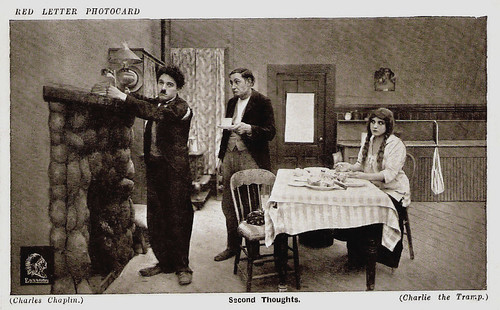
British postcard by Red Letter Photocard.

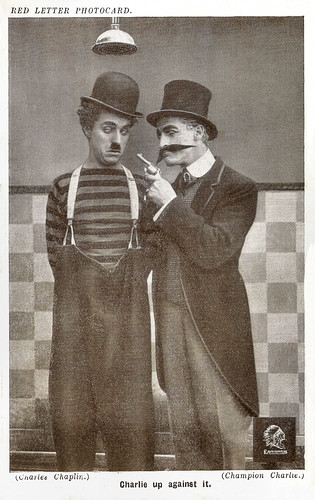
Charlie Chaplin
British postcard by Red Letter Photocard. Photo: Essanay. Publicity still for The Champion (Charles Chaplin, 1915) with Chaplin and Leo White.

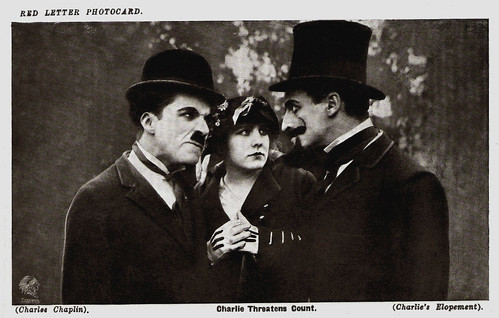
Charlie Chaplin, Edna Purviance
British postcard by Red Letter Photocard, no. 4. Photo: Essanay.

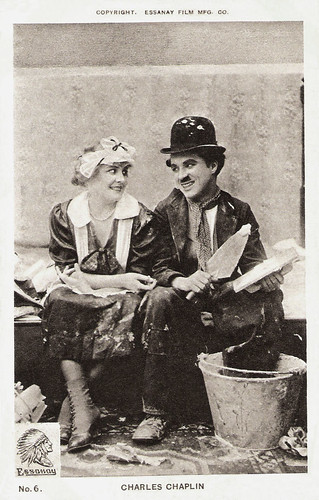
Charlie Chaplin
British postcard by Red Letter Photocard, no.6. Photo: Essanay. Publicity still for Work (1915) with Edna Purviance.

Fred Karno's Vaudeville Troupe


From age 17 to 24, Charlie Chaplin joined Fred Karno's English vaudeville troupe. He first toured the United States with the Fred Karno troupe from 1910 to 1912. After five months back in England, he returned to the US for a second tour. In the troupe was also his brother Sydney and Arthur Stanley Jefferson, who later became known as Stan Laurel.

In late 1913, Chaplin's act with the Karno troupe was seen by Mack Sennett, Mabel Normand, Minta Durfee, and Fatty Arbuckle. Sennett hired him for his studio, the Keystone Film Company as a replacement for Ford Sterling.

Chaplin had considerable initial difficulty adjusting to the demands of film acting and his performance suffered for it. After Chaplin's first film appearance, Making a Living (Henry Lehrman, 1914) was filmed, Sennett felt he had made a costly mistake.

Mabel Normand persuaded Sennett to give Chaplin another chance, and she directed and wrote a handful of his earliest films.

He first played The Tramp in the Keystone comedy Kid Auto Races at Venice (Henry Lehrman, 1914). This picture saw him wearing baggy pants borrowed from Roscoe 'Fatty' Arbuckle, size 14 shoes belonging to Ford Sterling (and worn upside down to keep them from falling off), a tiny jacket from Keystone Kop Charles Avery, a bowler hat belonging to Arbuckle's father-in-law and some crepe paper belonging to Mack Swain (which became the tramp's moustache). The only item that actually belonged to Charlie was the cane.

Two films Chaplin made in 1915, The Tramp and The Bank, created the characteristics of his screen persona.

Chaplin was influenced by his predecessor, the French silent film comedian Max Linder, to whom he dedicated one of his films. Quickly the little tramp became the most popular Keystone star.

Charlie Chaplin
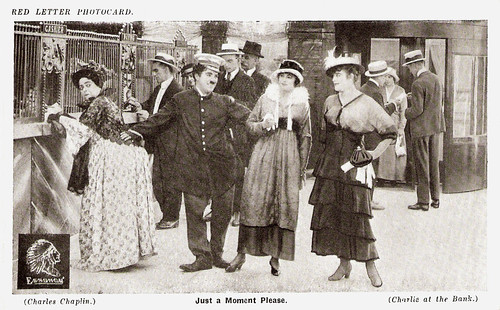
British postcard by Red Letter Photocard. Photo: Essanay. Publicity still for The Bank (1915).

Charlie Chaplin
British postcard by Red Letter Photocard. Photo: Essanay. Publicity still for The Tramp (1915).

Charlie Chaplin in The Tramp
British postcard by Red Letter Photocard. Photo: Essanay. Publicity still for The Tramp (1915). Chaplin as the Tramp, Ernest Van Pelt as the Farmer and Paddy McGuire as the Farmhand.

Charlie Chaplin
British postcard by Red Letter Photocard. Photo: Essanay. Publicity still for A Jitney Elopement (1915) with Charles Chaplin, Edna Purviance and Leo White.

Charlie Chaplin in By the Sea
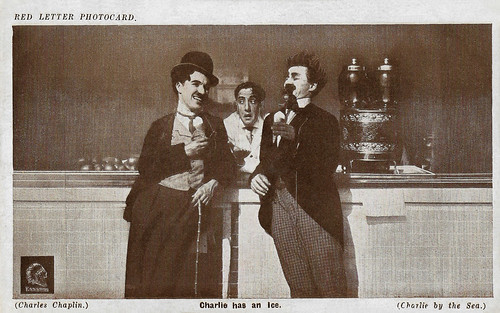
British postcard by Red Letter Photocard. Photo: Essanay. Chaplin and Billy Armstrong enjoy an ice cream after their fight in By the Sea (1915). The ice cream clerk is 'Snub' Pollard.

Charlie Chaplin in By the Sea
British postcard by Red Letter Photocard. Photo: Essanay. Chaplin and Margie Reiger flirt in By the Sea (1915), while Bud Jamison and Billy Armstrong are not too happy about this, and Edna Purviance fears trouble is coming up. The film was shot at Crystal Pear in Los Angeles.

Keystone, Essanay, Mutual, First National, United Artists


From the April 1914 one-reeler Twenty Minutes of Love (Charles Chaplin, Joseph Maddern, 1914) onwards, Charles Chaplin was writing and directing most of his films himself. By 1916 he was producing them, and from 1918 he was also composing the music.

He made 35 films in 1914, moved to Essanay in 1915 and did 14 more, then jumped over to Mutual for 12 two-reelers in 1916 and 1917.

In 1918 he joined First National (later absorbed by Warner Bros.) and in 1919 formed United Artists along with Douglas Fairbanks, Mary Pickford and D.W. Griffith.

His first full-length film was The Kid (1921) with Jackie Coogan; his first film for United Artists, which he produced and directed himself, was A Woman of Paris: A Drama of Fate (1923) starring Edna Purviance.

Chaplin continued to play The Tramp through dozens of short films and, later, feature-length productions. In only a handful of films he played different characters.

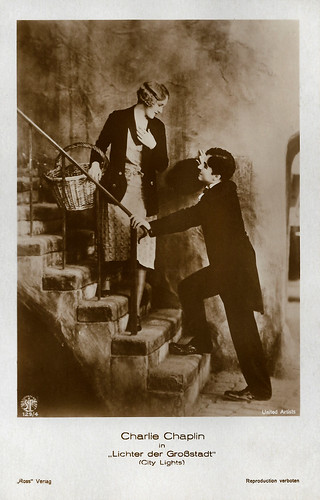
The Tramp was closely identified with the silent era, and was considered an international character; when the sound era began in the late 1920s, Chaplin refused to make a talkie featuring the character. City Lights (1931) featured no dialogue.

Chaplin officially retired the character in Modern Times (1936), which appropriately ended with the Tramp and his girl (played by Chaplin’s third wife, Paulette Godard) walking down an endless highway towards the horizon. The film was only a partial talkie and is often called the last silent film.

The Tramp remains silent until near the end of the film when, for the first time, his voice is finally heard, albeit only as part of a French/Italian-derived gibberish song. This allowed The Tramp to finally be given a voice but not tarnish his association with the silent era.

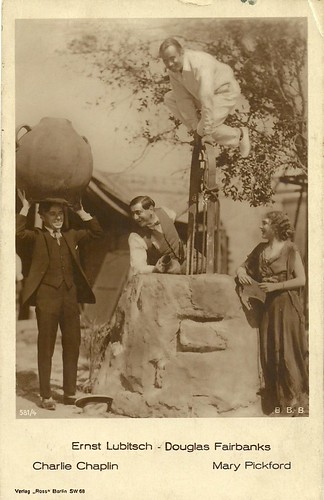
Ernst Lubitsch, Douglas Fairbanks, Charlie Chaplin, Mary Pickford
German postcard by Ross Verlag, Berlin, no. 581/4,1919-1924. Photo: B.B.B. Collection: Didier Hanson.

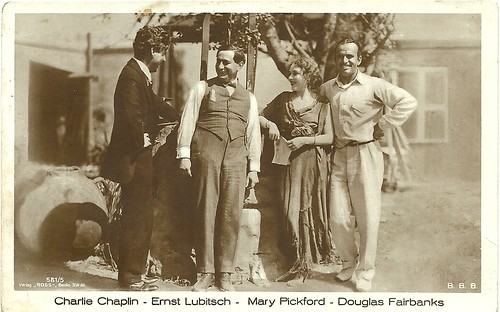
Charlie Chaplin, Ernst Lubitsch, Mary Pickford, Douglas Fairbanks
German postcard by Ross Verlag, no. 581/5, 1919-1924. Photo: B.B.B. Collection: Didier Hanson.

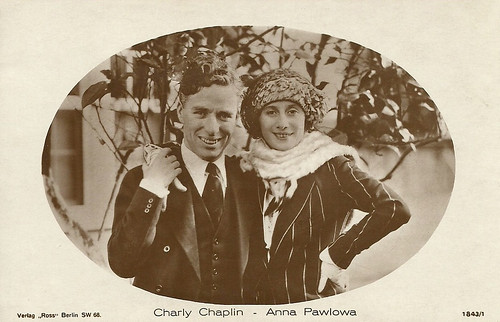
Charlie Chaplin, Anna Pavlova
German postcard by Ross Verlag, Berlin, no. 1843/1, 1927-1928. Collection: Didier Hanson.

Charlie Chaplin
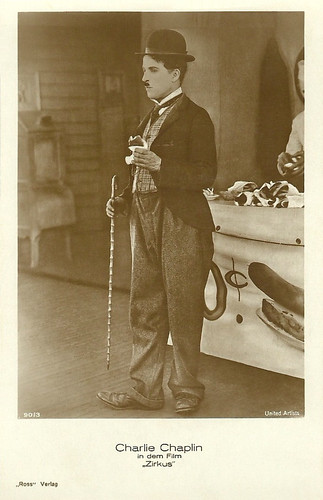
German postcard by Ross Verlag, Berlin, no. 90/3, 1925-1935. Photo: United Artists. Publicity still for The Circus (1928). Collection: Didier Hanson.

Charlie Chaplin
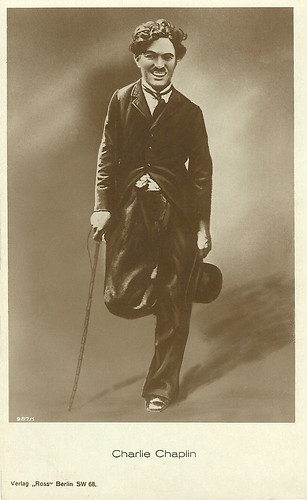
German postcard by Ross Verlag, Berlin, no. 987/1, 1925-1926. Collection: Didier Hanson.

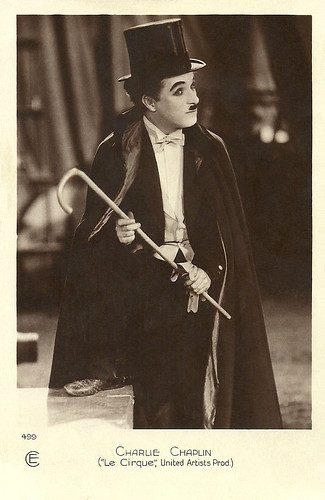
Charlie Chaplin, The Circus
French postcard by Editions Cinematographiques, no. 499. Photo: United Artists. Publicity still for The Circus (1928). Collection: Didier Hanson.

Adulation and Controversy


Charlie Chaplin’s high-profile public and private life encompassed both adulation and controversy.

Chaplin's political ideas ultimately forced him to resettle in Europe during the McCarthy era in the early 1950s. Chaplin's political sympathies always had laid with the left. His silent films made prior to the Great Depression typically did not contain overt political themes or messages, apart from The Tramp's plight in poverty and his run-ins with the law, but his 1930s films were more openly political. Modern Times (1936) depicts workers and poor people in dismal conditions.

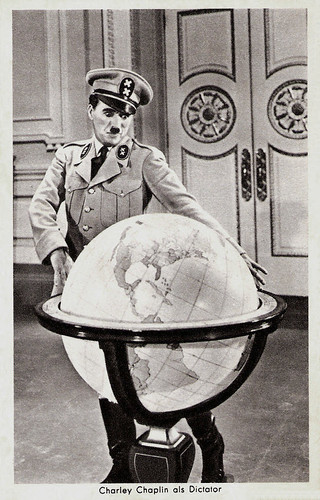
In The Great Dictator (1940) Chaplin plays a humorous caricature of Adolf Hitler. Some thought the film was poorly done and in bad taste. However, it grossed over $5 million and earned five Academy Award Nominations. The final dramatic speech in The Great Dictator, which was critical of following patriotic nationalism without question, and his vocal public support for the opening of a second European front in 1942 to assist the Soviet Union in World War II were controversial. Chaplin declined to support the war effort as he had done for the First World War which led to public anger, although his two sons saw service in the army in Europe.

For most of World War II he was fighting serious criminal and civil charges related to his involvement with 22-year old actress Joan Barry. In 1943 he was accused of fathering her child; the papers made much of the scandal, but it was proved in a court trial that he was not the father. The same year he entered his fourth marriage, to Oona O'Neill, daughter of playwright Eugene O'Neill.

After the war, his black comedy, Monsieur Verdoux (1947) showed a critical view of capitalism. Chaplin's final American film, Limelight, was less political and more autobiographical in nature. Limelight also featured Claire Bloom and Chaplin’s longtime friend, Buster Keaton.

In 1952, Chaplin left the US for what was intended as a brief trip home to the United Kingdom for the London premiere of Limelight. J. Edgar Hoover, head of the FBI, learned of the trip and negotiated with the Immigration and Naturalization Service to revoke Chaplin's re-entry permit, exiling Chaplin so he could not return for his alleged political leanings.

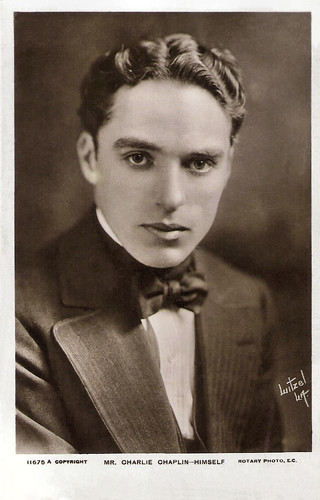
Charlie Chaplin
British postcard by Rotary, no 11675 A. Photo: Witzel.

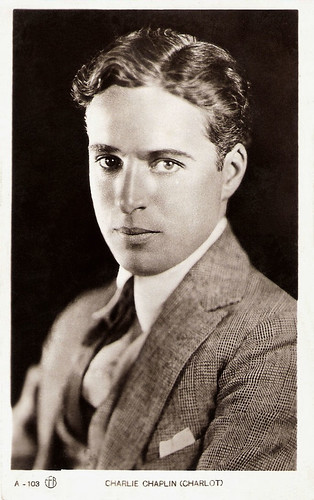
Charlie Chaplin
Spanish postcard by Editorial Photográfica, Barcelona, no. A - 103.

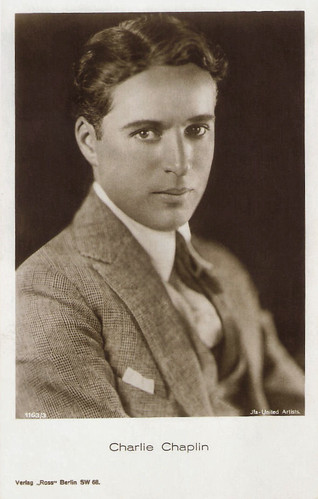
Charlie Chaplin
German postcard by Ross Verlag, Berlin, no. 1163/3, 1927-1928. Photo: Ifa / United Artists.

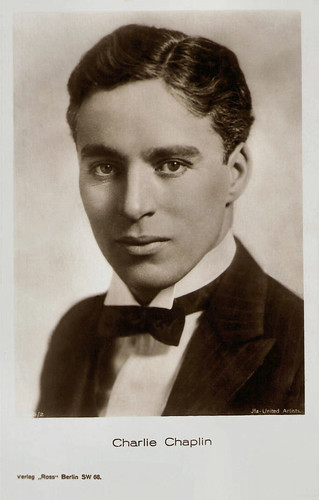
Charlie Chaplin
German postcard by Ross Verlag, Berlin, no. 1165/2, 1927-1928. Photo: Ifa / United Artists.

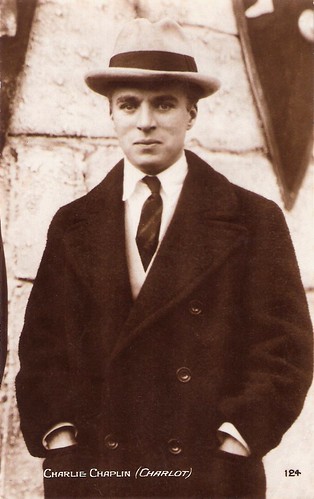
Charlie Chaplin
A fashionable Chaplin on a French postcard from the 1920s.

Charlie Chaplin
British postcard in the Film Weekly Series, London.

A King in Switzerland


Charles Chaplin made his home in Vevey, Switzerland. His final two films were made in London. A King in New York (1957),(in) which he starred, wrote, directed and produced, satirised the political persecution and paranoia that had forced him to leave the US five years earlier.

His last film, A Countess from Hong Kong (1967), which he directed, produced, and wrote, starred Sophia Loren and Marlon Brando. Chaplin made his final on-screen appearance in a brief cameo role as a seasick steward. He also composed the music for both films. The theme song from A Countess From Hong Kong, This is My Song, reached number one in the UK as sung by Petula Clark.

Chaplin also compiled a film The Chaplin Revue (1959) from three First National films A Dog's Life (1918), Shoulder Arms (1918) and The Pilgrim (1923) for which he composed the music and recorded an introductory narration.
As well as directing these final films, Chaplin also wrote My Autobiography, which was published in 1964. He briefly and triumphantly returned to the United States in April 1972, with his wife Oona, to receive an Honorary Oscar, and also to discuss how his films would be re-released and marketed.

Chaplin's last completed work was the score for his film A Woman of Paris (1923), which was completed in 1976, by which time Chaplin was extremely frail, even finding communication difficult. Charles Chaplin died in his sleep in Vevey on Christmas Day 1977. He and Oona had eight children, including film actress Geraldine Chaplin.

From his four marriages he had a total of 11 children. In 1921 Chaplin was decorated by the French government for his outstanding work as a filmmaker, and was elevated to the rank of Officer of the Legion of Honor in 1952.

In 1929, at the first Oscar awards, he won a special award "for versatility and genius in writing, acting, directing and producing" The Circus (1928). In 1975 he was named Knight Commander of the British Empire. His bowler and cane were sold for $150,000 in 1987. And in 1999, the American Film Institute ranked Chaplin the 10th Greatest Actor on The 50 Greatest Screen Legends list. Author George Bernard Shaw once called Chaplin "the only genius to come out of the movie industry".

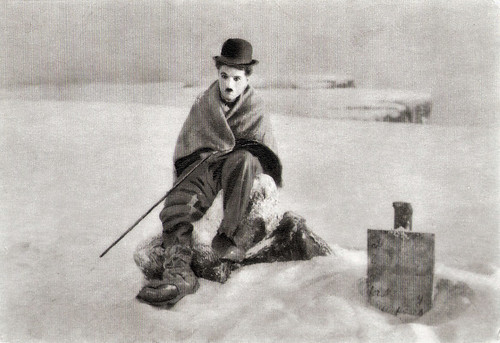
Charlie Chaplin, The Gold Rush
French postcard by Hélio-Cachan. Photo: publicity still for The Gold Rush (Charles Chaplin, 1925).

Charlie Chaplin, The Gold Rush
French postcard by Hélio-Cachan. Photo: publicity still for The Gold Rush (Charles Chaplin, 1925).

Charlie Chaplin
Dutch postcard. Sent by mail in the Netherlands in 1948. Photo: publicity still for The Great Dictator (Charles Chaplin, 1940).
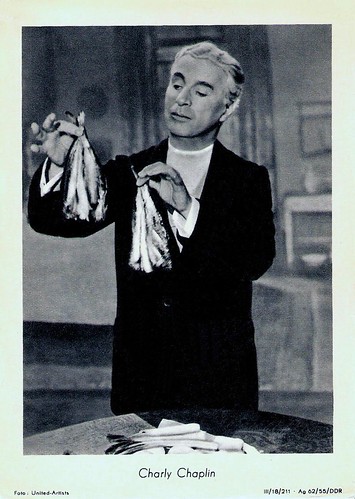
Charlie Chaplin
East-German collectors card, no. III/18/211, 1955. Photo: United Artists. Publicity still for Limelight (Charles Chaplin, 1952).

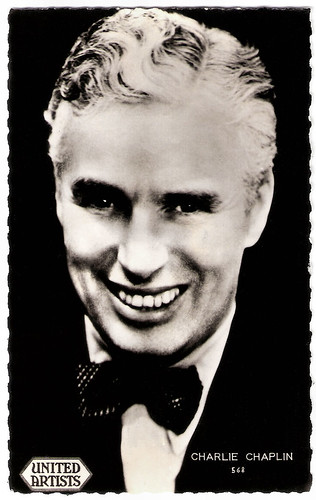
Charlie Chaplin
French postcard by Editions P.I., presented by Les Carbones Korès Carboplane, no. 568 Photo: United Artists.

Sources: Ed Stephan (IMDb), Amy Smith (IMDb), Linda Wada (Edna's Place), Wikipedia and IMDb.