One of the most fascinating and beautiful series of star postcards is Nos artistes dans leur loge. The series presents dozens of French stage and film stars of the 1920s in their dressing rooms. The postcards were all produced by the French journal Comoedia and one with Editions La Fayette.
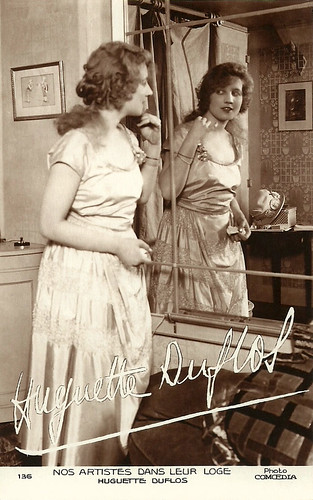
Huguette Duflos. French postcard in the series Nos artistes dans leur loge by Editions La Fayette, Paris. Photo: Comoedia.
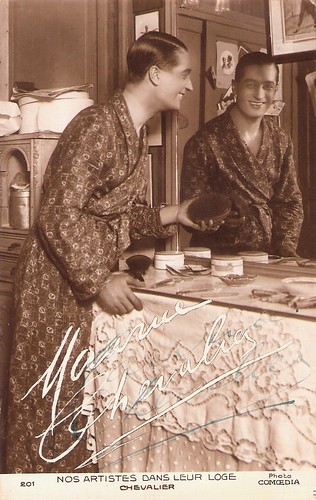
Maurice Chevalier. French postcard in the series Nos Artistes dans leur loge, no. 201. Photo: Comoedia.
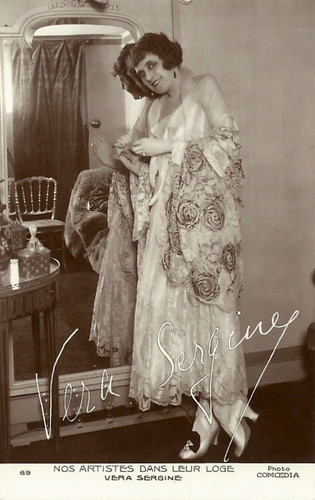
Vera Sergine. French postcard in the series Nos Artistes dans leur loge, no. 69. Photo: Comoedia.
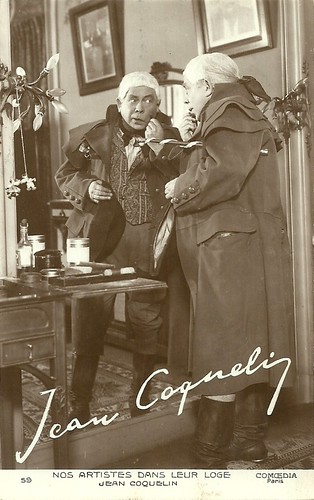
Jean Coquelin. French postcard in the series Nos Artistes dans leur loge, no. 59. Photo: Comoedia.
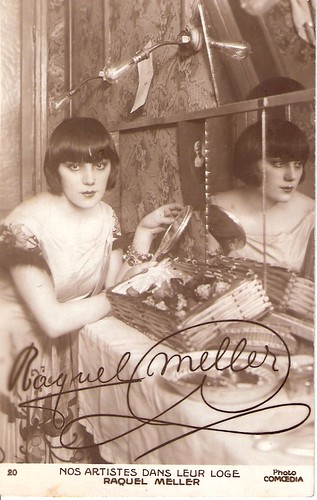
Raquel Meller. French postcard in the series Nos Artistes dans leur loge, no. 20. Photo: Comoedia.
Tour de France
Nowadays the Paris journal Comœdia is defunct. In 1907, it was founded by French bicycle racer and sports journalist Henri Desgrange (1865 – 1940), according to Wikipedia. Desgrange was also the first organizer of the Tour de France and the founder of the popular sports journal L’auto (nowadays L'Equipe). However, another source Le Guichet du Savoir cites an article by Nathalie Léger in Dictionnaire des lettres françaises: le XXe siècle, who claims that the founder was Georges de Pawlowski. The journal - or in French ‘revue’ – Comœdia appeared as a daily from 1 October 1907 to 6 August 1914. In the beginning it had four pages. Because of the First World War the publication then halted. After the war, on 1 October 1919 Comœdia returned, again as a daily. The 1920’s with its expanding rheatre and silent film industry were a golden period for Comœdia. Among its contributors were such famous authors as Francois Coppe, Tristan Bernard, Jean Richepin, Jules Renard, and Georges Courteline. They published columns, reviews and articles about actors, actresses and directors. There were two supplements. Since 1908 there was the bi-monthly art journal Comœdia illustrated. In 1926 the daily Comœdia-journal was started. In 1936 Desgrange fell ill and Comoedia disappeared. In 1941, after the death of Desgrange, the journal returned, but now as a weekly till August 1944. It reappeared between 1952 and 1954 under the name Paris-Comoedia, weekly show with journalist and scenario writer Jacques Chabannes as its director.
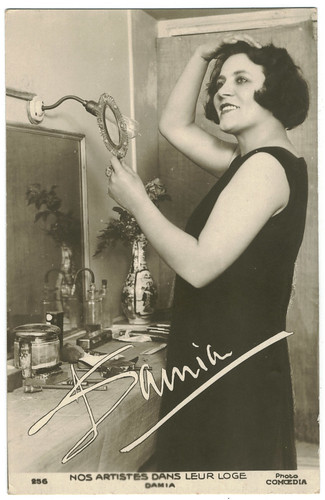
Damia. French postcard in the series Nos Artistes dans leur loge, no. 256. Photo: Comoedia. Collection: Performing Arts / Artes Escénicas.
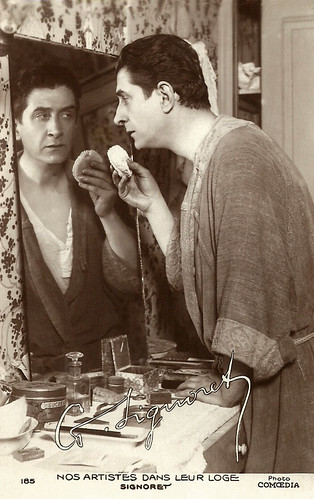
Gabriel Signoret. French postcard in the series Nos Artistes dans leur loge, no. 185. Photo: Comoedia.

Maurice de Féraudy. French postcard in the series Nos Artistes dans leur loge, no. 131. Photo: Comoedia.
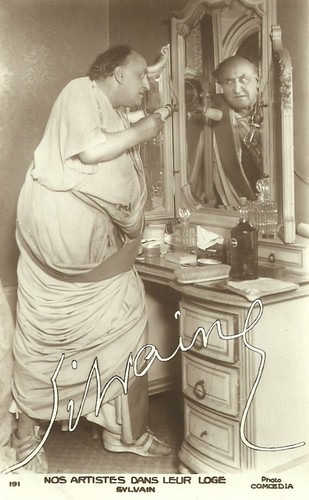
Eugène Silvain. French postcard in the series Nos artistes dans leur loge, no. 191. Photo: Comoedia.
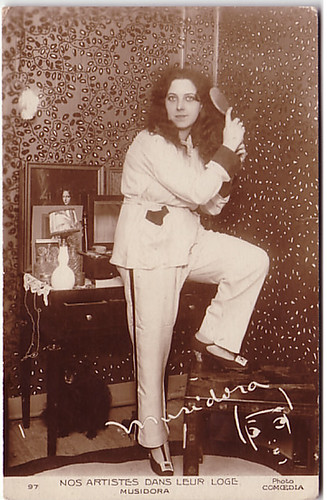
Musidora. French postcard in the series Nos Artistes dans leur loge, no. 97. Photo: Comoedia. Collection: Beth Gallagher.
The Mirror
The series Nos artistes dans leur loge was probably published between 1922 and 1926 as a supplement for Comœdia Illustrated. The series contained portraits of famous stage actors. The stars were often only referred to by their surname like Signoret, Dranem, De Feraudy et al. Many film stars were included. The ingredients of the picture were always the same. A full shot of an artist who is preparing for the spotlights in his or her dressing room. A recurring element on the photos is the mirror. Sometimes the star is glancing into the mirror, looking at himself or at the photographer. On other postcards he is watching the photographer – and the public – directly. The dressing room is never in full view, but on the pictures you can discover details: a chair, a lamp, an artwork. And every card has a signature of the artists written over it. The result is wonderful. And my favourite dressing room is Musidora's.
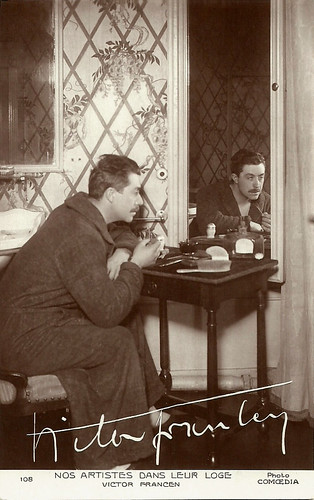
Victor Francen. French postcard in the series Nos artistes dans leur loge, no. 108. Photo: Comoedia.

Max de Rieux. French postcard in the series Nos artistes dans leur loge, no. 285. Photo: Comoedia.

Harry Baur. French postcard in the series Nos artistes dans leur loge, no. 202. Photo: Comoedia.
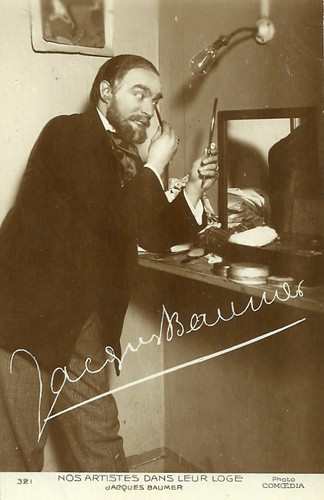
Jacques Baumer. French postcard in the series Nos artistes dans leur loge, no. 321. Photo: Comoedia.
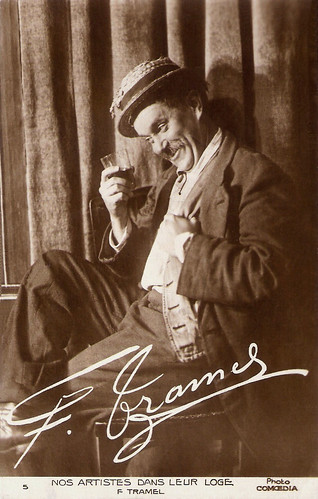
Tramel. French postcard in the series Nos artistes dans leur loge, no. 5. Sent by mail in 1923. Photo: Comoedia.
Sources: Wikipedia (French) and Le Guichet du Savoir (French).
Huguette Duflos. French postcard in the series Nos artistes dans leur loge by Editions La Fayette, Paris. Photo: Comoedia.
Maurice Chevalier. French postcard in the series Nos Artistes dans leur loge, no. 201. Photo: Comoedia.
Vera Sergine. French postcard in the series Nos Artistes dans leur loge, no. 69. Photo: Comoedia.
Jean Coquelin. French postcard in the series Nos Artistes dans leur loge, no. 59. Photo: Comoedia.
Raquel Meller. French postcard in the series Nos Artistes dans leur loge, no. 20. Photo: Comoedia.
Tour de France
Nowadays the Paris journal Comœdia is defunct. In 1907, it was founded by French bicycle racer and sports journalist Henri Desgrange (1865 – 1940), according to Wikipedia. Desgrange was also the first organizer of the Tour de France and the founder of the popular sports journal L’auto (nowadays L'Equipe). However, another source Le Guichet du Savoir cites an article by Nathalie Léger in Dictionnaire des lettres françaises: le XXe siècle, who claims that the founder was Georges de Pawlowski. The journal - or in French ‘revue’ – Comœdia appeared as a daily from 1 October 1907 to 6 August 1914. In the beginning it had four pages. Because of the First World War the publication then halted. After the war, on 1 October 1919 Comœdia returned, again as a daily. The 1920’s with its expanding rheatre and silent film industry were a golden period for Comœdia. Among its contributors were such famous authors as Francois Coppe, Tristan Bernard, Jean Richepin, Jules Renard, and Georges Courteline. They published columns, reviews and articles about actors, actresses and directors. There were two supplements. Since 1908 there was the bi-monthly art journal Comœdia illustrated. In 1926 the daily Comœdia-journal was started. In 1936 Desgrange fell ill and Comoedia disappeared. In 1941, after the death of Desgrange, the journal returned, but now as a weekly till August 1944. It reappeared between 1952 and 1954 under the name Paris-Comoedia, weekly show with journalist and scenario writer Jacques Chabannes as its director.
Damia. French postcard in the series Nos Artistes dans leur loge, no. 256. Photo: Comoedia. Collection: Performing Arts / Artes Escénicas.
Gabriel Signoret. French postcard in the series Nos Artistes dans leur loge, no. 185. Photo: Comoedia.
Maurice de Féraudy. French postcard in the series Nos Artistes dans leur loge, no. 131. Photo: Comoedia.
Eugène Silvain. French postcard in the series Nos artistes dans leur loge, no. 191. Photo: Comoedia.
Musidora. French postcard in the series Nos Artistes dans leur loge, no. 97. Photo: Comoedia. Collection: Beth Gallagher.
The Mirror
The series Nos artistes dans leur loge was probably published between 1922 and 1926 as a supplement for Comœdia Illustrated. The series contained portraits of famous stage actors. The stars were often only referred to by their surname like Signoret, Dranem, De Feraudy et al. Many film stars were included. The ingredients of the picture were always the same. A full shot of an artist who is preparing for the spotlights in his or her dressing room. A recurring element on the photos is the mirror. Sometimes the star is glancing into the mirror, looking at himself or at the photographer. On other postcards he is watching the photographer – and the public – directly. The dressing room is never in full view, but on the pictures you can discover details: a chair, a lamp, an artwork. And every card has a signature of the artists written over it. The result is wonderful. And my favourite dressing room is Musidora's.
Victor Francen. French postcard in the series Nos artistes dans leur loge, no. 108. Photo: Comoedia.
Max de Rieux. French postcard in the series Nos artistes dans leur loge, no. 285. Photo: Comoedia.
Harry Baur. French postcard in the series Nos artistes dans leur loge, no. 202. Photo: Comoedia.
Jacques Baumer. French postcard in the series Nos artistes dans leur loge, no. 321. Photo: Comoedia.
Tramel. French postcard in the series Nos artistes dans leur loge, no. 5. Sent by mail in 1923. Photo: Comoedia.
Sources: Wikipedia (French) and Le Guichet du Savoir (French).


