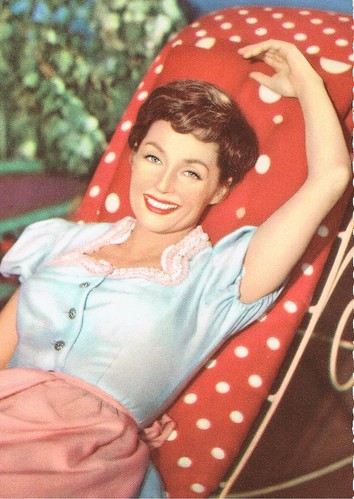
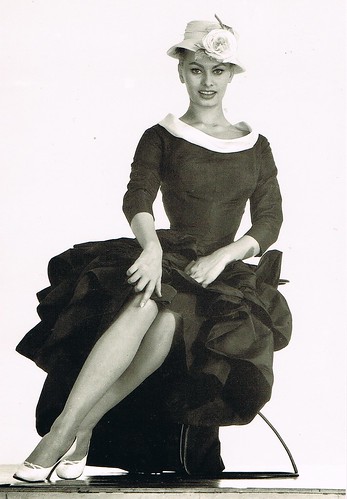
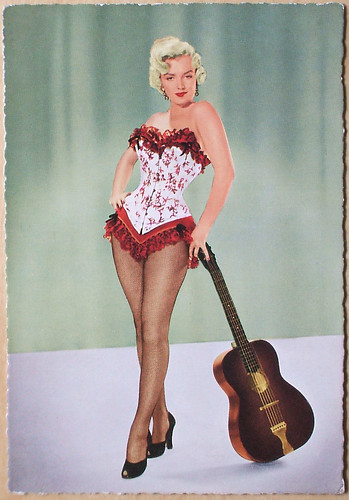
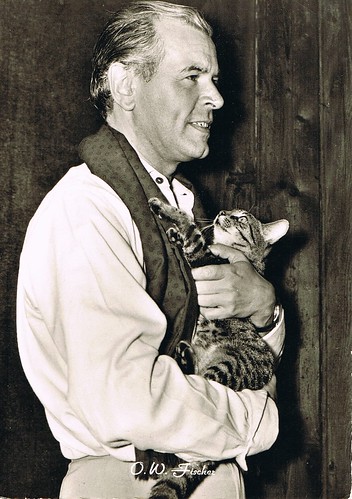
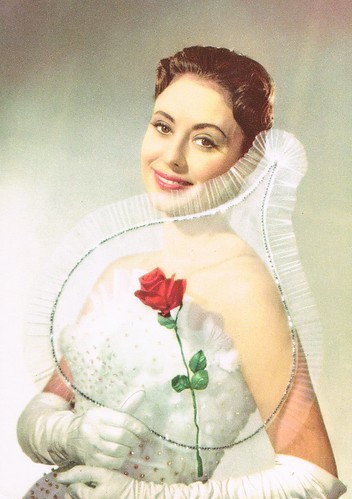
On 9 September 2024, Italian singer, dancer and actress Caterina Valente (1931) passed away at 93. In the late 1950s and early 1960s, she was the queen of the German Schlager music. Her popularity was global, and she played and sang in fifteen films. The Guinness Book of World Records recognised her as Europe's most successful female recording artist, with over 1350 albums to her credit.
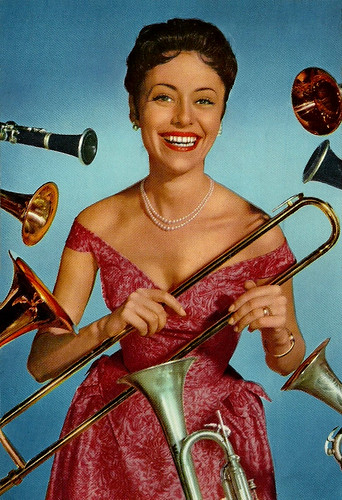
Vintage postcard.
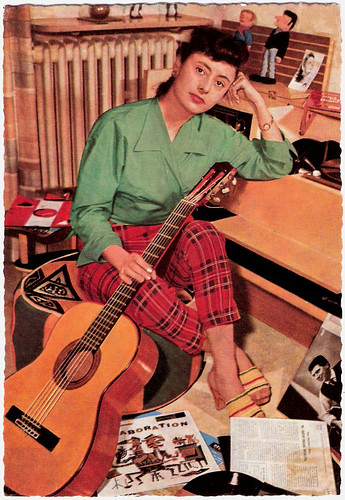
German postcard by WS-Druck, Wanne-Eickel, no. F 23. Photo: Ringpress.
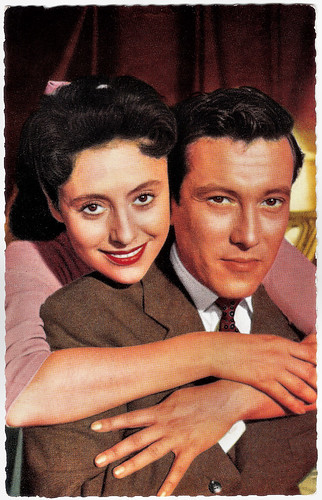
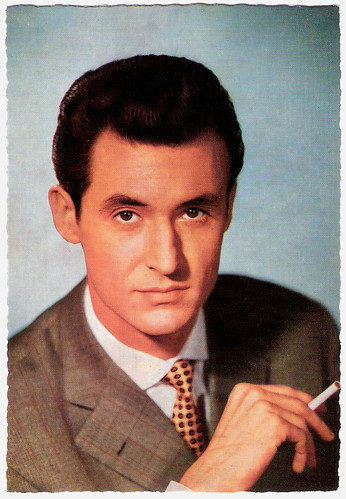
German postcard by Kolibri-Verlag, Minden/Westf., no. F 32. Photo: Ringpress / Vogelmann. Publicity still for Bonjour Kathrin (Karl Anton, 1956) with Dietmar Schönherr.

West German postcard by ISV, no. H 27. Photo: Constantin. Caterina Valente and Bill Haley and the Comets in Hier bin ich - hier bleib' ich/Here I Am, Here I Stay (Werner Jacobs, 1959).
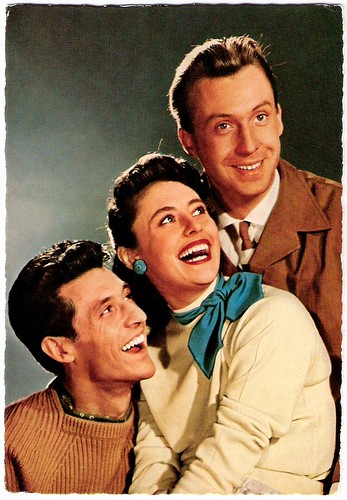
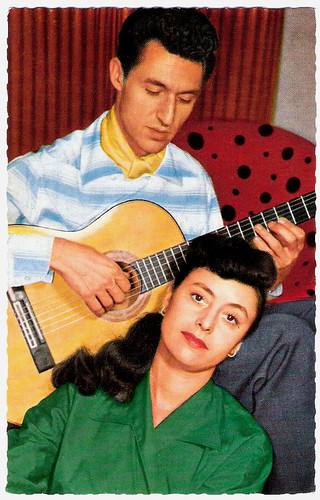
German postcard by WS-Druck, Wanne-Eickel, no. F 73. Photo: Lantin. With Peter Alexander and Silvio Francesco.
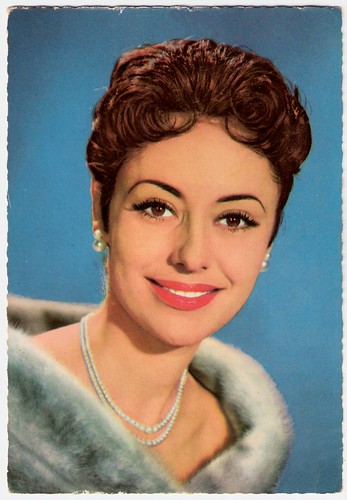
German postcard by ISV, no. L 2. Photo: Klaus Collignon.
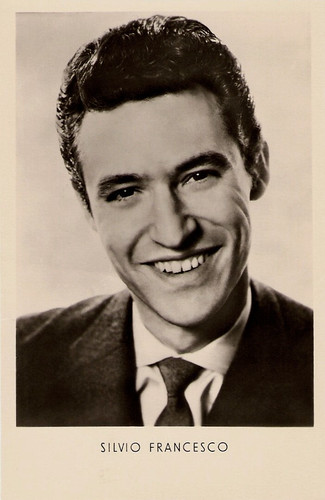
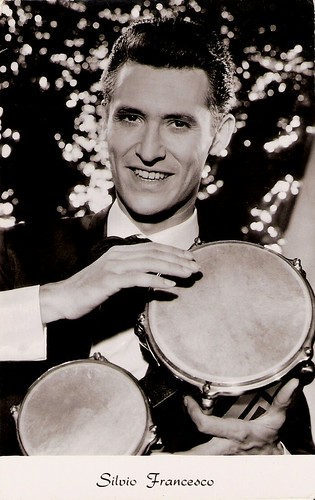
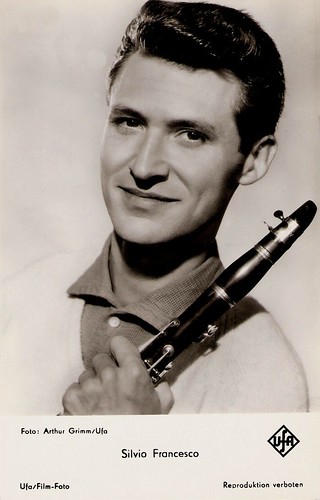
Caterina Valente was born in Paris, France, in 1931 in an Italian artist family. Her father Giuseppe Valente was a well-known accordion player, and her mother Maria Valente a musical clown. She had three siblings. With her older brother, the late singer and actor Silvio Francesco, she made later many records together, and he would be a frequent guest and musical director on her stage as well as TV shows.
Caterina started her career as a singer and dancer at the circus Grock. In 1952 she married juggler Erik van Aro who recognised her talent and accompanied her in her initial years of worldwide success. Their son is the singer Eric van Aro, Jr.
A year later, she made her first recordings for Polydor with the orchestra of Kurt Edelhagen. Soon afterwards she achieved great success with songs such as 'Dreh dich nicht um' (Don't Turn Around). Her hit 'Ganz Paris träumt von der Liebe' (1954), based on the Cole Porter song 'I Love Paris', sold more than 500,000 copies.
After her first musical successes, she sang and danced in the crime film Mannequins für Rio/Party Girls for Sale (Kurt Neumann, 1954) starring Johanna Matz and Raymond Burr.
The next year she performed in such German musicals as Ball im Savoy/Ball at Savoy (Paul Martin, 1955), and with Peter Alexander in Liebe, Tanz und 1000 Schlager/Love, Dance, and 1000 Songs (Paul Martin, 1955).

Dutch postcard by Gebr. Spanjersberg N.V., Rotterdam, no. 3928. Photo: Ufa.
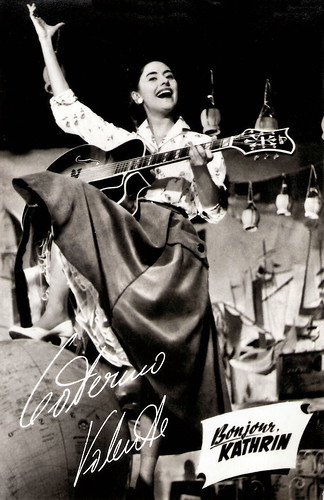
East-German postcard by VEB Progress Film-Vertrieb, no. 175, 1956. Retail price: 0,20 DM. Photo: publicity still for Bonjour, Kathrin (Karl Anton, 1956).

West German postcard by Rüdel-Verlag, Hamburg-Bergedorf. Photo: CCC / Gloria / Grimm. Caterina Valente in Du bist Musik/Music in Your Heart (Paul Martin, 1956).
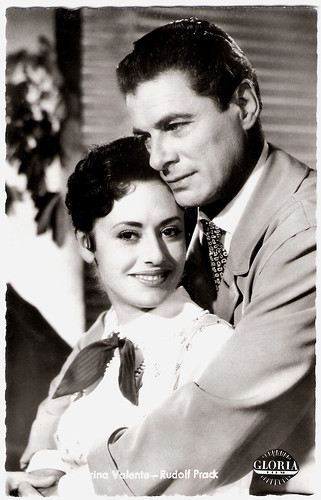
German postcard by Kolibri-Verlag G.m.b.H., Minden/Westf., no. 2952. Photo: CCC / Gloria. Publicity still for Das einfache Mädchen/The Simple Girl (Werner Jacobs, 1957) with Rudolf Prack.

Dutch postcard by N.V. v.h. Weenenk & Snel, Baarn, no. 880. Photo: Hafbo. Publicity still for Hier bin ich, Hier bleib ich/Here I Am, Here I Stay (Werner Jacobs, 1959).

Dutch postcard by Gebr. Spanjersberg N.V., Rotterdam, no. 1159. Photo: Arthur Grimm / Universum-Film Aktiengesellschaft (Ufa), Berlin-Tempelhof.
In 1954 and 1955 Caterina Valente had international success with 'Malagueña'. The song which introduced the Bossanova in Europe was written for her by Cuban composer Ernesto Lecuona. It charted first in Europe and eventually in England and the US.
Malaguena was featured on American TV in the Colgate Comedy Hour with Gordon MacRae. 'Malaguena' was followed by 'Analucia', also written by Lecuona, which when re-released in an English version as 'The Breeze and I' became a top ten hit in both Great Britain and the US.
By this time Valente had become a truly multi-lingual artist, performing her cabaret act and issuing recordings in six languages: French, German, Italian, English, Spanish and Swedish.
In France, she made the musical Casino de Paris (André Hunebelle, 1957) with Gilbert Bécaud and Vittorio de Sica.
In Germany, she continued to make popular Schlagerfilms like Hier bin ich - hier bleib' ich/Here I Am, Here I Stay (Werner Jacobs, 1959) with Hans Holt. In the US she was nominated for a Grammy Award in 1959.

West German postcard by ISV, no. N 10. Photo: CCC / Grimm.

West German postcard by WS-Druck, Wanne-Eickel, no. F 151.
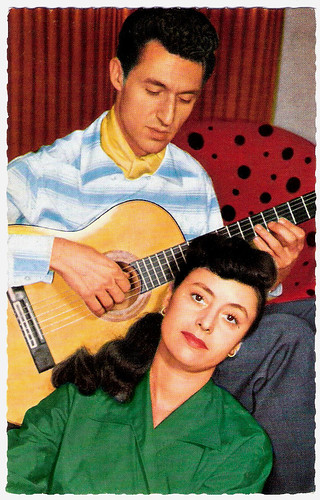
German postcard by Kolibri-Verlag G.m.b.H, Minden (Westf.), no F 31. Photo: Ringpress / Vogelmann. With Silvio Francesco.
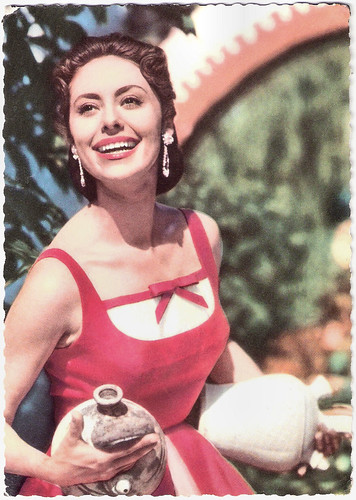
German postcard by Ufa, Berlin-Tempelhof, no. CK-55. Retail price: 30 Pfg. Photo: Arthur Grimm / Ufa.

German postcard by Krüger, no. 902/22. Photo: Teldec / Farabola.

Dutch postcard, mailed in 1964.

German postcard by Kruger, no. 902/19. Photo: Teldec / Farabola.
During the early 1960s, Caterina Valente switched alliances with Decca Records and scored several hits with them, including 'Itsy Bitsy Teenie Weenie Honolulu Strand Bikini', and 'Quando, Quando, Quando'. Valente worked with the legendary Claus Ogerman and recorded material in both Italian and English. Her version of 'La Golondrina' appeared on one of the first charity albums, 'All-Star Festival' (1963). The proceeds from that album went to aid refugees.
Between 1966 and 1972 she was a frequent guest on the Dean Martin Show and other American TV shows. From the mid-1950s to the 1980s German, Italian, Swiss and Austrian television produced more than a dozen series of Valente-Shows.
Over the years, she has recorded or performed with many international stars, including Louis Armstrong, Benny Goodman, Ella Fitzgerald, Woody Herman, the Tommy Dorsey Orchestra and Chet Baker.
In 1988 she issued 'Caterina 86', a recording made with the Count Basie Orchestra. In 1986 she enjoyed her fiftieth year on stage jubilee with the German TV show Bravo, Catrin! which attracted 17 million spectators. The Italian jazz CD 'A briglia sciolta' (1989) became Valente’s best-selling CD worldwide.
In 2001, she released her latest album of newly recorded material 'Girltalk', with harpist Catherine Michel. Among her many awards are the German Bundesverdienstkreuz (Cross of Merit, 1968), Großes Bundesverdienstkreuz (Grand Cross of Merit, 1985), and the Italian Premio Gabardi (Lifetime Achievement Award, 2004). In 1972, Valente married her musical director, British composer and jazz pianist Roy Budd. They had a son, Alexander Budd, but they divorced in 1979. Since then, Caterina Valente lived in her villa at the lake of Lugano in Switzerland. There she died in 2024 at the age of 93.
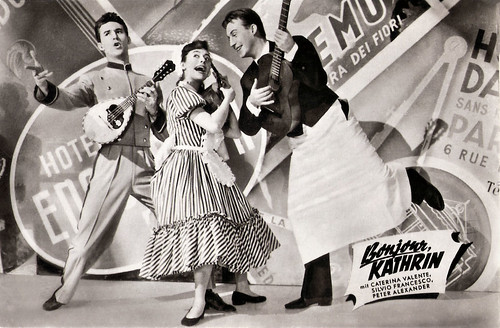
East-German postcard by VEB Progress Film-Vertrieb, no. 164, 1956. Retail price: 0,20 DM. Photo: publicity still for Bonjour, Kathrin (Karl Anton, 1956) with Silvio Francesco and Peter Alexander.

Dutch postcard by Takken, Utrecht, no. AX 4197.
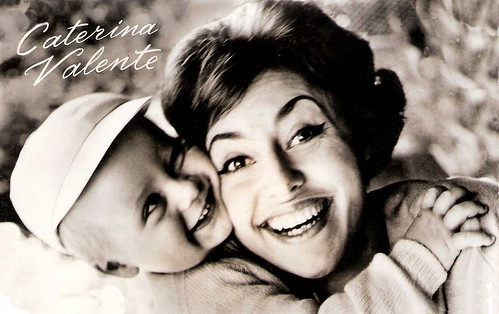
Dutch postcard by Takken, Utrecht, no. AX 4198. With her son Eric.

Dutch postcard by Takken, Utrecht, no. AX 5486. Caterina Valente with Willy Alberti and Willeke Alberti.

West German postcard by UFA, Berlin-Tempelhof, no. C-318. Photo: Arthur Grimm / UFA.
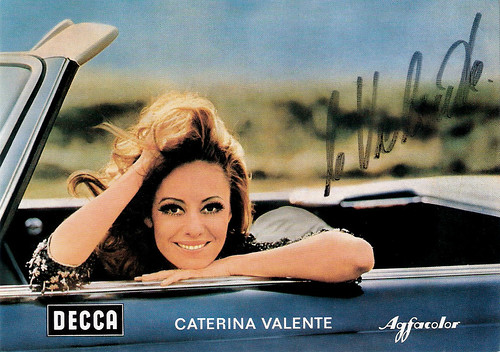
German promotion card by Decca, no. 225.
Caterina Valente sings 'Es gibt noch Märchen' (There are still fairy tales) in the schlagerfilm Das einfache Mädchen/The Ordinary Girl (Werner Jacobs, 1957). Source: Wyrubowa (YouTube).
Sources: Stacia Proefrock (AllMusic), Carola Bernasconi (IMDb), CaterinaValente.com, Wikipedia, and IMDb.
Vintage postcard.
German postcard by WS-Druck, Wanne-Eickel, no. F 23. Photo: Ringpress.
German postcard by Kolibri-Verlag, Minden/Westf., no. F 32. Photo: Ringpress / Vogelmann. Publicity still for Bonjour Kathrin (Karl Anton, 1956) with Dietmar Schönherr.
West German postcard by ISV, no. H 27. Photo: Constantin. Caterina Valente and Bill Haley and the Comets in Hier bin ich - hier bleib' ich/Here I Am, Here I Stay (Werner Jacobs, 1959).
German postcard by WS-Druck, Wanne-Eickel, no. F 73. Photo: Lantin. With Peter Alexander and Silvio Francesco.
German postcard by ISV, no. L 2. Photo: Klaus Collignon.
Initial years
Caterina Valente was born in Paris, France, in 1931 in an Italian artist family. Her father Giuseppe Valente was a well-known accordion player, and her mother Maria Valente a musical clown. She had three siblings. With her older brother, the late singer and actor Silvio Francesco, she made later many records together, and he would be a frequent guest and musical director on her stage as well as TV shows.
Caterina started her career as a singer and dancer at the circus Grock. In 1952 she married juggler Erik van Aro who recognised her talent and accompanied her in her initial years of worldwide success. Their son is the singer Eric van Aro, Jr.
A year later, she made her first recordings for Polydor with the orchestra of Kurt Edelhagen. Soon afterwards she achieved great success with songs such as 'Dreh dich nicht um' (Don't Turn Around). Her hit 'Ganz Paris träumt von der Liebe' (1954), based on the Cole Porter song 'I Love Paris', sold more than 500,000 copies.
After her first musical successes, she sang and danced in the crime film Mannequins für Rio/Party Girls for Sale (Kurt Neumann, 1954) starring Johanna Matz and Raymond Burr.
The next year she performed in such German musicals as Ball im Savoy/Ball at Savoy (Paul Martin, 1955), and with Peter Alexander in Liebe, Tanz und 1000 Schlager/Love, Dance, and 1000 Songs (Paul Martin, 1955).
Dutch postcard by Gebr. Spanjersberg N.V., Rotterdam, no. 3928. Photo: Ufa.
East-German postcard by VEB Progress Film-Vertrieb, no. 175, 1956. Retail price: 0,20 DM. Photo: publicity still for Bonjour, Kathrin (Karl Anton, 1956).
West German postcard by Rüdel-Verlag, Hamburg-Bergedorf. Photo: CCC / Gloria / Grimm. Caterina Valente in Du bist Musik/Music in Your Heart (Paul Martin, 1956).
German postcard by Kolibri-Verlag G.m.b.H., Minden/Westf., no. 2952. Photo: CCC / Gloria. Publicity still for Das einfache Mädchen/The Simple Girl (Werner Jacobs, 1957) with Rudolf Prack.
Dutch postcard by N.V. v.h. Weenenk & Snel, Baarn, no. 880. Photo: Hafbo. Publicity still for Hier bin ich, Hier bleib ich/Here I Am, Here I Stay (Werner Jacobs, 1959).
Dutch postcard by Gebr. Spanjersberg N.V., Rotterdam, no. 1159. Photo: Arthur Grimm / Universum-Film Aktiengesellschaft (Ufa), Berlin-Tempelhof.
Bossanova girl
In 1954 and 1955 Caterina Valente had international success with 'Malagueña'. The song which introduced the Bossanova in Europe was written for her by Cuban composer Ernesto Lecuona. It charted first in Europe and eventually in England and the US.
Malaguena was featured on American TV in the Colgate Comedy Hour with Gordon MacRae. 'Malaguena' was followed by 'Analucia', also written by Lecuona, which when re-released in an English version as 'The Breeze and I' became a top ten hit in both Great Britain and the US.
By this time Valente had become a truly multi-lingual artist, performing her cabaret act and issuing recordings in six languages: French, German, Italian, English, Spanish and Swedish.
In France, she made the musical Casino de Paris (André Hunebelle, 1957) with Gilbert Bécaud and Vittorio de Sica.
In Germany, she continued to make popular Schlagerfilms like Hier bin ich - hier bleib' ich/Here I Am, Here I Stay (Werner Jacobs, 1959) with Hans Holt. In the US she was nominated for a Grammy Award in 1959.
West German postcard by ISV, no. N 10. Photo: CCC / Grimm.
West German postcard by WS-Druck, Wanne-Eickel, no. F 151.
German postcard by Kolibri-Verlag G.m.b.H, Minden (Westf.), no F 31. Photo: Ringpress / Vogelmann. With Silvio Francesco.
German postcard by Ufa, Berlin-Tempelhof, no. CK-55. Retail price: 30 Pfg. Photo: Arthur Grimm / Ufa.
German postcard by Krüger, no. 902/22. Photo: Teldec / Farabola.
Dutch postcard, mailed in 1964.
German postcard by Kruger, no. 902/19. Photo: Teldec / Farabola.
Girltalk
During the early 1960s, Caterina Valente switched alliances with Decca Records and scored several hits with them, including 'Itsy Bitsy Teenie Weenie Honolulu Strand Bikini', and 'Quando, Quando, Quando'. Valente worked with the legendary Claus Ogerman and recorded material in both Italian and English. Her version of 'La Golondrina' appeared on one of the first charity albums, 'All-Star Festival' (1963). The proceeds from that album went to aid refugees.
Between 1966 and 1972 she was a frequent guest on the Dean Martin Show and other American TV shows. From the mid-1950s to the 1980s German, Italian, Swiss and Austrian television produced more than a dozen series of Valente-Shows.
Over the years, she has recorded or performed with many international stars, including Louis Armstrong, Benny Goodman, Ella Fitzgerald, Woody Herman, the Tommy Dorsey Orchestra and Chet Baker.
In 1988 she issued 'Caterina 86', a recording made with the Count Basie Orchestra. In 1986 she enjoyed her fiftieth year on stage jubilee with the German TV show Bravo, Catrin! which attracted 17 million spectators. The Italian jazz CD 'A briglia sciolta' (1989) became Valente’s best-selling CD worldwide.
In 2001, she released her latest album of newly recorded material 'Girltalk', with harpist Catherine Michel. Among her many awards are the German Bundesverdienstkreuz (Cross of Merit, 1968), Großes Bundesverdienstkreuz (Grand Cross of Merit, 1985), and the Italian Premio Gabardi (Lifetime Achievement Award, 2004). In 1972, Valente married her musical director, British composer and jazz pianist Roy Budd. They had a son, Alexander Budd, but they divorced in 1979. Since then, Caterina Valente lived in her villa at the lake of Lugano in Switzerland. There she died in 2024 at the age of 93.
East-German postcard by VEB Progress Film-Vertrieb, no. 164, 1956. Retail price: 0,20 DM. Photo: publicity still for Bonjour, Kathrin (Karl Anton, 1956) with Silvio Francesco and Peter Alexander.
Dutch postcard by Takken, Utrecht, no. AX 4197.
Dutch postcard by Takken, Utrecht, no. AX 4198. With her son Eric.
Dutch postcard by Takken, Utrecht, no. AX 5486. Caterina Valente with Willy Alberti and Willeke Alberti.
West German postcard by UFA, Berlin-Tempelhof, no. C-318. Photo: Arthur Grimm / UFA.
German promotion card by Decca, no. 225.
Caterina Valente sings 'Es gibt noch Märchen' (There are still fairy tales) in the schlagerfilm Das einfache Mädchen/The Ordinary Girl (Werner Jacobs, 1957). Source: Wyrubowa (YouTube).
Sources: Stacia Proefrock (AllMusic), Carola Bernasconi (IMDb), CaterinaValente.com, Wikipedia, and IMDb.