Austrian postcard by Iris Verlag, no. 5157. Photo: Hegewald Film / Lux Film-Verleih.
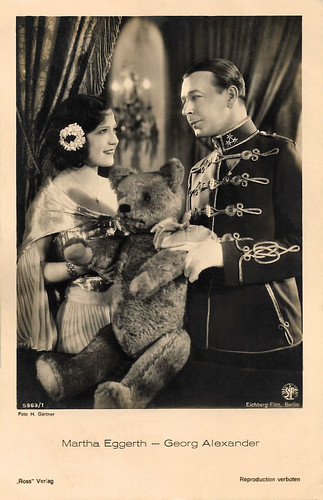
German postcard by Ross Verlag, no. 5969/1, 1930-1931. Photo: H. Gärner / Eichberg-Film / SF. Marta Eggerth and Georg Alexander in Die Bräutigamswitwe/The widow of the groom (Richard Eichberg, 1931).

German postcard by Ross Verlag, no. 6482/1, 1931-1932. Photo: Splendid-Film. Georg Alexander in Durchlaucht amüsiert sich (Conrad Wiene, 1932).
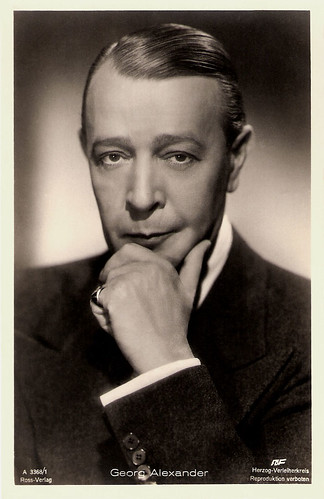
German postcard by Ross-Verlag, no. A 3368/1, 1941-1944. Photo: FDF / Herzog Verleiher-kreiz.
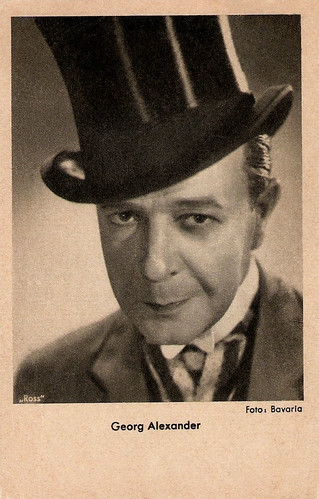
German postcard by Das Programm von Heute, Zeitschrift für Film und Theater G.m.b.H., Berlin. Licensed by Ross Verlag, Berlin. Photo: Bavaria.
Aud Egede Nissen
Georg (alternate name George) Alexander was born Werner Louis Georg Lueddeckens in Hannover, Germany in 1888. He made his theatrical debut in Halberstadt and then acted at various theatres in Hamburg, Hannover and from 1914 Berlin.
On stage and later in the film, his speciality was playing genteel bon vivants, fops and philistines. He made his film debut in 1915 in Der Schwiegervater seines Leutnants/The Father-in-law of His Lieutenant, followed by Sonne und Schatten/Sun and Shadow (Paul von Woringen, 1915).
In 1917 he married the Norwegian actress Aud Egede Nissen. Their son Georg Richter later also became a well-known actor in Norway.
With Aud Egede Nissen, he founded their own production company, the Egede-Nissen-Film Comp. mbH in Berlin in 1917. Their first film project was Die Geburt der Venus/The Birth of Venus (Georg Alexander, 1917).
Till 1919, Georg Alexander directed and produced circa 30 silent films.
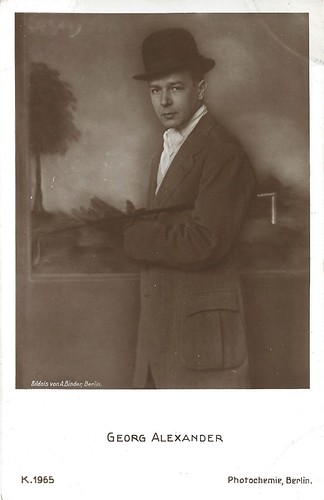
German postcard by Photochemie, no. K. 1965. Photo: Alex Binder, Berlin.

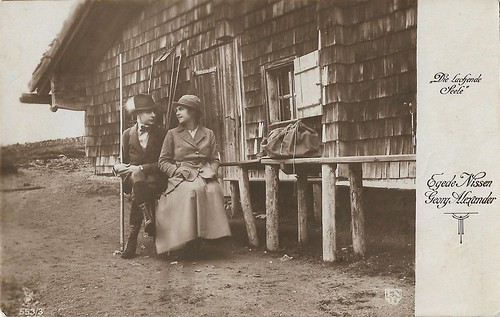
German postcard by Rotophot in the Film-Sterne series, no. 553/1. Photo: ENF (Egede-Nissen-Film). Aud Egede Nissen and Georg Alexander in the German silent film Die lachende Seele/The Laughing Soul (Georg Alexander, 1919).
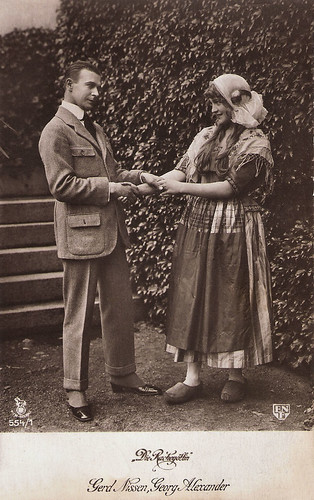
German postcard by Rotophot in the Film Sterne series, no. 554/1. Photo: ENF (Egede-Nissen-Film). Gerd Egede-Nissen and Georg Alexander in the German silent film Die Rachegöttin (Georg Alexander, 1918).
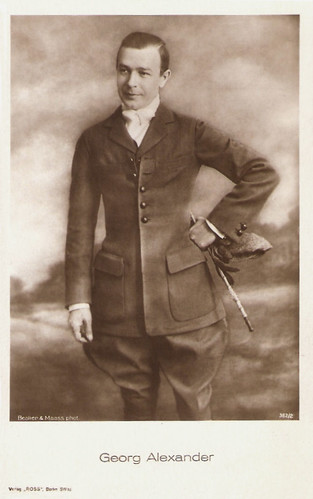
German postcard by Ross Verlag, Berlin, no. 362/2, 1919-1924. Photo: Becker & Maass.
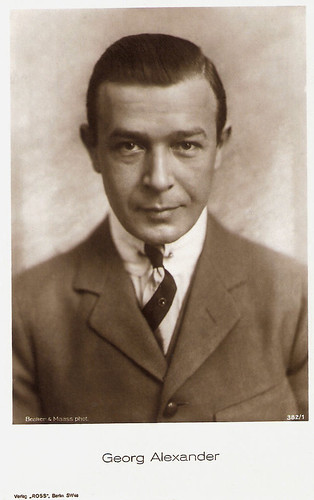
German postcard by Ross Verlag, Berlin, no. 382/1, 1919-1924. Photo: Becker & Maass.
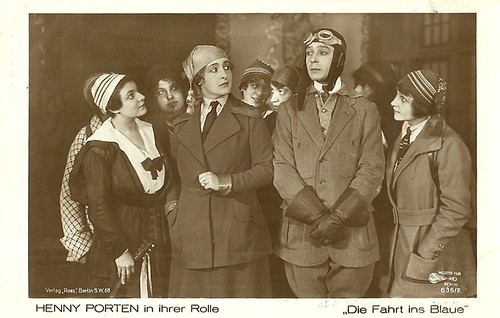
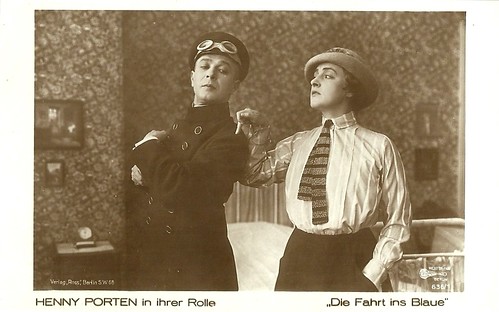
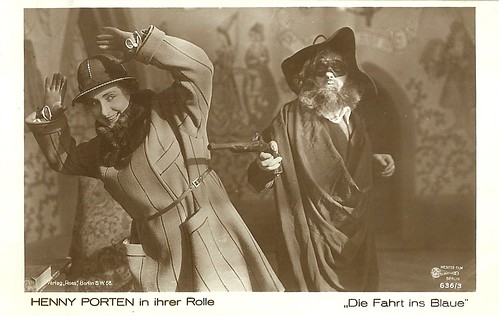
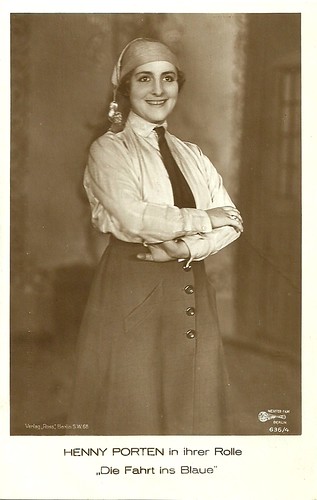
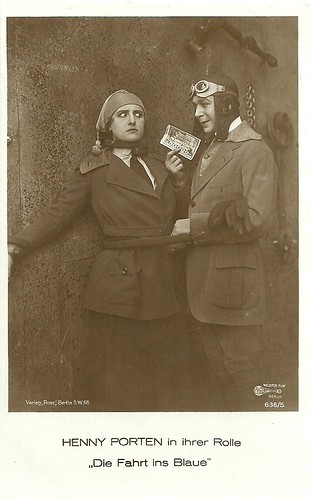
German postcard by Ross Verlag, no, 636/2. Photo: Messter Film. Henny Porten and Georg Alexander in the German silent comedy Die Fahrt ins Blaue (Rudolf Biebrach, 1919). The film was scripted by Hanns Kräly and cinematographed by Willy Gaebel.
Detective films
In 1919, Georg Alexander founded his own company Alexander-Film-GmbH with which he made sports films showing outstanding sporting performances.
He himself was also active as a racing driver and jockey. He even set up a new record with a horse jump over the height of 1.85 meters.
in 1919 he also started to concentrate on acting again. Alexander often played in detective films like the adventure serial Der Mann ohne Namen/The Man Without a Name (Georg Jacoby, 1921). He played the comic role of detective Bobby Dodd alongside Harry Liedtke's master thief Peter Voss.
He also starred in such entertainment films and salon comedies as Lady Hamilton (Richard Oswald, 1921), Eifersucht/Jealousy (Karl Grune, 1925) starring Lya de Putti and Die Frau ohne Namen/The Woman Without a Name (Georg Jacoby, 1927).
Then he appeared in Venus im Frack/Venus in Tails (Robert Land, 1927), and Schwarzwaldmädel/Girl from the Black Woods (Victor Janson, 1929) with Liane Haid.

German postcard by Photochemie, Berlin, no. K.1966. Photo: A. Binder, Berlin.
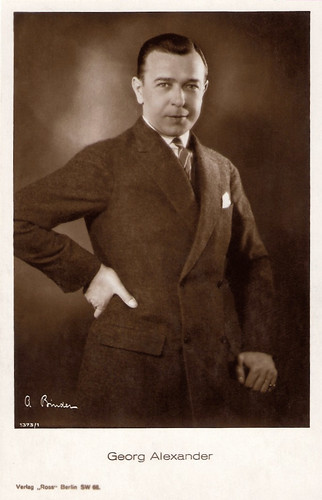
German postcard by Ross Verlag, no. 1373/1, 1927-1928. Photo: A. Binder, Berlin.
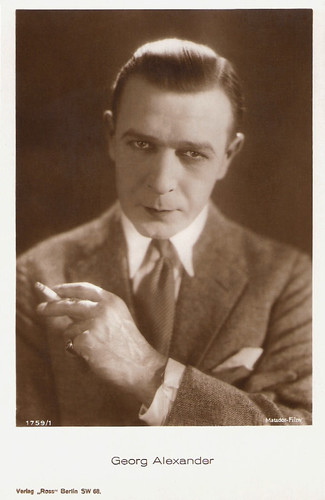
German postcard by Ross Verlag, Berlin, no. 1759/1, 1927-1928. Photo: Matador-Film.
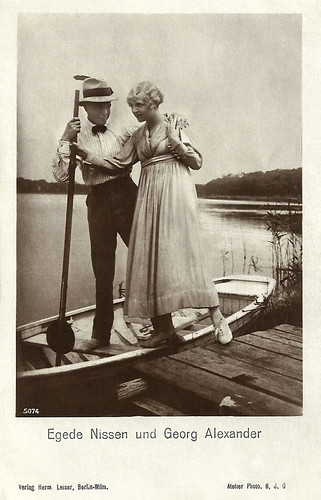
German postcard by Verlag Hermann Leiser, Berlin, no. 5074. Photo: Atelier B.J.G.
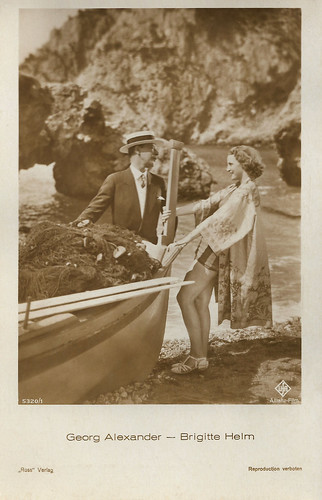
German postcard by Ross Verlag, Berlin, no. 5320/1, 1930-1931. Photo: Allianz-Film / Ufa. Georg Alexander and Brigitte Helm in Die singende Stadt/The Singing City (Carmine Gallone, 1930).

German postcard by Ross Verlag, no. 5368/1, 1930-1931. Photo: AAFA Film. Georg Alexander in Leutnant warst Du einst bei deinen Husaren/Love Comes But Once (Manfred Noa, 1930).
In the 1930s Georg Alexander often appeared as a distinguished Bon Vivant or a snobbish nobleman in such comedies as Wie sag ich's meinem Mann/How Shall I Tell My Husband? (Reinhold Schünzel, 1932) with Liane Haid, and Die englische Heirat/The English Marriage (Reinhold Schünzel, 1934), in which he starred with Adele Sandrock.
He also played Archduke Peter Ferdinand in Liebeswalzer/The Love Waltz (Wilhelm Thiele, 1932) opposite Lilian Harvey and Willy Fritsch and Mamsell Nitouche/Miss Nitouche(Carl Lamac, 1932) with Anny Ondra.
Alexander also acted in such dramas as Der alte und der junge König/The Making of a King (Hans Steinhoff, 1935), Heimat/Magda (Carl Froelich, 1938) starring Zarah Leander and Der Kleinstadtpoet/The Poet of a Small Town (Josef von Baky, 1940).
During the war, he appeared in Frau Luna/Mistress Moon (Theo Lingen, 1942) with Lizzi Waldmüller. His last film was the very funny musical Die Frau meiner Träume/The Woman of My Dreams (Georg Jacoby, 1944) starring Marika Rökk. In total, Georg Alexander worked on more than 160 films.
Immediately after the end of the war, he became the artistic director of the Potsdam Schauspielhaus, which had been largely destroyed. Georg Alexander died in Berlin in 1945. In 1928 he was married in his third marriage to the film agent Ilse Brach. His gravesite at the Wilmersdorf cemetery in Berlin-Wilmersdorf was closed in 1960.

French postcard by Cinémagazine-Edition, no. 826. Georg Alexander in the German late silent film Ehestreik/Marriage Strike (Carl Boese, 1930).
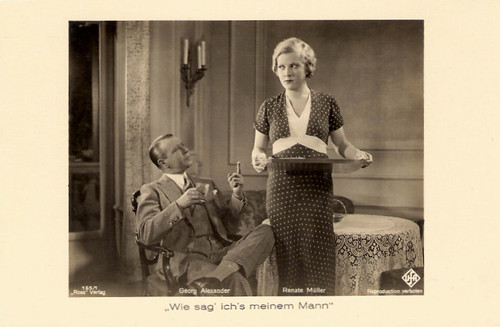
German postcard by Ross Verlag, no. 165/1. Photo: Ufa. Georg Alexander and Renate Müller in Wie sag ich's meinem Mann/How Shall I Tell My Husband? (Reinhold Schünzel, 1932).

Dutch postcard by Filma, no. 448. Georg Alexander and Liane Haid in Eine Frau wie Du/A Woman Like You (Carl Boese, 1933).
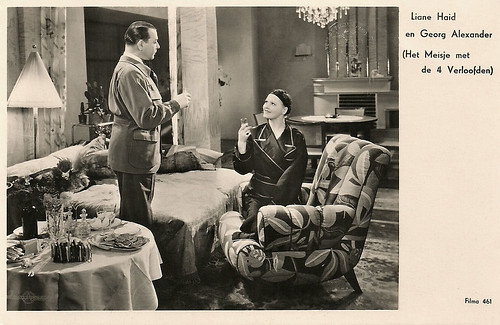
Dutch postcard by Filma, no. 461. Photo: publicity still of Liane Haid and Georg Alexander in the comedy Het meisje met de 4 verloofden/Eine Frau wie Du/A Woman Like You (Carl Boese, 1933).
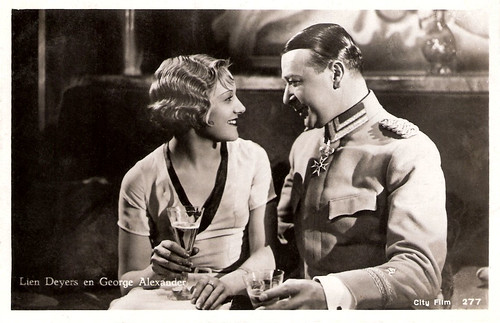
Dutch postcard by City Film, no. 277. Lien Deyers and Georg Alexander in Ist mein Mann nicht fabelhaft?/Isn't My Husband Wonderful? (Georg Jacoby, 1933). Collection: Geoffrey Donaldson Institute.

German postcard by Ross Verlag, no. 6148/1, 1931-1932.
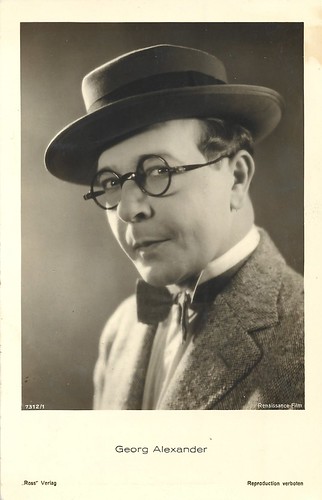
German postcard by Ross Verlag, no. 7312/1, 1932-1933. Photo: Renaissance Film. George Alexander in the German comedy crime film Flucht nach Nizza/The Escape to Nizza (James Bauer, 1933).
Sources: Thomas Staedeli (Cyranos), Filmportal, Wikipedia (German), and IMDb.
in 1919 he also started to concentrate on acting again. Alexander often played in detective films like the adventure serial Der Mann ohne Namen/The Man Without a Name (Georg Jacoby, 1921). He played the comic role of detective Bobby Dodd alongside Harry Liedtke's master thief Peter Voss.
He also starred in such entertainment films and salon comedies as Lady Hamilton (Richard Oswald, 1921), Eifersucht/Jealousy (Karl Grune, 1925) starring Lya de Putti and Die Frau ohne Namen/The Woman Without a Name (Georg Jacoby, 1927).
Then he appeared in Venus im Frack/Venus in Tails (Robert Land, 1927), and Schwarzwaldmädel/Girl from the Black Woods (Victor Janson, 1929) with Liane Haid.
German postcard by Photochemie, Berlin, no. K.1966. Photo: A. Binder, Berlin.
German postcard by Ross Verlag, no. 1373/1, 1927-1928. Photo: A. Binder, Berlin.
German postcard by Ross Verlag, Berlin, no. 1759/1, 1927-1928. Photo: Matador-Film.
German postcard by Verlag Hermann Leiser, Berlin, no. 5074. Photo: Atelier B.J.G.
German postcard by Ross Verlag, Berlin, no. 5320/1, 1930-1931. Photo: Allianz-Film / Ufa. Georg Alexander and Brigitte Helm in Die singende Stadt/The Singing City (Carmine Gallone, 1930).
German postcard by Ross Verlag, no. 5368/1, 1930-1931. Photo: AAFA Film. Georg Alexander in Leutnant warst Du einst bei deinen Husaren/Love Comes But Once (Manfred Noa, 1930).
Distinguished bon vivant
In the 1930s Georg Alexander often appeared as a distinguished Bon Vivant or a snobbish nobleman in such comedies as Wie sag ich's meinem Mann/How Shall I Tell My Husband? (Reinhold Schünzel, 1932) with Liane Haid, and Die englische Heirat/The English Marriage (Reinhold Schünzel, 1934), in which he starred with Adele Sandrock.
He also played Archduke Peter Ferdinand in Liebeswalzer/The Love Waltz (Wilhelm Thiele, 1932) opposite Lilian Harvey and Willy Fritsch and Mamsell Nitouche/Miss Nitouche(Carl Lamac, 1932) with Anny Ondra.
Alexander also acted in such dramas as Der alte und der junge König/The Making of a King (Hans Steinhoff, 1935), Heimat/Magda (Carl Froelich, 1938) starring Zarah Leander and Der Kleinstadtpoet/The Poet of a Small Town (Josef von Baky, 1940).
During the war, he appeared in Frau Luna/Mistress Moon (Theo Lingen, 1942) with Lizzi Waldmüller. His last film was the very funny musical Die Frau meiner Träume/The Woman of My Dreams (Georg Jacoby, 1944) starring Marika Rökk. In total, Georg Alexander worked on more than 160 films.
Immediately after the end of the war, he became the artistic director of the Potsdam Schauspielhaus, which had been largely destroyed. Georg Alexander died in Berlin in 1945. In 1928 he was married in his third marriage to the film agent Ilse Brach. His gravesite at the Wilmersdorf cemetery in Berlin-Wilmersdorf was closed in 1960.
French postcard by Cinémagazine-Edition, no. 826. Georg Alexander in the German late silent film Ehestreik/Marriage Strike (Carl Boese, 1930).
German postcard by Ross Verlag, no. 165/1. Photo: Ufa. Georg Alexander and Renate Müller in Wie sag ich's meinem Mann/How Shall I Tell My Husband? (Reinhold Schünzel, 1932).
Dutch postcard by Filma, no. 448. Georg Alexander and Liane Haid in Eine Frau wie Du/A Woman Like You (Carl Boese, 1933).
Dutch postcard by Filma, no. 461. Photo: publicity still of Liane Haid and Georg Alexander in the comedy Het meisje met de 4 verloofden/Eine Frau wie Du/A Woman Like You (Carl Boese, 1933).
Dutch postcard by City Film, no. 277. Lien Deyers and Georg Alexander in Ist mein Mann nicht fabelhaft?/Isn't My Husband Wonderful? (Georg Jacoby, 1933). Collection: Geoffrey Donaldson Institute.
German postcard by Ross Verlag, no. 6148/1, 1931-1932.
German postcard by Ross Verlag, no. 7312/1, 1932-1933. Photo: Renaissance Film. George Alexander in the German comedy crime film Flucht nach Nizza/The Escape to Nizza (James Bauer, 1933).
Sources: Thomas Staedeli (Cyranos), Filmportal, Wikipedia (German), and IMDb.