Raimondo Van Riel (1881-1962) was an Italian stage and film actor and mask maker of Dutch descent. His specialism was bad guys and evil villains.
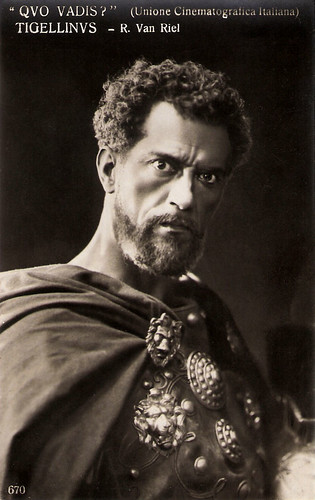
Italian postcard by Ed. A. Traldi, Milano, no. 670. Photo: UCI (Unione Cinematografica Italiana). Raimondo Van Riel as Tigellinus in Quo Vadis? (1925).

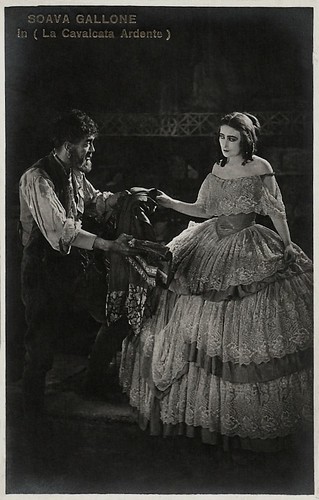
Italian postcard by Ed. A. Traldi, Milano. Photo: Westi / SAIC. Raimondo van Riel as Il Brigante (The Bandit) in the historical film La cavalcata ardente (Carmine Gallone, 1925).

Italian postcard, no. 120. Photo: Ebano, no. 120. Photo: Pittaluga Films. Raimondo Van Riel as the cruel Francesco Cenci in Beatrice Cenci (Baldassarre Negroni, 1927).
Raimondo Van Riel was born in Rome, Italy in 1881. He started to act on Roman local stages, becoming well-known as the villain. Together with his wife, actress Aidé Bongini, who was part of the company of Alfredo Sainati, he acted on stage between 1909 and 1919.
In 1914 Van Riel made his film debut in the silent short film Per un’ora d’amore/For an Hour of Love (Luigi Maggi, 1914), starring Bella Starace Sainati and her husband Alfredo Sainati.
Five years later, he began a steady career in the Italian silent cinema. This period started with the Berta Nelson vehicle Fiamma simbolica/Symbolic Flame (Eugenio Perego, 1919), a drama of vengeance which was found and restored at the Eye Filmmuseum in Amsterdam.
In 1919 Van Riel was offered a film contract by film producer and director Enrico Guazzoni. In subsequent years, Guazzoni often employed him as the ‘bad guy’ as in Il Sacco di Roma/The Sack of Rome (Enrico Guazzoni, Giulio Aristide Sartorio, 1920), La congrega dei ventiquattro/The congregation of twenty-four (Enrico Guazzoni, 1921) and Le tre ombre/The three shadows (Enrico Guazzoni, 1921).
In the early 1920s, Van Riel also played in dramas directed by Mario Bonnard for Bonnard Film, starring Vittoria Lepanto and Dolly Morgan, and directed by Carmine Gallone for Caesar Film, starring Yvonne de Fleuriel. Other films were Un viaggio nell’impossibile/A journey into the impossible (Nunzio Malasomma, Luciano Doria, 1923) with strong man Giovanni Raicevich, and Il cammino delle stelle/The path of the stars (Guglielmo Zorzi, 1924) with Linda Pini.

Italian postcard by G. Vettori, Bologna. Photo: U.C.I. Mario Parpagnoli as Don Rodrigo and Raimondo Van Riel as Griso in I promessi sposi/The Betrothed (Mario Bonnard, 1922), one of several adaptations of Alessandro Manzoni's famous novel, set in 17th century Italy. Caption: "Let me kill that infamous traitor!" Milan is in the grip of the plague. After Don Rodrigo (Mario Parpagnoli) has confessed to his aid Griso (Raimondo Van Riel) that he is ill, and the latter betrays him. He calls for the 'monatti' who will carry his master away to the 'Lazzaretto' and robs the wealth of Don Rodrigo. He won't enjoy his riches for long, as he too will be struck by the plague.
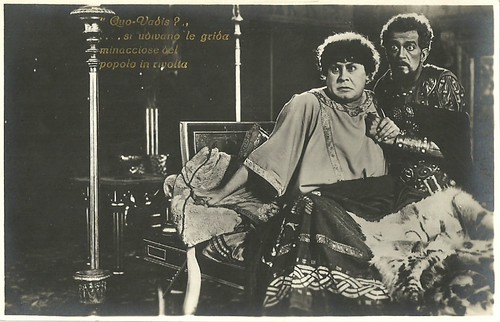
Italian postcard by G.G. Falci, Milano, no. 159. Photo: La Fotominio. Emil Jannings as Nero and Raimondo van Riel as Tigellinus in Quo Vadis? (Gabriellino D'Annunzio, Georg Jacoby, 1924). Caption: They heard the menacing shouts of the revolting mob.
During the mid-1920s, Raimondo Van Riel played in three major productions. First of all, he played emperor Nero’s (Emil Jannings) evil general Tigellinus in the silent costume epic Quo Vadis? (Georg Jacoby, Gabriellino D’Annunzio, 1925).
Then Van Riel played the devil in La giovinezza del diavolo/The youth of the Devil (Roberto Roberti, 1925), starring Francesca Bertini as a female Faust. This was a kind of remake of Rapsodia satanica/Satanic Rhapsody (Nino Oxilia, 1914-1917), the major production of Bertini’s former rival Lyda Borelli.
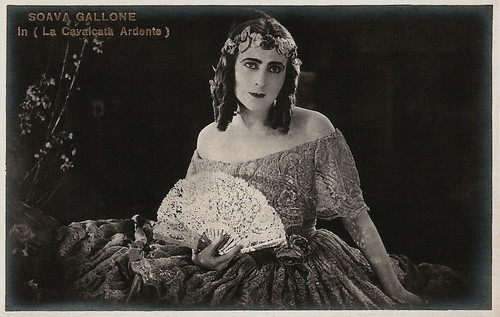
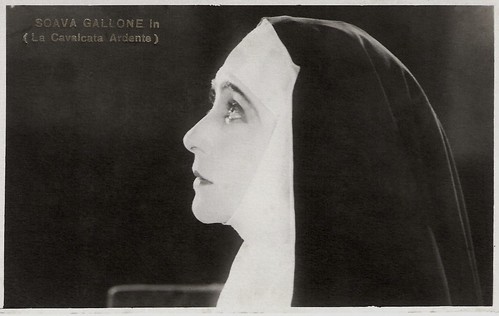
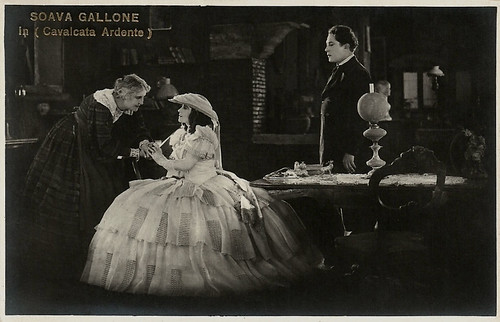
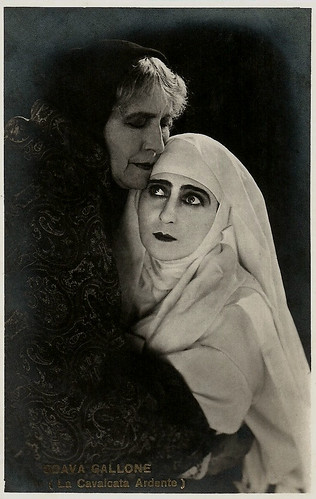
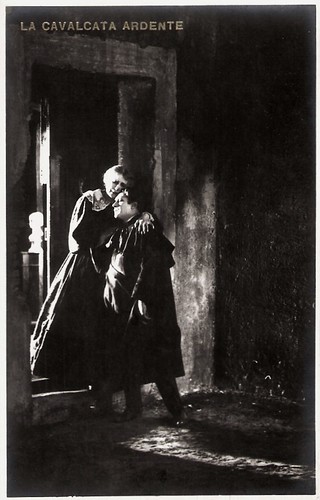
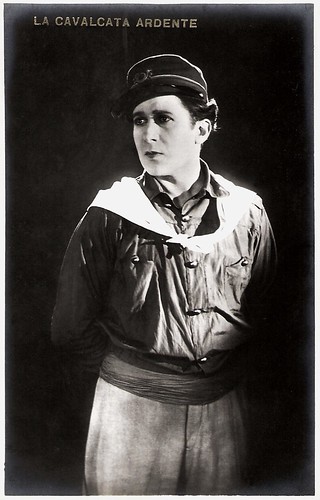
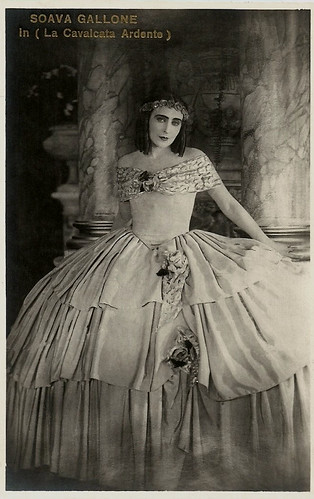
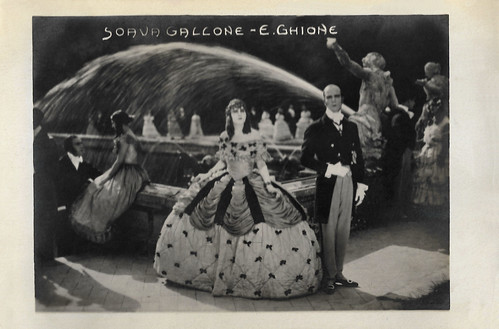
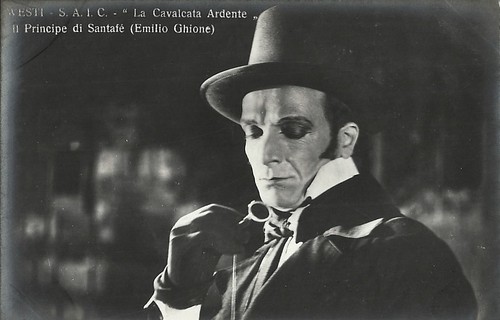
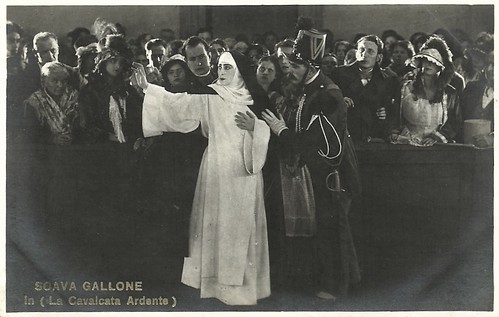
And then there was La cavalcata ardente/The Fiery Ride (Carmine Gallone, 1925), in which Van Riel played Pasquale Noto, a bandit during the Italian Risorgimento. For a change, he is the good guy in this film. He helps out the patriot Giovanni (Gabriel de Gravone) to get the girl of his dreams, the aristocratic Grazia (Soava Gallone), although she is promised to an evil prince (Emilio Ghione).
Then followed roles in Risa e lacrime napoletane/Neapolitan laughter and tears (Gian Orlando Vassallo, 1926) with Lia Maris and the historical film Beatrice Cenci (Baldassarre Negroni, 1926) with strong man Celio Bucchi and Maria Jacobini
.
He also acted in two more films by Vassallo: El moroso de la nona/And Arrears of the Ninth (Gian Orlando Vassallo, 1927) and I rifiuti del Tevere/The Waste of the Tiber (Gian Orlando Vassallo, 1927).
Italian postcard by Ed. A. Traldi, Milano, no. 670. Photo: UCI (Unione Cinematografica Italiana). Raimondo Van Riel as Tigellinus in Quo Vadis? (1925).
Italian postcard by Ed. A. Traldi, Milano. Photo: Westi / SAIC. Raimondo van Riel as Il Brigante (The Bandit) in the historical film La cavalcata ardente (Carmine Gallone, 1925).
Italian postcard, no. 120. Photo: Ebano, no. 120. Photo: Pittaluga Films. Raimondo Van Riel as the cruel Francesco Cenci in Beatrice Cenci (Baldassarre Negroni, 1927).
Bad guy
Raimondo Van Riel was born in Rome, Italy in 1881. He started to act on Roman local stages, becoming well-known as the villain. Together with his wife, actress Aidé Bongini, who was part of the company of Alfredo Sainati, he acted on stage between 1909 and 1919.
In 1914 Van Riel made his film debut in the silent short film Per un’ora d’amore/For an Hour of Love (Luigi Maggi, 1914), starring Bella Starace Sainati and her husband Alfredo Sainati.
Five years later, he began a steady career in the Italian silent cinema. This period started with the Berta Nelson vehicle Fiamma simbolica/Symbolic Flame (Eugenio Perego, 1919), a drama of vengeance which was found and restored at the Eye Filmmuseum in Amsterdam.
In 1919 Van Riel was offered a film contract by film producer and director Enrico Guazzoni. In subsequent years, Guazzoni often employed him as the ‘bad guy’ as in Il Sacco di Roma/The Sack of Rome (Enrico Guazzoni, Giulio Aristide Sartorio, 1920), La congrega dei ventiquattro/The congregation of twenty-four (Enrico Guazzoni, 1921) and Le tre ombre/The three shadows (Enrico Guazzoni, 1921).
In the early 1920s, Van Riel also played in dramas directed by Mario Bonnard for Bonnard Film, starring Vittoria Lepanto and Dolly Morgan, and directed by Carmine Gallone for Caesar Film, starring Yvonne de Fleuriel. Other films were Un viaggio nell’impossibile/A journey into the impossible (Nunzio Malasomma, Luciano Doria, 1923) with strong man Giovanni Raicevich, and Il cammino delle stelle/The path of the stars (Guglielmo Zorzi, 1924) with Linda Pini.
Italian postcard by G. Vettori, Bologna. Photo: U.C.I. Mario Parpagnoli as Don Rodrigo and Raimondo Van Riel as Griso in I promessi sposi/The Betrothed (Mario Bonnard, 1922), one of several adaptations of Alessandro Manzoni's famous novel, set in 17th century Italy. Caption: "Let me kill that infamous traitor!" Milan is in the grip of the plague. After Don Rodrigo (Mario Parpagnoli) has confessed to his aid Griso (Raimondo Van Riel) that he is ill, and the latter betrays him. He calls for the 'monatti' who will carry his master away to the 'Lazzaretto' and robs the wealth of Don Rodrigo. He won't enjoy his riches for long, as he too will be struck by the plague.
Italian postcard by G.G. Falci, Milano, no. 159. Photo: La Fotominio. Emil Jannings as Nero and Raimondo van Riel as Tigellinus in Quo Vadis? (Gabriellino D'Annunzio, Georg Jacoby, 1924). Caption: They heard the menacing shouts of the revolting mob.
The Devil
During the mid-1920s, Raimondo Van Riel played in three major productions. First of all, he played emperor Nero’s (Emil Jannings) evil general Tigellinus in the silent costume epic Quo Vadis? (Georg Jacoby, Gabriellino D’Annunzio, 1925).
Then Van Riel played the devil in La giovinezza del diavolo/The youth of the Devil (Roberto Roberti, 1925), starring Francesca Bertini as a female Faust. This was a kind of remake of Rapsodia satanica/Satanic Rhapsody (Nino Oxilia, 1914-1917), the major production of Bertini’s former rival Lyda Borelli.
And then there was La cavalcata ardente/The Fiery Ride (Carmine Gallone, 1925), in which Van Riel played Pasquale Noto, a bandit during the Italian Risorgimento. For a change, he is the good guy in this film. He helps out the patriot Giovanni (Gabriel de Gravone) to get the girl of his dreams, the aristocratic Grazia (Soava Gallone), although she is promised to an evil prince (Emilio Ghione).
Then followed roles in Risa e lacrime napoletane/Neapolitan laughter and tears (Gian Orlando Vassallo, 1926) with Lia Maris and the historical film Beatrice Cenci (Baldassarre Negroni, 1926) with strong man Celio Bucchi and Maria Jacobini
.
He also acted in two more films by Vassallo: El moroso de la nona/And Arrears of the Ninth (Gian Orlando Vassallo, 1927) and I rifiuti del Tevere/The Waste of the Tiber (Gian Orlando Vassallo, 1927).

Italian postcard by Ed. G.B. Falci, Milano. Raimondo Van Riel as the bandit Pasquale Noto in La cavalcata ardente/The Fiery Cavalcade (Carmine Gallone, 1925).
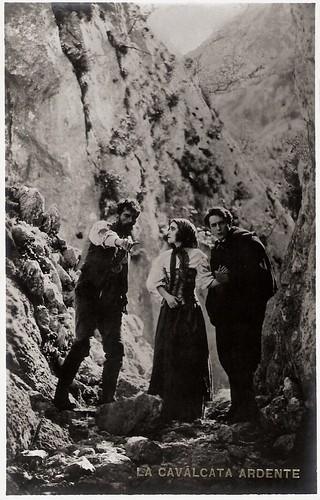
Italian postcard by G.B. Falci, Milano. Photo: Raimondo Van Riel, Soava Gallone and Gabriel de Gravone in the historical film La cavalcata ardente/The Fiery Ride (1925).
Action films and thrillers
In the meantime, Raimondo Van Riel had started working in Berlin as well. For four years, 1926-1930, he worked in the German cinema and had major parts in action films and thrillers.
As the adversary of Harry Piel, he played in Zigano (Gerard Bourgeois, Harry Piel, 1926), and Achtung! Auto-Diebe!/Attention! Car thieves! (Harry Piel, 1930).
He starred opposite Italian action star Carlo Aldini in Der Kampf gegen Berlin/The Struggle Against Berlin (Max Reichmann, 1926), the Czechoslovakian production Dva pekelné dny/Two Days of Hell (William Karfiol, 1928), and Im Kampf mit der Unterwelt/In the battle with the underworld (Carlo Aldini, 1930). He also co-starred with the other Italian strongman of the German silent cinema, Luciano Albertini, in Menschenleben in Gefahr/Human lives in danger (Karl Gehrhardt, 1926), and Die Jagd nach der Million/The Hunt for the Million (Max Obal, Rudolf Walther-Fein, 1930).
However, Van Riel also played in dramas and comedies, including Der goldene Abgrund/The Golden Abyss (Mario Bonnard, 1927) with Liane Haid, Flucht aus der Hölle/Escape from Hell (Georg Asagaroff, 1928) opposite Jean Murat and Mein Herz ist eine Jazzband/My heart is a jazz band (Friedrich Zelnik, 1929) starring Lya Mara.
In 1930 Raimondo Van Riel had the lead in Kurs auf die Ehe/Kire lained/Wellen der Leidenschaft/Course on Marriage, directed by former Russian actor Vladimir Gajdarov and co-starring Ita Rina. It was a German-Estonian production and the first of its kind. The film dealt with alcohol smuggling between Estonia and Finland and was shot on location in Estonia while the interiors were shot in Berlin. Kurs auf die Ehe still exists.
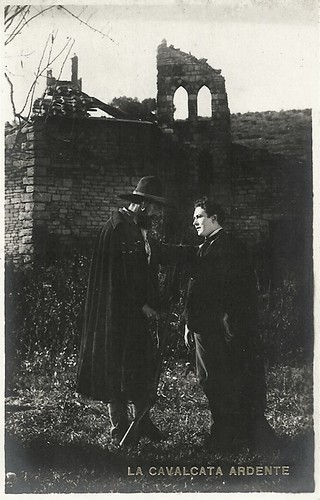
Italian postcard by Ed. G.B. Falci, Milano. Raimondo Van Riel and Gabriel de Gravone in La cavalcata ardente/The Fiery Ride (Carmine Gallone, 1925).

Italian postcard by Ed. G.B. Falci, Milano. Raimondo Van Riel and Gabriel de Gravone in La cavalcata ardente/The Fiery Ride (Carmine Gallone, 1925).
Masks
During his Berlin years, Raimondo Van Riel had come back to Italy to act in the orientalist drama Kif Tebbi (Mario Camerini, 1928), but by 1931 he definitely returned to Italy.
He played supporting parts in Italian sound films, such as Corte d’Assise/Before the Jury (Guido Brignone, 1931) starring Marcella Albani, Terra madre/Mother Earth (Alessandro Blasetti, 1931) with Leda Gloria, and Figaro e la sua gran giornata/Figaro and his big day (Mario Camerini, 1931).
He also appeared in the historical films Lorenzino de’ Medici/The Magnificent Rogue (Guido Brignone, 1936) featuring Alexander Moissi, Scipione l’Africano/Scipio Africanus: The Defeat of Hannibal (Carmine Gallone, 1937) and Il ponte dei sospiri/The bridge of sighs (Mario Bonnard, 1940).
From 1936 on Van Riel worked as a mask maker (make-up artist) and in 1937 he became a lecturer in mask making at the new film academy, Centro Sperimentale di Cinematografia in Rome. After the war, Van Riel played parts in films between 1948 and 1959.
His last – uncredited - part was that of an old man in Wiliam Wyler’s monumental epic Ben-Hur (1959). Raimondo Van Riel died in Rome in 1962. He was 81.
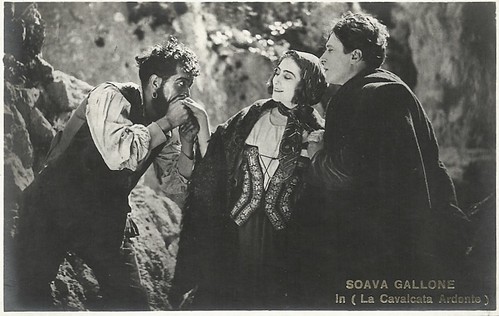
Italian postcard by Ed. G.B. Falci, Milano. Soava Gallone, Gabriel de Gravone and Raimondo Van Riel in La cavalcata ardente (Carmine Gallone, 1925).

German postcard by Ross Verlag, Berlin, no. 698/7, 1927-1928. Photo: Filmhaus Bruckman. Raimondo van Riel as Tigellinus in Quo Vadis? (Gabriellino D'Annunzio, Georg Jacoby, 1924).
Sources: Vittorio Martinelli (Il cinema muto italiano), Wikipedia (German), and IMDb.
This post was last updated on 3 December 2023.