Showing posts with label Pierre Brice. Show all posts

27 April 2017

Winnetou II. Teil (1964)

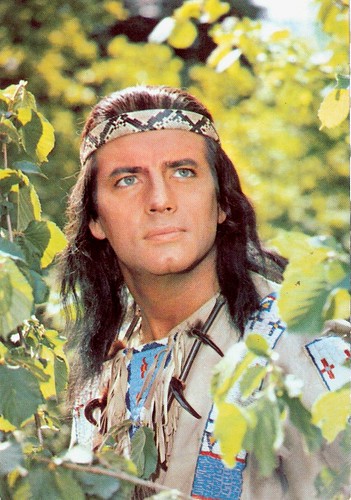
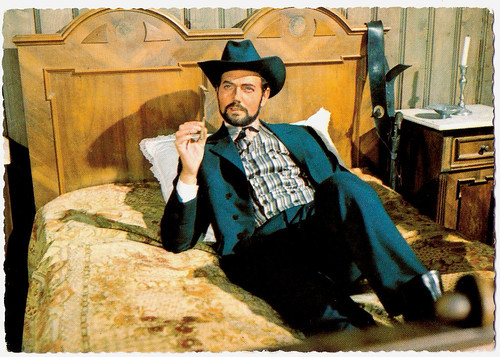
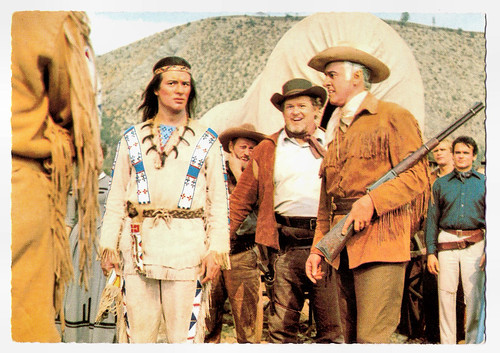
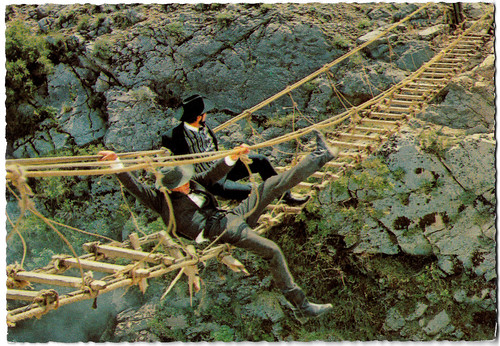
The German Westerm Winnetou – 2. Teil/Last of the Renegades (Harald Reinl, 1964), also known as Winnetou: The Red Gentleman, is one of the Eurowesterns in the series based on the novels by Karl May. Stars are Pierre Brice as Apache chief Winnetou and Lex Barker as his soul mate Old Shatterhand.

Pierre Brice (Winnetou) is dead
German postcard, no. R 5. Photo: publicity still of Pierre Brice and Gojko Mitic in Winnetou II. Teil/Winnetou: The Red Gentleman (Harald Reinl, 1964). Caption: "Winnetou hat die Assiniboins für seine Pläne gewonnen, und man beschliesst eine Verhandlung mit den Weissen in Fort Niobara. Botschaft hierüber geht an alle Häuptlinge." (Winnetou has won the Assiniboins for his plans, and they choose for a negotiation with the white in Fort Niobara. This message goes to all chiefs.)

Karin Dor and Pierre Brice in Winnetou II (1964)
German postcard, no. R 7. Photo: still from Winnetou II. Teil/Last of the Renegades (Harald Reinl, 1964) with Karin Dor as Ribanna and Pierre Brice as Winnetou. Caption: "Ribanna lüftet ein Geheimnis. Sie zeigt Winnetou eine im Felsen verborgene Höhle, die in Kriegszeiten den Frauen und Kinder als Zuflkuchtsstätte dient." (Ribanna reveals a secret. She shows Winnetou a cave hidden in the rock, which in wartime serves the women and children as a refuge.)

Pierre Brice (Winnetou) is dead
German postcard, no R 8. Photo: publicity still for Winnetou II. Teil/Winnetou: The Red Gentleman (Harald Reinl, 1964) with Pierre Brice and Karin Dor. Caption: "Noch ahnt man nicht, wie bald von diesem Versteck Gebrauch gemacht werden muss; den Forrester, der sein dunkles Gerwerbe auf Kosten der Indianer betreibt, schmiedet schon Pläne." (Yet nobody suspects how soon this hiding place must be used; Forrester, who runs his shady business at the expense of the Indians, already makes his plans).

Pierre Brice
German postcard by ISV, no. R 14. Photo: publicity still for Winnetou II. Teil/Last of the Renegades (Harald Reinl, 1964) with Pierre Brice as Winnetou. Caption: "In letzter Minute rettet Winnetou seinen Blutsbruder Old Shatterhand aus den Flammen." (At the last minute Winnetou saves his blood brother Old Shatterhand from the flames)

Pierre Brice in Winnetou II (1964)
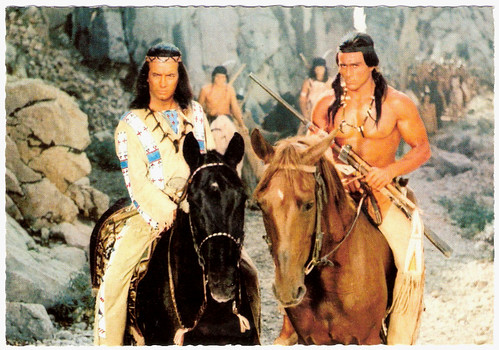
German postcard, no. R 15. Photo: still from Winnetou II (Harald Reinl, 1964) with Pierre Brice. Caption: "Winnetou, Old Shatterhand und die anderen Indianerhäuptlinge reiten zur Friedenskonferenz nach Fort Niobrara." (Winnetou, Old Shatterhand and the other Indian Chiefs ride to Fort Niobrara for the peace conference.)

A perfect money spinner


In the aftermath of the Second World War, Europe was left in ruins and so was the European cinema, especially the German film industry. There was a strong backlash against those filmmakers who had remained faithful to the Nazi party, while many of Germany's best filmmakers had moved to America in the 1930s.

In the 1950s, the German cinema struggled gradually back to form. Low budgets and at first a lack of international markets were the reasons that the most popular productions were the Heimat films and later also the Sissi films with Romy Schneider. Large audience figures meant that the film studios were gradually able to increase their budgets, and by the 1960s, big scale films were back on the cards. And even some of the directors who had fled to Hollywood returned to work in Germany, including Fritz Lang.

The Karl May novels were, and still are highly popular in the German speaking world, telling of adventurous exploits in the Wild West, the Orient. Film adaptations of the books had been made as early as the 1920s, and again in the late 1930s, and discussions had been made about shooting some of the Wild West stories - indeed a final script for a Winnetou film was approved in 1944 by Propaganda Minister Joseph Goebbels but never went into production.

Timothy Young in his Mondo Esoterica Guide to: The Karl May Westerns: "With German audiences filling cinemas, and desperately wanting more home grown films, the Karl May themes seemed like a perfect money spinner for producer Horst Wendlandt. A key player at Rialto Film, he had successfully produced a series of adult-targeted films based on the Edgar Wallace thriller/horror novels."

Wendlandt now sought to target the younger markets. His idea of shooting European Westerns was unheard of at the beginning of the 1960s - the Spaghetti Western rage started only a few years later with Sergio Leone's Per un pugno di dollari/For a fistful of Dollars (1964).

Instead of using the Spanish locations of the Spaghetti Westerns, the Karl May series was shot in Yugoslavia. Films like Winnetou II. Teil (1964) took great advantage of the barren landscapes, mountains and rivers. In return, the films made Yugoslavia a popular holiday destination for many Europeans.

Karin Dor and Mario Girotti (Terence Hill) in Winnetou II
German postcard, no. R 16. Photo: publicity still from Winnetou II. Teil/Last of the Renegades (Harald Reinl, 1964) with Mario Girotti and Karin Dor. Caption: "Fast scheitern die Friedensverhandlungen. Da erklärt sich Leutnant Merril bereit, Ribanna zu heiraten, um den Friedensband zwischen Weiss und Rot zu besieglen." (Almost the peace negotiations are failing. Lieutenant Merril declares his willingness to marry Ribanna in order to conquer the peace bond between white and red.)

Pierre Brice and Karin Dor in Winnetou - 2.Teil (1964)
German postcard, no. R 17. Photo: publicity still for Winnetou II. Teil/Winnetou: The Red Gentleman (Harald Reinl, 1964) with Pierre Brice and Karin Dor. Caption: So werden Ribanna und Winnetou gezwungen, ihre Liebe dem Frieden zu opfern. (Thus Ribanna and Winnetou are forced to sacrifice their love.)

Scene from Winnetou II. Teil (1964)
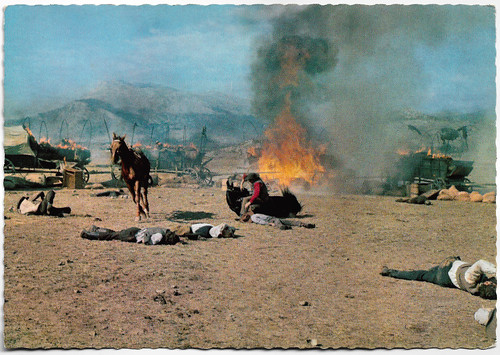
German postcard, no. R 18. Photo: publicity still for Winnetou II. Teil/Winnetou: The Red Gentleman (Harald Reinl, 1964). Caption: "Forrester sorgt für Unfrieden. Er überfällt mit seiner Bande einen Siedlertreck und hinterlässt falsche Spuren, um die Indianer in den Verdacht dieser Untat zu bringen." (Forrester is a source of dissatisfaction. He crosses a settlement with his gang, leaving behind bad traces to bring the Indians into the suspicion of this misdeed.)

Karin Dor, Winnetou II
German postcard, no. R 19. Photo: still from Winnetou - II. Teil/Last of the Renegades (Harald Reinl, 1964) with Karin Dor as Ribanna. Caption: "Den Assiniboins droht Gefahr. Von Ribanna und Leutnant Merril gewarnt, werden die Frauen und Kinder noch rechtzeitig in die Höhle geführt." (The Assiniboin are in danger. Warned by Ribanna and lieutenant Merril, the women and children are led into the cave in time.)

Pierre Brice in Winnetou II. Teil (1964)
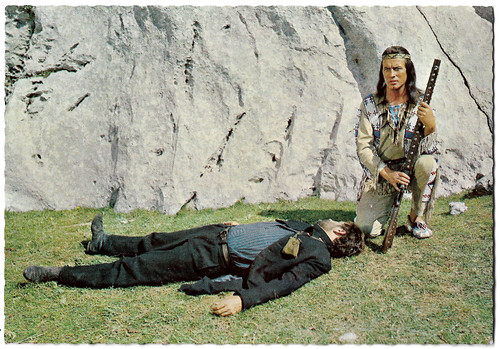
German postcard, no. R 20. Photo: publicity still for Winnetou II. Teil/Last of the Renegades (Harald Reinl, 1964) with Pierre Brice. Caption: Auf der Suche nach Forrester geraten Winnetou und Old Shatterhand in einen Hinterhalt. Durch eine List können sie in letzter Minute entkommen. (Looking for Forrester Winnetou and Old Shatterhand fall into an ambush. By a trick they can escape at the last minute.)

Winnetou's greatest love


Horst Wendlandt's first Eurowestern was, appropriately enough, Karl May's first Old West book - Der Schatz im Silbersee/The Treasure of Silver Lake (Harald Reinl, 1962). The novel had to be altered for the screen - scenes set aboard an American paddle steamer proved too much for the budget, while the graphic details of Colonel Brinkley's savage nature had to be toned down for the family market - but it still retained the charm and feel of the original stories, and proved a massive hit with audiences across Germany.

Impressively, the distinctive soundtrack proved equally popular and became a bestseller. The studio quickly commissioned a second film, and following the order of the original books Rialto produced the prequel story Winnetou 1. Teil (1963) which told the origins of the Winnetou and Old Shatterhand characters who played the major role in Der Schatz im Silbersee/The Treasure of Silver Lake, it secured actors Lex Barker and Pierre Brice in their respective roles as Old Shatterhand and Winnetou.

According to Timothy Young at the Mondo Esoterica Guide, Winnetou 1. Teil/Apache Gold (Harald Reinl, 1963) proved equally popular to the first, and stands as the best in the series - boasting a rarely bettered set piece with a full scale railway locomotive being driven through a saloon building.

Winnetou II. Teil (1964) followed on, continuing the series' popularity. Again Harald Reinl directed the sequel and he could work with a very good script by veteran author Harald G. Petterson. Composer Martin Böttcher made a new lead theme, the Winnetou-Melodie, which became massive hit.

Lex Barker and Pierre Brice were joined by a cast of excellent actors. Karin Dor plays Winnetou's greatest love Ribanna, British actor Anthony Steel plays Forester, a ruthless oil baron, and among his gang members is the enigmatic Klaus Kinski.

Lt. Robert Merril, one of the good guys is played by a blue-eyed Italian hunk called Mario Girotti, who would become one of the best-known Spaghetti Western stars under the alias Terence Hill. Also remarkable is the small part of Gojko Mitic as White Bird. The muscled Yugoslavian actor later became the superstar of the Eastern, the East-European Western. Finally there is comic actor Eddi Arent as Old Shatterhand's sidekick Lord Castlepool.

Klaus Kinski, Winnetou II
German postcard, no. R 21. Photo: publicity still for Winnetou - 2. Teil/Last of the Renegades (Harald Reinl, 1964), with Klaus Kinski. Caption: "Mit Hilfe des Bandesmitgliedes Luke spüren die Verbrecher die Höhle auf und bemächtigen sich der Frauen und Kinder des Assiniboins." (With the help of band member Luke the criminals find the cave and take possession of the women and children of the Assiniboin.)

Mario Girotti and Karin Dor in Winnetou II. Teil (1964)
German postcard, no. R 22. Photo: publicity still for Winnetou - 2. Teil/Last of the Renegades (Harald Reinl, 1964) with Mario Girotti and Karin Dor. Caption: "Auch Ribanna und ihr Mann Leutnant Merrill fallen in die Hände der Bande. Sie werden als Gefangene an einen Felsen gebunden." (Ribanna and her husband Lt. Merrill also fall into the hands of the gang. They are bound as prisoners to a rock.)

Pierre Brice, Karin Dor
German postcard, no. R 24. Photo: still from Winnetou II. Teil/Last of the Renegades (Harald Reinl, 1964) with Karin Dor as Ribanna and Pierre Brice as Winnetou. Caption: "Bis zur Verhandlung weilt Winnetou bei den Assiniboins und lernt Ribanna näher kennen und lieben." (Winnetou is waiting for the Assiniboins and learns to know and love Ribanna.)

Mario Girotti, Karin Dor, Anthony Steel in Winnetou II. Teil (1964)
German postcard, no. R 26. Photo: publicity still for Winnetou 2. Teil/Winnetou: The Red Gentleman (Harald Reinl, 1964) with Mario GirottiKarin Dor and Anthony Steel. Caption: "Der Skrupellose Forrester benutzt Ribanna und Leutnant Merril als Geiseln. Die Bande verlangt freien Abzug." (The unscrupulous Forrester used Ribanna and Lieutenant Merril as hostages. The gang demanded free passage.)

Lex Barker in Winnetou II. Teil (1964)
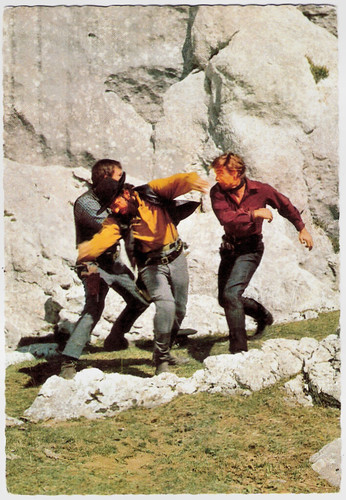
German postcard, no. R 27. Photo: publicity still for Winnetou II. Teil/Winnetou: The Red Gentleman (Harald Reinl, 1964) with Lex Barker as Old Shatterhand. Caption: "Durch einen Unterirdischen Wasserlauf gelingt es den Rettern in die Höhle einzudringen. Old Shatterhands harte Fäuste räumen unter den Banditen auf." (Through an underground watercourse the rescuers succeed to penetrate into the cave. Old Shatterhand's hard fists cleave under the bandits.)

Eddi Arent (1925-2013)
German postcard, no. R 28. Photo: publicity still for Winnetou II. Teil/ Last of the Renegades (Harald Reinl, 1964) with Eddi Arent. Caption: "Auch Lord Castlepool, der sich aus Abenteurlust Old Shatterhand angeschlossen hat, bewährt sich am Kampf gegen die Banditen." (Lord Castlepool, who has joined Old Shatterhand lusting for adventures, is also fighting against the bandits.)

Anthony Steel in Winnetou II. Teil (1964)
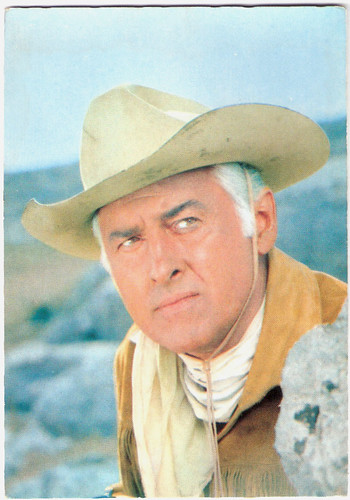
German postcard, no. R 29. Photo: publicity still for Winnetou - 2. Teil/Last of the Renegades (Harald Reinl, 1964) with Anthony Steel. Caption: "Die Bande ist vernichtet. Nur Forrester kämpft noch um sein Leben.Jedoch entgeht er nicht seinem wohlverdienten Schicksal." (The gang is destroyed. Only Forrester is still struggling for his life. However, he does not escape his well-deserved destiny.)

Karin Dor in Winnetou II. Teil (1964)
German postcard, no. R 30. Photo: publicity still for Winnetou 2. Teil/Winnetou: The Red Gentleman (Harald Reinl, 1964) with Karin Dor. Caption: "Der Friede ist gerettet. Ribanna weiss, dass ihr und Winnetous Opfer nicht umsonst war." (Peace is saved. Ribanna knows that her and Winnetou's sacrifice was not in vain.)

Sources: Timothy Young (Mondo Esoterica Guide to: The Karl May Westerns), Wikipedia (German and English) and IMDb.

07 June 2015

Pierre Brice (1929-2015)

Pierre Brice, the French actor who fascinated millions of European film fans in his role as Apache chief Winnetou, has died. The handsome Brice (1929-2015) was the hero of 11 films based on German author Karl May's tales of America's colonization. During the 1960s, Winnetou - a long-haired saint with a gun - was a superstar among European kids. Brice died in a clinic near Paris. He was 86.

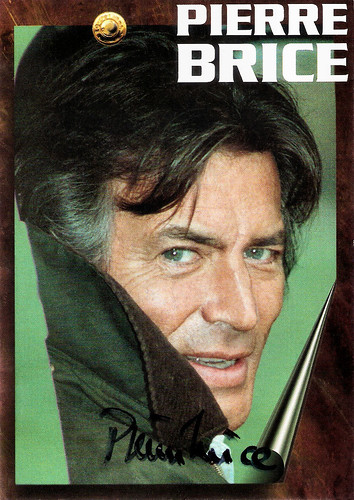
Pierre Brice
German autograph card. Photo: Lothar Winkler.

Pierre Brice
German postcard by Schorsch und Söhne, Kulmbach.
Pierre Brice (Winnetou) is dead
German promotion card by Herz Klang for the record Gefühle. Photo: Frank Wunderlich.

Paratrooper In Indochina


Pierre Brice was born into nobility as Baron Pierre Louis de Bris in Brest, France, in 1929. He was 11 years old when the Nazis invaded France. Since he was brought up a patriot, he joined his father in the Résistance at age 15. When he was 19, he enlisted as a volunteer in the French Army and fought four years as a paratrooper in Indochina.

In 1951, Brice returned from the war. He turned his life around and became an actor. He took acting classes from the Russian actor Gregori Chmara. He became a model for advertisements and photo novels, acted as a door-to-door salesman and traveled with a circus.

He got his first small film role in the Eddie Constantine thriller Ça va barder/Give 'em Hell (John Berry, Jacques Lamare, 1955). Bigger roles followed in French productions like Les Tricheurs/Youthful Sinners (Marcel Carné, 1958), but his career in France wasn't likely to take off. He simply did not have the same kind of talents and charisma as Alain Delon (to whom he was sometimes compared), nor did his good looks go down too well with the (then booming) Nouvelle Vague.

Brice was more a typical matinée idol, he was well-built and very handsome. He could easily pull off any kind of adventurer and he looked convincingly in period costume. Brice went to Italy, to appear in the Peplums, the sword and sandal films and similar adventure films like the Gothic horror shocker Il Mulino delle donne di pietra/Mill of the Stone Women (Giorgio Ferroni, 1960), and the modern day crime film Il Rossetto/Red Lips (Damiano Damiani, 1960).

Pierre Brice, Der Schatz im Silbersee
German postcard, no. E 74. Photo: Constantin. Publicity Still for Der Schatz im Silbersee/Treasure of Silver Lake (1962).

Pierre Brice and Lex Barker in Der Schatz im Silbersee
Dutch postcard by Gebr. Spanjersberg N.V., Rotterdam/Edition Facet Publishers. Photo: Rank Film Publishers (Holland) N.V. Publicity Still for Der Schatz im Silbersee/Treasure of Silver Lake (1962) with Lex Barker as Old Shatterhand.

Lex Barker and Pierre Brice in Der Schatz im Silbersee
German postcard, no. ED 52. Photo: Constantin. Still from Der Schatz im Silbersee/Treasure of Silver Lake (1962).

Winnetou


In 1962 at the Berlin Film Festival, Pierre Brice met the German producer Horst Wendlandt, head of Rialto Film. Wendlandt searched for an actor to play a Native American chief in Der Schatz im Silbersee/Treasure of Silver Lake (Harald Reinl, 1962).

Blogger Mike Haberfelner wonders why Wendlandt thought that Pierre Brice would be right for the role: "Sure, Brice was a suitably handsome actor for such a role and he had proven himself as a heroic lead time and again, but he was also almost unknown in Germany and he looked nothing like a Native American." Brice gave a passionate interpretation of Winnetou, and according to Haberfelner his impact easily overshadowed his co-star, Hollywood veteran Lex Barker, who as Old Shatterhand was first-billed in the credits.

Der Schatz im Silbersee was the first filmisation of a novel by Karl May (1842-1912) set in the American West. Earlier films after his novels, like Die Teufelsanbeter/The Devil Worshippers (Marie Luise Droop, 1920) and Die Sklavenkarawane/The Caravan of Slaves (Georg Marischka, Ramón Torrado, 1958), were all set in the Near East.

Der Schatz im Silbersee was a co-production of Germany, Yugoslavia and France. Principal shooting took place in national park Paklenica Karst River Canyon, Yugoslavia now Croatia. Marianne Hoppe had her first international film role, and for the laughs Eddi Arent (Lord Castlepool) and Ralf Wolter (Trapper Sam Hawkins) appeared. British actor Herbert Lom was cast as a bad colonel, but his performance was restricted by the script.

Pierre Brice in Der Schatz im Silbersee
German postcard, no. ED 51. Photo: Constantin. Still from Der Schatz im Silbersee (1962).

Der Schatz im Silbersee
German postcard, no. ED 62. Photo: Constantin. Still from Der Schatz im Silbersee (1962).
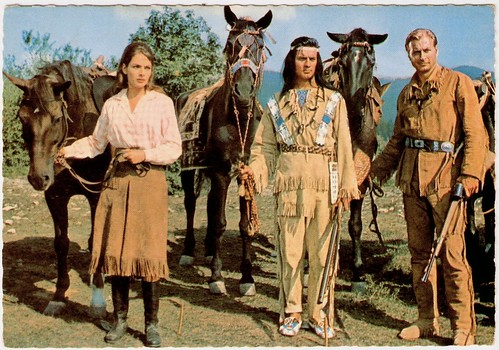
Karin Dor, Lex Barker, Pierre Brice in Der Schatz im Silbersee
Karin Dor, Lex Barker, Pierre Brice in Der Schatz im Silbersee. German postcard, no. ED 64. Photo: Constantin. Still from Der Schatz im Silbersee (1962).
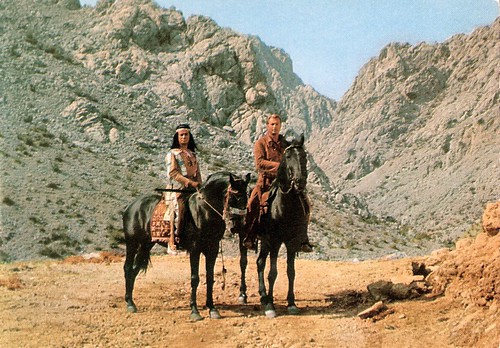
Pierre Brice and Lex Barker
Dutch postcard by Facet Publishers, Lunteren, no. 4. Photo: Rank Film Distributors (Holland) N.V. Publicity still from Der Schatz im Silbersee (1962).

A Superstar in West Germany


Der Schatz im Silbersee has a larger-than-life, fairy tale like atmosphere that attracted a huge audience. It was the very first German film to receive the Goldene Leinwand (Golden Screen), for having over 3 million visitors within 12 months. The film also received the Bambi-award 1963 as best box-office-production. It received furthermore a sum of 200.000 DM from the government as a film-prize.

The Old Shatterhand-Melodie, the title melody played on the harmonica by René Giessen and composed by Martin Böttcher, was the most successful track in the German hitparades during the 1960s. It stayed there for several months and over 100,000 copies were sold.

For that time this was very unusual, especially for a film music-track without any singers. The music was accompanied by members of the symphony-orchestra of the Norddeutscher Rundfunk. Later the theme was recorded as a vocal track by several singers, including a version by Pierre Brice.

Suddenly, Pierre Brice, who was virtually unknown in his homecountry and was barely holding his own in Italy, was a superstar in West Germany.
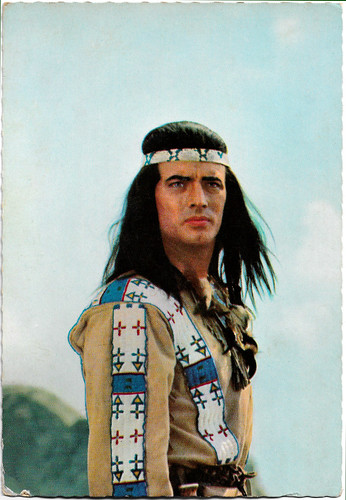
Winnetou I, Pierre Brice
German postcard , no. E 2. Photo: Constantin. Publicity Still for Winnetou I.Teil/Apache Gold (1963).

Winnetou I, Pierre Brice, Hrvoje Svob
Pierre Brice and Hrvoje Svob. German postcard, no. E 14. Photo: Constantin. Still from Winnetou I/Winnetou (1963).

Pierre Brice, Winnetou I
German postcard, no. E 5. Photo: Constantin. Still from Winnetou I/Winnetou (1963).

Blood Brothers


Der Schatz im Silbersee was the first Winnetou western, but it is set in time after the next film in the Winnetou series, Winnetou – 1. TeilApache Gold (Harald Reinl, 1963), again with a music score by Martin Böttcher.

Winnetou – 1. Teil, also starred Marie Versini as Winnetou's sister, Mario Adorf as the main villain and Croatian beauty Dunja Rajter.

The film depicts the first meeting of Winnetou and Old Shatterhand, but initially they find themselves fighting on opposite sides, and it takes the whole film (and a love story between Old Shatterhand and Winnetou's sister) until they realize each other's righteousness and become friends and blood brothers.

Pierre Brice would go on to portray Winnetou in a total of eleven films, alongside alternatively Lex Barker (Old Shatterhand in 7 films), Stewart Granger (Old Surehand in 3 films), and Rod Cameron (1 film) as the white heroes. All these Westerns were based on the Karl May books and were produced between 1962 and 1968.
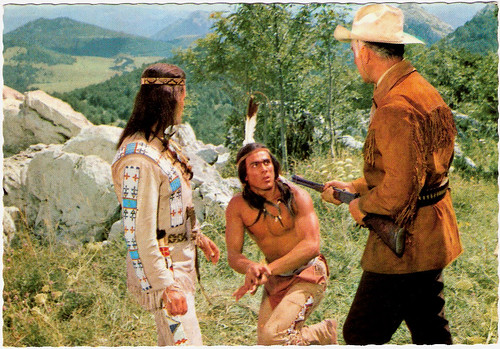
Pierre Brice, Gojko Mitić, Stewart Granger, Unter Geiern
Pierre Brice, Stewart Granger and Gojko Mitic. German postcard, no. 10. Photo: Constantin. Publicity still for Unter Geiern/Among Vultures (1964).
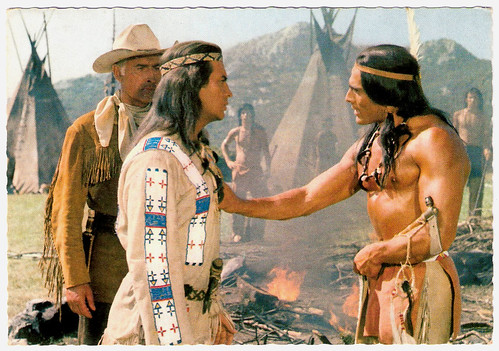
Gojko Mitic, Stewart Granger, Pierre Brice, Unter Geiern
German postcard, no. 35. Photo: Constantin. Publicity still for Unter Geiern/Among Vultures (1964).

Pierre Brice, Gojko Mitic, Unter Geiern
German postcard, no. 40. Photo: Constantin. Publicity still for Unter Geiern/Among Vultures (1964).

Peplum Spectacle


Pierre Brice appeared also in several other European films like Zorro contro Maciste/Samson and the Slave Queen (Umberto Lenzi, 1963), with Lex Barker in the non-Karl May film Die Hölle von Manitoba/A Place Called Glory (Sheldon Reynolds, 1965), the James Bond rip-off Schüsse im Dreivierteltakt/Operation Solo (Alfred Weidenmann, 1965), and the Peplum spectacle Dacii/The Dacians (Sergiu Nicolaescu, 1967) with Marie-José Nat.

In the anthology film Gern hab' ich die Frauen gekillt/Le Carnaval des barbouzes/Killer's Carnival (Sheldon Reynolds a.o., 1966) Stewart Granger, Lex Barker and Pierre Brice finally worked together - but for some reason, the three actors did not share a single scene in the film.

Pierre Brice (Winnetou) is dead
German postcard, no R 8. Photo: publicity still for Winnetou 2. Teil/Winnetou: The Red Gentleman (Harald Reinl, 1964) with Karin Dor.

Pierre Brice
German postcard by ISV, no. R 14. Photo: publicity still for Winnetou - 2. Teil/Last of the Renegades (1964).

Pierre Brice, Karin Dor
Karin Dor and Pierre Brice. German postcard, no. R 24. Photo: still from Winnetou - 2. Teil/Last of the Renegades (1964).
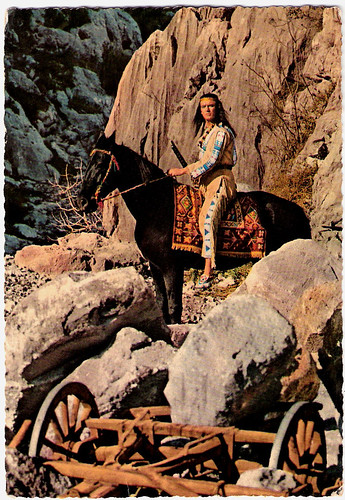
Pierre Brice
German postcard by Krüger. Photo: Bernard of Hollywood / CCC Produktion. Publicity still for Old Shattterhand (1964). Sent by mail in Luxemburg in 1966.

Lex Barker in Old Shatterhand
Lex Barker. German postcard by Kruger. Photo: Bernard of Hollywood (Bruno Bernard) / CCC-Produktion. Publicity still for Old Shatterhand (1964).
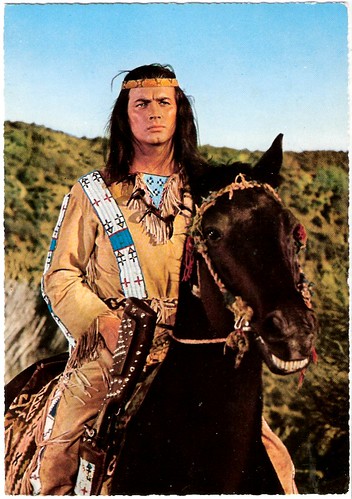
Pierre Brice
German postcard by Kruger. Photo: Bruno Bernard / CCC Produktion. Publicity Still for Old Shatterhand (1964).

Karl May Shows


During the 1970s, Pierre Brice played in supporting parts in films like the crime comedy La Pupa del Gangster/Get Rita (Giorgio Capitani, 1975), starring Marcello Mastroianni and Sophia Loren.

He also appeared in several TV shows like the Sci-Fi series Star Maidens (1976). But he will always be best remembered as Winnetou, whom he also played at the Karl May Festspiele in Elspe (1977-1986) and at the Bad Segeberg open air theater, dedicated only to productions of Karl May shows (1988-1991).

In 1979 he played Winnetou - with Siegfried Rauch as Old Shatterhand - in the TV series Winnetou le mescalero/My Friend Winnetou (Marcel Camus, 1980), which did not originate from Karl May material.

At age 69, he again acted in – and co-scripted - a TV mini series Winnetous Rückkehr/Winnetou's Return (Marijan David Vajda, 1998), which met devastating criticism.

Last Friday, 5 June 2015, the 86-years-old Brice was admitted to hospital with a high fever from a lung infection and he died early on Saturday in the arms of his wife, Hella Krekel. The pair, who lived for three decades in a country house 60 kilometers from Paris, had long been planning a return to her home state of Bavaria.

Pierre Brice
German postcard by Rüdel-Verlag. Photo: CCC / Constantin / Bruno Bernard. Publicity Still for Old Shatterhand (1964).
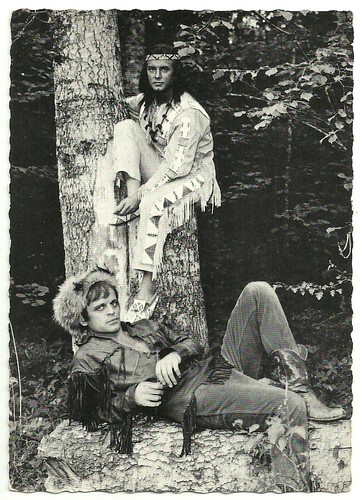
Pierre Brice and Klaus Kinski
With Klaus Kinski. German postcard by Filmbilder-Vertrieb Ernst Freihoff, Essen. Photo: Lothar Winkler.

Pierre Brice, Lex Barker
Vintage Dutch postcard. With Lex Barker.


US trailer for Il mulino delle donne di pietra/Mill of the Stone Women (1963). Source: Cult of the Cinema (YouTube).


Trailer for Winnetou - 2. Teil/Last of the Renegades (1964). Source: RialtoFilm (YouTube).


Scene from Winnetous Rückkehr/Winnetou's Return (1998). Source: SebastianVader (YouTube).

Sources: Mike Haberfelner ((Re)search My Trash), Deutsche Welle, Wikipedia and IMDb.

17 August 2014

Unter Geiern (1964)

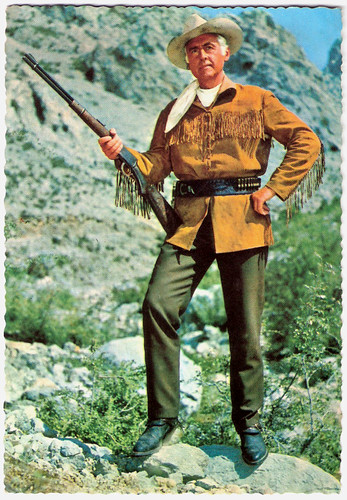
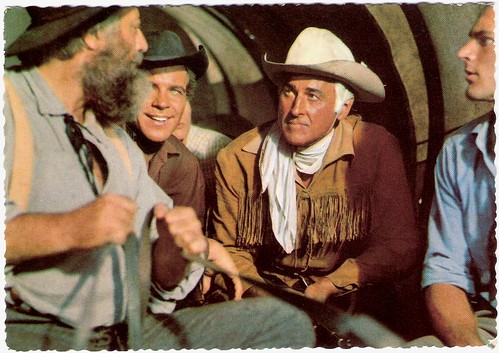
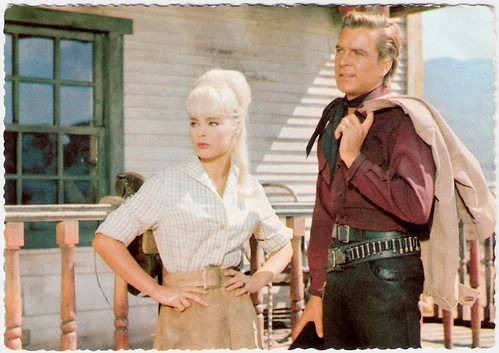
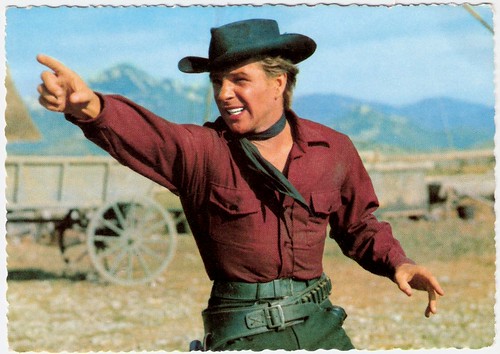
As the second post in our new weekly series of film specials, today the Euro-Western Unter Geiern/Among Vultures (Alfred Vohrer, 1964), based on one of the Winnetou novels by Karl May. It starred Stewart Granger as Old Surehand, Elke Sommer, Götz George and Pierre Brice as Winnetou. Unter Geiern, released in the US as Frontier Hellcat, was a co-production between West Germany, France, Italy and Yugoslavia, and was shot in Germany and Yugoslavia.

Götz George, Elke Sommer, Stewart Granger, Unter Geiern
German postcard. Photo: publicity still for Unter Geiern/Among Vultures (Alfred Vohrer, 1964) with Elke Sommer, Götz George and Stewart Granger.

Götz George, Unter Geiern
German collectors card. Photo: Constantin / Rialto. Publicity still for Unter Geiern/Among Vultures (Alfred Vohrer, 1964) with Götz George.

Old Surehand


Unter Geiern/Among Vultures (Alfred Vohrer, 1964) was the fourth in the series of 1960s European Westerns based on Karl May's Winnetou character.

For the first time  Stewart Granger stars as Old Surehand, although in Karl May's novel Old Shatterhand occurs as the main character. As 'Surehand', his hand is so sure that he can split an arrow aimed at him with a bullet in mid-air! Even Robin Hood would have been flabbergasted.

So Granger took over from Lex Barker as Winnetou's white 'blood brother', although his  age and stature did not resemble those of Karl May's character. In the books Surehand is a man with a troubled past, a tormented soul seeking redemption. But the Old Surehand played by Granger is, quite on the contrary, a jolly good fellow, who’s wearing Sunday trousers under buckskin.

The female lead role was played by Elke Sommer, and co-producer Artur Brauner asked Pierre Brice to return as Apache Chief Winnetou.

The young Mario Girotti, now better known as Terence Hill, played a supporting part as Baker Jr and the Romanian Gojko Mitic played the Indian Woladeh. In the following years, Mitic became one of the most beloved film stars of Eastern Europe as an Indian rebel in several Defa Westerns.

In Unter Geiern/Among Vultures, the experienced trapper Old Surehand and Winnetou investigate the murders of a frontier mother and daughter in Llano Estacado, a border area to New Mexico and Texas. The surviving husband, farmer Baumann, believes that his wife and daughter were murdered by Indians of the Shoshone tribe, but Old Surehand suspects that it is the work of a gang of bandits known as The Vultures, who disguise themselves as Indians while committing their crimes.

When attractive Annie (Elke Sommer), who was to deliver precious diamonds to Baumann, is kidnapped by the Vultures, Winnetou, Old Surehand and their friend Old Wabble pursue the gang. Meanwhile, the young Martin Baumann (Götz George) tries to free Annie.

Unter Geiern
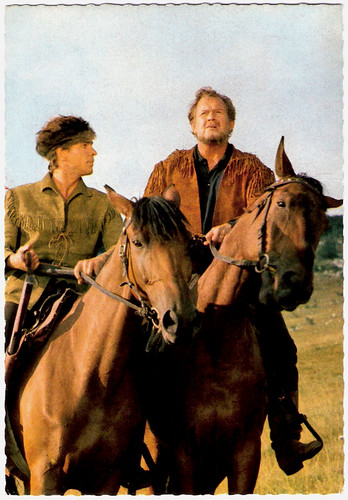
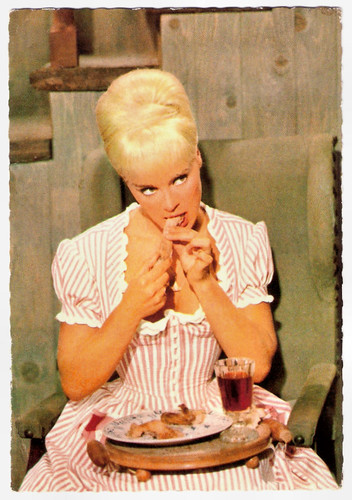
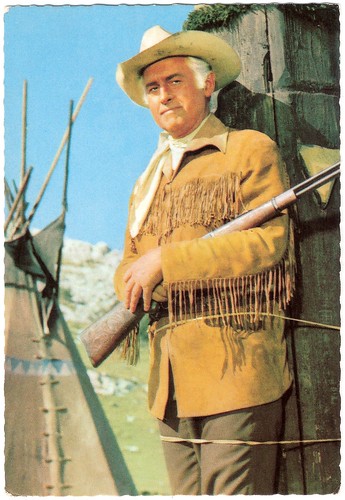
German postcard, no. 1 (1-64). Photo: Constantin. Publicity still for Unter Geiern/Among Vultures (Alfred Vohrer, 1964). Caption: "Nach herzlicher Verabschiedung von Frau und Tochter reitet Farmer Baumann, 'der Bärenjäger' genannt, mit seinem Sohn Martin zum Bärenjagd." (After a warm farewell of his wife and daughter, farmer Baumann (Walter Barnes), called 'the bear hunter', rides with his son Martin (Götz George) to the bear hunt).

Pierre Brice, Walter Barnes and Götz George in Unter Geiern
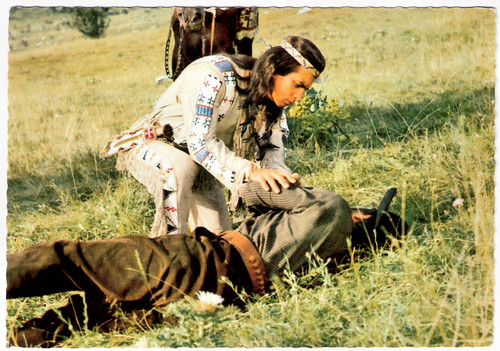
German postcard, no. 2 (1-64). Photo: Constantin. Publicity still for Unter Geiern/Among Vultures (Alfred Vohrer, 1964) with Pierre Brice as Winnetou. Caption: "Spuren von gerissenen Lämmern führen Baumann und seinen Freund Winnetou, der sich der Jagd angeschossen hat, direct zur Höhle des Bären. In mutigem Kampf wird das Ungetüm erlegt." (Traces of torn lambs lead Baumann and his friend Winnetou, who has joined the hunt, directly to the cave of the bear. In a bold fight the monster is killed.)

Pierre Brice, Unter Geiern
German postcard, no. 3 (1-64). Photo: Constantin. Publicity still for Unter Geiern/Among Vultures (Alfred Vohrer, 1964) with Pierre Brice as Winnetou. Caption: "Schüsse zerreißen der Stille des Tales. Fünf weisse Reiter werden von Indianern verfolgt. Einer von ihnen stürzt vom Pferd, aber Winnetou kennt den Toten nicht." (Shots rip the silence of the valley. Five white riders are pursued by Indians. One of them falls off his horse, but Winnetou does not know the dead.)

Götz George, Walter Barnes, Unter Geiern
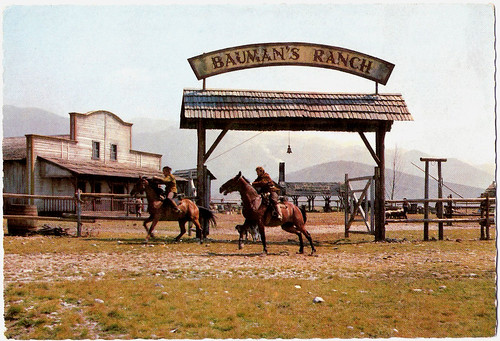
German postcard, no. 4 (1-64). Photo: Constantin. Publicity still for Unter Geiern/Among Vultures (Alfred Vohrer, 1964) with Götz George and Walter Barnes. Caption: "Rauchwolken in Richtung von Baumanns Ranch künden Unheil an. Von einer schreckligen Ahnung ergriffen, reiten die drei Jäger in rasendem Galopp zur Farm zurück." (Clouds of smoke in the direction of the Baumann Ranch herald disaster. From a horrible foreboding seized, the three hunters ride at a furious gallop back to the farm.)

Pierre Brice, Gojko Mitić, Stewart Granger, Unter Geiern
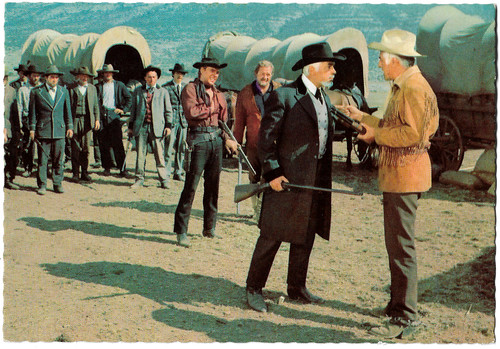
German postcard, no. 10 (1-64). Photo: Constantin. Publicity still for Unter Geiern/Among Vultures (Alfred Vohrer, 1964) with Gojko Mitic, Stewart Granger and Pierre Brice. Caption: "Winnetou hat von einem Hügel aus den Überfall beobachtet. Man ist sich einig, dass es sich nur um die berüchtigten Geiern handel kann. Woladeh sollte auch beseitigt werden, weil er zu viel vom Banditenüberfall auf Baumann's Ranch wusste." (Winnetou has watched the raid from a hill. Everyone agrees that it can only be the infamous Vultures gang. Woladeh should also be eliminated because he knew too much of the bandit raid on Baumann's Ranch.)

Götz George and Miha Baloh in Unter Geiern
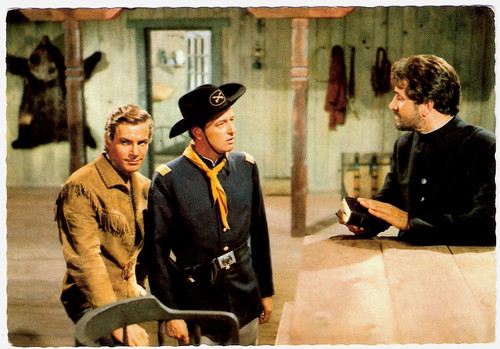
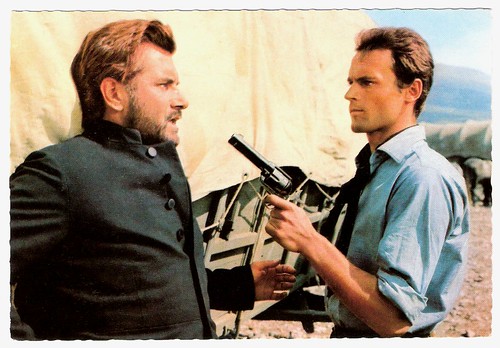
German postcard, no. 15 (1-64). Photo: Constantin. Publicity still for Unter Geiern/Among Vultures (Alfred Vohrer, 1964) with Götz George (left) and Miha Baloh (right). Caption: "Annies Blicken entgeht es nicht, wie der Offizier dem 'Prediger' einen Zettel zusteckt. Old Surehand erkennt in ihm ein Geier-Mitglied. Im entstehenden Kampf wird der falsche Soldat getötet, aber der Prediger kann unbemerkt entfliehen." (It does not escape Annie's eyes, that the officer hands a note to the 'preacher' (Miha Baloh). Old Surehand recognizes a Vulture member in him. In the resulting fight, the fake soldier is killed, but the preacher can escape unnoticed.)

Stewart Granger in Unter Geiern
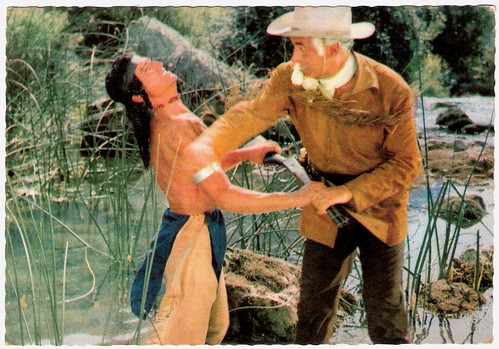
German postcard, no. 28 (1-64). Photo: Constantin. Publicity still for Unter Geiern/Among Vultures (Alfred Vohrer, 1964). Caption: "Old Surehand und seine Begleiter werden auf dem Weg zum Treck von Schschonen vervolgt. Mit seiner berühmten 'sicheren Hand' macht Old Surehand einen Indianer kampfunfähig. Baumann aber werd entführt und in das Lager der Schoschonen gebracht." (Old Surehand (Stewart Granger) and his companion are followed on the way to trek by Shoshone. With his famous 'safe hands' Old Surehand makes an Indian incapacitating. But Baumann is kidnapped and taken to the camp of Shoshone.)

Stewart Granger in Unter Geiern
German postcard, no. 37 (1-64). Photo: Constantin. Publicity still for Unter Geiern/Among Vultures (Alfred Vohrer, 1964) with Stewart Granger. Caption: "Lediglich Old Surehands Arme sind frei für sein Gewehrm das er zur Abwehr der Pfeile, aber nicht zum Schiessen benützen darf. Mit List und grossem Geschick wehrt sich Old Surehand seiner haut. Keiner der Pfeile trifft." (Only Old Surehand's arms are free for his rifle that he can use to ward off the arrows, but may not use for shooting. With cunning and great skill, Old Surehand defends his skin. None of the arrows hits.)

Pierre Brice, Gojko Mitic, Unter Geiern
German postcard, no. 40. Photo: Constantin. Publicity still for Unter Geiern/Among Vultures (Alfred Vohrer, 1964) with Gojko Mitic and Pierre Brice. Caption: "Wokadeh und seine Krieger, dem Häuptling zur Seite Winnetou, reiten in das 'Tal der Todes' um Oitka-Peteh beizusetzen. Das Tal ist eine Stätte des Verwüstung. Wokadeh erkennt nun die wahren Banditen, last Baumann frei und verspricht Winnetou Hilfe bei den Jagd nach den Geiern." (Wokadeh (Gojko Mitic) and his warriors, the chief at Winnetou's side, ride into the 'valley of death' to bury Oitka-Peteh. The valley is a place of Desolation. Wokadeh now recognizes the true bandits, he lets Baumann free and promises Winnetou to help in the hunt for the Vultures.)

Götz George, Unter Geiern
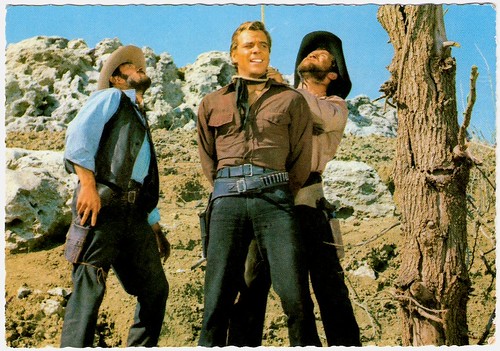
German postcard, no. 43 (1-64). Photo: Constantin / Rialto. Publicity still for Unter Geiern/Among Vultures (1964, Alfred Vohrer). Caption: "Nur allzugern sind die Geier bereit, Martin zu hängen." (All too glad, the vultures are ready to hang Martin (Götz George).)

Mario Girotti (Terence Hill) and Mila Baloh in Unter Geiern
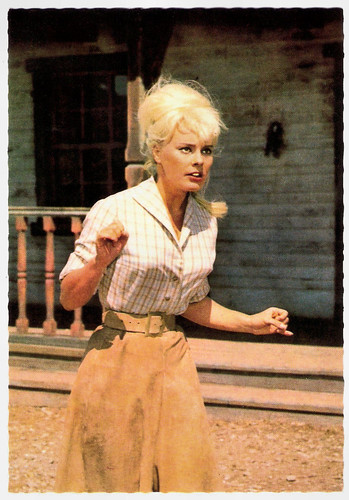
German postcard, no. 45 (1-64). Photo: Rialto. Publicity still for Unter Geiern/Among Vultures with Mario Girotti (Terence Hill) as Baker and Mila Baloh as Reverend Weller. Caption: "Einige Siedler, die ebenfals mistrauisch geworden sind, halten Weller (Mila Baloh) in Schach. Mann beschliesst sowohl Martin as die Geier im Auge zu behalten." (Some settlers, who have also become suspicious, hold Weller in check. They decide to keep an eye on both Martin as the Vulture.)

Sieghardt Rupp in Unter Geiern
German postcard, no. 57 (1-64). Photo: Constantin. Publicity still for Unter Geiern/Among Vultures (Alfred Vohrer, 1964) with at right Sieghardt Rupp as the gang leader of the Vultures. Caption: "Geierboss Preston fordert Old Surehand auf, allein in Felsental zu kommen, um Martin zu retten." (Preston, the boss of the Vultures (Sieghardt Rupp), calls Old Surehand to come alone in Felsental (Rocky Valley) to rescue Martin.)

Breathtaking cinematography


The first Karl May Western, Der Schatz im Silbersee/Treasure of Silver Lake (Harald Reinl, 1962) had been the most successful German film of the 1962/1963 season.

Director Harald Reinl and producer Horst Wendlandt then created a series of Euro-Westerns, all based on the novels by Karl May. Their next film, Winnetou - 1. Teil/Apache Gold (Harald Reinl, 1963) was in fact a prequel to Der Schatz im Silbersee which introduced Apache chief Winnetou and told how he met Old Shatterhand.

The script of Unter Geiern combines elements from two different Karl May novels, but Old Surehand appears in neither of them. The reason for this, is quite prosaic: originally Lex Barker, who had played Old Shatterhand in the first two films, would appear once again as Old Shatterhand alongside Pierre Brice, in a film called Winnetou und der Bärenjäger/Winnetou and the Bear Hunter, but Wendlandt thought Granger was a big catch, and asked his screenwriters to rework the entire script and write Granger/Old Surehand into it.

Most critics decided that Unter Geiern could not hold a candle to the earlier Karl May-films. The chemistry between Pierre Brice and Stewart Granger did not quite match that of Brice and Lex Barker.

At IMDb reviewer, Henri Sauvage, writes: "cinematography is occasionally breathtaking. (If possible, you should try to catch this in letterbox format, just for the gorgeous scenery.) The action sequences come off fairly well, too, and the bad guys are appropriately villainous."

Scherpschutter in his review at the Spaghetti Western Database: "Loyal fans of the series often call this one of the better entries. I can only partially agree. The film was aimed at a slightly more mature audience than the previous movies. The slaughter of the Baumann family (although not shown) is quite shocking, and the shootout near the end between the Vultures and the settlers, is remarkably violent. But the bulk of the movie is the usual heroic Karl May stuff, with Old Surehand put to a survival test by the Shoshones, and Winnetou leading the Indian braves in true cavalry style to the aid of the settlers when all seems lost. And then there’s Stewart Granger … Reportedly Granger was paid $ 75.000 for the part, which makes him the best-paid actor of the series, and he virtually directed his own scenes. He had completely different ideas about the movie than most other people on the set, and his approach led to a rather incongruous movie, with a dramatic story line of a young man, Martin Baumann, seeking the murderers of his family members, and a lot of funny and would-be funny scenes – featuring Surehand - thrown in."

Unter Geiern was a success in the German cinemas and was awarded the Goldene Leinwand (Golden Screen) for more than 3 million visitors in a year. The Karl May-series was to be continued...

Stewart Granger in Unter Geiern
German postcard by ISV, no. C 3. Photo: Constantin. Publicity still for Unter Geiern/Among Vultures (Alfred Vohrer, 1964) with Stewart Granger as Old Surehand.
Stewart Granger, Unter Geiern
German postcard by ISV, no. C 4. Photo: Constantin. Publicity still for Unter Geiern/Among Vultures (Alfred Vohrer, 1964) with Stewart Granger as Old Surehand.

Gojko Mitic, Stewart Granger, Pierre Brice, Unter Geiern
German postcard by ISV, no. C 5. Photo: Constantin. Publicity still for Unter Geiern/Among Vultures (Alfred Vohrer, 1964) with Gojko Mitic, Stewart Granger and Pierre Brice.

Elke Sommer and Stewart Granger in Unter Geiern
German postcard by ISV, no. C 8. Photo: Constantin. Publicity still for Unter Geiern/Among Vultures (Alfred Vohrer, 1964) with Elke Sommer and Stewart Granger.

Stewart Granger and Götz George in Unter Geiern
German postcard by ISV, no. C 11. Photo: Constantin. Publicity still for Unter Geiern/Among Vultures (Alfred Vohrer, 1964) with Stewart Granger and Götz George.

Elke Sommer and Götz George in Unter Geiern
German postcard by ISV, no. C 13. Photo: Constantin. Publicity still for Unter Geiern/Among Vultures (Alfred Vohrer, 1964) with Elke Sommer and Götz George.

Götz George in Unter Geiern
German postcard by ISV, no. C 16. Photo: Constantin. Publicity still for Unter Geiern/Among Vultures (Alfred Vohrer, 1964) with Götz George.

Götz George, Unter Geiern
German postcard by ISV, no. C 20. Photo: Constantin. Publicity still for Unter Geiern/Among Vultures (Alfred Vohrer, 1964) with Götz George.

Sources: Scherpschutter (Spaghettiwestern.net), Spaghettiwestern.net, Wikipedia (English and German), and IMDb.