Showing posts with label Gérard Philipe. Show all posts

19 August 2023

Gérard Philipe in East Germany

In 1956, the French idol Gérard Philipe worked in socialist East Germany. He starred as the popular jester in Les Aventures de Till L’Espiègle/Die Abenteuer des Till Ulenspiegel/The Adventures of Till Ulenspiegel (Gérard Philipe, Joris Ivens, 1956), a co-production between Ariane Film in France and DEFA in the GDR. The novel 'The Legend of Thyl Ulenspiegel and Lamme Goedzak' (1867) by Belgian author Charles De Coster served as the literary model. Coster's novel recounts the allegorical adventures as those of a Flemish prankster, Thyl Ulenspiegel, directly before and during the Dutch Revolt against Spanish rule in the Netherlands. It was the only time in his career that Gérard Philipe also directed a film. But when the Soviet tanks invaded Hungary, it lead to a great wave of indignation in France against the Eastern Bloc.

Gérard Philipe
East German postcard by VEB DEFA-Studio für Spielfilme, Postdam-Babelsberg, no. 49, 1956. Photo: Pattenheimer.

Gérard Philipe and Jean Carmet on the set of Les aventures de Till L'Espiègle (1956)
East German postcard by VEB Progress Film-Vertrieb, Berlin, no. 159, 1956. Photo: Gerhard Puhlmann. Gérard Philipe and Jean Carmet on the set of Les aventures de Till L'Espiègle/Bold Adventure (Gérard Philipe, Joris Ivens, 1956).

Gérard Philipe and Elfriede Florin
East German postcard by VEB Progress Film-Vertrieb, Berlin, no. 115, 1956. Photo: Gerhard Puhlmann. Gérard Philipe and German actress Elfriede Florin, who played Soetkin in Les Aventures de Till L’Espiègle/Die Abenteuer des Till Ulenspiegel/The Adventures of Till Ulenspiegel (Gérard Philipe, Joris Ivens, 1956).
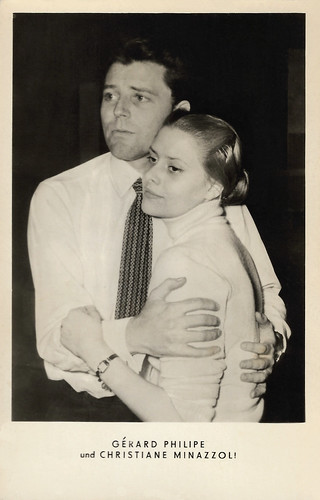
Gérard Philipe and Christiane Minazzoli
East German postcard by VEB Volkskunstverlag Reichenbach L.V., no. G 591, 1956. Photo: Zentralbild, Berlin. Gérard Philipe and Christiane Minazzoli, with whom he appeared in the play 'Ruys Blas' by Victor Hugo, directed by Jean Vilar at the Theatre National Populaire in Paris in 1954.
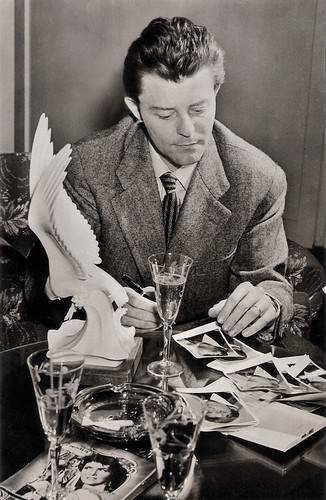
Gérard Philipe
East German postcard by VEB Progress Film-Vertrieb, Berlin, no. 146, 1956. Photo: Gerhard Kiesling. Caption: Gérard Philipe gives autographs during his visit to Berlin.

A cheerful farce with a socially critical impetus


Flanders in the 16th century. In Les Aventures de Till L’Espiègle/Die Abenteuer des Till Ulenspiegel/The Adventures of Till Ulenspiegel (Gérard Philipe, Joris Ivens, 1956), the Duke of Alva (Jean Vilar) oppresses the Flemish people in the name of the Spanish king. At the very moment when Till Ulenspiegel (Gérard Philipe) and his beloved Nele (Nicole Berger) become engaged, the marauding band of troops reach the Flemish village of Damme. The rebel Claes (Fernand Ledoux), Tijl Uilenspiegel's father, is considered a heretic by the Spanish army. Tijl has to watch helplessly as his father is executed. "Long live freedom!" are Claes' last words before he dies at the stake. This experience, however, radically changes Till’s life: the young man, who was once the village lark and mischievous prankster, now becomes a fighter against the Spaniards and their governor, Alba. Together with his friend Lamme Goedzak (Jean Carmet), Tijl uses a ruse to enter the service of the Duke of Alva. That way he can better organise resistance against the Spanish. Prince William of Orange (Wilhelm Koch-Hooge) and the Beggars will assist him in this.

Gérard Philipe's real-life father, Marcel Philip, collaborated with the German occupiers during the Second World War. He was the administrator of the Parc Palace, the meeting place of the Germans in Grasse, and also a regional delegate and member of the "Comité directeur" of the Parti populaire français, a party founded by Jacques Doriot for the Alpes-Maritimes département. His son, Gérard, was his whole life a staunch social liberal and fought in the Résistance in August 1944, during the uprising for the liberation of Paris. Marcel Philip was imprisoned, first in Saint-Denis, then in Grasse. His son tried to use his connections to help him but was only partially successful. However, his father managed to escape in 1945 while his son was performing as Caligula in Paris. Marcel went to Spain and was sentenced to death in absentia. After an amnesty, he returned to France, ten years after his son's death.

Gérard Philipe came up with the idea of filming Charles De Coster's novel 'The Legend of Thyl Ulenspiegel and Lamme Goedzak' as early as 1949. However, it took him seven years to find producers who would support his project, as the book about Flanders' fight for freedom against the Spanish occupiers was considered too political and also criticised the Catholic Church with its Inquisition. The East German film company DEFA had been working on an adaptation of the material since the end of 1947, and Bertolt Brecht and Günther Weisenborn, among others, had been discussed as screenwriters. In addition, DEFA had been trying to have international artists appear in feature films since the beginning of the 1950s. Between 1956 and 1959, four co-productions were thus made between the GDR and France. Defa hoped to break the boycott to which its films were subjected in the East-West conflict: "The presence of world-famous actors such as Gérard Philipe [...] strengthens DEFA's self-confidence and promotes the international reputation of GDR cinematography."

Les Aventures de Till L’Espiègle/Die Abenteuer des Till Ulenspiegel/The Adventures of Till Ulenspiegel was shot in 1956 in non-socialist countries, i.e. countries with high exchange rates, in Sweden, the Netherlands and Nice, France. In Raguhn in Saxony-Anhalt, the battle between the Spanish and the Flemings was filmed with over a thousand extras in period costumes. The local cultural centre in Raguhn still bears the name 'Gérard Philipe'. Originally, the Dutch documentary filmmaker Joris Ivens was supposed to direct the film, and it was through his contacts that the co-production with DEFA ultimately came about. However, for scheduling reasons he had to cancel at the beginning of the shoot, so Gérard Philipe directed a film himself for the only time in his career. Ivens was sometimes at his side as an advisor. The film buildings were created by Léon Barsacq and Alfred Tolle. The costumes were designed by Rosine Delamare and Ingeborg Wilfert.

The film premiere of The Adventures of Till Ulenspiegel took place in Paris on 7 November 1956, shortly after the Hungarian People's Uprising against the ruling Communist Party had been crushed by the Soviet Army, leading to a great wave of indignation in France against the Eastern Bloc. French audiences reacted accordingly by flunking the film as a co-production with an East German film company. However, there were 2,304,114 admissions in France and thus the film was not a 'total commercial failure' as some sources suggest. The first screening in the GDR took place on 4 January 1957 at the Babylon cinema in Berlin. Pitt Herrmann at Filmportal.de: "GDR audiences took the national pathos of the title character, which was diametrically opposed to the internationalist aspirations of GDR socialism, as a reference to the 1956 Hungarian uprising, which was bloodily put down by Soviet troops. Of course, this was not the intention of the film people in Paris or Babelsberg." The many GDR postcards of Philipe give an indication how popular he was in the East Germany. The Encyclopedia of International Film described The Adventures of Till Ulenspiegel as a "large-scale production that suffers from directorial weaknesses". "Beautiful to look at, but rather tough" was the verdict of Cinema. Ralf Schenk wrote in the Berliner Zeitung that the film ultimately turned into "a turbulent, but also stylistically unbalanced, eclectic puzzle". As a "cheerful farce with a socially critical impetus", however, it could "still find its friends today", thanks above all to "the brilliant cast in supporting roles".
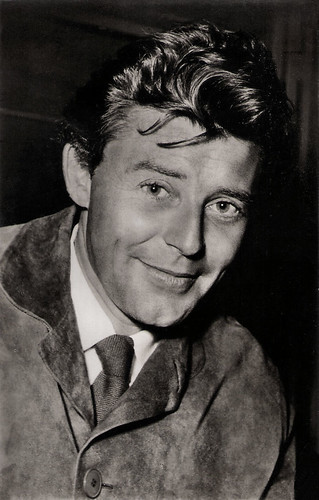
Gérard Philipe
East German postcard by VEB Progress Film-Vertrieb, Berlin, no. 148, 1956. Photo: Gerhard Puhlmann.
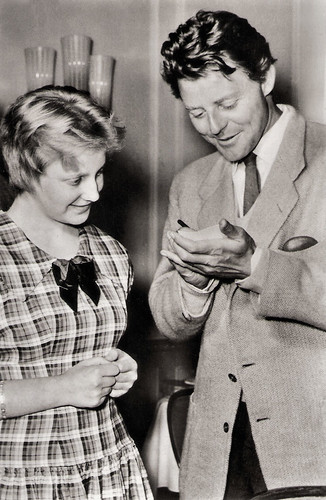
Gérard Philipe
East-German postcard by VEB Progress Film-Vertrieb, Berlin, no. 158, 1956. Photo: Gerhard Puhlmann. Caption: Gérard Philipe is always pursued by autograph hunters.

Gérard Philipe and Michèle Morgan in Les Grandes Manoeuvres (1955)
East-German postcard by VEB Progress Film-Vertrieb, Berlin, no. 194. Michèle Morgan and Gérard Philipe in Les grandes manoeuvres/Summer Manoeuvres (René Clair, 1955).

Dany Carrel and Gérard Philipe in Les grandes manoeuvres (1955)
East-German postcard by VEB Progress Film-Vertrieb, Berlin, no. 212. Dany Carrel and Gérard Philipe in Les grandes manoeuvres/Summer Manoeuvres (René Clair, 1955).
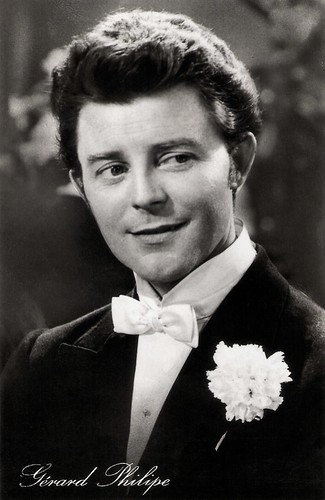
Gérard Philipe in Pot-Bouille (1957)
East-German postcard by VEB Progress Filmvertrieb, no. 1290, 1960. Photo: Gérard Philipe in Pot-Bouille/Lovers of Paris (Julien Duvivier, 1957).

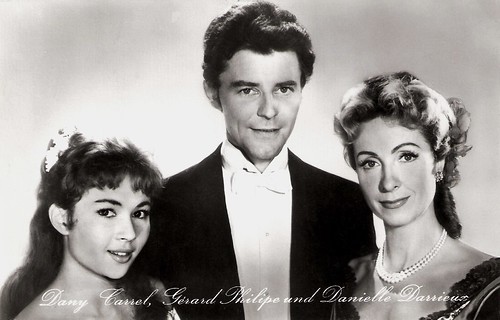
Dany Carrel, Gérard Philipe and Danièle Darrieux in Pot-Bouille (1957)
East-German postcard by VEB Progress Filmvertrieb, no. 1294, 1960. Photo: Dany Carrel, Gérard Philipe and Danièle Darrieux in Pot-Bouille/Lovers of Paris (Julien Duvivier, 1957), adapted from the novel by Emile Zola.

Gérard Philipe and Liselotte Pulver in Le joueur (1958)
East-German postcard by VEB Progress Film-Vertrieb, no. 2699. Retail price: 0,20 MDN. Photo: Gérard Philipe and Liselotte Pulver in Le joueur/The Gambler (Claude Autant-Lara, 1958).

Sources: Pitt Herrmann (Filmportal.de), Renaud Soyer (Box Office Story), Stiftung DEFA Filme, Wikipedia (French, German and English) and IMDb.

30 April 2023

Gérard Philipe

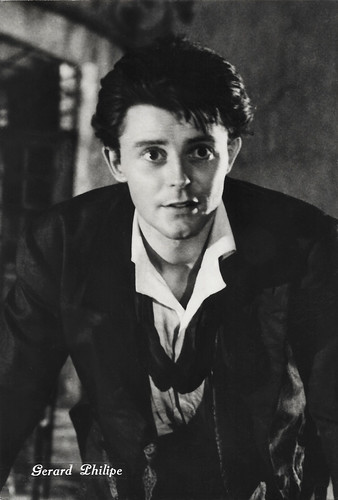
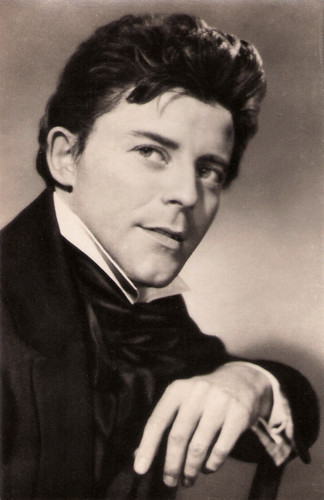
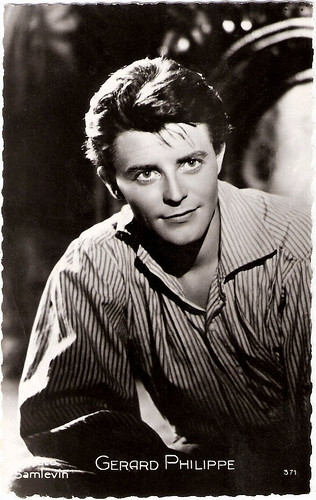
Gérard Philipe (1922–1959) is still a legendary idol of French cinema. He was adored for his good looks, but Philipe was also a very talented actor. He was sought out by France's preeminent directors for his versatility and professionalism and played roles as diverse as Faust and Modigliani.

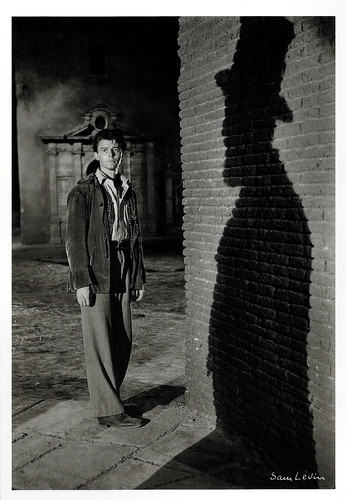
Gérard Philipe
French Postcard by Editions P.I., Paris, no. 371. Photo: Sam Lévin.

Gérard Philipe
French postcard in the Collection Image Noire by Editions Hazan, no. 6030, 1988. Photo: Raymond Voinquel. Caption: Gérard Philipe, 1946.

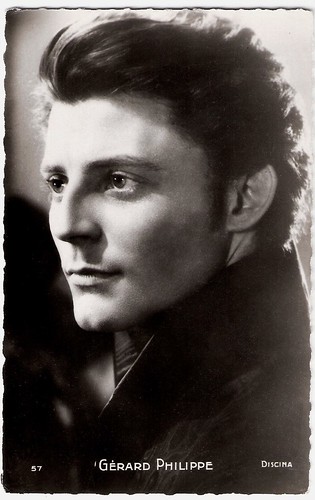
Gérard Philipe
French postcard by Editions P.I., Paris, no. 57. Photo: Discina.

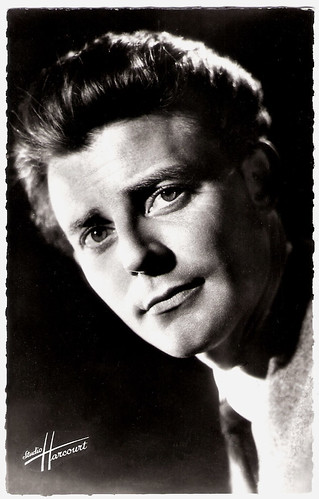
Gérard Philipe
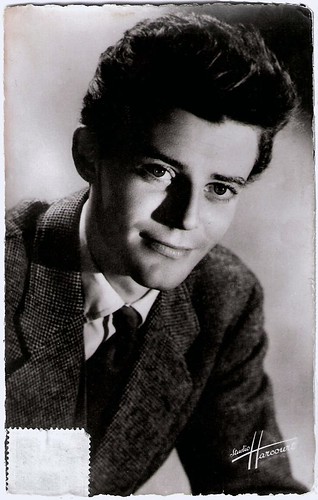
French postcard by Editions du Globe, Paris. Photo: Studio Harcourt.

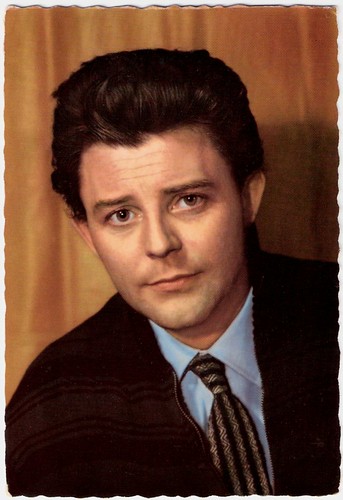
Gérard Philipe
German postcard by Universum-Film Aktiengesellschaft (UFA), Berlin-Tempelhof, no. 1041. Photo: UFA.

Rave reviews


Gérard Philipe (sometimes written as Philippe) was born Gérard Philip in Cannes, France in 1922. In 1940, Gérard left school and his parents wanted him to become a lawyer. His mother noticed that he was only interested in acting, but his father was against the idea.

Gérard's father, a successful businessman, was a right-wing extremist and collaborated with the Nazis. After the war, he was forced to exile to Spain to escape a death sentence. Gérard himself was his whole life a staunch social liberal politically wise.

Actor Claude Dauphin introduced the young Philipe in 1942 to the stage. One of his first parts was as the angel in the play 'Sodome et Gomorrhe' by Jean Giraudoux in 1943. Director Marc Allégret decided that he showed some promise and gave him a small part in his film Les petites du quai aux fleurs/The Girls From the Quai aux Fleurs (Marc Allégret, 1944) starring Odette Joyeux.

With the support of his admirer Jean Cocteau, he entered the Paris Conservatory where under the tutelage of Georges Le Roy he discovered his passion for live theatre. In 1945 he received rave reviews for his performance in the stage production of Albert Camus’ 'Caligula'.

This success further opened the doors to the cinema. His first leading part in Le pays sans étoiles/Land Without Stars (Georges Lacombe, 1946) opposite Jany Holt got so many favourable reviews that he became a star.

Gérard Philipe
French postcard by Editions du Globe, no. 22. Photo: Studio Harcourt.

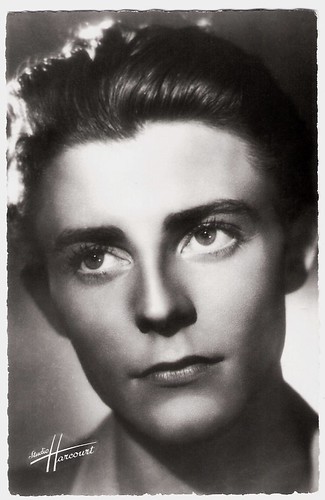
Gérard Philipe
French postcard by Editions du Globe (E.D.U.G.), Paris, no. 31. Photo: Studio Harcourt.

Gérard Philipe
British postcard in the Picturegoer Series, London, no. D 468. Photo: Sam Lévin.

Gérard Philipe
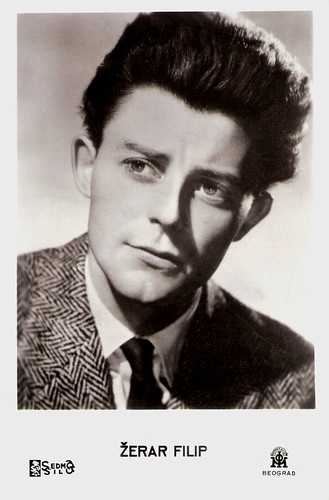
Serbian postcard by Sedm Sil.

Gérard Philipe
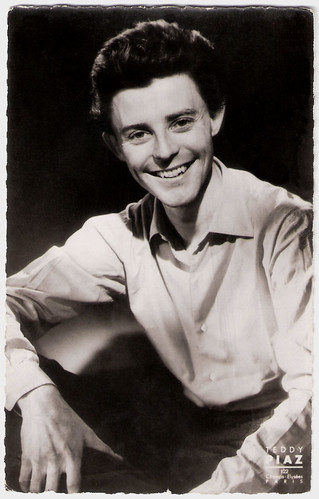
French postcard by Editions du Globe, no. 51. Photo: Teddy Piaz, Paris.

Gérard Philipe
French postcard by Editions la Malibran, Saint Dié, no. CF 44.

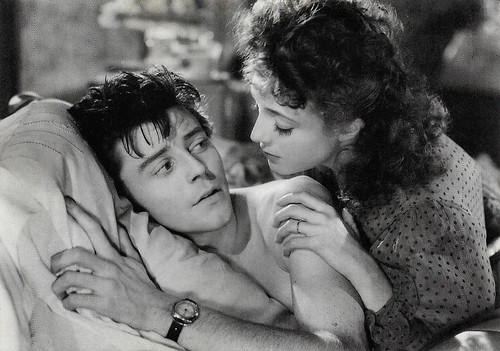
Gérard Philipe and Micheline Presle in Le Diable au corps (1947)
French postcard by Editions La Malibran, Paris, no. CF 23, 1990. Gérard Philipe and Micheline Presle in Le Diable au corps/Devil in the Flesh (Claude Autant-Lara, 1947).

Gérard Philipe in La chartreuse de Parme (1948)
Italian postcard by Vetta Traldi, Milano, no. 70. Gérard Philipe in La chartreuse de Parme/The Charterhouse of Parma (Christian-Jaque, 1948).

Tongue-in-cheek titular swashbuckler


In 1947, Gérard Philipe exploded upon the European film scene in Le diable au corps/Devil in the Flesh (Claude Autant-Lara, 1947), playing Francois Jaubert, a callow youth in love with much older and very married Micheline Presle.

Superstardom followed almost immediately: female filmgoers doted upon Philippe's sensitive, handsome features and strapping physique, while men identified with his soulfulness and introspection. Next, he would take on prominent roles in such classic films as Une si jolie petite plage/Such a Pretty Little Beach (Yves Allégret, 1949), and La beauté du diable/Beauty and the Devil (René Clair, 1950) as Faust.

He was an international success as the tongue-in-cheek titular swashbuckler Fanfan la Tulipe/Fan-Fan the Tulip (Christian-Jaque, 1952), one of the most popular historical-adventure films made in France. At French Films, James Travers reviews: "Not only is the film impeccably made, with lavish production values, stunning cinematography and impressively choreographed fight scenes, but it has a timeless quality which will no doubt ensure it will remain a popular classic for years to come. Philipe excels in this film in what is regarded by many as his finest film role, the indefatigable womaniser and agile swordsman Fanfan la Tulipe. Philipe is simply brilliant in the role, tackling the numerous swordfights and Henri Jeanson’s sparkling dialogue with equal relish."

He appeared with such great stars of the European cinema as Italian beauty Gina Lollobrigida in Les belles de nuit/Beauties of the Night (René Clair, 1952), with Michèle Morgan in both Les orgueilleux/The Proud Ones (Yves Allégret, 1953) and Les grandes manœuvres/The Grand Maneuver (René Clair, 1955).

In 1956, Philipe starred in and directed a film adaptation of the old folk tale 'Till Eulenspiegel', Les aventures de Till L'Espiègle/Bold Adventure (Gérard Philipe, Joris Ivens, 1956). The French-East-German coproduction was not a success. He simultaneously pursued his stage career, with a keen involvement in the Théatre National de Paris, which would endure up until his death. Whilst working at the TNP, Philipe, a strong believer in egalitarianism, would draw exactly the same salary as junior actors. He would also become president of the French actors union, actively promoting the rights of actors.

Gérard Philipe and Renée Faure in La chartreuse de Parme (1948)
French postcard by Editions La Malibran, Paris, no. CF 24. Photo: N. Hayer. Gérard Philipe and Renée Faure in La chartreuse de Parme (Christian-Jaque, 1948).

Gérard Philipe and Michel Simon in La Beauté du diable (1950)
French postcard in the Collection Magie Noire by Editions Hazan, Paris, no. 6192, 1989. Photo: Sam Lévin. Gérard Philipe and the shadow of Michel Simon in La Beauté du diable (René Clair, 1950).

Gérard Philipe and Michel Simon in La Beauté du diable (1950)
French postcard in the Collection Magie Noire by Editions Hazan, Paris, no. 6195, 1989. Photo: Sam Lévin. Gérard Philipe and Michel Simon in La Beauté du diable (René Clair, 1950).

Gérard Philipe in Fanfan la Tulipe (1952)
West German postcard by Rüdel Verlag, Hamburg-Bergedorf, no. 467. Photo: Allianz- Film. Gérard Philipe in Fanfan la Tulipe/Fan-Fan the Tulip (Christian-Jaque, 1952).

Gérard Philipe and Genevieve Page in Fanfan la Tulipe (1952)
Russian collectors card. Photo: Gérard Philipe and Genevieve Page in Fanfan la Tulipe (Christian-Jaque, 1952).

Gérard Philipe
East-German postcard by VEB Progress Film-Vertrieb, Berlin, no. 73. Photo: Franco-London-Film S.A. Publicity still for Le rouge et le noir/The Red and the Black (Claude Autant-Lara, 1954).

Gérard Philipe and Jean Carmet on the set of Les aventures de Till L'Espiègle (1956)
East German postcard by VEB Progress Film-Vertrieb, Berlin, no. 159, 1956. Photo: Gerhard Puhlmann. Gérard Philipe and Jean Carmet on the set of Les aventures de Till L'Espiègle/Bold Adventure (Gérard Philipe, Joris Ivens, 1956).

Gérard Philipe in Pot-Bouille (1957)
East-German postcard by VEB Progress Filmvertrieb, no. 1290, 1960. Photo: publicity still for Pot-Bouille/Lovers of Paris (Julien Duvivier, 1957).

Legendary status


Gérard Philipe continued his string of film successes throughout the 1950s. Among these films were the Fyodor Dostoevsky adaptation Le joueur/The Gambler (Claude Autant-Lara, 1958) with Liselotte Pulver, and Les liaisons dangereuses/Dangerous Liaisons (Roger Vadim, 1959) opposite Jeanne Moreau.

In 1959 doctors told Philippe that he had liver cancer. On 25 November that year, while working on Luis Buñuel's Le Fievre Monte a El Pao/Fever Mounts at El Pao (Luis Buñuel, 1959), he died at the peak of his popularity. He was just 36 years old.

The news provoked an immediate and intense outpouring of grief. His early death elevated him to a near-legendary status in France. Since 1951, Philipe was married to actress and writer Nicole Fourcade, with whom he had two children, writer and actor Anne-Marie Philipe (1954) and Olivier Philipe (1957).

Nicole adopted the pseudonym Anne Philipe, and wrote two books about her husband, 'Souvenirs' (1960) and 'Le Temps d'un soupir' (1963, No Longer Than a Sigh). In 1961, Gérard's portrait appeared on a French commemorative postage stamp. There is a film festival named in his honour as well as a number of theatres, schools and colleges in various parts of France. He was also very popular in Germany, and a Berlin theatre has been named after him.

Dany Carrel, Gérard Philipe and Danièle Darrieux in Pot-Bouille (1957)
East-German postcard by VEB Progress Filmvertrieb, no. 1294, 1960. Photo: publicity still for Pot-Bouille/Lovers of Paris (Julien Duvivier, 1957) with Dany Carrel and Danielle Darrieux.

Gérard Philipe and Liselotte Pulver in Le joueur (1958)
East-German postcard by VEB Progress Film-Vertrieb, no. 2699. Retail price: 0,20 MDN. Photo: publicity still for Le joueur/The Gambler (Claude Autant-Lara, 1958) with Liselotte Pulver.

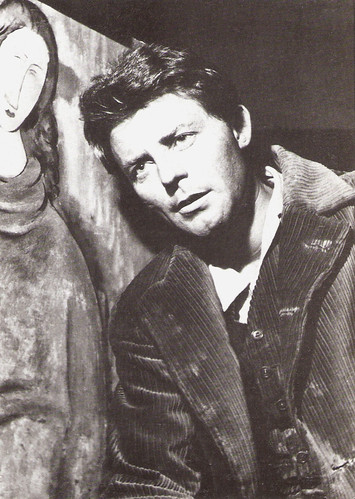
Gérard Philipe in Les amants de Montparnasse (1958)
French postcard by Sofraneme, Levallois Perret no. CP 210. Photo: publicity still for Les amants de Montparnasse/The Lovers of Montparnasse (Jacques Becker, 1958) with Gérard Philipe as painter Amedeo Modigliani.

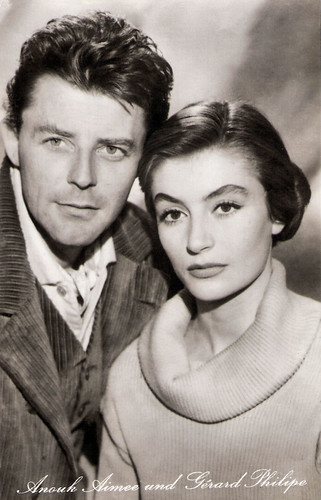
Gérard Philipe and Anouk Aimée in Les amants de Montparnasse (1958)
East-German postcard by VEB Progress Filmvertrieb, Berlin no. 1272, 1960. Photo: publicity still for Les amants de Montparnasse/The Lovers of Montparnasse (Jacques Becker, 1958) with Anouk Aimée.

Gérard Philipe
French postcard by Edition Delta-Productions, Saint Jean-De-Vedas, no CP-24.

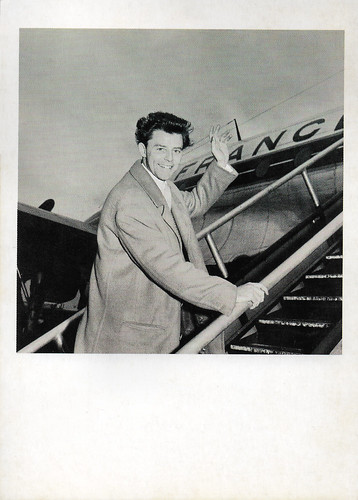
Gérard Philipe
French postcard by Editions F. Nugeron, no. Star 139. Photo: Air France / Distribution VU. Caption: Gerard Philippe, 5 January 1958.

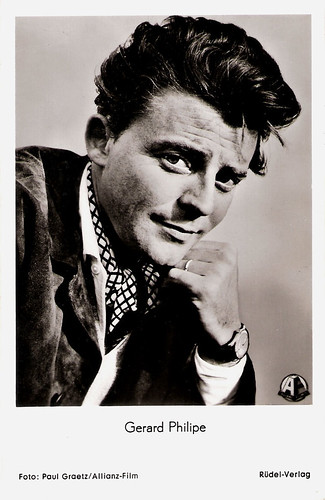
Gérard Philipe
German postcard by Rúdel-Verlag, Hamburg-Bergedorf, no.953. Photo: Paul Goetz / Allianz-Film.


Trailer for La Beauté du diable/Beauty and the Devil (René Clair, 1950). Source: entertainmentone (YouTube).


Compilation of scenes from Les grandes manœuvres/The Grand Maneuver (1955). Source: Slava Batareykin (YouTube).


French trailer for Les amants de Montparnasse/The Lovers of Montparnasse (Jacques Becker, 1958). Source: Gaumont (YouTube).

Sources: James Travers (French Films), Hal Erickson (AllMovie), Wikipedia, and IMDb.