Showing posts with label Juliette Binoche. Show all posts

22 June 2022

Le Hussard sur le toit (1995)

Le hussard sur le toit/The Horseman on the Roof (1995) is a French film directed by Jean-Paul Rappeneau and starring Juliette Binoche and Olivier Martinez. Based on the 1951 French novel 'Le hussard sur le toit' by Jean Giono, the film follows the adventures of a young Italian nobleman in France raising money for the Italian revolution against Austria during a time of cholera. The Italian struggle for independence and the cholera pandemic in southern France in 1832 are historical events. The film received César Awards in 1996 for Best Cinematography and Best Sound, as well as eight César Award nominations for Best Film, Best Costume Design, Best Actress (Binoche), Best Director, Best Editing, Best Music, Best Production Design, and Most Promising Actress (Isabelle Carré).

Le hussard sur le toit (1995)
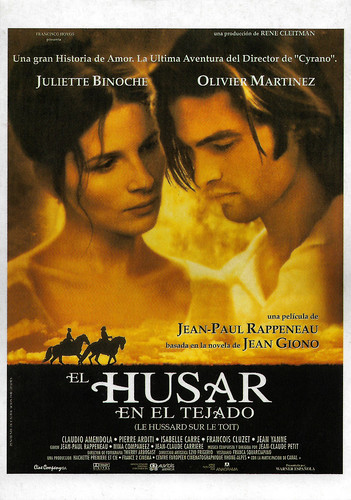
Spanish postcard by Memory Card, no 324. Image: Warner Espanola. Spanish poster of Juliette Binoche and Olivier Martinez in Le hussard sur le toit/The Horseman on the Roof (Jean-Paul Rappeneau, 1995). Spanish title is 'El husar en el tejado'.
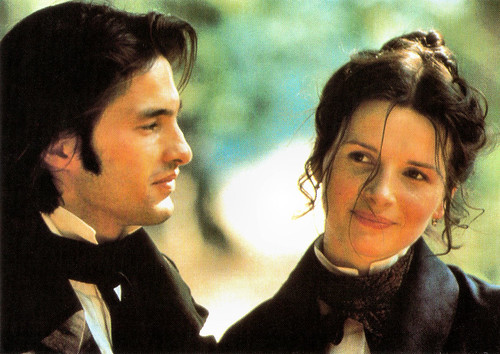
Juliette Binoche and Olivier Martinez in Le hussard sur le toit (1995)
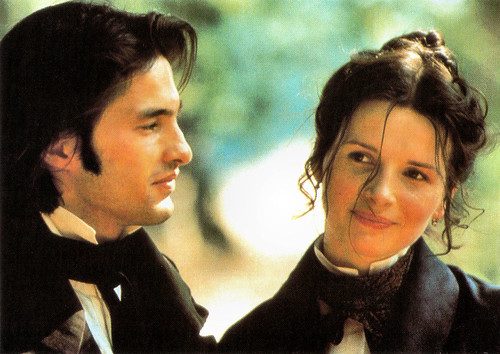
Danish postcard by Go Card, no. 2194, 1996. Photo: Camera Film. Juliette Binoche and Olivier Martinez in Le hussard sur le toit/The Horseman on the Roof (Jean-Paul Rappeneau, 1995).

A young Italian nobleman in France raising money for the Italian revolution


In 1832, cholera ravages Provence (South of France). Italian patriots hiding out in Aix, France, are betrayed by one of their own, and Austrian agents are on their trail. One patriot, Giacomo, is dragged away and executed. His wife runs off to warn their friend, Angelo Pardi (Olivier Martinez), a young Italian nobleman in France raising money for the Italian revolution against the Austrian Empire. As the agents descend on his apartment, Angelo escapes into the countryside.

At Meyrargues, Angelo looks for his compatriot and childhood friend, Maggionari, and then continues on to another village, where he writes to his mother, "Always fleeing. When can I fight and show what your son can do?" His mother purchased his commission as a colonel in the Piedmont Hussars, and he's never seen battle. Angelo encounters Maggionari, who turns out to be the traitor. When the Austrian agents arrive, Angelo fights them off and escapes.

The next day, Angelo enters a village ravaged by a cholera epidemic. The sight of the corpses abandoned to the scavenging crows sickens him. He meets a country physician, who shows him how to treat cholera victims by vigorously rubbing alcohol on the skin. Angelo continues north, passing a small village where corpses are being burned. He meets a young woman and two children and accompanies them to the outskirts of Manosque. The young woman, who is a tutor and lover of books, gives him a copy of 'Rinaldo and Armida' as a parting gift.

While in Manosque, Angelo is captured by a paranoid mob who accuse him of poisoning the town fountain. He is taken to the authorities, who soon abandon their posts in fear. Angelo searches for a compatriot but encounters the Austrian agents. Angelo eludes them, and with a sword in hand, fights his way through the hysterical mob and escapes across the rooftops. From his refuge above the town, Angelo watches one of the agents chased down and beaten to death, and later watches the piles of corpses being burned in the night.

To escape the rain, Angelo enters a dwelling where he is discovered by Countess Pauline de Théus (Juliette Binoche). Apologising for his presence, Angelo reassures her that he is a gentleman. Pauline offers him food and drink, and soon he falls asleep from exhaustion. The following morning, Pauline is gone and Angelo joins the forced evacuation of the town. In the hills outside Manosque, Angelo meets his compatriot, Giuseppe, who possesses money raised for the Italian resistance, but which cannot now be delivered because of the quarantine and roadblocks. Angelo agrees to deliver the money to Milan using backroads. Before leaving, he encounters the traitor, Maggionari, who attempts to kill Angelo before succumbing to cholera.

Angelo and Pauline meet again, and she joins him in a daring river escape. At Les Mées, rather than head east toward the Italian border, Angelo accompanies Pauline north toward her castle near Gap. Angelo insists it is his duty, so they set off through the countryside, avoiding the plague-ridden towns. Forced to camp out in the open, romantic feelings develop between the two, but Angelo remains gallant. Asked if he comes from a military family, Angelo reveals he never knew his father, saying, "He came to Italy with Napoleon, then left." Everything he learned in life came from his mother...

Juliette Binoche in Le hussard sur le toit (1995)
French postcard by CEC Rhone-Alpes. Photo: Mario Tursi. Juliette Binoche in Le hussard sur le toit/The Horseman on the Roof (Jean-Paul Rappeneau, 1995).
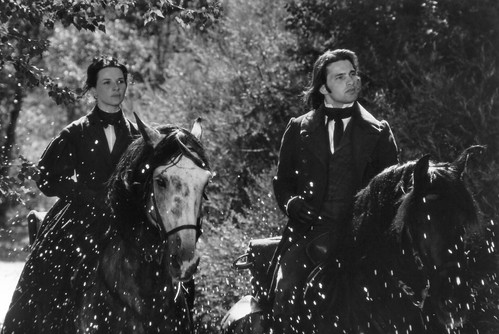
Juliette Binoche and Olivier Martinez in Le hussard sur le toit (1995)
Vintage photo. Juliette Binoche and Olivier Martinez in Le hussard sur le toit/The Horseman on the Roof (Jean-Paul Rappeneau, 1995).

A rousing romantic epic about beautiful people having thrilling adventures


Le hussard sur le toit/The Horseman on the Roof (Jean-Paul Rappeneau, 1995) is a beautifully mounted historical drama. Reportedly, it was the most expensive French production ever made at the time of its release. Le Hussard Sur Le Toit was nominated for ten Cesar Awards, also known as the French Oscar. The film won two of them, Best Sound (Pierre Gamet, Jean Goudier and Dominique Hennequin) and Best Cinematography (Thierry Arbogast).

American critic Roger Ebert loved the film: "The Horseman on the Roof is a rousing romantic epic about beautiful people having thrilling adventures in breathtaking landscapes. Hollywood is too sophisticated (or too jaded) to make movies like this anymore; it comes from France, billed as the most expensive movie in French history. It's a grand entertainment, intelligently written, well-researched, set in the midst of a 19th-century cholera epidemic. (...) it satisfies an old hunger among moviegoers: It is pure cinema, made of action, beauty, landscape and passion, all played with gusto, and affection."

Incredibly handsome Oliver Martinez, as the hero, was at the time a new leading man in the style of the young Jean-Paul Belmondo, who starred in films like Cartouche. Binoche played a woman loyal to her husband, for whom duty is a higher calling than passion. Roger Ebert: "Her reserve, and the instinctive chivalry of Angelo, create a sexual tension between them that is more interesting because it is not acted upon. Their restraint sets the stage for an eventual development all the more romantic because it is based on love and faith, not carnal satisfaction."

Director Jean-Paul Rappeneau started out in film as an assistant and screenwriter collaborating with Louis Malle on Zazie dans le métro/Zazie in the Metro in 1960. In 1964, he was co-screenwriter for L'Homme de Rio/That Man from Rio (Philippe de Broca, 1964), which starred Jean-Paul Belmondo. The first film that he both wrote and directed was La Vie de château/A Matter of Resistance (Jean-Paul Rappeneau, 1966) starring Catherine Deneuve.

Since 1975, Rappeneau has written only for his own films, including Le Sauvage/Lovers Like Us (1975), starring Yves Montand and Catherine Deneuve, and Tout feu, tout flamme/All Fired Up (1981), again with Montand, who co-starred with Isabelle Adjani. In 1990, Rappeneau directed an elaborate and very successful film version of Cyrano de Bergerac, his adaptation of the classic French play by Edmond Rostand, starring Gérard Depardieu. Another success was his comedy Bon voyage (2003), which again starred Depardieu with Isabelle Adjani.

Olivier Martinez and Juliette Binoche in Le hussard sur le toit (1995)
French postcard by Sonis, no. C. 561 Photo: Hachette Premiere / Mario Tursi / Le Moult. Olivier Martinez and Juliette Binoche in Le hussard sur le toit/The Horseman on the Roof (Jean-Paul Rappeneau, 1995).

Olivier Martinez and Juliette Binoche in Le hussard sur le toit (1995)
French postcard by Sonis, no. C. 562 Photo: Hachette Premiere / Mario Tursi, Fabian / Le Moult. Olivier Martinez and Juliette Binoche in Le hussard sur le toit/The Horseman on the Roof (Jean-Paul Rappeneau, 1995).

Juliette Binoche and Olivier Martinez in Le hussard sur le toit (1995)
French postcard by Sonis, no. C. 563. Photo: Hachette Premiere / Hans Silvester, Rapho / Le Moult. Juliette Binoche and Olivier Martinez in Le hussard sur le toit/The Horseman on the Roof (Jean-Paul Rappeneau, 1995).

Sources: Roger Ebert (RogerEbert.Com), Mark Deming (AllMovie), Wikipedia (English and French) and IMDb.

18 April 2017

Juliette Binoche

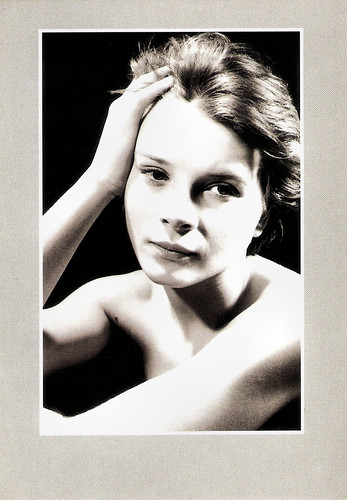
French actress Juliette Binoche (1964) has appeared in more than 60 international films. She won numerous international awards, and has appeared on stage across the world. André Téchiné made her a star in France with the leading role in his drama Rendez-vous (1985). Her sensual performance in The Unbearable Lightness of Being (Philip Kaufman, 1988) launched her international career. Other career highlights are her roles in Three Colors: Blue (Krzysztof Kieślowski, 1993), The English Patient (Anthony Minghella, 1996), for which she won an Oscar, and Caché (Michael Haneke, 2005).

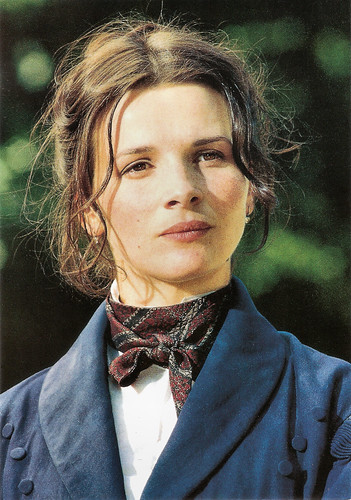
Juliette Binoche in Le hussard sur le toit (1995)
French postcard by CEC Rhone-Alpes. Photo: Mario Tursi. Publicity still for Le hussard sur le toit/The Horseman on the Roof (Jean-Paul Rappeneau, 1995).

The darling of the festival


Juliette Binoche was born in Paris, in 1964. She was the daughter of Jean-Marie Binoche, a director, actor, and sculptor, and Monique Yvette Stalens, a teacher, director, and actress. She is the sister of actress/photographer Marion Stalens. Her parents divorced when she was four, so she grew up living between each parent and a Catholic boarding school.

In her teenage years Juliette began acting at school in stage-productions. At 17 she directed and starred in a student production of the Eugène Ionesco play, Exit the King. She studied acting at the Conservatoire National Supérieur d'Art Dramatique (CNSAD), but quit after a short time as she disliked the curriculum.

In the early 1980s, she found an agent through a friend and joined a theatre troupe, touring France, Belgium and Switzerland under the pseudonym Juliette Adrienne. After performing in several stage productions and a few TV productions, Binoche secured her first feature-film appearance with a minor role in the drama Liberty Belle (Pascal Kané, 1983). Her role required just two days on–set, but was enough to inspire Binoche to pursue a career in film.

In 1983, she auditioned for the female lead in Jean-Luc Godard's' controversial Je vous salue, Marie/Hail Mary (1985), a modern retelling of the Virgin birth. She spent six months on the set of the film in Geneva, although her role in the final cut only contained a few scenes.

She gained more significant exposure in Jacques Doillon's critically acclaimed La Vie de Famille/Family Life (1985), cast as the volatile teenage step-daughter of Samy Frey's central character. Director André Téchiné made her a star in France with the leading role in his provocative erotic drama Rendez-vous (1985). The film, co-starring Lambert Wilson and Jean-Louis Trintignant, premiered at the 1985 Cannes Film Festival, winning Best Director.

Rendez-vous was a sensation and Binoche became the darling of the festival. In 1986, Binoche was nominated for her first César for Best Actress in a Leading Role for her performance. She starred opposite Michel Piccoli in the avant-garde thriller Mauvais Sang/Bad Blood (Leos Carax, 1986). Binoche plays Anna the vastly younger lover of Marc (Piccoli) who falls in love with Alex (Denis Lavant), a young thief. Mauvais Sang was a critical and commercial success, leading to Binoche's second César nomination.

She gave a sensual performance opposite Daniel Day-Lewis in The Unbearable Lightness of Being (Philip Kaufman, 1988), the adaptation of Milan Kundera's novel. It was Binoche's first English language role and was a worldwide success with critics and audiences alike.

In the summer of 1988, Binoche returned to the stage in an acclaimed production of Anton Chekhov's The Seagull directed by Russian director Andrei Konchalovsky at Théâtre De L'Odéon in Paris. Later that year she began work on Léos Carax's Les Amants du Pont-Neuf. The film was beset by problems and took three years to complete, requiring investment from three producers and funds from the French government. When finally released in 1991, Les Amants du Pont-Neuf was a critical success. Binoche won a European Film Award and her third César nomination for her performance.

Juliette Binoche
French postcard in the Le jour se lève series by Editions Humour à la carte, Paris, no. ST-170. Photo: Jean-Pierre Larcher.

The most expensive film in the history of French cinema


Juliette Binoche chose to pursue an international career outside France. Binoche relocated to London for the Emily Bronte adaptation Wuthering Heights (Peter Kosminsky, 1992) with Ralph Fiennes as Heathcliff, and Damage (Louis Malle, 1992) with Jeremy Irons, both enhanced her international reputation. For her performance in Damage, Binoche received her fourth César nomination.

She sparked the interest of Steven Spielberg, who offered her roles in three films: Indiana Jones and the Last Crusade (1989), Jurassic Park (1993), and Schindler's List (1993). which she declined.

Instead, she chose for Trois couleurs : Bleu/Three Colors: Blue (Krzysztof Kieślowski, 1993), for which she won the Venice Film Festival Award for Best Actress and a César. The first film in a trilogy inspired by the ideals of the French republic and the colors of its flag, Three Colors: Blue is the story of a young woman who loses her composer husband and daughter in a car accident. Though devastated she learns to cope by rejecting her previous life by rejecting all people, belongings and emotions. Binoche made cameo appearances in the other two films in Krzysztof Kieślowski's trilogy, Trois couleurs : Blanc/Three Colors: White (1994) and Trois couleurs : Rouge/Three Colors: Red (1994).

Binoche took a short sabbatical during which she gave birth to her son Raphaël in September 1993. In 1995, she returned to the screen in a big-budget adaptation of Jean Giono's Le hussard sur le toit/The Horseman on the Roof (Jean-Paul Rappeneau, 1995) with Olivier Martinez. At the time, it was the most expensive film in the history of French cinema. The film was a box-office success around the world and Binoche was again nominated for a César for Best Actress.

She gained further acclaim in The English Patient (Anthony Minghella, 1996), for which she was awarded an Academy Award and a BAFTA for Best Supporting Actress in addition to the Best Actress Award at the 1997 Berlin International Film Festival. Binoche was reunited with director André Téchiné for Alice et Martin (1998), the story of a relationship between an emotionally damaged Parisian musician and her younger lover (Alexis Loret) who hides a dark family secret.

Juliette Binoche appeared on stage in a 1998 London production of Luigi Pirandello's Clothe the Naked retitled Naked and in a 2000 production of Harold Pinter's Betrayal on Broadway for which she was nominated for a Tony Award. Between 1995 and 2000, she was also the advertising face of the Lancôme perfume Poème.

Juliette Binoche and Olivier Martinez in Le hussard sur le toit (1995)
Danish postcard by Go Card, no. 2194, 1996. Photo: Camera Film. Publicity still for Le hussard sur le toit/The Horseman on the Roof (Jean-Paul Rappeneau, 1995) with Olivier Martinez.

A welcome change from playing the romantic heroine


Juliette Binoche was nominated for an Academy Award for Best Actress for her performance opposite Johnny Depp in the romantic comedy Chocolat (Lasse Hallström, 2000).

Another hit was the period drama La Veuve de Saint-Pierre (Patrice Leconte, 2000), for which she was nominated for a César for Best Actress. Opposite Daniel Auteuil she played the role of a woman who attempts to save a condemned man from the guillotine. The film won favourable reviews, and was nominated for a Golden Globe for Best Foreign Language Film.

Next she appeared in Code inconnu: Récit incomplet de divers voyages/Code Unknown (Michael Haneke, 2000), a film which was made following Binoche's approach to the Austrian director. Her critically acclaimed role was a welcome change from playing the romantic heroine in a series of costume dramas.

During the following decade, she maintained a successful career, alternating between French and English language roles in both mainstream and art-house productions. 'La Binoche' appeared in such films as Jet Lag (Daniele Thompson, 2002) opposite Jean Reno, Caché (Michael Haneke, 2005), and Breaking and Entering (Anthony Minghella, 2006) with Jude Law.

Flight of the Red Balloon (Hou Hsiao-Hsien, 2007) pays homage to Albert Lamorisse's 1957 short The Red Balloon. The film tells the story of a woman's efforts to juggle her responsibilities as a single mother with her commitment to her career as a voice artist. Shot on location in Paris, the film was entirely improvised by the cast.

In 2008 Binoche began a world tour with a modern dance production titled in-i, co-created in collaboration with Akram Khan. In 2010, she won the Best Actress Award at the Cannes Film Festival for her role in Abbas Kiarostami's Certified Copy (2010) making her the first actress to win the European ‘Best Actress Triple Crown’ for winning best actress award at the Berlin, Cannes and Venice film festivals.

Her later films include Cosmopolis (David Cronenberg, 2011) with Robert Pattinson, Camille Claudel 1915 (Bruno Dumont, 2013) and Clouds of Sils Maria (Olivier Assayas, 2014). In 2015, Binoche starred on stage in a new English language translation of Antigone, directed by Ivo van Hove.

Juliette Binoche has two children: a son Raphaël (1993), whose father is André Halle, a professional scuba diver, and a daughter Hana (1999), whose father is actor Benoît Magimel, with whom Binoche starred in Les Enfants du Siècle/Children of the Century (Diane Kurys, 1999).

Juliette Binoche in Code inconnu Récit incomplet de divers voyages (2000)
Hungarian postcard by Montazs 2000. Photo: publicity still for Code inconnu Récit incomplet de divers voyages (Michael Haneke, 2004).

Sources: Dale O'Connor (IMDb), Wikipedia, and IMDb.