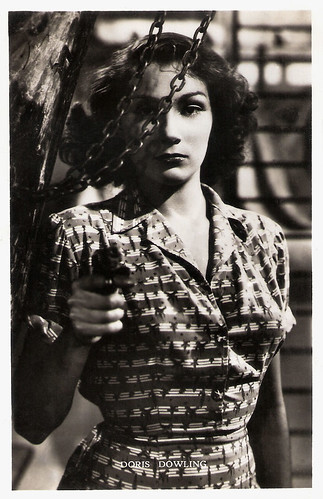
Vittorio Gassman (1922-2000) was one of the greatest Italian theatre and film actors. With his powerful voice, he was an extremely versatile, magnetic interpreter. He had an extraordinary career that spanned five decades and included both highlights of the Commedia all'Italiana genre and powerful melodramas in which he played the beloved rogue.
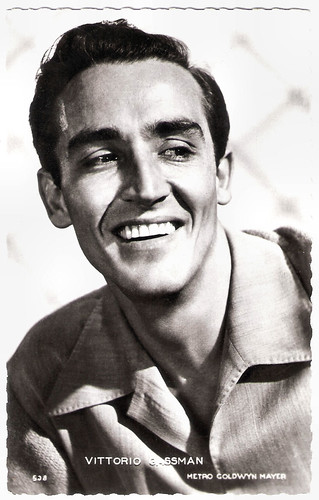
French postcard by Editions P.I., Paris, no. 111F. Photo: Metro-Goldwyn-Mayer, 1954.
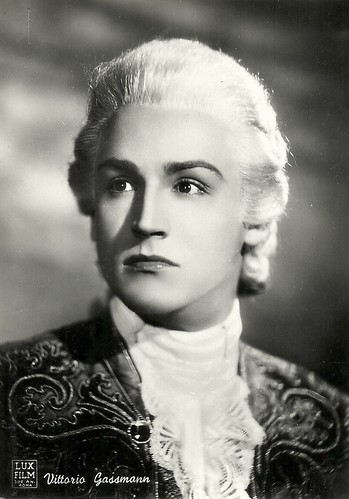
Italian postcard by Totalfoto / Ed. Garami, no. 78. Photo: Lux Film. Vittorio Gassman as Giacomo Casanova in Il cavaliere misterioso/The Mysterious Rider (Riccardo Freda, 1948).
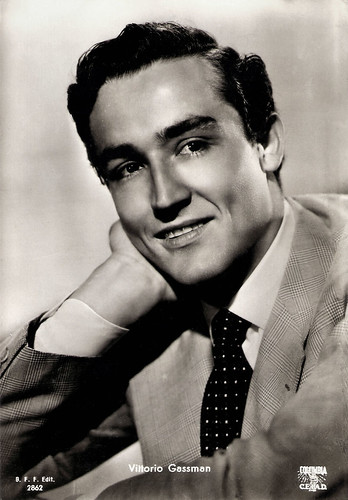
Italian postcard by Casa Editr. Ballerini & Fratini, Firenze (BFF), no. 2962. Photo: Columbia / CEIAD.
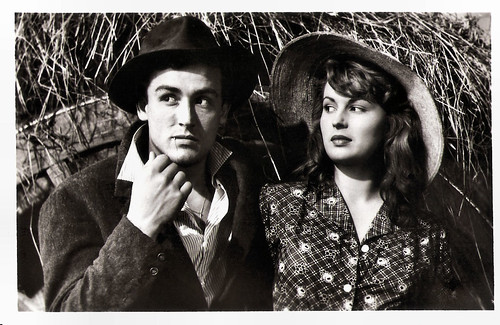
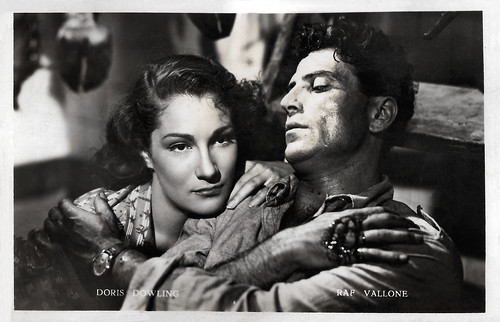
Dutch postcard by Centrafilm, Dordrecht. Photo: Vittorio Gassman and Silvana Mangano in Riso amaro/Bitter Rice (Giuseppe de Santis, 1949). Collection: Geoffrey Donaldson Instituut.
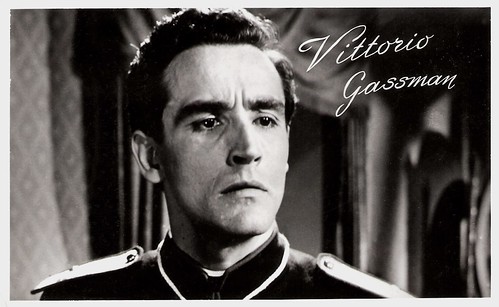
Dutch postcard by Takken / 't Sticht, no. AX 1677.
Vittorio Gassman (sometimes written as Gassmann) was born in Genoa, Italy, in 1922, to a father from a wealthy family of German origins and a Pisan mother. At a very young age, he moved to Rome, where he first studied law and then studied acting at the Accademia Nazionale d'Arte Drammatica (National Academy of Dramatic Art). It was his mother who encouraged Gassman to become an actor.
He made his stage debut in Milan in Dario Niccodemi's 'Nemica' (The Female Enemy, 1942). He then moved to the Teatro Eliseo in Rome. There, he specialised in classical plays establishing himself as a major stage star.
He made his film debut in the love triangle Preludio d'amore/Love Prelude (Giovanni Paolucci, 1946) with Massimo Girotti and Marina Berti. The following year, the tall, dark and handsome actor starred in five more dramatic or romantic film roles, like opposite Sarah Churchill in Daniele Cortis (Mario Soldati, 1947), La figlia del capitano/The Captain’s Daughter (Mario Camerini, 1947) and opposite Valentina Cortese in L'ebreo errante/The Wandering Jew (Goffredo Alessandrini, 1948).
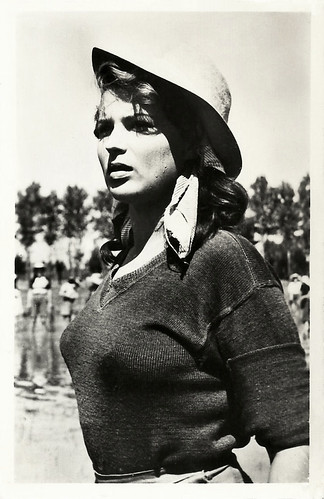
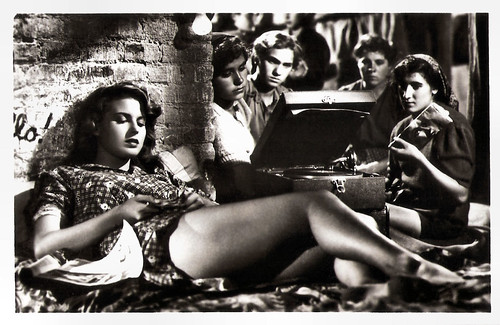
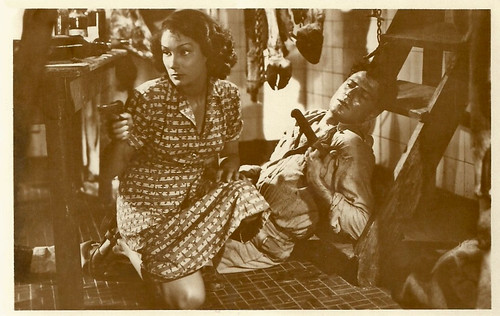
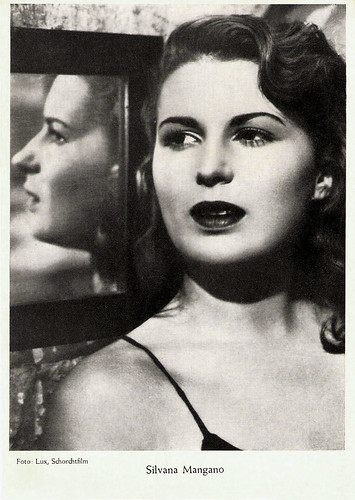
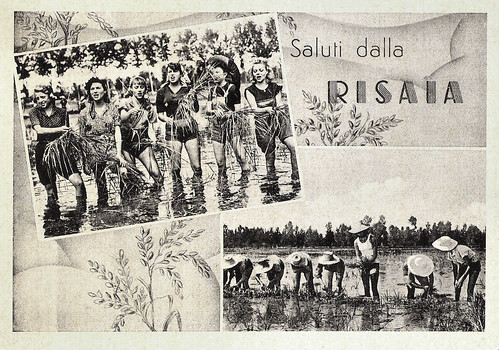
Then he had his international breakthrough in the Oscar-nominated box office hit Riso amaro/Bitter Rice (Giuseppe De Santis, 1949), in which he played the fugitive lover of sexy rice worker Silvana Mangano. He had further success playing the villainous Vittorio to Mangano's Anna in Anna (Alberto Lattuada, 1951). Again and again, he would repeat this type, the beloved rogue who inflicts pain and pleasure at the same time. There was always a hint of treachery in his wry half-smile.
On stage, Gassman achieved major successes with Luchino Visconti's company. He played a vigorous Stanley Kowalski in Tennessee Williams' 'Un tram che si chiama desiderio' (A Streetcar Named Desire), then emphatic in William Shakespeare's 'Rosalinda' (As You Like It) or in Vittorio Alfieri's 'Oreste'. He then joined the Teatro Nazionale for a successful performance in 'Peer Gynt' by Henrik Ibsen. In 1952 he co-founded and co-directed with Luigi Squarzina the Teatro d'Arte Italiano. They produced the first complete version of 'Hamlet' in Italy, and later staged rare works such as Lucius Annaeus Seneca's 'Thyestes' and Aeschylus' 'The Persians'.

Italian postcard by Italphoto, no. 260. Photo: Ponti-De Laurentiis.
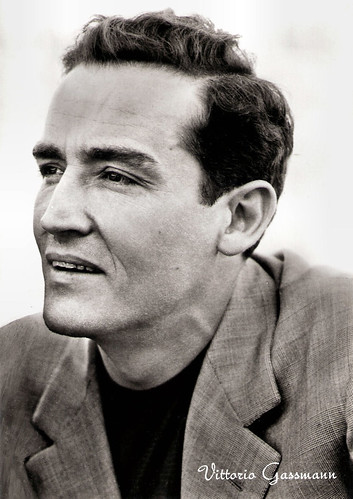
Italian postcard by Bromofoto no. 828.

Italian postcard by Bromofoto, Milano, no. 1183. Photo: Daily News.
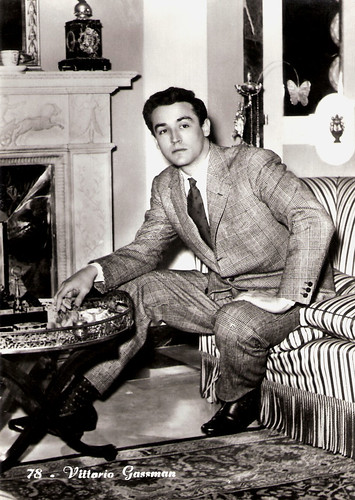
Italian postcard by Turismofoto, no. 78.
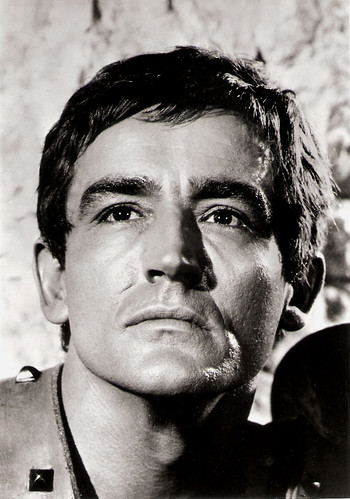
Italian postcard by Alterocca, Terni no. 49457. Photo: publicity still for Barabbas (Richard Fleischer, 1961).
With his natural charisma and fluency in English, Vittorio Gassman scored several roles in Hollywood. In 1952, he headed to America to call on Shelley Winters. The two married shortly aftwerwards and Gassman was contracted by MGM. He appeared in the Cold War pastiche The Glass Wall (Maxwell Shane, 1953) with Gloria Grahame, the musical Sombrero (Norman Foster, 1953) with Pier Angeli, the Film Noir Cry of the Hunted (Joseph H. Lewis, 1953), Rhapsody (Charles Vidor, 1954) with Elizabeth Taylor, and finally Mambo (Robert Rossen, 1954) with both Silvana Mangano and Shelley Winters.
These mediocre films did little to popularise him in the US. Later, Gassman considered his 1950s Hollywood films among the worst he had made during his long career. He eventually tired of trying to make it in America and after divorcing Winters, he returned to the Italian stage.
1956 was a key year in Gassman's career. He then established the Teatro Popolare Italiano, his own theatre troupe. He played a memorable 'Othello' with Salvo Randone, exchanging with him the roles of the Moor and Iago. With the television series Il Mattatore (translates as Monstre sacré or stage giant), he obtained unexpected success. Il Mattatore became the nickname that accompanied him for the rest of his life. He cut his directorial teeth on a biography of Edmund Kean, a famous British stage actor for Kean (Vittorio Gassman, Francesco Rosi, 1956). The film was not a success but his performance added fuel to Gassman's reputation for occasionally hamming up his roles.
In the cinema, he played Anatole in War and Peace (King Vidor, 1956) opposite Audrey Hepburn. He re-established himself as a star in the Rififi parody I soliti ignoti/Big Deal on Madonna Street (Mario Monicelli, 1958) with Renato Salvatori. His part as an inept ex-boxer turned criminal in I soliti ignoti was his first entry in the Commedia all' italiana genre. So far, he had been known only as a dramatic actor, not a comic one. Gassman himself was dubious of the results, but his role was so successful that he would become one of the mainstays of the genre, together with Alberto Sordi, Marcello Mastroianni, Nino Manfredi and Ugo Tognazzi.
Other famous film comedies featuring Gassman include the Oscar-nominated La Grande Guerra/The Great War (Mario Monicelli, 1959) with Alberto Sordi, the sequel Audace colpo dei soliti ignoti/Fiasco in Milan (Nanni Loy, 1960) with Claudia Cardinale, the road movie Il sorpasso/The Easy Life (Dino Risi. 1962) with Jean-Louis Trintignant, La marcia su Roma/March on Rome (Dino Risi, 1962) with Ugo Tognazzi, the anthology I mostri/15 from Rome (Dino Risi, 1963), La congiuntura/Hard Time for Princes (Ettore Scola, 1965) opposite Joan Collins, L'Armata Brancaleone/Brancaleone’s Army (Mario Monicelli, 1966) with Gian Maria Volonté, and the sequel Brancaleone alle crociate/Brancaleone at the Cross (Mario Monicelli, 1967). He also appeared in the international slapstick comedy 12 + 1 (Nicolas Gessner, 1969) with Sharon Tate and Orson Welles and in the thriller In nome del popolo italiano/In the Name of the Italian People (Dino Risi, 1971).
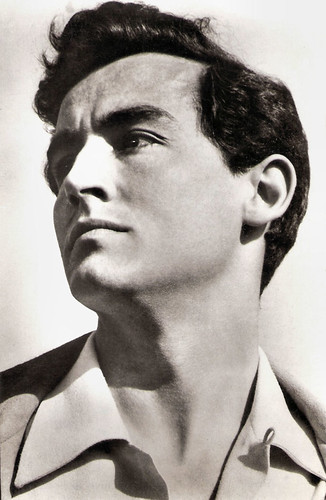
Spanish postcard by Archivo Bermejo, no. 5936. Vittorio Gassman in Sombrero (Norman Foster, 1953), distributed by Filmax.
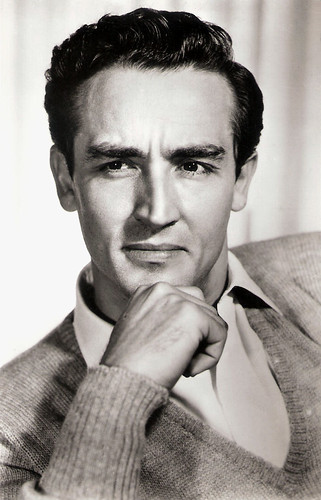
Spanish postcard by Edicion Archivo Bernajos.
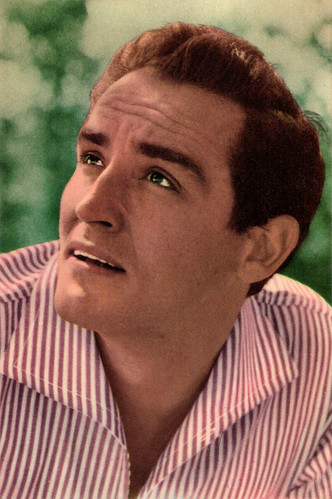
Spanish postcard by Raker, no. 1089. Sent by mail in 1964.
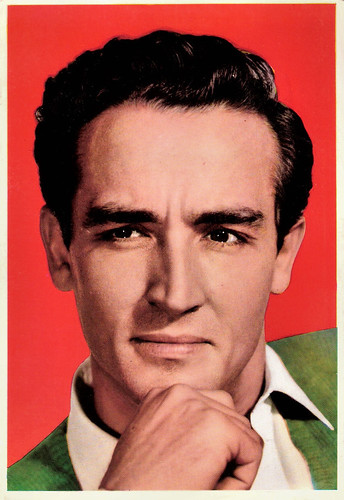
Spanish postcard by Archivo Bermejo, no. C-248, 1965.
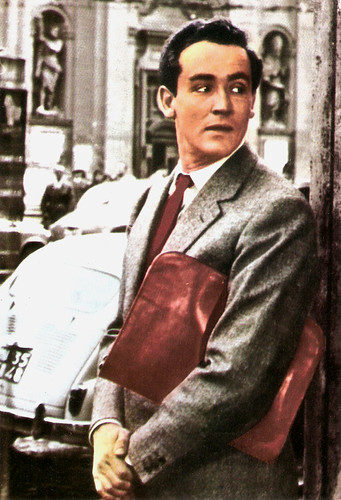
Spanish postcard, no. 58.
In 1975 Vittorio Gassman won the Cannes Film Festival award and the Premi David di Donatello (the Italian Oscar) for his portrayal of a sightless captain in Profumo di donna/Scent of a Woman (Dino Risi, 1974). The film was later remade in Hollywood as Scent of a Woman (Martin Brest, 1992) with Al Pacino. It was a highlight in Gassman’s career, which then continued in high gear through the mid-1980s with such notable films as C'Eravama Tanto Amati/Those Were the Years (Ettore Scola, 1974) with Nino Manfredi, Il Deserto dei Tartari/The Desert of the Tartars (Valerio Zurlini, 1976) with Giuliano Gemma, Caro Papà/Dear Father (Dino Risi, 1979), La terrazzo/The Terrace (Ettore Scola, 1980) with Marcello Mastroianni, and La Famiglia/The Family (Ettore Scola, 1987) with Fanny Ardant and Stefania Sandrelli.
He worked frequently abroad. In the US, he made films like A Wedding (Robert Altman, 1978) and The Nude Bomb (Clive Donner, 1980) with Sylvia Kristel, and in France, he appeared in La Vie est un Roman/Life is a Bed of Roses (Alain Resnais, 1983) with Geraldine Chaplin. After 1985, Gassman began to appear less in films though he did have memorable turns in Mortacci/Death to You (Sergio Citti, 1989 with Malcolm McDowell, the comedy Zio Indegno/The Sleazy Uncle (Franco Brusati, 1989) with Giancarlo Giannini, and the Spanish film El Largo Invierno/The Long Winter of ’39 (Jaime Camino, 1991). He played a crime lord in the tense Hollywood drama Sleepers (Barry Levinson, 1996) starring Kevin Bacon and Robert De Niro.
In the theatre, Gassman accepted the challenge of directing 'Adelchi', one of the less-known and more difficult works by Alessandro Manzoni. He toured with his Teatro Popolare Itinerante through Italy and performed this production for half a million spectators. His other productions included works of most of the famous authors of the 20th century, and the classics of William Shakespeare, Fyodor Dostoyevsky and the Greeks. He also founded a theatre school in Florence, which formed many talented actors.
Gassman had such an interesting, flexible voice and outstanding acting talent that he made everything he read entertaining and intense. In the mid-1990s, a satirical show on Italian national television gave him a 2 minutes space named Gassman Lo Legge (Gassman Reads) where he just ‘acted’ a few lines from banal, utterly non-poetic texts, e.g. a telephone bill or the classifieds page in a local newspaper. The segment was a success. He won the Golden Lion Award for lifetime achievement at the Venice Film Festival in 1996 and Spain’s Prince of Asturias prize in 1997. In his later years, he was a victim of depression. Vittorio Gassman died of a heart attack in his Roman home in 2000.
Vittorio Gassman had been married to three actresses: from 1944 to 1952 to Nora Ricci (with whom he had a daughter, actress Paola Gassman); from 1952 to 1954 to Shelley Winters (mother of his daughter Vittoria), and from 1972 till his death in 2000 to Diletta D'Andrea (with whom he had a son, Jacopo). His divorces created scandals in Roman Catholic Italy in the 1950s, but he never shied away from some controversy. From a relationship with actress Juliette Mayniel a son, actor Alessandro Gassman (1965), was born. In his last film, the Mafia comedy La Bomba/The Bomb (Giulio Base, 1999), Vittorio Gassman appeared with his son Alessandro Gassman and his ex-wife Shelley Winters, whose last film this was too.

Postcard, reproduction of film still from the Italian film I soliti ignoti/ Big Deal on Madonna Street (Mario Monicelli, 1958), starring Vittorio Gassman, Marcello Mastroianni and Renato Salvatori.
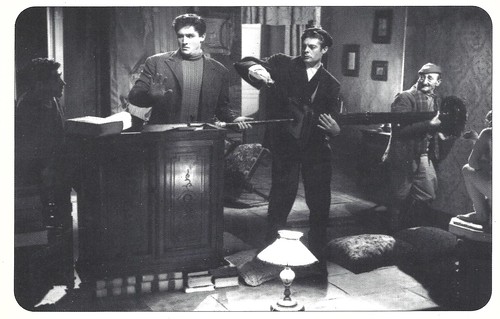
Italian postcard. Coop. soc. Archivio immagini cinema. Card made for exhibition on Marcello Mastroianni. Repro of still with Vittorio Gassman, Marcello Mastroianni and Carlo Pisacane in I soliti ignoti/Big Deal on Madonna Street (Mario Monicelli, 1958).
Trailer for I soliti ignoti/Big Deal on Madonna Street (1958). Source: DiFilm (YouTube).
Short episode La strada è di tutti/The Street is for Everybody from the anthology film I mostri/15 from Rome (1963). Source: Stephanie Laporte (YouTube).
Trailer of Sleepers (1996). Source: Movieclips Trailer Vault (YouTube).
Sources: Sandra Brennan (AllMovie), Volker Boehm (IMDb), Antonio Monda and Richard Peña (New York Film Festival), Britannica Online, Wikipedia, and IMDb.
This post was last updated on 7 May 2024.
French postcard by Editions P.I., Paris, no. 111F. Photo: Metro-Goldwyn-Mayer, 1954.
Italian postcard by Totalfoto / Ed. Garami, no. 78. Photo: Lux Film. Vittorio Gassman as Giacomo Casanova in Il cavaliere misterioso/The Mysterious Rider (Riccardo Freda, 1948).
Italian postcard by Casa Editr. Ballerini & Fratini, Firenze (BFF), no. 2962. Photo: Columbia / CEIAD.
Dutch postcard by Centrafilm, Dordrecht. Photo: Vittorio Gassman and Silvana Mangano in Riso amaro/Bitter Rice (Giuseppe de Santis, 1949). Collection: Geoffrey Donaldson Instituut.
Dutch postcard by Takken / 't Sticht, no. AX 1677.
Tall, dark and handsome
Vittorio Gassman (sometimes written as Gassmann) was born in Genoa, Italy, in 1922, to a father from a wealthy family of German origins and a Pisan mother. At a very young age, he moved to Rome, where he first studied law and then studied acting at the Accademia Nazionale d'Arte Drammatica (National Academy of Dramatic Art). It was his mother who encouraged Gassman to become an actor.
He made his stage debut in Milan in Dario Niccodemi's 'Nemica' (The Female Enemy, 1942). He then moved to the Teatro Eliseo in Rome. There, he specialised in classical plays establishing himself as a major stage star.
He made his film debut in the love triangle Preludio d'amore/Love Prelude (Giovanni Paolucci, 1946) with Massimo Girotti and Marina Berti. The following year, the tall, dark and handsome actor starred in five more dramatic or romantic film roles, like opposite Sarah Churchill in Daniele Cortis (Mario Soldati, 1947), La figlia del capitano/The Captain’s Daughter (Mario Camerini, 1947) and opposite Valentina Cortese in L'ebreo errante/The Wandering Jew (Goffredo Alessandrini, 1948).
Then he had his international breakthrough in the Oscar-nominated box office hit Riso amaro/Bitter Rice (Giuseppe De Santis, 1949), in which he played the fugitive lover of sexy rice worker Silvana Mangano. He had further success playing the villainous Vittorio to Mangano's Anna in Anna (Alberto Lattuada, 1951). Again and again, he would repeat this type, the beloved rogue who inflicts pain and pleasure at the same time. There was always a hint of treachery in his wry half-smile.
On stage, Gassman achieved major successes with Luchino Visconti's company. He played a vigorous Stanley Kowalski in Tennessee Williams' 'Un tram che si chiama desiderio' (A Streetcar Named Desire), then emphatic in William Shakespeare's 'Rosalinda' (As You Like It) or in Vittorio Alfieri's 'Oreste'. He then joined the Teatro Nazionale for a successful performance in 'Peer Gynt' by Henrik Ibsen. In 1952 he co-founded and co-directed with Luigi Squarzina the Teatro d'Arte Italiano. They produced the first complete version of 'Hamlet' in Italy, and later staged rare works such as Lucius Annaeus Seneca's 'Thyestes' and Aeschylus' 'The Persians'.
Italian postcard by Italphoto, no. 260. Photo: Ponti-De Laurentiis.
Italian postcard by Bromofoto no. 828.
Italian postcard by Bromofoto, Milano, no. 1183. Photo: Daily News.
Italian postcard by Turismofoto, no. 78.
Italian postcard by Alterocca, Terni no. 49457. Photo: publicity still for Barabbas (Richard Fleischer, 1961).
Heading for Hollywood
With his natural charisma and fluency in English, Vittorio Gassman scored several roles in Hollywood. In 1952, he headed to America to call on Shelley Winters. The two married shortly aftwerwards and Gassman was contracted by MGM. He appeared in the Cold War pastiche The Glass Wall (Maxwell Shane, 1953) with Gloria Grahame, the musical Sombrero (Norman Foster, 1953) with Pier Angeli, the Film Noir Cry of the Hunted (Joseph H. Lewis, 1953), Rhapsody (Charles Vidor, 1954) with Elizabeth Taylor, and finally Mambo (Robert Rossen, 1954) with both Silvana Mangano and Shelley Winters.
These mediocre films did little to popularise him in the US. Later, Gassman considered his 1950s Hollywood films among the worst he had made during his long career. He eventually tired of trying to make it in America and after divorcing Winters, he returned to the Italian stage.
1956 was a key year in Gassman's career. He then established the Teatro Popolare Italiano, his own theatre troupe. He played a memorable 'Othello' with Salvo Randone, exchanging with him the roles of the Moor and Iago. With the television series Il Mattatore (translates as Monstre sacré or stage giant), he obtained unexpected success. Il Mattatore became the nickname that accompanied him for the rest of his life. He cut his directorial teeth on a biography of Edmund Kean, a famous British stage actor for Kean (Vittorio Gassman, Francesco Rosi, 1956). The film was not a success but his performance added fuel to Gassman's reputation for occasionally hamming up his roles.
In the cinema, he played Anatole in War and Peace (King Vidor, 1956) opposite Audrey Hepburn. He re-established himself as a star in the Rififi parody I soliti ignoti/Big Deal on Madonna Street (Mario Monicelli, 1958) with Renato Salvatori. His part as an inept ex-boxer turned criminal in I soliti ignoti was his first entry in the Commedia all' italiana genre. So far, he had been known only as a dramatic actor, not a comic one. Gassman himself was dubious of the results, but his role was so successful that he would become one of the mainstays of the genre, together with Alberto Sordi, Marcello Mastroianni, Nino Manfredi and Ugo Tognazzi.
Other famous film comedies featuring Gassman include the Oscar-nominated La Grande Guerra/The Great War (Mario Monicelli, 1959) with Alberto Sordi, the sequel Audace colpo dei soliti ignoti/Fiasco in Milan (Nanni Loy, 1960) with Claudia Cardinale, the road movie Il sorpasso/The Easy Life (Dino Risi. 1962) with Jean-Louis Trintignant, La marcia su Roma/March on Rome (Dino Risi, 1962) with Ugo Tognazzi, the anthology I mostri/15 from Rome (Dino Risi, 1963), La congiuntura/Hard Time for Princes (Ettore Scola, 1965) opposite Joan Collins, L'Armata Brancaleone/Brancaleone’s Army (Mario Monicelli, 1966) with Gian Maria Volonté, and the sequel Brancaleone alle crociate/Brancaleone at the Cross (Mario Monicelli, 1967). He also appeared in the international slapstick comedy 12 + 1 (Nicolas Gessner, 1969) with Sharon Tate and Orson Welles and in the thriller In nome del popolo italiano/In the Name of the Italian People (Dino Risi, 1971).
Spanish postcard by Archivo Bermejo, no. 5936. Vittorio Gassman in Sombrero (Norman Foster, 1953), distributed by Filmax.
Spanish postcard by Edicion Archivo Bernajos.
Spanish postcard by Raker, no. 1089. Sent by mail in 1964.
Spanish postcard by Archivo Bermejo, no. C-248, 1965.
Spanish postcard, no. 58.
Career in high gear
In 1975 Vittorio Gassman won the Cannes Film Festival award and the Premi David di Donatello (the Italian Oscar) for his portrayal of a sightless captain in Profumo di donna/Scent of a Woman (Dino Risi, 1974). The film was later remade in Hollywood as Scent of a Woman (Martin Brest, 1992) with Al Pacino. It was a highlight in Gassman’s career, which then continued in high gear through the mid-1980s with such notable films as C'Eravama Tanto Amati/Those Were the Years (Ettore Scola, 1974) with Nino Manfredi, Il Deserto dei Tartari/The Desert of the Tartars (Valerio Zurlini, 1976) with Giuliano Gemma, Caro Papà/Dear Father (Dino Risi, 1979), La terrazzo/The Terrace (Ettore Scola, 1980) with Marcello Mastroianni, and La Famiglia/The Family (Ettore Scola, 1987) with Fanny Ardant and Stefania Sandrelli.
He worked frequently abroad. In the US, he made films like A Wedding (Robert Altman, 1978) and The Nude Bomb (Clive Donner, 1980) with Sylvia Kristel, and in France, he appeared in La Vie est un Roman/Life is a Bed of Roses (Alain Resnais, 1983) with Geraldine Chaplin. After 1985, Gassman began to appear less in films though he did have memorable turns in Mortacci/Death to You (Sergio Citti, 1989 with Malcolm McDowell, the comedy Zio Indegno/The Sleazy Uncle (Franco Brusati, 1989) with Giancarlo Giannini, and the Spanish film El Largo Invierno/The Long Winter of ’39 (Jaime Camino, 1991). He played a crime lord in the tense Hollywood drama Sleepers (Barry Levinson, 1996) starring Kevin Bacon and Robert De Niro.
In the theatre, Gassman accepted the challenge of directing 'Adelchi', one of the less-known and more difficult works by Alessandro Manzoni. He toured with his Teatro Popolare Itinerante through Italy and performed this production for half a million spectators. His other productions included works of most of the famous authors of the 20th century, and the classics of William Shakespeare, Fyodor Dostoyevsky and the Greeks. He also founded a theatre school in Florence, which formed many talented actors.
Gassman had such an interesting, flexible voice and outstanding acting talent that he made everything he read entertaining and intense. In the mid-1990s, a satirical show on Italian national television gave him a 2 minutes space named Gassman Lo Legge (Gassman Reads) where he just ‘acted’ a few lines from banal, utterly non-poetic texts, e.g. a telephone bill or the classifieds page in a local newspaper. The segment was a success. He won the Golden Lion Award for lifetime achievement at the Venice Film Festival in 1996 and Spain’s Prince of Asturias prize in 1997. In his later years, he was a victim of depression. Vittorio Gassman died of a heart attack in his Roman home in 2000.
Vittorio Gassman had been married to three actresses: from 1944 to 1952 to Nora Ricci (with whom he had a daughter, actress Paola Gassman); from 1952 to 1954 to Shelley Winters (mother of his daughter Vittoria), and from 1972 till his death in 2000 to Diletta D'Andrea (with whom he had a son, Jacopo). His divorces created scandals in Roman Catholic Italy in the 1950s, but he never shied away from some controversy. From a relationship with actress Juliette Mayniel a son, actor Alessandro Gassman (1965), was born. In his last film, the Mafia comedy La Bomba/The Bomb (Giulio Base, 1999), Vittorio Gassman appeared with his son Alessandro Gassman and his ex-wife Shelley Winters, whose last film this was too.
Postcard, reproduction of film still from the Italian film I soliti ignoti/ Big Deal on Madonna Street (Mario Monicelli, 1958), starring Vittorio Gassman, Marcello Mastroianni and Renato Salvatori.
Italian postcard. Coop. soc. Archivio immagini cinema. Card made for exhibition on Marcello Mastroianni. Repro of still with Vittorio Gassman, Marcello Mastroianni and Carlo Pisacane in I soliti ignoti/Big Deal on Madonna Street (Mario Monicelli, 1958).
Trailer for I soliti ignoti/Big Deal on Madonna Street (1958). Source: DiFilm (YouTube).
Short episode La strada è di tutti/The Street is for Everybody from the anthology film I mostri/15 from Rome (1963). Source: Stephanie Laporte (YouTube).
Trailer of Sleepers (1996). Source: Movieclips Trailer Vault (YouTube).
Sources: Sandra Brennan (AllMovie), Volker Boehm (IMDb), Antonio Monda and Richard Peña (New York Film Festival), Britannica Online, Wikipedia, and IMDb.
This post was last updated on 7 May 2024.