Leni Riefenstahl (1902-2003) was the notorious director of Triumph des Willens (1935), a fascinating propaganda documentary about Adolf Hitler and the Third Reich, commissioned by the Nazi government. Before she started directing films, she worked as a dancer and actress. She became a star in the mountain films, directed by Arnold Fanck.

German postcard from the book 'Leni Riefenstahl Five Lives' by Taschen, Köln, 2000. Photo: Leni Riefenstahl. Leni Riefenstahl as the pilot Ellen Lawrence in S.O.S. Iceberg (Tay Garnett, 1933).

German postcard by Ross Verlag, no. 1626/1, 1927-1928. Photo: Ufa / Parufamet. Collection: Didier Hanson.

German postcard by Ross Verlag, no. 4660/1, 1929-1930. Photo: Atelier Kiesel. Collection: Geoffrey Donaldson Institute.

German postcard by Ross Verlag, no. 4803/1, 1929-1930. Photo: Atelier Jacobi, Berlin. Collection: Geoffrey Donaldson Institute.

German postcard by Ross Verlag, no. 5679/1, 1930-1931. Photo: Aafa-Film. Publicity still for Stürme über dem Mont Blanc / Storm Over Mont Blanc (Arnold Fanck, 1930) with Sepp Rist.

German postcard by Ross Verlag, no. A 3162/1, 1941-1944. Photo: Riefenstahlfilm / Tobis. Franz Eichberger in Tiefland / Lowlands (Leni Riefenstahl, 1940-1954).
Helene Bertha Amalie 'Leni' Riefenstahl was born in Berlin, German Empire, in 1902. Her family was Lutheran Protestant, and she had a brother, Heinz, who was killed on the Eastern Front in World War II. Her father, Alfred Theodor Paul Riefenstahl, owned a successful heating and ventilation company and wanted his daughter to follow him into the business world. Leni was athletic. At the age of twelve, she joined a gymnastics and swim club. Without her father's knowledge, she enrolled in dance and ballet classes at the Grimm-Reiter Dance School in Berlin in 1918, where she quickly became a star pupil.
Riefenstahl later also studied dance with Jutta Klamt, Eugenie Eduardova and Mary Wigman. She became well known for her self-styled interpretive dancing skills. She travelled across Europe with Max Reinhardt in a show funded by Jewish producer Harry Sokal. She appeared with Wigman in a scene in the documentary Wege zu Kraft und Schönheit - Ein Film über moderne Körperkultur / The Way to Strength and Health: a film of modern body culture (Nicholas Kaufmann, Wilhelm Prager, 1925), an artefact of the Naturist fad that swept Germany at this time.
Riefenstahl began to suffer foot injuries that led to knee surgery, which threatened her dance career. A poster for the mountain film Der Berg des Schicksals / The Mountain of Destiny (Arnold Fanck, 1924) inspired her to move into film acting. She got in touch with director Arnold Fanck, who was the pioneer of the mountain film genre. Riefenstahl persuaded Fanck to feature her in his next film, Der heilige Berg / The Holy Mountain (Arnold Fanck, 1926) with Luis Trenker and Frieda Richard. The film cost 1.5 million Reichsmarks to produce, and was released during the 1926 Christmas season. Der heilige Berg / The Holy Mountain was popular in Berlin, where sold-out performances extended its premiere run for five weeks. The film was also screened in Britain, France and the US and was the first international success of its director
Between 1926 and 1931, Leni Riefenstahl starred in five successful films. First she made Der Große Sprung / The Great Leap (Arnold Fanck, 1927) and Das Schicksal derer von Habsburg / Fate of the House of Habsburg (Rolf Raffé, 1928). The film that brought Riefenstahl into the limelight was Fanck's Die Weisse Hölle vom Piz Palü / The White Hell of Piz Palü (Arnold Fanck, G. W. Pabst, 1929) with Gustav Diessl. Her fame spread to countries outside Germany. Her next two films were Stürme über dem Mont Blanc / Storm Over Mont Blanc (Arnold Fanck, 1930) with Sepp Rist, and Der Weisse Rausch / The White Ecstasy (Arnold Fanck, 1931).
From Arnold Fanck, she had learned acting but also film editing techniques. His use of cinematic technique - filters, special film stock, slow motion - to endow magnificent natural scenery with dramatic stature provided her with key elements of her towering visual style and fostered her technical skill. Leni Riefenstahl decided to try to produce and direct her own film. It was called Das Blaue Licht / The Blue Light (1932), co-written by Carl Mayer and Béla Balázs. In the film, Riefenstahl played an innocent peasant girl in the Tyrolean mountains who is hated and cast out by the villagers because they think she is diabolic. She is protected by a secret cave of blue crystals. With the blue light, she lures young men to their deaths. The film attracted the attention of Adolf Hitler, who saw talent in Riefenstahl. He believed Riefenstahl epitomised the perfect German female.

German postcard by Ross Verlag, Berlin, no. 24/5. Photo: Ufa. Publicity still for Wege zu Kraft und Schönheit / Ways to Strength and Beauty (Nicholas Kaufmann, Wilhelm Prager, 1925). Pictured are members of the Tanzgruppe Mary Wigman performing 'Die Wanderung' (The Hike). Collection: Didier Hanson.

German postcard. Photo: Karl Schenker. Collection: Didier Hanson.

German postcard by Ross Verlag, no. 1814/2, 1927-1928. Photo: Karl Schenker. Collection: Didier Hanson.

German postcard by Ross Verlag, no. 3168/1, 1929-1930. Photo: Ufa. Collection: Didier Hanson.

German collector card by Ross Verlag in the series 'Vom Werden Deutscher Filmkunst - Der Stumme Film', picture no. 130, group 40. Photo: Ufa. Leni Riefenstahl in Die weiße Hölle vom Piz Palü / The White Hell of Piz Palü (Arnold Fanck, G. W. Pabst, 1929).

German collector card by Ross Verlag. Photo: Aafa. Leni Riefenstahl and Sepp Rist in Stürme über dem Mont Blanc / Storm Over Mont Blanc (Arnold Fanck, 1930).

German collector card by Ross Verlag in the series 'Vom Werden deutscher Filmkunst - Der Tonfilm', album no. 11, picture no. 98. Photo: Aafa. Leni Riefenstahl in Das blaue Licht / The Blue Light (Leni Riefenstahl, 1932).

German collector card in the series 'Vom Werden deutscher Filmkunst - Der Tonfilm', album no. 11, picture no. 43, group 44. Photo: Ufa / Ross Verlag. Leni Riefenstahl and Gustav Diessl in S.O.S. Eisberg / S.O.S. Iceberg (Arnold Fanck, 1933).
In 1933, Leni Riefenstahl appeared in the American-German co-productions SOS Eisberg (Arnold Fanck, 1933; German version) and SOS Iceberg (Tay Garnett, 1933; US version). The two versions were filmed simultaneously in English and German and produced and distributed by Universal Studios. Riefenstahl co-starred with Gustav Diessl and Ernst Udet in S.O.S. Eisberg, and with Gibson Gowland and Rod La Rocque in S.O.S. Iceberg. Her part in SOS Iceberg would be her only English-language film role.
Riefenstahl heard Nazi Party (NSDAP) leader Adolf Hitler speak at the Berlin Sportpalast in 1932 and by her own account, she was 'mesmerised by his talent as a public speaker'. After meeting Hitler, Riefenstahl was offered the opportunity to direct Der Sieg des Glaubens / The Victory of Faith (1933), an hour-long propaganda film about the fifth Nuremberg Rally in 1933. Riefenstahl agreed to direct the film. She and Hitler got on well, forming a friendly relationship. The Propaganda film was funded entirely by the NSDAP.
Impressed with Riefenstahl's work, Hitler asked her to film Triumph des Willens / Triumph of the Will (1935), a new propaganda film about the 1934 Nazi Party Congress in Nuremberg. More than 700,000 Nazi supporters attended the rally. The film contains excerpts from speeches given by Nazi leaders at the Congress, including Adolf Hitler, Rudolf Hess, and Julius Streicher, interspersed with footage of massed Sturmabteilung and Schutzstaffel troops and public reaction. Riefenstahl's techniques — such as moving cameras, aerial photography, the use of long focus lenses to create a distorted perspective, and her revolutionary approach to the use of music and cinematography — made Triumph des Willens / Triumph of the Will a prominent example of propaganda in film history.
Riefenstahl won several awards, not only in Germany but also in the United States, France, Sweden, and other countries. Despite allegedly vowing not to make any more films about the Nazi Party, Riefenstahl made the 28-minute Tag der Freiheit: Unsere Wehrmacht / Day of Freedom: Our Armed Forces (1935) about the German Army. Hitler then invited Riefenstahl to film the 1936 Summer Olympics scheduled to be held in Berlin. She visited Greece to take footage of the route of the inaugural torch relay and the games' original site at Olympia, where she was aided by Greek photographer Nelly's. This material became the two-part Olympia (Festival Of Nations / Festival Of Beauty)(1938), a hugely successful film which has since been widely noted for its technical and aesthetic achievements.
Riefenstahl began work on the Opera film Tiefland / Lowlands. On Hitler's direct order, the German government paid her seven million Reichsmarks in compensation. Sinti and Roma people from the Marzahn detention camp near Berlin were compelled to work as extras. Almost to the end of her life, despite overwhelming evidence that the concentration camp occupants had been forced to work on the film unpaid, Riefenstahl continued to maintain all the film extras survived and that she had met several of them after the war. In October 1944, the production of Tiefland moved to Barrandov Studios in Prague for interior filming. Lavish sets made these shots some of the most costly of the film. The film was not edited and released until almost ten years later. Tiefland (1954) would be her last feature film.

German postcard from the book 'Leni Riefenstahl Five Lives' by Taschen, Köln, 2000. Photo: Leni Riefenstahl. Dance 'Study after a Cavotte' (1923).

German postcard by Taschen, from the book 'Leni Riefenstahl Five Lives' (2000). Photo: Leni Riefenstahl. Leni Riefenstahl as the dancer Diotima in Der heilige Berg / The Holy Mountain (Arnold Fanck, 1926).

German postcard by Taschen, from the book 'Leni Riefenstahl five lives' (2000). Leni Riefenstahl and Luis Trenker in Der heilige Berg / The Holy Mountain (Arnold Fanck, Leni Riefenstahl, 1926). Caption: The Ice Cathedral.

German postcard by Taschen, from the book 'Leni Riefenstahl five lives' (2000). Photo: Ufa. Leni Riefenstahl as Maria Majoni in Die weiße Hölle vom Piz Palü / The White Hell of Piz Palü (Arnold Fanck, G. W. Pabst, 1929).

German postcard by Taschen, from the book 'Leni Riefenstahl five lives' (2000). Photo: Ufa. Leni Riefenstahl as Maria Majoni and Ernst Petersen as Hans Brandt in Die weiße Hölle vom Piz Palü / The White Hell of Piz Palü (Arnold Fanck, G. W. Pabst, 1929).

German postcard from the book 'Leni Riefenstahl Five Lives' by Taschen, Köln, 2000. Photo: Leni Riefenstahl. Leni Riefenstahl as Junta in Das blaue Licht / The Blue Light (Leni Riefenstahl, 1932).

German postcard by Taschen, from the book 'Leni Riefenstahl Five Lives' (2000). Photo: Leni Riefenstahl. Leni Riefenstahl as Junta in the crystal grotto in Das blaue Licht / The Blue Light (Leni Riefenstahl, 1932).

German postcard from the book 'Leni Riefenstahl Five Lives' by Taschen, Köln, 2000. Photo: Leni Riefenstahl. Leni Riefenstahl as the pilot Ellen Lawrence in S.O.S. Iceberg (Tay Garnett, 1933).
In 1945, after the war, Leni Riefenstahl was arrested by US soldiers at her chalet in Kitzbühel in the Tyrol. Throughout 1945 to 1948, she was held in various Allied-controlled prison camps across Germany. She was also under house arrest for a period of time. She had never been a Nazi party member and was cleared of active involvement by a de-Nazification tribunal. She was declared a Mitläufer or fellow traveller, which disbarred her from ever seeking public office.
During the 1950s and 1960s, she tried many times to make more films, but was met with resistance, public protests and sharp criticism. Triumph des Willens and her other work for the Nazis had significantly damaged her career and reputation. Despite her protests to the contrary, Riefenstahl was considered an intricate part of the Third Reich's propaganda machine.
In the 1960s, Riefenstahl discovered Africa and reinvented herself as a still photographer. She published two photo books on the Nuba tribes, 'The Nuba' and 'The Nuba of Kau'. In 1968, she began a lifelong companionship with her cameraman Horst Kettner. She was 60, and he was 20. He assisted her with her photographs. She also photographed the 1972 Olympic Games in Munich. In 1978, Riefenstahl published a book of her sub-aquatic photographs called 'Korallengärten' (Coral Gardens), followed by the 1990 book 'Wunder unter Wasser' (Wonder under Water). Riefenstahl also released the autobiography A Memoir (1995). Leni Riefenstahl died of cancer in 2003 in Pöcking, Germany, at the age of 101. She was buried at the Waldfriedhof in Munich.
Leni Riefenstahl was married twice. From 1944 till 1947, she was married to Peter Jacob. Shortly before her death, she married her longtime companion Horst Kettner. After Kettner died in 2016, Riefenstahl's former secretary Gisela Jahn became the sole heir of Riefenstahl's estate. In 2018, Jahn bequeathed the Berlin-based Preußischer Kulturbesitz (Prussian Cultural Heritage Foundation) photos, films, manuscripts and letters that had belonged to Riefenstahl. The donation contained more than 700 boxes.
In 1993, Ray Müller made the documentary Die Macht der Bilder: Leni Riefenstahl / The Wonderful Horrible Life of Leni Riefenstahl, for which he won an International Emmy Award. Müller lets the spirited, then 92-year-old woman speak without interrupting her too much. He observes and makes it clear that she has not the slightest regret about her collaboration with Hitler, but she does regret the fact that it so severely hampered her postwar career. In 2024, Andres Veiel made the documentary Riefenstahl, which does not pass explicit judgment either, but it does tear Riefenstahl’s own victim narrative to shreds.

German collector card by Ross Verlag in the Unsere Bunten Filmbilder series for Constantin Cigarettenfabrik, Dresden, no. 271. Photo: Binder. Leni Riefenstahl during the filming of Triumph des Willens / Triumph of the Will (Leni Riefenstahl, 1935).

German postcard from the book 'Leni Riefenstahl Five Lives' by Taschen, Köln, 2000. Photo: Leni Riefenstahl. Director Leni Riefenstahl and cameraman Walter Frentz during the filming of Olympia (Leni Riefenstahl, 1938).
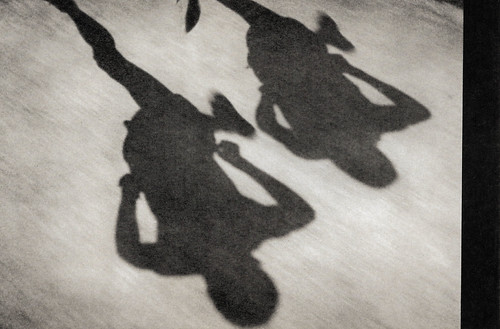
German postcard from the book 'Leni Riefenstahl Five Lives' by Taschen, Köln, 2000. Photo: Leni Riefenstahl. Still for Olympia (Leni Riefenstahl, 1938).

German postcard from the book 'Leni Riefenstahl Five Lives' by Taschen, Köln, 2000. Photo: Leni Riefenstahl. Leni Riefenstahl as director during the filming, 1940. Preparations for Tiefland (Leni Riefenstahl, 1940-1954).

German postcard by Taschen, from the book 'Leni Riefenstahl Five Lives' (2000). Photo: Leni Riefenstahl. Leni Riefenstahl as the Gypsy Martha, dancing in an inn in Tiefland / Lowlands (Leni Riefenstahl, 1940-1954).

German postcard by Taschen, from the book 'Leni Riefenstahl Five Lives' (2000). Photo: Leni Riefenstahl. Franz Eichberger as Pedro, a herdsman in the Pyrenees in Tiefland / Lowlands (Leni Riefenstahl, 1940-1954).

German postcard from the book 'Leni Riefenstahl Five Lives' by Taschen, Köln, 2000. Photo: Leni Riefenstahl. Caption: Leni Riefenstahl as a diver, c. 1980.

German autograph card.
German trailer for Der Weisse Rausch / The White Ecstasy (1931). Source: FREERIDE FILMFESTIVAL (YouTube).
Clip from Tiefland / Lowlands (1954). Source: Канал пользователя samoslav01 (YouTube).
Sources: Richard Falcon (The Guardian), Rainer Rother (Leni Riefenstahl: The Seduction of Genius), Berliner Woche (Page now defunct), DW, Wikipedia and IMDb.
German postcard from the book 'Leni Riefenstahl Five Lives' by Taschen, Köln, 2000. Photo: Leni Riefenstahl. Leni Riefenstahl as the pilot Ellen Lawrence in S.O.S. Iceberg (Tay Garnett, 1933).
German postcard by Ross Verlag, no. 1626/1, 1927-1928. Photo: Ufa / Parufamet. Collection: Didier Hanson.
German postcard by Ross Verlag, no. 4660/1, 1929-1930. Photo: Atelier Kiesel. Collection: Geoffrey Donaldson Institute.
German postcard by Ross Verlag, no. 4803/1, 1929-1930. Photo: Atelier Jacobi, Berlin. Collection: Geoffrey Donaldson Institute.
German postcard by Ross Verlag, no. 5679/1, 1930-1931. Photo: Aafa-Film. Publicity still for Stürme über dem Mont Blanc / Storm Over Mont Blanc (Arnold Fanck, 1930) with Sepp Rist.
German postcard by Ross Verlag, no. A 3162/1, 1941-1944. Photo: Riefenstahlfilm / Tobis. Franz Eichberger in Tiefland / Lowlands (Leni Riefenstahl, 1940-1954).
The perfect German female
Helene Bertha Amalie 'Leni' Riefenstahl was born in Berlin, German Empire, in 1902. Her family was Lutheran Protestant, and she had a brother, Heinz, who was killed on the Eastern Front in World War II. Her father, Alfred Theodor Paul Riefenstahl, owned a successful heating and ventilation company and wanted his daughter to follow him into the business world. Leni was athletic. At the age of twelve, she joined a gymnastics and swim club. Without her father's knowledge, she enrolled in dance and ballet classes at the Grimm-Reiter Dance School in Berlin in 1918, where she quickly became a star pupil.
Riefenstahl later also studied dance with Jutta Klamt, Eugenie Eduardova and Mary Wigman. She became well known for her self-styled interpretive dancing skills. She travelled across Europe with Max Reinhardt in a show funded by Jewish producer Harry Sokal. She appeared with Wigman in a scene in the documentary Wege zu Kraft und Schönheit - Ein Film über moderne Körperkultur / The Way to Strength and Health: a film of modern body culture (Nicholas Kaufmann, Wilhelm Prager, 1925), an artefact of the Naturist fad that swept Germany at this time.
Riefenstahl began to suffer foot injuries that led to knee surgery, which threatened her dance career. A poster for the mountain film Der Berg des Schicksals / The Mountain of Destiny (Arnold Fanck, 1924) inspired her to move into film acting. She got in touch with director Arnold Fanck, who was the pioneer of the mountain film genre. Riefenstahl persuaded Fanck to feature her in his next film, Der heilige Berg / The Holy Mountain (Arnold Fanck, 1926) with Luis Trenker and Frieda Richard. The film cost 1.5 million Reichsmarks to produce, and was released during the 1926 Christmas season. Der heilige Berg / The Holy Mountain was popular in Berlin, where sold-out performances extended its premiere run for five weeks. The film was also screened in Britain, France and the US and was the first international success of its director
Between 1926 and 1931, Leni Riefenstahl starred in five successful films. First she made Der Große Sprung / The Great Leap (Arnold Fanck, 1927) and Das Schicksal derer von Habsburg / Fate of the House of Habsburg (Rolf Raffé, 1928). The film that brought Riefenstahl into the limelight was Fanck's Die Weisse Hölle vom Piz Palü / The White Hell of Piz Palü (Arnold Fanck, G. W. Pabst, 1929) with Gustav Diessl. Her fame spread to countries outside Germany. Her next two films were Stürme über dem Mont Blanc / Storm Over Mont Blanc (Arnold Fanck, 1930) with Sepp Rist, and Der Weisse Rausch / The White Ecstasy (Arnold Fanck, 1931).
From Arnold Fanck, she had learned acting but also film editing techniques. His use of cinematic technique - filters, special film stock, slow motion - to endow magnificent natural scenery with dramatic stature provided her with key elements of her towering visual style and fostered her technical skill. Leni Riefenstahl decided to try to produce and direct her own film. It was called Das Blaue Licht / The Blue Light (1932), co-written by Carl Mayer and Béla Balázs. In the film, Riefenstahl played an innocent peasant girl in the Tyrolean mountains who is hated and cast out by the villagers because they think she is diabolic. She is protected by a secret cave of blue crystals. With the blue light, she lures young men to their deaths. The film attracted the attention of Adolf Hitler, who saw talent in Riefenstahl. He believed Riefenstahl epitomised the perfect German female.
German postcard by Ross Verlag, Berlin, no. 24/5. Photo: Ufa. Publicity still for Wege zu Kraft und Schönheit / Ways to Strength and Beauty (Nicholas Kaufmann, Wilhelm Prager, 1925). Pictured are members of the Tanzgruppe Mary Wigman performing 'Die Wanderung' (The Hike). Collection: Didier Hanson.
German postcard. Photo: Karl Schenker. Collection: Didier Hanson.
German postcard by Ross Verlag, no. 1814/2, 1927-1928. Photo: Karl Schenker. Collection: Didier Hanson.
German postcard by Ross Verlag, no. 3168/1, 1929-1930. Photo: Ufa. Collection: Didier Hanson.
German collector card by Ross Verlag in the series 'Vom Werden Deutscher Filmkunst - Der Stumme Film', picture no. 130, group 40. Photo: Ufa. Leni Riefenstahl in Die weiße Hölle vom Piz Palü / The White Hell of Piz Palü (Arnold Fanck, G. W. Pabst, 1929).
German collector card by Ross Verlag. Photo: Aafa. Leni Riefenstahl and Sepp Rist in Stürme über dem Mont Blanc / Storm Over Mont Blanc (Arnold Fanck, 1930).
German collector card by Ross Verlag in the series 'Vom Werden deutscher Filmkunst - Der Tonfilm', album no. 11, picture no. 98. Photo: Aafa. Leni Riefenstahl in Das blaue Licht / The Blue Light (Leni Riefenstahl, 1932).
German collector card in the series 'Vom Werden deutscher Filmkunst - Der Tonfilm', album no. 11, picture no. 43, group 44. Photo: Ufa / Ross Verlag. Leni Riefenstahl and Gustav Diessl in S.O.S. Eisberg / S.O.S. Iceberg (Arnold Fanck, 1933).
A friendly relationship with Hitler
In 1933, Leni Riefenstahl appeared in the American-German co-productions SOS Eisberg (Arnold Fanck, 1933; German version) and SOS Iceberg (Tay Garnett, 1933; US version). The two versions were filmed simultaneously in English and German and produced and distributed by Universal Studios. Riefenstahl co-starred with Gustav Diessl and Ernst Udet in S.O.S. Eisberg, and with Gibson Gowland and Rod La Rocque in S.O.S. Iceberg. Her part in SOS Iceberg would be her only English-language film role.
Riefenstahl heard Nazi Party (NSDAP) leader Adolf Hitler speak at the Berlin Sportpalast in 1932 and by her own account, she was 'mesmerised by his talent as a public speaker'. After meeting Hitler, Riefenstahl was offered the opportunity to direct Der Sieg des Glaubens / The Victory of Faith (1933), an hour-long propaganda film about the fifth Nuremberg Rally in 1933. Riefenstahl agreed to direct the film. She and Hitler got on well, forming a friendly relationship. The Propaganda film was funded entirely by the NSDAP.
Impressed with Riefenstahl's work, Hitler asked her to film Triumph des Willens / Triumph of the Will (1935), a new propaganda film about the 1934 Nazi Party Congress in Nuremberg. More than 700,000 Nazi supporters attended the rally. The film contains excerpts from speeches given by Nazi leaders at the Congress, including Adolf Hitler, Rudolf Hess, and Julius Streicher, interspersed with footage of massed Sturmabteilung and Schutzstaffel troops and public reaction. Riefenstahl's techniques — such as moving cameras, aerial photography, the use of long focus lenses to create a distorted perspective, and her revolutionary approach to the use of music and cinematography — made Triumph des Willens / Triumph of the Will a prominent example of propaganda in film history.
Riefenstahl won several awards, not only in Germany but also in the United States, France, Sweden, and other countries. Despite allegedly vowing not to make any more films about the Nazi Party, Riefenstahl made the 28-minute Tag der Freiheit: Unsere Wehrmacht / Day of Freedom: Our Armed Forces (1935) about the German Army. Hitler then invited Riefenstahl to film the 1936 Summer Olympics scheduled to be held in Berlin. She visited Greece to take footage of the route of the inaugural torch relay and the games' original site at Olympia, where she was aided by Greek photographer Nelly's. This material became the two-part Olympia (Festival Of Nations / Festival Of Beauty)(1938), a hugely successful film which has since been widely noted for its technical and aesthetic achievements.
Riefenstahl began work on the Opera film Tiefland / Lowlands. On Hitler's direct order, the German government paid her seven million Reichsmarks in compensation. Sinti and Roma people from the Marzahn detention camp near Berlin were compelled to work as extras. Almost to the end of her life, despite overwhelming evidence that the concentration camp occupants had been forced to work on the film unpaid, Riefenstahl continued to maintain all the film extras survived and that she had met several of them after the war. In October 1944, the production of Tiefland moved to Barrandov Studios in Prague for interior filming. Lavish sets made these shots some of the most costly of the film. The film was not edited and released until almost ten years later. Tiefland (1954) would be her last feature film.
German postcard from the book 'Leni Riefenstahl Five Lives' by Taschen, Köln, 2000. Photo: Leni Riefenstahl. Dance 'Study after a Cavotte' (1923).
German postcard by Taschen, from the book 'Leni Riefenstahl Five Lives' (2000). Photo: Leni Riefenstahl. Leni Riefenstahl as the dancer Diotima in Der heilige Berg / The Holy Mountain (Arnold Fanck, 1926).
German postcard by Taschen, from the book 'Leni Riefenstahl five lives' (2000). Leni Riefenstahl and Luis Trenker in Der heilige Berg / The Holy Mountain (Arnold Fanck, Leni Riefenstahl, 1926). Caption: The Ice Cathedral.
German postcard by Taschen, from the book 'Leni Riefenstahl five lives' (2000). Photo: Ufa. Leni Riefenstahl as Maria Majoni in Die weiße Hölle vom Piz Palü / The White Hell of Piz Palü (Arnold Fanck, G. W. Pabst, 1929).
German postcard by Taschen, from the book 'Leni Riefenstahl five lives' (2000). Photo: Ufa. Leni Riefenstahl as Maria Majoni and Ernst Petersen as Hans Brandt in Die weiße Hölle vom Piz Palü / The White Hell of Piz Palü (Arnold Fanck, G. W. Pabst, 1929).
German postcard from the book 'Leni Riefenstahl Five Lives' by Taschen, Köln, 2000. Photo: Leni Riefenstahl. Leni Riefenstahl as Junta in Das blaue Licht / The Blue Light (Leni Riefenstahl, 1932).
German postcard by Taschen, from the book 'Leni Riefenstahl Five Lives' (2000). Photo: Leni Riefenstahl. Leni Riefenstahl as Junta in the crystal grotto in Das blaue Licht / The Blue Light (Leni Riefenstahl, 1932).
German postcard from the book 'Leni Riefenstahl Five Lives' by Taschen, Köln, 2000. Photo: Leni Riefenstahl. Leni Riefenstahl as the pilot Ellen Lawrence in S.O.S. Iceberg (Tay Garnett, 1933).
Fellow traveller
In 1945, after the war, Leni Riefenstahl was arrested by US soldiers at her chalet in Kitzbühel in the Tyrol. Throughout 1945 to 1948, she was held in various Allied-controlled prison camps across Germany. She was also under house arrest for a period of time. She had never been a Nazi party member and was cleared of active involvement by a de-Nazification tribunal. She was declared a Mitläufer or fellow traveller, which disbarred her from ever seeking public office.
During the 1950s and 1960s, she tried many times to make more films, but was met with resistance, public protests and sharp criticism. Triumph des Willens and her other work for the Nazis had significantly damaged her career and reputation. Despite her protests to the contrary, Riefenstahl was considered an intricate part of the Third Reich's propaganda machine.
In the 1960s, Riefenstahl discovered Africa and reinvented herself as a still photographer. She published two photo books on the Nuba tribes, 'The Nuba' and 'The Nuba of Kau'. In 1968, she began a lifelong companionship with her cameraman Horst Kettner. She was 60, and he was 20. He assisted her with her photographs. She also photographed the 1972 Olympic Games in Munich. In 1978, Riefenstahl published a book of her sub-aquatic photographs called 'Korallengärten' (Coral Gardens), followed by the 1990 book 'Wunder unter Wasser' (Wonder under Water). Riefenstahl also released the autobiography A Memoir (1995). Leni Riefenstahl died of cancer in 2003 in Pöcking, Germany, at the age of 101. She was buried at the Waldfriedhof in Munich.
Leni Riefenstahl was married twice. From 1944 till 1947, she was married to Peter Jacob. Shortly before her death, she married her longtime companion Horst Kettner. After Kettner died in 2016, Riefenstahl's former secretary Gisela Jahn became the sole heir of Riefenstahl's estate. In 2018, Jahn bequeathed the Berlin-based Preußischer Kulturbesitz (Prussian Cultural Heritage Foundation) photos, films, manuscripts and letters that had belonged to Riefenstahl. The donation contained more than 700 boxes.
In 1993, Ray Müller made the documentary Die Macht der Bilder: Leni Riefenstahl / The Wonderful Horrible Life of Leni Riefenstahl, for which he won an International Emmy Award. Müller lets the spirited, then 92-year-old woman speak without interrupting her too much. He observes and makes it clear that she has not the slightest regret about her collaboration with Hitler, but she does regret the fact that it so severely hampered her postwar career. In 2024, Andres Veiel made the documentary Riefenstahl, which does not pass explicit judgment either, but it does tear Riefenstahl’s own victim narrative to shreds.
German collector card by Ross Verlag in the Unsere Bunten Filmbilder series for Constantin Cigarettenfabrik, Dresden, no. 271. Photo: Binder. Leni Riefenstahl during the filming of Triumph des Willens / Triumph of the Will (Leni Riefenstahl, 1935).
German postcard from the book 'Leni Riefenstahl Five Lives' by Taschen, Köln, 2000. Photo: Leni Riefenstahl. Director Leni Riefenstahl and cameraman Walter Frentz during the filming of Olympia (Leni Riefenstahl, 1938).
German postcard from the book 'Leni Riefenstahl Five Lives' by Taschen, Köln, 2000. Photo: Leni Riefenstahl. Still for Olympia (Leni Riefenstahl, 1938).
German postcard from the book 'Leni Riefenstahl Five Lives' by Taschen, Köln, 2000. Photo: Leni Riefenstahl. Leni Riefenstahl as director during the filming, 1940. Preparations for Tiefland (Leni Riefenstahl, 1940-1954).
German postcard by Taschen, from the book 'Leni Riefenstahl Five Lives' (2000). Photo: Leni Riefenstahl. Leni Riefenstahl as the Gypsy Martha, dancing in an inn in Tiefland / Lowlands (Leni Riefenstahl, 1940-1954).
German postcard by Taschen, from the book 'Leni Riefenstahl Five Lives' (2000). Photo: Leni Riefenstahl. Franz Eichberger as Pedro, a herdsman in the Pyrenees in Tiefland / Lowlands (Leni Riefenstahl, 1940-1954).
German postcard from the book 'Leni Riefenstahl Five Lives' by Taschen, Köln, 2000. Photo: Leni Riefenstahl. Caption: Leni Riefenstahl as a diver, c. 1980.
German autograph card.
German trailer for Der Weisse Rausch / The White Ecstasy (1931). Source: FREERIDE FILMFESTIVAL (YouTube).
Clip from Tiefland / Lowlands (1954). Source: Канал пользователя samoslav01 (YouTube).
Sources: Richard Falcon (The Guardian), Rainer Rother (Leni Riefenstahl: The Seduction of Genius), Berliner Woche (Page now defunct), DW, Wikipedia and IMDb.


