Polish singer and actress Helena Makowska (1893-1964) was a beautiful diva of the Italian silent cinema in the 1910s. During the 1920s, she moved to Berlin and became a star of the German cinema. Later, Luigi Comencini directed her in La valigia dei sogni / The Suitcase of Dreams (1953) as the aged actress of the silent era who is visibly moved by seeing herself back in Il fiacre no. 13 / Cab Number 13 (1917).
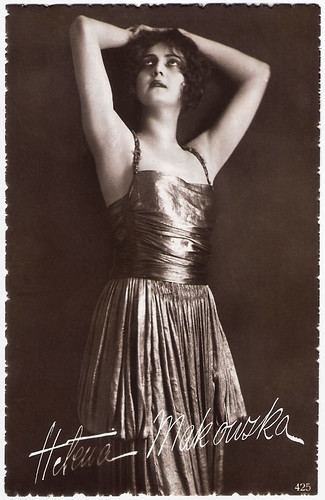
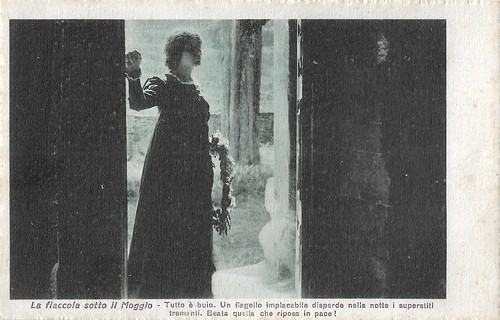
Italian postcard by Ed. A. Traldi, Milano, no. 425.
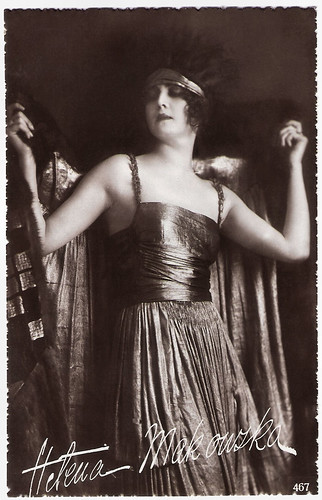
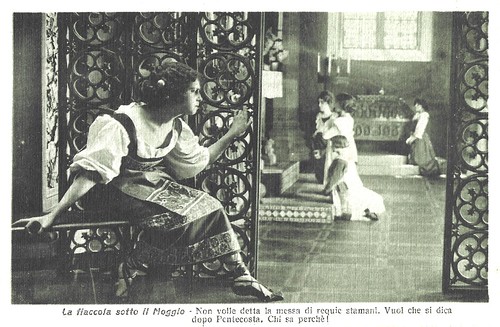
Italian postcard by Ed. A. Traldi, Milano, no. 467.

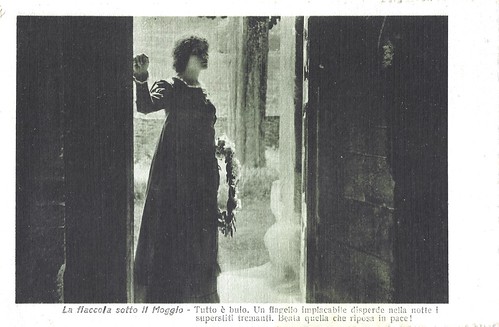
Italian postcard, no. 30. Collection: Didier Hanson.
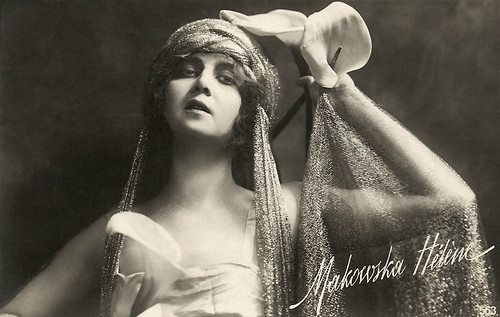
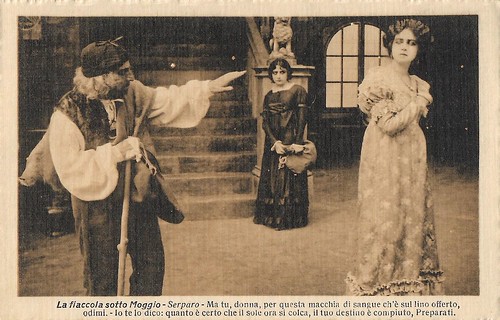
Italian postcard by Ed. A. Traldi, Milano, no. 563.
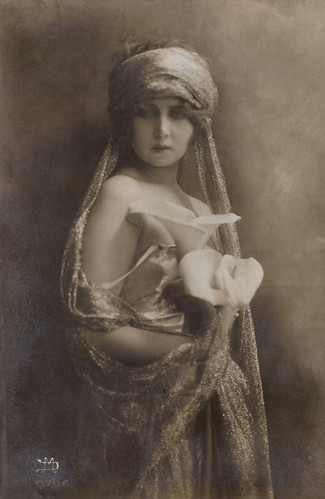
Italian postcard. Photo DM.
Helena (also Elena) Makowska was born Helena Woynowiczówna in Krivoy Rog, Russian Empire (now Kryvyi Rih, Ukraine), in 1893. She was the daughter of Ludwik Woyniewicz, a Polish engineer who worked for a Russian-Belgian company, and his wife, Stanislawa née Sauret.
At the age of 16, she married lawyer Julian Makowski, but the marriage was a brief intermezzo. In 1912 Makowska went to Milan to take singing lessons. The following year she debuted at the Opera as Amelia in 'Il ballo in maschera' and as Elena in 'Mefistofele'.
Her film debut was in the film Romanticismo (Carlo Campogalliani, Arrigo Frusta, 1915). It was based on a famous play by Gerolamo Rovetta, which was already filmed in 1913 and refilmed in 1951. Makowska is Anna Lamberti, whose husband Count Vitaliano Lamberti (Tullio Carminati) would like to join the partisans, but is withheld by his pro-Austrian mother. His indecision has estranged him from his wife, who has an affair with a Polish refugee, Cezky, Vitaliano's secretary. When Vitaliano finally joins the free-fighting patriots, he regains his wife's confidence, but her vengeful lover denounces Vitaliano to the police, then commits suicide. Even when warned, Vitaliano stays where he is, is caught and executed.
Romanticismo came out in Italy in September 1915, just a few months after the country had joined the Allied forces against Austria-Hungary and Germany in the First World War (April 1915). It was also Makowska's first film for the Torinese company Ambrosio.
From 1917 on, she switched to other film companies and played Ophelia in Ruggero Ruggeri's Amleto / Hamlet (1917), the seductress Elena in the comedy Addio giovinezza / Good-bye Youth (Augusto Genina, 1918) with Maria Jacobini, followed by La dame en gris / The Lady in Grey (Gian Paolo Rosmino, 1919). Makowska would go on to perform in some 40 Italian films until her move to Germany in the early 1920s. The Italian press constantly praised her beauty but found her a bit stiff.

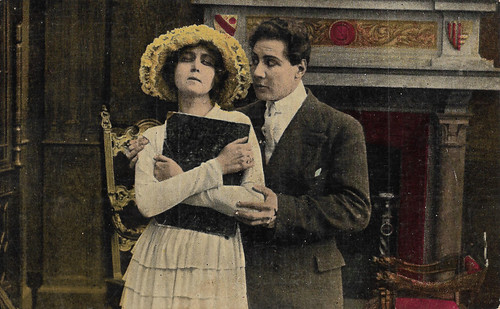
Italian postcard by IPA, no. CT. 750. Photo: Film della Società Anonima Ambrosio, Torino (Turin). Still from Romanticismo (1915). Caption: Notte d'angoscia (Night of anguish).

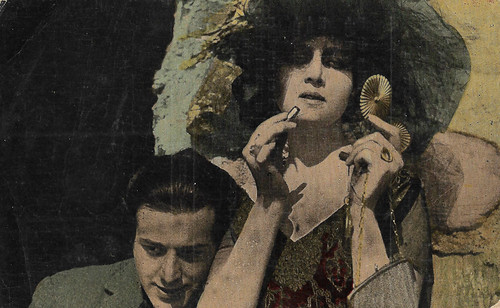
Italian postcard by IPA CT Duplex, no. 1713. Photo: Film Società Anonima Ambrosio Torino. V. Uff. Rev. St., Terni. Helena Makowska (in the back) and probably Vittorio Rossi-Pianelli in the Italian historical propaganda film Val d'Olivi (Eleuterio Rodolfi, 1916), based on the novel by Anton Giulio Barrili (1873). Caption: Caught!
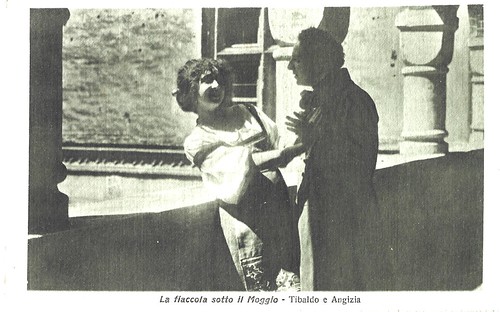
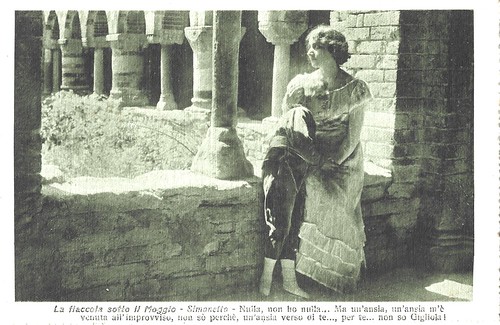
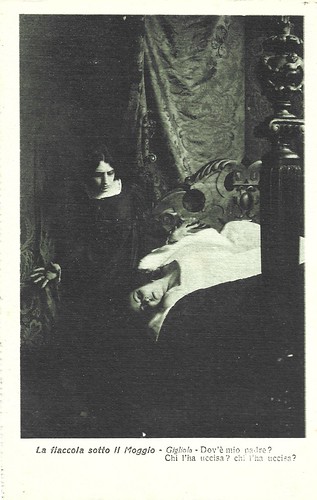
Italian postcard by Duplex IPA CT, no. 3887, card no. 2 Photo: Film. Soc. An. Ambrosio, Torino. Umberto Mozzato and Helena Makowska in La fiaccola sotto il moggio (Eleuterio Rodolfi, 1916), based on the eponymous stage play (1905) by Gabriele D'Annunzio. Caption: Tibaldo and Angizia.
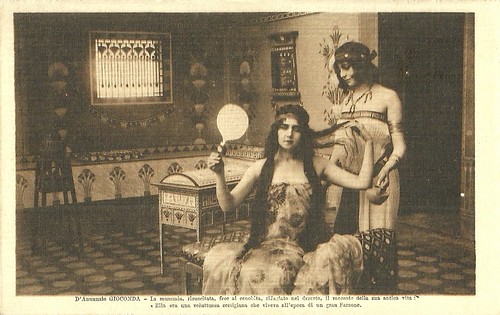
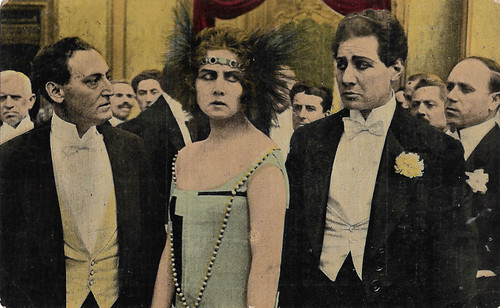
Italian postcard by IPA, no. CT. 3873. Photo: Film della Società Ambrosio, Torino. Helena Makowska as the Egyptian courtesan in La Gioconda (Eleuterio Rodolfi, 1916, released 1917), based on Gabriele D'Annunzio's play. Caption: The resurrected mummy told the monk, refugee in the desert, the story of her ancient life: She had been a voluptuous courtesan who lived in the times of the great Pharaoh.
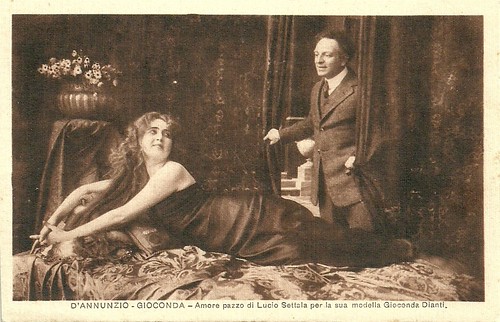
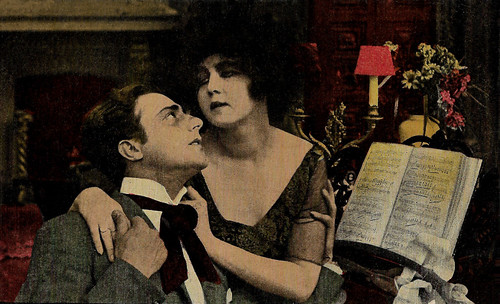
Italian postcard by IPA CT, no. 3876. Photo: Film della Società Ambrosio, Torino. Publicity still of Helena Makowska in La Gioconda (Eleuterio Rodolfi, 1916, released 1917) with Umberto Mozzato as Lucio Settala and Helena Makowska as Gioconda Dianti. Caption: Lucio Settala is madly in love with his model, Gioconda Dianti.
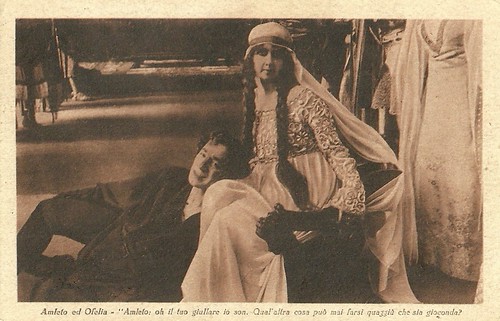
Italian postcard for the film Amleto (Eleuterio Rodolfi, 1917), adapted from William Shakespeare's play 'Hamlet', and starring Ruggero Ruggeri in the title role, and Helena Makowska as Ophelia. Caption: Hamlet: Oh, I am your jester. What else can one ever do down here that is joyous?

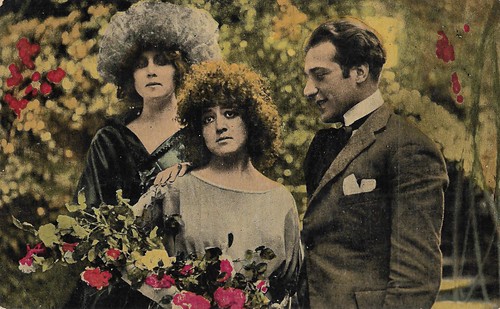
Spanish minicard (collector card) by Chocolate Pi, Barcelona. Photo: Ambrosia. Helena Makowska in Il fiacre no. 13 / Cab Number 13 (Alberto Capozzi, Gero Zambuto, 1917), based on the novel 'Le Fiacre Nº 13' (1880) by Xavier de Montépin.
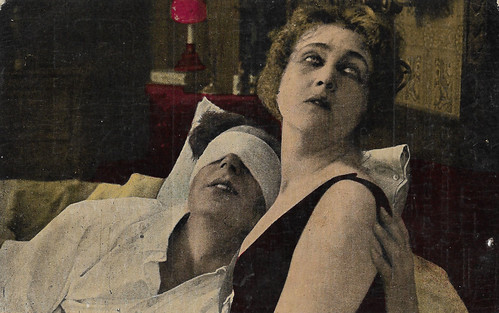
Spanish cromo (collector card) by Chocolat Imperiale, no. 3 of 6. Photo: Gladiator Film / Distr. J. Verdaguer, Barcelona. Helena Makowska and Angelo Vianello in Folgore (Ugo De Simone, 1918-1919), released in Spain as El Rayo.

Spanish collector card (cromo) by Chocolate Imperiale, card 5 of 6. Photo: Distr. J. Verdaguer, Barcelona. Maria Jacobini and Helena Makowska in Addio giovinezza!/Goodbye Youth! (Augusto Genina, 1918). The Spanish release title was Adios, juventud!
In the early 1920s, Helena Makowska moved to Berlin, where she remarried to actor Karl Falkenberg.
Between 1922 and 1927, Makowska played in some 15 films in Berlin and also in three in Warsaw, such as Judith / Frauen im Sumpf (1923) and Frauenmoral / Women's Morals (1923), both directed by Dutch director Theo Frenkel, Taras Bulba (Vladimir Strizevsky, Joseph N. Ermolieff, 1924) with Oscar Marion, the Stuart Webbs-detective Der Schuss im Pavillion/The Shot in the Pavillion (Max Obal, 1925), and Kochanka Szamoty / Szamota's Mistress (Leon Trystan, 1927), her last film in Poland.
After her return to Italy, rumours started to circulate that she had an affair with Crown Prince Umberto. In the early 1930s, she married for the third time, now with an Englishman, Botteril, and returned to Poland as an opera and operetta singer.
In 1939, immediately after the Germans occupied Poland, she was arrested as a British citizen and in 1940, she was deported to Berlin. After four years in a prison camp, she was liberated in the course of an exchange of prisoners.
In England she joined the theatre ensemble of the Polish army, where she performed until the end of the war.
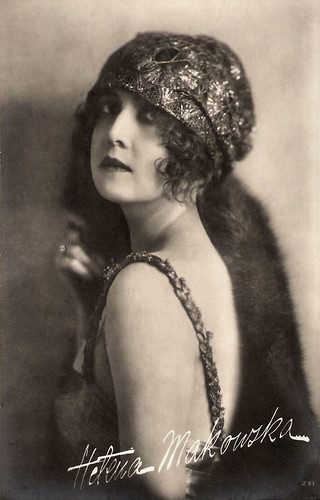
Italian postcard, no. 231.
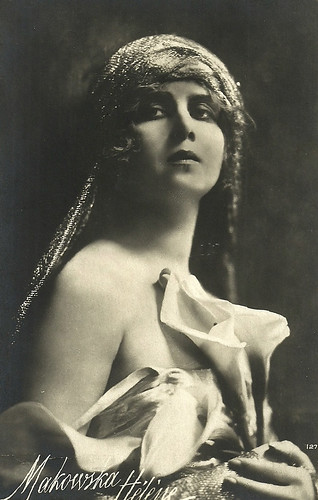
Italian postcard by Fotocelere, Torino, no. 127, with Romanian imprint by Editions SARPIC, Bucharest.

Italian postcard by Fotocelere, Torino, no. ?, with Romanian imprint by Editions SARPIC, Bucharest.
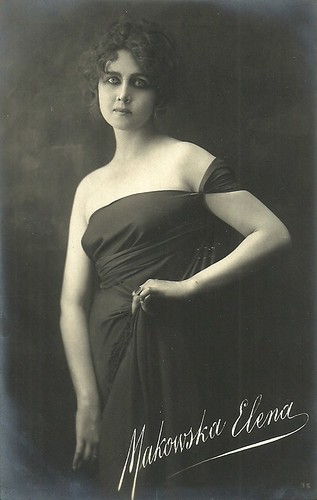
Italian postcard by Fotocelere, Torino, no. 35, with Romanian imprint by Editions SARPIC, Bucharest.
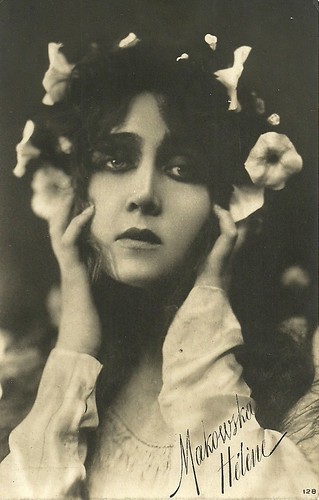
Italian postcard by Fotocelere, Torino, no. 128.

Italian postcard, no. 23. Collection: Didier Hanson.
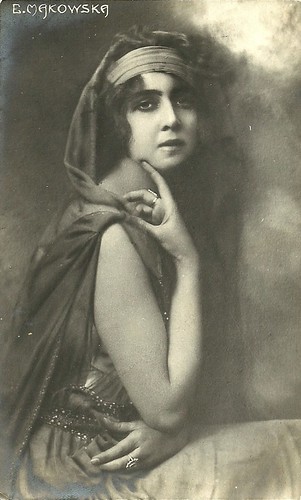
Italian postcard.
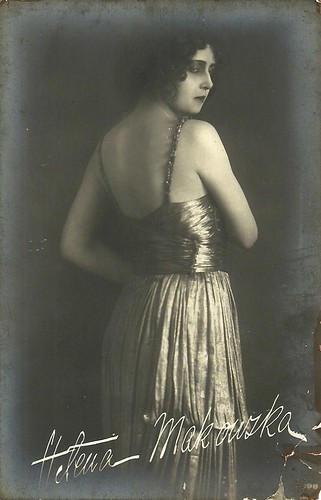
Italian postcard by Ed. Fotocelere, Torino.
During her final years, Helena Makowska lived in Italy, where she did bit parts in Fabiola (Alessandro Blasetti, 1948) starring Michèle Morgan and Henri Vidal, and Quo vadis? (Mervyn LeRoy, 1951), with Robert Taylor and Deborah Kerr.
She appeared in Luigi Comencini's melancholic La valigia dei sogni / The Suitcase of Dreams (1953) as the aged actress of the silent era who is visibly moved by the performances of Lyda Borelli in La Donna Nuda / The Naked Truth (Carmine Gallone, 1914) and of herself in Fiacre 13 / Cab Number 13 (Alberto Capozzi, Gero Zambuto, 1917), one of her most popular films.
In the film of Comencini, a modern audience of the 1950s cruelly laughs about the performances of the silent actresses, but the diva of bygone days sheds a tear over so much beauty and emotion.
Her final film appearance was in Arrivederci Firenze / Goodbye Firenze (Rate Furlan, 1958) with Maria-Pia Casilio.
Helena Makowska died in 1964 in Rome, Italy. She was 71. In 1999 director Peter Delpeut included footage of Makowska, Lyda Borelli, Pina Menichelli and other Italian silent film stars in his beautiful compilation film Diva Dolorosa (1999).
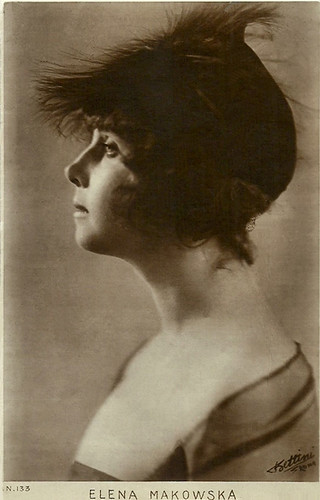
Italian postcard, no. 133. Photo: Bettini, Roma.
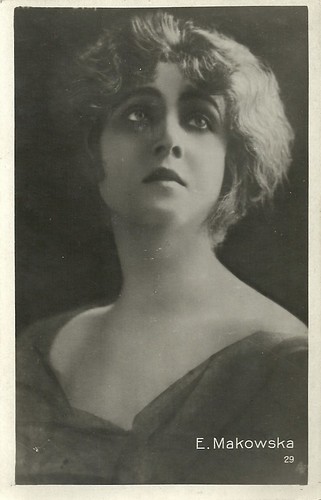
Italian postcard, no. 29.
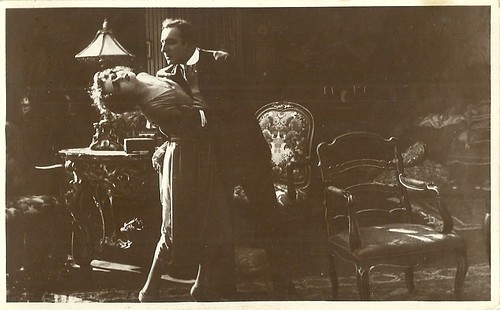
Italian postcard by Unione Cinematografica Italiana. Photo: Medusa Film. Publicity still for Idillio tragico (Gaston Ravel, 1922), based on a novel by Paul Bourget. Caption: Ely rejects Oliviero, as she has now fallen in love with Pietro di Hautefeuille.
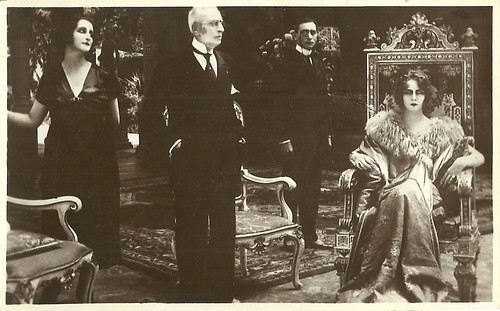
Italian postcard by Unione Cinematografica Italiana. Photo: Medusa Film. Publicity still for Idillio tragico (Gaston Ravel, 1922), based on a novel by Paul Bourget. Caption: Ely's sadness after Oliviero has abandoned her.
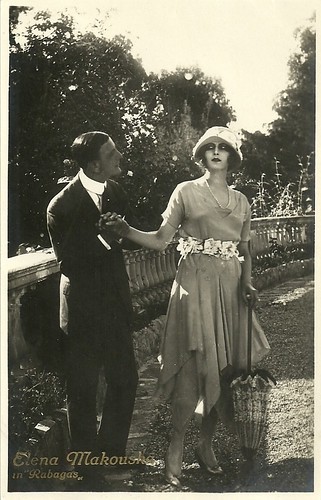
Italian postcard by G.B. Falci, Milano. Photo: Medusa Film / UCI. Publicity still for Rabagas (Gaston Ravel, 1922).
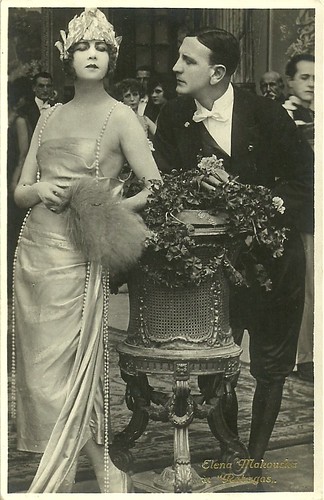
Italian postcard by G.B. Falci, Milano. Photo: Medusa Film / UCI. Publicity still for Rabagas (Gaston Ravel, 1922).
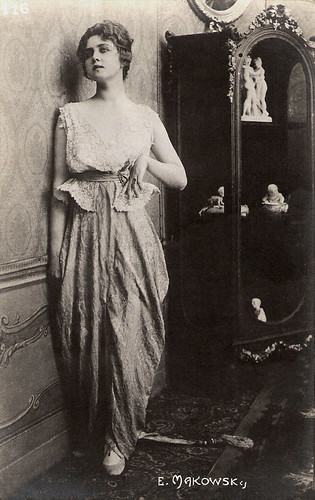
Italian postcard.
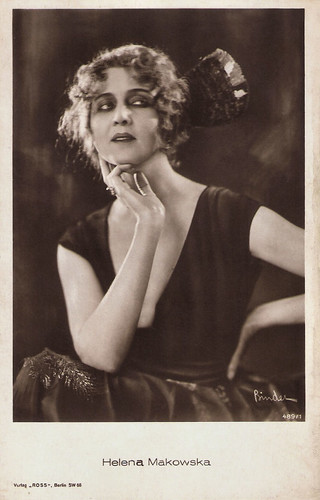
German postcard by Verlag Ross, Berlin, no. 489/1, 1919-1924. Photo: Alex Binder.
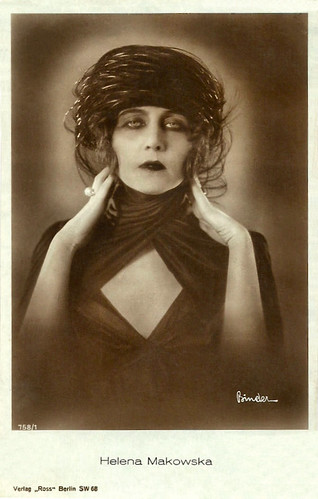
German postcard by Ross Verlag, no. 758/1, 1925-1926. Photo: Alex Binder. Collection: Didier Hanson.
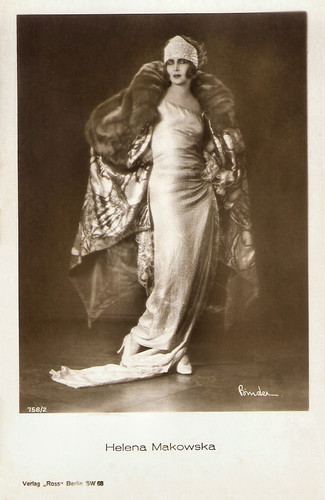
German postcard by Ross Verlag, no. 758/2, 1925-1926. Photo: Alex Binder.
Clip from Diva Dolorosa (1999). Source: The Stat (YouTube).
Source: Vittorio Martinelli (Le dive del silenzio) Wikipedia (German) and IMDb.
Italian postcard by Ed. A. Traldi, Milano, no. 425.
Italian postcard by Ed. A. Traldi, Milano, no. 467.
Italian postcard, no. 30. Collection: Didier Hanson.
Italian postcard by Ed. A. Traldi, Milano, no. 563.
Italian postcard. Photo DM.
Beautiful and a bit stiff
Helena (also Elena) Makowska was born Helena Woynowiczówna in Krivoy Rog, Russian Empire (now Kryvyi Rih, Ukraine), in 1893. She was the daughter of Ludwik Woyniewicz, a Polish engineer who worked for a Russian-Belgian company, and his wife, Stanislawa née Sauret.
At the age of 16, she married lawyer Julian Makowski, but the marriage was a brief intermezzo. In 1912 Makowska went to Milan to take singing lessons. The following year she debuted at the Opera as Amelia in 'Il ballo in maschera' and as Elena in 'Mefistofele'.
Her film debut was in the film Romanticismo (Carlo Campogalliani, Arrigo Frusta, 1915). It was based on a famous play by Gerolamo Rovetta, which was already filmed in 1913 and refilmed in 1951. Makowska is Anna Lamberti, whose husband Count Vitaliano Lamberti (Tullio Carminati) would like to join the partisans, but is withheld by his pro-Austrian mother. His indecision has estranged him from his wife, who has an affair with a Polish refugee, Cezky, Vitaliano's secretary. When Vitaliano finally joins the free-fighting patriots, he regains his wife's confidence, but her vengeful lover denounces Vitaliano to the police, then commits suicide. Even when warned, Vitaliano stays where he is, is caught and executed.
Romanticismo came out in Italy in September 1915, just a few months after the country had joined the Allied forces against Austria-Hungary and Germany in the First World War (April 1915). It was also Makowska's first film for the Torinese company Ambrosio.
From 1917 on, she switched to other film companies and played Ophelia in Ruggero Ruggeri's Amleto / Hamlet (1917), the seductress Elena in the comedy Addio giovinezza / Good-bye Youth (Augusto Genina, 1918) with Maria Jacobini, followed by La dame en gris / The Lady in Grey (Gian Paolo Rosmino, 1919). Makowska would go on to perform in some 40 Italian films until her move to Germany in the early 1920s. The Italian press constantly praised her beauty but found her a bit stiff.
Italian postcard by IPA, no. CT. 750. Photo: Film della Società Anonima Ambrosio, Torino (Turin). Still from Romanticismo (1915). Caption: Notte d'angoscia (Night of anguish).
Italian postcard by IPA CT Duplex, no. 1713. Photo: Film Società Anonima Ambrosio Torino. V. Uff. Rev. St., Terni. Helena Makowska (in the back) and probably Vittorio Rossi-Pianelli in the Italian historical propaganda film Val d'Olivi (Eleuterio Rodolfi, 1916), based on the novel by Anton Giulio Barrili (1873). Caption: Caught!
Italian postcard by Duplex IPA CT, no. 3887, card no. 2 Photo: Film. Soc. An. Ambrosio, Torino. Umberto Mozzato and Helena Makowska in La fiaccola sotto il moggio (Eleuterio Rodolfi, 1916), based on the eponymous stage play (1905) by Gabriele D'Annunzio. Caption: Tibaldo and Angizia.
Italian postcard by IPA, no. CT. 3873. Photo: Film della Società Ambrosio, Torino. Helena Makowska as the Egyptian courtesan in La Gioconda (Eleuterio Rodolfi, 1916, released 1917), based on Gabriele D'Annunzio's play. Caption: The resurrected mummy told the monk, refugee in the desert, the story of her ancient life: She had been a voluptuous courtesan who lived in the times of the great Pharaoh.
Italian postcard by IPA CT, no. 3876. Photo: Film della Società Ambrosio, Torino. Publicity still of Helena Makowska in La Gioconda (Eleuterio Rodolfi, 1916, released 1917) with Umberto Mozzato as Lucio Settala and Helena Makowska as Gioconda Dianti. Caption: Lucio Settala is madly in love with his model, Gioconda Dianti.
Italian postcard for the film Amleto (Eleuterio Rodolfi, 1917), adapted from William Shakespeare's play 'Hamlet', and starring Ruggero Ruggeri in the title role, and Helena Makowska as Ophelia. Caption: Hamlet: Oh, I am your jester. What else can one ever do down here that is joyous?
Spanish minicard (collector card) by Chocolate Pi, Barcelona. Photo: Ambrosia. Helena Makowska in Il fiacre no. 13 / Cab Number 13 (Alberto Capozzi, Gero Zambuto, 1917), based on the novel 'Le Fiacre Nº 13' (1880) by Xavier de Montépin.
Spanish cromo (collector card) by Chocolat Imperiale, no. 3 of 6. Photo: Gladiator Film / Distr. J. Verdaguer, Barcelona. Helena Makowska and Angelo Vianello in Folgore (Ugo De Simone, 1918-1919), released in Spain as El Rayo.
Spanish collector card (cromo) by Chocolate Imperiale, card 5 of 6. Photo: Distr. J. Verdaguer, Barcelona. Maria Jacobini and Helena Makowska in Addio giovinezza!/Goodbye Youth! (Augusto Genina, 1918). The Spanish release title was Adios, juventud!
German prison camp
In the early 1920s, Helena Makowska moved to Berlin, where she remarried to actor Karl Falkenberg.
Between 1922 and 1927, Makowska played in some 15 films in Berlin and also in three in Warsaw, such as Judith / Frauen im Sumpf (1923) and Frauenmoral / Women's Morals (1923), both directed by Dutch director Theo Frenkel, Taras Bulba (Vladimir Strizevsky, Joseph N. Ermolieff, 1924) with Oscar Marion, the Stuart Webbs-detective Der Schuss im Pavillion/The Shot in the Pavillion (Max Obal, 1925), and Kochanka Szamoty / Szamota's Mistress (Leon Trystan, 1927), her last film in Poland.
After her return to Italy, rumours started to circulate that she had an affair with Crown Prince Umberto. In the early 1930s, she married for the third time, now with an Englishman, Botteril, and returned to Poland as an opera and operetta singer.
In 1939, immediately after the Germans occupied Poland, she was arrested as a British citizen and in 1940, she was deported to Berlin. After four years in a prison camp, she was liberated in the course of an exchange of prisoners.
In England she joined the theatre ensemble of the Polish army, where she performed until the end of the war.
Italian postcard, no. 231.
Italian postcard by Fotocelere, Torino, no. 127, with Romanian imprint by Editions SARPIC, Bucharest.
Italian postcard by Fotocelere, Torino, no. ?, with Romanian imprint by Editions SARPIC, Bucharest.
Italian postcard by Fotocelere, Torino, no. 35, with Romanian imprint by Editions SARPIC, Bucharest.
Italian postcard by Fotocelere, Torino, no. 128.
Italian postcard, no. 23. Collection: Didier Hanson.
Italian postcard.
Italian postcard by Ed. Fotocelere, Torino.
Diva of bygone days
During her final years, Helena Makowska lived in Italy, where she did bit parts in Fabiola (Alessandro Blasetti, 1948) starring Michèle Morgan and Henri Vidal, and Quo vadis? (Mervyn LeRoy, 1951), with Robert Taylor and Deborah Kerr.
She appeared in Luigi Comencini's melancholic La valigia dei sogni / The Suitcase of Dreams (1953) as the aged actress of the silent era who is visibly moved by the performances of Lyda Borelli in La Donna Nuda / The Naked Truth (Carmine Gallone, 1914) and of herself in Fiacre 13 / Cab Number 13 (Alberto Capozzi, Gero Zambuto, 1917), one of her most popular films.
In the film of Comencini, a modern audience of the 1950s cruelly laughs about the performances of the silent actresses, but the diva of bygone days sheds a tear over so much beauty and emotion.
Her final film appearance was in Arrivederci Firenze / Goodbye Firenze (Rate Furlan, 1958) with Maria-Pia Casilio.
Helena Makowska died in 1964 in Rome, Italy. She was 71. In 1999 director Peter Delpeut included footage of Makowska, Lyda Borelli, Pina Menichelli and other Italian silent film stars in his beautiful compilation film Diva Dolorosa (1999).
Italian postcard, no. 133. Photo: Bettini, Roma.
Italian postcard, no. 29.
Italian postcard by Unione Cinematografica Italiana. Photo: Medusa Film. Publicity still for Idillio tragico (Gaston Ravel, 1922), based on a novel by Paul Bourget. Caption: Ely rejects Oliviero, as she has now fallen in love with Pietro di Hautefeuille.
Italian postcard by Unione Cinematografica Italiana. Photo: Medusa Film. Publicity still for Idillio tragico (Gaston Ravel, 1922), based on a novel by Paul Bourget. Caption: Ely's sadness after Oliviero has abandoned her.
Italian postcard by G.B. Falci, Milano. Photo: Medusa Film / UCI. Publicity still for Rabagas (Gaston Ravel, 1922).
Italian postcard by G.B. Falci, Milano. Photo: Medusa Film / UCI. Publicity still for Rabagas (Gaston Ravel, 1922).
Italian postcard.
German postcard by Verlag Ross, Berlin, no. 489/1, 1919-1924. Photo: Alex Binder.
German postcard by Ross Verlag, no. 758/1, 1925-1926. Photo: Alex Binder. Collection: Didier Hanson.
German postcard by Ross Verlag, no. 758/2, 1925-1926. Photo: Alex Binder.
Clip from Diva Dolorosa (1999). Source: The Stat (YouTube).
Source: Vittorio Martinelli (Le dive del silenzio) Wikipedia (German) and IMDb.