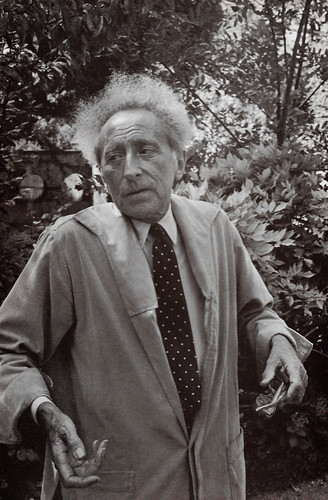
With his heroic physique, Jean Marais (1913-1998) was France’s answer to Errol Flynn: the epitome of the swashbuckling romantic hero of French cinema. The blonde and incredibly good-looking actor played over 100 roles in film and on television and was also known as a director, writer, painter and sculptor. His mentor was the legendary poet and director Jean Cocteau, who was also his lover.
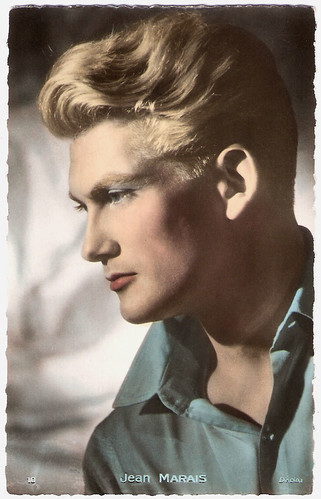
French postcard by Editions E.C., Paris, no. 10. Photo: Discina.
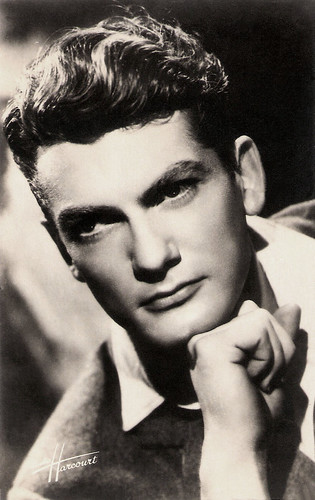
French postcard by Editions O.P., Paris, no. 21. Photo: Studio Harcourt.
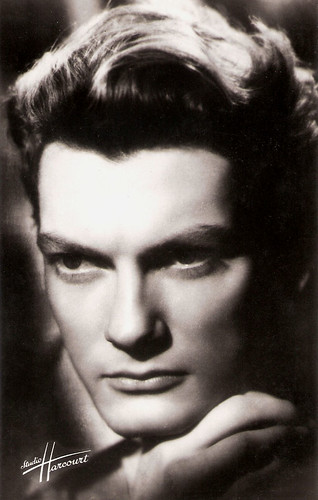
French postcard by Editions O.P., no. 15. Photo: Studio Harcourt.
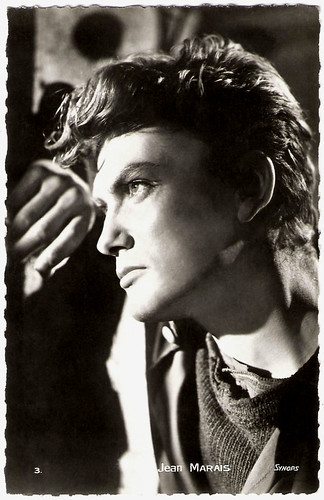
French postcard by Editions E.C., no. 3. Photo: Synops.
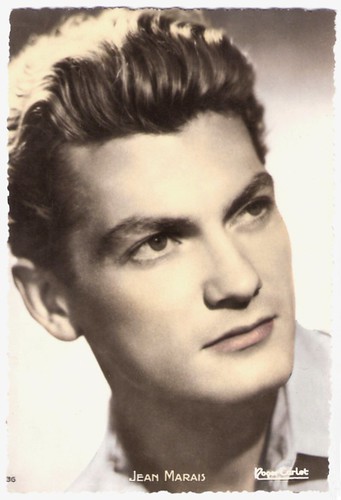
French postcard by Editions P.I., Paris, no. 36. Photo: Roger Carlet.

Vintage card. Jean Marais and Madeleine Sologne in L'Éternel Retour / The Eternal Return (Jean Delannoy, 1941), written by Jean Cocteau.

West German postcard by Film und Bild, Frankfurt - Main. Photo: IFA. Jean Marais in Ruy Blas (Pierre Billon, 1948).
Jean-Alfred Villain-Marais was born in 1913 in Cherbourg, France. He endured a turbulent childhood. When he was born, on the eve of World War I, his mother refused to see him. Her only daughter had died a few days before. When Marais' father returned from the war, the five-year-old Jean didn't remember him, and his father slapped him. His mother promptly packed her three children off to their grandmother's, and Jean grew up fatherless.
He attended the Lycee Condorcet, a prestigious private school, where some of his future film partners also studied, such as Louis de Funes and Jean Cocteau, and the faculty had such figures as Jean-Paul Sartre. At the age of 13, Marais had to leave the Lycee Condorcet, after gamingly flirting in drag with a teacher. He was placed in a Catholic boarding school, but at 16, he left school and became involved in amateur acting.
As a child, he had dreamed of becoming an actor but he was twice rejected when he applied to drama schools. He took a job as a photographer's assistant and had acting classes with Charles Dullin.
In 1933 Marcel L'Herbier gave him a bit part in L’Épervier / The Casting Net (Marcel L'Herbier, 1933) starring Charles Boyer. This was followed by more small parts in films by L’Herbier, such as L'Aventurier / The Adventurer (Marcel L'Herbier, 1934), Le Bonheur / Happiness (Marcel L'Herbier, 1935), Les Hommes nouveaux / The New Men (Marcel L'Herbier, 1936), and Nuits de feu / The Living Corpse (Marcel L'Herbier, 1936).
Jean Marais also appeared in Abus de confiance / Abused Confidence (Henri Decoin, 1937), and Drôle de drame / Bizarre, Bizarre (Marcel Carné, 1937).
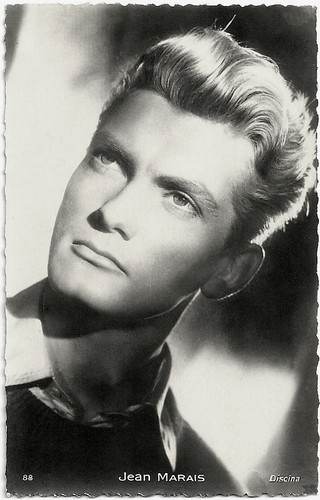
French postcard, no. 88. Photo: Discina.

French postcard by Editions O.P., Paris, no. 90. Photo: Teddy Piaz.

German postcard. Photo: IFA.
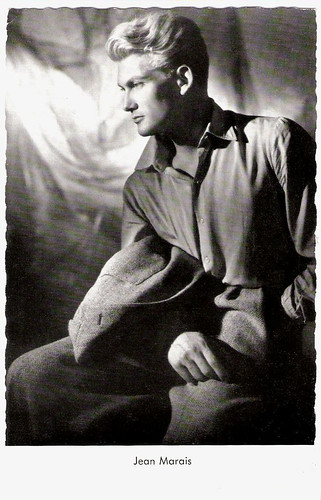
German postcard by Kolibri-Verlag, Minden, Westphalen. Photo: Aldo Graziati.

French postcard by A. Noyer, Paris, no. 1253. Photo: Raymond Voinquel.

French postcard by Editions O.P., Paris, no. 21. Photo: Raymond Voinquel / Studio Harcourt.

French postcard by Editions O.P., Paris, no. 91. Photo: Teddy Piaz.
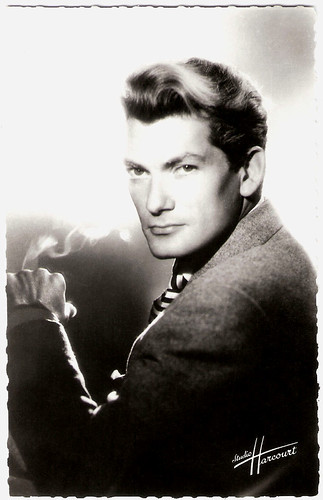
French postcard by Editions du Globe, Paris, no. 212. Photo: Studio Harcourt.
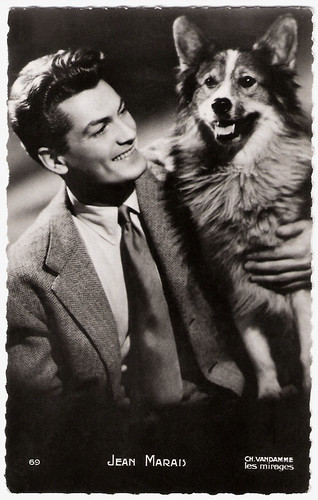
French postcard by Editions P.I., Paris, no. 69. Photo: Ch. Vandamme / Les Mirages.

French postcard by Editions P.I., Paris, no. 69. Photo: Studio Synops.
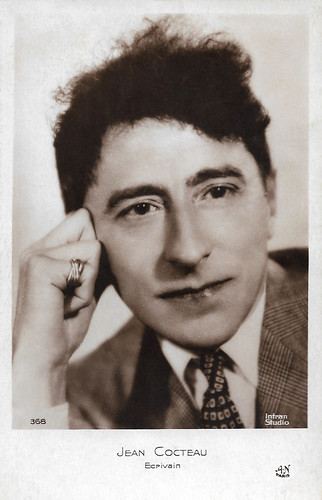
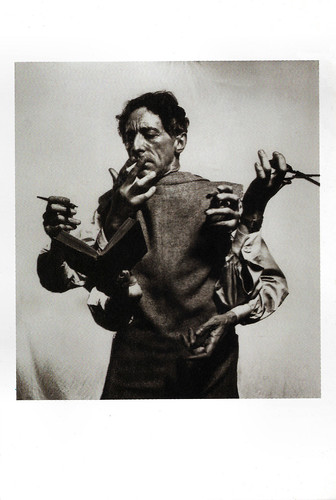
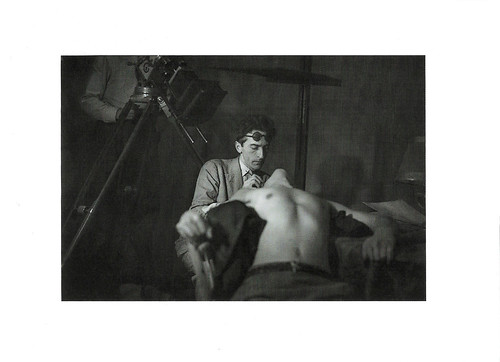
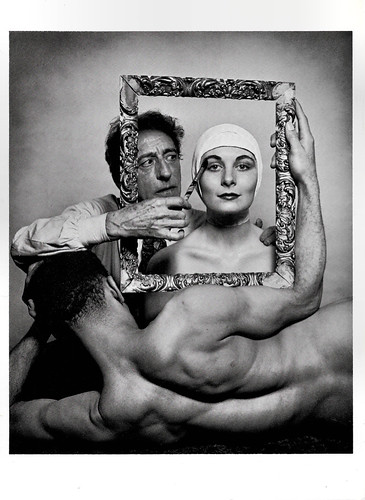
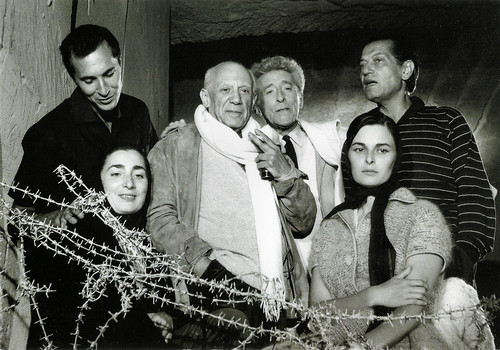
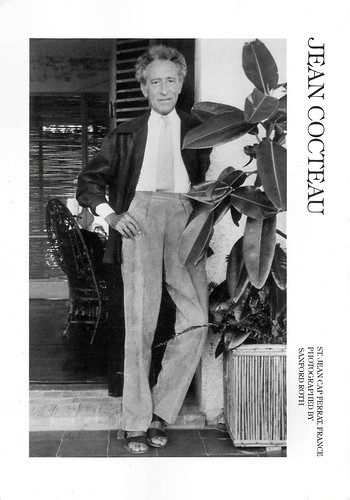
In 1937, Jean Marais, then 24, met Jean Cocteau at a stage rehearsal of 'Oedipe-Roi' (King Oedipus). They fell in love and would remain close friends until Cocteau died in 1963. Cocteau became his surrogate father, and he was Cocteau's surrogate son.
Cocteau had a major influence on Marais’ career. In 1938 he cast him as Galahad in the stage play 'Les Chevaliers de La Table Ronde' (The Knights of the Round Table), and wrote the film L'Éternel retour with him in mind. With L’Éternal retour / The Eternal Return (Jean Delannoy, 1943), Marais made his big break in the cinema.
This was the turning point in his life and the start of a film career which spanned nearly sixty years. In the following years, he appeared in almost all of Cocteau's films: La Belle et la bête / Beauty and the Beast (Jean Cocteau, Jean Delannoy, 1946), L'Aigle à deux têtes / The Eagle Has Two Heads (1947, Jean Cocteau), Les parents terribles / The Storm Within (Jean Cocteau, 1948), and Orphée/Orpheus (Jean Cocteau, 1950).
After the Allies liberated Paris in August 1944, he joined France's Second Armored Division and served as a truck driver carrying fuel and ammunition to the front. Later he was decorated with the Croix de Guerre for his courage.
During the war, Marais was engaged to his film partner, actress Mila Parély, and their engagement was blessed by Cocteau, who wanted Marais to be happy. Marais and Mila Parély separated after two years, and shortly after they worked together again in La Belle et la bête / Beauty and the Beast (Jean Cocteau, Jean Delannoy, 1946). His double role as the beast and the prince in this classic film made Marais an international teen idol.
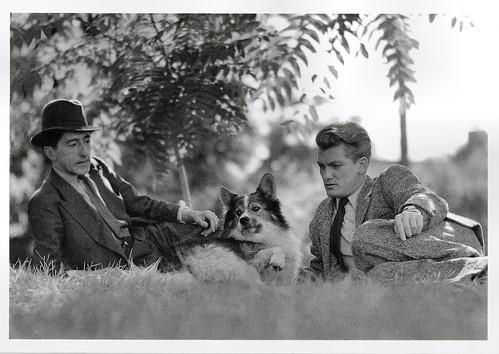
French postcard by Editions Hazan, Paris, in the Collection Magie Noire, no. 1960. Photographer unknown. Jean Cocteau and Jean Marais.

French postcard by Éditions du Désastre, Paris, 1988, no RD 6. Photo: Robert Doisneau, 1949.

Photocard.

French postcard in the Collection Magie Noire by Éditions Hazan, Paris, 1988, no. 6009. Photo: Sam Lévin Jean Marais and Michèle Morgan in Aux yeux du souvenir/Nightstop in Dakar (Jean Delannoy, 1948).

Austrian postcard by Kellner-Fotokarten, Wien, no. 1038. Photo: Ringfilm. Jean Marais in Orphée/Orpheus (Jean Cocteau, 1950).

Swiss / British / German postcard by News Productions, Baulmes & Stroud / Filmwelt Berlin, Bakede, no. 56482. Photo: Collection Cinémathèque Suisse, Lausanne. Jean Marais in Orphée / Orpheus (Jean Cocteau, 1950).

German postcard by Wilhelm Schulze-Witteburg Graphischer Betrieb (WS-Druck), Wanne Eickel. Photo: Deutsche Commerz Film GmbH. Jean Marais and Alida Valli in Les Miracles n'ont lieu qu'une fois / Miracles Only Happen Once (Yves Allégret, 1951).

Soviet postcard. Jean Marais in Le comte de Monte-Cristo: La vengeance / The Count of Monte Cristo: Revenge (Robert Vernay, 1954).

West German postcard by Rüdel-Verlag, Hamburg-Bergedorf, no. 2136. Photo: J. Arthur Rank Film. Jean Marais in Le notti bianche / White Nights (Luchino Visconti, 1957).
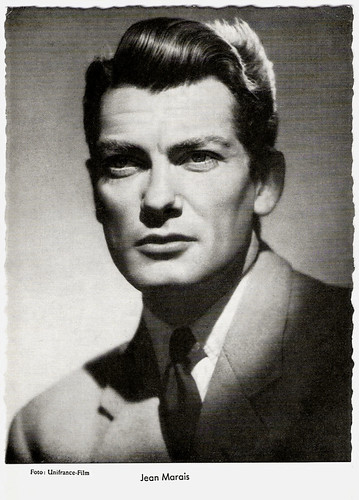
German postcard by WS-Druck, Wanne-Eickel, no. 50. Photo: Unifrance-Film.
During the 1950’s, Jean Marais became a dashing sword master, dazzling his audiences with impressive French swashbuckling adventures, in which he performed his own stunts.
Le Comte de Monte Cristo / The Count of Monte Cristo (Robert Vernay, 1955), Le Bossu / The Hunchback of Paris (André Hunebelle, 1959), and Le Capitaine Fracasse / Captain Fracasse (Pierre Gaspard-Huit, 1961) all enjoyed great box office popularity in France.
Marais would become one of the most admired and celebrated actors of his generation. He starred in international productions by famous directors like Elena et les hommes / Elena and Her Men (Jean Renoir, 1956) and Le Notti bianche / White Nights (Luchino Visconti, 1957) with Maria Schell and Marcello Mastroianni.
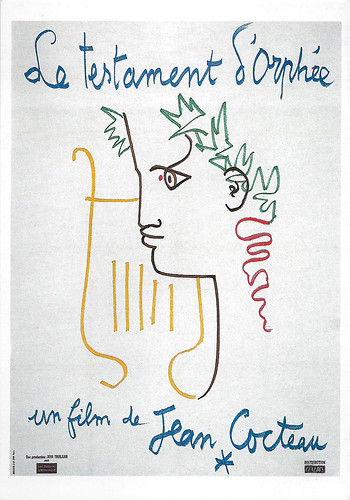
Jean Marais also continued to work for Jean Cocteau in Le testament d'Orphée / The Testament of Orpheus (Jean Cocteau, 1959).
During the 1960s and 1970s, he appeared in popular adventure comedies such as the Fantômas (André Hunebelle, 1964-1967) trilogy, co-starring with Louis de Funes and Mylène Demongeot.

East-German postcard by VEB Progress Film-Vertrieb, Berlin, no. 1378, 1961. Retail price: 0.20 DM. Photo: Progress.

East German postcard by VEB Progress Film-Vertrieb, Berlin, no. 1.954, 1963. Jean Marais in Le Capitan / Captain Blood (André Hunebelle, 1960).
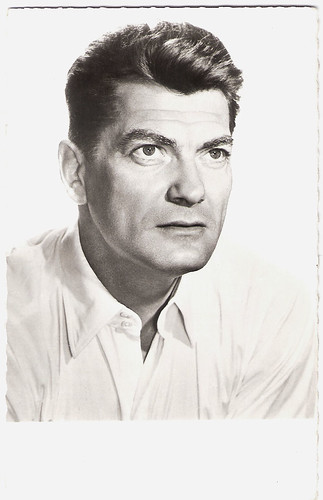
French postcard by Editions P.I., Paris, no. 902, offered by Les Carbones Korès. Photo: Sam Lévin.
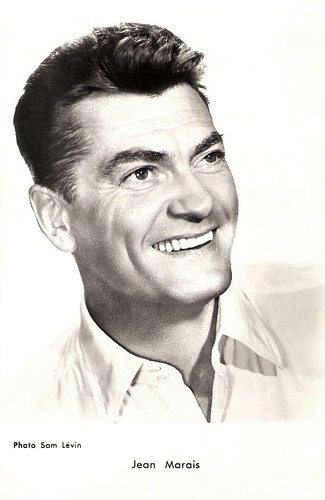
French postcard by Editions P.I., Paris, no. 1111. Photo: Sam Lévin.
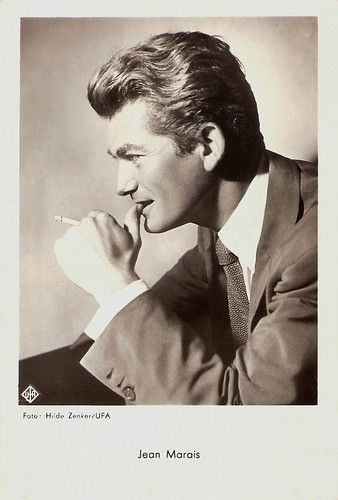
French postcard by Editions P.I., Paris, no. FK 1042, French licency holder for UFA, Berlin-Tempelhof. Photo: Hilde Zenker / UFA.
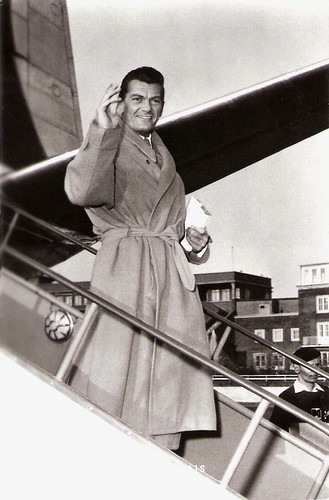
German postcard by Netter's Star Verlag, Berlin.
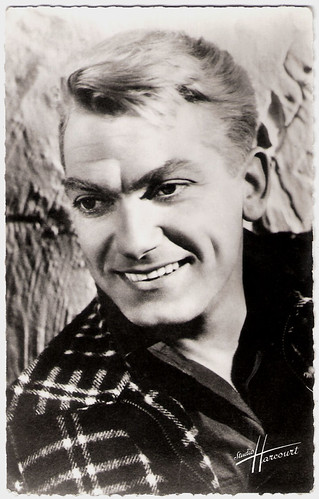
French postcard by Editions du Globe, Paris. Photo: Studio Harcourt.
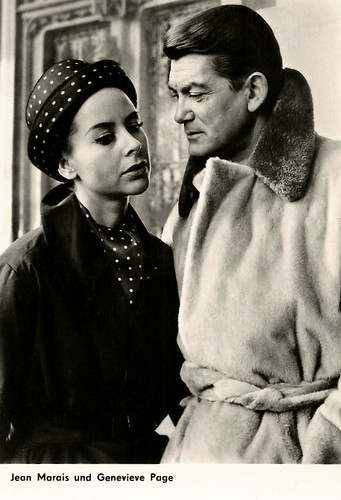
German postcard by Progress-Filmvertrieb, Berlin, no. 2416. Photo: Jean Marais and Geneviève Page in Der ehrenwerte Stanislas/L'honorable Stanislas, l'agent secret (Jean-Charles Dudrumet, 1963).

French postcard by Chromos, no. 37. Jean Marais and Louis de Funès in Fantomas contre Scotland Yard / Fantomas Contra Scotland Yard (André Hunebelle, 1967).

Romanian postcard by Casa Filmului Acin, no. 433. Jean Marais in Le paria / Diamond Rush (Claude Carliez, 1969).
Jean Marais was equally impressive in the theatre, appearing in such plays as 'Britannicus', 'Pygmalion' and 'Cher Menteur' at the Théâtre de Paris, Théâtre de l'Atelier, and the Comédie Francaise.
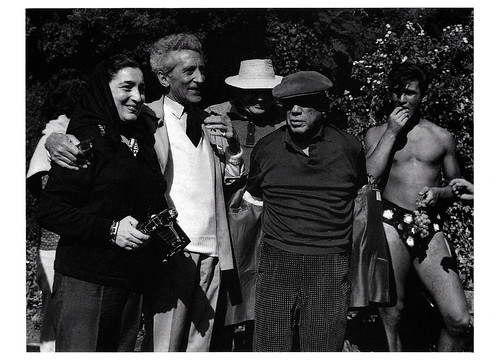
He spent his later years living in his house in Vallauris, in the South of France where he was involved in painting, sculpture and pottery, and was visited by Pablo Picasso and other cultural figures.
His monument 'Le passe muraille' (The Walker Through Walls), honouring French author Marcel Aymé, can be seen in the Montmartre Quarter in Paris.
After a long retirement, Jean Marais returned to filmmaking in the mid-1980s with choice character roles in such films as Parking (Jacques Demy, 1985). In 1993 he was awarded an honourable César. Marais made his final film appearance in Bernardo Bertolucci's Io ballo da sola/Stealing Beauty (1996) starring Liv Tyler. That year he received France's highest tribute, the Legion of Honour for his contribution to the French cinema.
Jean Marais died of heart failure in 1998, in Cannes. He had an adopted son, Serge Marais.

French card by St. Anne, Marseille. Photo: Sam Lévin.

French postcard by E.D.U.G., Paris, no. 178. Photo: Sam Lévin.

French postcard by Editions P.I., Paris, no. 1007. Photo: Sam Lévin.

German postcard by Universum-Film Aktiengesellschaft (Ufa), Berlin-Tempelhof, no. CK-27. Retail price: 30 Pfg. Photo: Gérard Décaux / Ufa.

German postcard by Universum-Film Aktiengesellschaft (Ufa), Berlin-Tempelhof, no. CK-161. Retail price: 30 Pfg. Photo: Unifrance-Film.

German postcard by Ufa (Universum-Film Aktiengesellschaft), Berlin-Tempelhof, no. CK-202. Retail price: 30 Pfg. Photo: Sam Lévin / UFA.

French postcard by La roue tourne, L'Association du Spectacle, Paris.

French postcard by Editions d'art Yvon, Paris, no. 40-110-02. Photo: Parc Film / KIM. Jean Marais and Catherine Deneuve in Peau d'âne/Donkey Skin (Jacques Demy, 1970). Caption: Peau d'âne (Donkey Skin), a tale by Charles Perrault, a film by Jacques Demy. The Princess asks the King, her father, for a moon-coloured dress.

West German collector card in the Unsere Bambi-Lieblinge series by Penny Bildband, no. 45. Jean Marais in the TV series Joseph Balsamo (André Hunebelle, 1973), based on a novel by Alexandre Dumas. Caption: Jean Marais, the celebrated film and theatre actor, was the first BAMBI winner in 1948. As the adventurer ‘Cagliostro’, he confirmed his great skills on German television.

French postcard by Galerie Jean Marais. Photo: Gérard Dufraigne.
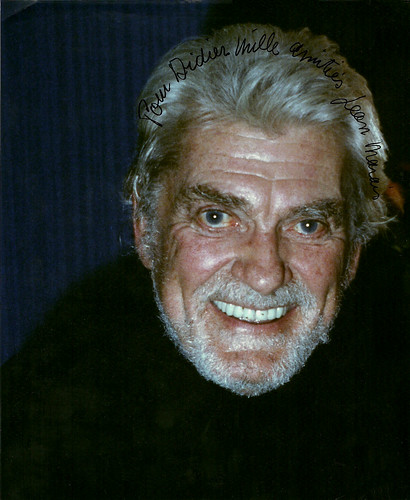
Original photo with autograph and dedication. Collection: Didier Hanson.

French postcard by Carterie Occitane, Toulouse in the series 'Les acteurs Français vus par Solo', no. 8. Illustration: Solo.
Sources: Steve Shelokhonov (IMDb), Hal Erickson (AllMovie - Page now defunct), Wikipedia, James Travers (Films de France), Lenin Imports, and IMDb.
French postcard by Editions E.C., Paris, no. 10. Photo: Discina.
French postcard by Editions O.P., Paris, no. 21. Photo: Studio Harcourt.
French postcard by Editions O.P., no. 15. Photo: Studio Harcourt.
French postcard by Editions E.C., no. 3. Photo: Synops.
French postcard by Editions P.I., Paris, no. 36. Photo: Roger Carlet.
Vintage card. Jean Marais and Madeleine Sologne in L'Éternel Retour / The Eternal Return (Jean Delannoy, 1941), written by Jean Cocteau.
West German postcard by Film und Bild, Frankfurt - Main. Photo: IFA. Jean Marais in Ruy Blas (Pierre Billon, 1948).
Gamingly flirting in drag
Jean-Alfred Villain-Marais was born in 1913 in Cherbourg, France. He endured a turbulent childhood. When he was born, on the eve of World War I, his mother refused to see him. Her only daughter had died a few days before. When Marais' father returned from the war, the five-year-old Jean didn't remember him, and his father slapped him. His mother promptly packed her three children off to their grandmother's, and Jean grew up fatherless.
He attended the Lycee Condorcet, a prestigious private school, where some of his future film partners also studied, such as Louis de Funes and Jean Cocteau, and the faculty had such figures as Jean-Paul Sartre. At the age of 13, Marais had to leave the Lycee Condorcet, after gamingly flirting in drag with a teacher. He was placed in a Catholic boarding school, but at 16, he left school and became involved in amateur acting.
As a child, he had dreamed of becoming an actor but he was twice rejected when he applied to drama schools. He took a job as a photographer's assistant and had acting classes with Charles Dullin.
In 1933 Marcel L'Herbier gave him a bit part in L’Épervier / The Casting Net (Marcel L'Herbier, 1933) starring Charles Boyer. This was followed by more small parts in films by L’Herbier, such as L'Aventurier / The Adventurer (Marcel L'Herbier, 1934), Le Bonheur / Happiness (Marcel L'Herbier, 1935), Les Hommes nouveaux / The New Men (Marcel L'Herbier, 1936), and Nuits de feu / The Living Corpse (Marcel L'Herbier, 1936).
Jean Marais also appeared in Abus de confiance / Abused Confidence (Henri Decoin, 1937), and Drôle de drame / Bizarre, Bizarre (Marcel Carné, 1937).
French postcard, no. 88. Photo: Discina.
French postcard by Editions O.P., Paris, no. 90. Photo: Teddy Piaz.
German postcard. Photo: IFA.
German postcard by Kolibri-Verlag, Minden, Westphalen. Photo: Aldo Graziati.
French postcard by A. Noyer, Paris, no. 1253. Photo: Raymond Voinquel.
French postcard by Editions O.P., Paris, no. 21. Photo: Raymond Voinquel / Studio Harcourt.
French postcard by Editions O.P., Paris, no. 91. Photo: Teddy Piaz.
French postcard by Editions du Globe, Paris, no. 212. Photo: Studio Harcourt.
French postcard by Editions P.I., Paris, no. 69. Photo: Ch. Vandamme / Les Mirages.
French postcard by Editions P.I., Paris, no. 69. Photo: Studio Synops.
Cocteau
In 1937, Jean Marais, then 24, met Jean Cocteau at a stage rehearsal of 'Oedipe-Roi' (King Oedipus). They fell in love and would remain close friends until Cocteau died in 1963. Cocteau became his surrogate father, and he was Cocteau's surrogate son.
Cocteau had a major influence on Marais’ career. In 1938 he cast him as Galahad in the stage play 'Les Chevaliers de La Table Ronde' (The Knights of the Round Table), and wrote the film L'Éternel retour with him in mind. With L’Éternal retour / The Eternal Return (Jean Delannoy, 1943), Marais made his big break in the cinema.
This was the turning point in his life and the start of a film career which spanned nearly sixty years. In the following years, he appeared in almost all of Cocteau's films: La Belle et la bête / Beauty and the Beast (Jean Cocteau, Jean Delannoy, 1946), L'Aigle à deux têtes / The Eagle Has Two Heads (1947, Jean Cocteau), Les parents terribles / The Storm Within (Jean Cocteau, 1948), and Orphée/Orpheus (Jean Cocteau, 1950).
After the Allies liberated Paris in August 1944, he joined France's Second Armored Division and served as a truck driver carrying fuel and ammunition to the front. Later he was decorated with the Croix de Guerre for his courage.
During the war, Marais was engaged to his film partner, actress Mila Parély, and their engagement was blessed by Cocteau, who wanted Marais to be happy. Marais and Mila Parély separated after two years, and shortly after they worked together again in La Belle et la bête / Beauty and the Beast (Jean Cocteau, Jean Delannoy, 1946). His double role as the beast and the prince in this classic film made Marais an international teen idol.
French postcard by Editions Hazan, Paris, in the Collection Magie Noire, no. 1960. Photographer unknown. Jean Cocteau and Jean Marais.
French postcard by Éditions du Désastre, Paris, 1988, no RD 6. Photo: Robert Doisneau, 1949.
Photocard.
French postcard in the Collection Magie Noire by Éditions Hazan, Paris, 1988, no. 6009. Photo: Sam Lévin Jean Marais and Michèle Morgan in Aux yeux du souvenir/Nightstop in Dakar (Jean Delannoy, 1948).
Austrian postcard by Kellner-Fotokarten, Wien, no. 1038. Photo: Ringfilm. Jean Marais in Orphée/Orpheus (Jean Cocteau, 1950).
Swiss / British / German postcard by News Productions, Baulmes & Stroud / Filmwelt Berlin, Bakede, no. 56482. Photo: Collection Cinémathèque Suisse, Lausanne. Jean Marais in Orphée / Orpheus (Jean Cocteau, 1950).
German postcard by Wilhelm Schulze-Witteburg Graphischer Betrieb (WS-Druck), Wanne Eickel. Photo: Deutsche Commerz Film GmbH. Jean Marais and Alida Valli in Les Miracles n'ont lieu qu'une fois / Miracles Only Happen Once (Yves Allégret, 1951).
Soviet postcard. Jean Marais in Le comte de Monte-Cristo: La vengeance / The Count of Monte Cristo: Revenge (Robert Vernay, 1954).
West German postcard by Rüdel-Verlag, Hamburg-Bergedorf, no. 2136. Photo: J. Arthur Rank Film. Jean Marais in Le notti bianche / White Nights (Luchino Visconti, 1957).
German postcard by WS-Druck, Wanne-Eickel, no. 50. Photo: Unifrance-Film.
Dashing sword master
During the 1950’s, Jean Marais became a dashing sword master, dazzling his audiences with impressive French swashbuckling adventures, in which he performed his own stunts.
Le Comte de Monte Cristo / The Count of Monte Cristo (Robert Vernay, 1955), Le Bossu / The Hunchback of Paris (André Hunebelle, 1959), and Le Capitaine Fracasse / Captain Fracasse (Pierre Gaspard-Huit, 1961) all enjoyed great box office popularity in France.
Marais would become one of the most admired and celebrated actors of his generation. He starred in international productions by famous directors like Elena et les hommes / Elena and Her Men (Jean Renoir, 1956) and Le Notti bianche / White Nights (Luchino Visconti, 1957) with Maria Schell and Marcello Mastroianni.
Jean Marais also continued to work for Jean Cocteau in Le testament d'Orphée / The Testament of Orpheus (Jean Cocteau, 1959).
During the 1960s and 1970s, he appeared in popular adventure comedies such as the Fantômas (André Hunebelle, 1964-1967) trilogy, co-starring with Louis de Funes and Mylène Demongeot.
East-German postcard by VEB Progress Film-Vertrieb, Berlin, no. 1378, 1961. Retail price: 0.20 DM. Photo: Progress.
East German postcard by VEB Progress Film-Vertrieb, Berlin, no. 1.954, 1963. Jean Marais in Le Capitan / Captain Blood (André Hunebelle, 1960).
French postcard by Editions P.I., Paris, no. 902, offered by Les Carbones Korès. Photo: Sam Lévin.
French postcard by Editions P.I., Paris, no. 1111. Photo: Sam Lévin.
French postcard by Editions P.I., Paris, no. FK 1042, French licency holder for UFA, Berlin-Tempelhof. Photo: Hilde Zenker / UFA.
German postcard by Netter's Star Verlag, Berlin.
French postcard by Editions du Globe, Paris. Photo: Studio Harcourt.
German postcard by Progress-Filmvertrieb, Berlin, no. 2416. Photo: Jean Marais and Geneviève Page in Der ehrenwerte Stanislas/L'honorable Stanislas, l'agent secret (Jean-Charles Dudrumet, 1963).
French postcard by Chromos, no. 37. Jean Marais and Louis de Funès in Fantomas contre Scotland Yard / Fantomas Contra Scotland Yard (André Hunebelle, 1967).
Romanian postcard by Casa Filmului Acin, no. 433. Jean Marais in Le paria / Diamond Rush (Claude Carliez, 1969).
Choice character roles
Jean Marais was equally impressive in the theatre, appearing in such plays as 'Britannicus', 'Pygmalion' and 'Cher Menteur' at the Théâtre de Paris, Théâtre de l'Atelier, and the Comédie Francaise.
He spent his later years living in his house in Vallauris, in the South of France where he was involved in painting, sculpture and pottery, and was visited by Pablo Picasso and other cultural figures.
His monument 'Le passe muraille' (The Walker Through Walls), honouring French author Marcel Aymé, can be seen in the Montmartre Quarter in Paris.
After a long retirement, Jean Marais returned to filmmaking in the mid-1980s with choice character roles in such films as Parking (Jacques Demy, 1985). In 1993 he was awarded an honourable César. Marais made his final film appearance in Bernardo Bertolucci's Io ballo da sola/Stealing Beauty (1996) starring Liv Tyler. That year he received France's highest tribute, the Legion of Honour for his contribution to the French cinema.
Jean Marais died of heart failure in 1998, in Cannes. He had an adopted son, Serge Marais.
French card by St. Anne, Marseille. Photo: Sam Lévin.
French postcard by E.D.U.G., Paris, no. 178. Photo: Sam Lévin.
French postcard by Editions P.I., Paris, no. 1007. Photo: Sam Lévin.
German postcard by Universum-Film Aktiengesellschaft (Ufa), Berlin-Tempelhof, no. CK-27. Retail price: 30 Pfg. Photo: Gérard Décaux / Ufa.
German postcard by Universum-Film Aktiengesellschaft (Ufa), Berlin-Tempelhof, no. CK-161. Retail price: 30 Pfg. Photo: Unifrance-Film.
German postcard by Ufa (Universum-Film Aktiengesellschaft), Berlin-Tempelhof, no. CK-202. Retail price: 30 Pfg. Photo: Sam Lévin / UFA.
French postcard by La roue tourne, L'Association du Spectacle, Paris.
French postcard by Editions d'art Yvon, Paris, no. 40-110-02. Photo: Parc Film / KIM. Jean Marais and Catherine Deneuve in Peau d'âne/Donkey Skin (Jacques Demy, 1970). Caption: Peau d'âne (Donkey Skin), a tale by Charles Perrault, a film by Jacques Demy. The Princess asks the King, her father, for a moon-coloured dress.
West German collector card in the Unsere Bambi-Lieblinge series by Penny Bildband, no. 45. Jean Marais in the TV series Joseph Balsamo (André Hunebelle, 1973), based on a novel by Alexandre Dumas. Caption: Jean Marais, the celebrated film and theatre actor, was the first BAMBI winner in 1948. As the adventurer ‘Cagliostro’, he confirmed his great skills on German television.
French postcard by Galerie Jean Marais. Photo: Gérard Dufraigne.
Original photo with autograph and dedication. Collection: Didier Hanson.
French postcard by Carterie Occitane, Toulouse in the series 'Les acteurs Français vus par Solo', no. 8. Illustration: Solo.
Sources: Steve Shelokhonov (IMDb), Hal Erickson (AllMovie - Page now defunct), Wikipedia, James Travers (Films de France), Lenin Imports, and IMDb.