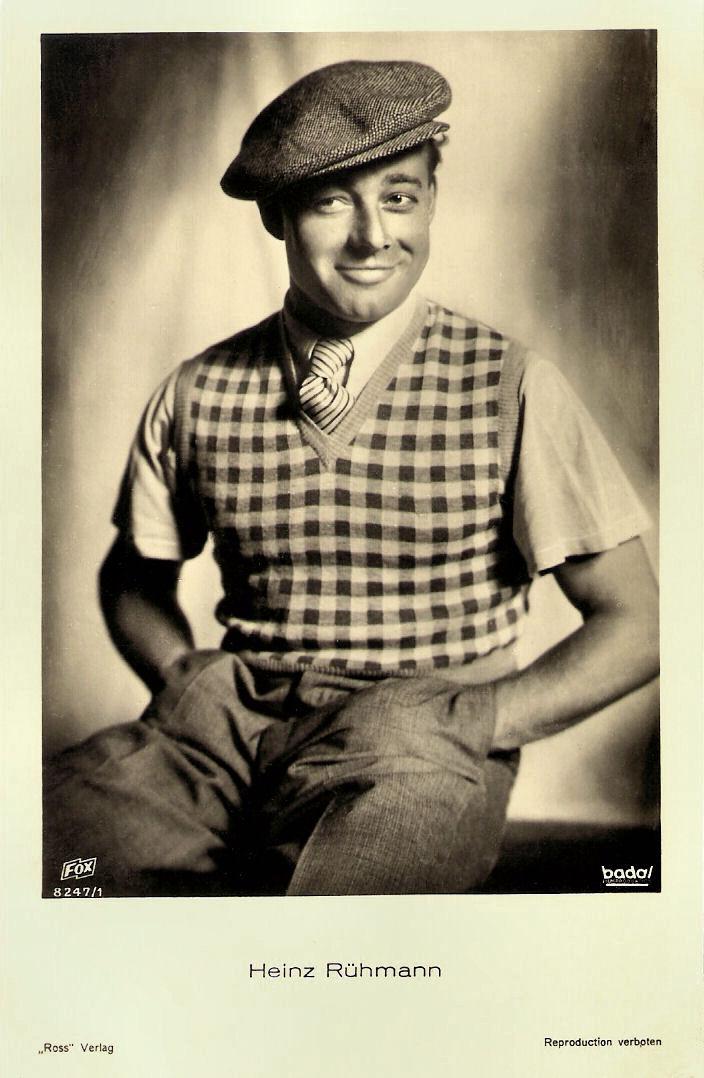
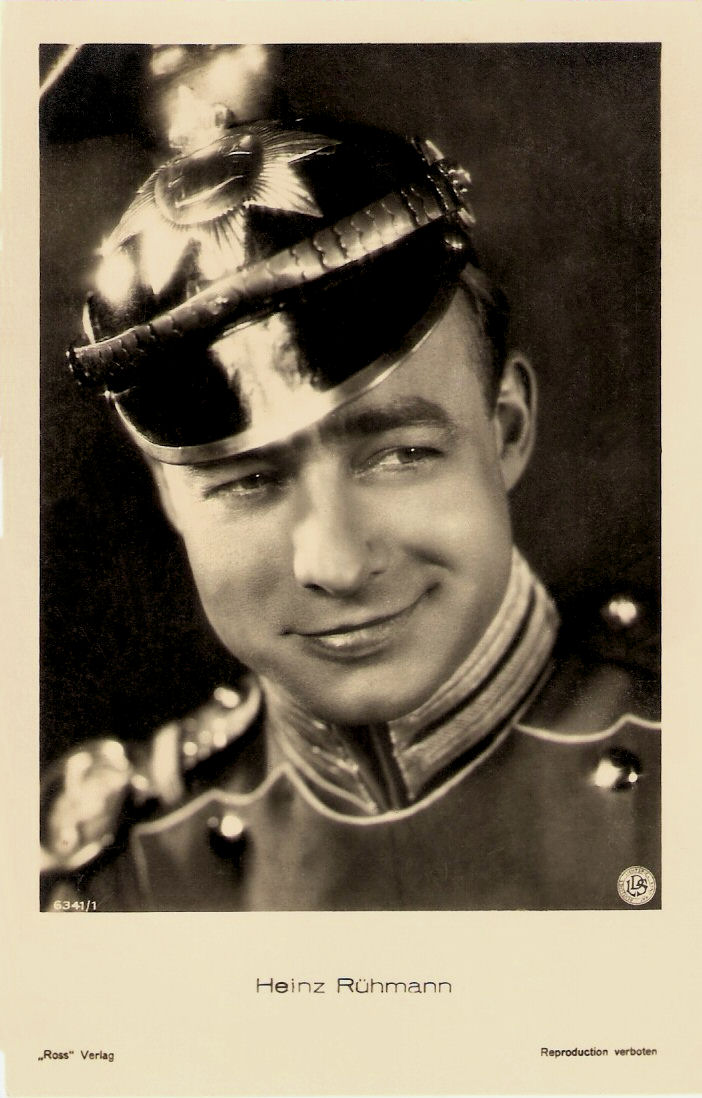
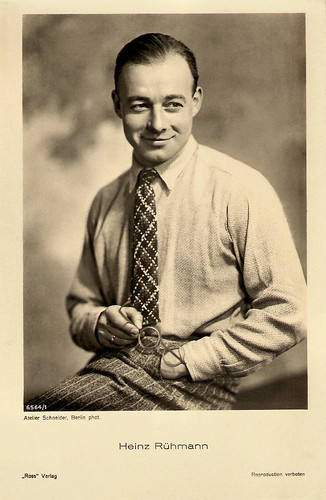
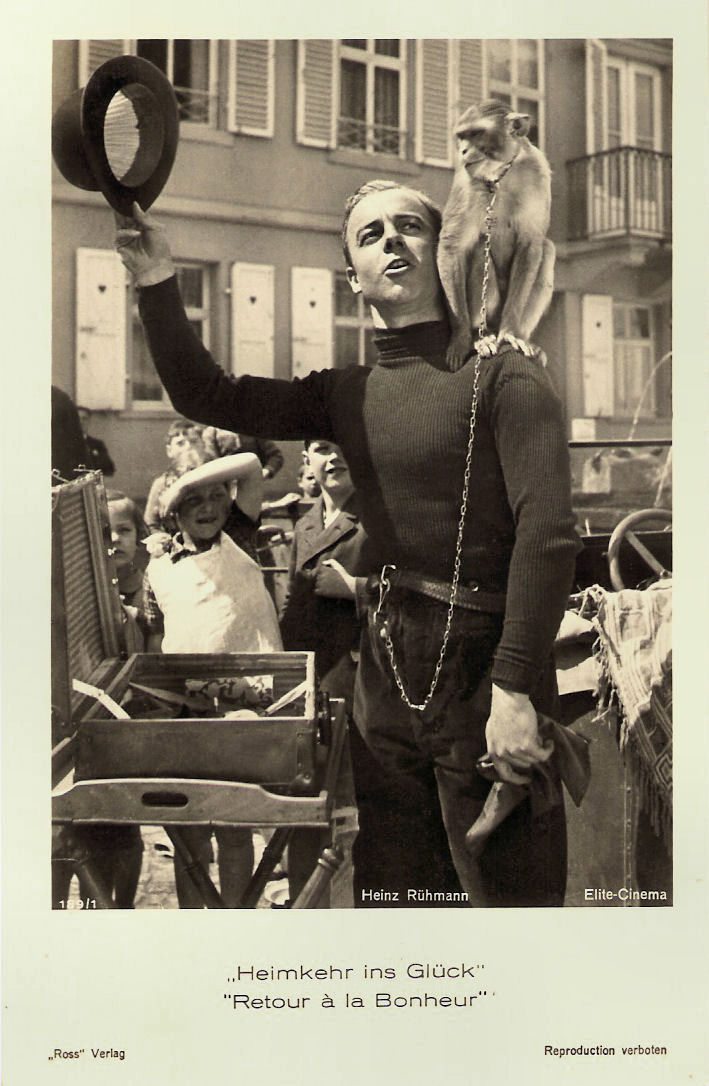
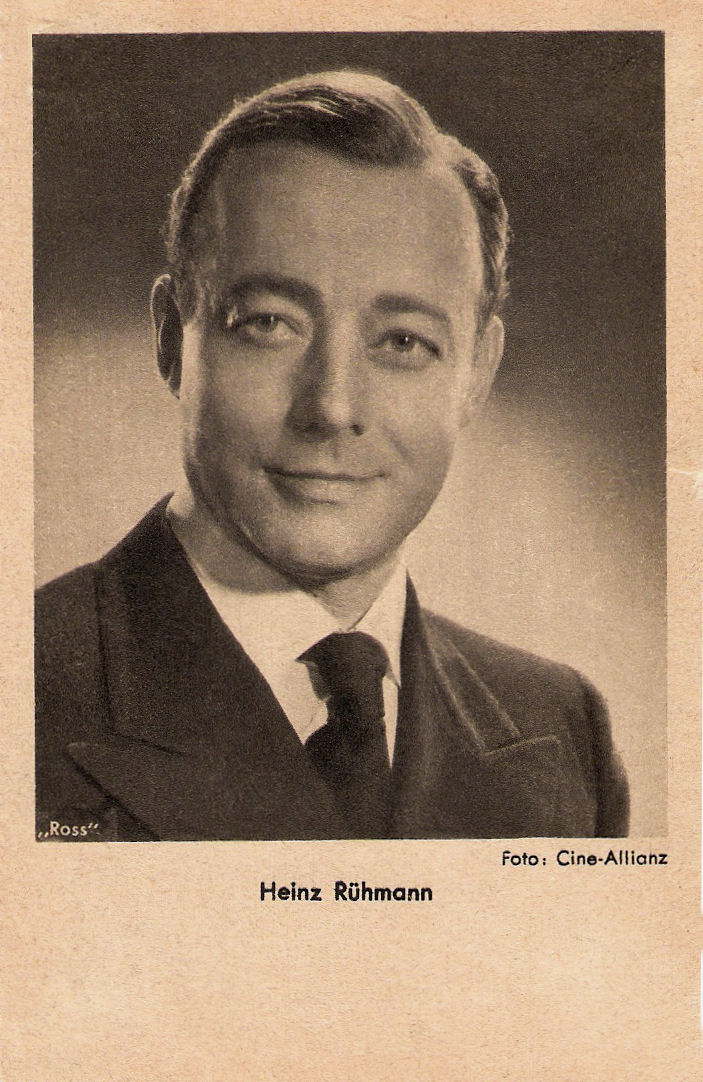
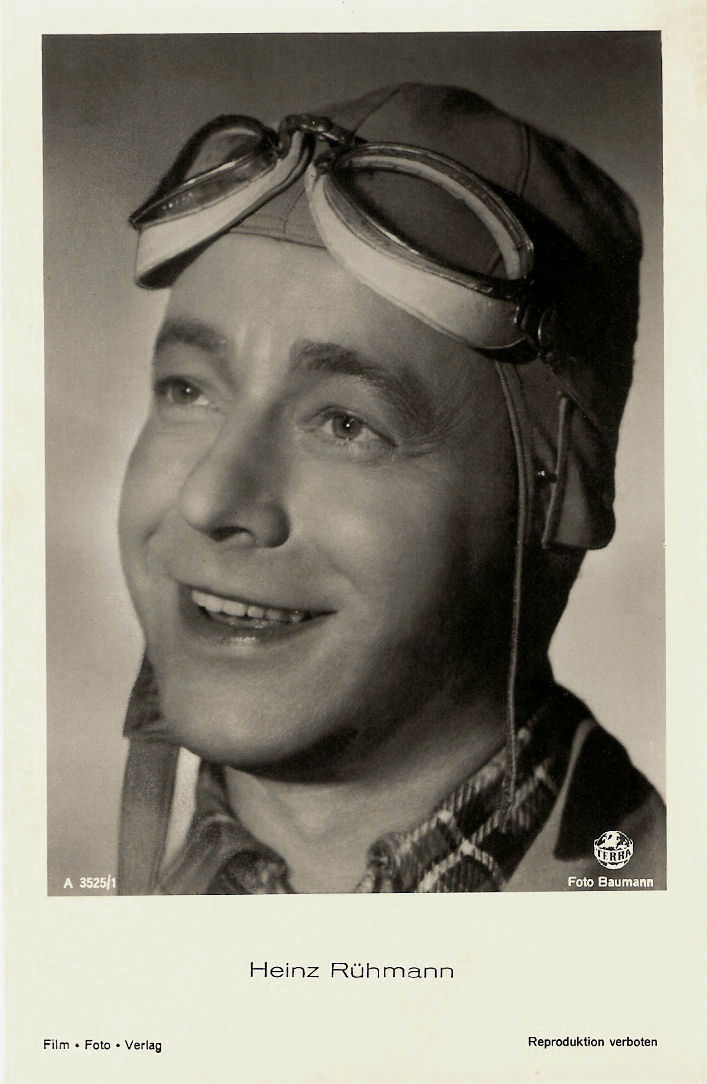
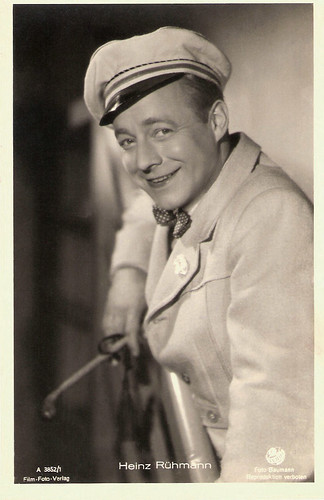
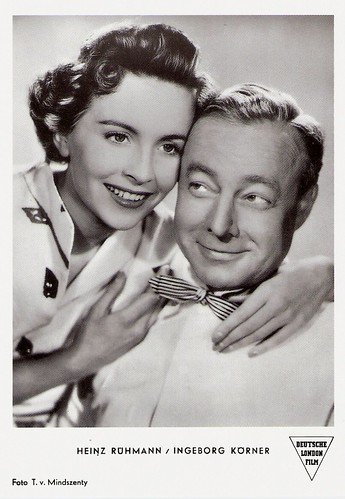
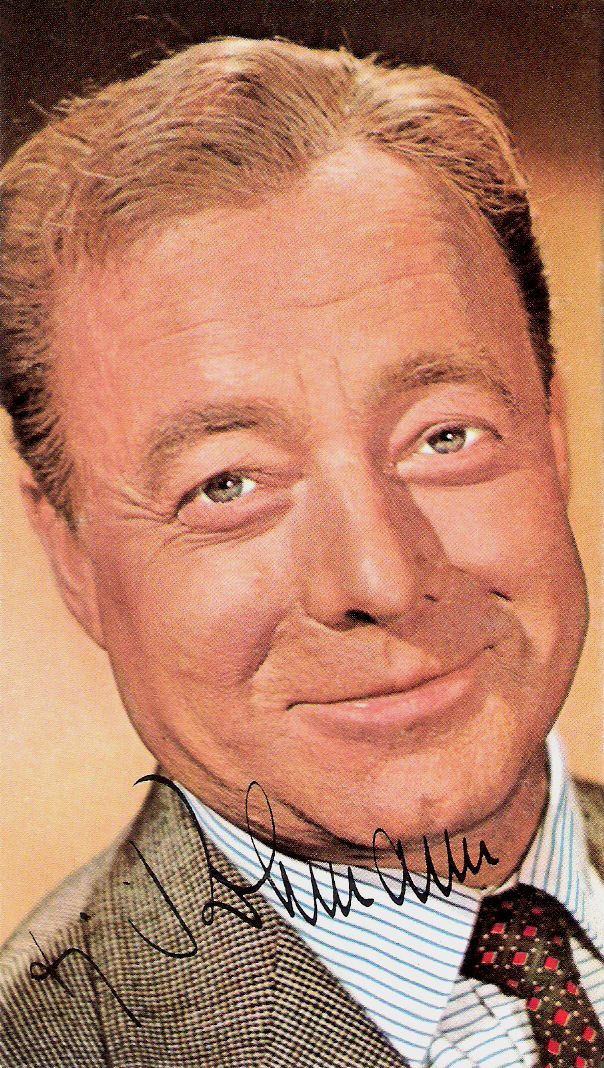
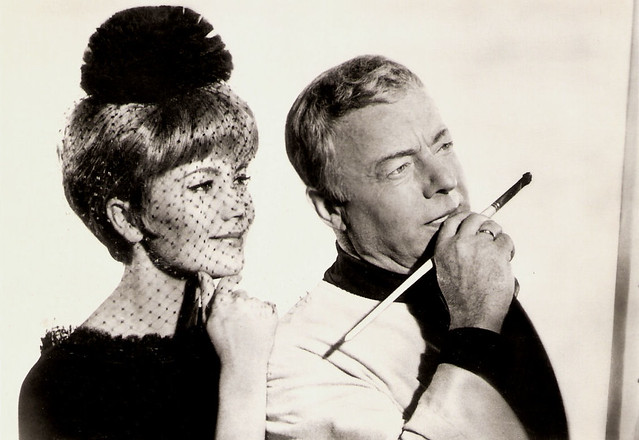
In Noord Schwarwoude, the Netherlands, there is small film institute we love, the Geoffrey Donaldson Institute (GDI). Our friend Egbert Barten is the managing director and he regularly shares new postcards from his collection with EFSP. Tomorrow we'll have a post on a postcard album he lately found in France. Today we do a post on a series of fine postcards plus a photo of the popular German film star Heinz Rühmann. The pictures plus the text for an article on Rühmann, were acquired from Dutch film journalist and collector Thijs Ockersen. We combine them with other new acquisitions by GDI and finish this post with one of the cards from the album on which we will focus tomorrow.
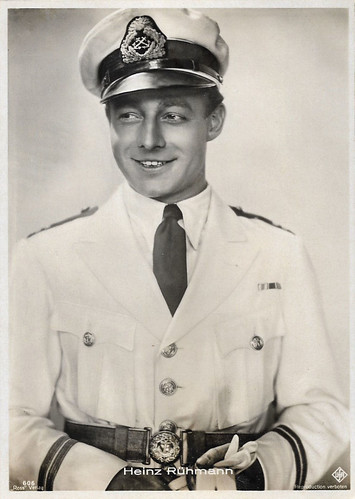
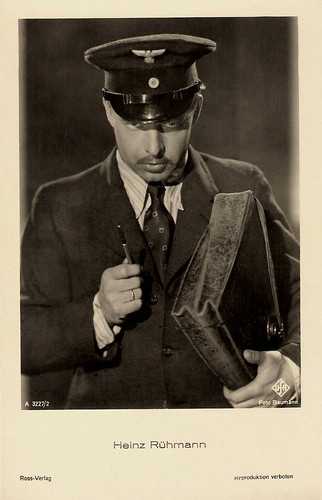
Heinz Rühmann in Bomben auf Monte Carlo (1931). German postcard by Ross Verlag, no. 606. Photo: Ufa. Publicity still for Bomben auf Monte Carlo/The Bombardment of Monte Carlo (Hanns Schwarz, 1931). Collection: Geoffrey Donaldson Institute.
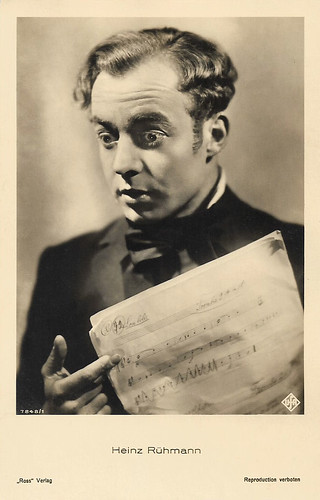
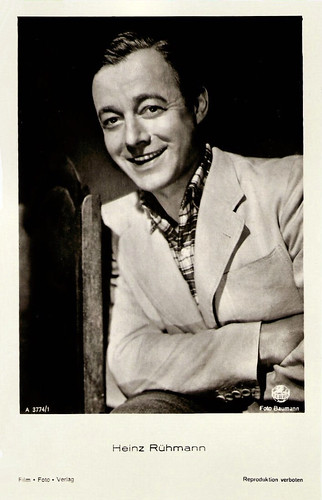
Heinz Rühmann in Ich und die Kaiserin (1933). German postcard by Ross Verlag, no. 7848/1, 1932-1933. Photo: Ufa. Publicity still for Ich und die Kaiserin/The Empress and I (Friedrich Hollaender, 1933). Collection: Geoffrey Donaldson Institute.
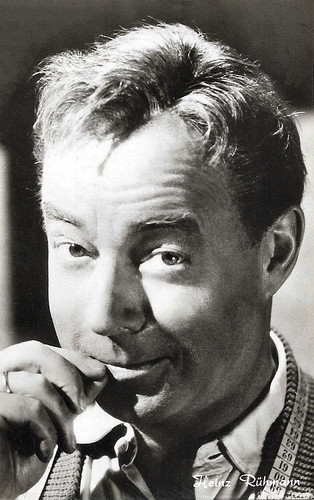
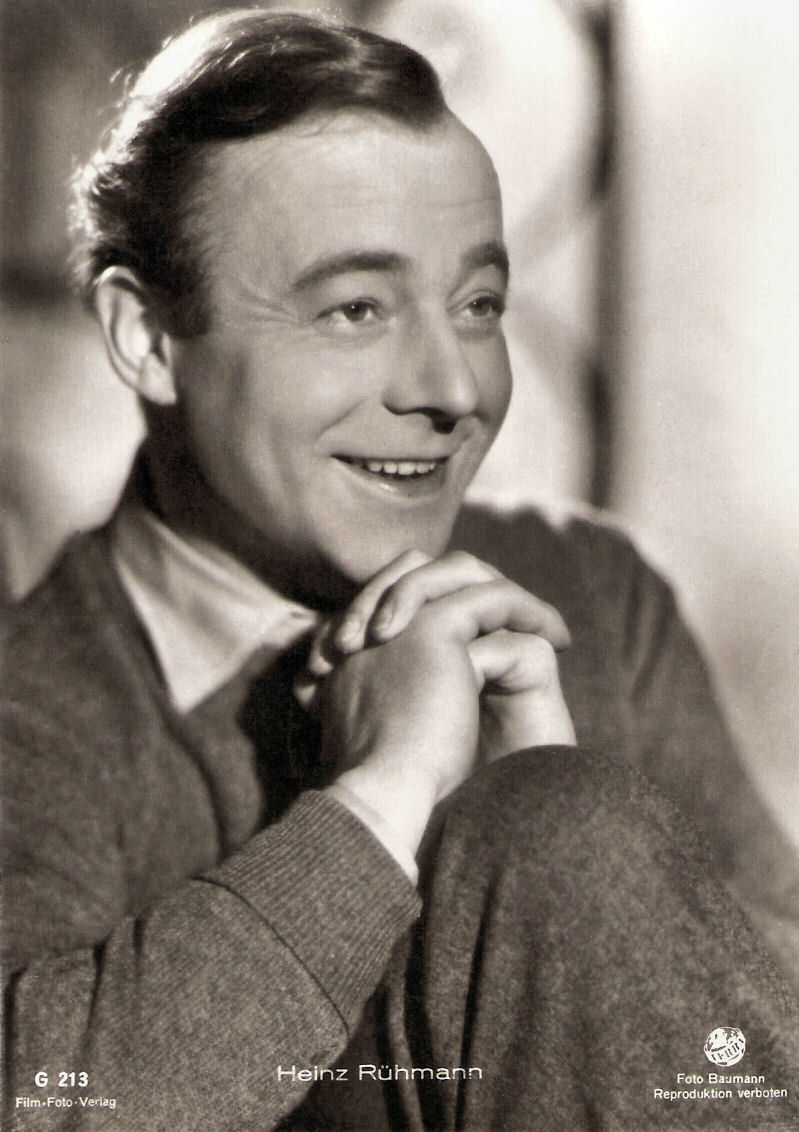
Heinz Rühmann in Kleider machen Leute (1940). Dutch postcard by I.F.P. (Drukkerij Uitg. Int. Filmpers), Amsterdam, no. 1243. Photo: publicity still for Kleider machen Leute/Clothes Make the Man (Helmut Käutner, 1940). Collection: Geoffrey Donaldson Institute.
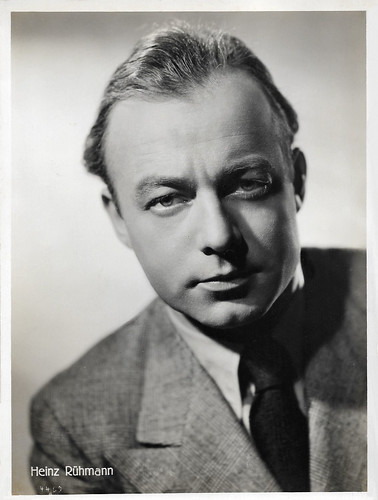
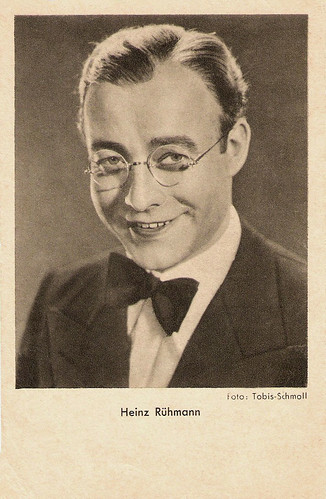
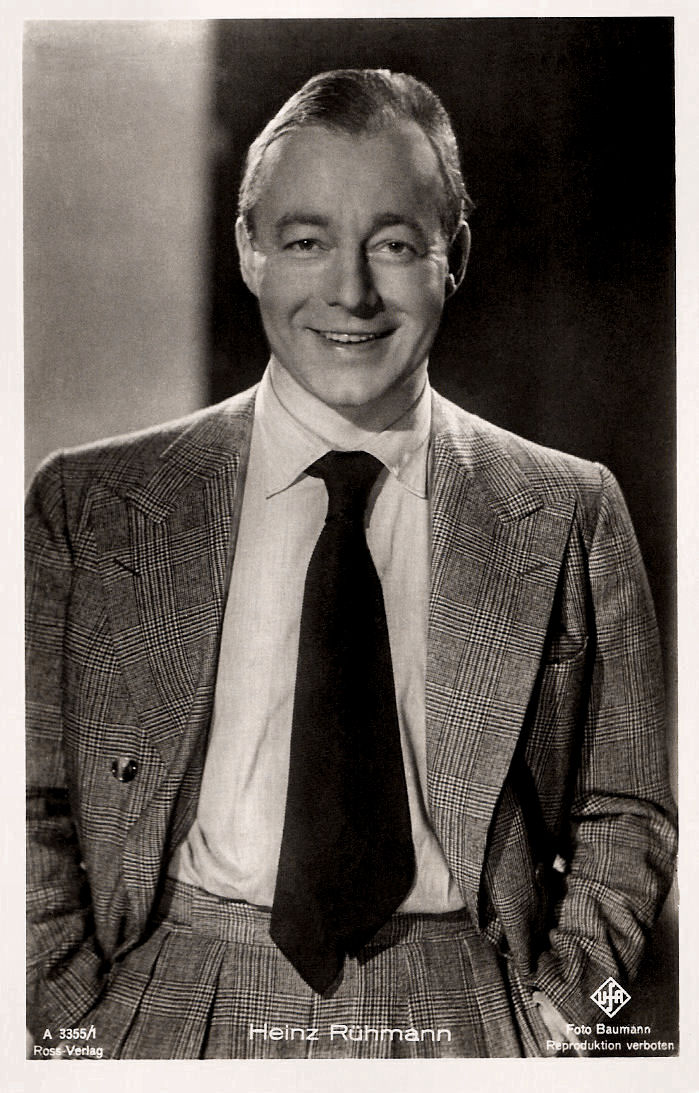
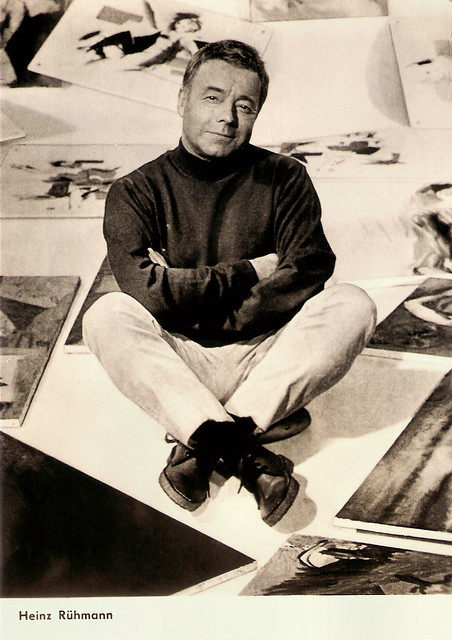
Heinz Rühmann. German photo. Collection: Geoffrey Donaldson Institute.
Actor, director and producer Heinz Rühmann (1902-1994) played in more than 100 films over nearly 70 years and was one of Germany's most popular film stars. He was a favourite actor of Adolf Hitler and Josef Goebbels but also of Anne Frank. She pasted his photo on the wall of her room in her family's hiding place during the war, where it can still be seen today.
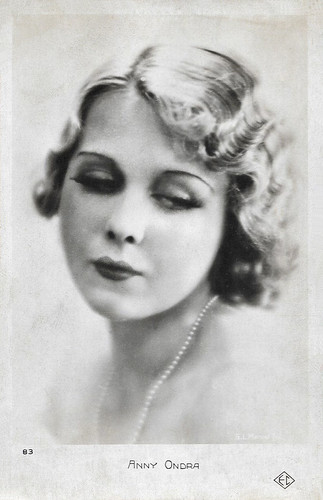
Anny Ondra. French postcard by EC, no. 83. Photo: G.L. Manuel Frères. Collection: Geoffrey Donaldson Institute.
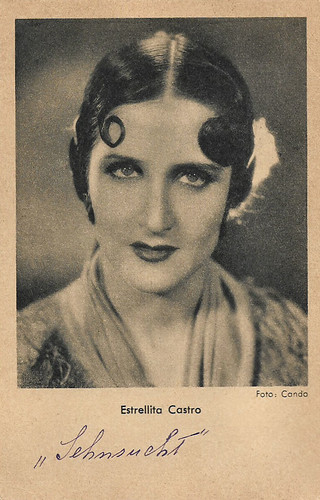
Estrellita Castro in El barbero de Sevilla (1938). German postcard by Das Programm von Heute / Ross Verlag, Berlin. Photo: Cando. Publicity still for El barbero de Sevilla/The Barber of Seville (Benito Perojo, 1938). Collection: Geoffrey Donaldson Institute.
Estrellita Castro (1914-1983) was a Spanish 'tonadillera' (little tune singer) and actress, who had a stirring and passionate style. Born Estrella Castro Navarrete to a humble family, she started singing from an early age and busked around in Sevilla streets. She was yet known in Andalusia when she appeared in Barcelona in 1929 with a variety show named 'La copla andaluza', where she was the first star together with 'Ángel Sampedro 'Angelillo''. From that moment on she enjoyed success all over Spain, Europe and America. Castro became one of the greatest 'copla' (Spanish popular song) performers.
Estrellita Castro's success as a singer paved her way to the film industry, and she became one of the most popular and highly-paid Spanish actresses of the time. She made many folkloric musicals, including and La Maja del capote/ (Fernando Delgado, 1943). She starred in 40 films of which the most important were filmed in Germany - Suspiros de España/Sighs of Spain (Benito Perojo, 1938), El barbero de Sevilla/The Barber of Seville (Benito Perojo, 1938) both with Miguel Ligero, and Mariquilla Terremoto (Benito Perojo, 1939). The charm of her movements in the cinema together with her powerful acute voice and beauty conquered the public. One of the iconic features of her personal looks was a hair-curl on her forehead. After the war, she became a living myth of the Spanish music and cinema.
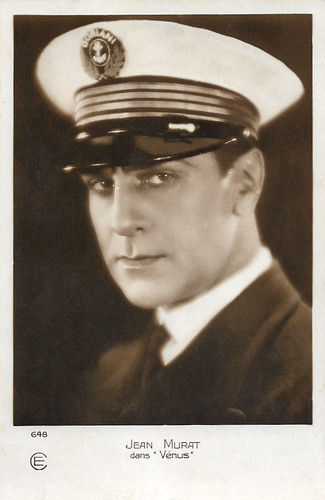
Jean Murat in Vénus (1929). French postcard by EC, no. 648. Photo publicity still for Vénus/Venus (Louis Mercanton, 1929). Collection: Geoffrey Donaldson Institute.
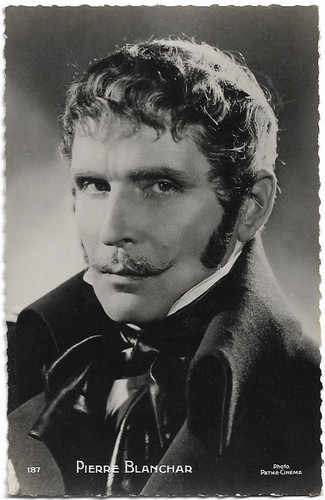
Pierre Blanchar in Pontcarral, Colonel d'Empire (1942). French postcard by Editions P.I., Paris, no. 187. Photo: Pathé Cinéma, Pierre Blanchar in Pontcarral, colonel d'empire/Pontcarral, colonel of the empire (Jean Delannoy, 1942). Collection: Geoffrey Donaldson Institute.
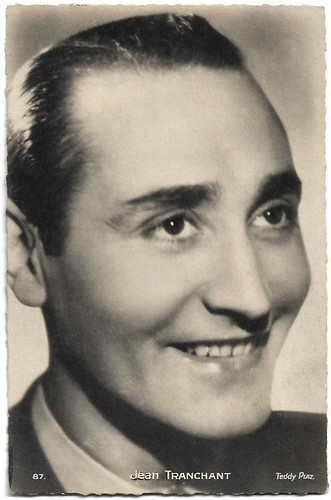
Jean Tranchant. French postcard by Editions O.P., Paris, no. 87. Photo: Teddy Piaz. Collection: Geoffrey Donaldson Institute.
Jean Tranchant (1904-1972) was a French singer-composer, poster designer and painter, who also incidentally acted in films. Tranchant wrote songs for Lucienne Boyer (La Barque d'Yves, Moi j'crache dans l'eau), then for Marianne Oswald (Appel, La Complainte de Kesoubah, Sans repentir), Marlène Dietrich (Assez) and Lys Gauty. He performed with his wife Simone Naudet. Many of his songs were used in French films, and he also composed for the soundtrack of such films as Fanatisme (Tony Lekain, Gaston Ravel, 1934), starring Pola Negri. Tranchant himself starred in the film musical Ici l'on pêche (René Jayet, 1941) with Jane Sourza.
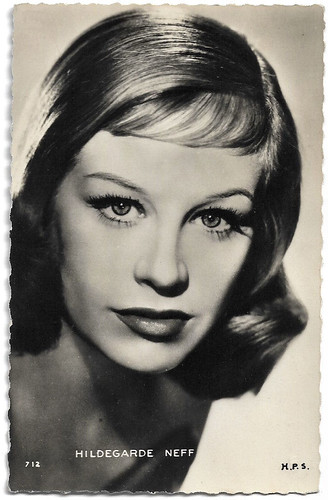
Hildegard Knef. French postcard by Edition P.I., offered by Les Carbones Korès Carboplane, no. 712. Photo: H.P.S. Collection: Geoffrey Donaldson Institute.
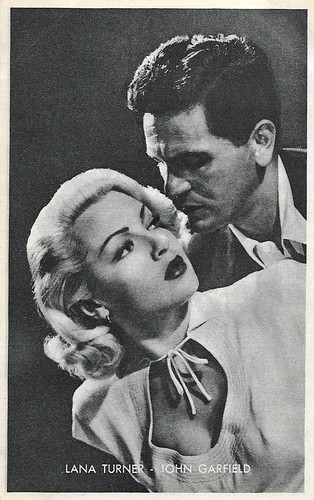
Lana Turner and John Garfield in The Postman Always Rings Twice (1946). Belgian Collectors Card by Kwatta, Bois d'Haine, no. C. 173. Photo: Metro-Goldwyn-Mayer. Collection: Geoffrey Donaldson Institute. Publicity still for The Postman Always Rings Twice (Tay Garnett, 1946).
Egbert, thank you!
Heinz Rühmann in Bomben auf Monte Carlo (1931). German postcard by Ross Verlag, no. 606. Photo: Ufa. Publicity still for Bomben auf Monte Carlo/The Bombardment of Monte Carlo (Hanns Schwarz, 1931). Collection: Geoffrey Donaldson Institute.
Heinz Rühmann in Ich und die Kaiserin (1933). German postcard by Ross Verlag, no. 7848/1, 1932-1933. Photo: Ufa. Publicity still for Ich und die Kaiserin/The Empress and I (Friedrich Hollaender, 1933). Collection: Geoffrey Donaldson Institute.
Heinz Rühmann in Kleider machen Leute (1940). Dutch postcard by I.F.P. (Drukkerij Uitg. Int. Filmpers), Amsterdam, no. 1243. Photo: publicity still for Kleider machen Leute/Clothes Make the Man (Helmut Käutner, 1940). Collection: Geoffrey Donaldson Institute.
Heinz Rühmann. German photo. Collection: Geoffrey Donaldson Institute.
Heinz Rühmann
Actor, director and producer Heinz Rühmann (1902-1994) played in more than 100 films over nearly 70 years and was one of Germany's most popular film stars. He was a favourite actor of Adolf Hitler and Josef Goebbels but also of Anne Frank. She pasted his photo on the wall of her room in her family's hiding place during the war, where it can still be seen today.
Anny Ondra. French postcard by EC, no. 83. Photo: G.L. Manuel Frères. Collection: Geoffrey Donaldson Institute.
Estrellita Castro in El barbero de Sevilla (1938). German postcard by Das Programm von Heute / Ross Verlag, Berlin. Photo: Cando. Publicity still for El barbero de Sevilla/The Barber of Seville (Benito Perojo, 1938). Collection: Geoffrey Donaldson Institute.
Estrellita Castro
Estrellita Castro (1914-1983) was a Spanish 'tonadillera' (little tune singer) and actress, who had a stirring and passionate style. Born Estrella Castro Navarrete to a humble family, she started singing from an early age and busked around in Sevilla streets. She was yet known in Andalusia when she appeared in Barcelona in 1929 with a variety show named 'La copla andaluza', where she was the first star together with 'Ángel Sampedro 'Angelillo''. From that moment on she enjoyed success all over Spain, Europe and America. Castro became one of the greatest 'copla' (Spanish popular song) performers.
Estrellita Castro's success as a singer paved her way to the film industry, and she became one of the most popular and highly-paid Spanish actresses of the time. She made many folkloric musicals, including and La Maja del capote/ (Fernando Delgado, 1943). She starred in 40 films of which the most important were filmed in Germany - Suspiros de España/Sighs of Spain (Benito Perojo, 1938), El barbero de Sevilla/The Barber of Seville (Benito Perojo, 1938) both with Miguel Ligero, and Mariquilla Terremoto (Benito Perojo, 1939). The charm of her movements in the cinema together with her powerful acute voice and beauty conquered the public. One of the iconic features of her personal looks was a hair-curl on her forehead. After the war, she became a living myth of the Spanish music and cinema.
Jean Murat in Vénus (1929). French postcard by EC, no. 648. Photo publicity still for Vénus/Venus (Louis Mercanton, 1929). Collection: Geoffrey Donaldson Institute.
Pierre Blanchar in Pontcarral, Colonel d'Empire (1942). French postcard by Editions P.I., Paris, no. 187. Photo: Pathé Cinéma, Pierre Blanchar in Pontcarral, colonel d'empire/Pontcarral, colonel of the empire (Jean Delannoy, 1942). Collection: Geoffrey Donaldson Institute.
Jean Tranchant. French postcard by Editions O.P., Paris, no. 87. Photo: Teddy Piaz. Collection: Geoffrey Donaldson Institute.
Jean Tranchant
Jean Tranchant (1904-1972) was a French singer-composer, poster designer and painter, who also incidentally acted in films. Tranchant wrote songs for Lucienne Boyer (La Barque d'Yves, Moi j'crache dans l'eau), then for Marianne Oswald (Appel, La Complainte de Kesoubah, Sans repentir), Marlène Dietrich (Assez) and Lys Gauty. He performed with his wife Simone Naudet. Many of his songs were used in French films, and he also composed for the soundtrack of such films as Fanatisme (Tony Lekain, Gaston Ravel, 1934), starring Pola Negri. Tranchant himself starred in the film musical Ici l'on pêche (René Jayet, 1941) with Jane Sourza.
Hildegard Knef. French postcard by Edition P.I., offered by Les Carbones Korès Carboplane, no. 712. Photo: H.P.S. Collection: Geoffrey Donaldson Institute.
Lana Turner and John Garfield in The Postman Always Rings Twice (1946). Belgian Collectors Card by Kwatta, Bois d'Haine, no. C. 173. Photo: Metro-Goldwyn-Mayer. Collection: Geoffrey Donaldson Institute. Publicity still for The Postman Always Rings Twice (Tay Garnett, 1946).
Egbert, thank you!