Éva Ruttkay (1927-1986) was one of the greatest Hungarian actresses of the 20th Century. She appeared in more than 60 films and TV films in over six decades.
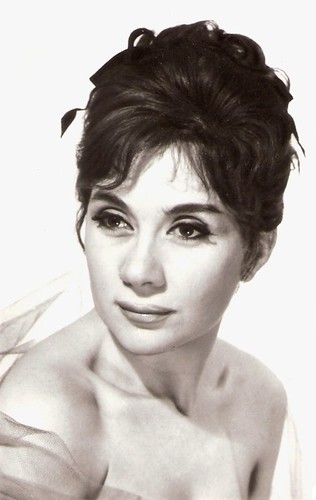
Czech collector's card by Pressfoto, Praha (Prague), no. 14/4, 1964. Retail price: 0,50 Kcs.

East-German postcard by VEB Progress Film-Vertrieb, Berlin, no. 2.570, 1966. Photo: Hungarofilm.
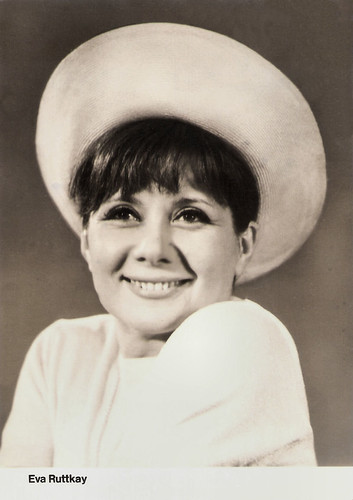
East-German postcard by VEB Progress Film-Vertrieb, Berlin, no. 2892, 1968. Photo: Hungarofilm.
Éva Ruttkay (sometimes credited as Éva Ruttkai) was born as Éva Russ in Budapest, Hungary in 1927. As a child she already appeared in the film comedy Lila akác/Purple Lilacs (Steve Sekely, 1934) with Irén Biller.
At the age of 16, she gained the attention of Dániel Jób, director of the Vígszínház (Comedy Theatre), and she would play there until her death. An exception were the years 1948–1951, when she played at the Nemzeti Színházban (the National Theatre in Budapest).
During this period, she appeared in such film as Beszterce ostroma/The Siege of Beszterce (Márton Keleti, 1948), Szabóné (Félix Máriássy, 1949), and Lúdas Matyi/Mattie the Goose-boy (Kálmán Nádasdy, László Ranódy, 1950).
Lúdas Matyi was the first colour production from the newly nationalised Hungarian film industry. Inspired by Mihaly Fazekas' epic poem, the film stars Imre Soós as a Hungarian Robin Hood.
Éva Ruttkay fell in love with the well known actor Miklós Gábor, and they married in 1950. Two years later their daughter Julia was born.
In 1951 Éva already appeared on the Hungarian television, in the short TV comedy A Selejt bosszúja/The Revenge of Scrap (1951).
Some of her popular feature films of the 1950s were Liliomfi (Karoly Makk, 1954) again with Imre Soós, the comedy Egy pikoló világos/A Half Pint of Beer (Félix Máriássy, 1955), the drama Éjfélkor/Before Midnight (György Révész, 1957) with Miklós Gábor, Mese a 12 találatról/Tale of the 12 hit (Karoly Makk, 1956), Sóbálvány/Pillar of Salt (Zoltán Várkonyi, 1958) and Álmatlan évek/Sleepless Years (Félix Máriássy, 1959) with Mari Töröcsik.
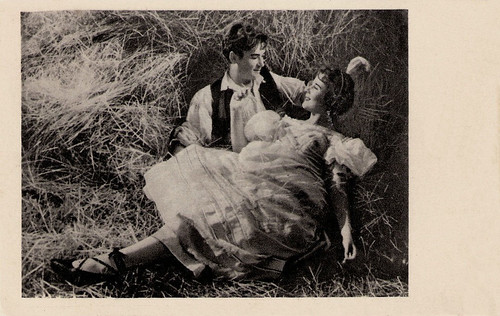
Hungarian postcard by Képzömüvészeti Alap Kiadóvállata, Budapest, no. 331/552. Photo: Saphir. Publicity still for Liliomfi (Károly Makk, 1954) with Imre Soós.
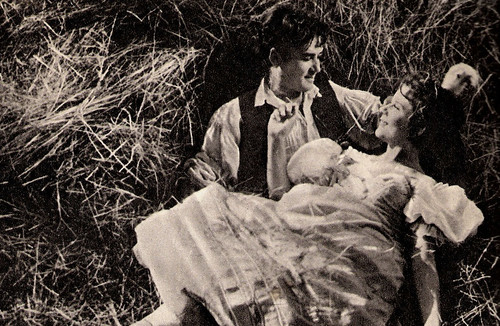
Hungarian postcard by Képzömüvészeti Alap Kiadóvállata, Budapest, no. 331/12/564. Photo: Saphir. Publicity still for Liliomfi (Károly Makk, 1954). Card price: 60 fillér.
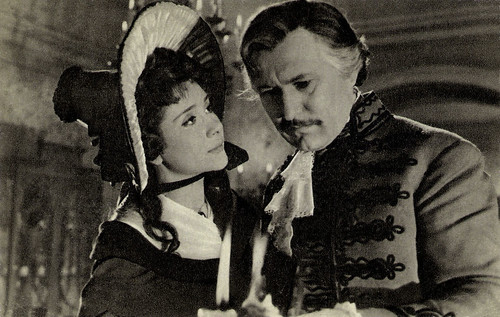
Hungarian postcard by Kepzömüvészeti Alap, Budapest, no. 331/24/564. Photo: Inkey. Publicity still for Kioltott lángok/Extinguished flames (Frigyes Bán, 1956) with Ferenc Bessenyei.
Éva Ruttkay continued her acting career successfully into the 1960s both on television and in such films as Három csillag/Three Stars (Miklós Jancsó, Zoltán Várkonyi, Karoly Wiedermann, 1960), Alázatosan jelentem/A Certain Major (Mihály Szemes, 1960), and the espionage action feature Fotó Háber/Haber's Photo Shop (Zoltán Várkonyi, 1963).
She also appeared in the classic comedy Butaságom története/Story of My Dumbness (Márton Keleti, 1965), Kárpáthy Zoltán (Zoltán Várkonyi, 1966), the comedy Tanulmány a nökröl/Study on Women (Márton Keleti, 1967), Egri csillagok/Stars of Eger (Zoltán Várkonyi, 1968), and Keresztelö/Baptism (István Gaál, 1968).
In the following decade she appeared in a.o. Utazás a koponyám körül/Trip Around My Cranium (Gyorgy Révész, 1970), Szindbád/Sinbad (Zoltan Huszarik, 1971), Labirintus/Labyrinth (András Kovács, 1976), Ha megjön József/When Joseph Returns (Zsolt Kézdi-Kovács, 1976), and several TV-series.
Among her last appearances were roles in the films Idö van/Time (Peter Gothar, 1986) and Küldetés Evianba/Mission to Evian (Erika Szántó, 1988).
In 1986, after thirty years the film Keseru Igazsag/The Bitter Truth (Zoltán Várkonyi, 1956-1986) was finally released. This 1956 film was banned in Hungary shortly after it was completed and just before the Soviet tanks rolled in to quell the Hungarian uprising. And small wonder - its ‘hero’ is a Party faithful whose corruption and lack of morality is disgusting, and its ‘antihero’ (played by Miklós Gábor) is someone honest and good, imprisoned for his anti-Party stance.
Her second husband was actor Zoltán Latinovits, whom she met in 1960 during rehearsals. They lived together until Latinovits's death. Half a year after her last stage appearance, Éva Ruttkay died in 1986 in her hometown Budapest. She was 58.
During her career she was awarded several times, with the Mari Jászai-award (in 1955 and 1959), the Kossuth-díj (1960), the ban Érdemes művész (1966), the ben Kiváló művész (1971), and the Pro Arte-díj. In 2006 the Éva Ruttkai Theatre opened its gates in Budapest.
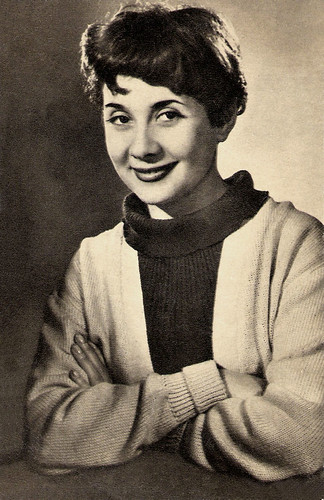
Hungarian postcard by Kepzömüvészeti Alap, Budapest, no. 5/583. Photo: Fény Szöv.
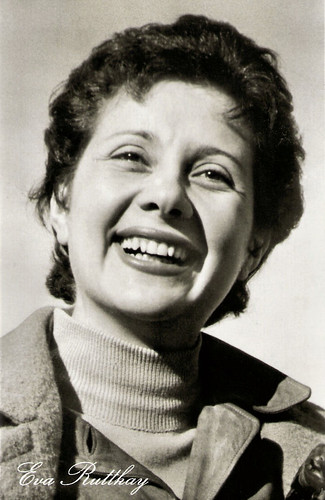
East-German postcard by Progress Starfoto, no. 927, 1958. Photo: Gerhard Kindt.
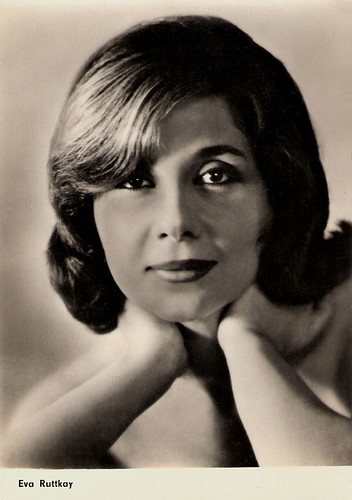
East-German postcard by VEB Progress Film-Vertrieb, Berlin, no. 1692, 1962. Retail price: 0,20 DM. Photo: Hungarofilm.
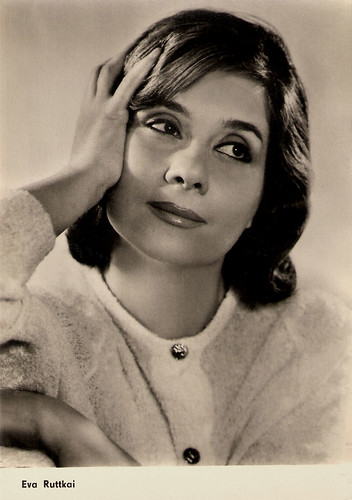
East-German postcard by VEB Progress Film-Vertrieb, Berlin, no. 1960, 1964. Retail price: 0,20 DM. Photo: Hungarofilm.
Sources: AllMovie, Wikipedia and IMDb.
Czech collector's card by Pressfoto, Praha (Prague), no. 14/4, 1964. Retail price: 0,50 Kcs.
East-German postcard by VEB Progress Film-Vertrieb, Berlin, no. 2.570, 1966. Photo: Hungarofilm.
East-German postcard by VEB Progress Film-Vertrieb, Berlin, no. 2892, 1968. Photo: Hungarofilm.
The Hungarian Robin Hood
Éva Ruttkay (sometimes credited as Éva Ruttkai) was born as Éva Russ in Budapest, Hungary in 1927. As a child she already appeared in the film comedy Lila akác/Purple Lilacs (Steve Sekely, 1934) with Irén Biller.
At the age of 16, she gained the attention of Dániel Jób, director of the Vígszínház (Comedy Theatre), and she would play there until her death. An exception were the years 1948–1951, when she played at the Nemzeti Színházban (the National Theatre in Budapest).
During this period, she appeared in such film as Beszterce ostroma/The Siege of Beszterce (Márton Keleti, 1948), Szabóné (Félix Máriássy, 1949), and Lúdas Matyi/Mattie the Goose-boy (Kálmán Nádasdy, László Ranódy, 1950).
Lúdas Matyi was the first colour production from the newly nationalised Hungarian film industry. Inspired by Mihaly Fazekas' epic poem, the film stars Imre Soós as a Hungarian Robin Hood.
Éva Ruttkay fell in love with the well known actor Miklós Gábor, and they married in 1950. Two years later their daughter Julia was born.
In 1951 Éva already appeared on the Hungarian television, in the short TV comedy A Selejt bosszúja/The Revenge of Scrap (1951).
Some of her popular feature films of the 1950s were Liliomfi (Karoly Makk, 1954) again with Imre Soós, the comedy Egy pikoló világos/A Half Pint of Beer (Félix Máriássy, 1955), the drama Éjfélkor/Before Midnight (György Révész, 1957) with Miklós Gábor, Mese a 12 találatról/Tale of the 12 hit (Karoly Makk, 1956), Sóbálvány/Pillar of Salt (Zoltán Várkonyi, 1958) and Álmatlan évek/Sleepless Years (Félix Máriássy, 1959) with Mari Töröcsik.
Hungarian postcard by Képzömüvészeti Alap Kiadóvállata, Budapest, no. 331/552. Photo: Saphir. Publicity still for Liliomfi (Károly Makk, 1954) with Imre Soós.
Hungarian postcard by Képzömüvészeti Alap Kiadóvállata, Budapest, no. 331/12/564. Photo: Saphir. Publicity still for Liliomfi (Károly Makk, 1954). Card price: 60 fillér.
Hungarian postcard by Kepzömüvészeti Alap, Budapest, no. 331/24/564. Photo: Inkey. Publicity still for Kioltott lángok/Extinguished flames (Frigyes Bán, 1956) with Ferenc Bessenyei.
A Small Wonder
Éva Ruttkay continued her acting career successfully into the 1960s both on television and in such films as Három csillag/Three Stars (Miklós Jancsó, Zoltán Várkonyi, Karoly Wiedermann, 1960), Alázatosan jelentem/A Certain Major (Mihály Szemes, 1960), and the espionage action feature Fotó Háber/Haber's Photo Shop (Zoltán Várkonyi, 1963).
She also appeared in the classic comedy Butaságom története/Story of My Dumbness (Márton Keleti, 1965), Kárpáthy Zoltán (Zoltán Várkonyi, 1966), the comedy Tanulmány a nökröl/Study on Women (Márton Keleti, 1967), Egri csillagok/Stars of Eger (Zoltán Várkonyi, 1968), and Keresztelö/Baptism (István Gaál, 1968).
In the following decade she appeared in a.o. Utazás a koponyám körül/Trip Around My Cranium (Gyorgy Révész, 1970), Szindbád/Sinbad (Zoltan Huszarik, 1971), Labirintus/Labyrinth (András Kovács, 1976), Ha megjön József/When Joseph Returns (Zsolt Kézdi-Kovács, 1976), and several TV-series.
Among her last appearances were roles in the films Idö van/Time (Peter Gothar, 1986) and Küldetés Evianba/Mission to Evian (Erika Szántó, 1988).
In 1986, after thirty years the film Keseru Igazsag/The Bitter Truth (Zoltán Várkonyi, 1956-1986) was finally released. This 1956 film was banned in Hungary shortly after it was completed and just before the Soviet tanks rolled in to quell the Hungarian uprising. And small wonder - its ‘hero’ is a Party faithful whose corruption and lack of morality is disgusting, and its ‘antihero’ (played by Miklós Gábor) is someone honest and good, imprisoned for his anti-Party stance.
Her second husband was actor Zoltán Latinovits, whom she met in 1960 during rehearsals. They lived together until Latinovits's death. Half a year after her last stage appearance, Éva Ruttkay died in 1986 in her hometown Budapest. She was 58.
During her career she was awarded several times, with the Mari Jászai-award (in 1955 and 1959), the Kossuth-díj (1960), the ban Érdemes művész (1966), the ben Kiváló művész (1971), and the Pro Arte-díj. In 2006 the Éva Ruttkai Theatre opened its gates in Budapest.
Hungarian postcard by Kepzömüvészeti Alap, Budapest, no. 5/583. Photo: Fény Szöv.
East-German postcard by Progress Starfoto, no. 927, 1958. Photo: Gerhard Kindt.
East-German postcard by VEB Progress Film-Vertrieb, Berlin, no. 1692, 1962. Retail price: 0,20 DM. Photo: Hungarofilm.
East-German postcard by VEB Progress Film-Vertrieb, Berlin, no. 1960, 1964. Retail price: 0,20 DM. Photo: Hungarofilm.
Sources: AllMovie, Wikipedia and IMDb.


