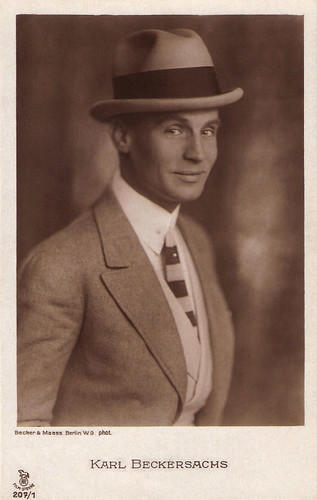
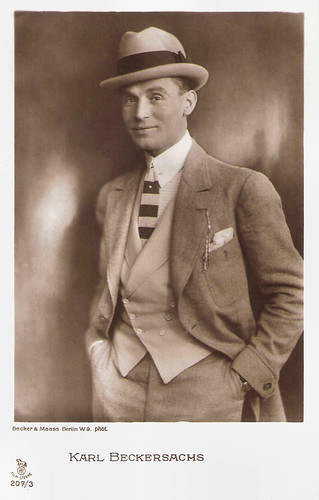
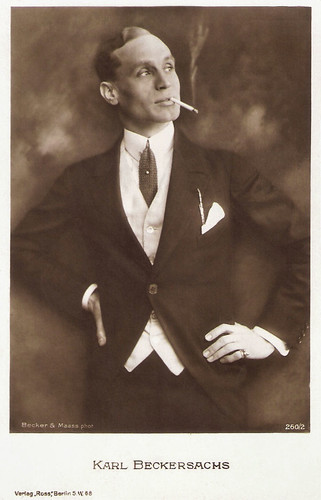
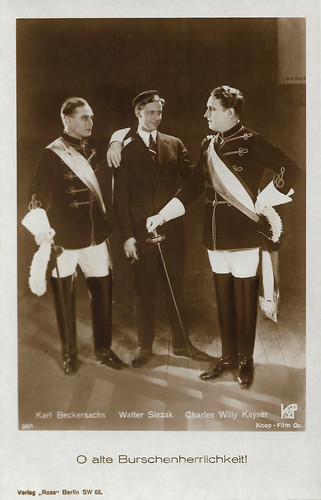
In Fräulein Wildfang (Friedrich Zelnik, 1916), sweet German actress Lisa Weise appeared in the title role. She starred in a dozen silent German films of the 1910s, and most of them, including Fräulein Wildfang, were directed and produced by Friedrich Zelnik. Her film partner, as in nearly all of her films, was Karl Beckersachs.
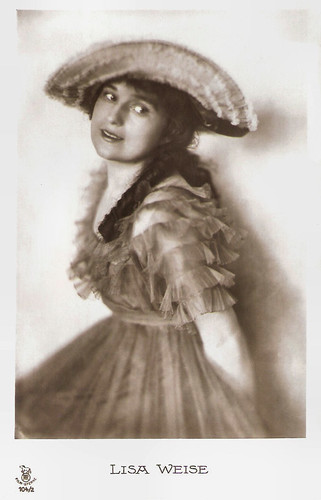
Lisa Weise. German postcard by Rotophot in the Film-Sterne series, no. 104/2.
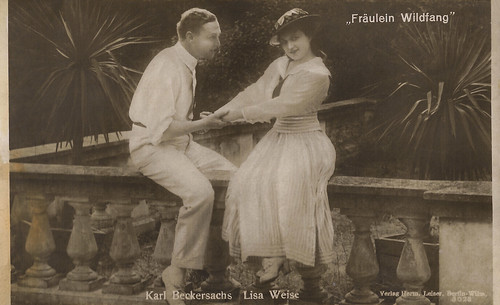
German postcard by Verlag Hermann Leiser, Berlin-Wilmersdorf, no. 3025. Photo: publicity still for Fräulein Wildfang (Friedrich Zelnik, 1916) with Karl Beckersachs and Lisa Weise.
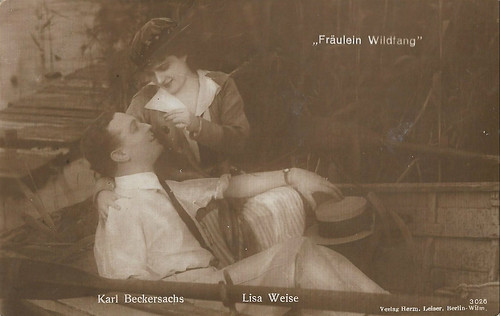
German postcard by Verlag Hermann Leiser, Berlin-Wilmersdorf, no. 3026. Photo: publicity still for Fräulein Wildfang (Friedrich Zelnik, 1916) with Karl Beckersachs and Lisa Weise.
In the middle of the First World War, the short romance Fräulein Wildfang (Friedrich Zelnik, 1916) was produced by the Berliner Film-Manufaktur GmbH, and released in June 1916. The two stars, Lisa Weise and Karl (or Carl) Beckersachs belonged to the pioneers of the German film actors. Beckersachs' career in the cinema had already begun in 1912, and the film debut of Lisa Weise was even two years earlier, in Der Graf von Luxemburg/The Count of Luxembourg (1910).
Lisa Weise and Karl Beckersachs were one of the most beloved romantic couples of the German cinema of the 1910s. Together, they appeared in such short silent films as Carl und Carla/Carl and Carla (Carl Wilhelm, 1915) in which Weise played both Carl and Carla, and Ein Zirkusmädel/A Circus Girl (Carl Wilhelm, 1916). Producer of the film was Friedrich Zelnik, later known as Frederic Zelnik.
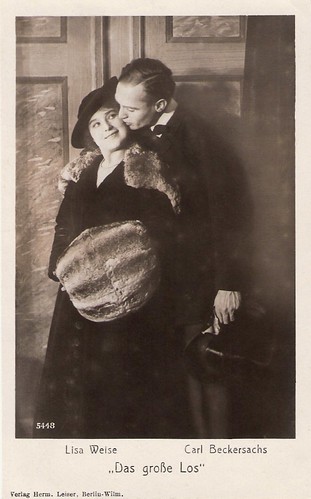
Austrian actor Friedrich Zelnik made his film debut in Germany in 1914. From 1915 on, he also directed and produced film, while he remained acting in films by other directors. Zelnik directed most of the films with Weise and Beckersachs, including Das grosse Los/The big prize (1917), Klein Doortje (1917), based on the novel Little Dorrit by Charles Dickens, Edelweiß (1917) with Lupu Pick, and Durchlaucht Hypochonder/Highness hypochondriac (1917), for which Ewald André Dupont wrote the screenplay.
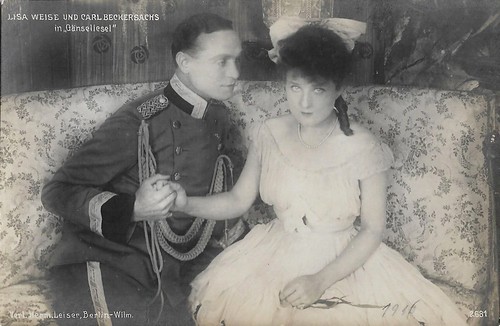
Their last films together were Gänseliesel/Goose Liesel (1918) and Der Liftjunge/The Elevator Boy (1918). Director Willy Zeyn directed in between another Beckersachs-Weise film, Amalie - 45 Mark (1918). After these films, Lisa Weise retired in 1918 and she vanished into obscurity. Completely forgotten by the public she died in 1952. Beckersachs remained appearing in films and made his 82th and final film in 1935.
Influential producer-director Friedrich Zelnik came to prominence in the Weimar cinema of the 1920s. He was the mentor of his actress-wife Lya Mara, whose films he directed and produced through their joint production company Zelnik-Mara Film GmbH. Lya Mara became one of the stars of the German silent cinema. Of Jewish background, he was forced to flee from Germany in 1933 and later continued making films in The Netherlands and Great Britain. Zelnik died in 1950 in London.
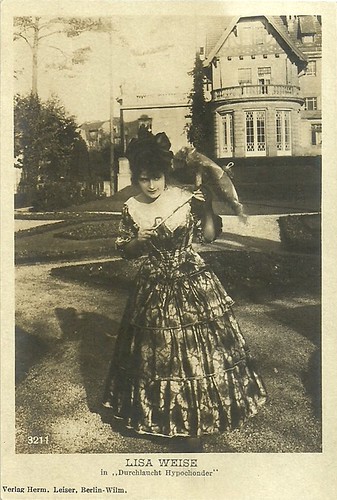
Lisa Weise. German postcard by Verlag Hermann Leiser, Berlin-Wilmersdorf, no. 3211. Photo: publicity still for Durchlaucht Hypochonder/Highness hypochondriac (Friedrich Zelnik, 1918).
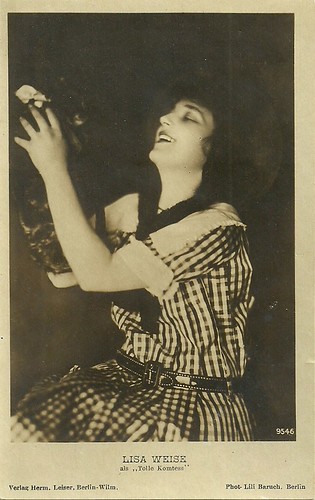
Lisa Weise. German postcard by Verlag Hermann Leiser, Berlin-Wilmersdorf, no. 9546. Photo: Lili Baruch, Berlin. Filmportal.de lists a 1915 film Die tolle Komtesse, produced by Messter, but gives no actors'names. Within the filmography of Lisa Weise on Filmportal.de this title is absent. Thomas Städeli at Cyranos writes that Hilde Wörner began her film career in this film. There is no mention of the film at our other sources.

German postcard by Verlag Hermann Leiser, Berlin-Wilmersdorf, no. 9939. Photo: publicity still for Ein Zirkusmädel (Friedrich Zelnik, 1916) with Karl Beckersachs and Lisa Weise.
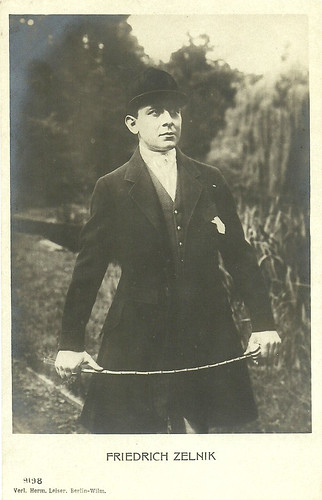
Friedrich Zelnik. German postcard by Verlag Hermann Leiser, Berlin-Wilmersdorf, no. 9198. Collection: Didier Hanson.
Sources: Stephanie d'Heil (Steffi-line.de), Thomas Städeli (Cyranos), Filmportal.de, Wikipedia and IMDb.
Lisa Weise. German postcard by Rotophot in the Film-Sterne series, no. 104/2.
German postcard by Verlag Hermann Leiser, Berlin-Wilmersdorf, no. 3025. Photo: publicity still for Fräulein Wildfang (Friedrich Zelnik, 1916) with Karl Beckersachs and Lisa Weise.
German postcard by Verlag Hermann Leiser, Berlin-Wilmersdorf, no. 3026. Photo: publicity still for Fräulein Wildfang (Friedrich Zelnik, 1916) with Karl Beckersachs and Lisa Weise.
One of the most beloved couples of the German cinema of the 1910s
In the middle of the First World War, the short romance Fräulein Wildfang (Friedrich Zelnik, 1916) was produced by the Berliner Film-Manufaktur GmbH, and released in June 1916. The two stars, Lisa Weise and Karl (or Carl) Beckersachs belonged to the pioneers of the German film actors. Beckersachs' career in the cinema had already begun in 1912, and the film debut of Lisa Weise was even two years earlier, in Der Graf von Luxemburg/The Count of Luxembourg (1910).
Lisa Weise and Karl Beckersachs were one of the most beloved romantic couples of the German cinema of the 1910s. Together, they appeared in such short silent films as Carl und Carla/Carl and Carla (Carl Wilhelm, 1915) in which Weise played both Carl and Carla, and Ein Zirkusmädel/A Circus Girl (Carl Wilhelm, 1916). Producer of the film was Friedrich Zelnik, later known as Frederic Zelnik.
Austrian actor Friedrich Zelnik made his film debut in Germany in 1914. From 1915 on, he also directed and produced film, while he remained acting in films by other directors. Zelnik directed most of the films with Weise and Beckersachs, including Das grosse Los/The big prize (1917), Klein Doortje (1917), based on the novel Little Dorrit by Charles Dickens, Edelweiß (1917) with Lupu Pick, and Durchlaucht Hypochonder/Highness hypochondriac (1917), for which Ewald André Dupont wrote the screenplay.
Their last films together were Gänseliesel/Goose Liesel (1918) and Der Liftjunge/The Elevator Boy (1918). Director Willy Zeyn directed in between another Beckersachs-Weise film, Amalie - 45 Mark (1918). After these films, Lisa Weise retired in 1918 and she vanished into obscurity. Completely forgotten by the public she died in 1952. Beckersachs remained appearing in films and made his 82th and final film in 1935.
Influential producer-director Friedrich Zelnik came to prominence in the Weimar cinema of the 1920s. He was the mentor of his actress-wife Lya Mara, whose films he directed and produced through their joint production company Zelnik-Mara Film GmbH. Lya Mara became one of the stars of the German silent cinema. Of Jewish background, he was forced to flee from Germany in 1933 and later continued making films in The Netherlands and Great Britain. Zelnik died in 1950 in London.
Lisa Weise. German postcard by Verlag Hermann Leiser, Berlin-Wilmersdorf, no. 3211. Photo: publicity still for Durchlaucht Hypochonder/Highness hypochondriac (Friedrich Zelnik, 1918).
Lisa Weise. German postcard by Verlag Hermann Leiser, Berlin-Wilmersdorf, no. 9546. Photo: Lili Baruch, Berlin. Filmportal.de lists a 1915 film Die tolle Komtesse, produced by Messter, but gives no actors'names. Within the filmography of Lisa Weise on Filmportal.de this title is absent. Thomas Städeli at Cyranos writes that Hilde Wörner began her film career in this film. There is no mention of the film at our other sources.
German postcard by Verlag Hermann Leiser, Berlin-Wilmersdorf, no. 9939. Photo: publicity still for Ein Zirkusmädel (Friedrich Zelnik, 1916) with Karl Beckersachs and Lisa Weise.
Friedrich Zelnik. German postcard by Verlag Hermann Leiser, Berlin-Wilmersdorf, no. 9198. Collection: Didier Hanson.
Sources: Stephanie d'Heil (Steffi-line.de), Thomas Städeli (Cyranos), Filmportal.de, Wikipedia and IMDb.