German actress Carola Höhn (1910-2005) had a 60 years lasting film career. She began as the elegant star of many Ufa productions and later became the acclaimed Grande Dame of the German post-war cinema.

German postcard by Film-Foto-Verlag, no. G 174, 1941-1944. Photo: Ciolfi, Rome.

German postcard by Ross-Verlag, no. 9941/1, 1935-1936. Photo: Hämmerer / Ufa.

German postcard by Ross-Verlag, no. A 3370/2, 1941-1944. Photo: K.L. Haenchen.

German postcard by Film-Foto-Verlag, no. A 3735/1, 1941-1944. Photo: Ciolfi.

German postcard by Ross-Verlag, no. A 3956/2, 1941-1944. Photo: Haenchen.
Carola Höhn was born Karoline Minna Höhn in Geestemünde (now Bremerhaven), Germany, in 1910. At the end of the 1920s, she went to Berlin, where she received acting lessons from Julia Serda and Hans Junkermann. In 1933 she made her stage debut at the Berlin Schlosstheater.
Five years earlier she already had had her first contacts with the film business when she played minor parts in silent films like Die Wochenendbraut/The Weekend Bride (Georg Jacoby, 1928), Aus dem Tagebuch eines Junggesellen/From the Diary of a Bachelor (Erich Schönfelder, 1928) starring Reinhold Schünzel, and the Russian-German divorce drama Zhivoy trup/The Living Corpse (Fyodor Otsep, 1929).
Her film career really took off with the romance Ferien vom Ich/Holiday From Myself (Hans Deppe, 1934). She became a popular Ufa star with roles in films like Einmal eine grosse Dame sein/Once a Great Lady (Gerhard Lamprecht, 1934), Charleys Tante/Charley's Aunt (Robert A. Stemmle, 1934), and Der alte und der junge König/The Old and the Young King (Hans Steinhoff, 1935). In Königswalzer/The Royal Waltz (Herbert Maisch, 1935) she played Sissi, the iconic Empress Elisabeth of Austria.
Next she was seen in the operetta Der Bettelstudent/The Beggar Student (Georg Jacoby, 1936) and the Zarah Leander melodrama Zu neuen Ufern/To New Shores (Detlev Sierck a.k.a. Douglas Sirk, 1937). Opposite Heinz Rühmann she starred in the comedy Hurra, ich bin Papa!/Hurrah! I am a Papa (Kurt Hoffmann, 1939).
During wartime, she continued her film career in light entertainment like Die lustigen Vagabunden/The Funny Vagrants (Jürgen von Alten, 1940) with Johannes Heesters, Sonntagskinder/Sunday Children (Jürgen von Alten, 1941), Mamma (Guido Brignone, 1941) with Beniamino Gigli, and Warum lügst Du, Elisabeth?/Why Do You Lie, Elisabeth? (Fritz Kirchhoff, 1944). In 1941 she married a major of the Luftwaffe, Arved Krüger. He was shot during action above Malta in 1942. Their son Arved-Michael was born later that year.
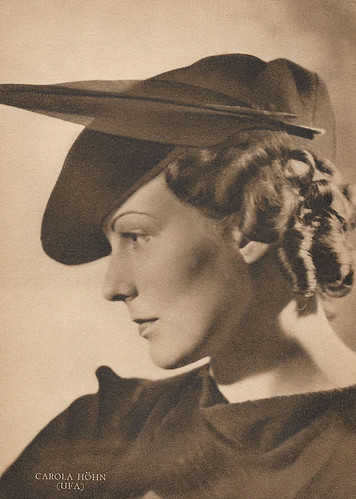
Italian postcard by Rizzoli & C. Milano, 1941. Photo: Ufa.

German postcard by Das Programm von Heute / Ross Verlag. Photo: Tobis / Lindner.

German postcard by Film-Foto-Verlag, no. A 3880/1, 1941-1944. Photo: Star-Foto-Atelier / Tobis.

German postcard by Film-Foto-Verlag, no. A 3880/2, 1941-1944. Photo: Star-Foto-Atelier / Tobis.

German postcard by Film-Foto-Verlag, no. G 174, 1941-1944. Photo: Ciolfi, Rome.
After the war, Carola Höhn first gained a foothold at the theatre and gave guest performances in Berlin, Vienna, Munich and Bremen. She also dubbed films and lent her voice to stars like Katharine Hepburn, Ava Gardner and Danielle Darrieux. Her first post-war film was the drama Du bist nicht allein/You're Not Alone (Paul Verhoeven, 1949).
Another popular film was Toxi (Robert A. Stemmle, 1952) about an Afro-German girl who comes to live at the house of a middle-class German family and thus confronts them with their racism. Höhn was seen in successful Heimatfilms like Heideschulmeister Uwe Karsten/Eternal Love (Hans Deppe, 1954) as the mother of Barbara Rütting, and Johannisnacht/Midsummer Night (Harald Reinl, 1956).
During the following demise of the popular German cinema the elegant Grande Dame played on as a true trouper in brainless and increasingly tasteless comedies, including a remake of the transvestite comedy Viktor und Viktoria/Viktor and Viktoria (Karl Anton, 1957), the Rex Gildo vehicle Appartementzauber/Apartment Enchantment (Helmuth M. Backhaus, 1963), Pepe, der Paukerschreck/Pepe: His Teacher's Fright (Harald Reinl, 1969) and the softcore sexfilm Graf Porno und die liebesdurstigen Töchter/Count Porn and His Love Thirsty Daughters (Günther Hendel, 1969).
Her activities dropped off in the 1970s. She played parts in the popular TV Krimi Derrick (1977-1980) and in the Hollywood production Nightcrossing (Delbert Mann, 1981). The comedy Schloss Königswald/Castle Königswald (Peter Schamoni, 1988) was a tribute to her and colleague stars of the Ufa like Marianne Hoppe, Camilla Horn and Marika Rökk. Together, the actresses were awarded the Bavarian Film Prize for Best Actress.
In 1990, Carola Höhn was also honoured with the Filmband in Gold for her contributions to German film over the years, and in 1999 she received the Bundesverdienstkreuz am Bande (Germany's Cross of Merit). Besides her acting jobs, she ran a fashion store and wrote articles for Film und Frau magazine. Carola Höhn died in 2005 at the age of 95 years in a nursing home in Grünwald near Munich. Her second marriage was to Gerd Lange from 1966 till his death in 1991.

German cigarette card by Ross Verlag in the 'Künstler im Film' series for Zigarettenfabrik Monopol, Dresden, Serie 1, image 13 (of 200). Photo: Ufa.

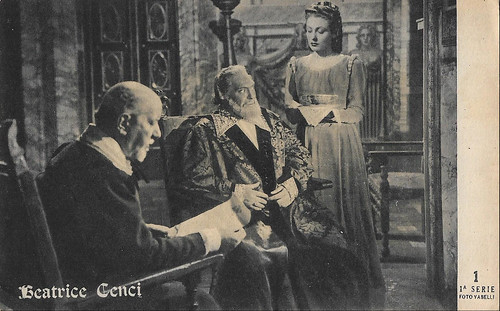
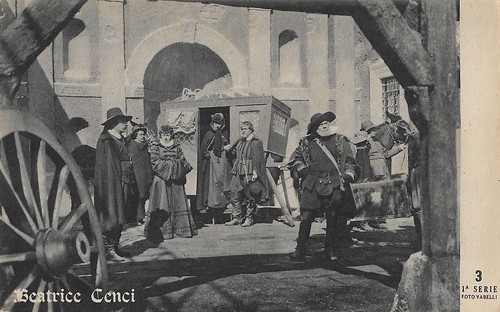
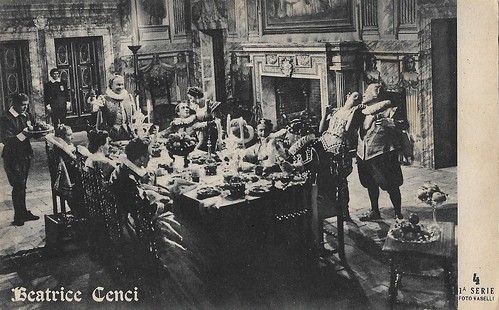
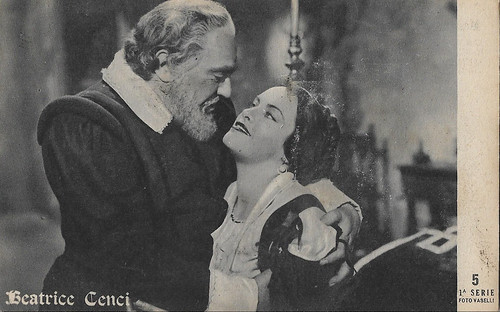
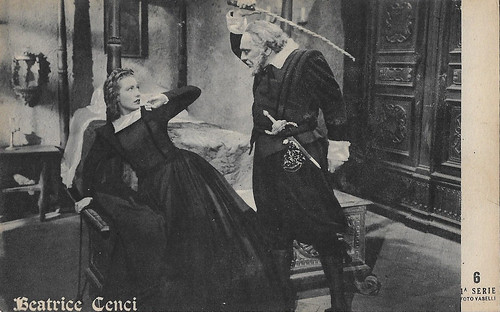
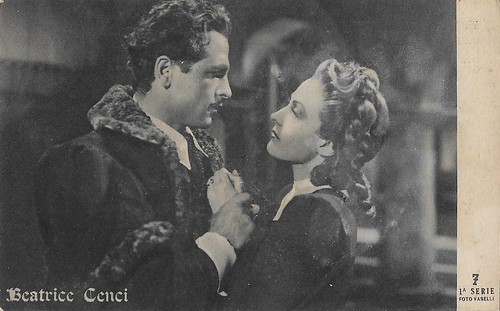
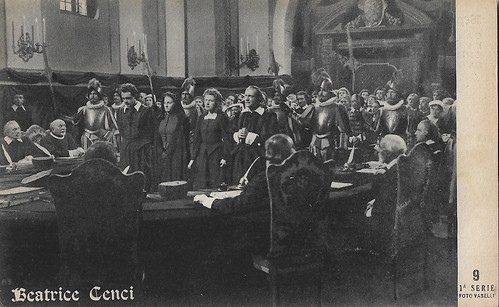
Italian postcard by Casa editrice Albore, Milano, no. 1. Photo: Vaselli. Card of a set of 10 postcards for the Italian period piece Beatrice Cenci (Guido Brignone, 1941), starring Carola Höhn. Here Carola Höhn as the title character and Giulio Donadio as her father.

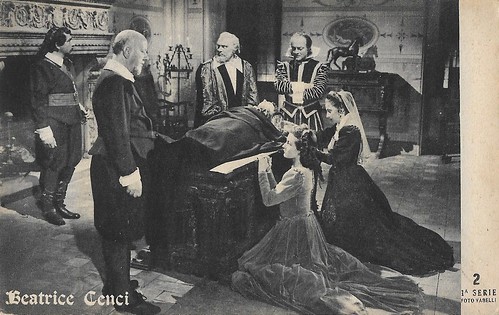
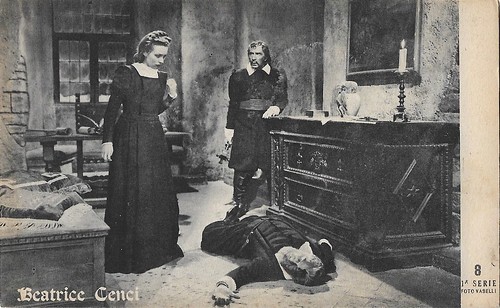
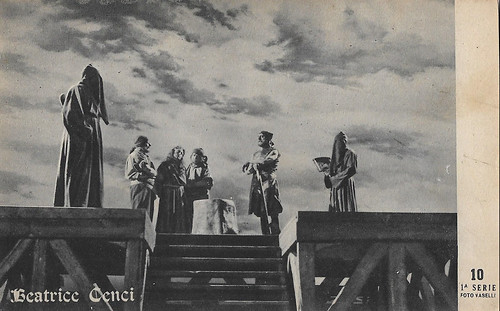
Italian postcard by Casa editrice Albore, Milano, no. 10. Photo: Vaselli. Card of a set of 10 postcards for the Italian period piece Beatrice Cenci (Guido Brignone, 1941). Here the blacksmith Il Catalano (Luigi Pavese) has slain Cenci (Giulio Donadio), while Beatrice (Carola Höhn) watches her dead father.
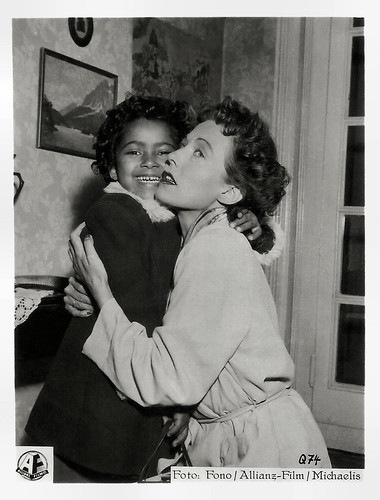
German collector card, no. Q74. Photo: Fono / Allianz-Film / Michaelis. Elfie Fiegert as Toxi and Carola Höhn in Toxi (Robert A. Stemmle, 1952).

German collector card, no. Q74. Photo: Fono / Allianz-Film / Michaelis. Wilfried Seyferth, Elfie Fiegert as Toxi and Carola Höhn in Toxi (Robert A. Stemmle, 1952).
Sources: Thomas Staedeli (Cyranos), Stephanie D'heil (Steffi-line - German), Wikipedia (German) and IMDb.
This post was last updated on 12 October 2024.
German postcard by Film-Foto-Verlag, no. G 174, 1941-1944. Photo: Ciolfi, Rome.
German postcard by Ross-Verlag, no. 9941/1, 1935-1936. Photo: Hämmerer / Ufa.
German postcard by Ross-Verlag, no. A 3370/2, 1941-1944. Photo: K.L. Haenchen.
German postcard by Film-Foto-Verlag, no. A 3735/1, 1941-1944. Photo: Ciolfi.
German postcard by Ross-Verlag, no. A 3956/2, 1941-1944. Photo: Haenchen.
Sissi
Carola Höhn was born Karoline Minna Höhn in Geestemünde (now Bremerhaven), Germany, in 1910. At the end of the 1920s, she went to Berlin, where she received acting lessons from Julia Serda and Hans Junkermann. In 1933 she made her stage debut at the Berlin Schlosstheater.
Five years earlier she already had had her first contacts with the film business when she played minor parts in silent films like Die Wochenendbraut/The Weekend Bride (Georg Jacoby, 1928), Aus dem Tagebuch eines Junggesellen/From the Diary of a Bachelor (Erich Schönfelder, 1928) starring Reinhold Schünzel, and the Russian-German divorce drama Zhivoy trup/The Living Corpse (Fyodor Otsep, 1929).
Her film career really took off with the romance Ferien vom Ich/Holiday From Myself (Hans Deppe, 1934). She became a popular Ufa star with roles in films like Einmal eine grosse Dame sein/Once a Great Lady (Gerhard Lamprecht, 1934), Charleys Tante/Charley's Aunt (Robert A. Stemmle, 1934), and Der alte und der junge König/The Old and the Young King (Hans Steinhoff, 1935). In Königswalzer/The Royal Waltz (Herbert Maisch, 1935) she played Sissi, the iconic Empress Elisabeth of Austria.
Next she was seen in the operetta Der Bettelstudent/The Beggar Student (Georg Jacoby, 1936) and the Zarah Leander melodrama Zu neuen Ufern/To New Shores (Detlev Sierck a.k.a. Douglas Sirk, 1937). Opposite Heinz Rühmann she starred in the comedy Hurra, ich bin Papa!/Hurrah! I am a Papa (Kurt Hoffmann, 1939).
During wartime, she continued her film career in light entertainment like Die lustigen Vagabunden/The Funny Vagrants (Jürgen von Alten, 1940) with Johannes Heesters, Sonntagskinder/Sunday Children (Jürgen von Alten, 1941), Mamma (Guido Brignone, 1941) with Beniamino Gigli, and Warum lügst Du, Elisabeth?/Why Do You Lie, Elisabeth? (Fritz Kirchhoff, 1944). In 1941 she married a major of the Luftwaffe, Arved Krüger. He was shot during action above Malta in 1942. Their son Arved-Michael was born later that year.
Italian postcard by Rizzoli & C. Milano, 1941. Photo: Ufa.
German postcard by Das Programm von Heute / Ross Verlag. Photo: Tobis / Lindner.
German postcard by Film-Foto-Verlag, no. A 3880/1, 1941-1944. Photo: Star-Foto-Atelier / Tobis.
German postcard by Film-Foto-Verlag, no. A 3880/2, 1941-1944. Photo: Star-Foto-Atelier / Tobis.
German postcard by Film-Foto-Verlag, no. G 174, 1941-1944. Photo: Ciolfi, Rome.
True trouper
After the war, Carola Höhn first gained a foothold at the theatre and gave guest performances in Berlin, Vienna, Munich and Bremen. She also dubbed films and lent her voice to stars like Katharine Hepburn, Ava Gardner and Danielle Darrieux. Her first post-war film was the drama Du bist nicht allein/You're Not Alone (Paul Verhoeven, 1949).
Another popular film was Toxi (Robert A. Stemmle, 1952) about an Afro-German girl who comes to live at the house of a middle-class German family and thus confronts them with their racism. Höhn was seen in successful Heimatfilms like Heideschulmeister Uwe Karsten/Eternal Love (Hans Deppe, 1954) as the mother of Barbara Rütting, and Johannisnacht/Midsummer Night (Harald Reinl, 1956).
During the following demise of the popular German cinema the elegant Grande Dame played on as a true trouper in brainless and increasingly tasteless comedies, including a remake of the transvestite comedy Viktor und Viktoria/Viktor and Viktoria (Karl Anton, 1957), the Rex Gildo vehicle Appartementzauber/Apartment Enchantment (Helmuth M. Backhaus, 1963), Pepe, der Paukerschreck/Pepe: His Teacher's Fright (Harald Reinl, 1969) and the softcore sexfilm Graf Porno und die liebesdurstigen Töchter/Count Porn and His Love Thirsty Daughters (Günther Hendel, 1969).
Her activities dropped off in the 1970s. She played parts in the popular TV Krimi Derrick (1977-1980) and in the Hollywood production Nightcrossing (Delbert Mann, 1981). The comedy Schloss Königswald/Castle Königswald (Peter Schamoni, 1988) was a tribute to her and colleague stars of the Ufa like Marianne Hoppe, Camilla Horn and Marika Rökk. Together, the actresses were awarded the Bavarian Film Prize for Best Actress.
In 1990, Carola Höhn was also honoured with the Filmband in Gold for her contributions to German film over the years, and in 1999 she received the Bundesverdienstkreuz am Bande (Germany's Cross of Merit). Besides her acting jobs, she ran a fashion store and wrote articles for Film und Frau magazine. Carola Höhn died in 2005 at the age of 95 years in a nursing home in Grünwald near Munich. Her second marriage was to Gerd Lange from 1966 till his death in 1991.
German cigarette card by Ross Verlag in the 'Künstler im Film' series for Zigarettenfabrik Monopol, Dresden, Serie 1, image 13 (of 200). Photo: Ufa.
Italian postcard by Casa editrice Albore, Milano, no. 1. Photo: Vaselli. Card of a set of 10 postcards for the Italian period piece Beatrice Cenci (Guido Brignone, 1941), starring Carola Höhn. Here Carola Höhn as the title character and Giulio Donadio as her father.
Italian postcard by Casa editrice Albore, Milano, no. 10. Photo: Vaselli. Card of a set of 10 postcards for the Italian period piece Beatrice Cenci (Guido Brignone, 1941). Here the blacksmith Il Catalano (Luigi Pavese) has slain Cenci (Giulio Donadio), while Beatrice (Carola Höhn) watches her dead father.
German collector card, no. Q74. Photo: Fono / Allianz-Film / Michaelis. Elfie Fiegert as Toxi and Carola Höhn in Toxi (Robert A. Stemmle, 1952).
German collector card, no. Q74. Photo: Fono / Allianz-Film / Michaelis. Wilfried Seyferth, Elfie Fiegert as Toxi and Carola Höhn in Toxi (Robert A. Stemmle, 1952).
Sources: Thomas Staedeli (Cyranos), Stephanie D'heil (Steffi-line - German), Wikipedia (German) and IMDb.
This post was last updated on 12 October 2024.