Showing posts with label Lydia Quaranta. Show all posts

19 April 2023

Lydia Quaranta

Lydia Quaranta (1891-1928) was an actress in the Italian silent cinema, just like her twin sisters, Letizia and Isabella Quaranta. Lydia specialised in lavish epics. Her career reached its apex with the title role in the mega-production Cabiria (1914), widely considered the first feature film in the history of cinema.

Lydia Quaranta
Italian postcard by Ed. A. Traldi, Milano, no. 450.
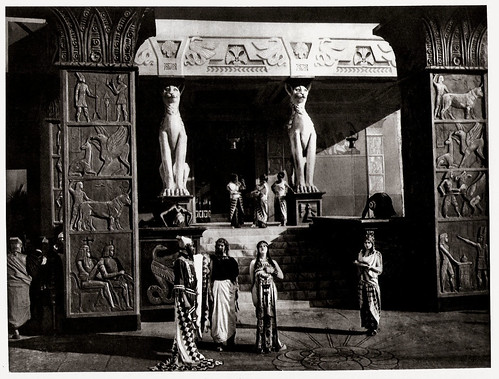
Cabiria
Publicity still for Cabiria (Giovanni Pastrone, 1914), with Alex Bernard, Edoardo Davesnes, Italia Almirante-Manzini and Lydia Quaranta.

Lydia Quaranta
Italian postcard by Fotocelere, Torino.

Lydia Quaranta,
Italian postcard by Ed. Ballerini & Fratini, Firenze, no. 317. Photo: Massaglia, Torino.

Cabiria


Lydia or Lidia Quaranta was born Lidia Gemma Mattia Quaranta in Turin, Italy in 1891. She started her career as a stage actress at the company of Dante Testa. In 1910 she debuted in the film, together with her sister Letizia Quaranta when the company Itala Film enrolled both. Her true film debut though was in a short called L'ignota/The Unknown Woman (1910), produced by Aquila Films and directed by Edoardo Bencivenga.

After a few more Aquila productions, Quaranta played steadily at Itala, as in the aeroplane drama Come una sorella/Like a Sister (Vincenzo Denizot, 1912), the sensational drama Padre/Father (Dante Testa, Gino Zaccaria, 1912), starring Ermete Zacconi, Lo scomparso/The Dread of Doom (Dante Testa, 1913) with again Zacconi, and the crime story Tigris (Vincenzo Denizot, 1913).

Together with her sister Letizia, she played in Addio giovinezza!/Goodbye youth! (Nino Oxilia, 1913). In 1914 Lydia Quaranta’s cinema career reached its apex when she had the title role in the mega-production Cabiria. This was a historical film made on an epic scale by Giovanni Pastrone who used the pseudonym Piero Fosco.

For a lot of money, the famous author Gabriele D’Annunzio attached his name to the film as the scriptwriter. D’Annunzio in reality only invented some of the names of the characters and helped with the elaborate intertitles of the film.

Hal Erickson reviews at AllMovie: "Cabiria is an Italian historical epic that ran a full 14 reels (well over three hours) at a time when most American films were still short subjects. The plot hinges on the abduction of wealthy and virginal Cabiria (Lidia Quaranta) by pirates during the Roman/Carthaginian War of ancient times. Highlights (many of which were filmed on tinted stock) include the burning of the Roman fleet, an effect accomplished with miniatures and mirrors, and Hannibal's crossing of the Alps - with real Alps, and real elephants."

Cabiria (1914)
Spanish collectors card (minicard) by Chocolate Amatller, Barcelona, no. 7 of 12 cards. Photo: Itala Film. Picture from the Italian silent mega-epic Cabiria (Giovanni Pastrone, 1914), starring Italia Almirante Manzini as Sophonisba, Umberto Mozzato as Fulvio Axilla, Lydia Quaranta as Cabiria and Bartolomeo Pagano as Maciste. The high priest Karthalo (Dante Testa) is called by Queen Sophonisba to explain her nightmare. In between them, in the back, we see the adult Cabiria (Lydia Quaranta).

Cabiria (1914)
Spanish collectors card (minicard) by Chocolate Amatller, Barcelona, no. 10 of 12 cards. Photo: Itala Film. Picture from the Italian silent mega-epic Cabiria (Giovanni Pastrone, 1914), starring Italia Almirante Manzini as Sophonisba, Umberto Mozzato as Fulvio Axilla, Lydia Quaranta as Cabiria and Bartolomeo Pagano as Maciste. Here Maciste strangles the highpriest Karthalo (Dante Testa), but Cabiria holds him back.

Cabiria (1914)
Spanish collectors card (minicard) by Chocolate Amatller, Barcelona, no. 11 of 12 cards. Photo: Itala Film. Picture from the Italian silent mega-epic Cabiria (Giovanni Pastrone, 1914), starring Italia Almirante Manzini as Sophonisba, Umberto Mozzato as Fulvio Axilla, Lydia Quaranta as Cabiria and Bartolomeo Pagano as Maciste. Here we see the death of Sophonisba, surrounded by Cabiria, Fulvio Axilla and the courtiers. She has poisoned herself, rather than become a slave to the Romans. 

Struck with Pulmonitis


Cabiria was an international success. Pastrone eventually created a whole series around one of the popular characters of the film, the strong man Maciste (played by Bartolomeo Pagano). Lydia Quaranta did not get this special exposure from Pastrone, but Cabiria did guarantee her many films offers in the years from 1915 to 1920, from various Turinese film companies, such as Gloria and Savoia.

Itala hired her again in 1919, for the then enormous sum of 10.000 lire per month. Among her memorable titles of this period are Iwna, perla del Gange/Iwna, Pearl of the Ganges (Giuseppe Pinto, 1914), Beffa di Satana/Mockery of Satan (Telemaco Ruggeri, 1915) with Dante Cappelli, Il romanzo di un atleta/The novel of an athlete (Vitorio Rossi Pianelli, 1915) with strong man Mario Guaita Ausonia, Nel vortice del peccato/In the vortex of sin (Telemaco Ruggeri, 1916) with Sandro Ruffini, Fiamma!/Flame! (Ettore Piergiovanni, 1920) with director Piergiovanni in the male lead as well, and I tre sentimentali/The three sentimental (Augusto Genina, 1921) - which film historian Vittorio Martinelli considered as her best film.

Hereafter, Quaranta moved to the Fert company, for which she did a few films such as the comedy Treno di piacere/Train of pleasure (Luciano Doria, 1924) with Alex Bernard.

In 1925 she played her last role, a small part in Mario Camerini’s Voglio tradire il mio marito/I want to betray my husband, starring Linda Pini. All in all Lydia Quaranta played in some 70 films.

In 1928, Quaranta was struck by an attack of pneumonia and died in her hometown Turin. She was only 36. Her sister Letizia (1893-1977) had a less intense but longer career. In 1921, she would marry film director Carlo Campogalliani and did various films with him, such as a few starring Maciste. Letizia had a twin sister Isabella (1892-1975) who also knew a career in Italian silent cinema between 1912 and 1917 but didn’t have the status her sisters had.

Lydia Quaranta
Italian postcard by Fotocelere, Torino, no. 66.
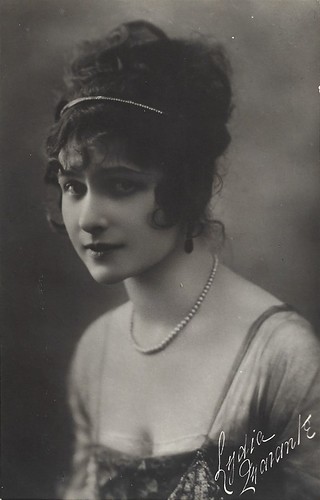
Lydia Quaranta
Italian postcard by Fotocelere, Torino.
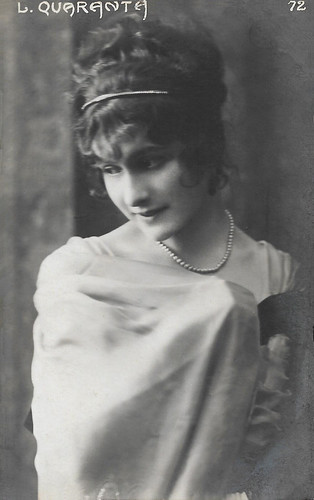
Lydia Quaranta
Italian postcard by G. Vettori, Bologna, no. 72.

Lydia Quaranta
Italian postcard, no. 316. Photo: Massaglia, Torino.

Sources: Hal Erickson (AllMovie), Sandra Brennan (AllMovie), Cinema in Piemonte (Italian - now defunct), Wikipedia (Italian), and IMDb.

14 June 2022

Three early films with Italia Almirante: Cabiria (1914), Tua per la vita (1917) and Il matrimonio di Olimpia (1918)

Italia Almirante (1890-1941) or Italia Almirante Manzini became one of the divas of the Italian silent cinema with Cabiria (1914). She worked with some of the most important Italian directors of the silent era, including Roberto Roberti, Augusto Genina and Giovanni Pastrone. Earlier, EFSP had posts on her later films L'innamorata/The Woman in Love (Gennaro Righelli, 1920), Zingari/Gypsies (Mario Almirante, 1920), La statua di carne/The statue of flesh (Mario Almirante, 1921), La chiromante/The Fortune Teller (Mario Almirante, 1922), La grande passione/The great passion (Mario Almirante, 1922), L'ombra/The Shadow (Mario Almirante, 1923) and L'arzigogolo/The Court Jester (1924). Today, we focus on three of her early films: Cabiria (Giovanni Pastrone, 1914), Tua per la vita/Yours for life (Ugo De Simone, 1917) and Il matrimonio di Olimpia/Olympia's wedding (Gero Zambuto, 1918).

Cabiria (1914)


Cabiria (1914)
Spanish collectors card by Chocolate Amatller, Barcelona, no. 1 of 12 cards. Photo: Itala Film. Picture from the Italian silent mega-epic Cabiria (Giovanni Pastrone, Itala Film 1914). Here, the Punic army returns to the city Cirta. They have captured a few Roman soldiers among whom Fulvio Axilla (Umberto Mozzato) and Maciste (Bartolomeo Pagano).

Cabiria (1914)
Spanish collectors card by Chocolate Amatller, Barcelona, no. 2 of 12 cards. Photo: Itala Film. Teresa Marangoni as the nurse Croessa and Carolina Catena as young Cabiria in Cabiria (Giovanni Pastrone, 1914).

Cabiria (1914)
Spanish collectors card by Chocolate Amatller, Barcelona, no. 3 of 12 cards. Photo: Itala Film. The giant entrance to the Temple of Moloch in Cabiria (Giovanni Pastrone, 1914).

Cabiria (1914)
Spanish collectors card by Chocolate Amatller, Barcelona, no. 5 of 12 cards. Photo: Itala Film. Picture from the Italian silent mega-epic Cabiria (Giovanni Pastrone, Itala Film 1914). Here Sophonisba (Italia Almirante) and Massinissa (Vitale Di Stefano) are married.

Italia Almirante had her breakthrough in the cinema as the wicked Carthaginian queen Sofonisba in the influential costume epic Cabiria (1914). Director Giovanni Pastrone chose her for the role at the suggestion of author Gabriele D'Annunzio himself.

The film also starred Umberto Mozzato as Fulvio Axilla, Lydia Quaranta as Cabiria and Bartolomeo Pagano as Maciste.

A million lira was budgeted for the film, a tremendous sum then, and location shooting was extended to Tunisia, Sicily and the Alps. The result was a tremendous success and it had a direct influence on D.W. Griffith's production of Intolerance (1916).

Ivo Blom wrote an article about how director Giovanni Pastrone appropriated the book illustrations for the 1900 edition of Gustave Flaubert's 'Salammbô' for Cabiria.

This article in French, ‘Images spectaculaires: Cabiria de Pastrone et les illustrations de Salammbô de Flaubert par le peintre Rochegrosse’, has just been published this month in 'Le cinéma muet italien, à la croisée des arts, edited by Céline Gailleurd (Paris: Les Presses du Réel, 2022), pp. 162-191.

Take a sneak peek at the book. It includes two pages of Ivo Blom's article. Later in 2022, an Italian edition of the book will appear with publisher Kaplan.

Cabiria (1914)
Spanish collectors card by Chocolate Amatller, Barcelona, no. 7 of 12 cards. Photo: Itala Film. Picture from the Italian silent mega-epic Cabiria (Giovanni Pastrone, 1914). The high priest Karthalo (Dante Testa) is called by Queen Sophonisba (Italia Almirante) to explain her nightmare. In between them, in the back, we see the adult Cabiria (Lydia Quaranta).

Cabiria (1914)
Spanish collectors card by Chocolate Amatller, Barcelona, no. 8 of 12 cards. Photo: Itala Film. Picture from the Italian silent mega-epic Cabiria (Giovanni Pastrone, Itala Film 1914). Here Queen Sophonisba receives her former lover and now adversary Massinissa (Vitale Di Stefano) in her palace at Cirta.

Cabiria (1914)
Spanish collectors card by Chocolate Amatller, Barcelona, no. 9 of 12 cards. Photo: Itala Film. Italia Almirante as princess Sophonisba in her boudoir in Cabiria (Giovanni Pastrone, 1914).

Cabiria (1914)
Spanish collectors card by Chocolate Amatller, Barcelona, no. 10 of 12 cards. Photo: Itala Film. Bartolomeo Pagano as Maciste in Cabiria (Giovanni Pastrone, 1914). Maciste strangles the high priest Karthalo (Dante Testa), but Cabiria (Lydia Quaranta) holds him back.

Cabiria (1914)
Spanish collectors card by Chocolate Amatller, Barcelona, no. 11 of 12 cards. Photo: Itala Film. Italia Almirante as Sophonisba in Cabiria (Giovanni Pastrone, 1914). Here we see the death of Sophonisba, surrounded by Cabiria, Fulvio Axilla and the courtiers. She has poisoned herself, rather than to become a slave to the Romans.

Tua per la vita (1917)


Italia Almirante in Tua per la vita (1917)
Spanish collectors card by Chocolat Imperiale, no. 1 of 6 cards. Photo: Gladiator Film /J. Verdaguer. Italia Almirante as Winny Workson in Tua per la vita/Yours for life (Ugo De Simone, 1917). The ruined Count Del Rio (Giuseppe Ciabattini) has set his eyes on the young widow and rich heiress Winny Workson, who has returned to Italy. She rejects the golddigger. He threatens her to avenge himself.

Italia Almirante in Tua per la vita (1917)
Spanish collectors card by Chocolat Imperiale, no. 2 of 6 cards. Photo: Gladiator Film /J. Verdaguer. Italia Almirante in Tua per la vita/Yours for life (Ugo De Simone, 1917). The vengeful Count Del Rio (Giuseppe Ciabattini), rejected by the young widow Winny, slanders her so Winny's father refuses a marriage between the two lovers. Winny begs the count in vain for mercy. The count's sister (Renata Torelli) is to the right here.

Giovanni Casaleggio in Tua per la vita (1917)
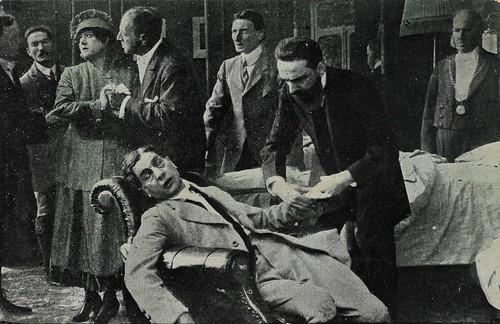
Spanish collectors card by Chocolat Imperiale, no. 3 of 6 cards. Photo: Gladiator Film /J. Verdaguer. Card for the film Tua per la vita/Yours for life (Ugo De Simone, 1917), starring Italia Almirante. Count Del Rio (Giuseppe Ciabattini) has just been poisoned. His sister (Renata Torelli) is devastated. The inventor Mari (Giovanni Casaleggio) is suspected, arrested and condemned.

After her lead as the princess, and later queen, Sofonisba in the mega-epic Cabiria (Giovanni Pastrone, 1914) for Itala, Italia Almirante became one of the Italian film divas of the late 1910s and early 1910s, in most modern dramas, often adaptations of plays and novels.

Tua per la vita/Yours for life (Ugo De Simone, 1917) is probably one of the oldest of these for which we have cards in our collection, although Almirante did a handful of films before, particularly in 1916.

The plot deals with a young widow and rich heiress, Winny Workson (Italia Almirante), who has returned from the US to Italy to her father. She is haunted by an old, ruined aristocrat, Count Del Rio (Giuseppe Ciabbattaini).

Instead, she falls for an inventor, Mari (Giovanni Casaleggio), who believes he has failed in life and tries to commit suicide. Yet, Winny stops him and they fall in love. When she rejects the count, he takes revenge by slandering the inventor such that Winny's father refuses a marriage between the two lovers.

When afterwards during a hunting party, the count dies of poisoning, Mari is suspected as a flask is found with a poison he invented. He is arrested and condemned, but Winny doesn't give up on him. In the end, it is revealed that an employee, mistreated by the count, had taken revenge by poisoning him. Mari is freed and Winny and Mari are free to marry.

The Italian press thought the script of Tua per la vita/Yours for life was too old-hat and overly complicated but praised the performances of the actors, Italia Almirante in the first place.

Filippo Butera in Tua per la vita (1917)
Spanish collectors card by Chocolat Imperiale, no. 4 of 6 cards. Photo: Gladiator Film /J. Verdaguer. Probably Filippo Butera as the demented employee, who poisons his employer, the count Del Rio, who mistreated him, in Tua per la vita/Yours for life (Ugo De Simone, 1917), starring Italia Almirante.

Italia Almirante in Tua per la vita (1917)

Spanish collectors card by Chocolat Imperiale, no. 6 of 6 cards. Photo: Gladiator Film /J. Verdaguer. Italia Almirante in Tua per la vita/Yours for life (Ugo De Simone, 1917). Epilogue: Winny Workson and the count's sister reconcile.

Il matrimonio di Olimpia (1918)


Italia Almirante in Il matrimonio di Olimpia (1918)
Spanish collectors card by Chocolat Imperiale, no. 1 of 6 cards. Photo: Itala Film /J. Verdaguer. Italia Almirante in Il matrimonio di Olimpia/Olympia's wedding (Gero Zambuto, 1918).

Italia Almirante Il matrimonio di Olimpia (1918)
Spanish collectors card by Chocolat Imperiale, no. 2 of 6 cards. Photo: Itala Film /J. Verdaguer. Italia Almirante in Il matrimonio di Olimpia/Olympia's wedding (Gero Zambuto, 1918).

Il matrimonio di Olimpia/Olympia's wedding (Gero Zambuto, 1918) was based on the play 'Le Mariage d'Olympe' (1885) by Émile Augier.

The celebrated mundane Olimpia Taverny (Italia Almirante) whose caprice is the law to all of her admirers, secretly has the dream of marriage, her own house and family, and a quiet and honest life. She finds the young marquis Vilbert, who falls in love with her and marries her.

Olimpia retakes her original name of Paolina Moris. But life is against her. After the feverish first times have passed, Vilbert notices he has no true sentiments for her anymore and rekindles his affair with his cousin. In a wild, rebellious act against life, Olimpia commits the final act which honours and purifies herself.

The Italian film journal La vita cinematografica wasn't very convinced by the film and thought the artistry of the original source was mistreated. Moreover, even while praising her performance, the critic asked himself why Almirante had to appear in a new attire in every shot.

Italia Almirante Il matrimonio di Olimpia (1918)
Spanish collectors card by Chocolat Imperiale, no. 4 of 6 cards. Photo: Itala Film /J. Verdaguer. Italia Almirante in Il matrimonio di Olimpia/Olympia's wedding (Gero Zambuto, 1918).

Italia Almirante Il matrimonio di Olimpia (1918)
Spanish collectors card by Chocolat Imperiale, no. 6 of 6 cards. Photo: Itala Film /J. Verdaguer. Italia Almirante and probably Alberto Nepoti in Il matrimonio di Olimpia/Olympia's wedding (Gero Zambuto, 1918).

Sources: Vittorio Martinelli (Il cinema muto italiano, Vol. 1917 and 1918 - Italian), and IMDb.