One of the best known pioneers among the British film studios was Hepworth. Cecil M. Hepworth set up the production company Hepworth and Co. in 1898. It was later renamed the Hepworth Manufacturing Company, and then Hepworth Picture Plays. Hepworth produced the first film version of Alice in Wonderland in 1903 and the innovative Rescued by Rover in 1905. Among the most popular stars of the studio were Alma Taylor, Stewart Rome and the husband-and-wife-team of Henry Edwards and Chrissie White. In 1923 Hepworth Picture Plays went bankrupt.
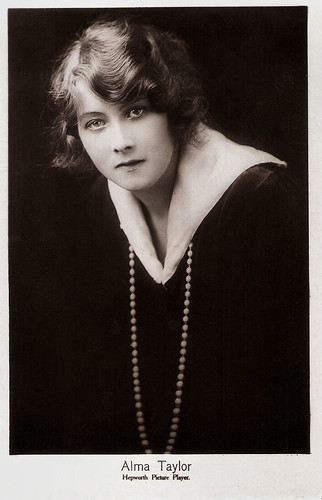
Alma Taylor. British postcard in the Hepworth Picture Player Series.
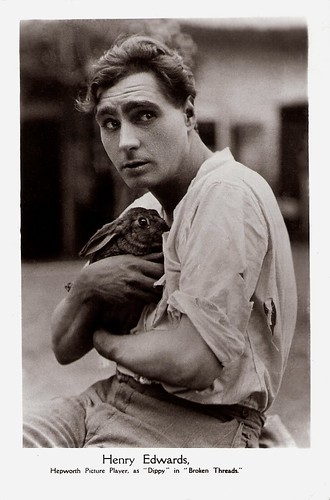
Henry Edwards. British postcard in the Hepworth Picture Player Series. Publicity still for Broken Threads (Henry Edwards, 1917) with Henry Edwards as Dippy.
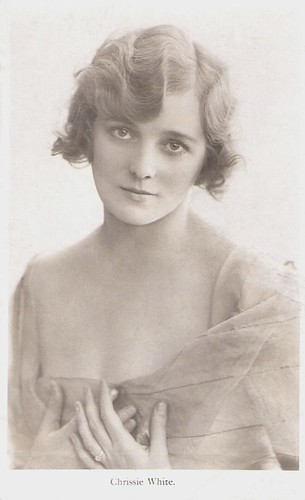
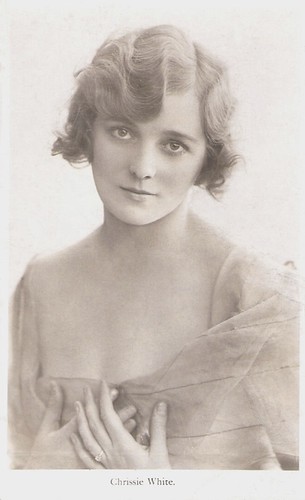
Chrissie White. British postcard. Photo: Hepworth Pictures.
Cecil Milton Hepworth (1874-1953) was both director, producer and screenwriter. He was born in Lambeth, in present-day South London. His father, Thomas Cradock Hepworth, was a magic lantern showman and author. As a child, Cecil often travelled with his father when he lectured about magic lanterns. This fascinated the young Cecil, and he often cited it as an influence on his later inventions in pre-World War I British cinema.
Cecil M. Hepworth became involved in the early stages of British film making, and worked for both Birt Acres and Charles Urban, and wrote the first British book on the subject in 1897. In 1898, Cecil M. Hepworth and his cousin Monty Wicks set up the production company Hepworth and Co. in London. A year later, they built a small film studio in Walton-on-Thames, Hepworth Studios.
The company produced about three films a week, sometimes with Hepworth directing. An example is the first film version of Alice in Wonderland (Cecil M. Hepworth, Percy Stow, 1903). May Clark originally worked for Hepworth Film Studios as a film cutter and production secretary when she was cast as Alice. She would appear in 20 Hepworth films.
Hepworth became instrumental in developing the British film industry through his use of cutting to produce a coherent film narrative. Remarkable is his six minute film Rescued by Rover (Lewin Fitzhamon, Cecil M. Hepworth, 1905), featuring a faithful Collie who leads its master to his kidnapped baby. With shots being effectively combined to emphasise the action, the film is now regarded as an important development in film grammar.
Rescued by Rover was a family affair: Hepworth himself, his wife Margaret and their baby daughter Barbara are the family in the film, Rover is their own dog Blair, and Margaret also wrote the screenplay. The beggar and another minor character are played by professional actors, quite likely another first for British cinema.
In 1905, Rescued by Rover was a great success. Hepworth had to remake it twice to supply enough prints to meet demand. All with the same narrative, the original version is differentiable from the remakes via the scene where the nurse (May Clark) tells her boss that she lost the child. The original breaks the scene into two shots - the second shot being from a closer position. The two remakes contain only one shot, from the closer position, in that scene.
Hepworth patented several photographic inventions. He was also one of the first to recognise the potential of film stars, both animal and human, with several recurring characters appearing in his films. By 1910, Hepworth was also the inventor of Vivaphone, an early sound on disk system for adding sound to motion pictures. The device used phonograph records to record and play back the sound. Hepworth's Vivaphone was distributed in Britain and also in the United States and Canada.

Violet Hopson. British postcard in the Hepworth Picture Player Series.
Australian-born actress and producer Violet Hopson (1887-1973) was one of the first British film stars. She appeared in more than 100 British silent films, and occasionally played supporting roles in sound pictures of the early 1930s.
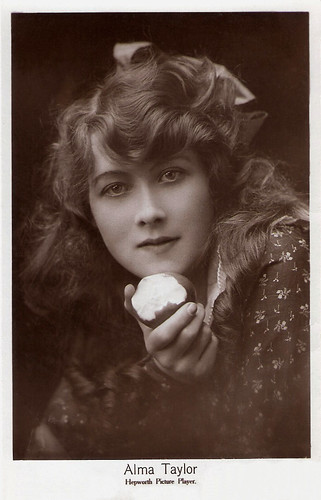
Alma Taylor. British postcard in the Hepworth Picture Player Series.
Blue-eyed, round-faced Alma Taylor (1895-1974) was a British actress, who peeked in the British silent cinema of the 1910s and 1920s. In 1915 readers of Pictures and Picturegoers voted her most popular British performer, beating even Charlie Chaplin. Taylor acted in over 150 films.
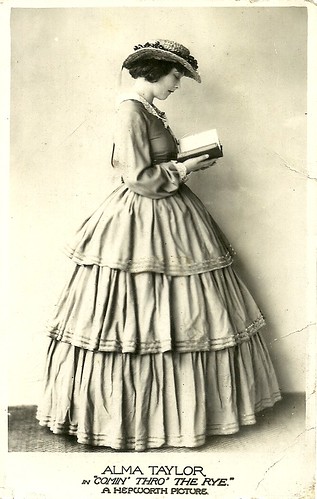
British postcard by TIC. Photo: Hepworth. Publicity still for Comin' Thro' the Rye (1923) with Alma Taylor.
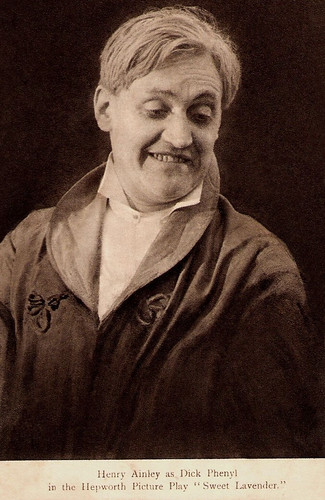
British postcard. Photo: Hepworth Pictures. Publicity still for Sweet Lavender (Cecil M. Hepworth, 1915) with Henry Ainley as Dick Phenyl.
Shakespeare performer Henry Ainley (1879-1945) was one of the first prominent stage actors to cross over into the world of film making. He played in some 20 silent films, but the stage was his real home.
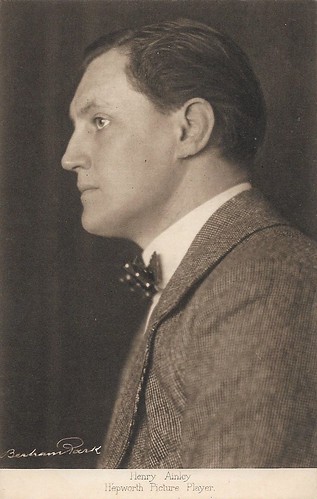
Henry Ainley. British postcard in the Hepworth Picture Player Series. Photo: Bertram Park.
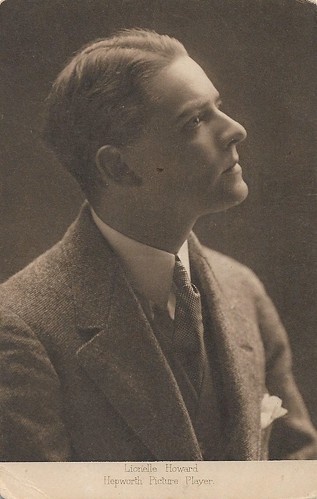
Lionelle Howard. British postcard in the Hepworth Picture Player Series.
Lionelle Howard (1886–1930) was a British silent film actor, who started his career in the early 1910s as secretary at Clarendon Films and was discovered in 1914 by director Wilfred Noy. After a series of short films at Clarendon, he stepped over to Hepworth, where he often acted together with Chrissie White and Stewart Rome. After a string of shorts at Hepworth, probably Howard's first feature film at Hepworth was the Dickens adaptation Barnaby Rudge (Thomas Bentley, Cecil M. Hepworth, 1915), with Tom Powers, Violet Hopson, Rome, and White. Still, in many of the Hepworth films he was often third actor, after Rome, White, Alma Taylor, and others. In the years after the First World War, Howard left Hepworth and got male leads at various other British companies.
In 1907 Cecil Hepworth hired two child actresses to play tragic young girls in his short silent films. The two girls, Alma Taylor and Chrissie White, co-starred in Hepworth's 'Tilly the Tomboy' comedy series (1910-1915) about two naughty schoolgirls. They were a hit. In those days, everyone helped out at the studios, so both Alma and Chrissie helped in the processing rooms when the weather was too poor to shoot.
Alma Taylor was Hepworth's favourite, and remained devoted to him for decades. She would appear in 75 or more short and long films by Hepworth, such as the Charles Dickens adaptations Oliver Twist (Thomas Bentley, 1912) as Nancy, David Copperfield (Thomas Bentley, 1913) and The Old Curiosity Shop (Thomas Bentley, 1913).
After a lull in film-making while attending more to his film studio business, Cecil M. Hepworth began making films again in 1914. During the First World War and soon after Hepworth contributed to the war effort with such propaganda films like The Nature of the Beast (Cecil Hepworth, 1919). Boosted by the international success of Alf's Button (Cecil M. Hepworth, 1920), the company went public to fund a large studio development, but Hepworth failed to raise the necessary capital.
Hepworth's film style did not change and became increasingly old-fashioned. In 1923, he directed Alma Taylor and Ralph Forbes in the British countryside drama Comin' Thro the Rye (Cecil M. Hepworth, 1923), a remake of an earlier version of 1916. It was a box office failure and the company went into receivership the next year. After his bankruptcy, Hepworth finished his career as a director of trailers and advertisements.
Cecil M. Hepworth died in 1953 in Greenford, Middlesex, England. He was 79. During his career he had produced more than 1600 short films and features. In 1924, all of the original film negatives in Hepworth's possession were melted down by the receiver in order to sell the silver. Hepworth's feature films have been considered lost for many decades. In 2008, an original 35mm print of his film Helen of Four Gates (Cecil M. Hepworth, 1920) starring Alma Taylor and Gerald Ames, was located in a film archive in Montreal, Canada.
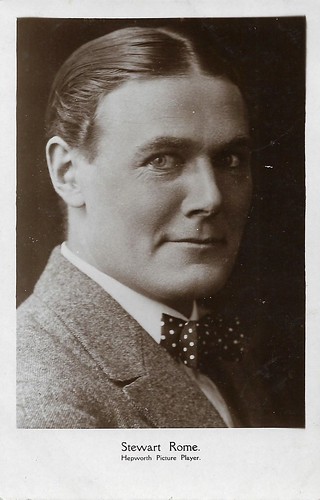
Stewart Rome. British postcard in the Hepworth Picture Player Series.
Stewart Rome (1886-1965) was a British actor of the silent screen. In the 1910s he was often paired with Alma Taylor and Chrissie White. In 1915 he was voted second to Chaplin in a Pictures magazine popularity poll. Rome played in over 120 films between 1913 and 1950.
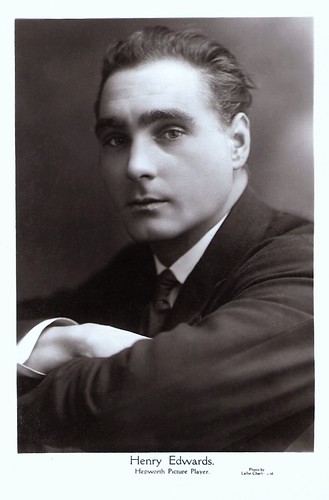
Henry Edwards. British postcard in the Hepworth Picture Player Series. Photo: Lallie Charles
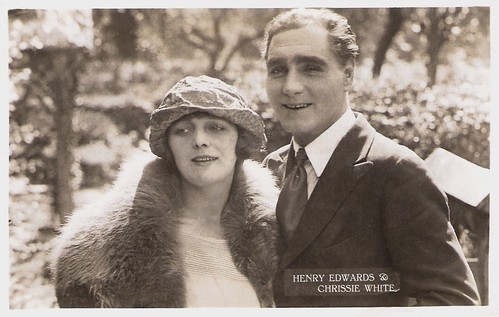
Tall, British stage actor Henry Edwards (1882-1952) was in the silent period a famous star of the Hepworth studio. He was also active as an innovative film producer and director. Between 1914 and 1952 he appeared in 81 films and directed 67 films.
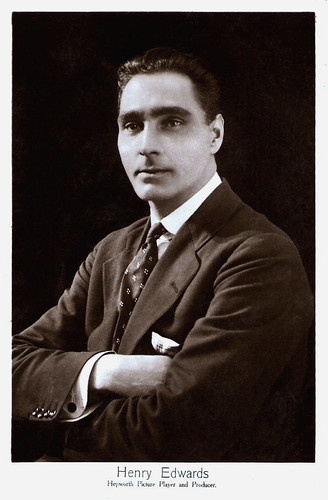
Henry Edwards. British postcard in the Hepworth Picture Player Series.
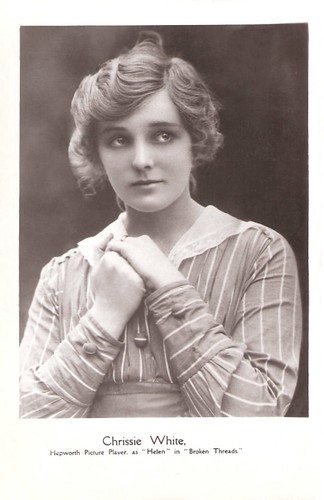
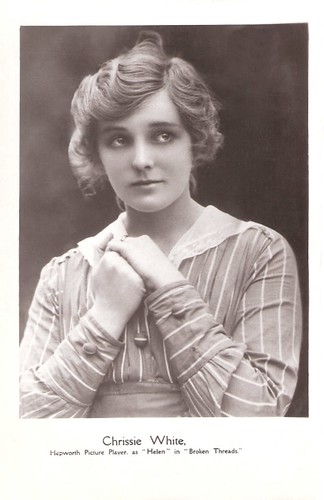
British postcard in the Hepworth Picture Player Series. Publicity still for Broken Threads (Henry Edwards, 1917) with Chrissie White as Helen.
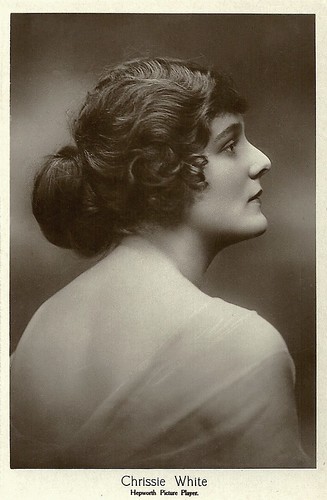
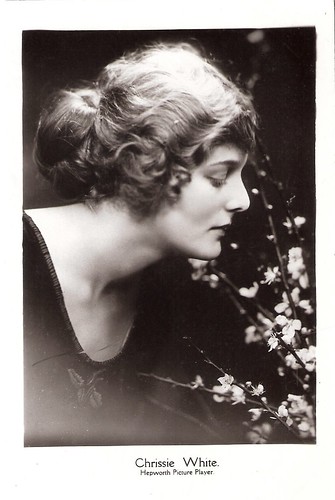
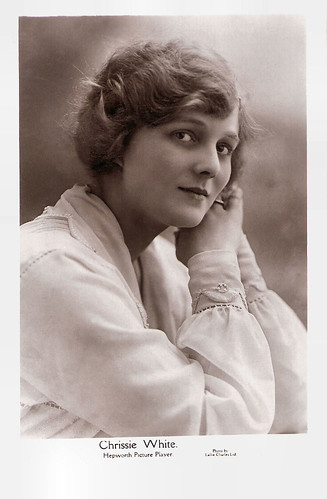
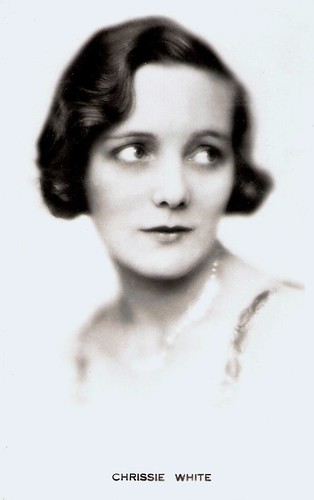
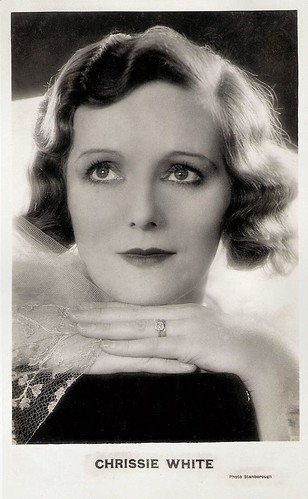
Blue-eyed and light-haired beauty Chrissie White (1895-1989) was one of the most famous and popular stars of British silent cinema. In 1907 the 12-years old started at the Hepworth company and soon became a popular child star. In the 1920s, she and husband Henry Edwards were regarded as one of Britain's most newsworthy celebrity couples.
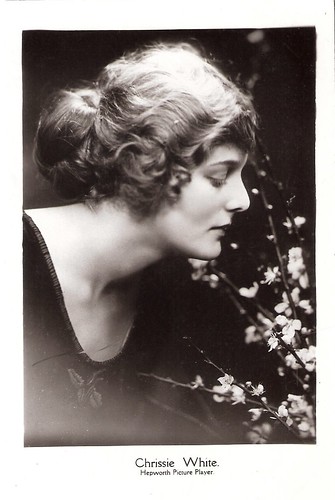
Chrissie White. British postcard in the Hepworth Picture Player Series.
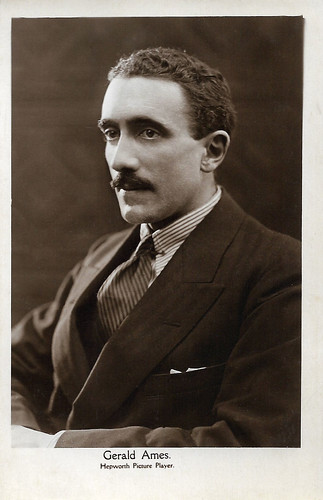
Gerald Ames. British postcard in the Hepworth Picture Player Series.
Gerald Ames (1880-1933) was a British actor, film director and Olympic fencer. In the post-First World War cinema, he was a popular leading man in the silent British cinema. Between 1914 and 1928. Ames appeared in more than seventy films.
Sources: Doug Sederberg (IMDb), Wikipedia and IMDb.
Alma Taylor. British postcard in the Hepworth Picture Player Series.
Henry Edwards. British postcard in the Hepworth Picture Player Series. Publicity still for Broken Threads (Henry Edwards, 1917) with Henry Edwards as Dippy.
Chrissie White. British postcard. Photo: Hepworth Pictures.
Fascinated by the magic lantern
Cecil Milton Hepworth (1874-1953) was both director, producer and screenwriter. He was born in Lambeth, in present-day South London. His father, Thomas Cradock Hepworth, was a magic lantern showman and author. As a child, Cecil often travelled with his father when he lectured about magic lanterns. This fascinated the young Cecil, and he often cited it as an influence on his later inventions in pre-World War I British cinema.
Cecil M. Hepworth became involved in the early stages of British film making, and worked for both Birt Acres and Charles Urban, and wrote the first British book on the subject in 1897. In 1898, Cecil M. Hepworth and his cousin Monty Wicks set up the production company Hepworth and Co. in London. A year later, they built a small film studio in Walton-on-Thames, Hepworth Studios.
The company produced about three films a week, sometimes with Hepworth directing. An example is the first film version of Alice in Wonderland (Cecil M. Hepworth, Percy Stow, 1903). May Clark originally worked for Hepworth Film Studios as a film cutter and production secretary when she was cast as Alice. She would appear in 20 Hepworth films.
Hepworth became instrumental in developing the British film industry through his use of cutting to produce a coherent film narrative. Remarkable is his six minute film Rescued by Rover (Lewin Fitzhamon, Cecil M. Hepworth, 1905), featuring a faithful Collie who leads its master to his kidnapped baby. With shots being effectively combined to emphasise the action, the film is now regarded as an important development in film grammar.
Rescued by Rover was a family affair: Hepworth himself, his wife Margaret and their baby daughter Barbara are the family in the film, Rover is their own dog Blair, and Margaret also wrote the screenplay. The beggar and another minor character are played by professional actors, quite likely another first for British cinema.
In 1905, Rescued by Rover was a great success. Hepworth had to remake it twice to supply enough prints to meet demand. All with the same narrative, the original version is differentiable from the remakes via the scene where the nurse (May Clark) tells her boss that she lost the child. The original breaks the scene into two shots - the second shot being from a closer position. The two remakes contain only one shot, from the closer position, in that scene.
Hepworth patented several photographic inventions. He was also one of the first to recognise the potential of film stars, both animal and human, with several recurring characters appearing in his films. By 1910, Hepworth was also the inventor of Vivaphone, an early sound on disk system for adding sound to motion pictures. The device used phonograph records to record and play back the sound. Hepworth's Vivaphone was distributed in Britain and also in the United States and Canada.
Violet Hopson. British postcard in the Hepworth Picture Player Series.
Australian-born actress and producer Violet Hopson (1887-1973) was one of the first British film stars. She appeared in more than 100 British silent films, and occasionally played supporting roles in sound pictures of the early 1930s.
Alma Taylor. British postcard in the Hepworth Picture Player Series.
Blue-eyed, round-faced Alma Taylor (1895-1974) was a British actress, who peeked in the British silent cinema of the 1910s and 1920s. In 1915 readers of Pictures and Picturegoers voted her most popular British performer, beating even Charlie Chaplin. Taylor acted in over 150 films.
British postcard by TIC. Photo: Hepworth. Publicity still for Comin' Thro' the Rye (1923) with Alma Taylor.
British postcard. Photo: Hepworth Pictures. Publicity still for Sweet Lavender (Cecil M. Hepworth, 1915) with Henry Ainley as Dick Phenyl.
Shakespeare performer Henry Ainley (1879-1945) was one of the first prominent stage actors to cross over into the world of film making. He played in some 20 silent films, but the stage was his real home.
Henry Ainley. British postcard in the Hepworth Picture Player Series. Photo: Bertram Park.
Lionelle Howard. British postcard in the Hepworth Picture Player Series.
Lionelle Howard (1886–1930) was a British silent film actor, who started his career in the early 1910s as secretary at Clarendon Films and was discovered in 1914 by director Wilfred Noy. After a series of short films at Clarendon, he stepped over to Hepworth, where he often acted together with Chrissie White and Stewart Rome. After a string of shorts at Hepworth, probably Howard's first feature film at Hepworth was the Dickens adaptation Barnaby Rudge (Thomas Bentley, Cecil M. Hepworth, 1915), with Tom Powers, Violet Hopson, Rome, and White. Still, in many of the Hepworth films he was often third actor, after Rome, White, Alma Taylor, and others. In the years after the First World War, Howard left Hepworth and got male leads at various other British companies.
An increasingly old-fashioned film style
In 1907 Cecil Hepworth hired two child actresses to play tragic young girls in his short silent films. The two girls, Alma Taylor and Chrissie White, co-starred in Hepworth's 'Tilly the Tomboy' comedy series (1910-1915) about two naughty schoolgirls. They were a hit. In those days, everyone helped out at the studios, so both Alma and Chrissie helped in the processing rooms when the weather was too poor to shoot.
Alma Taylor was Hepworth's favourite, and remained devoted to him for decades. She would appear in 75 or more short and long films by Hepworth, such as the Charles Dickens adaptations Oliver Twist (Thomas Bentley, 1912) as Nancy, David Copperfield (Thomas Bentley, 1913) and The Old Curiosity Shop (Thomas Bentley, 1913).
After a lull in film-making while attending more to his film studio business, Cecil M. Hepworth began making films again in 1914. During the First World War and soon after Hepworth contributed to the war effort with such propaganda films like The Nature of the Beast (Cecil Hepworth, 1919). Boosted by the international success of Alf's Button (Cecil M. Hepworth, 1920), the company went public to fund a large studio development, but Hepworth failed to raise the necessary capital.
Hepworth's film style did not change and became increasingly old-fashioned. In 1923, he directed Alma Taylor and Ralph Forbes in the British countryside drama Comin' Thro the Rye (Cecil M. Hepworth, 1923), a remake of an earlier version of 1916. It was a box office failure and the company went into receivership the next year. After his bankruptcy, Hepworth finished his career as a director of trailers and advertisements.
Cecil M. Hepworth died in 1953 in Greenford, Middlesex, England. He was 79. During his career he had produced more than 1600 short films and features. In 1924, all of the original film negatives in Hepworth's possession were melted down by the receiver in order to sell the silver. Hepworth's feature films have been considered lost for many decades. In 2008, an original 35mm print of his film Helen of Four Gates (Cecil M. Hepworth, 1920) starring Alma Taylor and Gerald Ames, was located in a film archive in Montreal, Canada.
Stewart Rome. British postcard in the Hepworth Picture Player Series.
Stewart Rome (1886-1965) was a British actor of the silent screen. In the 1910s he was often paired with Alma Taylor and Chrissie White. In 1915 he was voted second to Chaplin in a Pictures magazine popularity poll. Rome played in over 120 films between 1913 and 1950.
Henry Edwards. British postcard in the Hepworth Picture Player Series. Photo: Lallie Charles
Tall, British stage actor Henry Edwards (1882-1952) was in the silent period a famous star of the Hepworth studio. He was also active as an innovative film producer and director. Between 1914 and 1952 he appeared in 81 films and directed 67 films.
Henry Edwards. British postcard in the Hepworth Picture Player Series.
British postcard in the Hepworth Picture Player Series. Publicity still for Broken Threads (Henry Edwards, 1917) with Chrissie White as Helen.
Blue-eyed and light-haired beauty Chrissie White (1895-1989) was one of the most famous and popular stars of British silent cinema. In 1907 the 12-years old started at the Hepworth company and soon became a popular child star. In the 1920s, she and husband Henry Edwards were regarded as one of Britain's most newsworthy celebrity couples.
Chrissie White. British postcard in the Hepworth Picture Player Series.
Gerald Ames. British postcard in the Hepworth Picture Player Series.
Gerald Ames (1880-1933) was a British actor, film director and Olympic fencer. In the post-First World War cinema, he was a popular leading man in the silent British cinema. Between 1914 and 1928. Ames appeared in more than seventy films.
Sources: Doug Sederberg (IMDb), Wikipedia and IMDb.