Dutch comedians Willy Walden (1905-2003) and Piet Muyselaar (1899-1978), aka the ladies Snip & Snap, were the stars of the Sleeswijk Revue which filled the biggest theatres of the Netherlands between 1937 and 1977. The duo also starred together on TV and in the film Sterren stralen overal / Stars Twinkle Everywhere (1953).
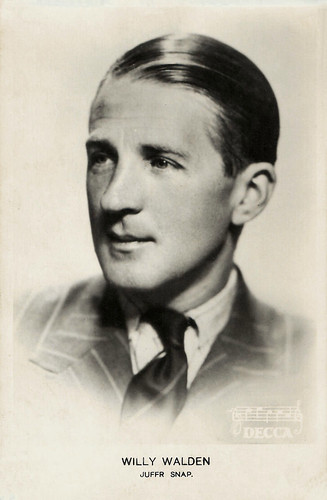
Willy Walden. Dutch postcard by Uitg. Handelsonderneming Triëm, Utrecht. Photo: Decca. Caption: Juffrouw Snap.
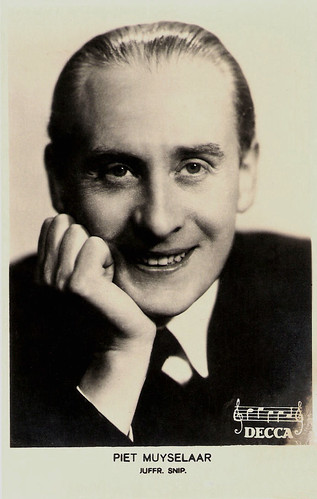
Piet Muyselaar. Dutch postcard by Uitg. Handelsonderneming Triëm, Utrecht. Photo: Decca.
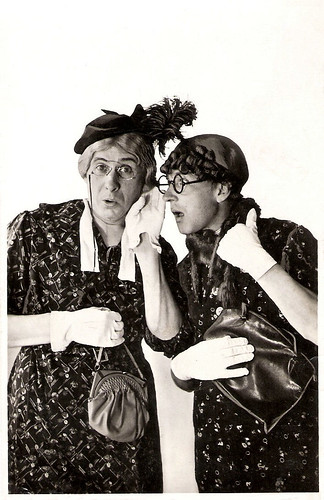
Dutch postcard by L. Nieweg, Amersfoort. Photo: W. Schuurman, Den Haag.
Willy Walden was born as Herman Jan Jacob Kaldewaaij in Amsterdam in 1905. His brother would also become an artist, known as Gerard Walden. During his youth, Willy was a good friend of the later film star Johan(nes) Heesters. In the 1920s, they would appear together in a revue.
Willy Walden made his stage debut in 1927 with the Stapperrevue, in 'Hallo Parijs' (Hello Paris). The stars were singer-comedian Louis Davids and the chansonniére Louisette. For the next years, he often performed together with Davids. During the 1930s, he also performed with another great Dutch comedian of this era, Lou Bandy.
In 1935, he joined the Bouwmeester Revue, famous for its luxurious and spectacular outfits. The star of these revues was the clown Johan Buziau. One of the extras was Piet Muyselaar.
Piet Muyselaar was born in 1899 in Zaandam. He started his stage career at the Henvo-revues in Amsterdam. These revues, under the direction of Henk Voogd (HenVo), were small but popular. After a few years, Muyselaar was discovered by Louis Bouwmeester Jr., the director of the Bouwmeester-revues. He engaged Muyselaar, reportedly while 'he could wear a tuxedo so well'.
Piet Muyselaar was indeed a true gentleman. He started as an extra, but soon his singing talents were discovered. In 1936, he appeared in the revue 'De lachende komedianten' (The laughing comedians), next to Johan Buziau. Another extra was the comedian Willy Walden.
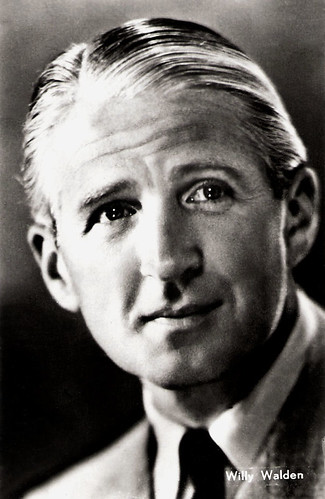
Willy Walden. Dutch collector card.
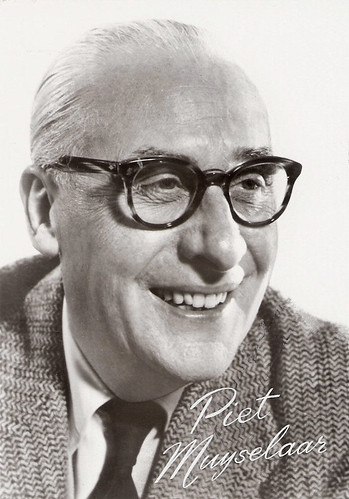
Piet Muyselaar. Dutch promocard.
In 1937, Willy Walden and Piet Muyselaar were brought together as a comic duo by chance. The radio show 'De Bonte Dinsdagavondtrein' (The Colourful Tuesday Night Train) was the most popular Dutch radio program of the era. The show presented amusement and cabaret, and was created by the young revue producer René Sleeswijk.
One legendary night, Sleeswijk had engaged Louis Davids, but the famous entertainer fell ill. Sleeswijk asked Muyselaar and Walden to appear together as a replacement. He also suggested they do the sketch 'Juffrouw Snip en Juffrouw Snap' (Miss Snip and Miss Snap), written by Davids and Jacques van Tol.
At first, Walden and Muyselaar didn’t like to do a drag act and thought the humour was silly, but finally they agreed to do it. Their crosstalks on stage were mostly improvisations. The radio public loved it, and two stars were born. Snip (Walden) & Snap (Muyselaar) became a Dutch phenomenon, and the act would endure for four decades.
The first revue with the ladies Snip and Snap was a promotional tour for radio broadcaster AVRO. After a year, this show evolved into the Snip & Snap Revue, under the direction of René Sleeswijk. In 1938, Snip & Snap made their first recordings, including 'Ja, meneer' (Yes, Sir), a parody on the popular Zarah Leander song, and 'Snap je dat nou, juffrouw Snip' (Do You Understand that, Miss Snip).
During the Second World War, the revues were continued, like most of the Dutch theatre activities. Piet Muyselaar was married to revue actress Serah van der Heijm. She was Jewish, and during the war, the couple divorced formally. Serah was hidden in the house of Piet Muyselaar and survived the Holocaust. After the war, the couple remarried.
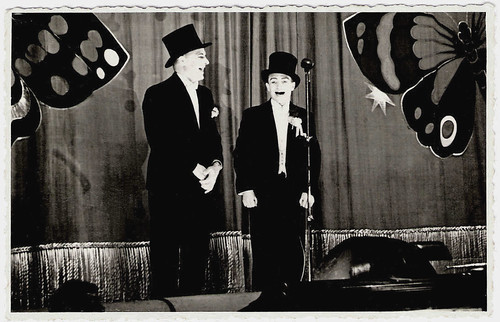
Dutch postcard by S. Oppelaar, Den Haag. On the flip side is written: Snip en Snap Amasitia Brabant feest 15 jaar bestaan (Snip & Snap Amasitia Brabant party 15 year jubilee). However, I'm not sure if this information is correct. Probably Amasitia is misspelt and must be Amicitia, a venue in Landsmeer. And I also wonder if the artists are really Willy Walden and Piet Muyselaar or imitators. If the caption refers to the 15-year jubilee of Snip & Snap, the picture is probably taken in 1952.
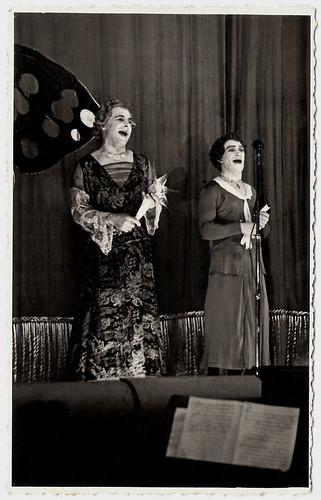
Dutch postcard by S. Oppelaar, Den Haag. Are the artists really Willy Walden and Piet Muyselaar or Snip and Snap imitators?
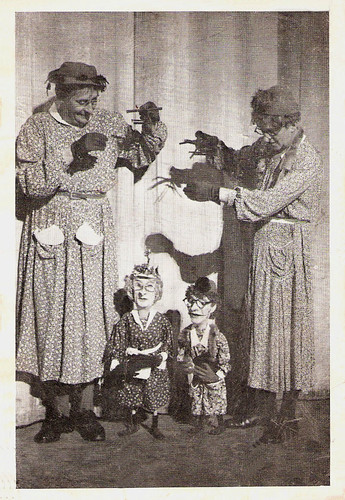
Dutch postcard. Sent by mail in 1955. Publicity still for the Snip and Snap revue 'Hollandse Nieuwe' (Dutch Newest) in Carré, Amsterdam.
In the post-war years, the Snip & Snap revue became immensely popular in the Netherlands. For the Netherlands (our country is small and Calvinistic), those revues were incredible spectacles with beautiful showgirls, an orchestra, big sets and lots of feathers, glitter and glam. Willy Walden developed into a great comedian with superb mimicry and perfect timing. Piet Muyselaar was perfect as his distinguished sidekick who could also sing well.
They starred in a popular film, Sterren stralen overal / Stars Twinkle Everywhere (Gerard Rutten, 1953) with Johan Kaart. The subject was the then-actual item of Dutch emigration to Canada and Australia. For the comic interludes, producer Rudi Meyer engaged Walden and Muyselaar and also the complete cast of the Snip & Snap revue. The film became a success with more than 1 million visitors. More than one tenth of the Dutch population in 1953!
The following year, the Snip & Snap Revue was broadcast on Dutch television. This would become a popular tradition. In 1977, Walden and Muyselaar performed for the last time together. Piet Muyselaar died a half year later, at age 78.
Willy Walden was married twice. His second wife was the Danish actress Aase Rasmussen, who often appeared in the Snip & Snap revues. Willy and Aase presented the radio show 'Raad een lied (of niet)' (Guess the Song (or Not)) till 1987. Then they retired after their 500th show.
Willy Walden wrote his memoirs, published as 'Ja, dat was revue' (Yes, that was revue). He died in 2003 in Bennekom, two weeks before his 98th birthday.
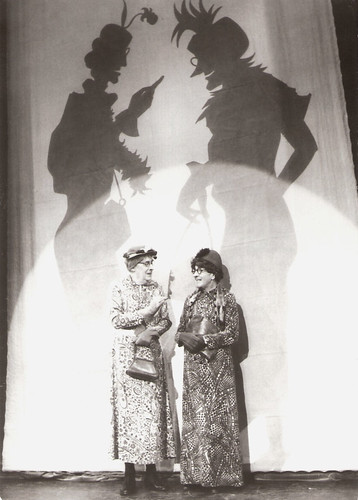
Dutch promocard, ca. 1980.
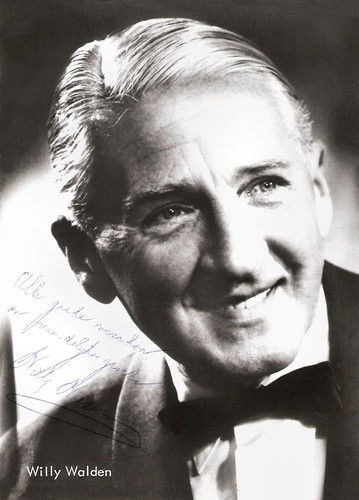
Willy Walden. Dutch autograph card.
Source: Aart Laferte (Aart Laferte’s Sentimental Journey - Now defunct), Coen Verbraak (Vrij Nederland - Dutch), Wikipedia (Dutch) and IMDb
This post was last updated on 28 November 2025.
Willy Walden. Dutch postcard by Uitg. Handelsonderneming Triëm, Utrecht. Photo: Decca. Caption: Juffrouw Snap.
Piet Muyselaar. Dutch postcard by Uitg. Handelsonderneming Triëm, Utrecht. Photo: Decca.
Dutch postcard by L. Nieweg, Amersfoort. Photo: W. Schuurman, Den Haag.
Bouwmeester Revue
Willy Walden was born as Herman Jan Jacob Kaldewaaij in Amsterdam in 1905. His brother would also become an artist, known as Gerard Walden. During his youth, Willy was a good friend of the later film star Johan(nes) Heesters. In the 1920s, they would appear together in a revue.
Willy Walden made his stage debut in 1927 with the Stapperrevue, in 'Hallo Parijs' (Hello Paris). The stars were singer-comedian Louis Davids and the chansonniére Louisette. For the next years, he often performed together with Davids. During the 1930s, he also performed with another great Dutch comedian of this era, Lou Bandy.
In 1935, he joined the Bouwmeester Revue, famous for its luxurious and spectacular outfits. The star of these revues was the clown Johan Buziau. One of the extras was Piet Muyselaar.
Piet Muyselaar was born in 1899 in Zaandam. He started his stage career at the Henvo-revues in Amsterdam. These revues, under the direction of Henk Voogd (HenVo), were small but popular. After a few years, Muyselaar was discovered by Louis Bouwmeester Jr., the director of the Bouwmeester-revues. He engaged Muyselaar, reportedly while 'he could wear a tuxedo so well'.
Piet Muyselaar was indeed a true gentleman. He started as an extra, but soon his singing talents were discovered. In 1936, he appeared in the revue 'De lachende komedianten' (The laughing comedians), next to Johan Buziau. Another extra was the comedian Willy Walden.
Willy Walden. Dutch collector card.
Piet Muyselaar. Dutch promocard.
Drag act
In 1937, Willy Walden and Piet Muyselaar were brought together as a comic duo by chance. The radio show 'De Bonte Dinsdagavondtrein' (The Colourful Tuesday Night Train) was the most popular Dutch radio program of the era. The show presented amusement and cabaret, and was created by the young revue producer René Sleeswijk.
One legendary night, Sleeswijk had engaged Louis Davids, but the famous entertainer fell ill. Sleeswijk asked Muyselaar and Walden to appear together as a replacement. He also suggested they do the sketch 'Juffrouw Snip en Juffrouw Snap' (Miss Snip and Miss Snap), written by Davids and Jacques van Tol.
At first, Walden and Muyselaar didn’t like to do a drag act and thought the humour was silly, but finally they agreed to do it. Their crosstalks on stage were mostly improvisations. The radio public loved it, and two stars were born. Snip (Walden) & Snap (Muyselaar) became a Dutch phenomenon, and the act would endure for four decades.
The first revue with the ladies Snip and Snap was a promotional tour for radio broadcaster AVRO. After a year, this show evolved into the Snip & Snap Revue, under the direction of René Sleeswijk. In 1938, Snip & Snap made their first recordings, including 'Ja, meneer' (Yes, Sir), a parody on the popular Zarah Leander song, and 'Snap je dat nou, juffrouw Snip' (Do You Understand that, Miss Snip).
During the Second World War, the revues were continued, like most of the Dutch theatre activities. Piet Muyselaar was married to revue actress Serah van der Heijm. She was Jewish, and during the war, the couple divorced formally. Serah was hidden in the house of Piet Muyselaar and survived the Holocaust. After the war, the couple remarried.
Dutch postcard by S. Oppelaar, Den Haag. On the flip side is written: Snip en Snap Amasitia Brabant feest 15 jaar bestaan (Snip & Snap Amasitia Brabant party 15 year jubilee). However, I'm not sure if this information is correct. Probably Amasitia is misspelt and must be Amicitia, a venue in Landsmeer. And I also wonder if the artists are really Willy Walden and Piet Muyselaar or imitators. If the caption refers to the 15-year jubilee of Snip & Snap, the picture is probably taken in 1952.
Dutch postcard by S. Oppelaar, Den Haag. Are the artists really Willy Walden and Piet Muyselaar or Snip and Snap imitators?
Dutch postcard. Sent by mail in 1955. Publicity still for the Snip and Snap revue 'Hollandse Nieuwe' (Dutch Newest) in Carré, Amsterdam.
Lots of feathers, glitter and glam
In the post-war years, the Snip & Snap revue became immensely popular in the Netherlands. For the Netherlands (our country is small and Calvinistic), those revues were incredible spectacles with beautiful showgirls, an orchestra, big sets and lots of feathers, glitter and glam. Willy Walden developed into a great comedian with superb mimicry and perfect timing. Piet Muyselaar was perfect as his distinguished sidekick who could also sing well.
They starred in a popular film, Sterren stralen overal / Stars Twinkle Everywhere (Gerard Rutten, 1953) with Johan Kaart. The subject was the then-actual item of Dutch emigration to Canada and Australia. For the comic interludes, producer Rudi Meyer engaged Walden and Muyselaar and also the complete cast of the Snip & Snap revue. The film became a success with more than 1 million visitors. More than one tenth of the Dutch population in 1953!
The following year, the Snip & Snap Revue was broadcast on Dutch television. This would become a popular tradition. In 1977, Walden and Muyselaar performed for the last time together. Piet Muyselaar died a half year later, at age 78.
Willy Walden was married twice. His second wife was the Danish actress Aase Rasmussen, who often appeared in the Snip & Snap revues. Willy and Aase presented the radio show 'Raad een lied (of niet)' (Guess the Song (or Not)) till 1987. Then they retired after their 500th show.
Willy Walden wrote his memoirs, published as 'Ja, dat was revue' (Yes, that was revue). He died in 2003 in Bennekom, two weeks before his 98th birthday.
Dutch promocard, ca. 1980.
Willy Walden. Dutch autograph card.
Source: Aart Laferte (Aart Laferte’s Sentimental Journey - Now defunct), Coen Verbraak (Vrij Nederland - Dutch), Wikipedia (Dutch) and IMDb
This post was last updated on 28 November 2025.

No comments:
Post a Comment