André Roanne (1896-1959) had a long-standing career in French cinema with more than 90 films. He started as a kid actor in short silent films in 1914, and ended with the part of the commissioner in Henri Verneuil's Une manche et la belle / A Kiss for a Killer (1957).
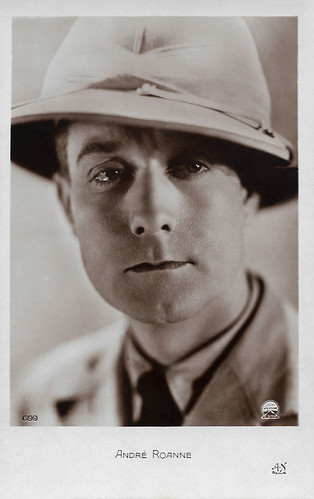
French postcard by A. N. Paris, no. 699. Photo: Paramount.
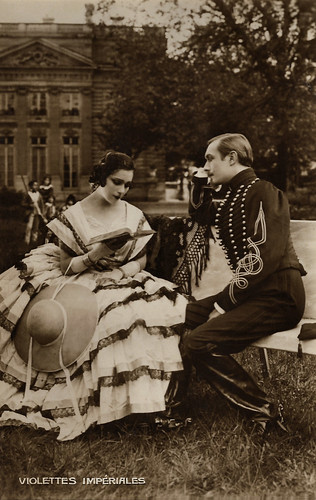
French postcard by Cinémagazine-Edition. Photo: Raquel Meller and André Roanne in Violettes impériales / Imperial Violets (Henry Roussel, 1924).

Vintage postcard. Photo: publicity still for the early sound film Accusée levez-vous / Accused, Stand Up (Maurice Tourneur, 1930).

French postcard by CE (Cinémagazine-Edition), no. 848. Photo: Studio Lorelle, Paris. Publicity still for the early sound film Accusée levez-vous / Accused, Stand Up (Maurice Tourneur, 1930).

French postcard by P.C., Paris, no. 83. Photo: Paramount.
André Roanne was born André Albert Louis Rahou in the 6th arrondissement of Paris in 1896. He made his film debut as a kid in the short and silent Gaumont production Le films de la divette / The Son of La Divette (Gaston Ravel, 1914).
Roanne played in various other Gaumont shorts by Gaston Ravel during the First World War. Even though he wore a big moustache in it, Roanne came to the footlights in a parody of the crime serial, Le pied qui étreint (Jacques Feyder, 1916) opposite Musidora.
After more serious Gaumont productions, Roanne had a major part as Segheir ben Cheikh in Jacques Feyder's lengthy oriental drama L'Atlantide / Missing Husbands (Jacques Feyder, 1921). The leads were Jean Angelo as Captain Morhange and Stacia Napierkowska as the cruel queen Antinea.
L'Atlantide / Missing Husbands (Jacques Feyder, 1921) was partly shot on location in the Sahara. The film was recently restored in its original colourful tinting.
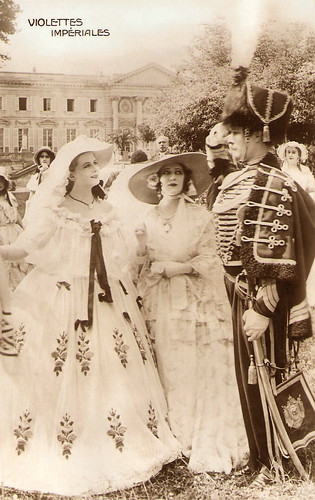
In those years, Roanne often played the jeune premier, both in dramas such as Violettes impériales / Imperial Violets (Henry Roussel, 1924), and comedies such as Chouchou poids plume / Chouchou Featherweight (Gaston Ravel, 1925), which was one of Roanne's first leads.

Spanish collector card (cromo) by Chocolate Salas, Sabadell, no. 5. Photo: Gaumont. André Roanne in the comedy Têtes de femmes, femmes de tête (1916), the debut of the Belgian director Jacques Feyder. Before her leave for the spas, Princess Orazzi (Georgette Faraboni) gives a farewell dinner as a 'bal costumé'. Here she sits left, flirting with the married Lord (André Roanne), who is head-over-heels in love with her. His sister-in-law (Suzanne Delvé), to the right of them, has her head on her shoulders instead, defending her sister.

French postcard by Cinémagazine-Edition. Photo: publicity still for Violettes impériales / Imperial Violets (1924).
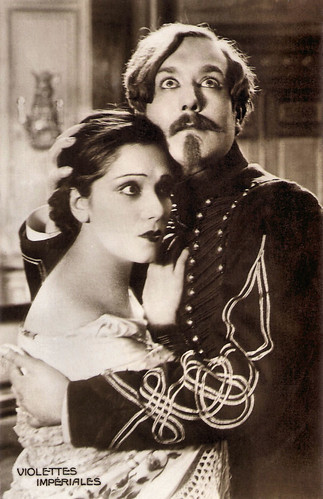
French postcard by Cinémagazine-Edition. Photo: publicity still for Violettes impériales / Imperial Violets (1924) with Raquel Meller.
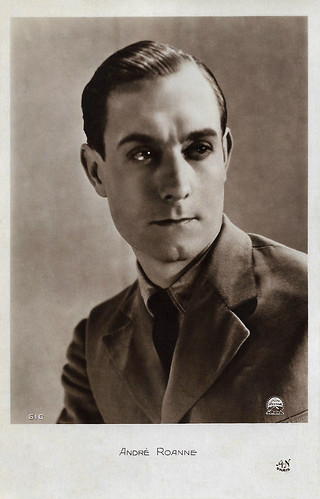
French postcard by A.N., Paris, no. 616. Photo: Films Paramount.
In the mid-1920s, André Roanne played more and more in international coproductions, shot either in France or abroad. Opposite British silent star Betty Balfour, he appeared in La petite bonne du palace / The Little Maid of the Palace (1926) and Cinders (1926), both by Louis Mercanton.
He starred opposite Mady Christians in the Austrian production Die Köningin von Moulin Rouge / The Queen of Moulin Rouge (Robert Wiene, 1926), opposite Liane Haid in the German production Der goldene Abgrund / The Golden Abyss (Mario Bonnard, 1927), and opposite Carmen Boni in Augusto Genina's La storia di una piccola Parigina / The History of a Little Parisian Girl (1928).
In the late 1920s, Roanne was often matched with comédienne Dolly Davis, as in La merveilleuse journée / The Wonderful Day (René Barberis, 1928).
In Berlin, he played opposite Anny Ondra in Sündig und süss / Sinful and Sweet (Carl Lamac, 1929) and Die Kaviarprinzessin / The Caviar Princess (Carl Lamac, 1930), and opposite Louise Brooks in Tagebuch einer Verlorene / Diary of a Lost Girl (1929) by Georg Wilhelm Pabst.
André Roanne's last silent film was Quand nous étions deux / When We Were Two (Léonce Perret, 1930).
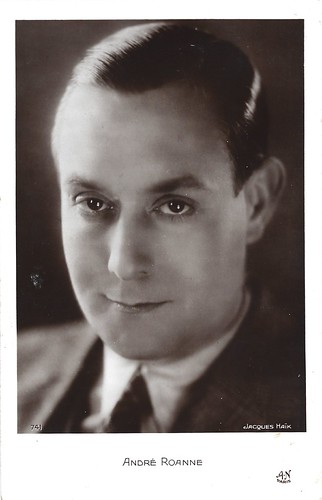
French postcard by A.N. (Armand Noyer), Paris, no. 741. Photo: Jacques Haïk.

French postcard by Cinémagazine-Edition, no. 8. Photo: Franz Lowy.

French postcard by Editions Cinemagazine, Paris, no. 847. Photo: Studio Lorelle, Paris.

French postcard, no. 141. Photo: J. Kruger.
André Roanne made a smooth passage to sound film. He acted in films made at Paramount's new sound studios at Joinville, such as La lettre / The Letter (Louis Mercanton, 1930). He also worked for other companies.
The international element remained with the Franco-German comedy Ma cousine de Varsovie / My cousin of Warsaw (Carmine Gallone, 1931), Calais-Douvres / Calais - Dover (Jean Boyer, Anatole Litvak, 1931) opposite Lilian Harvey, Ne sois pas jalouse / Don't Be Jealous (Augusto Genina, 1931), and Le triangle de feu / The Triangle of Fire (Edmond T. Gréville, Johannes Guter, 1932).
He also collaborated again with Dolly Davis in La chanson des nations / The Song of Nations (Maurice Gleize, Rudolf Meinert, 1931). During the 1930s, Roanne played in many average dramas and comedies, of which most titles are forgotten now. He often performed opposite Fernandel, like in Les cinq sous de Lavarède / The Five Cents of Lavarède (Maurice Cammade, 1939).
During the war years, Roanne did not play in films. After an isolated part in Macadam (Jacques Feyder, 1946), he had major parts again in the 1950s in comedies starring Fernandel, in addition to smaller parts in other films. An unusual role was a Commissioner in the crime film Une manche et la belle / A Kiss for a Killer (Henri Verneuil, 1957), starring Henri Vidal and Mylène Demongeot.
André Roanne died in 1959 in a hospital in Cannes, France. He was 62. He was married to the actress Fernande Albany in 1917, then to Marie-Louise Iribe in 1921, and finally to Geneviève Callix.

French postcard. Photo: Studio Lorelle, Paris.
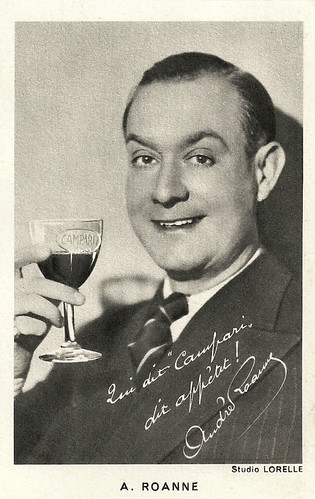
French postcard. Photo: Studio Lorelle. Caption: "Qui dit Campari, dit appétit!"

German postcard by Ross Verlag, no. 6121/2, 1931-1932. Photo: Ufa.
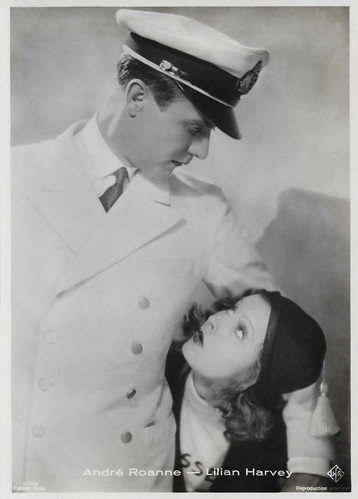
French postcard by Edition Ross, no. 3238. Photo: Ufa. André Roanne and Lilian Harvey in Calais-Douvres / Calais - Dover (Jean Boyer, Anatole Litvak, 1931). This was the alternate-language version of Nie wieder Liebe! / No More Love (Anatole Litvak, 1931).
Sources: Wikipedia (English and French) and IMDb.
French postcard by A. N. Paris, no. 699. Photo: Paramount.
French postcard by Cinémagazine-Edition. Photo: Raquel Meller and André Roanne in Violettes impériales / Imperial Violets (Henry Roussel, 1924).
Vintage postcard. Photo: publicity still for the early sound film Accusée levez-vous / Accused, Stand Up (Maurice Tourneur, 1930).
French postcard by CE (Cinémagazine-Edition), no. 848. Photo: Studio Lorelle, Paris. Publicity still for the early sound film Accusée levez-vous / Accused, Stand Up (Maurice Tourneur, 1930).
French postcard by P.C., Paris, no. 83. Photo: Paramount.
Big moustache
André Roanne was born André Albert Louis Rahou in the 6th arrondissement of Paris in 1896. He made his film debut as a kid in the short and silent Gaumont production Le films de la divette / The Son of La Divette (Gaston Ravel, 1914).
Roanne played in various other Gaumont shorts by Gaston Ravel during the First World War. Even though he wore a big moustache in it, Roanne came to the footlights in a parody of the crime serial, Le pied qui étreint (Jacques Feyder, 1916) opposite Musidora.
After more serious Gaumont productions, Roanne had a major part as Segheir ben Cheikh in Jacques Feyder's lengthy oriental drama L'Atlantide / Missing Husbands (Jacques Feyder, 1921). The leads were Jean Angelo as Captain Morhange and Stacia Napierkowska as the cruel queen Antinea.
L'Atlantide / Missing Husbands (Jacques Feyder, 1921) was partly shot on location in the Sahara. The film was recently restored in its original colourful tinting.
In those years, Roanne often played the jeune premier, both in dramas such as Violettes impériales / Imperial Violets (Henry Roussel, 1924), and comedies such as Chouchou poids plume / Chouchou Featherweight (Gaston Ravel, 1925), which was one of Roanne's first leads.
Spanish collector card (cromo) by Chocolate Salas, Sabadell, no. 5. Photo: Gaumont. André Roanne in the comedy Têtes de femmes, femmes de tête (1916), the debut of the Belgian director Jacques Feyder. Before her leave for the spas, Princess Orazzi (Georgette Faraboni) gives a farewell dinner as a 'bal costumé'. Here she sits left, flirting with the married Lord (André Roanne), who is head-over-heels in love with her. His sister-in-law (Suzanne Delvé), to the right of them, has her head on her shoulders instead, defending her sister.
French postcard by Cinémagazine-Edition. Photo: publicity still for Violettes impériales / Imperial Violets (1924).
French postcard by Cinémagazine-Edition. Photo: publicity still for Violettes impériales / Imperial Violets (1924) with Raquel Meller.
French postcard by A.N., Paris, no. 616. Photo: Films Paramount.
Abroad
In the mid-1920s, André Roanne played more and more in international coproductions, shot either in France or abroad. Opposite British silent star Betty Balfour, he appeared in La petite bonne du palace / The Little Maid of the Palace (1926) and Cinders (1926), both by Louis Mercanton.
He starred opposite Mady Christians in the Austrian production Die Köningin von Moulin Rouge / The Queen of Moulin Rouge (Robert Wiene, 1926), opposite Liane Haid in the German production Der goldene Abgrund / The Golden Abyss (Mario Bonnard, 1927), and opposite Carmen Boni in Augusto Genina's La storia di una piccola Parigina / The History of a Little Parisian Girl (1928).
In the late 1920s, Roanne was often matched with comédienne Dolly Davis, as in La merveilleuse journée / The Wonderful Day (René Barberis, 1928).
In Berlin, he played opposite Anny Ondra in Sündig und süss / Sinful and Sweet (Carl Lamac, 1929) and Die Kaviarprinzessin / The Caviar Princess (Carl Lamac, 1930), and opposite Louise Brooks in Tagebuch einer Verlorene / Diary of a Lost Girl (1929) by Georg Wilhelm Pabst.
André Roanne's last silent film was Quand nous étions deux / When We Were Two (Léonce Perret, 1930).
French postcard by A.N. (Armand Noyer), Paris, no. 741. Photo: Jacques Haïk.
French postcard by Cinémagazine-Edition, no. 8. Photo: Franz Lowy.
French postcard by Editions Cinemagazine, Paris, no. 847. Photo: Studio Lorelle, Paris.
French postcard, no. 141. Photo: J. Kruger.
Fernandel
André Roanne made a smooth passage to sound film. He acted in films made at Paramount's new sound studios at Joinville, such as La lettre / The Letter (Louis Mercanton, 1930). He also worked for other companies.
The international element remained with the Franco-German comedy Ma cousine de Varsovie / My cousin of Warsaw (Carmine Gallone, 1931), Calais-Douvres / Calais - Dover (Jean Boyer, Anatole Litvak, 1931) opposite Lilian Harvey, Ne sois pas jalouse / Don't Be Jealous (Augusto Genina, 1931), and Le triangle de feu / The Triangle of Fire (Edmond T. Gréville, Johannes Guter, 1932).
He also collaborated again with Dolly Davis in La chanson des nations / The Song of Nations (Maurice Gleize, Rudolf Meinert, 1931). During the 1930s, Roanne played in many average dramas and comedies, of which most titles are forgotten now. He often performed opposite Fernandel, like in Les cinq sous de Lavarède / The Five Cents of Lavarède (Maurice Cammade, 1939).
During the war years, Roanne did not play in films. After an isolated part in Macadam (Jacques Feyder, 1946), he had major parts again in the 1950s in comedies starring Fernandel, in addition to smaller parts in other films. An unusual role was a Commissioner in the crime film Une manche et la belle / A Kiss for a Killer (Henri Verneuil, 1957), starring Henri Vidal and Mylène Demongeot.
André Roanne died in 1959 in a hospital in Cannes, France. He was 62. He was married to the actress Fernande Albany in 1917, then to Marie-Louise Iribe in 1921, and finally to Geneviève Callix.
French postcard. Photo: Studio Lorelle, Paris.
French postcard. Photo: Studio Lorelle. Caption: "Qui dit Campari, dit appétit!"
German postcard by Ross Verlag, no. 6121/2, 1931-1932. Photo: Ufa.
French postcard by Edition Ross, no. 3238. Photo: Ufa. André Roanne and Lilian Harvey in Calais-Douvres / Calais - Dover (Jean Boyer, Anatole Litvak, 1931). This was the alternate-language version of Nie wieder Liebe! / No More Love (Anatole Litvak, 1931).
Sources: Wikipedia (English and French) and IMDb.