Showing posts with label Italia Almirante. Show all posts

05 October 2026

L'arzigogolo (1924)

Le Giornate del Cinema Muto is the world’s leading international silent film festival. From 4 to 11 July 2025, EFSP contributor Ivo Blom is in Pordenone in Northern Italy to attend the 44th edition of the festival. And like Ivo, the festival is still going strong. It presents many rediscoveries and highlights. One programme is dedicated to Italian diva Italia Almirante Manzini and includes the wonderful costume drama L'arzigogolo / The Court Jester (Mario Almirante, 1924), which co-starred Annibale Betrone and Oreste Bilancia.

Italia Almirante in L'arzigogolo
Italian postcard by Ed. Ballerini & Fratini, Firenze, no. 526. Photo: Scoffone. Italia Almirante Manzini as Monna Violante in L'arzigogolo (Mario Almirante, 1924).

Italia Almirante in L'arzigogolo
Italian postcard by Ballerini & Fratini, Firenze, no. 528. Photo: Scoffone. Publicity still for L'arzigogolo (Mario Almirante, 1924), with Italia Almirante.
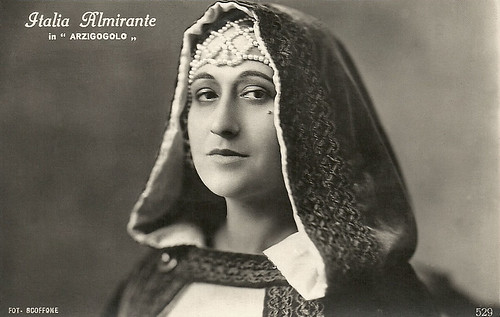
Italia Almirante
Italian postcard by Ballerini & Fratini, Firenze, no. 529. Photo: Scoffone. Italia Almirante in L'Arzigogolo (Mario Almirante, 1924).

Annibale Betrone in L'arzigogolo
Italian postcard by Ed. G.B. Falci, Milano. Photo: Annibale Betrone in L'arzigogolo (Mario Almirante, 1924).

Italia Almirante and Oreste Bilancia in L'arzigogolo
Italian postcard by Ed. G.B. Falci, Milano, no. 197. Photo: publicity still for L'arzigogolo (Mario Almirante, 1924) with Oreste Bilancia and Italia Almirante
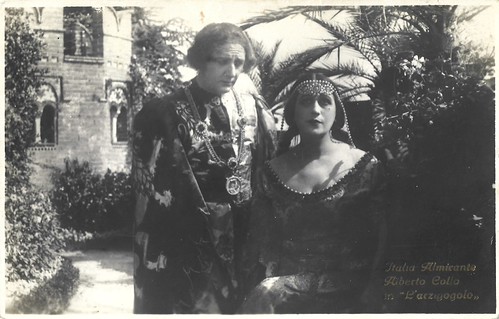
Italia Almirante and Alberto Collo in L'arzigogolo, G.B. Falci
Italian postcard by Ed. G.B. Falci, Milano, no. 198. Italia Almirante Manzini as Monna Violante and Alberto Collo as Count Giano in L'arzigogolo (Mario Almirante, 1924).

Oreste Bilancia in L'arzigogolo (1924)
Italian postcard by Ed. G.B. Falci, no. 202. Photo: Alba Film. Oreste Bilancia in L'arzigogolo (Mario Almirante, 1924).
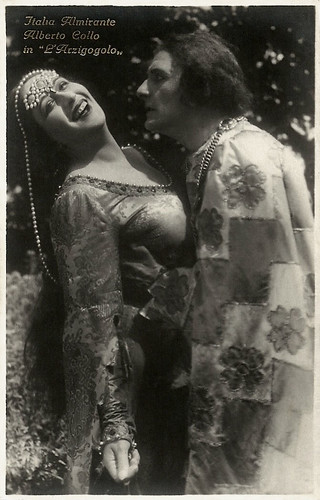
Italia Almirante
Italian postcard by Ed. G.B. Falci, Milano, no. 203. Photo: publicity still for L'arzigogolo (Mario Almirante, 1924) with Italia Almirante and Alberto Collo.
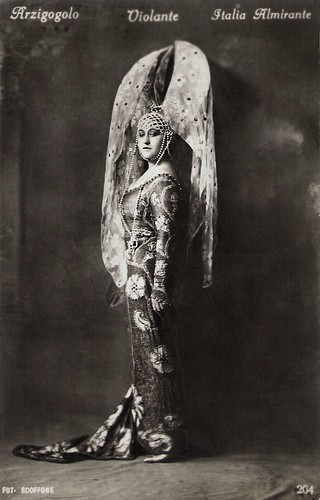
Italia Almirante in L'Arzigogolo
Italian postcard by Ed. G.B. Falci, Milano, no. 204. Photo: publicity still for L'arzigogolo (Mario Almirante, 1924) with Italia Almirante.

Italia Almirante and Alberto Collo in L'arzigogolo
Italian postcard by G.B. Falci, Milano, no. 209. Photo: Italia Almirante and Alberto Collo in L'arzigogolo (Mario Almirante, 1924).

An attractive cast


L'arzigogolo/The Court Jester (Mario Almirante, 1924) has an attractive cast. The leading lady is Italia Almirante Manzini (1890-1941), the cousin of director Mario Almirante. After she had starred in the classic epic Cabiria (1914), Almirante had become one of the divas of the Italian silent cinema.

Her co-star was Annibale Betrone (1883-1950), an important figure in the Italian theatre of the first half of the 20th century. Betrone also appeared in several silent and sound films. Oreste Bilancia (1881-1945) was another well-known face of the Italian silent cinema. As in L'arzigogolo, he mostly worked as a supporting actor, but occasionally played the main character.

Almirante plays Monna Violante, daughter of the Prince of Carpi. Her father forces her to find a husband from among her suitors, or he will lock her up in a convent. Violante chooses Floridoro (Oreste Bilancia), a fat and rich merchant, self-confident and convinced that he is protected by good fortune.

Even after the wedding, however, Violante does not abandon her goal of finding the man of her dreams. On a visit to the castles of the Principality, she meets Count Giano (Alberto Collo), one of her former suitors. Cruelly, she pretends to be willing to give him up. So Giano orders Spallatonda (Annibale Betrone), his court jester and servant, to bring her to him, or Giano will chop his head off.

Spallatonda attempts, but with such vehemence that Violante is sensually disturbed. She even allows herself to be seduced by the jester, who then no longer wants to take her to his master. So Giano will carry out his terrible threat. Violante, however, offers herself for the jester's life, and Giano accepts. Spallatonda will be beheaded in mockery. The jester feigns unconsciousness and hides in Violante's room. When Giano arrives, Spallatonda kills him, and then Monna Violante and Spallatonda flee together.

Arzigogolo
Italian postcard by Ballerini & Fratini, Firenze, no. 205. Photo: Alba Film. An ensemble shot from the opening scene of L'arzigogolo (Mario Almirante, 1924). Caption: The tournament in honour of Violante.

Arzigogolo
Italian postcard by Ballerini & Fratini, Firenze, no. 206. Photo: Alba Film. Italia Almirante as Monna Violante in L'arzigogolo (Mario Almirante, 1924). Caption: Violante leaves for the hunt.

Arzigogolo
Italian postcard by Ballerini & Fratini, Firenze, no. 20?. Photo: Alba Film. Italia Almirante as Monna Violante and Alberto Collo as Count Giano in L'arzigogolo (Mario Almirante, 1924). Caption: Giano tries in vain to conquer Violante's coldness.

Arzigogolo
Italian postcard by Ballerini & Fratini, Firenze, no. 209. Photo: Alba Film. Annibale Betrone as The Jester in L'arzigogolo (Mario Almirante, 1924). Caption: Spallatonda chased from the village.

Arzigogolo 210
Italian postcard by Ballerini & Fratini, Firenze, no. 210. Photo: Alba Film. In the back, Italia Amirante as Monna Violante and Alberto Collo as Count Giano in L'arzigogolo (Mario Almirante, 1924). Caption: The dinner in the house of Count Giano.

Annibale Betrone in L'arzigogolo
Italian postcard by Ballerini & Fratini, Firenze, no. 211. Photo: Alba Film. Publicity still for L'arzigogolo (Mario Almirante, 1924). Caption: The arrival of the buffoon at the castle of Giano.

Arzigogolo
Italian postcard by Ballerini & Fratini, Firenze, no. 214. Photo: Alba Film. Annibale Betrone as The Jester and Alberto Collo as Giano in L'arzigogolo (Mario Almirante, 1924). Caption: Giano to the Jester: ... if you don't manage to convince Violante of my love, I will have your head chopped off!

Italia Almirante and Annibale Betrone in L'arzigogolo
Italian postcard by Ballerini & Fratini, Firenze, no. 216. Photo: Alba Film. Italia Almirante and Annibale Betrone in L'arzigogolo (Mario Almirante, 1924). Caption: In the calm moonlight, the buffoon sees Violante and declares her his love.

Classic love story


L'arzigogolo is a classic love story in the vein of William Shakespeare's 'Romeo and Juliet'. Director Mario Almirante wrote the script originally in French. Almirante directed such films as Il fornaretto di Venezia / The Baker Boy of Venice (1923) and L'ombra / The Shadow (1923). He wrote a liberal adaptation of a popular 1922 Sem Benelli's 'comic poem in four acts'. The Italian playwright, essayist and librettist Benelli provided the texts for several noted Italian operas, including Italo Montemezzi's 'L'amore dei tre re' and 'L'incantesimo', and Umberto Giordano's 'La cena delle beffe', based on Benelli's own play of the same title.

The sets for L'arzigogolo were designed by Luigi Sapelli, better known as Caramba, who specialised in costume dramas. The Director of photography was Ubaldo Arata, who was one of Italy's most famous cinematographers.

After the premiere, the critic of Il Roma della Domenica wrote: "L'arzigogolo did not delude the high expectations, because it is the result on the screen of an original and interesting work. Therefore the poet (Sem Benelli) can be satisfied."

The critic of La Vita Cinematografica adds: "We never saw Italia Almirante so perfect in place. She exquisitely figures as an intelligent woman. Her plastic beauty, preserved by exuberant costumes, makes the complex and enigmatic character of Violante more fascinating and suggestive."

Società Anonima Stefano Pittaluga distributed the film. L'arzigogolo became one of the most successful films in Italy in 1924. The most popular film that year was Die Nibelungen, a two-part German fantasy film by Fritz Lang. L'arzigogolo is now in the public domain.
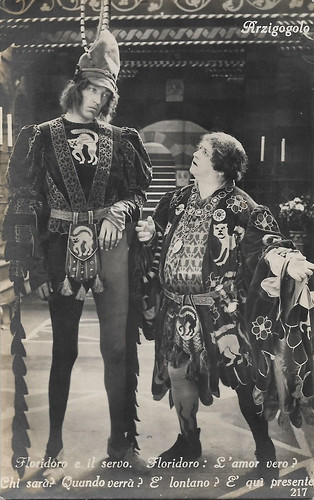
Arzigogolo
Italian postcard by Ballerini & Fratini, Firenze, no. 217. Photo: Alba Film. Oreste Bilancia as Floridoro in L'arzigogolo (Mario Almirante, 1924). Caption: Floridoro and the servant. Floridoro: Her true love? Who is it? When will he come? Is he far away? Is he here?
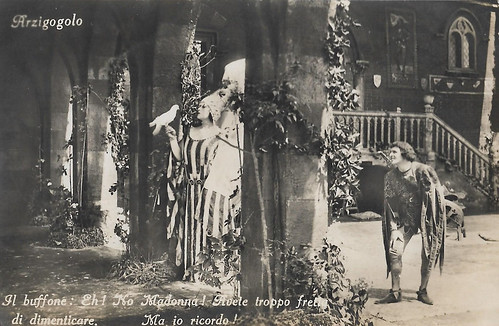
Arzigogolo
Italian postcard by Ballerini & Fratini, Firenze, no. 218 or 219. Photo: Alba Film. Annibale Betrone as The Jester and Italia Almirante Manzini as Monna Violante in L'arzigogolo (Mario Almirante, 1924). Caption: The Jester: What! No Milady! You have too great haste to forget. But I remember!
Arzigogolo
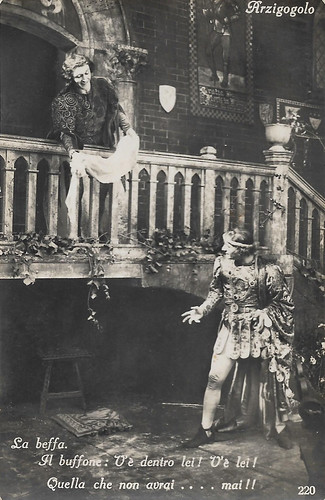
Italian postcard by Ballerini & Fratini, Firenze, no. 220. Photo: Alba Film. Annibale Betrone as The Jester and Alberto Collo as Giano in L'arzigogolo (Mario Almirante, 1924). Caption: The mockery. The Jester: She is in this, it is hers. She whom you'll never have... never!

Arzigogolo
Italian postcard by Ballerini & Fratini, Firenze, no. 221. Photo: Alba Film. Italia Almirante as Monna Violante, Annibale Betrone as The Jester, Oreste Bilancia as Floridoro, and Alberto Collo as Giano in L'arzigogolo (Mario Almirante, 1924). Caption: The Jester rebels against Giano and defies death out of love for Violante.

Arzigogolo
Italian postcard by Ballerini & Fratini, Firenze, no. 222. Photo: Alba Film. Annibale Betrone as The Jester in L'arzigogolo (Mario Almirante, 1924). Caption: The Jester in prison.
Arzigogolo
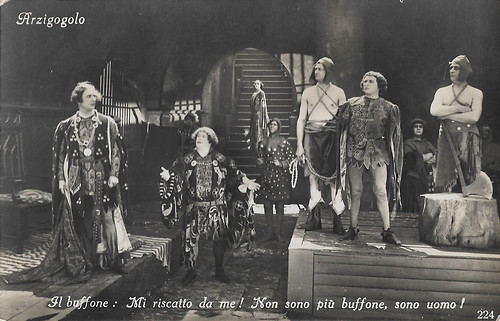
Italian postcard by Ballerini & Fratini, Firenze, no. 224. Photo: Alba Film. Annibale Betrone as The Jester, Oreste Bilancia as Floridoro, and Alberto Collo as Giano in L'arzigogolo (Mario Almirante, 1924). Caption: The Jester: I redeem myself! I am no longer a jester, but a man!

Arzigogolo
Italian postcard by Ballerini & Fratini, Firenze, no. 226. Photo: Alba Film. Annibale Betrone as The Jester, Oreste Bilancia as Floridoro, and Alberto Collo as Giano in L'arzigogolo (Mario Almirante, 1924). Caption: Dead!

Italia Almirante in L'arzigogolo
Italian postcard by Ballerini & Fratini, Firenze, no. 227. Photo: Alba Film. Annibale Betrone and Italia Almirante in L'arzigogolo (Mario Almirante, 1924). Caption: True love...attained in vain... He is dead!

Annibale Betrone and Oreste Bilancia in L'arzigogolo
Italian postcard by Ballerini & Fratini, Firenze, no. 228. Photo: Alba Film. Annibale Betrone and Oreste Bilancia in L'arzigogolo (Mario Almirante, 1924). Caption: The buffoon resurrected to the great terror of Floridoro.

Arzigogolo
Italian postcard by Ballerini & Fratini, Firenze, no. 229. Photo: Alba Film. Oreste Bilancia as Floridoro, and Alberto Collo as Giano in L'arzigogolo (Mario Almirante, 1924). Caption: The Death of Giano.
Arzigogolo
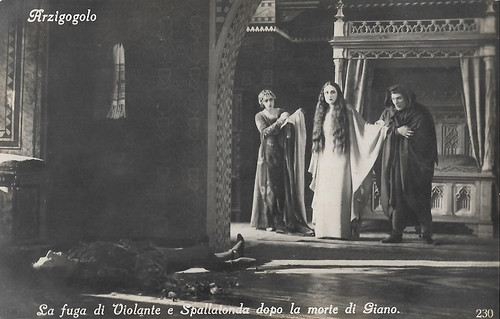
Italian postcard by Ballerini & Fratini, Firenze, no. 230. Photo: Alba Film. Italia Almirante Manzini as Monna Violante, Annibale Betrone as The Jester, and Alberto Collo as Giano in L'arzigogolo (Mario Almirante, 1924). Caption: The flight of Violante and Spallatonda after Giano's death.

Sources: Vittorio Martinelli (Il Cinema Muto Italiano 1923-1931 - Italian), Wikipedia (Italian and Cymraeg) and IMDb.

06 October 2025

Zingari (1920)

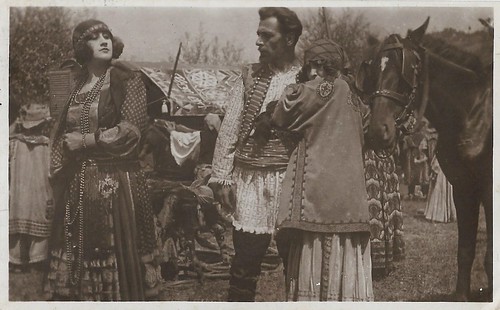
Le Giornate del Cinema Muto is the world’s leading international silent film festival. From 4 to 11 July 2025, EFSP contributor Ivo Blom is in Pordenone in Northern Italy to attend the 44th edition of the festival. And like Ivo, the festival is still going strong and presents many rediscoveries and highlights. Gabriele Perrone, Paolo Tosini, and Marco Grifo curated a programme on Italian diva Italia Almirante Manzini. Tonight, her film Zingari / The Gypsy Feud (1920) will be presented, accompanied by Günter Buchwald, Elizabeth-Jane Baldry and Frank Bockius. Italia Almirante stars as Vielka, the daughter of the King of the gypsies. The film was directed by her husband, Mario Almirante, for the Fert Film studio.

Italia Almirante Manzini in Zingari (1920)
Italian postcard for Zingari (Mario Almirante, 1920), starring Italia Almirante.

Italia Almirante and Amleto Novelli in Zingari (1920)
Italian postcard for Zingari (Mario Almirante, 1920). Caption: The first encounter between Vielka (Italia Almirante) and Sindel (Amleto Novelli). The woman Novelli carries may be Rosetta Solari, who plays Radscia.

Italia Almirante Manzini and Amleto Novelli in Zingari (1920)
Italian postcard for Zingari (Mario Almirante, 1920). Caption: Vielka challenges Sindel. The second woman may be Rosetta Solari.

A warm, vigorous and deeply human performance


In Zingari / The Gypsy Feud (1920), Old Jammadar (Alfonso Cassini), King of the gypsies, wants to marry his daughter Vielka (Italia Almirante) to Gudlo (Franz Sala), a member of an important and valuable clan, but also a violent and ambitious man.

Vielka, instead, loves the head of another clan, Sindel (Amleto Novelli). When Jammadar dies, Vielka is crowned Queen of the gypsies. The proud Sindel distances himself from the woman out of fear of becoming a prince's consort. The perfidious Gudlo wounds and betrays Sindel, but Vielka renounces her crown and thus regains Sindel's love, who chases Gudlo from the clan.

Zingari was produced by Fert Film and distributed by Pittaluga. The film was scripted and directed by Mario Almirante and photographed by Ubaldo Arata. It was one of Arata's first films. The active cinematographer did over 100 films between 1918 and 1947, including Roberto Rossellini's Roma città aperta / Rome, Open City (1945).

The film premiered on 27 December 1920. At the time, critics wrote mixed reviews. The Neapolitan Cine-Fono wrote that despite the luxurious mise-en-scene, the script and direction were not top-notch, while Italia Almirante was beautiful but too external and lacking psychology, and her co-star, Amleto Novelli, was straight-jacked in his acting.

Instead, the Roman journal Febo wrote that despite well-known romantic elements, the story was solid, convincing and at times original. Also, the mise-en-scène was impeccable, faithful to the interiors, and picturesque for the exteriors, while the film technology used showed modernity and innovation. Among the performances of the actors, in particular that of Italia Almirante was singled out as warm, vigorous and deeply human.

Italia Almirante Manzini and Alfonso Cassini in Zingari (1920)
Italian postcard for Zingari (Mario Almirante, 1920). Caption: Jammadar (Alfonso Cassini) shouts to Vielka (Italia Almirante): I will crush you!

Italia Almirante Manzini, Alfonso Cassini and Franz Sala in Zingari (1920)
Italian postcard for Zingari (Mario Almirante, 1920). Caption: Jammadar forces Vielka to marry Gudlo.

Italia Almirante Manzini in Zingari (1920)
Italian postcard for Zingari (Mario Almirante, 1920). Caption: Vielka returns to the gypsy wagon.

Italia Almirante Manzini and Amleto Novelli in Zingari (1920)
Italian postcard for Zingari (Mario Almirante, 1920). Caption: Vielka (Italia Almirante) tends to the wounded Sindel (Amleto Novelli) in her wagon.

Zingari (1920)
Italian postcard for Zingari (Mario Almirante, 1920). Caption: The gypsy camp.

Italia Almirante Manzini in Zingari (1920)
Publicity still for Le Giornate del Cinema Muto 2025. Credits: CSC - Cineteca Nazionale. Italia Almirante Manzini in Zingari (Mario Almirante, 1920).

Sources: Vittorio Martinelli (Il cinema muto italiano 1920 - Italian), Wikipedia (Italian and English), and IMDb.

25 June 2023

One Hundred Years Ago: L’ombra (1923)

Now in its 20th anniversary year, the One Hundred Years Ago section at Il Cinema Ritrovato continues its annual exploration of a single year in cinema’s rich and varied history with a selection of enduring classics and archival rarities as well as thought-provoking documentaries from 1923. The Italian silent melodrama L'ombra/The Shadow (1923) was one of the final Diva films in which Italia Almirante (Manzini) was directed by her husband, Mario Almirante for Alba Film. The film, based on a play by Dario Niccodemi, co-starred Alberto Collo, Liliana Ardea, Oreste Bilancia, Andrea Habay and Vittorio Pieri. EFSP's Ivo Blom wrote for the festival catalogue about the film.

L'Ombra 3
Italian postcard by Ed. Ballerini & Fratini, Firenze, no. 231. Photo: Alba Film. Publicity still for L'ombra (Mario Almirante, 1923). Caption: "In the garden of the villa of Gerardo and Berta".

Italia Almirante Manzini, Alberto Collo and Vittorio Pieri in L'ombra (1923)
Italian postcard by Ed. Ballerini & Fratini, Firenze, no. 232. Photo: Alba Film. Italia Almirante Manzini as Berta, Alberto Collo as Gerardo and Vittorio Pieri as Berta's godfather Michele in L'ombra (Mario Almirante, 1923). Caption: "Berta: Don't look, godfather! These are matters which don't concern you."

L'Ombra 5
Italian postcard by Ed. Ballerini & Fratini, Firenze, no. 233. Photo: Alba Film. Publicity still for L'ombra (Mario Almirante). Caption: Morning strolls.

L'Ombra 4
Italian postcard by Ed. Ballerini & Fratini, Firenze, no. 23?. Photo: Alba Film. Publicity still for L'ombra (Mario Almirante, 1923) with Liliana Ardea as Elena and Alberto Collo as Gerardo. Caption: "Berta's little friend and the daily painting lesson".

L'Ombra 2
Italian postcard by Ed. Ballerini & Fratini, Firenze, no. 235. Photo: Alba Film. Publicity still for L'ombra (Mario Almirante, 1923), with Italia Almirante Manzini as Berta and Vittorio Pieri as Berta's godfather Michele. Caption: "Berta: Beware of the thorns, but don't ruin my roses".

L'Ombra 6
Italian postcard by Ed. Ballerini & Fratini, Firenze, no. 236. Photo: Alba Film. Publicity still for L'ombra (Mario Almirante, 1923) with Italia Almirante as Berta and Liliana Ardea as Elena. Caption: "Confidential matters".

Life between enduring her misfortune and the illusion of love


Italia Almirante Manzini plays in L'ombra/The Shadow (1923) the beautiful young Berta Trégner. In an accident, Berta is paralysed. She then spends her life between enduring her misfortune and the illusion that her husband Gerardo (Alberto Collo) continues to love her.

After six years, however, almost miraculously, she recovers and discovers that Gerardo has created another family with Elena (Liliana Ardea), her best friend and that they also have a child.

Distraught, she runs away from home. The situation is saved by Michele (Vittorio Pieri), Berta's godfather, who manages to discover that Elena has reconnected with her ex-husband Alberto, and informs Gerardo, who, having rejected the unworthy Elena, can return to Berta to find love again.

L'ombra/The Shadow (1923) was scripted by director Mario Almirante himself. It is an adaptation of the 1915 play of the same name written by Dario Niccodemi. It was first performed at Milan's Teatro Manzoni in 1916 by the Compagnia Giannina Chiantoni, Irma Gramatica and Ernesto Sabbatini.

The first film adaptation was L'ombra/The Shadow (1917) by Mario Caserini starring Vittoria Lepanto. In 1954, a new adaptation was made by Giorgio Bianchi, L'ombra/The Shadow, starring Märta Torén and Pierre Cressoy.

L'Ombra 7
Italian postcard by Ed. Ballerini & Fratini, Firenze, no. 238. Photo: Alba Film. Publicity still for L'ombra (Mario Almirante, 1923). Caption: "Struck by paralysis, Berta (Italia Almirante) passed her days in tranquillity and suffering." The nurse was played by Rita D'Harcourt.

L'Ombra 9
Italian postcard by Ed. Ballerini & Fratini, Firenze, no. 239. Photo: Alba Film. Publicity still for L'ombra (Mario Almirante, 1923). Caption: "Berta: Why, Gerardo, don't you recognize Elena? My little Elena?" Italia Almirante as Berta, Alberto Collo as Gerardo and Liliana Ardea as Elena.

Alberto Collo and Italia Almirante in L'ombra (1923)
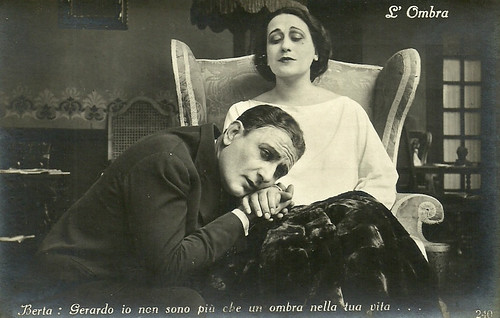
Italian postcard by Ed. Ballerini & Fratini, Firenze, no. 240. Photo: Alba Film. Alberto Collo and Italia Almirante in L'ombra (Mario Almirante, 1923). Caption: "Berta: Gerardo, I am no more than a shadow in your life...."

L'ombra 11
Italian postcard by Ed. Ballerini & Fratini, Firenze, no. 241. Photo: Alba Film. Publicity still for L'ombra (Mario Almirante, 1923). Caption: "The sudden healing. Berta: Doctor! It seems as if I am tall... tall. My head spins! I am afraid!" The doctor was played by Domenico Marverti.

L'ombra 10
Italian postcard by Ed. Ballerini & Fratini, Firenze, no. 242. Photo: Alba Film. Alberto Collo as Gerardo and Liliana Ardea as Elena in L'ombra (Mario Almirante, 1923). Caption: "In the new house of Gerardo. Elena: He is your real masterpiece!".

A titanic struggle between opposing feelings and erupting passions


How did the critics judge the film hundred years ago? In La rivista cinematografica, 'Gulliver' writes on 25 April 1924: "The drama unfolds intensely and collectedly in the soul of the protagonist. Everything is contained within her, a titanic struggle between opposing feelings and erupting passions, without, however, addressing ideological and moral problems. If these erupt suddenly and vehemently, without preparation and almost without entanglement, it is because of that strange game that an author sometimes enjoys for a sense of acrobatic and theatrical virtuosity [...]. The theatrical intricacy, which in many works extends from the first to the last scene with progressive potential, here is muted and only appears in the evolution of the woman's consequent soul, in its passages, nuances and, we would say, in the foreboding of the obscure immanence of destiny [...].

This having wanted to develop a superior concept evidently creates imbalances between the idea, abstraction and reality, matter: imbalances that remain in the cinema, even though it possesses greater means of implementation and greater possibilities so that the realistic event suffocates the symbolic meaning that we, unlike other writers, wanted to emphasise for a greater understanding and penetration of the work, also because we followed the comments of the public that crowded Ghersi, comments based on exteriority and impression. Instead, how much understanding would be needed and how much less levity of judgement, for a just appreciation of art. If the public reads us, they can profit well from these notes."

In the catalogue of Il Cinema Ritrovato 2023, Ivo Blom writes: "The film partly re-enacts the silent parable of people suffering from paralysis who regain their strength in a miraculous way, as in The Home Maker (King Baggot, 1925) or Lucky Star (Frank Borzage, 1929). Even more, the film follows the parables of silent films about the blind who, once they regain their sight, discover a bitter reality, e.g. that their friend, husband or wife no longer feels love for them, as for instance in the French film, Mieux valait la nuit (Éclair, 1911) with Cécile Guyon, or the Danish film Hjertestorme (August Blom, 1916) with Clara Wieth."

In another article, 'Italia Almirante e le arti', Blom observes: "While Niccodemi's text begins in medias res. Berta is already paralysed, 'in a statue-like immobility' (again a statuesque, sculptural quality, as in another film with Italia Almirante: La statua di carne), the film instead shows what precedes Berta's paralysis. [...] In the prologue, we see the happiness of Gerardo and Berta. He is an accomplished painter, and she is a tennis player, living in an elegant house. In a close-up, we see Gerardo in front of Berta's painted portrait. The portrait expresses the man's love for his wife, but it is also the face of the film's star, Italia Almirante Manzini, who thus confirms her status, as with the portrait in La statua di carne.

We see the latter only in passing, briefly, but it stands in contrast to the later portraits in the film. We then witness Gerardo's painting lesson to Elena, Berta's coquettish young niece. In the film, the camera pans from left to right, while in the film's promotional postcard depicting this scene, we have a visual synthesis. The captions ironise Elena's crush on Gerardo. Later, Elena marries her young lover and goes on a trip. It is then that Berta suffers from paralysis. Very beautiful at this point in the film is the play with a large mirror, raised so that Berta can no longer observe herself. At first, Gerardo takes care of his wife and feels guilty. Berta says she now feels like a shadow, thus establishing an explicit reference to the film's title. As soon as Elena returns, tired of the groom, Gerardo secretly starts an affair with her. From the two a child is born: the son Berta could not give him."

L'ombra 12
Italian postcard by Ed. Ballerini & Fratini, Firenze, no. 243. Photo: Alba Film. Italia Almirante as Berta in L'ombra (Mario Almirante, 1923). Caption: "Berta: I am a friend, a relative of His Lordship. I want to give him a surprise."

Italia Almirante, Liliana Ardea and Alberto Collo in L'ombra (1923)
Italian postcard by Ed. Ballerini & Fratini, Firenze, no. 244. Photo: Alba Film. Italia Almirante as Berta, Liliana Ardea as Elena and Alberto Collo as Gerardo in L'ombra (Mario Almirante, 1923). Caption: "Berta [to Gerardo]: You shouldn't have done this! Raise another family... another home!".

L'ombra 14
Italian postcard by Ed. Ballerini & Fratini, Firenze, no. 245. Photo: Alba Film. Publicity still for L'ombra (Mario Almirante, 1923). Caption: "Berta: Lord... return me my illness! Return me my cross, it felt so good, so good!"

L'Ombra 15
Italian postcard by Ed. Ballerini & Fratini, Firenze, no. 246. Photo: Alba Film. Publicity still for L'ombra (Mario Almirante, 1923). Caption: "Berta: Doctor, this is a new case, very strange! A sick person who dies of her own healing." Italia Almirante as Berta, in the back Alberto Collo as Gerardo, who repents his bigamy. Extreme left godfather Michele (Vittorio Pieri), and next to him was the doctor (Domenico Marverti).

L'ombra 16
Italian postcard by Ed. Ballerini & Fratini, Firenze, no. 247. Photo: Alba Film. Italia Almirante as Berta and Alberto Collo as Gerardo in L'ombra (Mario Almirante, 1923). Caption: Berta: "The shadow is receding... disappearing from your life."

L'Ombra
Italian postcard by Ed. Ballerini & Fratini, Firenze, no. 248. Photo: Alba Film. Publicity still for L'ombra (Mario Almirante, 1923), with Italia Almirante as Berta and Alberto Collo as Gerardo. Caption: "Berta: Poor little one! He won't realize to have changed mother." This image represents the final scene of the film.

Sources: Ivo Blom (Italia Almirante e le arti: Relazioni pittoriche, scultoree e teatrali in Femmina, La statua di carne e L’ombra‘, in: Alessandro Faccioli, Elena Mosconi eds., Divine. Nuove prospettive sul cinema muto italiano), Il Cinema Ritrovato, Wikipedia (Italian) and IMDb.