Temperamental and beautiful Viviane Romance (1912-1991) played dozens of flirts, femme fatales and fallen women in black-and-white classics of the French cinema of the 1930s and 1940s.

French postcard by Viny, no. 12. Photo: Paris Film. Publicity still for Naples au baiser de feu / Naples Under the Kiss of Fire (Augusto Genina, 1937).

French postcard by Editions P.I., Paris, no. 13.

French postcard by Editions P.I., Paris, no. 2. Publicity still for Carmen (Christian-Jaque, 1944).

French postcard by Ed. Chantal, Rueil, no. 24. Photo: Discina. Publicity still for Carmen (Christian-Jaque, 1944).
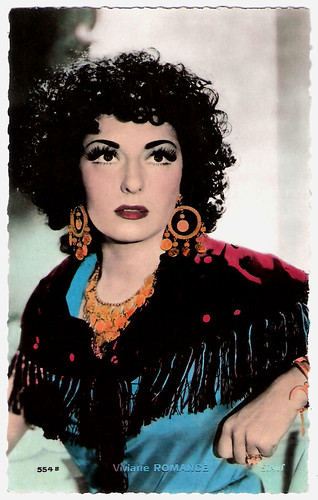
French postcard by Ed. Chantal, Rueil, no. 554 B. Photo: Sirius. Publicity still for Cartacalha, reine des gitans / Cartacalha (Léon Mathot, 1942).
Viviane Romance was born Pauline Arlette Ortmans in Roubaix, France, in 1912.
At 13, she made her debut as a bit player at the Théâtre Sarah-Bernhardt, then did some modelling work. At 14, she joined the troupe at the Moulin Rouge in Paris. She also performed the 'Can-can' at the legendary Parisian nightclub Bal Tabarin. In 1930, Viviane was elected Miss Paris, and caused a small scandal because she had a child.
She made her film debut with a cameo role in Paris-girls (Henry Roussell, 1929) with Fernand Fabre. She appeared in several films over the next few years, including La Chienne / The Bitch (Jean Renoir, 1931), Liliom (Fritz Lang, 1934), and Zouzou (Marc Allégret, 1934). Opposite Jean Gabin, she played in La Bandera / The Bandage (Julien Duvivier, 1935).
Princesse Tam Tam / Princess Tam Tam (Edmond T. Gréville, 1935) was a French adaptation of G.B. Shaw's Pygmalion with Josephine Baker as a beautiful native African woman, who is ‘westernised’ by a handsome writer and then introduced to high society as an exotic princess.
Viviane Romance made a strong impression in La belle équipe / The Good Crew (Julien Duvivier, 1936) as the sensual Gina who plots the destruction of Jean Gabin’s character because he refuses to make love to her. La belle équipe constituted a milestone in French Cinema. From this time on, Romance was regarded as one of France's leading film actresses and a box-office draw.

French postcard by Editions P.I., Paris, no. 126. Photo: Discina.

French postcard by SERP, Paris, no. 41. Photo: Studio Harcourt.
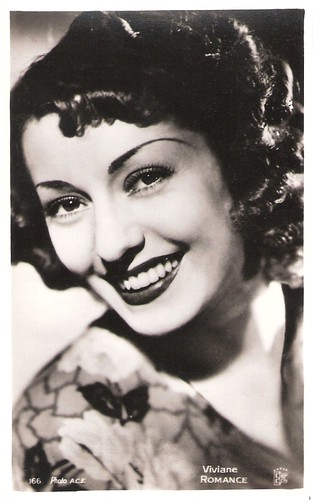
French postcard by EPC, no. 166. Photo: A.C.E.

French postcard by Editions P.I., Paris, no. 13.
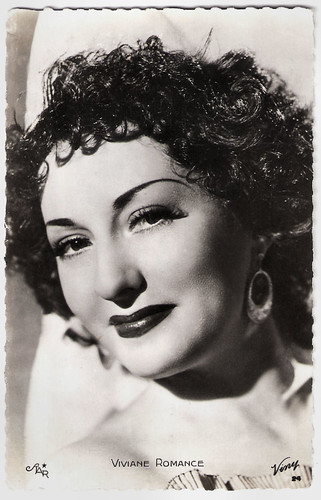
French postcard by Viny, no. 24. Photo: Star.
Viviane Romance reportedly was offered a Hollywood film contract, but she rejected it. She preferred to make films in her native France, and many noted directors asked her to. However, for many years, she resided in Italy, where she made several Italian-language films in the 1950s.
Throughout her career, she played dozens of exotic femme fatales, courtesans, vamps and fallen women with hearts of gold. Among her best films during the occupation of France were Angélica / Blood Red Rose (Jean Choux, 1940), and the excellent melodrama Vénus aveugle / Blind Venus (Abel Gance, 1941). She also starred in the title role of Carmen (Christian-Jaque, 1944), a French-Italian version of Georges Bizet's famous opera.
After the war, she returned with the dark thriller Panique / Panic (Julien Duvivier, 1946) based on a novel by Georges Siménon, Passion (Georges Lampin, 1951) and the anthology film Les Sept péchés capitaux / The Seven Deadly Sins (Yves Allégret, 1952). Her last film from this period was Pitié pour les vamps / Pity for the Vamps (Jean Josipovici, 1956).
She went into production with her then-husband Clément Duhour, but without much success. After 1956, her acting roles were few, and she suffered considerable financial hardship. In 1962, she starred with Jean Gabin in the suspense film Mélodie en sous-sol / Any Number Can Win (Henri Verneuil, 1962).
Eventually, she reappeared on television in the early 1970s. In 1973, she made one final film appearance in the thriller Nada / The Nada Gang (Claude Chabrol, 1974), at the special request of director Claude Chabrol. It was her 65th film. She published her memoirs, 'Romantique à mourir' in 1986. Viviane Romance died of cancer in 1991 in Nice, France. She had married and divorced three times. Her spouses were actor Georges Flamant, actor Clément Duhour and director Jean Josipovici.

French collector card by Massilia. Photo: Paris Film Production. Publicity still for Naples au baiser de feu / Naples Under the Kiss of Fire (Augusto Genina, 1937).

French postcard by Editions P.I., Paris, no. 37. Sent by mail in 1944. Photo: Star.
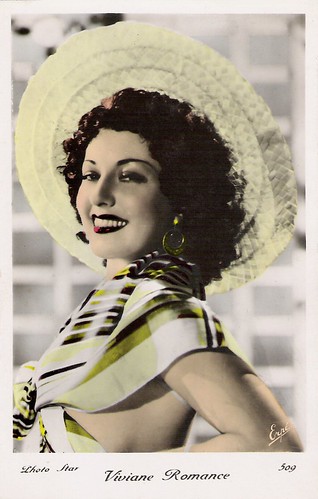
French postcard by Erpé, no. 509. Photo: Star.
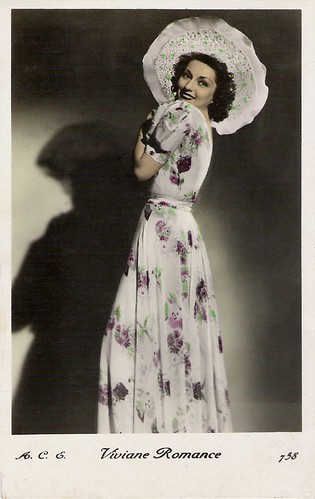
French postcard by A.C.E., no. 138.

Vintage collector card, no. A 62.

French postcard by Edit. Chantal, Rueil, no. 554-S. Photo: R.A.C. Publicity still for Le joueur / The Player (Gerhard Lamprecht, Louis Daquin, 1938).
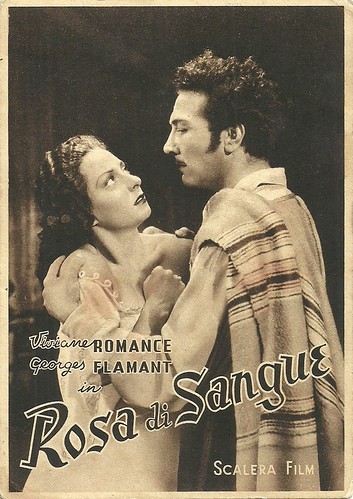
Italian postcard. Photo: Scalera Film. Viviane Romance and Georges Flamant in Rose di sangue / Angélica (Jean Choux, 1939), based on the novel 'Les compagnons d'Ulysse' by Pierre Benoît.

Italian postcard. Photo: Scalera Film. Viviane Romance in the Franco-Italian co-production Rosa di Sangue / Angélica (Jean Choux, 1940).
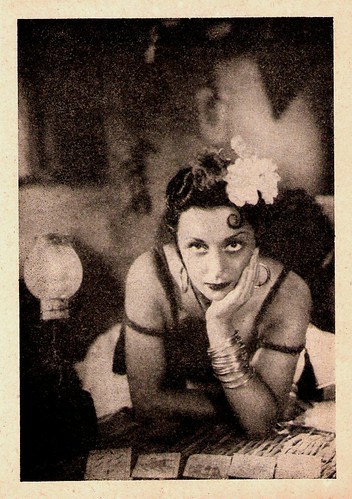
German postcard. Photo: IFA-Film. Publicity still for Carmen (Christian-Jaque, 1945).
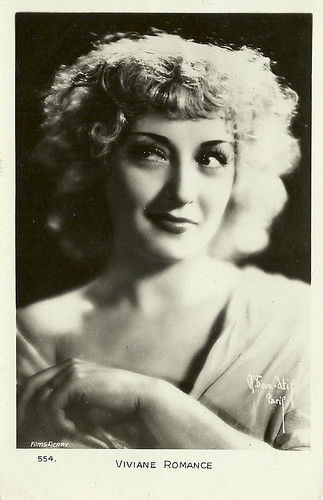
French postcard, no. 554. Photo: Films Derby. Collection: Didier Hanson.

French postcard by Editions du Globe, Paris, no. 161. Photo: Studio Harcourt.
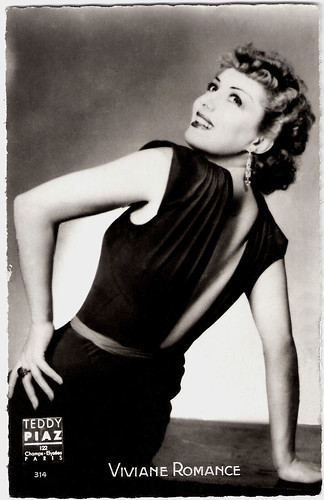
French postcard by Editions O.P., Paris, no. 314. Photo: Teddy Piaz.
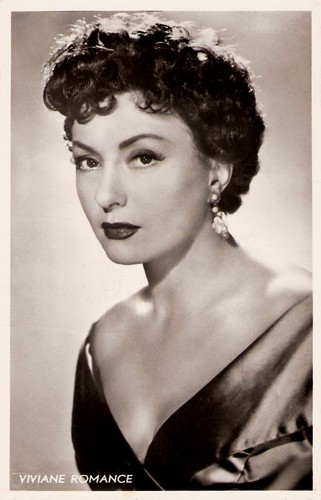
Dutch postcard by Takken, no. 1923.
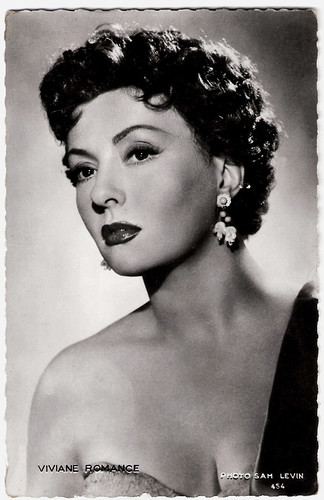
French postcard by Editions P.I., Paris, no. 454. Photo: Sam Lévin.
Sources: Hal Erickson (AllMovie), I.S.Mowis (IMDb), Yvan Foucart (Les gens du cinema - French), Wikipedia, and IMDb.
This post was last updated on 11 September 2026.
French postcard by Viny, no. 12. Photo: Paris Film. Publicity still for Naples au baiser de feu / Naples Under the Kiss of Fire (Augusto Genina, 1937).
French postcard by Editions P.I., Paris, no. 13.
French postcard by Editions P.I., Paris, no. 2. Publicity still for Carmen (Christian-Jaque, 1944).
French postcard by Ed. Chantal, Rueil, no. 24. Photo: Discina. Publicity still for Carmen (Christian-Jaque, 1944).
French postcard by Ed. Chantal, Rueil, no. 554 B. Photo: Sirius. Publicity still for Cartacalha, reine des gitans / Cartacalha (Léon Mathot, 1942).
Miss Paris
Viviane Romance was born Pauline Arlette Ortmans in Roubaix, France, in 1912.
At 13, she made her debut as a bit player at the Théâtre Sarah-Bernhardt, then did some modelling work. At 14, she joined the troupe at the Moulin Rouge in Paris. She also performed the 'Can-can' at the legendary Parisian nightclub Bal Tabarin. In 1930, Viviane was elected Miss Paris, and caused a small scandal because she had a child.
She made her film debut with a cameo role in Paris-girls (Henry Roussell, 1929) with Fernand Fabre. She appeared in several films over the next few years, including La Chienne / The Bitch (Jean Renoir, 1931), Liliom (Fritz Lang, 1934), and Zouzou (Marc Allégret, 1934). Opposite Jean Gabin, she played in La Bandera / The Bandage (Julien Duvivier, 1935).
Princesse Tam Tam / Princess Tam Tam (Edmond T. Gréville, 1935) was a French adaptation of G.B. Shaw's Pygmalion with Josephine Baker as a beautiful native African woman, who is ‘westernised’ by a handsome writer and then introduced to high society as an exotic princess.
Viviane Romance made a strong impression in La belle équipe / The Good Crew (Julien Duvivier, 1936) as the sensual Gina who plots the destruction of Jean Gabin’s character because he refuses to make love to her. La belle équipe constituted a milestone in French Cinema. From this time on, Romance was regarded as one of France's leading film actresses and a box-office draw.
French postcard by Editions P.I., Paris, no. 126. Photo: Discina.
French postcard by SERP, Paris, no. 41. Photo: Studio Harcourt.
French postcard by EPC, no. 166. Photo: A.C.E.
French postcard by Editions P.I., Paris, no. 13.
French postcard by Viny, no. 24. Photo: Star.
Fallen women with hearts of gold
Viviane Romance reportedly was offered a Hollywood film contract, but she rejected it. She preferred to make films in her native France, and many noted directors asked her to. However, for many years, she resided in Italy, where she made several Italian-language films in the 1950s.
Throughout her career, she played dozens of exotic femme fatales, courtesans, vamps and fallen women with hearts of gold. Among her best films during the occupation of France were Angélica / Blood Red Rose (Jean Choux, 1940), and the excellent melodrama Vénus aveugle / Blind Venus (Abel Gance, 1941). She also starred in the title role of Carmen (Christian-Jaque, 1944), a French-Italian version of Georges Bizet's famous opera.
After the war, she returned with the dark thriller Panique / Panic (Julien Duvivier, 1946) based on a novel by Georges Siménon, Passion (Georges Lampin, 1951) and the anthology film Les Sept péchés capitaux / The Seven Deadly Sins (Yves Allégret, 1952). Her last film from this period was Pitié pour les vamps / Pity for the Vamps (Jean Josipovici, 1956).
She went into production with her then-husband Clément Duhour, but without much success. After 1956, her acting roles were few, and she suffered considerable financial hardship. In 1962, she starred with Jean Gabin in the suspense film Mélodie en sous-sol / Any Number Can Win (Henri Verneuil, 1962).
Eventually, she reappeared on television in the early 1970s. In 1973, she made one final film appearance in the thriller Nada / The Nada Gang (Claude Chabrol, 1974), at the special request of director Claude Chabrol. It was her 65th film. She published her memoirs, 'Romantique à mourir' in 1986. Viviane Romance died of cancer in 1991 in Nice, France. She had married and divorced three times. Her spouses were actor Georges Flamant, actor Clément Duhour and director Jean Josipovici.
French collector card by Massilia. Photo: Paris Film Production. Publicity still for Naples au baiser de feu / Naples Under the Kiss of Fire (Augusto Genina, 1937).
French postcard by Editions P.I., Paris, no. 37. Sent by mail in 1944. Photo: Star.
French postcard by Erpé, no. 509. Photo: Star.
French postcard by A.C.E., no. 138.
Vintage collector card, no. A 62.
French postcard by Edit. Chantal, Rueil, no. 554-S. Photo: R.A.C. Publicity still for Le joueur / The Player (Gerhard Lamprecht, Louis Daquin, 1938).
Italian postcard. Photo: Scalera Film. Viviane Romance and Georges Flamant in Rose di sangue / Angélica (Jean Choux, 1939), based on the novel 'Les compagnons d'Ulysse' by Pierre Benoît.
Italian postcard. Photo: Scalera Film. Viviane Romance in the Franco-Italian co-production Rosa di Sangue / Angélica (Jean Choux, 1940).
German postcard. Photo: IFA-Film. Publicity still for Carmen (Christian-Jaque, 1945).
French postcard, no. 554. Photo: Films Derby. Collection: Didier Hanson.
French postcard by Editions du Globe, Paris, no. 161. Photo: Studio Harcourt.
French postcard by Editions O.P., Paris, no. 314. Photo: Teddy Piaz.
Dutch postcard by Takken, no. 1923.
French postcard by Editions P.I., Paris, no. 454. Photo: Sam Lévin.
Sources: Hal Erickson (AllMovie), I.S.Mowis (IMDb), Yvan Foucart (Les gens du cinema - French), Wikipedia, and IMDb.
This post was last updated on 11 September 2026.
