Showing posts with label Édouard Mathé. Show all posts

20 November 2022

Édouard Mathé

Édouard Mathé (1886-1934) was an extremely popular French actor, in particular in the silent crime serials by Louis Feuillade.

Edouard Mathé
French postcard. Sent by mail in 1922. Photo: Film Gaumont.
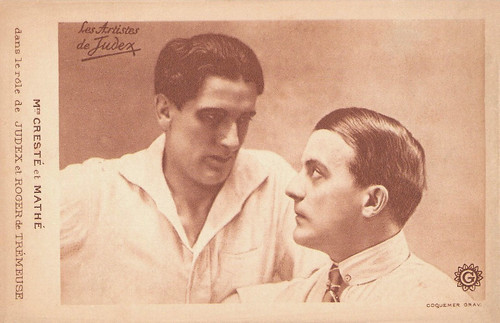
René Cresté and Edouard Mathé in La nouvelle mission de Judex (1917)
French postcard by Coquemer Gravures, Paris. Photo: Gaumont. Still for La nouvelle mission de Judex (Louis Feuillade, 1917-1918) with René Cresté.

Edouard Mathé
French postcard by Editions Cinémagazine, no. 83. Photo: Studio Henri Lebrun.

Les Vampires


Édouard Mathé was born in Australia (unknown where exactly) in 1886.

In 1914, he started his career as a film actor at the French company Gaumont. He remained a fixed actor for Gaumont director Louis Feuillade, who had already directed him in Mathé’s first film, L'Hôtel de la gare (Louis Feuillade, 1914).

After some ten shorts in 1914-1915, Feuillade replaced his former leading actor René Navarre with Mathé and gave him the leading role of the journalist Philippe de Guérande, protagonist of the crime serial film Les Vampires (1915-1916).

Together with a reformed criminal, Mazamette (Marcel Lévesque), Guérande fights the gang of the Vampires, including the fatal beauty Irma Vep, played by Musidora As the police were ridiculed in the series, the real police prefect of Paris forbade the screenings for a while.

Mathé also acted in Feuillade’s subsequent serials Judex (1916-1917), La nouvelle mission de Judex (1917-1918), Tih Minh (1918-1919), Vendémiaire (1918-1919), Barrabas (1919), Les deux gamines (1921), L’Orpheline (1921), and Parisette (1921-1922), the latter three starring Sandra Milowanoff.
In between, Feuillade continued to direct Mathé in several individual films, which, though, were less successful.

Edouard Mathé
French postcard by Coquemer Gravures, Paris. Photo: Gaumont. Still for La nouvelle mission de Judex (Louis Feuillade, 1917-1918).

La nouvelle mission de Judex
Spanish collector card by Chocolate Pi, Barcelona. card no. 53 of 54. Edouard Mathé as Roger de Tremeuse and probably Georgette de Nerys as Primerose in La Nouvelle mission de Judex (Louis Feuillade, 1917-1918).

Edouard Mathé in La nouvelle mission de Judex
French postcard by Coquemer Gravures, Paris. Photo: Gaumont. Still for La nouvelle mission de Judex (Louis Feuillade, 1917-1918).

Judex


Édouard Mathé starred as Roger de Tremeuse, the hero's brother, in Judex (Louis Feuillade, 1916-1917). After the upheaval of Les Vampires (which was later cherished by the Surrealists), Judex was less anti-establishment and closer to bourgeois morals.

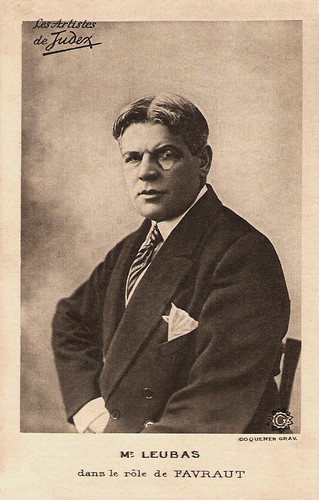
The positive hero, played by René Cresté, is a black caped avenger who kidnaps the evil banker Favraux (Louis Leubas), who has caused his father's death. Musidora is the banker's evil mistress and governess of his grandson. Marcel Lévesque plays the clumsy amateur detective Cocantin, Yvette Andreyor the banker's innocent daughter and widower Jacqueline, and Olinda Mano her little son Jean.

Mathé often played a relative or buddy of René Cresté in subsequent Feuillade serials such as the sequel to Judex: La nouvelle mission de Judex / The New Mission of Judex (1917-1918), Tih Minh (1918-1919) and Vendémiaire (1918-1919), until Cresté was fed up with Feuillade’s serials

René Cresté started his own film company, with disastrous effects. He died of tuberculosis in 1922 Mathé himself quit filmmaking with Feuillade in 1922 after Parisette (Louis Feuillade, 1921).

After a handful of films in 1923-1924, including the two Mario Ausonia films Mes p’tits (1923) and La course à l’amour / The Race to Love (1924), both directed by Charles Keppens and Paul Barlatier, he quit acting in film altogether. Édouard Mathé died in Brussels in 1934.

Édouard Mathé
Spanish postcard. Photo: Film Gaumont.

Édouard Mathé
French postcard in the Les Vedettes de l'Écran series by Editions Filma, no. 116.

Édouard Mathé
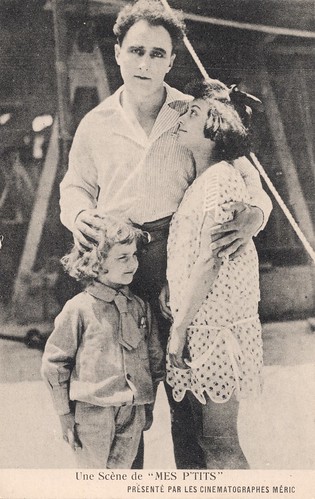
French postcard by Cinématographes Méric. Photo Henri Lebrun, Paris. This card was made for a folder with cards on the film Mes p'tits aka Le Calvaire d'une saltimbanque (Paul Barlatier, Charles Keppens, 1923), starring the Italian forzuto Mario Guaita - Ausonia.

Mes p'tits
French postcard by Cinématographes Méric. Edouard Mathé and Gina Relly in Mes p'tits (Paul Barlatier, Charles Keppens, 1923).

Sources: Wikipedia (English, French and Italian), and IMDb.

This post was last updated on 10 June 2025.

27 September 2022

La nouvelle mission de Judex (1917)

René Cresté was the hero Jacques de Tremeuse, better known as Judex, in de popular French crime-adventure serial Judex (1916-1917), directed by Louis Feuillade for Gaumont. Judex is an amazingly cool character and became the first superhero in the cinema. Of course, a sequel was needed and Cresté returned in La nouvelle mission de Judex/The New Mission of Judex (Louis Feuillade, 1917-1918), a serial in twelve episodes. Because of the paper shortage in France during the World War, there are hardly any postcards of Feuillade's earlier serials, Les Vampires and Judex, but we found two card series of La nouvelle mission de Judex: a French postcard series with portraits of the main characters by Coquemer Gravures in Paris and a Spanish collectors card series with film scenes by Chocolate Pi in Barcelona.

René Cresté as Judex
French postcard by Coquemer Gravures, Paris. Photo: Gaumont. René Cresté in La nouvelle mission de Judex (1917-1918).

Edouard Mathé
French postcard by Coquemer Gravures, Paris. Photo: Gaumont. Édouard Mathé in La nouvelle mission de Judex (Louis Feuillade, 1917-1918).

Louis Leubas in La nouvelle mission de Judex
French postcard by Coquemer Gravures, Paris. Photo: Gaumont. Louis Leubas in the role of Favraud in La nouvelle mission de Judex (Louis Feuillade, 1917-1918).

Marcel Levesque in La nouvelle mission de Judex
French postcard by Coquemer Gravures, Paris. Photo: Gerschel / Gaumont. Marcel Lévesque in the role of Coquentin La nouvelle mission de Judex (Louis Feuillade, 1917-1918).

Yvette Andreyor
French postcard in the 'Les Artistes de Judex' series by Coquemer Grav. Photo: Gaumont. Yvette Andréyor as Jacqueline in La nouvelle mission de Judex (Louis Feuillade, 1917-1918).

The strict boundaries between good women and bad women are blurred


In the sequel La nouvelle mission de Judex/The New Mission of Judex (Louis Feuillade, 1917-1918) most characters from Judex (Louis Feuillade, 1916-1917) return: Judex (René Cresté), Jacqueline (Yvette Andreyor), her father Favraux (Louis Leubas), clumsy Cocantin (Marcel Lévesque), little Jean (Olinda Mano) and Roger (Edouard Mathé).

Jacques de Tremeuse better known as Judex has married Jacqueline, so he has become a father to her son Jean. Jacques' brother Roger loves the neighbour girl Primerose (Georgette de Néry), whose father is the inventor Milton (Emile Keppens). Their happiness is threatened by the dangerous gang 'La rafle aux secrets' (The Raiders of the Secrets), avid in stealing and reselling important technological inventions.

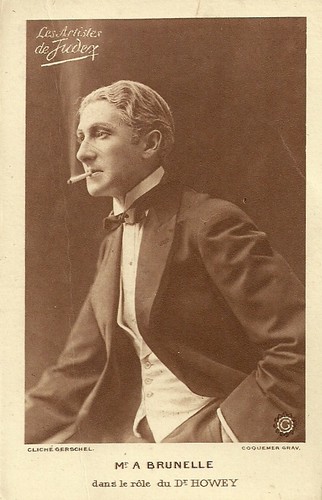
The evil Dr. Howey (Andrew Brunelle) and his accomplice, the dangerous Baronne d'Apremont (Juana Borguèse), both have the capacity to hypnotise the innocent Jacqueline and Primerose and make them do things against their will. Jacqueline threatens to poison her already ill son, while Primerose steals her father's invention and kidnaps little Jean.

The Baronne and her female aid Gaby (Cyprian Gilles) hold Jean, but they are captured and imprisoned by Judex and Cocantin, Gaby repents but the unrepentant Baronne escapes. Dr. Howey and the Baronne die when their boat explodes, accidentally caused by Cocantin.

In the end, Primerose is cured and marries Roger. Remarkable is that the theft of the invention seems an excuse to display the hysterical crises and hypnotised states of the women, while the Baronne and Gaby seem to be very close to one another and the previous strict boundaries between good women and bad women in Judex are blurred.

La nouvelle mission de Judex (1917)
Spanish collectors card by Chocolate Pi, Barcelona, no. 26 of 54. Photo: Gaumont. Left, Juana Borguèse as the Baronne d'Apremont in La nouvelle mission de Judex (Louis Feuillade, 1917-1918).

La nouvelle mission de Judex
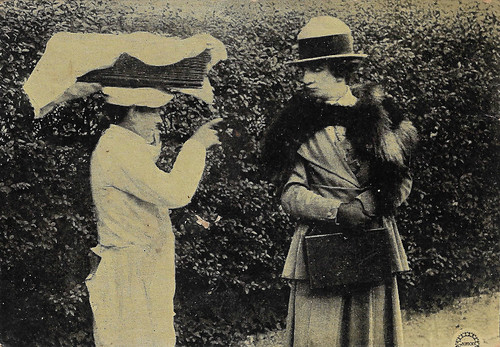
Spanish collectors card by Chocolate Pi, Barcelona, no. 26 of 54. Photo: Gaumont. Marcel Lévesque as Cocantin, dressed as a woman but recognised by the baker's boy, in La nouvelle mission de Judex (Louis Feuillade, 1917-1918).

La nouvelle mission de Judex
Spanish collectors card by Chocolate Pi, Barcelona, no. 33 of 54. Photo: Gaumont. Juana Borguèse as the Baronne d'Apremont in La nouvelle mission de Judex (Louis Feuillade, 1917-1918).

La nouvelle mission de Judex
Spanish collectors card by Chocolate Pi, Barcelona, no. 43 of 54. Photo: Gaumont. Marcel Lévesque as Cocantin in La Nouvelle mission de Judex (Louis Feuillade, 1917-1918).

La nouvelle mission de Judex
Spanish collectors card by Chocolate Pi, Barcelona, no. 44 of 54. Photo: Gaumont. Judex (René Cresté) overhears a phone call by the evil Baronne d'Apremont (Juana Borguèse) in La nouvelle mission de Judex (Louis Feuillade, 1917-1918).

La nouvelle mission de Judex
Spanish collectors card by Chocolate Pi, Barcelona, no. 47 of 54. Photo: Gaumont. Scene La nouvelle mission de Judex (Louis Feuillade, 1917-1918). The man on the right could be Andrew Brunelle as the hypnotising Dr. Howey.

La nouvelle mission de Judex
Spanish collectors card by Chocolate Pi, Barcelona, no. 49 of 54. Photo: Gaumont. Marcel Lévesque as Cocantin in La nouvelle mission de Judex (Louis Feuillade, 1917-1918).

La nouvelle mission de Judex
Spanish collectors card by Chocolate Pi, Barcelona, no. 53 of 54. Photo: Gaumont. Edouard Mathé as Roger de Tremeuse and probably Georgette de Néry as Primerose in La nouvelle mission de Judex (Louis Feuillade, 1917-1918).

Less anti-establishment and closer to bourgeois morals


In Louis Feuillade's crime serial film Les Vampires (1915-1916) about the gang of Vampires including the fatal beauty Irma Vep (Musidora), the police were ridiculed. The real police prefect of Paris forbade the screenings of the serial for a while.

After the upheaval of Les Vampires, later on, cherished by the Surrealists, Feuillade's next serial, Judex (Louis Feuillade, 1916-1917), was less anti-establishment and closer to bourgeois morals. The positive hero, played by René Cresté, is a black caped avenger who kidnaps the evil banker Favraux (Louis Leubas), who has caused his father's death. Musidora is the banker's evil mistress and governess of his grandson, and Marcel Lévesque plays the clumsy amateur detective Cocantin.

In 1916, Feuillade and writer Arthur Bernède had begun to develop 'Jacques de Tremeuse' (aka Judex) as a mysterious avenger who sports a signature long dark cloak, a wide-brimmed black hat, and a fatalistic air. Judex (which translates as 'Justice') appears and disappears like a ghost, and seems to have hypnotic powers. He is a master of disguise and an excellent fighter. He commands the loyalty of an organisation composed of circus folks and redeemed Apaches. He flies a plane and has a secret lair, where he interrogates his prisoners through a ‘television’ screen - everything Judex writes on the screen on his desk appears on a similar screen on the wall of his victim's cell.

René Cresté as Judex was already very popular with female audiences as this positive hero who comes to the rescue of the oppressed, but the sequel landed René Cresté definitively in ‘le Panthéon du cinéma’, as Philippe Pelletier writes so beautifully at CinéArtistes. He wore in his role as Judex a hat and cape, like Aristide Bruant, a French singer of his time. This costume is very similar to the hero costume of the later comic book hero The Shadow. Edouard Mathé played Cresté’s brother, Roger de Tremeuse. Henceforth Mathé often played a relative or buddy of in subsequent Feuillade serials such as in Judex: La nouvelle mission de Judex/The New Mission of Judex (Louis Feuillade, 1917-1918).

Musidora didn't act in the sequel as her character had died at the end of Judex. Georgette de Néry aka de Nérys didn't play in the original Judex film but played Primerose in the sequel. It was also probably her only film.

After two more crime serials for Feuillade, Tih Minh (1918) and Vendémiaire (1918), René Cresté was fed up with the genre and concerned about his image. He decided to take his career in hand and started his own film company, Films-René-Cresté, with disastrous effects. He turned to manage the Cocorico cinema in the Parisian district of Belleville and re-enacted his famous character, Judex, in a show at the Gaîté-Rochechouart. He died of tuberculosis in 1922. His brother in the Judex serials, Edouard Mathé quit filmmaking with Feuillade in 1922 after Parisette. After a handful of films in 1923-1924, including the two Ausonia films Mes p’tits (1923) and La course à l’amour (1924), he quitted acting in film altogether.

The Cinémathèque française owns a 35 mm version of La nouvelle mission de Judex (Louis Feuillade, 1917-1918) that was screened as part of the major Louis Feuillade retrospective in 2006. The series has not yet been released on DVD.

Juana Borguèse in La nouvelle mission de Judex
French postcard by Coquemer Gravures, Paris. Photo: Félix / Gaumont. Juana Borguèse as the evil Baronne d'Apremont in La nouvelle mission de Judex (Louis Feuillade, 1917-1918).

René Cresté & Georgette de Néry in La nouvelle mission de Judex
French postcard by Coquemer Gravures. Photo: Production Gaumont. René Cresté as Judex and Georgette de Néry as Primerose in La nouvelle mission de Judex (Louis Feuillade, 1917-1918).

Andrew Brunelle in La nouvelle mission de Judex
French postcard by Coquemer Gravures, Paris. Photo: Gerschel / Gaumont. Andrew Brunelle as the evil Dr. Howey in La nouvelle mission de Judex (Louis Feuillade, 1917-1918).

Olinda Mano in La nouvelle mission de Judex
French postcard by Coquemer Gravures, Paris. Photo: Gaumont. Olinda Mano as the boy Jean in La nouvelle mission de Judex (Louis Feuillade, 1917-1918).

Georgette de Néry(s) in La nouvelle mission de Judex
French postcard by Coquemer Gravures, Paris. Photo: Gerschel / Gaumont. Photo: Gaumont. Georgette de Néry as Primerose in La nouvelle mission de Judex (Louis Feuillade, 1917-1918).

Marcel Levesque in La nouvelle mission de Judex
French postcard by Coquemer Gravures, Paris. Photo: Gerschel / Gaumont. Marcel Lévesque in the role of Coquentin La nouvelle mission de Judex (Louis Feuillade, 1917-1918).

Edouard Mathé in La nouvelle mission de Judex
French postcard by Coquemer Gravures, Paris. Photo: Gaumont. Édouard Mathé in La nouvelle mission de Judex (Louis Feuillade, 1917-1918).

René Cresté in La nouvelle mission de Judex (1917)
French postcard by Coquemer Gravures, Paris. Photo: Gaumont. René Cresté in La nouvelle mission de Judex (Louis Feuillade, 1917-1918).

René Cresté and Edouard Mathé in La nouvelle mission de Judex (1917)
French postcard by Coquemer Gravures, Paris. Photo: Gaumont. René Cresté and Edouard Mathé in La nouvelle mission de Judex (Louis Feuillade, 1917-1918).

Source: Vicki Callahan (Zones of Anxiety: Movement, Musidora and the Crime Serials of Louis Feuillade), Philippe Pelletier (CinéArtistes - French), Jeffrey M. Anderson (Combustible Celluloid), Wikipedia (German) and IMDb.

22 June 2016

Mes p'tits (1923)

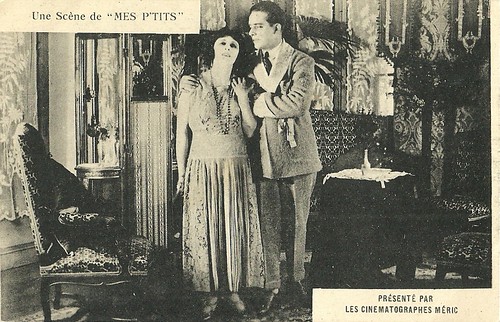
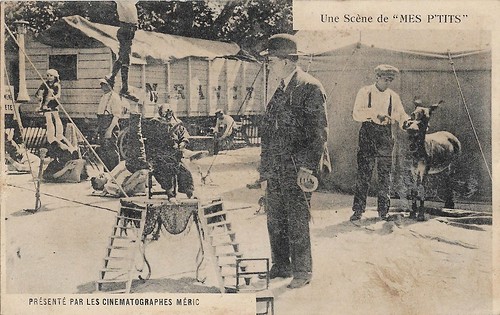
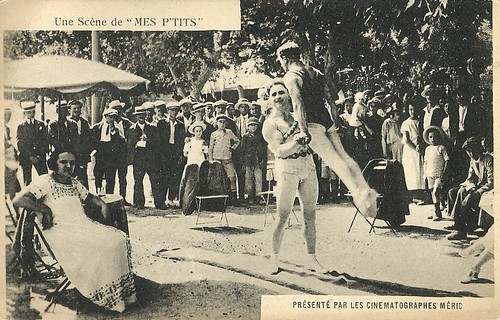
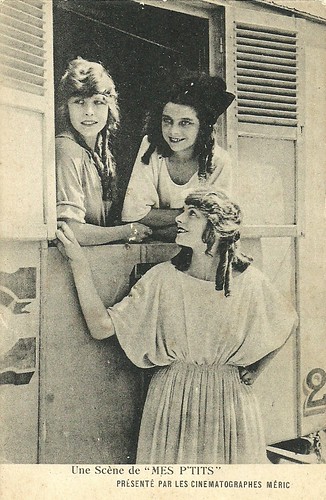
Italian strongman Mario Ausonia and the French actors Gina Relly and Edouard Mathé were the stars of the French silent film Mes p'tits/Le calvaire d’un saltimbanque (Paul Barlatier, Charles Keppens, 1923), produced by the Marseille-based Lauréa Films company. The film evolves in the circus milieu, like many other European silent films.

Ausonia in Mes p'tits
French postcard by Cinématographes Méric. Photo: publicity still for Mes p'tits (Paul Barlatier, Charles Keppens, 1923) with Ausonia (Mario Guaita).

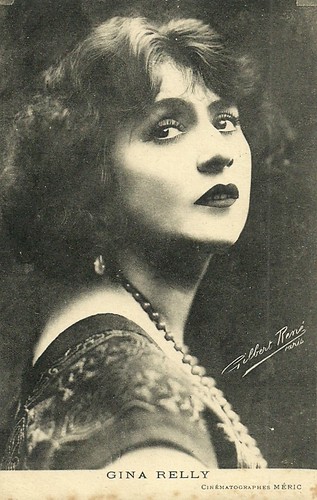
Gina Relly
Gina Relly. French postcard by Cinématographes Méric. Photo: Gilbert René, Paris.

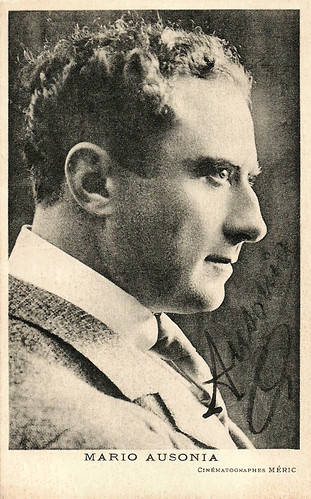
Mario Ausonia
Mario Guaita aka Ausonia. French postcard by Cinématographes Méric.

Jane (Jeanne) Rollette
Jane (Jeanne) Rollette. French postcard by Cinématographes Méric.

Édouard Mathé
Édouard Mathé. French postcard by Cinématographes Méric. Photo: Henri Lebrun, Paris. This card and the ones above were made for a folder with cards on Mes p'tits aka Le Calvaire d'une saltimbanque (Paul Barlatier, Charles Keppens, 1923).

Marseille


Athletic muscleman Mario Guaita aka Ausonia (1881-1956) was an Italian actor, director, producer and scriptwriter in the silent era. He had his international breakthrough with Spartaco (Enrico Vidali, 1913) and became a major actor in the Italian forzuto (strong man) genre.

In the early 1920s, Ausonia moved to Marseille. In the French harbour city, he made a few films including Mes p'tits (1923) and he ran a cinema. Mes p'tits evolves in the circus and fairground milieu and was scripted by Ausonia's wife Renée Deliot aka de Liot.

Gina Relly (1891-1985) was a mesmerising actress of the French silent cinema. She starred opposite Léon Mathot in the beautiful French film serial L'empereur des pauvres/The Emperor of the poor (René Leprince, 1921).

Édouard Mathé (1886-1934) was an extremely popular French actor, in particular in the silent crime serials by Louis Feuillade. He was the protagonist of the crime serial Les Vampires (1915-1916) and also appeared in Feuillade's serials Judex (1916-1917), La nouvelle mission de Judex (1917-1918), Tih Minh (1918-1919), Vendémiaire (1918-1919) and Barrabas (1919).

Ausonia, Relly and Mathé also starred together in the film La course à l’amour/Love on the run (Paul Barlatier, Charles Keppens, 1924), again made in Marseille by Lauréa Films.

Mes p'tits
French postcard by Cinématographes Méric. Photo: publicity still for Mes p'tits (Paul Barlatier, Charles Keppens, 1923) with Ausonia (Mario Guaita).

Mes p'tits
French postcard by Cinématographes Méric. Photo: publicity still for Mes p'tits (Paul Barlatier, Charles Keppens, 1923) with Gina Relly.

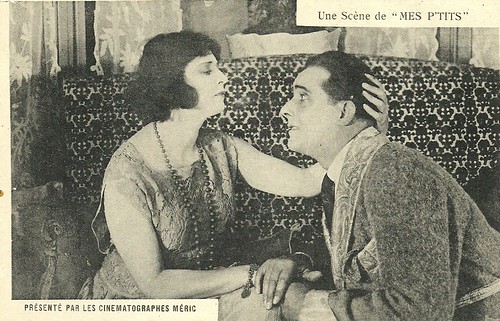
Mes p'tits
French postcard by Cinématographes Méric. Photo: publicity still for Mes p'tits (Paul Barlatier, Charles Keppens, 1923) with Gina Relly and Edouard Mathé.

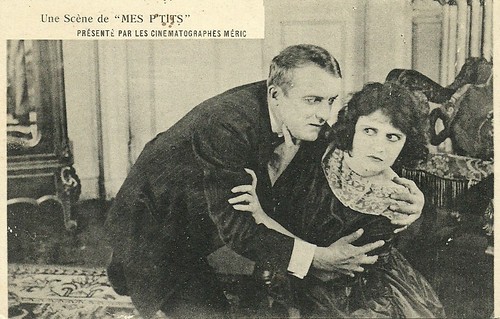
Mes p'tits
French postcard by Cinématographes Méric. Photo: publicity still for Mes p'tits (Paul Barlatier, Charles Keppens, 1923) with Gina Relly.

Mes p'tits
French postcard by Cinématographes Méric. Photo: publicity still for Mes p'tits (Paul Barlatier, Charles Keppens, 1923).

An anonymous letter


In Mes p'tits the circus artist Ausonia (Ausonia - Mario Guaita) lives with his two children in the circus Rancy. (The film was shot at the existing circus Rancy). Ausonia is a widower after his young wife fell from a trapeze. Only his children prevent him from committing suicide. All of the circus crew like Ausonia because of his strength and goodness. Wanda the amazon (Jane Rollette) is even in love with him and shows this indirectly by her affection to his children, but Ausonia is too deep in mourning to notice.

When the circus manager dies, his wife absolves the circus and all artists are on the street. In a nearby village, Ausonia discovers a fairground booth of wrestlers and becomes the centre of attention, alas not only of the audience but also of the manager (Huguette Sandry), the widow of a wrestler. Ausonia instead is enamoured by her daughter Paulette (Gina Relly), whom the widow has promised to a jealous man, her cousin Frederick (Edouard Mathé).

What the others don’t know is that Paulette is secretly married to a young man from a rich British family. She confesses her secret to Ausonia and tells him also she is pregnant. Ausonia promises to help her, but because of the jealousy of Frederick and the widow, he is fired and once more on the streets.

Ausonia has odd jobs as a carrier in the food halls, but when his little girl gets sick they head for the sea. Here he sees the booth of Paulette’s mother again but cannot reach Paulette. He finds an anonymous letter, though, asking to send the letter a.s.a.p. to someone else. He arrives at a villa where two men quarrel and one draws a gun. While the culprit flees, Ausonia helps the victim who seems to be dying and Ausonia is arrested for murder.

His children are brought to the countryside, to his mother, who dies when she reads about her son’s arrest. The children are on the street, on their own. Meanwhile, Paulette, who had thrown the letter, is locked up by Frederick, who discovered her secret marriage and who afterwards shot her English husband.

Ausonia manages to escape from prison, returns to his natal village to discover, to his despair, that the house is empty, his mother dead and his children on the streets. He meets a small acrobatic guy (Riri Fortoul) and they form a duo. They travel the small fairgrounds, while he keeps looking for his children. His fate turns when he meets Wanda again, who has become a big music hall star, enlists Ausonia for the music-hall and hires detectives to help him.

When in a dance hall defending Wanda, Ausonia gets in a fight and disgusted he leaves the city. By chance, he manages to trace and find his children in the countryside, who are starving of hunger. He also discovers a villa where Frederick keeps Paulette locked up and the husband who survived the gunshot and now tries to free Paulette. After a fierce fight, Ausonia conquers Frederick and has him arrested, gives Paulette back to her husband and marries Wanda, thus giving the children a new mother.

Mes p'tits
French postcard by Cinématographes Méric. Photo: publicity still for Mes p'tits (Paul Barlatier, Charles Keppens, 1923). Mario Guaita aka Ausonia performs under his stage name as a strongman at the booth of the widow of Paul Mons, on a French fairground in the countryside. Note that the posters may well have been from Ausonia's former own stage career, in which he was also subtitled "l'Athlète mondain".

Mes p'tits
French postcard by Cinématographes Méric. Photo: publicity still for Mes p'tits (Paul Barlatier, Charles Keppens, 1923).

Mes p'tits
French postcard by Cinématographes Méric. Photo: publicity still for Mes p'tits (Paul Barlatier, Charles Keppens, 1923) with Ausonia (Mario Guaita).

Mes p'tits
French postcard by Cinématographes Méric. Photo: publicity still for Mes p'tits (Paul Barlatier, Charles Keppens, 1923). The girl at the right is Jane Rollette, who plays Wanda the amazon, in love with the leading character played by Mario Guaita / Ausonia.

Mes p'tits
French postcard by Cinématographes Méric. Mario Guaita/Ausonia in Mes p'tits aka Le Calvaire d'une saltimbanque (Paul Barlatier, Charles Keppens, 1923). The woman in the middle could be Jane (Jeanne) Rollette.

Sources: Ciné Ressources (French), IMDb and the film print.

This post was last updated on 20 January 2021.