Albert Dieudonné (1889-1976) was a French actor, author and director, who became famous as the title character in Abel Gance’s epic film Napoléon (1927).

French postcard by Editions Cinémagazine. Photo: G.L. Manuel Frères.

French postcard by Editions Cinémagazine, no. 469. Albert Dieudonné as Napoleón in Napoléon (Abel Gance, 1927).
Albert Dieudonné was born in Paris in 1889. His uncle, the actor Alphonse Dieudonné, brought him in contact with the world of theatre. Albert had already played minor parts on stage when he got a small part in the Film d’Art production L’Assassinat du Duc de Guise/The Assassination of the Duke de Guise (André Calmettes, Charles Le Bargy, 1908), with musical score by Camille Saint-Saëns.
In addition to his stage acting, Diedonné continued to act in film. During the 1910s, he worked with such directors as Albert Capellani at Le roi s’amuse/The King Enjoys Himself (1909) and La bouteille de lait/The Milk Bottle (1910); Georges Monca at Jim Blackwood, jockey/The Jockey (1910); and Alfred Machin at Le Diamant noir/The Black Diamond (1913).
In 1915-1916 he performed in five films directed by Abel Gance: La Folie du docteur Tube/The Madness of Dr. Tube (1915), L'Héroïsme de Paddy/The Heroism of Paddy (1915), Ce que les flots racontent/What the Waves Tell (1915), Le Fou de la falaise/The Lunatic of the Cliff (1915), and Le Périscope/The Periscope (1916) with Henri Maillard. He also acted opposite stage diva Gabrielle Réjane in the war propaganda drama Alsace (1916) by Henri Pouctal. In the 1910s, Dieudonné also tried to establish himself as a director and scriptwriter. In 1913 he directed the film L’Idole brisée/The Fallen Idol.
Dieudonné (co-)scripted the films A Woman of Impulse (Edward José, 1917) starring Lina Cavalieri, Angoisse/Anxiety (André Hugon, 1917), and Les Chacals/The Jackals (André Hugon, 1917) with André Nox. He directed La Gloire rouge/Red Glory (1917, also scriptwriter), Sous la griffe/Into the clutches (1921) with Harry Baur, and Son Crime/His Crime (1922). In 1923 Diedonné met Jean Renoir and they co-directed Renoir’s debut film Cathérine/Une vie sans joie/Backbiters (1924) with Catherine Hessling, but because of a disagreement between the directors the film was only released in 1927.
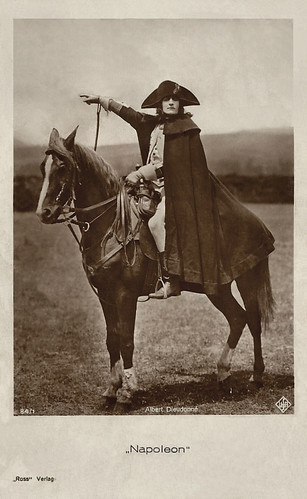
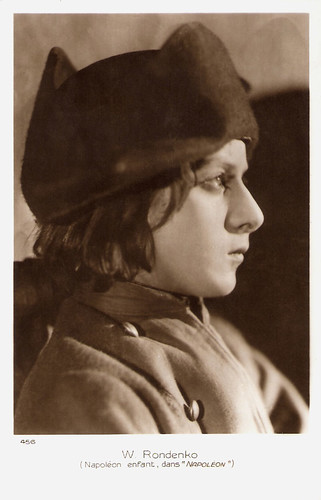
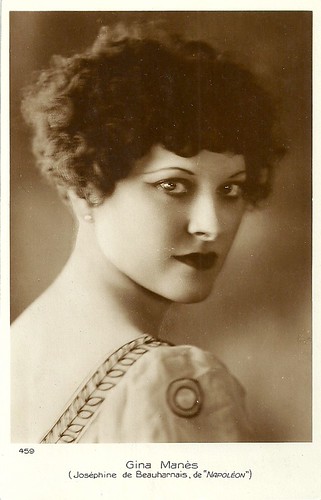
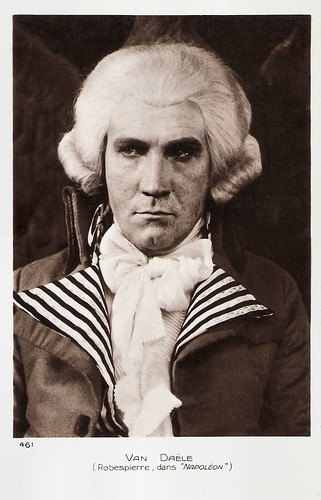
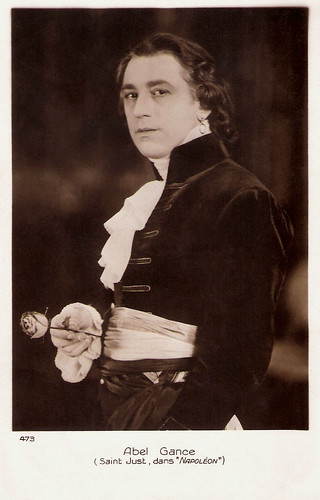
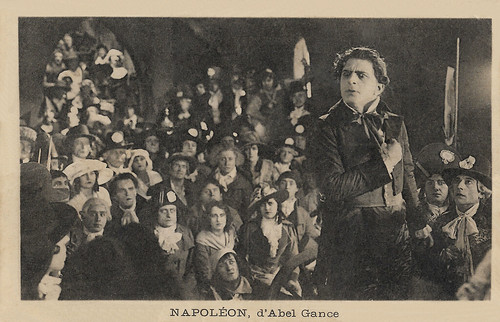
Dieudonné got his breakthrough and lasting claim of fame with his performance as Napoléon Bonaparte in the monumental biopic by Abel Gance, which focuses on Napoléon’s early career, from the military school in Brienne which he visited as a kid, to the Italian campaign of 1796, and including the French revolution, the Siege of Toulon, and Napoleon’s love affair and marriage with Joséphine de Beauharnais (played by Gina Manès). Gance planned it as the first of six films on Napoleon’s career, but already the extreme length and the extreme costs of his ‘first episode’ made clear it would be impossible to shoot the sequels. Although Dieudonné was considered too old for the part, he offered himself to Abel Gance in 1925. Gance was so impressed by Dieudonné’s makeover and performance that he gave him the title part. In Kevin Brownlow’s TV series Cinema Europe, Dieudonné told an anecdote about visiting Fontainebleau castle in his Napoleon costume: "I flung open the door. I was in uniform and I said to the nightwatchman, 'Asleep on duty, Matat?' The poor fellow woke up completely bewildered, rubbed his eyes and stared at me. Then I went. The next day, he told the curator D'Esparbes about it. He confessed that in the past he'd been joking a little but this time he'd really seen Napoleon. Unfortunately, the poor soul died eight days later and I may have been one of the causes."

German postcard by Ross Verlag, no. 84/1, 1925-1935. Photo: Ufa. Publicity still for Napoléon/Napoleon (Abel Gance, 1927).

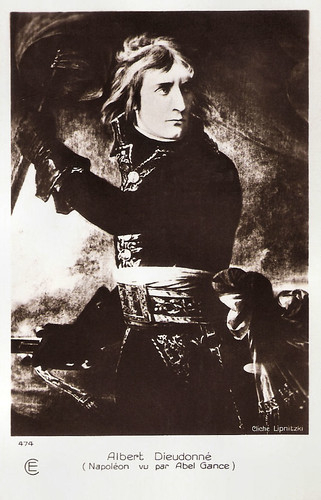
French postcard by Cinémagazine-Edition, no. 474. Photo: Lipnitzky. Publicity still for Napoléon/Napoleon (Abel Gance. 1927). The postcard is a pastiche of the famous portrait of Bonaparte at Arcole, 1796, by Baron Antoine-Jean Gros. See History-of-the-two-empires.
The shooting of Napoléon/Napoleon (Abel Gance, 1927) took place in 1925 and – with a break due to a krach of one of the financiers – in 1926. On 7 April 1927, the French premiere took place at the Parisian Opéra Garnier. The film had a score by Arthur Honegger, a metrage of 5.600 metres and a triptych finale.
When Napoléon came out, it was only shown in 8 major European cities. Then MGM bought the rights and drastically reduced its length for an American release. Because of the introduction of sound cinema in 1927, the American reception was not as enthusiastic as in Europe. In 1934-1935 a sonorised version was released, with some added scenes, and in 1971 a reworking of this sound version was established in collaboration with French television.
Especially the latter version was felt inadequate. In 1981 Kevin Brownlow finished a major restoration of the film and afterwards, the film was shown around the world with an orchestra conducted by Carmine Coppola, father of the film director. Brownlow continued the restoration afterwards, using materials at the Cinémathèque française as well, and these restorations came out in 1990 and 2001.
After Napoléon, Dieudonné hardly acted in film anymore but continued as a scriptwriter and director. He wrote the scripts for La Douceur d’aimer (René Hervil, 1930), La Garçonne/The Tomboy (Jean de Limur, 1936, also production manager) starring Marie Bell, L’Homme du Niger/Forbidden Love (Jacques de Baroncelli, 1939) with Victor Francen, and co-adapted Le Brigand gentilhomme/The Gentleman Robber (Emile Couzinet, 1942) with Jean Weber. His only acting part in those years was in Madame Sans-Gêne (Roger Richebé, 1941), where he played: Bonaparte.
According to French historian Jean Tulard, Dieudonné’s method of acting resulted in the actor himself behaving more and more like the French Emperor. Dieudonné would also lecture on Napoleon and in 1957 he wrote the play 'Moi, Napoléon', staged by Alain Quercy at the Theatre des Arts. Albert Dieudonné died in 1976 in Boulogne-Billancourt. He lies buried in the cemetery of Courçay, a small village where he spent his last years. According to his last wish, he was buried in his costume of Napoléon.

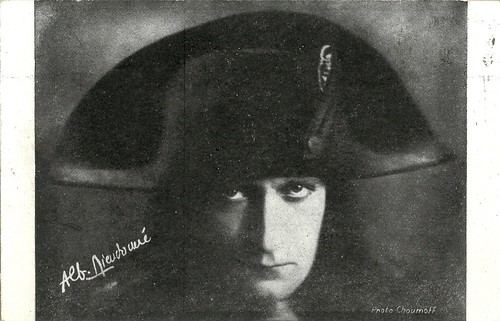
French postcard. Photo: Choumoff. Albert Dieudonné as Napoleon. The retro of the card makes publicity for Dieudonné in a stage version 'Bonaparte' at the Theatre de la Renaissance.
American 2012 trailer for Napoléon/Napoleon (1927). Source: Insidebayarea (YouTube).
Sources: Commenting-the-commentaries, Wikipedia (French, English and German), and IMDb.
This post was last updated on 9 January 2024.
French postcard by Editions Cinémagazine. Photo: G.L. Manuel Frères.
French postcard by Editions Cinémagazine, no. 469. Albert Dieudonné as Napoleón in Napoléon (Abel Gance, 1927).
Napoleon's ghost
Albert Dieudonné was born in Paris in 1889. His uncle, the actor Alphonse Dieudonné, brought him in contact with the world of theatre. Albert had already played minor parts on stage when he got a small part in the Film d’Art production L’Assassinat du Duc de Guise/The Assassination of the Duke de Guise (André Calmettes, Charles Le Bargy, 1908), with musical score by Camille Saint-Saëns.
In addition to his stage acting, Diedonné continued to act in film. During the 1910s, he worked with such directors as Albert Capellani at Le roi s’amuse/The King Enjoys Himself (1909) and La bouteille de lait/The Milk Bottle (1910); Georges Monca at Jim Blackwood, jockey/The Jockey (1910); and Alfred Machin at Le Diamant noir/The Black Diamond (1913).
In 1915-1916 he performed in five films directed by Abel Gance: La Folie du docteur Tube/The Madness of Dr. Tube (1915), L'Héroïsme de Paddy/The Heroism of Paddy (1915), Ce que les flots racontent/What the Waves Tell (1915), Le Fou de la falaise/The Lunatic of the Cliff (1915), and Le Périscope/The Periscope (1916) with Henri Maillard. He also acted opposite stage diva Gabrielle Réjane in the war propaganda drama Alsace (1916) by Henri Pouctal. In the 1910s, Dieudonné also tried to establish himself as a director and scriptwriter. In 1913 he directed the film L’Idole brisée/The Fallen Idol.
Dieudonné (co-)scripted the films A Woman of Impulse (Edward José, 1917) starring Lina Cavalieri, Angoisse/Anxiety (André Hugon, 1917), and Les Chacals/The Jackals (André Hugon, 1917) with André Nox. He directed La Gloire rouge/Red Glory (1917, also scriptwriter), Sous la griffe/Into the clutches (1921) with Harry Baur, and Son Crime/His Crime (1922). In 1923 Diedonné met Jean Renoir and they co-directed Renoir’s debut film Cathérine/Une vie sans joie/Backbiters (1924) with Catherine Hessling, but because of a disagreement between the directors the film was only released in 1927.
Dieudonné got his breakthrough and lasting claim of fame with his performance as Napoléon Bonaparte in the monumental biopic by Abel Gance, which focuses on Napoléon’s early career, from the military school in Brienne which he visited as a kid, to the Italian campaign of 1796, and including the French revolution, the Siege of Toulon, and Napoleon’s love affair and marriage with Joséphine de Beauharnais (played by Gina Manès). Gance planned it as the first of six films on Napoleon’s career, but already the extreme length and the extreme costs of his ‘first episode’ made clear it would be impossible to shoot the sequels. Although Dieudonné was considered too old for the part, he offered himself to Abel Gance in 1925. Gance was so impressed by Dieudonné’s makeover and performance that he gave him the title part. In Kevin Brownlow’s TV series Cinema Europe, Dieudonné told an anecdote about visiting Fontainebleau castle in his Napoleon costume: "I flung open the door. I was in uniform and I said to the nightwatchman, 'Asleep on duty, Matat?' The poor fellow woke up completely bewildered, rubbed his eyes and stared at me. Then I went. The next day, he told the curator D'Esparbes about it. He confessed that in the past he'd been joking a little but this time he'd really seen Napoleon. Unfortunately, the poor soul died eight days later and I may have been one of the causes."
German postcard by Ross Verlag, no. 84/1, 1925-1935. Photo: Ufa. Publicity still for Napoléon/Napoleon (Abel Gance, 1927).
French postcard by Cinémagazine-Edition, no. 474. Photo: Lipnitzky. Publicity still for Napoléon/Napoleon (Abel Gance. 1927). The postcard is a pastiche of the famous portrait of Bonaparte at Arcole, 1796, by Baron Antoine-Jean Gros. See History-of-the-two-empires.
Moi, Napoléon
The shooting of Napoléon/Napoleon (Abel Gance, 1927) took place in 1925 and – with a break due to a krach of one of the financiers – in 1926. On 7 April 1927, the French premiere took place at the Parisian Opéra Garnier. The film had a score by Arthur Honegger, a metrage of 5.600 metres and a triptych finale.
When Napoléon came out, it was only shown in 8 major European cities. Then MGM bought the rights and drastically reduced its length for an American release. Because of the introduction of sound cinema in 1927, the American reception was not as enthusiastic as in Europe. In 1934-1935 a sonorised version was released, with some added scenes, and in 1971 a reworking of this sound version was established in collaboration with French television.
Especially the latter version was felt inadequate. In 1981 Kevin Brownlow finished a major restoration of the film and afterwards, the film was shown around the world with an orchestra conducted by Carmine Coppola, father of the film director. Brownlow continued the restoration afterwards, using materials at the Cinémathèque française as well, and these restorations came out in 1990 and 2001.
After Napoléon, Dieudonné hardly acted in film anymore but continued as a scriptwriter and director. He wrote the scripts for La Douceur d’aimer (René Hervil, 1930), La Garçonne/The Tomboy (Jean de Limur, 1936, also production manager) starring Marie Bell, L’Homme du Niger/Forbidden Love (Jacques de Baroncelli, 1939) with Victor Francen, and co-adapted Le Brigand gentilhomme/The Gentleman Robber (Emile Couzinet, 1942) with Jean Weber. His only acting part in those years was in Madame Sans-Gêne (Roger Richebé, 1941), where he played: Bonaparte.
According to French historian Jean Tulard, Dieudonné’s method of acting resulted in the actor himself behaving more and more like the French Emperor. Dieudonné would also lecture on Napoleon and in 1957 he wrote the play 'Moi, Napoléon', staged by Alain Quercy at the Theatre des Arts. Albert Dieudonné died in 1976 in Boulogne-Billancourt. He lies buried in the cemetery of Courçay, a small village where he spent his last years. According to his last wish, he was buried in his costume of Napoléon.
French postcard. Photo: Choumoff. Albert Dieudonné as Napoleon. The retro of the card makes publicity for Dieudonné in a stage version 'Bonaparte' at the Theatre de la Renaissance.
American 2012 trailer for Napoléon/Napoleon (1927). Source: Insidebayarea (YouTube).
Sources: Commenting-the-commentaries, Wikipedia (French, English and German), and IMDb.
This post was last updated on 9 January 2024.