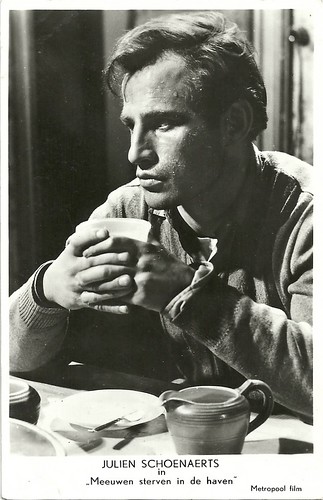
On 8 November, Belgian actress and theatre director Dora van der Groen (1927-2015) passed away. She starred with Julien Schoenaerts in the 'first Belgian film' Meeuwen sterven in de haven/Seagulls Die in the Harbour (1955) and with Kees Brusse in the Dutch classic Dokter Pulder zaait papavers/Doctor Pulder Sows Poppies (1975). She appeared in more than 120 films and television shows between 1945 and 2003.
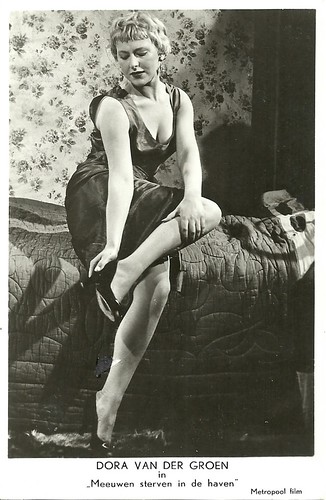
Belgian postcard by Ed. Privot, Antwerp. Photo: Metropool Film. Publicity still for Meeuwen sterven in de haven/Seagulls Die in the Harbour (Rik Kuypers, Ivo Michiels and Roland Verhavert, 1955) with Dora van der Groen as the Prostitute.
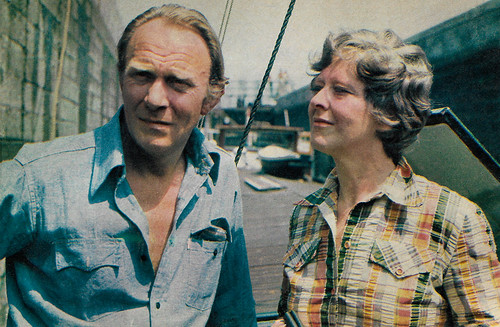
Dutch blank back card. Kees Brusse and Dora van der Groen in the Dutch-Belgian TV series Tussen wal en schip (Eimert Kruidhof, 1977).
Dora van der Groen was born in 1927, in Antwerp, Belgium. She began her acting career at the Koninklijke Nederlandse Schouwburg (Royal Dutch Theatre) in Antwerp. Later, she played at the Koninklijke Vlaamse Schouwburg (Royal Flemish Theatre) in Brussels. For many years, she was also the artistic director of the theatre department of the Royal Flemish Conservatory in Antwerp.
She made her film debut in the Belgian comedy Baas Gansendonck/Boss Gansendonck (Gaston Ariën, 1945), based on a novel by Hendrik Conscience.
In 1955, she played the female lead as a prostitute opposite Julien Schoenaerts in the Belgian drama film Meeuwen sterven in de haven/Seagulls Die in the Harbour (Rik Kuypers, Ivo Michiels and Roland Verhavert, 1955), which was entered into the 1956 Cannes Film Festival. The film made a great impression on the press and the public. Both the theme and the stylistic program introduced a new, more internationally-oriented sensibility in the cinema for Flanders. In many reviews, Meeuwen was unreservedly hailed as ‘the first Flemish' or even 'the first Belgian film'.
Van der Groen became a much sought-after television actor, and played in series such as Wij, Heren van Zichem/We, Gentlemen of Zichem (Maurits Balfoort, 1969), Tussen wal en schip/Between Two Stools (Eimert Kruidhof, 1977), De Bossen van Vlaanderen/The Woods of Flanders Marc Lybaert, 1991), Moeder, waarom leven wij/Mother, Why Do We Live (Guido Henderickx, 1993), and Terug naar Oosterdonk/Back to Oosterdonk (Frank Van Passel, 1997).
Wij, heren van Zichem/We, Gentlemen from Zichem (Maurits Balfoort, 1969) was a very authentic Flemisch TV series. A soap avant-la-lettre about a devout Catholic village, with numerous storylines on human themes such as affection, jealousy, greed, family - and social life. The series elaborates on the adventures of the blond rascal Lewie, the title character of Ernest Claes' hit novel 'De Witte'(The White One). Lewie's eternal mischief makes life difficult for his family, friends, people at school and the other inhabitants of the village.
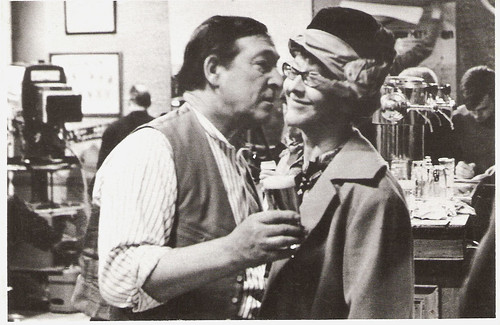
Belgian postcard by Best, Antwerpen, no 30. Photo: Humo. Publicity still for the TV series Wij, heren van Zichem/We, Gentlemen from Zichem (Maurits Balfoort, 1969) with Robert Marcel as Jef de Smid and Dora van der Groen as Melanie.
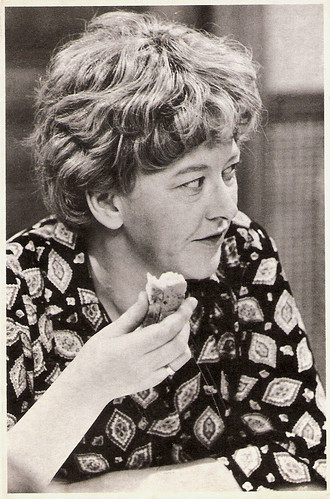
Belgian postcard by Best, Antwerpen, no. 34. Photo: Humo. Publicity still for the TV series Wij, heren van Zichem/We, Gentlemen from Zichem (Maurits Balfoort, 1969) with Dora van der Groen as Melanie.
Dora van der Groen also appeared in several Belgian and Dutch films. In 1969, she appeared in the Belgian-Dutch drama Monsieur Hawarden (Harry Kümel, 1969) with Ellen Vogel as a woman who disguises herself as a man to avoid prosecution for murdering her lover fifteen years ago. Van der Groen also appeared in Kümel’s fantasy-horror Malpertuis/The Legend of Doom House (Harry Kümel, 1971) with Orson Welles.
She had a small part in the French film La Maison sous les arbres/The Deadly Trap (René Clément, 1971) starring Faye Dunaway. She co-starred with Kees Brusse in the drama-comedy Dokter Pulder zaait papavers/Doctor Pulder Sows Poppies (Bert Haanstra, 1975), which was entered into the 26th Berlin International Film Festival.
Other successful films were Dagboek van een Oude Dwaas/Diary of a Mad Old Man (Lili Rademakers, 1987) based on a book by Jun'ichirō Tanizaki, the Dutch drama Havinck (Frans Weisz, 1987) with Willem Nijholt, and the feminist fairy-tale Antonia/Antonia's Line (Marleen Gorris, 1995) featuring Willeke van Ammelrooy. Antonia won the Academy Award for Best Foreign Language Film at the 68th Academy Awards.
In the film Pauline & Paulette (Lieven Debrauwer, 2001), Van der Groen played the mentally handicapped Pauline opposite Ann Petersen as her sister Paulette. Van der Groen herself stayed for several years in a housing project for people with dementia. Earlier, she had performed as a demented woman in the short film Leonie (1996), and in Villa des Roses (Frank Van Passel, 2002).
Dora van der Groen was married to the actor Tone Brulin and later to actor and TV host Wies Andersen. Both marriages ended in divorce. She had three sons. Her youngest son is director Brick de Bois. Dora van der Groen was 88.
Trailer Meeuwen sterven in de haven/Seagulls Die in the Harbour (1955). Source: Ximon NL (YouTube).
American trailer for Pauline & Paulette (Lieven Debrauwer, 2001). Source: Lieven Debrauwer (YouTube).
Sources: HLN.be (page now defunct), Wikipedia (English and Dutch) and IMDb.
This post was last updated on 17 July 2024.
Belgian postcard by Ed. Privot, Antwerp. Photo: Metropool Film. Publicity still for Meeuwen sterven in de haven/Seagulls Die in the Harbour (Rik Kuypers, Ivo Michiels and Roland Verhavert, 1955) with Dora van der Groen as the Prostitute.
Dutch blank back card. Kees Brusse and Dora van der Groen in the Dutch-Belgian TV series Tussen wal en schip (Eimert Kruidhof, 1977).
The first Belgian film
Dora van der Groen was born in 1927, in Antwerp, Belgium. She began her acting career at the Koninklijke Nederlandse Schouwburg (Royal Dutch Theatre) in Antwerp. Later, she played at the Koninklijke Vlaamse Schouwburg (Royal Flemish Theatre) in Brussels. For many years, she was also the artistic director of the theatre department of the Royal Flemish Conservatory in Antwerp.
She made her film debut in the Belgian comedy Baas Gansendonck/Boss Gansendonck (Gaston Ariën, 1945), based on a novel by Hendrik Conscience.
In 1955, she played the female lead as a prostitute opposite Julien Schoenaerts in the Belgian drama film Meeuwen sterven in de haven/Seagulls Die in the Harbour (Rik Kuypers, Ivo Michiels and Roland Verhavert, 1955), which was entered into the 1956 Cannes Film Festival. The film made a great impression on the press and the public. Both the theme and the stylistic program introduced a new, more internationally-oriented sensibility in the cinema for Flanders. In many reviews, Meeuwen was unreservedly hailed as ‘the first Flemish' or even 'the first Belgian film'.
Van der Groen became a much sought-after television actor, and played in series such as Wij, Heren van Zichem/We, Gentlemen of Zichem (Maurits Balfoort, 1969), Tussen wal en schip/Between Two Stools (Eimert Kruidhof, 1977), De Bossen van Vlaanderen/The Woods of Flanders Marc Lybaert, 1991), Moeder, waarom leven wij/Mother, Why Do We Live (Guido Henderickx, 1993), and Terug naar Oosterdonk/Back to Oosterdonk (Frank Van Passel, 1997).
Wij, heren van Zichem/We, Gentlemen from Zichem (Maurits Balfoort, 1969) was a very authentic Flemisch TV series. A soap avant-la-lettre about a devout Catholic village, with numerous storylines on human themes such as affection, jealousy, greed, family - and social life. The series elaborates on the adventures of the blond rascal Lewie, the title character of Ernest Claes' hit novel 'De Witte'(The White One). Lewie's eternal mischief makes life difficult for his family, friends, people at school and the other inhabitants of the village.
Belgian postcard by Best, Antwerpen, no 30. Photo: Humo. Publicity still for the TV series Wij, heren van Zichem/We, Gentlemen from Zichem (Maurits Balfoort, 1969) with Robert Marcel as Jef de Smid and Dora van der Groen as Melanie.
Belgian postcard by Best, Antwerpen, no. 34. Photo: Humo. Publicity still for the TV series Wij, heren van Zichem/We, Gentlemen from Zichem (Maurits Balfoort, 1969) with Dora van der Groen as Melanie.
Feminist fairy-tale
Dora van der Groen also appeared in several Belgian and Dutch films. In 1969, she appeared in the Belgian-Dutch drama Monsieur Hawarden (Harry Kümel, 1969) with Ellen Vogel as a woman who disguises herself as a man to avoid prosecution for murdering her lover fifteen years ago. Van der Groen also appeared in Kümel’s fantasy-horror Malpertuis/The Legend of Doom House (Harry Kümel, 1971) with Orson Welles.
She had a small part in the French film La Maison sous les arbres/The Deadly Trap (René Clément, 1971) starring Faye Dunaway. She co-starred with Kees Brusse in the drama-comedy Dokter Pulder zaait papavers/Doctor Pulder Sows Poppies (Bert Haanstra, 1975), which was entered into the 26th Berlin International Film Festival.
Other successful films were Dagboek van een Oude Dwaas/Diary of a Mad Old Man (Lili Rademakers, 1987) based on a book by Jun'ichirō Tanizaki, the Dutch drama Havinck (Frans Weisz, 1987) with Willem Nijholt, and the feminist fairy-tale Antonia/Antonia's Line (Marleen Gorris, 1995) featuring Willeke van Ammelrooy. Antonia won the Academy Award for Best Foreign Language Film at the 68th Academy Awards.
In the film Pauline & Paulette (Lieven Debrauwer, 2001), Van der Groen played the mentally handicapped Pauline opposite Ann Petersen as her sister Paulette. Van der Groen herself stayed for several years in a housing project for people with dementia. Earlier, she had performed as a demented woman in the short film Leonie (1996), and in Villa des Roses (Frank Van Passel, 2002).
Dora van der Groen was married to the actor Tone Brulin and later to actor and TV host Wies Andersen. Both marriages ended in divorce. She had three sons. Her youngest son is director Brick de Bois. Dora van der Groen was 88.
Trailer Meeuwen sterven in de haven/Seagulls Die in the Harbour (1955). Source: Ximon NL (YouTube).
American trailer for Pauline & Paulette (Lieven Debrauwer, 2001). Source: Lieven Debrauwer (YouTube).
Sources: HLN.be (page now defunct), Wikipedia (English and Dutch) and IMDb.
This post was last updated on 17 July 2024.