Armando Falconi (1871-1954) was an Italian stage and screen actor. Though he was foremost a theatre actor, he had a prolific career as a comedian in the 1930s and early 1940s Italian cinema.
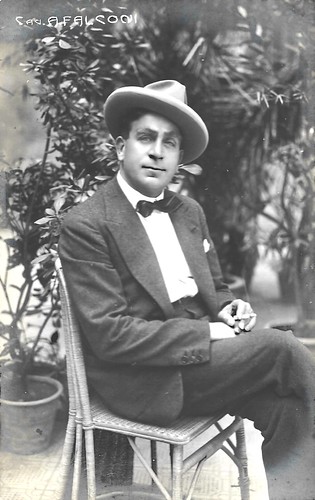
Italian postcard by Ed. G. Vettori, Bologna. Cav. (Cavaliere) A. Falconi.

Italian postcard by Ed. G.B. Falci, Milano in the Cines-Pittaluga series, no. 42. Photo: Cines-Pittaluga. Armando Falconi (the man with the bandage) as Count Armando, and possibly left Giuseppe Pierozzi as the little creditor and Arturo Falconi as Armando's best friend Paolino in Patatrac (Gennaro Righelli, 1931).

Italian postcard, no. 55. Photo: Cines-Pittaluga, Roma. Armando Falconi in Rubacuori (Guido Brignone, 1931). The woman is probably Grazia Del Rio.

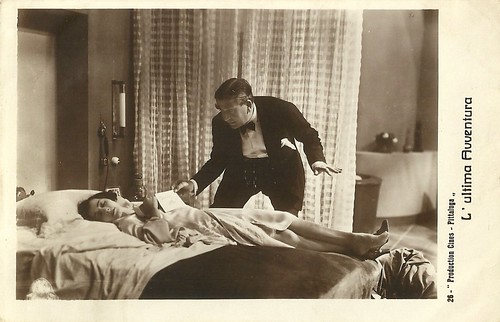
Italian postcard, even if with French written captions, no. 26. Photo: Prod. Cines-Pittaluga. Diomira Jacobini and Armando Falconi in L'ultima avventura (Mario Camerini 1932).
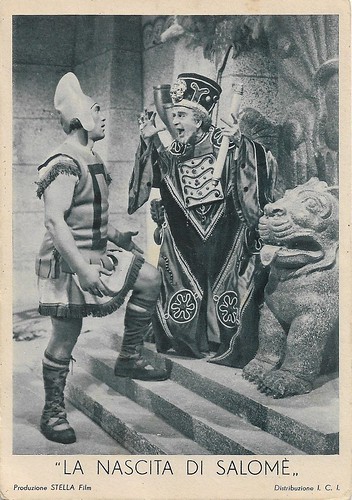
Italian postcard. Photo: Stella Film / Distribuzione I.C.I. Primo Carnera and Armando Falconi in the film comedy La nascita di Salomè/The Birth of Salome (Jean Choux, 1940). The back of the card offers a referendum on the two endings of the film, to be sent to the company Stella Film, Via Vittorio Veneto 116 in Rome.

Italian postcard by S.A. Grafitalia, Milano (Milan), no. 10. Photo: Film Lux. Armando Falconi as Don Abbondio in I Promessi Sposi/The Spirit and the Flesh (Mario Camerini, 1941).
Armando Falconi was born in Rome, Italy in 1871. Falconi followed in his parents’ footsteps: his father Pietro Falconi was first an actor then a company leader, while his mother Adelaide Negri was also an actress. His brother Arturo Falconi was a dramatic actor but had less success than the rest of the family.
At 23, Armando was enrolled in a Neapolitan theatre company. He fared particularly well as a comic actor and was asked to play in many comedies. During a tour in Hungary, Falconi fell in love with his cousin Tina Di Lorenzo, one of the greatest stage actresses of her time.
After duelling with a reporter who had offended her, Falconi married Di Lorenzo in 1901. Their bond was also professional, as they often performed together.
The couple appeared together in short silent films such as La scintilla/The Spark (Eleuterio Rodolfi, 1915) with Oreste Bilancia, and La bella mamma/The Beautiful Mother (1915). They had a son, Dino Falconi (1902-1990), who would become a scriptwriter and film director.
Between 1905 and 1912, Falconi had his own theatre company. Famous stage parts of Falconi were Falstaff in William Shakespeare’s play 'The Merry Wives of Windsor', Peachum in 'The Beggar’s Opera' by John Gay, and Leone in 'Addio Giovinezza' by Sandro Camasio and Nino Oxilia.

Italian postcard by NPC, no. 19. Photo: Varischi Artico & Co., Milano. Armando Falconi and Tina Di Lorenzo.

Italian postcard by Prob. Alterocca, Terni. Commemoration of the marriage of the actors Tina Di Lorenzo and Armando Falconi, in Livorno on 8 and 10 August 1901.
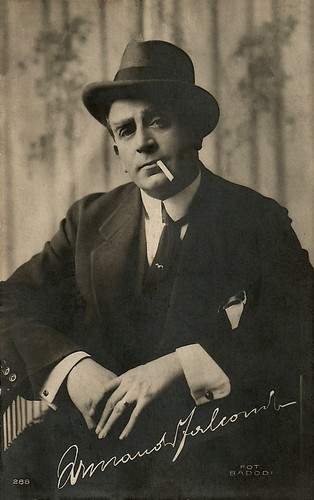
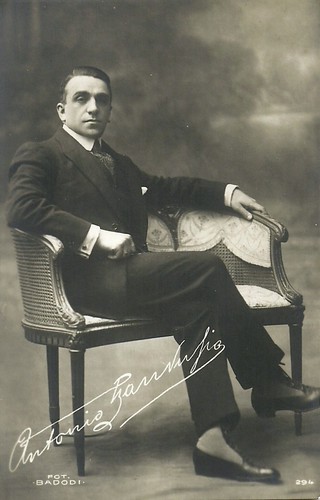
Italian postcard, no. 288. Photo: Badodi.
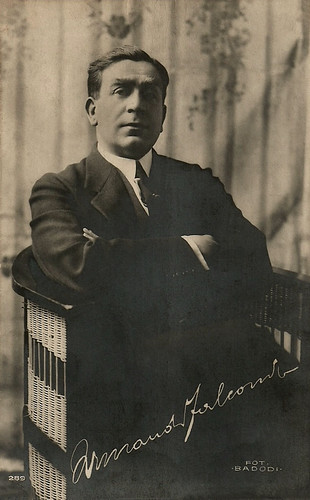
Italian postcard, no. 289. Photo: Badodi.

Italian postcard by Photo Edizione Bettini, Roma, no. 91. Photo: Riccardo Bettini.

Italian postcard by Edizioni Aperol / Gazzettino di Venezia.
Armando Falconi was a familiar face in Italian films in the 1930s and early 1940s. He was often type-casted as the naive and elderly stealer of hearts. In 1931 Falconi debuted in the film Rubacuori/The Sheik (Guido Brignone, 1931).
That same year, he went to the Paris Paramount studio in Joinville, to act in the Italian version of the multilingual The Devil’s Holiday, La vacanza del Diavolo (Jack Salvatori, 1931). Falconi scripted the film himself.
Afterwards, Falconi had a very prolific career in Italian sound cinema, mostly in comedy. He worked with reputed directors on films like La stella del cinema (Mario Almirante, 1931), La segretaria per tutti (Amleto Palermi, 1933) with Vittorio De Sica, and Joe il Rosso (Raffaello Matarazzo, 1926).
Later films include Felicita Colombo (1937), Don Pasquale (Camillo Mastrocinque, 1940), Il biricchino di papa (Raffaello Matarazzo, 1942), and La locandiera (1943). In I promessi sposi (Mario Camerini, 1941) he played a wise Don Abbondio. Falconi also acted in films directed by foreign directors, such as Cento lettere d’amor (Max Neufeld, 1940) and La nascita di Salomé (Jean Choux, 1940). His son Dino wrote scripts for many films in which his father performed and directed him in Vento di milioni (Dino Falconi, 1940).
In 1943 an accident ruined Armando Falconi’s career: he fell in the Cines studios in Rome and never recovered from this unfortunate event. Afterwards he only rarely reappeared in film. Complicating his condition even more was Parkinon’s disease, which forced him to stay immobile until his death. Armando Falconi died in Milan in 1954. He was 83.

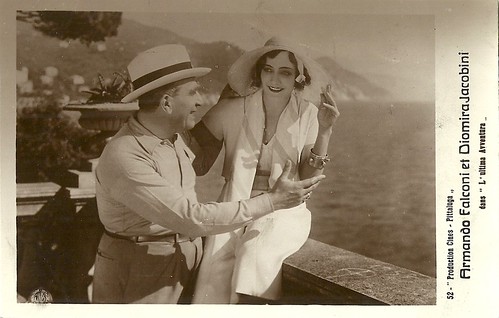
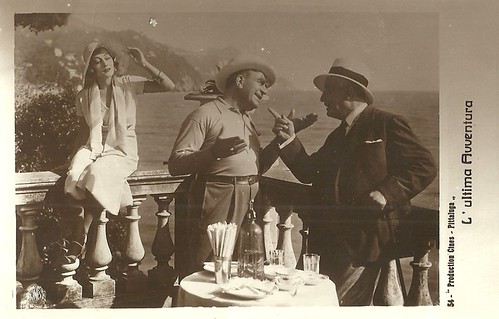
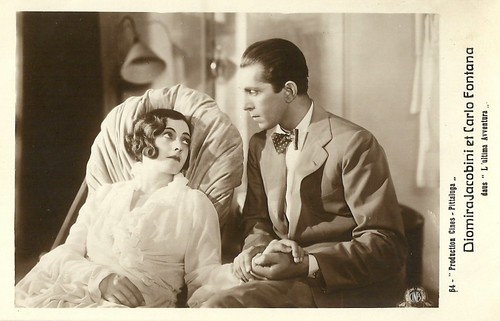
Italian postcard by Stab. Fotografico G.B. Falci, Milano, no. 88. Photo: Production Cines Pittaluga. Armando Falconi and Diomira Jacobini in L'ultima avventura/The last adventure (Mario Camerini, 1932).

Italian postcard. Photo: I.C.A.R. (Generalcine). Nino Taranto and Armando Falconi in the Italian comedy Nonna Felicità (Mario Mattoli, 1938) It was a sequel to the 1937 film Felicità Colombo, again by Mattoli. Taranto played a singer called Nino Senesi, although he looks like a travelling salesman on this card.
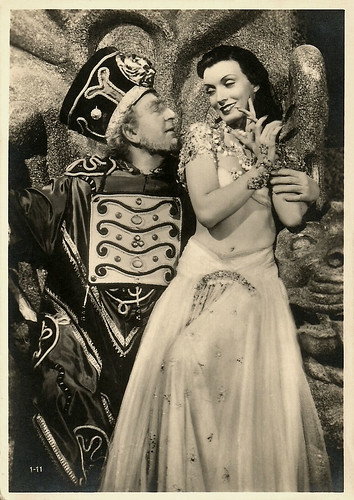
Italian postcard. Armando Falconi and Conchita Montenegro in the Italo-Spanish coproduction La nascita di Salome (Jean Choux, 1940), shot in the Cinecittà studios in Rome.

Italian postcard by S.A. Grafitalia, Milano (Milan), no. 3. Photo: Film Lux. Publicity still for I Promessi Sposi/The Spirit and the Flesh (Mario Camerini, 1941). Don Abbondio (Armando Falconi) warns Perpetua (Ines Zacconi) to take the menace seriously and keep her mouth shut.
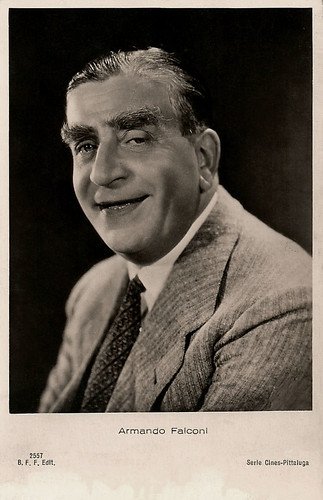
Italian postcard by Ballerini & Fratini, Firenze, no. 2557. Series Cines-Pittaluga.

Italian postcard by ASER (A. Scarmiglia Edizioni, Roma), no. 207. Photo: Vaselli / Lux.
Sources: MyMovies, Wikipedia (Italian), and IMDb.
This post was last updated on 28 February 2024.
Italian postcard by Ed. G. Vettori, Bologna. Cav. (Cavaliere) A. Falconi.
Italian postcard by Ed. G.B. Falci, Milano in the Cines-Pittaluga series, no. 42. Photo: Cines-Pittaluga. Armando Falconi (the man with the bandage) as Count Armando, and possibly left Giuseppe Pierozzi as the little creditor and Arturo Falconi as Armando's best friend Paolino in Patatrac (Gennaro Righelli, 1931).
Italian postcard, no. 55. Photo: Cines-Pittaluga, Roma. Armando Falconi in Rubacuori (Guido Brignone, 1931). The woman is probably Grazia Del Rio.
Italian postcard, even if with French written captions, no. 26. Photo: Prod. Cines-Pittaluga. Diomira Jacobini and Armando Falconi in L'ultima avventura (Mario Camerini 1932).
Italian postcard. Photo: Stella Film / Distribuzione I.C.I. Primo Carnera and Armando Falconi in the film comedy La nascita di Salomè/The Birth of Salome (Jean Choux, 1940). The back of the card offers a referendum on the two endings of the film, to be sent to the company Stella Film, Via Vittorio Veneto 116 in Rome.
Italian postcard by S.A. Grafitalia, Milano (Milan), no. 10. Photo: Film Lux. Armando Falconi as Don Abbondio in I Promessi Sposi/The Spirit and the Flesh (Mario Camerini, 1941).
Duelling with a reporter
Armando Falconi was born in Rome, Italy in 1871. Falconi followed in his parents’ footsteps: his father Pietro Falconi was first an actor then a company leader, while his mother Adelaide Negri was also an actress. His brother Arturo Falconi was a dramatic actor but had less success than the rest of the family.
At 23, Armando was enrolled in a Neapolitan theatre company. He fared particularly well as a comic actor and was asked to play in many comedies. During a tour in Hungary, Falconi fell in love with his cousin Tina Di Lorenzo, one of the greatest stage actresses of her time.
After duelling with a reporter who had offended her, Falconi married Di Lorenzo in 1901. Their bond was also professional, as they often performed together.
The couple appeared together in short silent films such as La scintilla/The Spark (Eleuterio Rodolfi, 1915) with Oreste Bilancia, and La bella mamma/The Beautiful Mother (1915). They had a son, Dino Falconi (1902-1990), who would become a scriptwriter and film director.
Between 1905 and 1912, Falconi had his own theatre company. Famous stage parts of Falconi were Falstaff in William Shakespeare’s play 'The Merry Wives of Windsor', Peachum in 'The Beggar’s Opera' by John Gay, and Leone in 'Addio Giovinezza' by Sandro Camasio and Nino Oxilia.
Italian postcard by NPC, no. 19. Photo: Varischi Artico & Co., Milano. Armando Falconi and Tina Di Lorenzo.
Italian postcard by Prob. Alterocca, Terni. Commemoration of the marriage of the actors Tina Di Lorenzo and Armando Falconi, in Livorno on 8 and 10 August 1901.
Italian postcard, no. 288. Photo: Badodi.
Italian postcard, no. 289. Photo: Badodi.
Italian postcard by Photo Edizione Bettini, Roma, no. 91. Photo: Riccardo Bettini.
Italian postcard by Edizioni Aperol / Gazzettino di Venezia.
Naive and elderly stealer of hearts
Armando Falconi was a familiar face in Italian films in the 1930s and early 1940s. He was often type-casted as the naive and elderly stealer of hearts. In 1931 Falconi debuted in the film Rubacuori/The Sheik (Guido Brignone, 1931).
That same year, he went to the Paris Paramount studio in Joinville, to act in the Italian version of the multilingual The Devil’s Holiday, La vacanza del Diavolo (Jack Salvatori, 1931). Falconi scripted the film himself.
Afterwards, Falconi had a very prolific career in Italian sound cinema, mostly in comedy. He worked with reputed directors on films like La stella del cinema (Mario Almirante, 1931), La segretaria per tutti (Amleto Palermi, 1933) with Vittorio De Sica, and Joe il Rosso (Raffaello Matarazzo, 1926).
Later films include Felicita Colombo (1937), Don Pasquale (Camillo Mastrocinque, 1940), Il biricchino di papa (Raffaello Matarazzo, 1942), and La locandiera (1943). In I promessi sposi (Mario Camerini, 1941) he played a wise Don Abbondio. Falconi also acted in films directed by foreign directors, such as Cento lettere d’amor (Max Neufeld, 1940) and La nascita di Salomé (Jean Choux, 1940). His son Dino wrote scripts for many films in which his father performed and directed him in Vento di milioni (Dino Falconi, 1940).
In 1943 an accident ruined Armando Falconi’s career: he fell in the Cines studios in Rome and never recovered from this unfortunate event. Afterwards he only rarely reappeared in film. Complicating his condition even more was Parkinon’s disease, which forced him to stay immobile until his death. Armando Falconi died in Milan in 1954. He was 83.
Italian postcard by Stab. Fotografico G.B. Falci, Milano, no. 88. Photo: Production Cines Pittaluga. Armando Falconi and Diomira Jacobini in L'ultima avventura/The last adventure (Mario Camerini, 1932).
Italian postcard. Photo: I.C.A.R. (Generalcine). Nino Taranto and Armando Falconi in the Italian comedy Nonna Felicità (Mario Mattoli, 1938) It was a sequel to the 1937 film Felicità Colombo, again by Mattoli. Taranto played a singer called Nino Senesi, although he looks like a travelling salesman on this card.
Italian postcard. Armando Falconi and Conchita Montenegro in the Italo-Spanish coproduction La nascita di Salome (Jean Choux, 1940), shot in the Cinecittà studios in Rome.
Italian postcard by S.A. Grafitalia, Milano (Milan), no. 3. Photo: Film Lux. Publicity still for I Promessi Sposi/The Spirit and the Flesh (Mario Camerini, 1941). Don Abbondio (Armando Falconi) warns Perpetua (Ines Zacconi) to take the menace seriously and keep her mouth shut.
Italian postcard by Ballerini & Fratini, Firenze, no. 2557. Series Cines-Pittaluga.
Italian postcard by ASER (A. Scarmiglia Edizioni, Roma), no. 207. Photo: Vaselli / Lux.
Sources: MyMovies, Wikipedia (Italian), and IMDb.
This post was last updated on 28 February 2024.