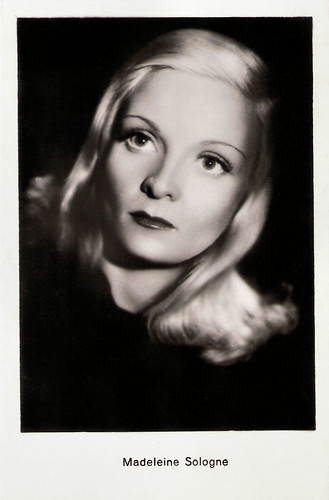
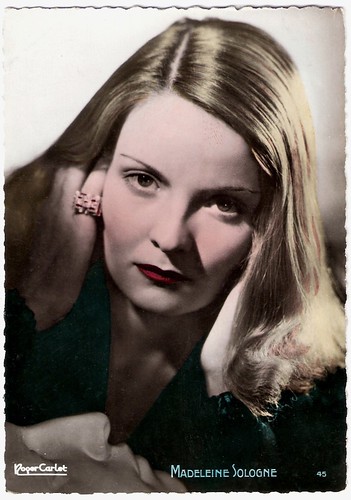
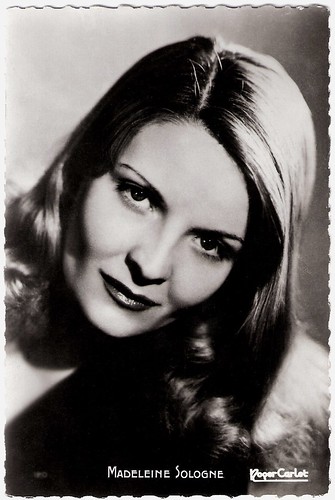
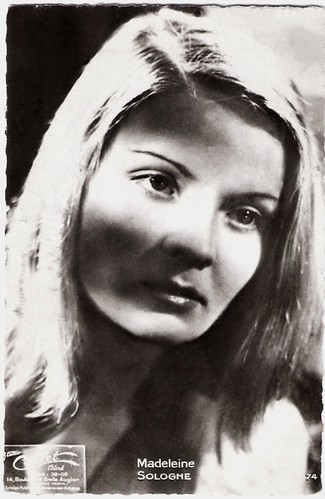
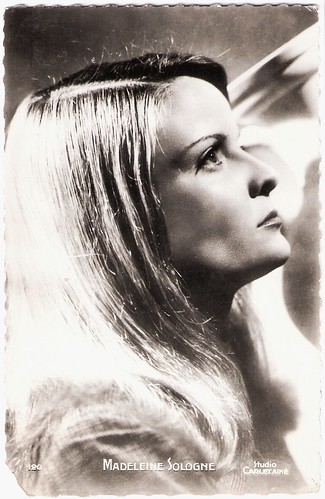
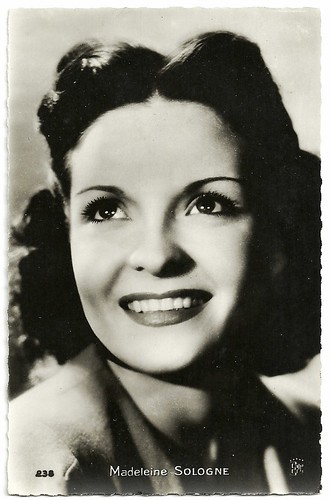
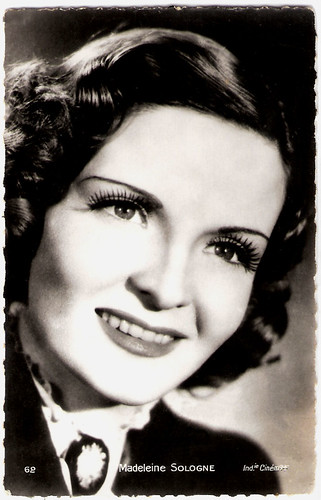
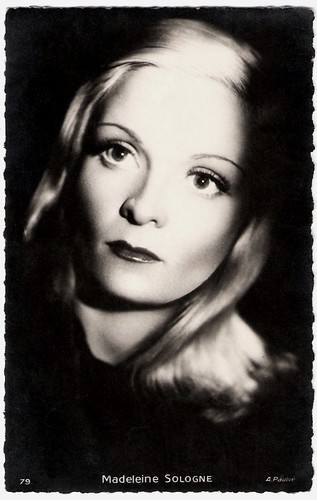
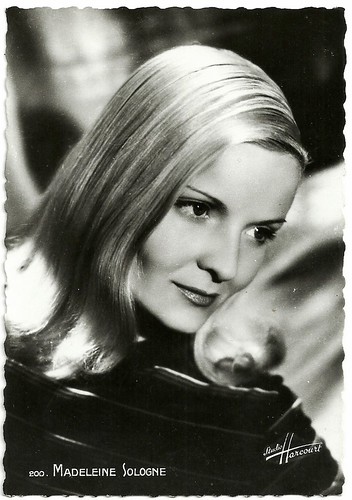
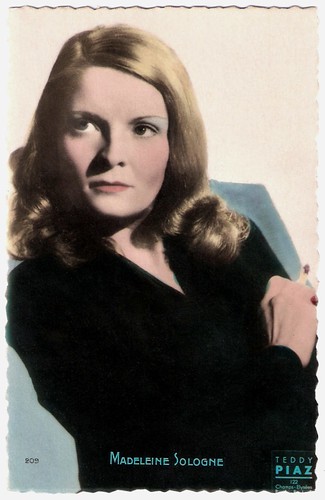
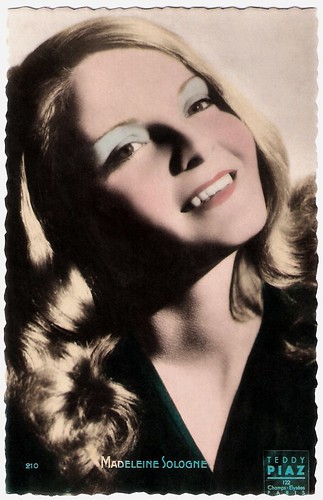
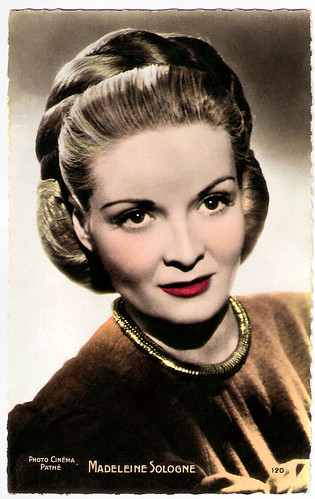
Une grande fille toute simple/Just a Big Simple Girl (Jacques Manuel, 1948) is a French romantic comedy in which the line between artifice and reality is blurred. Beautiful Madeleine Sologne played the girl from the title, a role which was in fact about and written for another French film star, Madeleine Robinson.
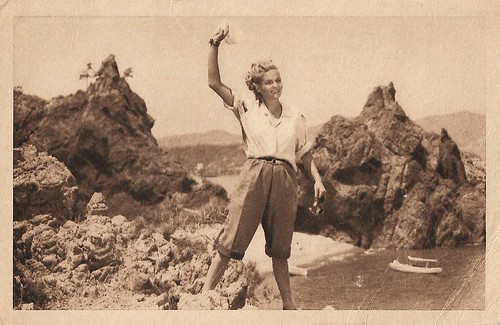
French postcard. Photo: Prod. CAPAC. Madeleine Sologne in Une grande fille toute simple (Jacques Manuel, 1948). This postcard was for the exclusive release at the Madeleine cinema.
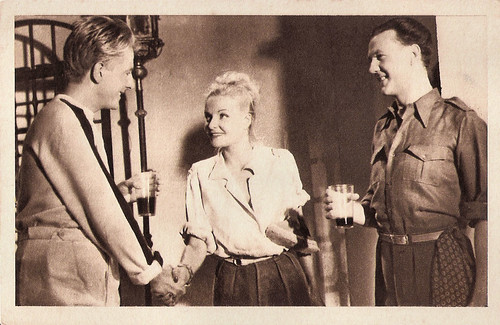
French postcard. This postcard was made for the exclusive release at the Madeleine cinema. Photo: Prod. CAPAC. Jean Desailly, Madeleine Sologne and Raymond Rouleau in Une grande fille toute simple/Just a Big Simple Girl (Jacques Manuel, 1948).
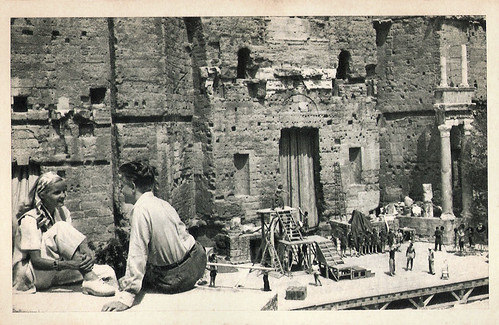
French postcard. This postcard was made for the exclusive release at the Madeleine cinema. Photo: Prod. CAPAC. Jean Desailly and Madeleine Sologne in Une grande fille toute simple/Just a Big Simple Girl (Jacques Manuel, 1948).
During a stage tour, the young and beautiful star Stépha (Madeleine Sologne) behaves complicated and unpredictable and plays with the men in the production. She does not know to choose between the stage director Simon (Raymond Rouleau) and the 'jeune premier' of the actors, Michel (Jean Desailly).
Stépha and Michel fall in love with each other. However, the pianist Esther (Andrée Clément) also fancies Michel. On the night of the last show, the jealous Stépha breaks with Michel, with Esther's presence as a pretext, and wants to go (back) to Simon. At the estate of Stépha's aunt (Gabrielle Dorziat) at the Côte d'Azur, matters are settled.
Une grande fille toute simple was directed by former costume designer Jacques Manuel. The production was supervised by Marcel L’Herbier, who had directed Le vertige (1926), which had been Manuel’s first film job.
The screenplay was written by André Roussin based on his own 1942 stage play of the same name. When he wrote Une grande fille toute simple, Roussin was inspired by his love affair with actress Madeleine Robinson during rehearsals of the play Musique légère (Light music) by Louis Ducreux. The play, co-starring Gérard Philipe was a huge success.
Paradoxically, the role of Stepha, especially written for Madeleine Robinson, was entrusted to Madeleine Sologne for the film adaptation of the play. The other parts went to Raymond Rouleau and director Jean Desailly. Gabrielle Dorziat played aunt Edmée and author Louis Ducreux played a bit part.
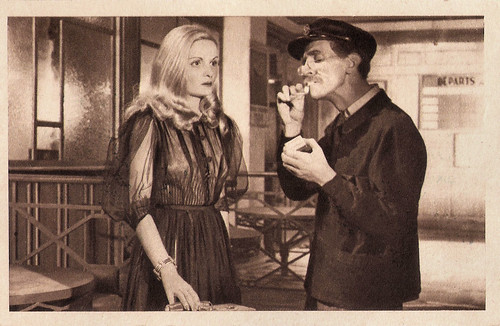
French postcard. This postcard was made for the exclusive release at the Madeleine cinema. Photo: Prod. CAPAC. Madeleine Sologne and Louis Ducreux in Une grande fille toute simple/Just a Big Simple Girl (Jacques Manuel, 1948).
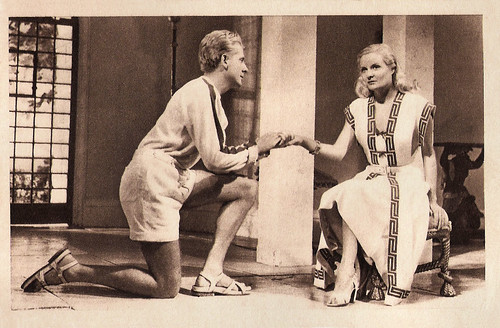
French postcard. This postcard was made for the exclusive release at the Madeleine cinema. Photo: Prod. CAPAC. Jean Desailly and Madeleine Sologne in Une grande fille toute simple/Just a Big Simple Girl (Jacques Manuel, 1948). The sets were by Robert Gys.
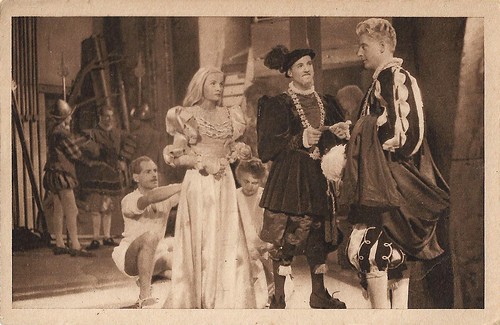
French postcard. This postcard was made for the exclusive release at the Madeleine cinema. Photo: Prod. CAPAC. Jean Desailly, Madeleine Sologne and Raymond Rouleau in Une grande fille toute simple/Just a Big Simple Girl (Jacques Manuel, 1948).
When Une grande fille toute simple was released in the US as Just a Big Simple Girl, critic Bosley Crowther of The New York Times reviewed: “Into the Arcadia Theatre, at Third Avenue and Fifty-ninth Street, someone of reckless disposition deposited a new French film yesterday. The title of this adventurous import was announced as Just a Big Simple Girl, and mainly to check on that title, this reviewer went over to have a look.
That's the title, all right, and, as near as we could make out, it suitably describes the crazy dame who races about in this picture—except that she's not very big.But we've got to confess quite frankly that we can't be entirely sure that it's the girl in the case who is simple and not the people who made the film.
For this tale of a platinum-blonde French actress, who appears to be two or three kinds of maniac, is the most completely incoherent lot of twaddle we ever heard or saw. For almost an hour and three-quarters, this dame is all over the lot, pushing and grabbing at fellows and talking them blue in the face. What it is precisely that she wants we never know, for the cutting is quite as provoking as the writing and directing of this film.”
Hal Erickson at AllMovie: "The French Just a Big, Simple Girl strives to emulate Pirandello by blurring the line between artifice and reality. The scene is a theater, where a group of actors are performing in a play. We have already been informed that there is a real-life romantic triangle going on backstage, but the actors gamely act out their roles as if everything is okay. But everything becomes no-kay when a strange woman walks on stage and begins digressing from the script."
Jacques Manuel directed one more film, the Colette adaptation Julie de Carneilhan (1950), with Edwige Feuillère and Pierre Brasseur. Manuel passed away in 1968 in Paris.
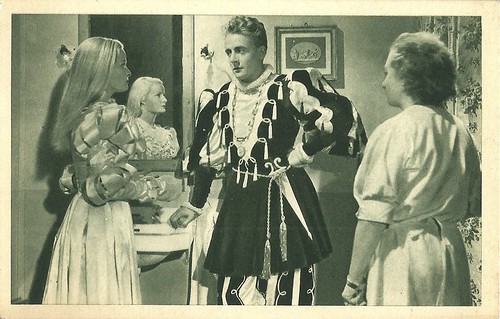
Belgian postcard. Photo: Prod. CAPAC. Artistes Associés. Madeleine Sologne and Jean Desailly in Une grande fille toute simple (Jacques Manuel, 1948). This card was for the showing of the film at the Palais des Arts/ Feestpaleis in [Antwerp? Ghent?].
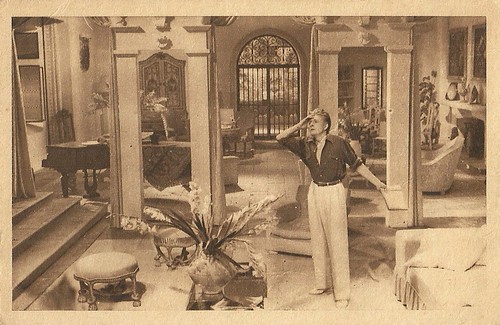
French postcard. Photo: Prod. CAPAC. Jean Desailly in Une grande fille toute simple (Jacques Manuel, 1948). This postcard was for the exclusive release at the Madeleine cinema. The sets were by Robert Gys.
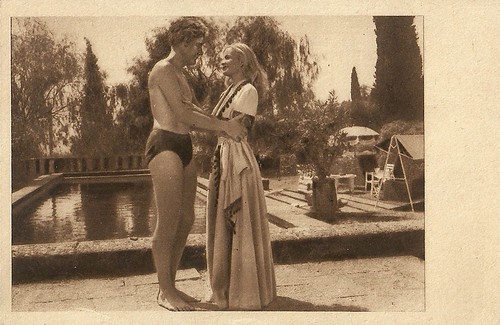
French postcard. Photo: Prod. CAPAC. Jean Desailly and Madeleine Sologne in Une grande fille toute simple (Jacques Manuel, 1948). This postcard was for the exclusive release at the Madeleine cinema.
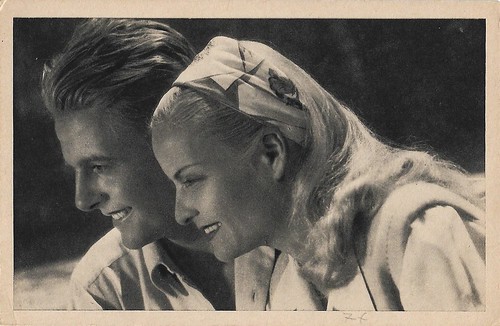
French postcard. Photo: Prod. CAPAC. Jean Desailly and Madeleine Sologne in Une grande fille toute simple (Jacques Manuel, 1948). This postcard was for the exclusive release at the Madeleine cinema.
Sources: Bosley Crowther (The New York Times), Hal Erickson (AllMovie), Wikipedia (French) and IMDb.
French postcard. Photo: Prod. CAPAC. Madeleine Sologne in Une grande fille toute simple (Jacques Manuel, 1948). This postcard was for the exclusive release at the Madeleine cinema.
French postcard. This postcard was made for the exclusive release at the Madeleine cinema. Photo: Prod. CAPAC. Jean Desailly, Madeleine Sologne and Raymond Rouleau in Une grande fille toute simple/Just a Big Simple Girl (Jacques Manuel, 1948).
French postcard. This postcard was made for the exclusive release at the Madeleine cinema. Photo: Prod. CAPAC. Jean Desailly and Madeleine Sologne in Une grande fille toute simple/Just a Big Simple Girl (Jacques Manuel, 1948).
A Love Triangle Backstage
During a stage tour, the young and beautiful star Stépha (Madeleine Sologne) behaves complicated and unpredictable and plays with the men in the production. She does not know to choose between the stage director Simon (Raymond Rouleau) and the 'jeune premier' of the actors, Michel (Jean Desailly).
Stépha and Michel fall in love with each other. However, the pianist Esther (Andrée Clément) also fancies Michel. On the night of the last show, the jealous Stépha breaks with Michel, with Esther's presence as a pretext, and wants to go (back) to Simon. At the estate of Stépha's aunt (Gabrielle Dorziat) at the Côte d'Azur, matters are settled.
Une grande fille toute simple was directed by former costume designer Jacques Manuel. The production was supervised by Marcel L’Herbier, who had directed Le vertige (1926), which had been Manuel’s first film job.
The screenplay was written by André Roussin based on his own 1942 stage play of the same name. When he wrote Une grande fille toute simple, Roussin was inspired by his love affair with actress Madeleine Robinson during rehearsals of the play Musique légère (Light music) by Louis Ducreux. The play, co-starring Gérard Philipe was a huge success.
Paradoxically, the role of Stepha, especially written for Madeleine Robinson, was entrusted to Madeleine Sologne for the film adaptation of the play. The other parts went to Raymond Rouleau and director Jean Desailly. Gabrielle Dorziat played aunt Edmée and author Louis Ducreux played a bit part.
French postcard. This postcard was made for the exclusive release at the Madeleine cinema. Photo: Prod. CAPAC. Madeleine Sologne and Louis Ducreux in Une grande fille toute simple/Just a Big Simple Girl (Jacques Manuel, 1948).
French postcard. This postcard was made for the exclusive release at the Madeleine cinema. Photo: Prod. CAPAC. Jean Desailly and Madeleine Sologne in Une grande fille toute simple/Just a Big Simple Girl (Jacques Manuel, 1948). The sets were by Robert Gys.
French postcard. This postcard was made for the exclusive release at the Madeleine cinema. Photo: Prod. CAPAC. Jean Desailly, Madeleine Sologne and Raymond Rouleau in Une grande fille toute simple/Just a Big Simple Girl (Jacques Manuel, 1948).
The most completely incoherent lot of twaddle
When Une grande fille toute simple was released in the US as Just a Big Simple Girl, critic Bosley Crowther of The New York Times reviewed: “Into the Arcadia Theatre, at Third Avenue and Fifty-ninth Street, someone of reckless disposition deposited a new French film yesterday. The title of this adventurous import was announced as Just a Big Simple Girl, and mainly to check on that title, this reviewer went over to have a look.
That's the title, all right, and, as near as we could make out, it suitably describes the crazy dame who races about in this picture—except that she's not very big.But we've got to confess quite frankly that we can't be entirely sure that it's the girl in the case who is simple and not the people who made the film.
For this tale of a platinum-blonde French actress, who appears to be two or three kinds of maniac, is the most completely incoherent lot of twaddle we ever heard or saw. For almost an hour and three-quarters, this dame is all over the lot, pushing and grabbing at fellows and talking them blue in the face. What it is precisely that she wants we never know, for the cutting is quite as provoking as the writing and directing of this film.”
Hal Erickson at AllMovie: "The French Just a Big, Simple Girl strives to emulate Pirandello by blurring the line between artifice and reality. The scene is a theater, where a group of actors are performing in a play. We have already been informed that there is a real-life romantic triangle going on backstage, but the actors gamely act out their roles as if everything is okay. But everything becomes no-kay when a strange woman walks on stage and begins digressing from the script."
Jacques Manuel directed one more film, the Colette adaptation Julie de Carneilhan (1950), with Edwige Feuillère and Pierre Brasseur. Manuel passed away in 1968 in Paris.
Belgian postcard. Photo: Prod. CAPAC. Artistes Associés. Madeleine Sologne and Jean Desailly in Une grande fille toute simple (Jacques Manuel, 1948). This card was for the showing of the film at the Palais des Arts/ Feestpaleis in [Antwerp? Ghent?].
French postcard. Photo: Prod. CAPAC. Jean Desailly in Une grande fille toute simple (Jacques Manuel, 1948). This postcard was for the exclusive release at the Madeleine cinema. The sets were by Robert Gys.
French postcard. Photo: Prod. CAPAC. Jean Desailly and Madeleine Sologne in Une grande fille toute simple (Jacques Manuel, 1948). This postcard was for the exclusive release at the Madeleine cinema.
French postcard. Photo: Prod. CAPAC. Jean Desailly and Madeleine Sologne in Une grande fille toute simple (Jacques Manuel, 1948). This postcard was for the exclusive release at the Madeleine cinema.
Sources: Bosley Crowther (The New York Times), Hal Erickson (AllMovie), Wikipedia (French) and IMDb.