Showing posts with label Winona Ryder. Show all posts

04 March 2023

Winona Ryder

Delicate American actress Winona Ryder (1971) is known for her dark hair, brown eyes and pale skin. She starred in films such as Beetlejuice (1988), Heathers (1989), Edward Scissorhands (1990), Bram Stoker's Dracula (1992), and the television series Stranger Things. In 1994, she won a Golden Globe for Best Supporting Actress in The Age of Innocence (1993), and Ryder was nominated twice for an Oscar.

Winona Ryder
Vintage postcard.

Winona Ryder
British postcard by TV Hits. Photo: Firooz Zahedi / Onyx.

Winona Ryder
Belgian postcard by MultiChoice Kaleidoscope. Photo: Isopress / Outline (Low).

Killing popular schoolgirls


Winona Ryder was born Winona Laura Horowitz in Winona (Olmsted County), Minnesota, in 1971. Yes, her name is very much the same as her birthplace. Her parents, Cindy Horowitz (Istas), an author and video producer, and Michael Horowitz, a publisher and bookseller, were part of the hippie movement. Her brother Uri Horowitz (1976) got his first name from Yuri Gagarin. She also has a half-sister, Sunyata Palmer (1968), and a half-brother, Jubal Palmer (1970), from her mother Cindy's first marriage.

From 1978, Winona grew up in a commune near Mendocino in California, without electricity. When Winona was seven, her mother managed an old cinema in a nearby barn and screened films all day. She allowed Winona to miss school to watch movies with her. In 1981, the family moved to Petaluma, California. Winona was an outsider. Her parents sent her to a public school and later to the American Conservatory Theatre acting school in San Francisco.

At 13, a talent scout discovered her at a performance at the American Conservatory Theatre. In 1985, she auditioned for a role in the film Desert Bloom (David Seltzer, 1986) with a video in which she performed a monologue from 'Franny and Zooey' by J. D. Salinger. Although fellow actress Annabeth Gish was cast, director and writer David Seltzer recognised her talent. He later cast her as Rina in his film Lucas (David Seltzer, 1986) about a teenager (Corey Haim) and his high school life. When telephoned how she wanted to be credited, she heard her father's album by Mitch Ryder & The Detroit Wheels playing in the background and chose Ryder as her stage name. Her hair's real colour is blonde, but was dyed black for Lucas (1986). She was told to keep it that colour. Except for Edward Scissorhands (Tim Burton, 1990), it has stayed that colour since.

Her next film was Square Dance (Daniel Petrie, 1987), in which her character lives between two worlds: on a traditional farm and in a big city. Ryder's performance received good reviews, although neither film was a commercial success. Lucas led director Tim Burton to cast her in his film Beetlejuice (1988). In this comedy, she played Lydia Deetz, who moves with her family into a house inhabited by ghosts (Geena Davis, Alec Baldwin, and Michael Keaton). Ryder and the film received positive reviews, and Beetlejuice was a box office hit.

In 1989, she starred as Veronica Sawyer in the independent film Heathers (Michael Lehmann, 1989) about a couple (Ryder and Christian Slater) who kill popular schoolgirls. Ryder's agent had advised her against the role. The film was a financial failure, but Ryder received positive reviews. The Jerry Lee Lewis biopic Great Balls of Fire! (Jim McBride, 1989) was also a flop. That same year, Ryder appeared in Mojo Nixon's music video 'Debbie Gibson Is Pregnant with My Two-Headed Love Child'. At the premiere of Great Balls of Fire (1989), Ryder met Johnny Depp. They became engaged a few months later, but their relationship ended in 1993. He had a tattoo of her name, and after they broke up, he reduced it to "Wino forever".

Winona Ryder in Heathers (1989)
Canadian postcard by Canadian Postcard, no. A 272. Photo: Winona Ryder in Heathers (Michael Lehmann, 1989).

Winona Ryder
Canadian postcard by Canadian Postcard, no. A 298.

Winona Ryder in The House of the Spirits (1993)
British postcard by Film Review, set L, card 3. Photo: Entertainment Film Distributors. Winona Ryder in The House of the Spirits (Bille August, 1993), adapted from the novel by Isabel Allende.

A voicemail from Martin Scorsese


In 1990, Winona Ryder broke through alongside her boyfriend Johnny Depp in Edward Scissorhands (Tim Burton, 1990). The fantasy film was an international box-office success. Ryder was selected as Mary Corleone in The Godfather: Part III (Francis Ford Coppola, 1990) but had to drop out after catching the flu from the strain of doing Welcome Home, Roxy (Jim Abrahams, 1990) and Mermaids (Richard Benjamin, 1990) back-to-back. In a later interview, she said she arrived in Rome to film and simply could not get out of bed. A doctor was called and ordered her to return home and sleep.

Critics praised Ryder's performance alongside Cher and Christina Ricci in the family comedy Mermaids (1990). She was nominated for a Golden Globe as Best Supporting Actress. Ryder also appeared with Cher and Ricci in the music video for 'The Shoop Shoop Song', the film's theme song. Independent filmmaker Jim Jarmusch wrote a role specifically for her in Night on Earth (Jim Jarmusch, 1991), as a tattooed, chain-smoking cab driver who dreams of becoming a mechanic.

Ryder played a dual role as Mina Murray and Elisabeta in Bram Stoker's Dracula (Francis Ford Coppola, 1992). In 1993, she starred as Blanca in the drama The House of the Spirits (Bille August, 1993) alongside Antonio Banderas, Meryl Streep, and Glenn Close. It is the film adaptation of Isabel Allende's bestseller of the same name. She co-starred with Michelle Pfeiffer and Daniel Day-Lewis in Age of Innocence (Martin Scorsese, 1993), the film adaptation of Edith Wharton's novel. Ryder was Martin Scorsese's first and only choice for the role of May Welland. For years, she kept Scorsese's voicemail message in which he told her that she got the role. Her part earned her the Golden Globe for Best Supporting Actress and an Oscar nomination.

Winona Ryder also earned positive reviews for her role in the comedy Reality Bites (Ben Stiller, 1994). That same year, she received more critical acclaim and another Oscar nomination as Jo in the drama Little Women (Gillian Armstrong, 1994). In 1996, she starred alongside Daniel Day-Lewis and Joan Allen in The Crucible (Nicholas Hytner, 1996), an adaptation of Arthur Miller's stage play about the Puritan witch hunt in Salem. The film was not a success, but Ryder's performance was acclaimed. A year later, she portrayed an android in the successful Horror film Alien: Resurrection (Jean-Pierre Jeunet, 1997) alongside Sigourney Weaver's Ripley.

She starred in Woody Allen's Celebrity (1998) after Drew Barrymore turned down the role, and as a psychiatric patient with borderline syndrome in the drama Girl, Interrupted (James Mangold, 1999), based on Susanna Kaysen's autobiographical novel. Girl, Interrupted was her first film as executive producer and was to be Ryder's comeback in Hollywood after some flops. However, the film became Angelina Jolie's breakthrough, and she won an Oscar for her role. From 1993 to 1996, Ryder was in a relationship with Dave Pirner, the lead singer of the group Soul Asylum, and from December 1997 to April 2000 with Matt Damon.

Winona Ryder
Vintage postcard, no. 1030.

Winona Ryder
Vintage postcard by iauioasinu, no. 0042.

Winona Ryder
British postcard by Heroes Publishing LTD, London, no. SPC 2856.

Winona Ryder
British postcard by Pyramid, Leicester, no. PC 8209. Photo: Joyce Silverstein. Caption: Winona Ryder - Cream Dress.

A career setback and a comeback


Winona Ryder appeared alongside Richard Gere in Autumn in New York (Joan Chen, 2000), a romance about an older man's love for a younger woman. She also made a cameo appearance in the comedy Zoolander (Ben Stiller, 2000). The Adam Sandler comedy Mr. Deeds (Steven Brill, 2002) became a huge box-office hit, but failed with critics. Ryder was nominated for a Golden Raspberry Award.

Also in 2002, she was sentenced to three years' probation and 480 hours of work for shoplifting $5,000 worth of clothes. The incident caused a career setback. She withdrew from the public eye in the following years and did not return until 2006. In that year, she appeared in the novel adaptation A Scanner Darkly (Richard Linklater, 2006) alongside Keanu Reeves, Robert Downey Jr., and Woody Harrelson.

In 2009, she appeared in Star Trek: The Future Begins (J. J. Abrams, 2009) as Amanda Grayson, Spock (Zachary Quinto)'s mother. The prequel was a box-office hit, and Ryder earned a Scream Award for Best Guest Appearance. She also appeared alongside Robin Wright and Julianne Moore in Rebecca Miller's Pippa Lee (2009), and alongside Natalie Portman and Mila Kunis in Darren Aronofsky's Black Swan (2010).

Ryder starred in the television film When Love Is Not Enough: The Lois Wilson Story (John Kent Harrison, 2010), for which she was nominated for a Screen Actors Guild Award. She starred in the comedy The Dilemma (Ron Howard, 2011), and the thrillers The Iceman (Ariel Vromen, 2012) and The Letter (Jay Anania, 2012) opposite James Franco. In Tim Burton's Frankenweenie (2012), she voiced Elsa Van Helsing.

Winona Ryder embodied the main character, Joyce Byers, in the Netflix series Stranger Things (2016-2022). Critics named her role a comeback. She returned opposite Michael Keaton in Beetlejuice Beetlejuice (Tim Burton, 2024), the sequel to Beetlejuice (1988). Set more than three decades after the first film, it follows Ryder as Lydia Deetz, now a mother, struggling to keep her family together in the wake of a loss as Beetlejuice returns to haunt her. The film got positive reviews and grossed $452 million worldwide. Since 2011, Ryder has been in a relationship with fashion designer Scott MacKinlay Hahn. She owns some of Hollywood's stars' most priceless memorabilia, including Louis Armstrong's bongo drums. She also has a collection of vintage Hollywood costumes, including Claudette Colbert's gown from It Happened One Night (Frank Capra, 1934).

Ron Perlman, Dominique Pinon.Sigourney Weaver, and Winona Ryder in Alien Resdurrection (1997)
Vintage postcard in the Movie's Images series, no. 52. Ron Perlman, Dominique Pinon, Sigourney Weaver, and Winona Ryder in Alien: Resurrection (Jean-Pierre Jeunet, 1997).
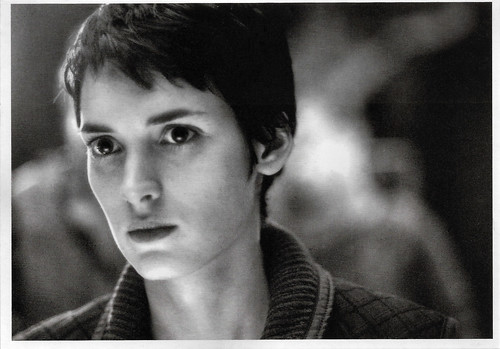
Winona Ryder in Alien - Resurrection (1997)
Vintage postcard in the Movie's Images series, no. 53. Winona Ryder in Alien: Resurrection (Jean-Pierre Jeunet, 1997).

Winona Ryder and Sigourney Weaver in Alien Resurrection (1997)
Vintage postcard in the Movie's Images series, no. 59. Winona Ryder and Sigourney Weaver in Alien: Resurrection (Jean-Pierre Jeunet, 1997).
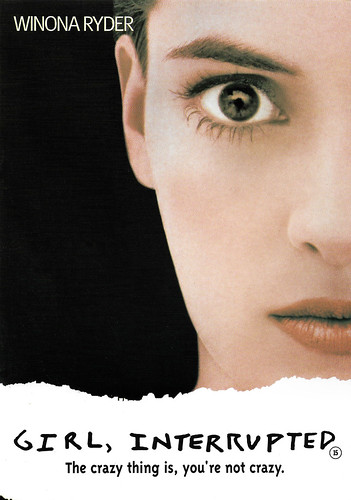
Winona Ryder in Girl, Interrupted (1999)
British freecard by Boomerang. Winona Ryder in Girl, Interrupted (James Mangold, 1999). Captions: The crazy thing is, you're not crazy. Girl, Interrupted. Based on a true story. Opens March 24 at Cinemas across the country.

Sources: Pedro Borges (IMDb), Wikipedia (Dutch and German), and IMDb. This post was last updated on 1 October 2026.

18 August 2022

Alien Resurrection (1997)

Alien: Resurrection (1997) is an American Science Fiction film, the third sequel to Alien (1979). 200 years after her death, Ellen Ripley is revived as a powerful human/alien hybrid clone. Along with a crew of space pirates, she must again battle the deadly aliens and stop them from reaching Earth. The film was directed by Frenchman Jean-Pierre Jeunet. The leads are played by Sigourney Weaver, Winona Ryder, Ron Perlman, and Dominique Pinon.

Sigourney Weaver in Alien Resdurrection (1997)
Vintage postcard in the Movie's Images series, no. 54. Sigourney Weaver in Alien - Resurrection (Jean-Pierre Jeunet, 1997).

Winona Ryder in Alien - Resurrection (1997)
Vintage postcard in the Movie's Images series, no. 53. Winona Ryder in Alien - Resurrection (Jean-Pierre Jeunet, 1997).

Ron Perlman, Dominique Pinon.Sigourney Weaver, and Winona Ryder in Alien Resdurrection (1997)
Vintage postcard in the Movie's Images series, no. 52. Ron Perlman, Dominique Pinon, Sigourney Weaver, and Winona Ryder in Alien - Resurrection (Jean-Pierre Jeunet, 1997).

Ron Perlman, J. E. Freeman, Winona Ryder, Gary Dourdan, Kim Flowers, and Raymond Cruz in Alien Resurrection (1997)
Vintage postcard in the Movie's Images series, no. 51. Sigourney Weaver in Alien - Resurrection (Jean-Pierre Jeunet, 1997).

Alien Resdurrection (1997)
Dutch postcard by Film Freak Productions, Zoetermeer, no. FA 461, 1997. Photo: Twentieth Century Fox Film Corporation. Poster image of Alien - Resurrection (Jean-Pierre Jeunet, 1997) with Sigourney Weaver and Winona Ryder.

The new Aliens prove smarter than usual


Alien: Resurrection (1997) is set 200 years after the events of Alien³. Using blood samples, a group of scientists aboard the USM Auriga creates a clone of Ellen Ripley (Sigourney Weaver). The scientists work for the company United Systems Military, a kind of successor of Weyland-Yutani from the previous films. Like its predecessor, this company has set its sights on using the Aliens as a biological weapon.

Since Ripley was carrying the embryo of an Alien queen when she died, the scientists hope to obtain such an Alien embryo by cloning it. The plan succeeds and an Alien queen is extracted from the Ripley clone. The clone itself is kept alive for further research, while a nest of Aliens is created through the Alien Queen with a series of hosts kidnapped by smugglers for the first time in two centuries.

The smugglers find Ripley aboard the ship. The youngest member of the group, Call (Winona Ryder), recognises her name. Meanwhile, the new Aliens prove smarter than usual. Soon they escape and pose a threat to everyone aboard the Auriga. Most of the people on board are killed.

Ripley and scientist Dr. Wren (J.E. Freeman) realise that the Auriga is programmed to return to Earth. When the ship arrives there, the aliens will be released on the planet. Ripley, now with part alien DNA and superhuman powers, tries to escape with the smugglers of the spaceship before it reaches Earth.

During their escape, Ripley discovers more about the Aliens; for example, the new Alien Queen has part of her human DNA and is now able to produce living offspring without the need for eggs. The Aliens thus created see Ripley as their mother.

Eventually, Call turns out to be an android. She can break into the Auriga's computer system and programs the ship to crash into Earth in the hope that the crash will kill all the aliens. Just before the impact, Ripley and the last smugglers are able to escape with another ship.

Winona Ryder in Alien Resurrection (1997)
Vintage postcard in the Movie's Images series, no. 50. Winona Ryder in Alien - Resurrection (Jean-Pierre Jeunet, 1997).

Winona Ryder and Sigourney Weaver in Alien Resurrection (1997)
Vintage postcard in the Movie's Images series, no. 55. Winona Ryder and Sigourney Weaver in Alien - Resurrection (Jean-Pierre Jeunet, 1997).

Winona Ryder, Sigourney Weaver and Leland Orser in Alien Resurrection (1997)
Winona Ryder Vintage postcard in the Movie's Images series, no. 56. Winona Ryder, Sigourney Weaver and Leland Orser in Alien - Resurrection (Jean-Pierre Jeunet, 1997).

Alien Resurrection (1997)
Vintage postcard in the Movie's Images series, no. 57. Publicity still for Alien - Resurrection (Jean-Pierre Jeunet, 1997).

Sigourney Weaver in Alien Resurrection (1997)
Vintage postcard in the Movie's Images series, no. 59. Sigourney Weaver in Alien - Resurrection (Jean-Pierre Jeunet, 1997).

Resurrecting Ripley


20th Century Fox hired Joss Whedon to write the script for Alien: Resurrection as they were impressed with his previous work. Initially, Fox wanted the film to revolve around a clone of the Newt character from Aliens (James Cameron, 1987). Whedon wrote a short script around this idea when Fox decided to try to have Ellen Ripley return in the film.

At first, it was a bit of a mystery how to make an Alien 4, as Ripley died in the previous film, Alien³ (David Fincher, 1992). In the 1990s, cloning was in the spotlight, and that became the basis for the resurrection of Ripley and the xenomorph. Whedon personally found it difficult to incorporate Ripley's return into the script.

Sigourney Weaver, who had played Ripley in all the previous films, initially saw nothing in yet another return of her character. She felt it would be too much of the same. However, she was so impressed by Whedon's script that she agreed to play the role again. It was her idea to give her character some new characteristics, such as the Alien DNA. Weaver also gained mention as a co-producer and an $11 million salary as a result of her input.

Amalgamated Dynamics Incorporated (ADI) was hired to provide the effects for the film, and to design the Aliens for the film. In the previous Alien sequels, H.R. Giger's original Alien (Ridley Scott, 1986) design had already been reworked, for example, the creatures in Aliens (James Cameron, 1987) had a ribbed skull roof (in the previous film it was smooth), the chestburster had arms and the eggs looked different. In Alien³, they went a step further, turning the Alien into a reddish-brown, lightning-fast quadruped.

For the fourth instalment in the series, some changes were made again. In the past, the legs of the aliens were never shown, because in terms of joints they were clearly human. Because in 1997 the computer was now available, digital Aliens could be fully portrayed. To give them a more animal-like appearance, an extra joint was added to the ankle. The tail was also made flatter, as a paddle for the swimming scenes in the film. The old hissing and screeching noises were replaced by growling and roaring, and the Alien eggs were made much more mobile. The appearance of the eggs was brought back to that of the original Alien.

Alien: Resurrection was shot at Fox Studios in Los Angeles. Filming lasted from October 1996 to February 1997. Jeunet had difficulty finding a studio as the production of Alien: Resurrection coincided with several other films such as Titanic (James Cameron, 1997), Starship Troopers (Paul Verhoeven, 1997) and The Lost World: Jurassic Park (Steven Spielberg, 1997).

Jeunet wanted to emphasise Ripley's new powers, including in a scene where Ripley throws a basketball through the net in a gym without looking. This shot is real. Sigourney Weaver insisted on doing it herself, though it was said to be almost impossible to do without a machine or digital ball. When it was done, actor Ron Perlman was so impressed that he started cursing in amazement while the camera was still rolling. This 'character break' could be cut out without losing the scene.

Alien: Resurrection officially premiered on 26 November 1997 after a preview in Camarillo, California. In North America, the film grossed $47.7 million, making it the least successful film in the franchise in America. Internationally, the film did better. Its worldwide box office was $161.2 million. Like Alien 3, Alien: Resurrection was met with mixed reviews.

Roger Ebert in The Chicago Sun-Times: "The 'Alien' movies always have expert production design. Alien Resurrection was directed by the French visionary Jean-Pierre Jeunet (City of Lost Children), who with his designers has placed it in what looks like a large, empty hangar filled with prefabricated steel warehouse parts. There is not a single shot in the movie to fill one with wonder - nothing like the abandoned planetary station in Aliens. Even the standard shots of vast spaceships, moving against a backdrop of stars, are murky here, and perfunctory."

Winona Ryder and Ron Perlman in Alien Resurrection (1997)
Vintage postcard in the Movie's Images series, no. 60. Winona Ryder and Ron Perlman in Alien - Resurrection (Jean-Pierre Jeunet, 1997).

Sigourney Weaver in Alien Resurrection (1997)
Vintage postcard in the Movie's Images series, no. 63. Sigourney Weaver in Alien - Resurrection (Jean-Pierre Jeunet, 1997).

Sigourney Weaver in Alien Resurrection (1997)
Vintage postcard in the Movie's Images series, no. 64. Sigourney Weaver in Alien - Resurrection (Jean-Pierre Jeunet, 1997).

Sigourney Weaver in Alien (1979)
British postcard in the Mini Series by Lilliput Production, London, no. 505. Sigourney Weaver in Alien (Ridley Scott, 1979).

Sigourney Weaver and Carrie Henn in Aliens (1996)
Canadian postcard by Canadian Postcard, no. A-433. Sigourney Weaver and Carrie Henn in Aliens (James Cameron, 1996).

Sigourney Weaver
British postcard in the Mini Series by Lilliput Production, London, no. 502.

Sources: Roger Ebert (RogerEbert.com), Wikipedia (Dutch), and IMDb.