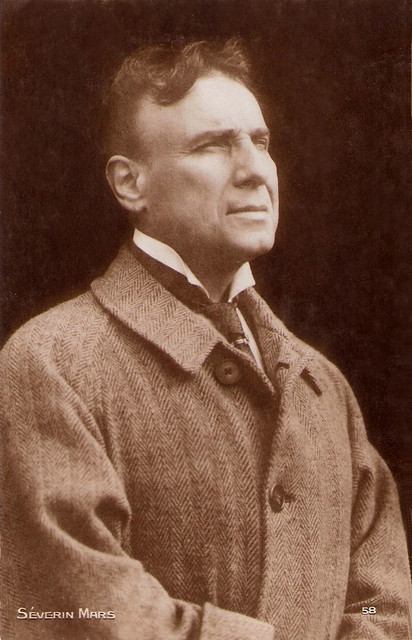
In less than two weeks it will be 2014 and it will be 100 years ago that the First World War started. European Film Gateway 1914 is an interesting digitisation project focusing on films and non-film material from and related to World War I. 26 partners, among them 21 European film archives, are digitalising 661 hours of film and ca. 5.600 film-related documents on the theme of the First World War. And it's all free accessible, so check it out.
The pacifist First World War drama J'accuse!/I Accuse (1919) is one of the silent masterpieces by French film director Abel Gance. Work on the film began in 1918 and some scenes were filmed on real battlefields.
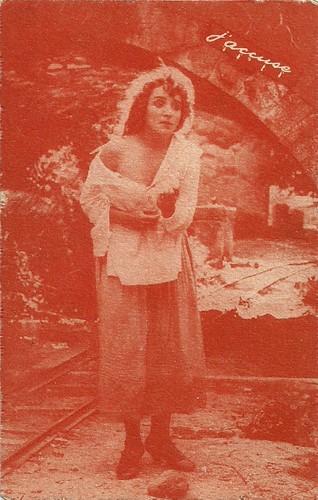
French postcard by Sadag de France, Imp., Paris, no 109. Maryse Dauvray as Edith Laurin, after being raped by a German soldier, in J'accuse (Abel Gance, 1919).
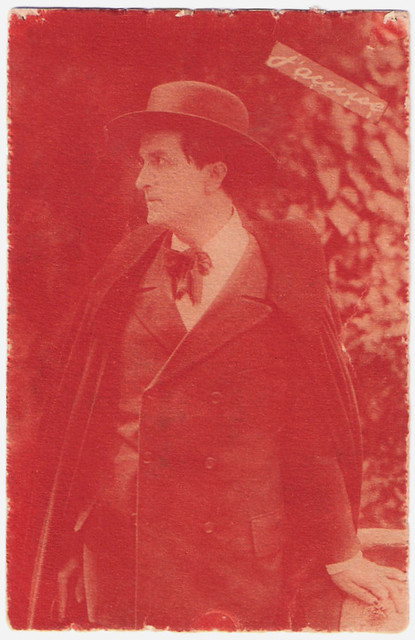
French postcard by Sadag de France Imp., Paris, no. 109. Still for J'accuse (Abel Gance, 1919) with Romuald Joubé.
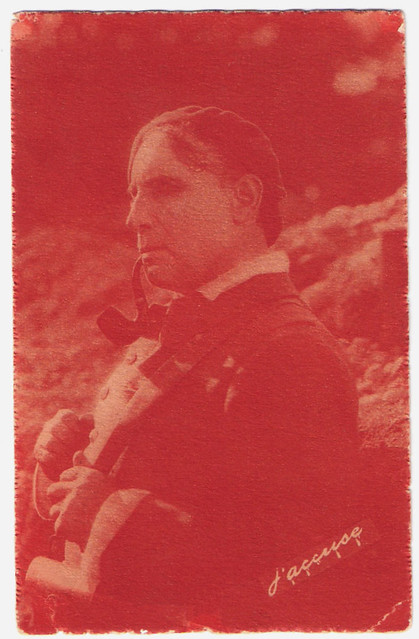
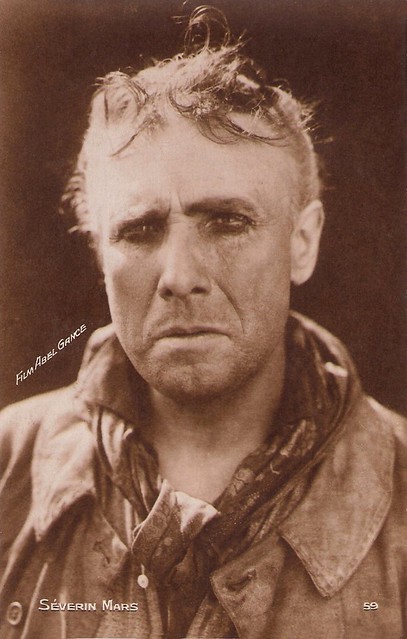
French postcard by Sadag de France Imp., Paris, no. 109. Still for J'accuse (Abel Gance, 1919) with Séverin-Mars
In J'accuse! Séverin-Mars plays the stubborn brute François Laurin, who lives in a Provençal village in the south of France. He maltreats his wife Edith (Maryse Dauvray), while she feels more for the gentle poet Jean Diaz (Romuald Joubé).
When the war breaks out in 1914, the villagers welcome the declaration of war with Germany and flock to enlist. The threesome seems to explode.
The two men meet again in the trenches and experience the horrors of the war. Laurin saves Diaz’s life and sacrifices himself for the benefit of the other two.
Edith is raped by a German soldier. She returns to the village with the fruit of this encounter. She raises the child despite hostility.
Maddened, Diaz returns from the trenches, despises his art and asks the village inhabitants: was it worthwhile, all the sacrifices, while the ghosts of the killed soldiers march up to them.
This sequence of the 'return of the dead' was shot in the south of France, using 2000 soldiers who had come back on leave.
The technical quality of the film was impressive, especially the cinematography of Léonce-Henry Burel with its subtle use of lighting effects and a mobile camera. For the battle scenes in the last section of the film, Gance also introduced some of the techniques of rapid editing which he would develop much further in his later films La Roue (1923) and Napoléon (1927).
J’accuse!/I Accuse was released in France in April 1919, only a few months after the Armistice. It was a great success with the public, whose mood in the aftermath of the war the film seemed to capture.
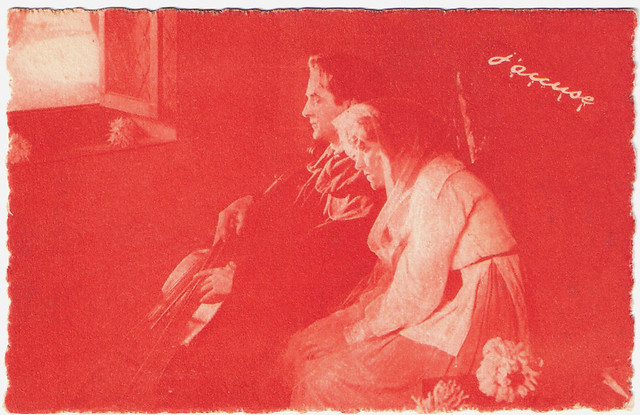
French postcard by Sadag de France Imp., Paris, no. 109. Photo: publicity still for J'accuse (Abel Gance, 1919) with Romuald Joubé and Maryse Dauvray.
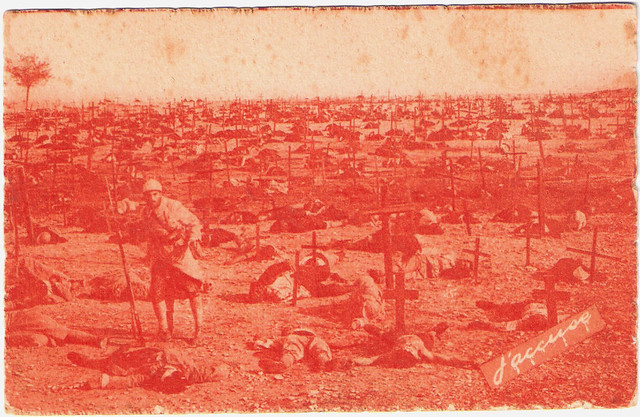
French postcard by Sadag de France, Imp., Paris, no. 109.f Photo: publicity still for J'accuse (Abel Gance 1919), starring Séverin-Mars. Here he is one of the ghosts of the dead soldiers who resurrect at the end of the film, and come to the survivors, asking them whether the war was worth fighting for.
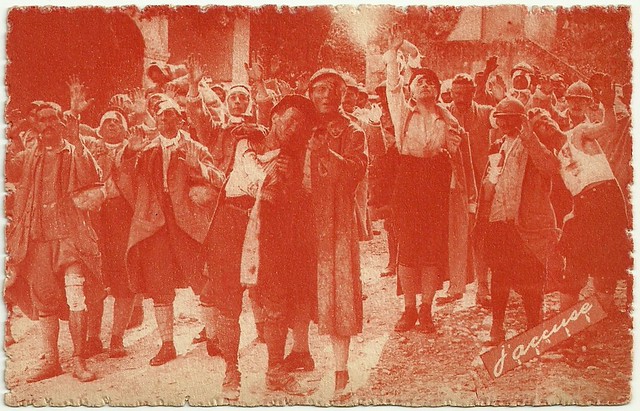
French postcard by Sadag de France, Paris, no. 109. The resurrection of the dead soldiers in J'accuse (1919).
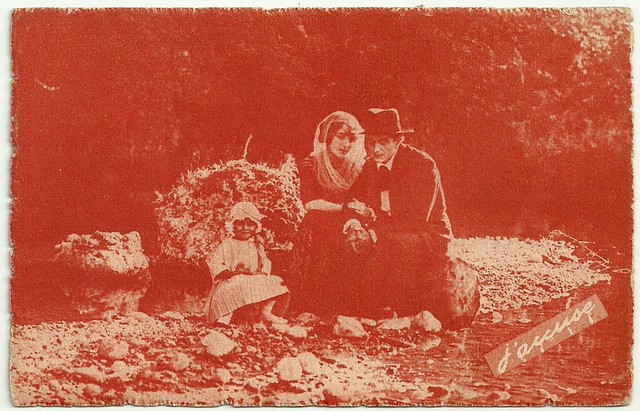
French postcard by Sadag de France, Paris, no. 109. Photo: Edith (Marise Dauvray), Jean Diaz (Romuald Joubé) and little Angele (Angèle Guys) towards the end of J'accuse (1919).
Sources: Wikipedia and IMDb.
The pacifist First World War drama J'accuse!/I Accuse (1919) is one of the silent masterpieces by French film director Abel Gance. Work on the film began in 1918 and some scenes were filmed on real battlefields.
French postcard by Sadag de France, Imp., Paris, no 109. Maryse Dauvray as Edith Laurin, after being raped by a German soldier, in J'accuse (Abel Gance, 1919).
French postcard by Sadag de France Imp., Paris, no. 109. Still for J'accuse (Abel Gance, 1919) with Romuald Joubé.
French postcard by Sadag de France Imp., Paris, no. 109. Still for J'accuse (Abel Gance, 1919) with Séverin-Mars
Experiencing the Horrors of the War
In J'accuse! Séverin-Mars plays the stubborn brute François Laurin, who lives in a Provençal village in the south of France. He maltreats his wife Edith (Maryse Dauvray), while she feels more for the gentle poet Jean Diaz (Romuald Joubé).
When the war breaks out in 1914, the villagers welcome the declaration of war with Germany and flock to enlist. The threesome seems to explode.
The two men meet again in the trenches and experience the horrors of the war. Laurin saves Diaz’s life and sacrifices himself for the benefit of the other two.
Edith is raped by a German soldier. She returns to the village with the fruit of this encounter. She raises the child despite hostility.
Maddened, Diaz returns from the trenches, despises his art and asks the village inhabitants: was it worthwhile, all the sacrifices, while the ghosts of the killed soldiers march up to them.
This sequence of the 'return of the dead' was shot in the south of France, using 2000 soldiers who had come back on leave.
The technical quality of the film was impressive, especially the cinematography of Léonce-Henry Burel with its subtle use of lighting effects and a mobile camera. For the battle scenes in the last section of the film, Gance also introduced some of the techniques of rapid editing which he would develop much further in his later films La Roue (1923) and Napoléon (1927).
J’accuse!/I Accuse was released in France in April 1919, only a few months after the Armistice. It was a great success with the public, whose mood in the aftermath of the war the film seemed to capture.
French postcard by Sadag de France Imp., Paris, no. 109. Photo: publicity still for J'accuse (Abel Gance, 1919) with Romuald Joubé and Maryse Dauvray.
French postcard by Sadag de France, Imp., Paris, no. 109.f Photo: publicity still for J'accuse (Abel Gance 1919), starring Séverin-Mars. Here he is one of the ghosts of the dead soldiers who resurrect at the end of the film, and come to the survivors, asking them whether the war was worth fighting for.
French postcard by Sadag de France, Paris, no. 109. The resurrection of the dead soldiers in J'accuse (1919).
French postcard by Sadag de France, Paris, no. 109. Photo: Edith (Marise Dauvray), Jean Diaz (Romuald Joubé) and little Angele (Angèle Guys) towards the end of J'accuse (1919).
Sources: Wikipedia and IMDb.