
American postcard by Pomegranate, Petaluma, CA. Postcard from the book 'Gay Portraits'. Photo: Rice. Collection: Motion Picture and Television Archive. Caption: Alla Nazimova (Russian, 1878-1945) studied with Stanislavsky in Russia (1898) and became a star of the American stage (1906) before heading for success in Hollywood (1916).

American postcard by Pomegranate, Petaluma, CA. Postcard from the book 'Gay Portraits'. Photo: Barraud, 1891 / Popperfoto, London. Caption: J.M. Barrie (Sir Michael Matthew, Scottish, 1860-1937). A playwright and novelist, he wrote nostalgic novels of the Scottish countryside, but is best known for the play 'Peter Pan' (1904).
In 1901 and 1902, J.M. Barrie had two back-to-back successes. In 'Quality Street', a respectable, responsible old maid poses as her own flirtatious niece to try to win the attention of a former suitor returned from the war. The play's initial London run lasted for 459 performances. In the social commentary 'The Admirable Crichton', the play inverts the social order of an aristocratic family and their household servants after they are shipwrecked on a desert island. Critic Max Beerbohm thought it "quite the best thing that has happened, in my time, to the British theatre". This satire on class relationships ran 828 performances. In 1902, Barrie introduced Peter Pan, which became his most popular creation. He liked contrasting the typical middle-class life of the Edwardian era with the adventurous life and ambivalent morality of the fictional Neverland. His play 'Peter Pan, or The Boy Who Wouldn't Grow Up' had its first stage performance on 27 December 1904 at the West End’s Duke of York's Theatre. Peter Pan returned in the novel 'Peter Pan in Kensington Gardens' (1906), the play 'When Wendy Grew Up - An Afterthought' (1908), and the novel 'Peter and Wendy' (1911). Many film versions of Peter Pan followed. Johnny Depp played J.M. Barrie in Finding Neverland (Marc Forster, 2004), about the creation of Peter Pan. The film also starred Dustin Hoffman, who had played Captain Hook in Steven Spielberg's Hook (1991), which depicted an adult Peter Pan. From 1928 onward, all royalties from Peter Pan were donated to the Great Ormond Street Hospital. Barrie raised 5 surrogate sons and acted as a surrogate uncle to several other children. By all accounts, he liked kids. Following his death, there were rumours that he was sexually interested in children. Barrie's surrogate son Nicholas Llewelyn Davies vehemently denied this. According to Nicholas, Barrie never felt sexual attraction to anyone: "man, woman, or child".

American postcard by Pomegranate, Petaluma, CA. Postcard from the book 'Gay Portraits'. Photo: University Research Library. Caption: Gertrude Stein (American, 1874-1946) and Alice B. Toklas (American, 1877-1967). Stein was an experimental writer who undid language in an effort to revivify dead words and capture "the living moment". Wrote 'The Autobiography of Alice B. Toklas' (1933). Toklas wrote her own story in 'What is remembered' (1963).
Gertrude Stein lived in Paris for 40 years and was a patron of artists Pablo Picasso, Georges Braque, Henri Matisse and Paul Cézanne. The art collection of 'The Mother Goose of Montparnasse' became enormous. In her literary work, she experimented with stream-of-consciousness in her own deconstructive style, and by using words as rhythmical brushstrokes. Her literary secretary, Alice B. Toklas, was her lifetime companion. They met in 1907 and lived together from 1911 until Gertrude died in 1946. They travelled in Spain together, while Stein worked on the book 'Tender Buttons' (1914). During WWI, Stein drove their Ford, and they helped wounded soldiers. She and Alice were honoured for this work. 'The Autobiography of Alice B. Toklas' (1933) became a bestseller and turned Stein into a celebrity. In 1940, Stein and Toklas, both Jewish, barely escaped the Nazi concentration camps, protected by their French neighbours. They returned to Paris in 1944 and found their precious art collection untouched. The collection is now in major museums. Several films were made about Stein and Toklas, including the short Hubby/Wifey (Todd Hughes, 2005). Kathy Bates portrayed Stein in Woody Allen's delicious comedy Midnight in Paris (2011).
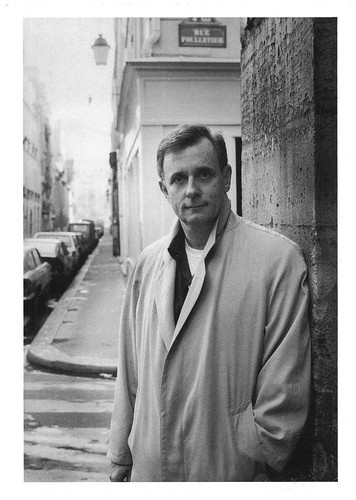
American postcard by Pomegranate, Petaluma, CA. Postcard from the book 'Gay Portraits'. Caption: Edmund White (American, b. 1940). Fine, sensitive and sometimes baroque gay novelist acclaimed for 'Nocturnes for the King of Naples' (1978) and 'A Boy's Own Story' (1983).
Edmund White, who passed away in 2025, was a pioneering figure in LGBTQ and especially gay literature after the Stonewall riots. He wrote with rare candour about gay identity, relationships, and sex. His work helped to reshape public narratives at a time when coming out was still a dangerous, even radical act. His intimate and elegant novels include the semi-autobiographical trilogy 'A Boy's Own Story' (1982), 'The Beautiful Room Is Empty' (1988), and 'The Farewell Symphony' (1997). He also co-authored 'The Joy of Gay Sex' (1977), celebrated for its sex-positive tone. Just before his death, White was interviewed for the upcoming documentary Utterly Shameless, directed by journalist Brian Montopoli and former Out magazine editor Aaron Hicklin. The film offers a candid portrait of Edmund White and positions him as both architect of and witness to the queer experience. The filmmakers were the last to interview White before he died at age 85.
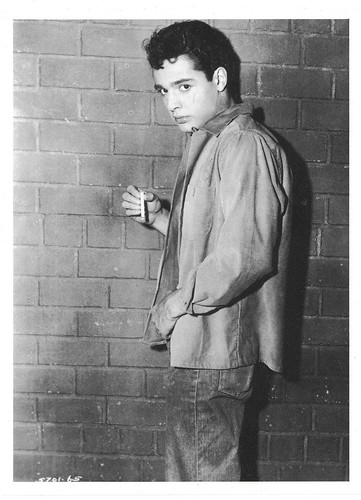
American postcard by Pomegranate, Petaluma, CA. Postcard from the book 'Gay Portraits'. Photo: Michael Ochs Archives. Caption: Sal Mineo (American, 1939-1976). Diminutive actor worked on Broadway as a child before going to Hollywood. Films include Rebel Without a Cause (1955) and Exodus (1960).
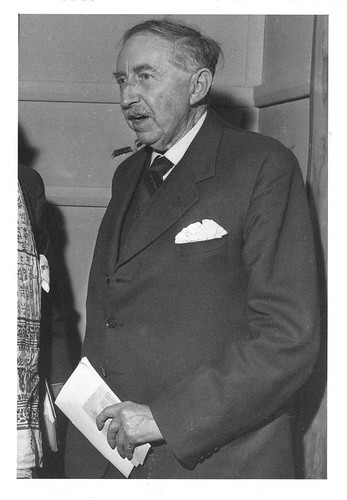
American postcard by Pomegranate, Petaluma, CA. Postcard from the book 'Gay Portraits'. Photo: Topham / The Image Works. Caption: E.M. Forster (English, 1879-1970). Acclaimed for 'A Room With A View' (1908) and 'A Passage to India' (1924), his themes were the hypocrisy and conventionality of the middle classes.
E.M. Forster's last novel, 'Maurice', is a tale of homosexual love in early 20th-century England. Completed in 1914, the novel was only published in 1971, the year after his death. Many of his novels were adapted for cinema, beginning with David Lean's well-received film A Passage to India (1984) starring Alec Guinness and Judy Davis, followed by Merchant Ivory Productions' A Room with a View (1985) starring Helena Bonham Carter, Maggie Smith, and Julian Sands, Maurice (1987), starring James Wilby, Hugh Grant and Rupert Graves, and Howards End (1992), starring Emma Thompson and Anthony Hopkins.

American postcard by Pomegranate, Petaluma, CA. Postcard from the book 'Gay Portraits'. Photo: Michael Ochs Archives. Photo circa 1940. Caption: Cole Porter (American, 1893-1964). Prolific lyricist and composer of many sophisticated Broadway hits like 'Anything Goes' (1934), songs 'Night and Day', 'I've Got You Under My Skin', and movies like Can-Can(1953) and High Society (1956).
Cole Porter's grandfather, J.G. Cole, was a multi-millionaire who made his fortune in the coal and western timber business. Classically trained, Cole Porter was drawn to musical theatre. In 1917, he went to France and distributed foodstuffs to war-ravaged villages. Porter maintained a luxury apartment in Paris, where his parties were extravagant and scandalous, with "much gay and bisexual activity". In 1918, at a breakfast reception at the Ritz Hotel, he met Linda Lee Thomas, a rich divorcée eight years his senior. The couple married the next year. She was in no doubt about Porter's homosexuality, but it was mutually advantageous for them to marry. For Linda, it offered continued social status and a partner who was the antithesis of her abusive first husband, a newspaper publisher. For Porter, it brought a respectable heterosexual front in an era when homosexuality was not publicly acknowledged. After a slow start, Porter had his first successes in the 1920s. By the 1930s, he was one of Broadway's major songwriters. Unlike his colleagues, Porter wrote the lyrics and the music for his songs. In the early 1940s, his shows lacked the lasting hits of the 1920s and 1930s. In 1948, he made a triumphant comeback with his most successful musical, 'Kiss Me, Kate'. It won the first Tony Award for Best Musical. Cole and his wife Linda were genuinely devoted to each other and remained married until she died in 1954. Porter's life has been dramatised several times. The biopic Night and Day (Michael Curtiz, 1946), starring Cary Grant as Porter, was highly embellished. More realistic is De-Lovely (Irwin Winkler, 2004), starring Kevin Kline as Porter and Ashley Judd as Linda. Porter is also a character in Woody Allen's Midnight in Paris (2011).
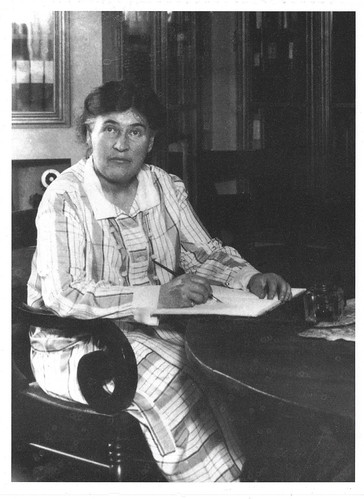
American postcard by Pomegranate, Petaluma, CA. Postcard from the book 'Gay Portraits'. Photo: Historical Pictures Service, Chicago. Caption: Willa Cather (American, 1873-1947). Journalist and novelist best known for her book 'My Antonia' (1918), who wrote of the American frontier and vigorous working women who defied the stereotype of feminine fragility. Shown here in 1926 signing copies of 'My Mortal Enemy'.
In her youth, Willa Cather cut her hair short and wore trousers to her fashionable mother's chagrin. Shortly after graduating from the University of Nebraska, she moved to Pittsburgh for 10 years. She supported herself as a magazine editor and high school English teacher. At 33, she moved to New York City, where she stayed for the rest of her life. She spent her last 39 years with her partner, Edith Lewis. Cather and Lewis are buried together in Jaffrey, New Hampshire. In 1923, she was awarded the Pulitzer Prize for 'One of Ours', a novel set during World War I. Her early novels focused on the destruction of provincial life and the death of the pioneering tradition, but her later novels, including 'The Professor's House' (1925), 'My Mortal Enemy' (1926), and 'Death Comes for the Archbishop' (1927), reflected the personal despair that followed her commercial success. Several films were based on her books. In 1924, Irene Rich starred in the silent film A Lost Lady (Harry Beaumont, 1924). Ten years later, it was filmed with sound as A Lost Lady (Alfred E. Green, Phil Rosen, 1934), now starring Barbara Stanwyck. Later examples are the TV Movies Spring Awakening (Jack Gold, 1994) with Sherilee Fenn, and The Song of the Lark (Karen Arthur, 2001), starring Alison Elliott.

American postcard by Pomegranate, Petaluma, CA. Postcard from the book 'Gay Portraits'. Photo: Popperfoto, London. Caption: André Gide (French, 1869-1951), author (The Counterfeiters, 1926), whose career was marked by controversy because of his frank defence of homosexuality; he received the Nobel Prize for Literature in 1947.
In 1893 and 1894, André Gide travelled to North Africa, where he learned different moral and sexual conventions. In Algiers, he met Oscar Wilde and the two became close friends. Gide's early collection of prose and poetry, 'Les nourritues terrestres' (Fruits of the Earth, 1897), gained popularity. It influenced Guillaume Apollinaire, Albert Camus, and Jean-Paul Sartre, as well as a generation of young writers. His serious illness and a near-death experience in Algiers gave him material for his 'twin' psychological novels 'L'immoraliste' (The Immoralist, 1902) and 'La porte etroite' (Strait is the Gate, 1909). In his 'La symphonie pastorale' (The Pastoral Symphony, 1919), Gide revealed the hypocrisy behind the mask of a pastor who adopted a blind orphan girl. The pastor seduces the girl on the eve of her eye surgery. She opens her eyes only to see the ugly truth about people, then commits suicide. In 'Les faux-monnayeurs' and 'Le journal des faux-monnayeurs' (The Counterfeiters, 1926), he exposed the self-deception and counterfeit personality of the protagonist, Edouard, who falls in love with his nephew. Gide alluded to his own relationship with his adopted son, Marc Allegret, with whom he eloped to London in 1916. Gide wrote and produced Allegret's debut Voyage au Congo / Travels in the Congo (Marc Allegret, 1927). Many films were based on his books, including La Symphonie pastorale / Pastoral Symphony (Jean Delannoy, 1946) starring Pierre Blanchar and Michèle Morgan, and Les faux-monnayeurs / The Counterfeiters (Benoît Jacquot, 2010), starring Melvil Poupaud.
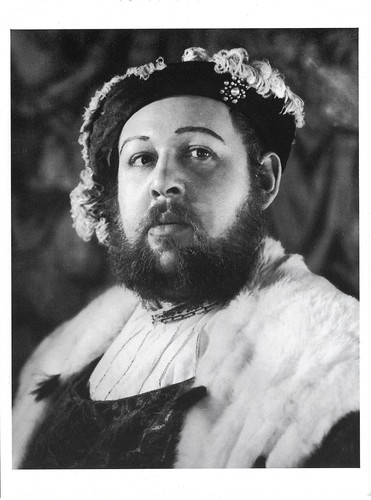
American postcard by Pomegranate, Petaluma, CA. Postcard from the book 'Gay Portraits'. Photo: Popperfoto, London. Charles Laughton in The Private Life of Henry VIII (Alexander Korda, 1933). Caption: Charles Laughton (English, 1899-1962). Here as the king in The Private Life of Henry VIII (1933). Laughton performed primarily in American films. He also directed the classic thriller The Night of the Hunter (1955).
In a memoir written after his death, Charles Laughton's widow, Elsa Lanchester, stated that they never had children because he was homosexual. According to Elsa, Laughton confessed he was gay just two years into their marriage. The revelation allegedly occurred after he was caught with a male prostitute. Rather than divorcing him, the Bohemian Lanchester chose to stay. Mr. and Mrs. Laughton were known in Hollywood as a famous eccentric couple. They were the subject of a tabloid story entitled "The Strange Pair", and Time contrasted Charles’ "plump effeminacy" with Elsa’s "mannish" dress in a 1935 article. In the 1940s, their household included composer Forman Brown, whom Laughton viewed as an integral part of their unconventional but largely happy family. Elsa and Charles shared a profound emotional bond that made them fiercely loyal to one another until Laughton died in 1962.
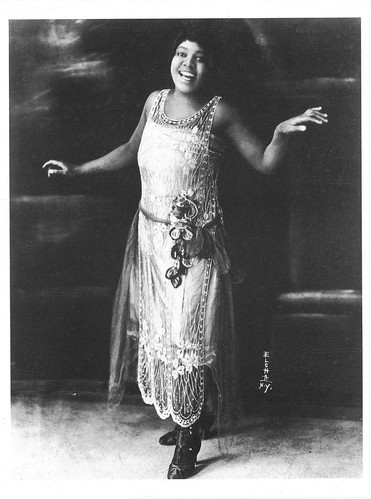
American postcard by Pomegranate, Petaluma, CA. Postcard from the book 'Gay Portraits'. Photo: Elcha, New York. Collection: Michael Ochs Archives. Caption: Bessie Smith (American, 1895-1937). Protégée of pioneer blues singer Ma Rainey, in the '20s, Smith was the most successful black entertainer in America. The 'Empress of Jazz' made over 150 recordings.
Bessie Smith starred in the short film St. Louis Blues (Dudley Murphy, 1929). In her only known film appearance, she witnesses her lover's betrayal, then sings a powerful rendition of the title song. The film is a fascinating glimpse at a legend and the world she lived in. The storyline painfully mirrors Smith's own life and offers an interesting glimpse at black American life at the dusk of the Jazz Age. Despite the film's erratic nature, sketchy pacing and music, it is a marvel to glimpse and hear Smith at her peak.
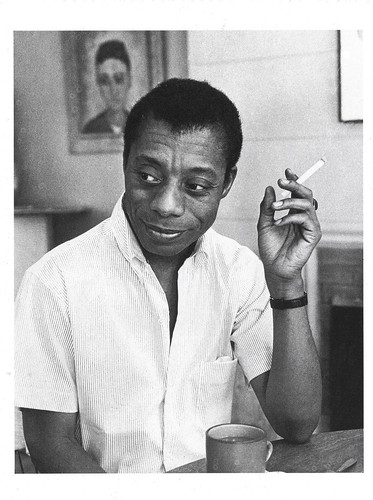
American postcard by Pomegranate, Petaluma, CA. Postcard from the book 'Gay Portraits'. Photo: Michael Ochs Archives. Photo circa mid-1950s. Caption: James Baldwin (American, 1924-1987). His writing expressed the anger of both the gay and black communities in prose of quiet, controlled rage. 'Go Tell it to the Mountain' (1953), 'Giovanni's Room' (1956), 'Another Country' (1962).
James Baldwin's fiction posed fundamental personal questions and dilemmas amid complex social and psychological pressures. Themes of masculinity, sexuality, race, and class intertwine to create intricate narratives that influenced both the civil rights movement and the gay liberation movement in mid-20th-century America. His protagonists are often, but not exclusively, African-American, and gay and bisexual men feature prominently in his work, as in his 1956 novel 'Giovanni's Room. His characters typically face internal and external obstacles in their search for self- and social acceptance. Baldwin's work continues to influence artists and writers. His unfinished manuscript 'Remember This House' was expanded and adapted as the documentary film I Am Not Your Negro (Raoul Peck, 2016), winning the BAFTA Award for Best Documentary. Narrated by Samuel L. Jackson, the film explores the history of racism in the United States through Baldwin's recollections of civil rights movement leaders such as Medgar Evers, Malcolm X and Martin Luther King Jr., as well as his personal observations of American history. I Am Not Your Negro was nominated for Best Documentary Feature at the 89th Academy Awards and won the BAFTA Award for Best Documentary. Baldwin's 1974 novel 'If Beale Street Could Talk' was adapted into the film If Beale Street Could Talk (Barry Jenkins, 2018). It follows a young woman who, with her family's support, seeks to clear the name of her wrongly charged lover and prove his innocence before the birth of their child. The film was nominated for Best Motion Picture – Drama and Best Screenplay at the 76th Golden Globe Awards, and Best Adapted Screenplay and Best Original Score at the 91st Academy Awards. Regina King won the Best Supporting Actress award at both the Academy Awards and Golden Globes.

American postcard by Pomegranate, Petaluma, CA. Postcard from the book 'Gay Portraits'. Photo: Library of Congress. Caption: Oscar Wilde (English, 1854-1900). High Victorian poet (Intentions 1891), dramatist of brilliant wit (The Importance of Being Earnest 1895). Wilde was also an aesthete, dandy and cause célèbre.
After writing in different literary styles throughout the 1880s, Oscar Wilde became one of the most popular and influential dramatists in London in the early 1890s. He was a key figure in the emerging Aestheticism movement of the late 19th century and is widely regarded as the greatest playwright of the Victorian era. Wilde is best known for his Gothic novel 'The Picture of Dorian Gray' (1890), his epigrams, plays and bedtime stories for children, as well as his criminal conviction in 1895 for gross indecency and for practising homosexual acts. Stephen Fry played Oscar Wilde in the wonderful biopic Wilde (Brian Gilbert, 1997). Julian Mitchell based his screenplay on Richard Ellmann's 1987 biography of Wilde. Fry received a Best Actor nomination at the 56th Golden Globe Awards. In 2017, Wilde was among an estimated 50,000 men who were pardoned for homosexual acts that were no longer considered offences under the Policing and Crime Act 2017 (homosexuality was decriminalised in England and Wales in 1967). The 2017 Act implemented what is known informally as the Alan Turing law. Rupert Everett starred as Wilde in, and wrote the screenplay for, The Happy Prince (Rupert Everett, 2018), a biographical drama film about Wilde following his release from prison.

American postcard by Pomegranate, Petaluma, CA. Postcard from the book 'Gay Portraits'. Photo: George E. Hurrell / Motion Picture and Television Archive. Caption: Ramon Novarro (Mexican, 1899-1968). Romantic leading man of the 20s in Hollywood; later came back as a character actor. Films include Ben-Hur (1925) and Call of the Flesh (1930).
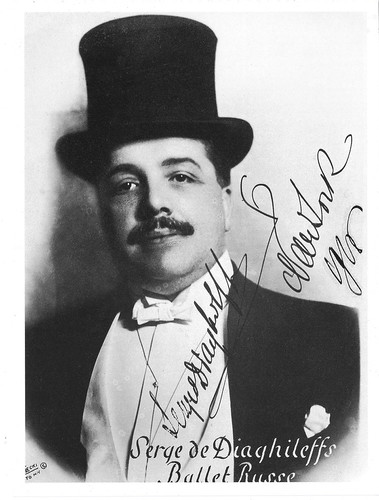
American postcard by Pomegranate, Petaluma, CA. Postcard from the book 'Gay Portraits'. Photo: The New York Public Library Dance Collection. A New York photographer took the picture probably in 1911, when the Ballet Russes performed at the Metropolitan Opera. Caption: Sergei Diaghilev (Russian, 1872-1929). Impresario of genius who founded the Ballet Russes, which employed the talents of Picasso, Matisse, Stravinsky, Ravel, Cocteau, Nijinsky, Bakst and Chaliapin among many others.
Sergei Diaghilev's company, the Ballet Russes, premiered the original productions of Stravinsky's 'The Firebird', 'Petrouchka' and 'Le Sacre du Printemps' (The Rite of Spring), as well as the ballet versions of Debussy's 'Prelude to the Afternoon of a Faun' and Rimsky-Korsakov's 'Scheherazade'. Diaghilev's life and the Ballet Russes were inextricably entwined. His most famous lover was Vaslav Nijinsky. However, according to Serge Lifar, of all Diaghilev's lovers, only Léonide Massine, who replaced Nijinsky, provided him with "so many moments of happiness or anguish". Diaghilev's other lovers included Anton Dolin, Serge Lifar and his secretary and librettist Boris Kochno. Dancers such as Alicia Markova, Tamara Karsavina, Serge Lifar, and Lydia Sokolova remembered Diaghilev fondly as a stern but kind father-figure who put his dancers and company above himself. He lived from paycheck to paycheck to finance his company, and he spent considerably on a splendid collection of rare books. Several sources cited Diaghilev and the Ballets Russes as inspiration for the film classic The Red Shoes (Michael Powell, Emeric Pressburger, 1948).
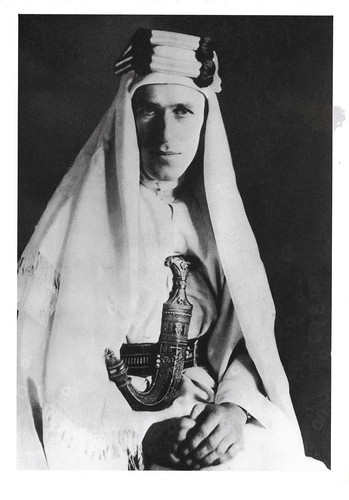
American postcard by Pomegranate, Petaluma, CA. Postcard from the book 'Gay Portraits'. Photo: Popperfoto, London. Caption: Thomas Edward Lawrence (English, 1888-1935). Soldier and scholar, best remembered for his exploits in the Middle East during World War I, earning him the epithet 'Lawrence of Arabia'.
T.E. Lawrence was a prolific writer throughout his life. Most of his writing was epistolary. He often sent several letters a day, and some collections of his letters have been published. He corresponded with many notable figures, including George Bernard Shaw, Noël Coward, and E. M. Forster. Lawrence published three major texts in his lifetime. Significant was his account of the Arab Revolt in 'Seven Pillars of Wisdom'. He also translated Homer's 'The Odyssey'. Lawrence lived in a period of strong official opposition to homosexuality, but his writing on the subject was tolerant. His biographers have discussed his sexuality at considerable length. There is no direct evidence for consensual sexual intimacy between Lawrence and any person. His friends have expressed the opinion that he was asexual, and Lawrence himself specifically denied any personal experience of sex in multiple private letters. More than 25 years after his death, Lawrence of Arabia (David Lean, 1962) was released. Peter O'Toole was nominated for the Oscar for Best Actor for his portrayal of Lawrence. In 2002, Sight and Sound ranked the film in the top ten films of all time.

American postcard by Pomegranate, Petaluma, CA. Postcard from the book 'Gay Portraits'. Photo: Sylvia Beach Collection, Princeton University Library. Caption: Sylvia Beach (American, 1887-1962) and Adrienne Monnier (American, 1887-1962). An important player in the Paris literary scene of the '20s. Beach published James Joyce's controversial 'Ulysses' (1922), ran an English-language bookshop with Monnier, and wrote of it all in 'Shakespeare and Company' (1959).
While conducting research at the Bibliothèque Nationale, Sylvia Beach read in a French literary journal about a lending library and bookshop, La Maison des Amis des Livres (The House of Friends of Books) in Paris. There, she met the owner, Adrienne Monnier, who was one of the first women in France to found her own bookstore. The two became lovers. Inspired by the Left Bank's literary life and Monnier's efforts to promote innovative writing, Beach dreamed of a branch of Monnier's bookshop in New York with contemporary French works for American readers. Her only capital, which her mother gave her from her savings, was not enough for such a venture. However, Paris rents were much cheaper and the exchange rates favourable, so with Monnier's help, she opened an English-language bookstore and lending library that she named 'Shakespeare and Company'. Sylvia Beach and Adrienne Monnier lived together for 36 years until Monnier's suicide in 1955.
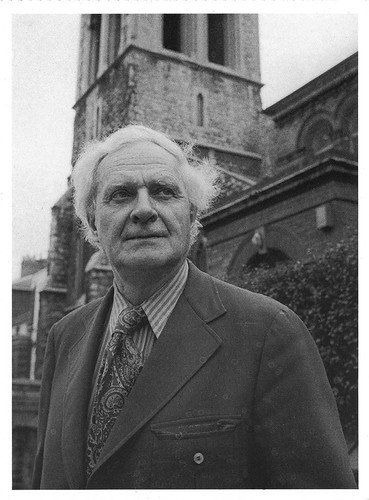
American postcard by Pomegranate, Petaluma, CA. Postcard from the book 'Gay Portraits' (1990). Photo: Jerry Bauer. Caption: Sir Stephen Spender (British, b. 1909). A poet of the Auden generation, a man of the left who fought with the Loyalists in the Spanish Civil War; today he is a cultural critic and celebrated man of letters ('The Temple' 1988).
Sir Stephen Spender CBE (1909-1995) was an English poet, novelist and essayist whose work concentrated on themes of social injustice and the class struggle. He was appointed U.S. Poet Laureate Consultant in Poetry to the Library of Congress in 1965. Spender had multiple relationships with both men and women during his life. In 1933, he fell in love with Tony Hyndman, and they lived together from 1935 to 1936. In 1934, Spender had an affair with Muriel Gardiner. In a letter to Christopher Isherwood in September 1934, he wrote, "I find boys much more attractive, in fact I am rather more than usually susceptible, but actually I find the actual sexual act with women more satisfactory, more terrible, more disgusting, and, in fact, more everything". In December 1936, shortly after his relationship with Hyndman, Spender fell in love with and married Inez Pearn after a three-week engagement. The marriage broke down in 1939. In 1941, Spender married Natasha Litvin, a concert pianist. The marriage lasted until his death. Spender wrote the script for the film The Fool and the Princess (William C. Hammond, 1949).

American postcard by Pomegranate, Petaluma, CA. Postcard from the book 'Gay Portraits'. Photo: Popperfoto, London. Caption: Truman Capote (American, 1924-1984). Author and celebrity, he is best known for 'Breakfast at Tiffany's' and his non-fiction crime novel Ín Cold Blood'.
In the early 1950s, Truman Capote took on Broadway and films. He adapted his 1951 novella, 'The Grass Harp', into a 1952 play of the same name. In 1971, he turned it into a musical, and in 1995, Charles Matthau made the film version. In the fall of 1952, film producer David O. Selznick hired Capote alongside two Hollywood screenwriters for the script of Stazione Termini / Terminal Station (Vittorio De Sica, 1953) starring Jennifer Jones. A few months later, in early 1953, John Huston hired him for Beat the Devil (1953), starring Humphrey Bogart. In 1960, while writing 'In Cold Blood', Jack Clayton approached him to rewrite the script for The Innocents (1961). Capote set aside his novel and in eight weeks produced the script used for the final film. Capote's work and life story have inspired more than 20 films and television productions.

American postcard by Pomegranate, Petaluma, CA. Postcard from the book 'Gay Portraits'. Photo: Popperfoto, London. Caption: Vaslav Nijinsky (Russian, 1890-1950). Legendary dancer, he is shown in costume for 'The Afternoon of the Faun', first performed for Sergei Diaghilev's Ballets Russes in Paris, 1912.
Serge Diaghilev was deeply involved in directing and managing Vaslav Nijinsky's career. Nijinsky became the Ballets Russes' star male dancer, causing an enormous stir amongst audiences whenever he performed. For Diaghilev, Vaslav Nijinsky choreographed such influential ballets as 'L'après-midi d'un faune' (1912), 'Le Sacre du Printemps' (1913), 'Jeux' (1913), and 'Till Eulenspiegel' (1916). He was celebrated for his virtuosity and for the depth and intensity of his characterisations. He could dance en pointe, a rare skill among male dancers at the time, and was admired for his seemingly gravity-defying leaps. In 1980, Herbert Ross directed the film Nijinsky (1980), starring professional dancers George de la Peña as Nijinsky and Leslie Browne as Romola, with Alan Bates as Diaghilev and Jeremy Irons as Fokine. Romola Nijinsky had a writing credit for the film. In 2001, followed The Diaries of Vaslav Nijinsky (2001), written, shot, edited and directed by Paul Cox. He based the screenplay on Nijinsky's diaries, narrated by Derek Jacobi, with related imagery, including several Leigh Warren Dancers portraying Nijinsky.
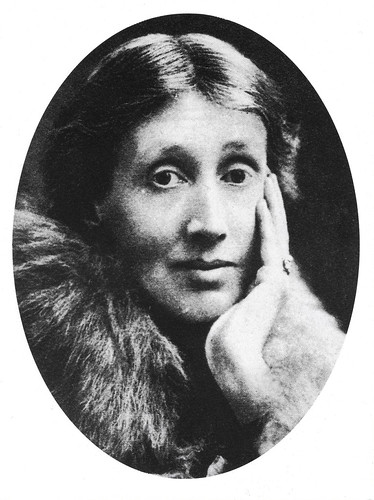
American postcard by Pomegranate, Petaluma, CA. Postcard from the book 'Gay Portraits'. Photo: The Illustrated London News. Caption: Virginia Woolf (English, 1882-1941). Prolific writer of genius and formidable intellect, a priestess of the modernist movement. Works include 'To the Lighthouse' (1927) and 'The Waves' (1931).
Virginia Woolf began publishing professionally in 1904 and rose to prominence during the interwar period with novels including 'Mrs Dalloway' (1925), 'To the Lighthouse' (1927), and 'Orlando' (1928). She also wrote the influential feminist essay 'A Room of One's Own' (1929), followed by 'Three Guineas' (1938), which explores the roots of fascism in society. Her work became central to 1970s feminist criticism and remains influential worldwide. Woolf had several affairs with women, the most notable being with Vita Sackville-West. The two women developed a deep connection; Vita was arguably one of the few people in Virginia's adult life that she was truly close to. Several of Woolf's works were filmed. Dutch director Annette Apon made a film version of 'The Waves', Golven / Waves (1982). Sally Potter adapted 'Orlando' for the screen, Orlando (1992), starring Tilda Swinton. Dutch film director Marleen Gorris made a film version of 'Mrs Dalloway', Mrs Dalloway (1997), with Vanessa Redgrave and Natascha McElhone in the title role.

Cover of 'Gay Portraits, A Book of Postcards' by Pomegranate Artbooks, San Francisco, no. A555, 1990. Cover design: Katie Burke.
Back cover of 'Gay Portraits, A Book of Postcards' by Pomegranate Artbooks, San Francisco, no. A555, 1990.
Sources: Steve Shelokhonov (IMDb), Dimos I (IMDb), Christine L. DeSimone (IMDb), Walter Yablonsky (Facebook), Philip Fagan (Thee Bat City Vangarde), Wikipedia and IMDb.

No comments:
Post a Comment