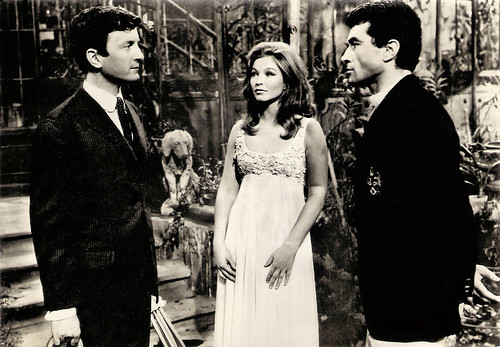
31 July 2017

Kai Fischer

Red-haired and spirited German actress Kai Fischer (1934) appeared in 54 films between 1955 and 2004. She was the naughty bad girl of the Wirtschaftswunder cinema, and also appeared in sexy roles in international productions, either as a prostitute or a gangster girl. Later she worked with famous directors such as Wim Wenders and Ingmar Bergman.
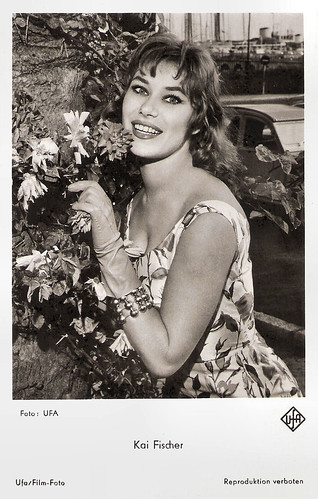
Kai Fischer
German postcard by Ufa, Berlin-Tempelhhof, no. FK 4095. Photo: Ufa.
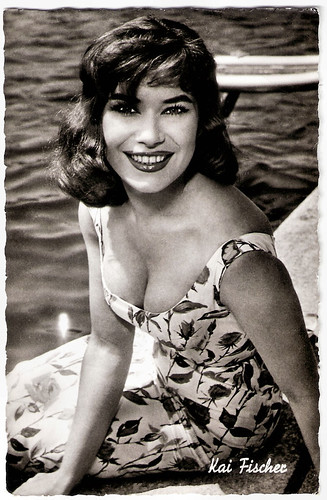
Kai Fischer
Austrian postcard by Kellner-Fotokarten, Wien, no. 287.
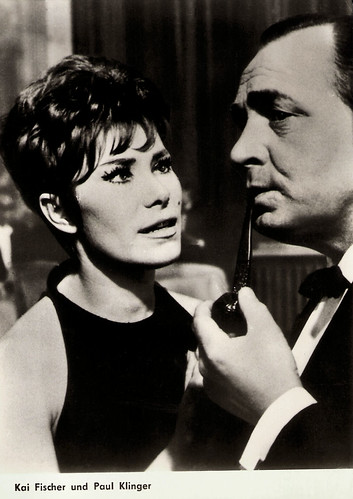
Kai Fischer and Paul Klinger in Das Wirtshaus von Dartmoor (1964)
East-German postcard by VEB Progress Film-Vertrieb, Berlin, no. 3034, 1968. Photo: Kai Fischer and Paul Klinger in Das Wirtshaus von Dartmoor/The Inn on Dartmoor (Rudolf Zehetgruber, 1964).

Either a gangster bride, a criminal bar girl or a prostitute


Kai Anne Inge Fischer was born in Halle, Germany (according to the German version of Wikipedia while the English version and IMDb mention Prague, Czechoslovakia, as her birthplace) in 1934. Fischer's family was forced to move to Munich in 1945. In the 1950s the young Kai Fischer (or Kay Fischer) appeared in the cabaret Schwabinger Brettl without stage training and worked as a photo model and mannequin.

In 1955, she entered the cinema. She initially played supporting roles in such films as the German-Austrian comedy Oh diese lieben Verwandten/Oh These Dear Relatives (Joe Stöckel, 1955) and Unternehmen Schlafsack/Operation Sleeping Bag (Arthur Maria Rabenalt, 1955).

She had her first major role in the drama Die Ehe des Dr. med. Danwitz/The Marriage of Doctor Danwitz (Arthur Maria Rabenalt, 1956), starring Marianne Koch and Karlheinz Böhm. Very popular was the musical comedy Das Wirtshaus im Spessart/The Spessart Inn (Kurt Hoffmann, 1958), starring Liselotte Pulver and Carlos Thompson.

In Italy, Fischer appeared in La ragazza della salina/Sand, Love and Salt (Frantisek Cáp, 1957) with Marcello Mastroianni, and in the comedy Tempi duri per i vampiri/Hard Times for Dracula (Steno, 1959) with Renato Rascel and Christopher Lee.

Until the mid-1960s, Fischer often played sexy, bad girls in films. She was either a gangster bride, a criminal bar girl or a prostitute in such films as Für zwei Groschen Zärtlichkeit/Call Girls (Arthur Maria Rabenalt, 1957), the French drama Filles de nuit/Girls of the Night (Maurice Cloche, 1958) with Georges Marchal, Mädchen für die Mambo-Bar/$100 a Night (Wolfgang Glück, 1959) and the Edgar Wallace Krimi Zimmer 13/Room 13 (Harald Reinl, 1964), starring Joachim Fuchsberger.

Kai Fischer and Maximilian Schell in Die Ehe des Dr. med. Danwitz (1956)
West-German postcard by Kunst und Bild, Berlin, no. I 471. Photo: Real / Europa / Haenchen. Kai Fischer and Maximilian Schell in Die Ehe des Dr. med. Danwitz/Marriage of Dr. Danwitz (Arthur Maria Rabenalt, 1956).
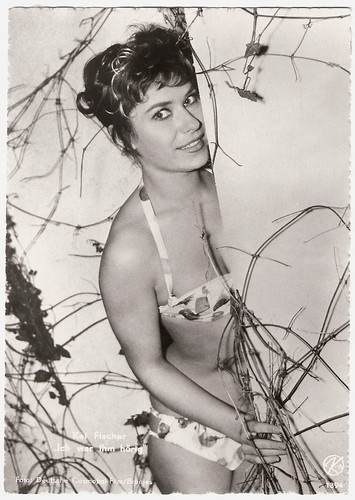
Kai Fischer in Ich war ihm hörig (1958)
Austrian postcard by Kellner-Fotokarten, Wien, no. 1394. Photo: Deutsche Cosmopol-film / Brünjes. Publicity still for Ich war ihm hörig/I Was All His (Wolfgang Becker, 1958).

The first female private detective on German TV


From 1963 to 1965 Kai Fischer played the first female private detective on German television in the ZDF series Die Karte mit dem Luchskopf (Hermann Kugelstadt, 1963-1965). She also wrote the scripts for 13 episodes of the series. At times, she also worked internationally, like in the Jayne Mansfield vehicle Too Hot to Handle (Terence Young, 1960), The Hellfire Club (Robert S. Baker, Monty Berman, 1961) with Peter Cushing, and Escape from East Berlin (Robert Siodmak, 1962). In Italy, she was seen in Spaghetti Westerns like Le pistole non discutono/Guns Don't Talk (Mario Caiano, 1964) starring Rod Cameron.

In these films, her erotic charisma was often used. She even made some soft sex films like Josefine Mutzenbacher (Kurt Nachmann, 1970). It was only in the 1970s that she was able to gradually free herself from her sexy image. She became well known for her role as Tiger Lilli in the popular TV series Salto Mortale (Michael Braun, 1969-1972) starring Gustav Knuth. She also could be seen in episodes of Krimis like Der Kommissar/The Commissioner (1975) and Derrick (1978).

She played a more serious role in the arthouse film Die Angst des Tormanns beim Elfmeter/The Fear of the Goal at the Penalty (1972) by Wim Wenders. She also got a part in Ingmar Bergman’s film The Serpent's Egg (1977) with Liv Ullmann.

Until the end of the 1980s, Kai Fischer played parts in film and television productions, including Lena Rais (Christian Rischert, 1979), and the romantic comedy Kassensturz/Banks And Robbers (Rolf Silber, 1984). She also played stage roles, wrote books, and, under a pseudonym, criminal novels. From 1984 on, Fischer worked as a businesswoman. Since then, she has only appeared in episodes of television series, such as Alte Gauner (1985), Der Fahnder (1986), Tatort (1988) and Liebesgeschichten/Love Stories (1990).

In 1970 she recorded an LP, Kai Fidelity with naughty songs. Kai Fischer stayed refreshingly naughty. Her last film appearance was in the Rosa von Praunheim epic Der Einstein des Sex (1999) about Dr. Magnus Hirschfeld, founder of the First Institute of Sexual Sciences.
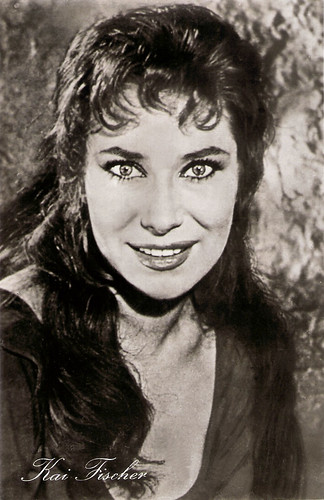
Kai Fischer
East-German postcard by VEB Progress Film-Vertrieb, Berlin, no. 1108, 1959. Photo: publicity still for Das Wirtshaus im Spessart/The Spessart Inn (Kurt Hoffmann, 1958).
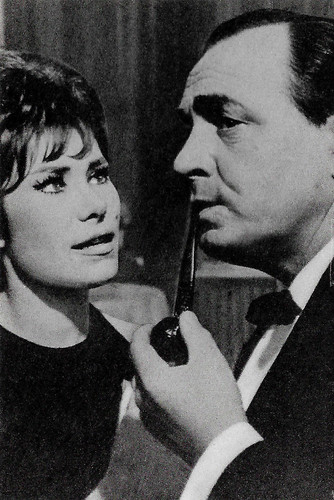
Kai Fischer and Paul Klinger in Das Wirtshaus von Dartmoor (1964)
East-German collectors card in the 'Neu im Kino' series by VEB Progress Film-Vertrieb, Berlin, no. 500/6/68. Kai Fischer and Paul Klinger in Das Wirtshaus von Dartmoor/The Inn on Dartmoor (Rudolf Zehetgruber, 1964).

Sources: Stephanie d’Heil (Steffi-Line - German), Wikipedia (English and German) and IMDb.

This post was last updated on 19 March 2024.

30 July 2017

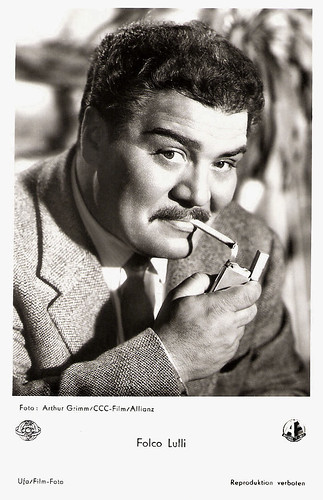
Folco Lulli

Acclaimed Italian film actor Folco Lulli (1912–1970) appeared in 104 films between 1946 and 1970, mainly in strong character roles. He was very active in both Italian and French cinema. Now he is best known as one of the four nitroglycerin truck drivers in Henri Georges Clouzot‘s classic nail-biter La Salaire de la Peur/The Wages of Fear (1953).

Folco Lulli
German postcard by Ufa, Berlin-Tempelhof, no. FK 1458. Photo: Arthur Grimm / CCC-Film / Allianz. Publicity still for Stern von Rio/Star from Rio (Kurt Neumann, 1955).

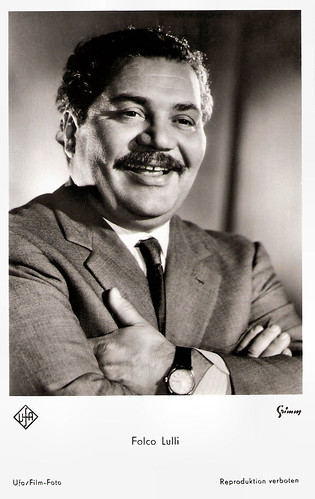
Folco Lulli
German postcard by Ufa, Berlin-Tempelhof, no. FK 4222. Photo: Arthur Grimm.

Anti-fascist partisan


Folco Lulli was born in Florence, Italy, in 1912. He was the son of baritone Gino Lulli and Ada Toccafondi. His brother was the actor Piero Lulli. Folco studied and got degrees in law and philosophy. In 1935 he commanded a group of Ethiopians during the conquest of Abyssinia, where he developed his anti-fascist ideology. During World War II, he fought with anti-fascist partisans against the Nazis. From September 1943 on, he fought in the brigade I Gruppo Divisioni Alpine, commanded by Enrico Martini. Lulli was captured by the Nazis, and deported in Germany. He escaped and after the war, he returned from the Soviet Union to Italy.

In 1946, he was discovered for the screen by filmmaker Alberto Lattuada, who directed him in the crime drama Il bandito/The Bandit (Alberto Lattuada, 1946), starring Anna Magnani and Amedeo Nazzari. Lulli then appeared in Lattuada’s Il delitto di Giovanni Episcopo/Flesh will surrender (Alberto Lattuada, 1947), featuring Aldo Fabrizi.

He also appeared in a supporting part in the Neorealist drama Caccia tragica/The Tragic Pursuit (Giuseppe De Santis, 1947), starring Vivi Gioi and Andrea Checchi. The film was awarded with the First Prize at the Film Festival of Venice as 'The Best Italian Film of the Year'. Lulli played his first leading role in the crime drama Fuga in Francia/Flight Into France (Mario Soldati, 1948). He also appeared in Senza pietà/Without Pity (Alberto Lattuada, 1948), starring Carla del Poggio, and the Totò comedy Totò cerca casa/Totò Looks for an Apartment (Mario Monicelli, Steno, 1949).

He reunited with Giuseppe De Santis for the Neorealist drama Non c'è pace tra gli ulivi/No Peace Under the Olive Tree (Giuseppe De Santis, 1950), starring Raf Vallone and Lucia Bosé. It was filmed in natural locations in the mountains of Ciociaria, the homeland of De Santis.

The next year, Lulli appeared in a supporting part in Federico Fellini's classic Luci del varietà/Variety Lights (Alberto Lattuada, Federico Fellini, 1951) about a provincial vaudeville troupe, headed by Peppino De Filippo.

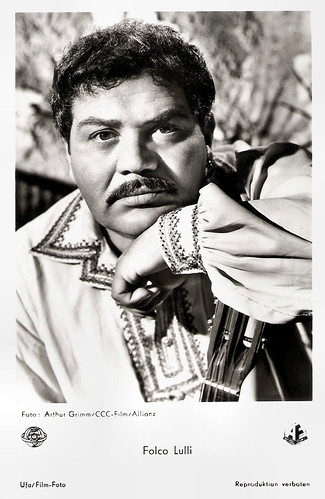
Folco Lulli in Polikuschka (1958)
German postcard by Ufa, Berlin-Tempelhof, no. FK 1457. Photo: Arthur Grimm / CCC-Film / Allianz. Publicity still for Polikuschka (Carmine Gallone, 1958).

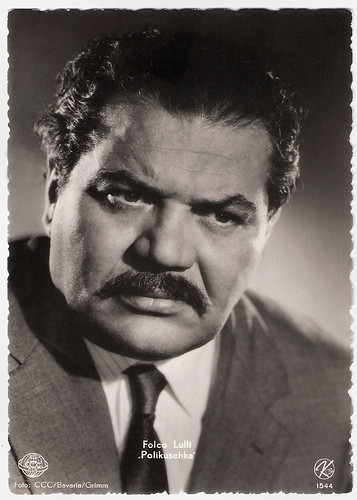
Folco Lulli in Polikuschka (1958)
Austrian postcard by Kellner-Fotokarten, Wien, no. 1544. Photo: CCC / Bavaria / Arthur Grimm. Publicity still for Polikuschka/Polikuska (Carmine Gallone, 1958).

A cat-and-mouse game with death


Folco Lulli had his international breakthrough with the thriller La Salaire de la Peur/Wages of Fear (Henri-Georges Clouzot, 1953), starring Yves Montand, Charles Vanel and Peter van Eyck. They play four men in a decrepit South American village, who are hired to transport an urgent nitroglycerin shipment without the equipment that would make it safe.

Howard Schumann at IMDb: "This unlikely group will play a cat-and-mouse game with death for the remainder of the film. Clouzot depicts several incidents that bring the tension to the boiling point." La Salaire de la Peur won the Grand Prix at the Cannes Festival.

From then on Lulli appeared in both Italian and such international co-productions as the biblical epic Ester e il re/Esther and the King (Raoul Walsh, 1960) featuring Joan Collins, and I Tartari/The Tartars (Richarde Thorpe, 1961) starring Victor Mature and Orson Welles.

Successful Italian films were the war comedy La grande guerra/The Great War (Mario Monicelli, 1959) with Alberto Sordi and Vittorio Gassman, and L'armata Brancaleone/For Love and Gold (Mario Monicelli, 1966) with Vittorio Gassman and Catherine Spaak. He won the Nastro d'argento award from the Italian National Union of Film Journalists for his role in I Compagni/The Organizer (Mario Monicelli, 1963). All three films were directed by Mario Monicelli and written by the duo Age & Scarpelli.

Lulli played the president of a Latin American country in the hilarious comedy-thriller Le Grand Restaurant/The Big Restaurant (Jacques Besnard, 1966), starring Louis de Funès and Bernard Blier. In 1967 he wrote, scripted and directed a film about the Mafia, Gente d‘onore/Honored People (Folco Lulli, 1967) with Leopoldo TriesteFolco Lulli suffered from diabetes and respiratory difficulties. He died of a heart attack in 1970 in a hospital in Rome. He was 57. His final film, the comedy Tre nel mille/Three in a Thousand (Franco Indovina, 1971), was released after his death.

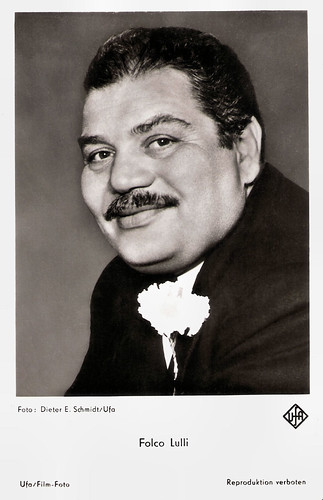
Folco Lulli
German postcard by Ufa, Berlin-Tempelhof, no. FK 4140. Photo: Dieter E. Schmidt / Ufa.


Scene from Caccia tragica/The Tragic Pursuit (1947). Source: borgorusky (YouTube).

Sources: Hal Erickson (AllMovie - Page now defunct), Find A Grave, Wikipedia (English, French and Italian), and IMDb.

This post was last updated on 9 April 2025.

29 July 2017

Twelve postcards from Brighton

Last Saturday, we had a post with twelve sunny and glamorous Italian postcards of the 1950s which we acquired during our trip to Italy. Today we like to share twelve new acquisitions we found a week later in Brighton, U.K. in a nice shop called Step Back In Time.

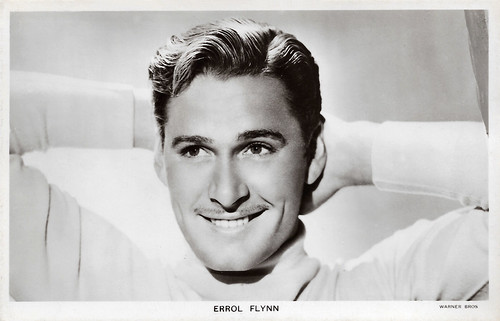
Errol Flynn
Errol Flynn. British postcard in the Picturegoer Series, London, no. W 65. Photo: Warner Bros.

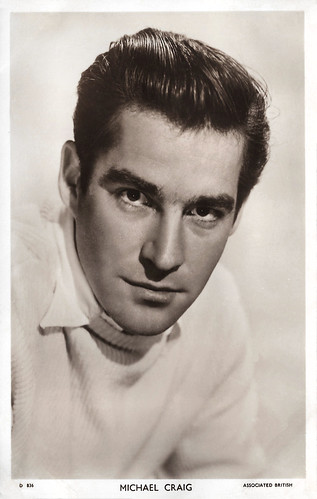
Michael Craig
Michael Craig. British postcard in the Picturegoer Series, London, no. D 836. Photo: Associated British.

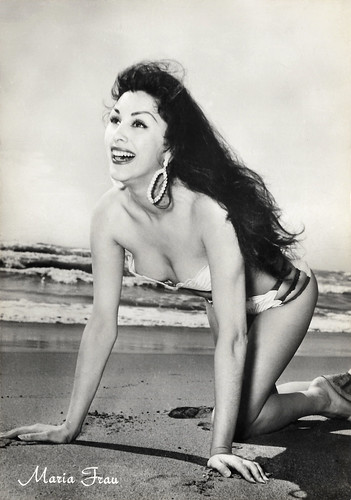
Maria Frau
Maria Frau. Italian postcard by Rotalfoto, Milano, no. 578.

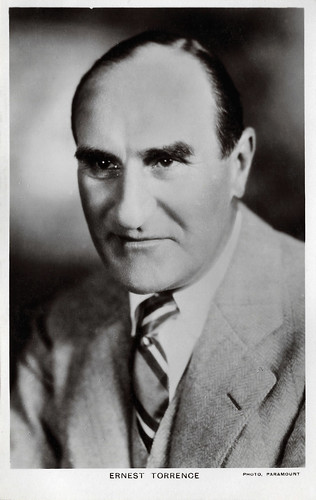
Ernest Torrence
Ernest Torrence. British postcard in the Picturegoer series, London, no. 167a. Photo: Paramount.

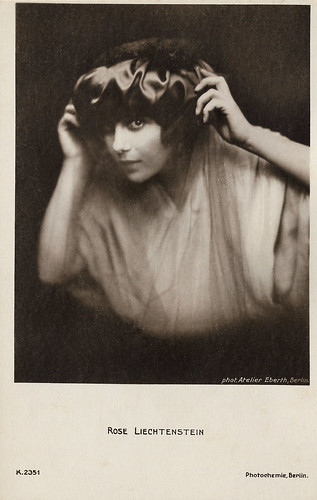
Rose Liechtenstein
Rose Liechtenstein. German postcard by Photochemie, Berlin, no. K. 2351. Photo: Atelier Eberth, Berlin.

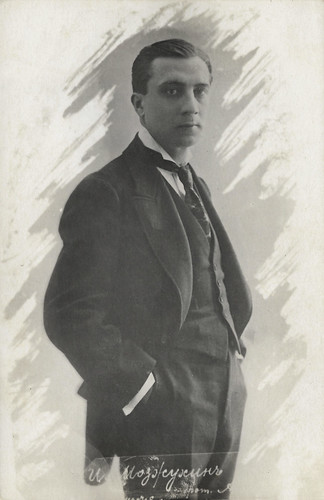
Ivan Mozzhukhin
Ivan Mozzhukhin. Russian postcard.

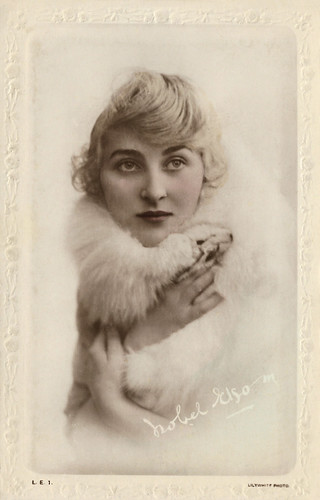
Isobel Elsom
Isobel Elsom. British postcard in the Lilywhite Photographic Series, no. L.E. 1. Photo: Lilywhite.

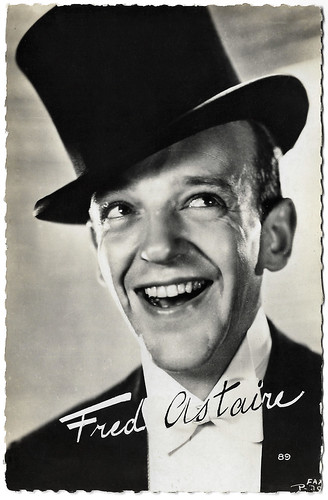
Fred Astaire
Fred Astaire. French postcard by Editions et Publications Cinematographiques, no. 89.

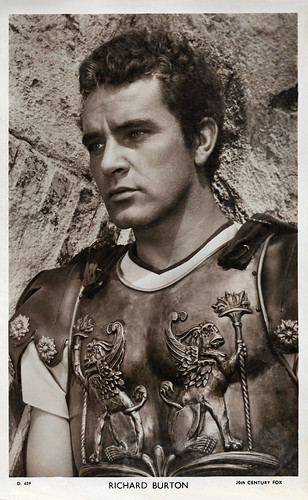
Richard Burton in The Robe (1953)
Richard Burton. British postcard in the Picturegoer Series, London, no. D 459. Photo: 20th Century Fox. Publicity still for The Robe (Henry Koster, 1953).

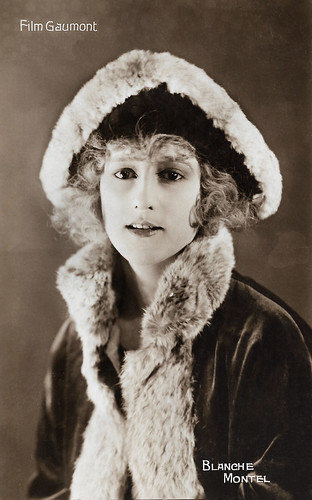
Blanche Montel
Blanche Montel. French postcard. Photo: Film Gaumont.

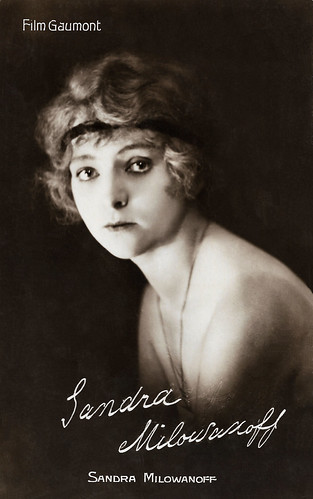
Sandra Milowanoff
Sandra Milowanoff. French postcard. Photo: Film Gaumont.

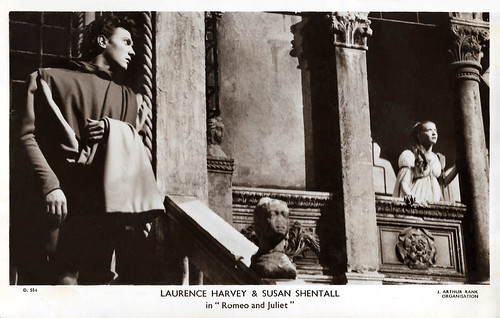
Laurence Harvey and Susan Shentall in Romeo and Juliet (1954)
Laurence Harvey and Susan Shentall. British postcard in the Picturegoer Series, London, no. D 551. Photo: J. Arthur Rank Organisation. Publicity still for Romeo and Juliet (Renato Castellani, 1954).

27 July 2017

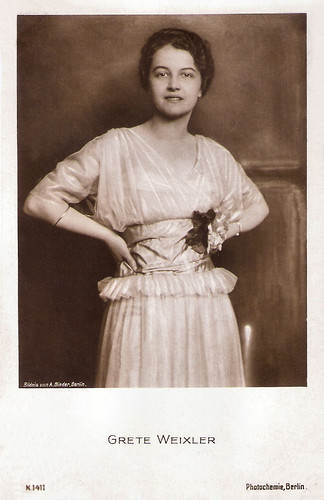
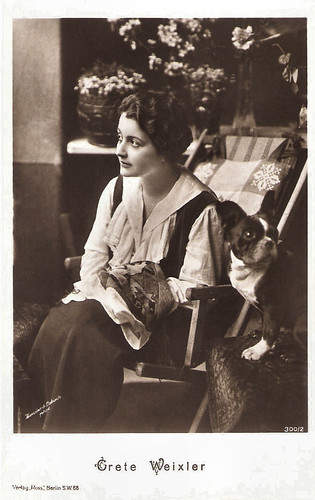
Grete Weixler

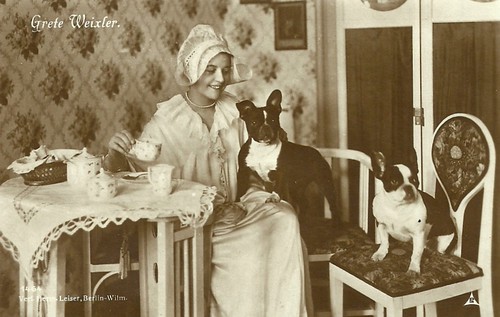
Grete Weixler (ca. 1900 - after 1922) was a German actress of the silent cinema. From 1914 on, she appeared in secondary roles in melodramas by directors like Carl Boese, Friedrich Zelnik and Lupu Pick.

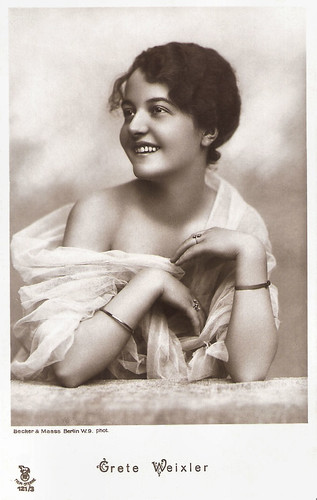
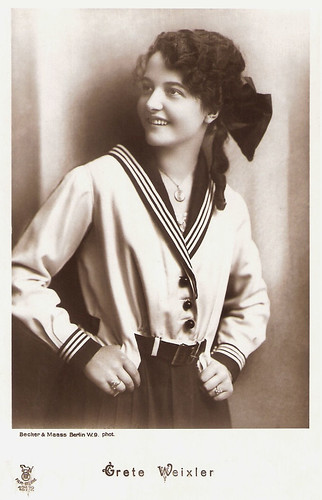
Grete Weixler
German postcard in the Film Sterne series by Rotophot, no. 121/3. Photo: Becker & Maass, Berlin.

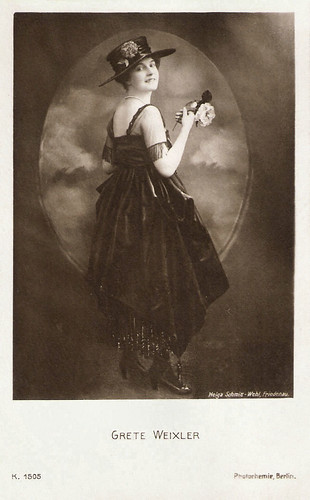
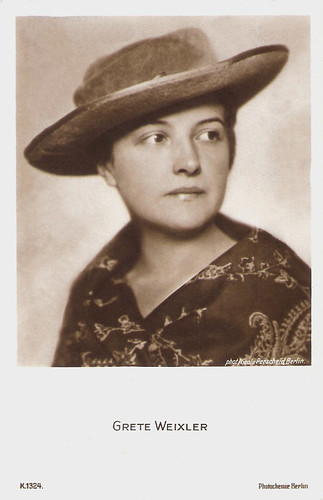
Grete Weixler
German postcard in Photochemie, Berlin, no. K 1324. Photo: Helga-Schmitt-Wehl, Friedenau.
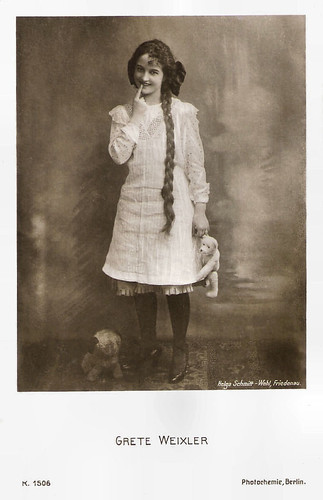
Grete Weixler
German postcard by Photochemie, Berlin, no. K 1505. Photo: Helga Schmitt-Wehl, Friedenau.

The story of a fallen woman


Grete Weixler was born into an actor’s family. Her grandfather had been successful in Hungary as an actor, Weixler's aunt lived as an artist in Vienna. Weixler's other siblings also turned to the performing arts.

Best known is her elder sister, popular silent film actress Dorrit Weixler. Grete followed in her footsteps and made her film debut under the direction of Dorrit’s husband, pioneer director Franz Hofer.

Possibly her first film was the silent short Fräulein Piccolo/Miss Piccolo (Franz Hofer, 1914) in which her sister starred and Ernst Lubitsch had a small role. Dorrit Weixler was the first German ‘backfish’, specialised in playing childlike young women in comedies.

In contrast to her sister, Grete Weixler appeared in serious films such as the melodramas Jahreszeiten des Lebens/Seasons of Life (Franz Hofer, 1915), Geopfert .../Sacrificed… (Walter Schmidthässler, 1916), and the Charles Dickens adaptation Klein Doortje/Little Dorrit (Friedrich Zelnik, 1917) featuring Lisa Weise.

Her next films included Margarete. Die Geschichte einer Gefallenen/Margarete. The story of a fallen woman (Friedrich Zelnik, 1918), featuring Lya Mara, and Verschleppt/Abducted (Carl Boese, 1919).

Grete Weixler
German postcard in the Film Sterne series by Rotophot, no. 121/1. Photo: Becker & Maass, Berlin.

Grete Weixler
German postcard by Verlag Hermann Leiser, Berlin, no. 1464. Photo: Pm.
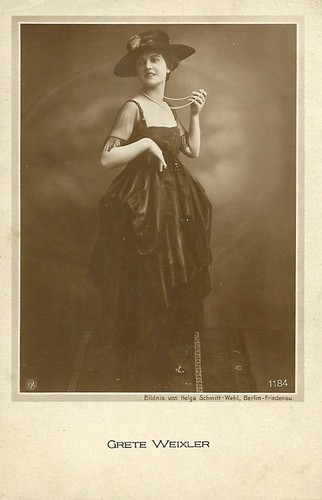
Grete Weixler
German postcard by NPG, no. 1184. Photo: Helga Schmidt-Wehl, Berlin-Friedenau.


The Way of Condemnation


In 1919, Grete Weixler took over the role of Lilly in Der Weg, der zur Verdammnis führt, 2. Teil. Hyänen der Lust (Otto Rippert, 1919) the second part of the film Der Weg der Verdammnis/The Way of Condemnation, about the fate of two young women who fall in the hands of girl traffickers.

Der Weg der Verdammnis/The Way of Condemnation was one of the most controversial and successful examples of the wave of ‘Sittenfilme’, melodramas about taboo subjects, mostly sexual, which were presented as enlightenment. This film was produced by the Gesellschaft zur Bekämpfung des Mädchenhandels (Society for the Struggle Against White Slavery).

Other films with Grete Weixler were Die Herrenschneiderin/The Lord's Cutler (Lupu Pick, 1919) and Die Sklavenhalter von Kansas-City/The Slaves of Kansas City (Wolfgang Neff, 1920) with a young Béla Lugosi.

In addition to her work in the cinema, Weixler was also a stage actress and appeared in the Trianon-Theater in Berlin. In 1922, she made her final film Die Tochter der Verführten/The Daughter of the seduced (Jaap Speyer, 1922) in which she played the daughter of a banker who falls for a femme fatale (Mia Pankau).

What happened to Grete Weixler after her retirement is not known. In 1916 her sister Dorrit, who was a morphine-dependent, had taken her own life.

Grete Weixler
German postcard in the Film Sterne series by Rotophot, no. 121/2. Photo: Becker & Maass, Berlin.

Grete Weixler
German postcard in Photochemie, Berlin, no. K 1324. Photo: Nicola Perscheid, Berlin.

Grete Weixler
German postcard in Photochemie, Berlin, no. K 1411. Photo: Alex Binder, Berlin.

Grete Weixler
German postcard by Verlag Ross, Berlin, no. 300/2, 1919-1924. Photo: Zander and Labisch.

Sources: Stephanie D’heil (Steffi-Line), Sophie (German), Wikipedia (German) and IMDb.

26 July 2017

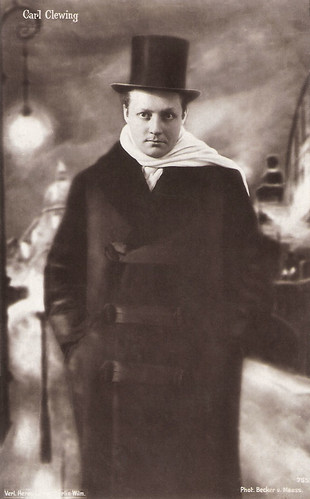
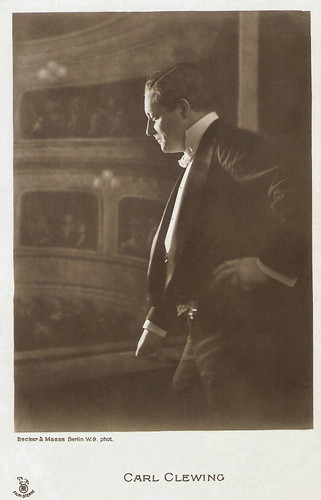
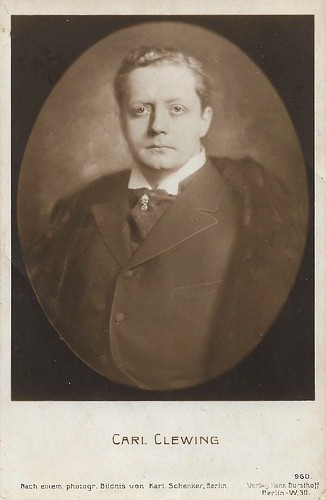
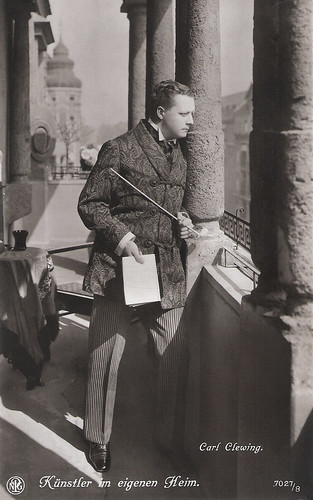
Carl Clewing

German actor Carl Clewing (1884-1954) was also an opera singer, the composer of the song 'Alle Tage ist kein Sonntag' (Every Day Isn't Sunday) and a music professor in Berlin. During the years of the early cinema, he was much in demand as a film actor.

Carl Clewing
German postcard by Verlag Hermann Leiser, Berlin-Wilm., no. 755. Photo: Becker & Maass, Berlin.

Carl Clewing
German postcard in the Film Sterne series by Rotophot, no. 147. Photo: Becker & Maass, Berlin.

Carl Clewing in Peer Gynt
German postcard by Verlag Hermann Leiser, Berlin, no. 8331. Photo: Becker & Maass. Carl Clewing in 'Peer Gynt.'

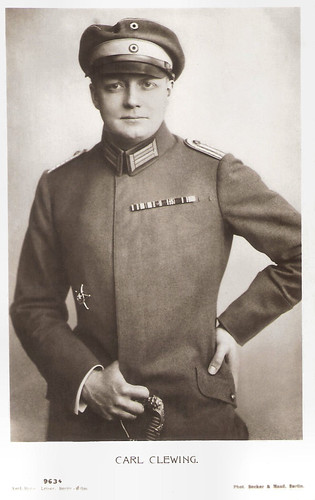
Carl Clewing
German postcard by Verlag Herm. Leiser, Berlin-Wilm., no. 9634. Photo: Becker & Maass, Berlin.

Ernst Lubitsch classic


Theodor Rudolph Carl Clewing was born in 1884 in Schwerin, Germany. His father was the owner of an apothecary. Clewing studied in Prague. From 1909 he was an actor in Berlin and he was appointed Royal Court actor in 1911.

In the same year, Clewing also made his debut as a film actor in Der fremde Vogel/The Strange Bird (Urban Gad, 1911) starring Hans Mierendorff and Asta Nielsen.

In the next years followed roles in productions like Ein Sommernachtstraum in unserer Zeit (Stellan Rye, 1913) based on motives of William Shakespeare’s A Midsummer Night's Dream, the fantasy Der Ring des schwedischen Reiters/The Ring of the Swedish riders (Stellan Rye, 1913), and Der Flug in die Sonne/The flight into the sun (Stellan Rye, 1914). At the outbreak of the First World War, he announced himself voluntarily, and during the war, he was repeatedly distinguished and promoted to lieutenant.

After the war, he was again active in Berlin as an opera singer, but also as a film actor. Among his films were the crime drama Whitechapel (Ewald André Dupont 1920) with Hans Mierendorff and Grit Hagasa, and Ernst Lubitsch’s classic Sumurun (1920), in which Ewing played the young Sheik. His final film was Das Floß der Toten/The Raft of the Dead (Carl Boese, 1920) with Aud Egede Nissen.

In the autumn of 1922, he had an engagement as 'Heldentenor' at the Staatsoper Berlin. In 1924-1925 he performed at the Bayreuth Festival and sang Walter von Stolzing and the 'Parsifal'. In 1922 he became a guest lecturer and professor at the State Conservatory of the Hochschule für Staats- & Wirtschaftswissenschaften in Detmold. In December 1928 he was appointed extraordinary professor for singing, vocal training and practical phonetics at the University of Music in Vienna.

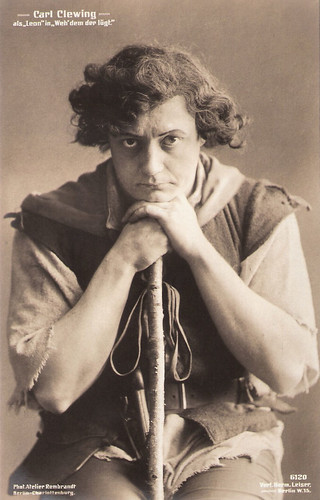
Carl Clewing in Weh dem der lügt!
German postcard by Verlag Herm. Leiser, no. 6120. Photo: Atelier Rembrandt, Berlin-Charlottenburg. Publicity still for a stage production of 'Weh dem, der lügt!' by Franz Grillparzer with Carl Clewing in the role of Leon, the kitchen help.

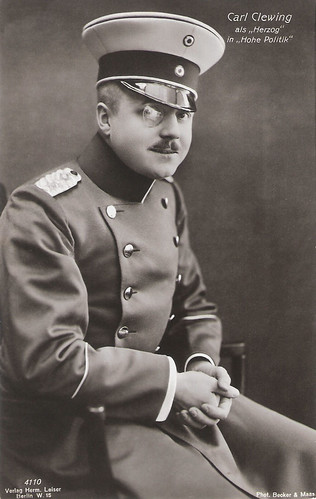
Carl Clewing in Hohe Politik
German postcard by Verlag Hermann Leiser, Berlin-Wilm., no. 4110. Photo: Becker & Maass. Publicity still for the stage play 'Hohe Politik' by Julius Rosen.

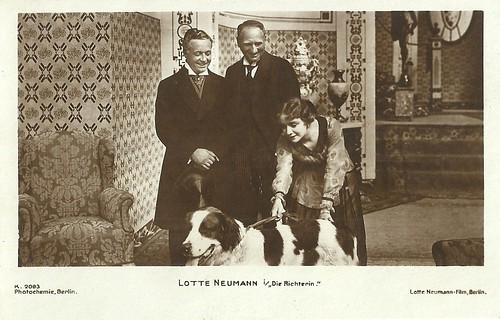
Lotte Neumann in Die Richterin
German postcard by Photochemie, Berlin, no. K.2092. Photo: Lotte Neumann-Film, Berlin. Lotte Neumann in Die Richterin/The Judge (Paul von Woringen, 1917). The sitting man is Carl Clewing.

Lotte Neumann in Die Richterin
German postcard by Photochemie, Berlin, no. K.2093. Photo: Lotte Neumann-Film, Berlin. Lotte Neumann in Die Richterin/The Judge (Paul von Woringen, 1917). The man left is Carl Clewing.

A member of the NSDAP, the SA, and the SS


At the beginning of 1931, Carl Clewing moved back to Germany and was appointed professor at the Staatliche Hochschule für Musik in Berlin, and at the same time, he was a representative of the Cooperative of German Stage Artists in the School of the German Stage Society, as well as a member of the Berlin Opera and Opera, and moved to Berlin-Lichterfelde-Ost.

After Adolf Hitler's rise to power, Clewing was a member of the NSDAP, the SA, and the SS. However, he was expelled in 1934, because he had concealed his ‘non-Aryan slippage’ and his former affiliation to a Masonic lodge. In 1935 he composed the Schlager and folk play 'Alle Tage ist kein Sonntag'. It was made into the film Alle Tage ist kein Sonntag/Every Day Isn't Sunday (Walter Janssen, 1935) with Adele Sandrock and Wolfgang Liebeneiner.

In the second half of the 1930s, Clewing, who was also a passionate hunter and collector of hunting culture, was entrusted by Hermann Göring, who was the 'Reichsjägermeister', to issue the series of monuments of German hunting culture. The first volume appeared as early as 1937, as well as a folk edition of 100 Huntsmen and a songbook of the Luftwaffe.

During this time he also developed a small form of the Fürst-Pless-Horn, which is also called 'Clewingsches Taschenjagdhorn'. In May 1939 he returned as an opera singer. In the same year, he wrote a cantata on the birth of Edda Goering.

After the Second World War, he lived in the sanatorium in Glotterbad near Freiburg im Breisgau and spent his retirement in the health resort Dr. Saller in Badenweiler. Carl Clewing passed away in Badenweiler, Baden-Württemberg, Germany in 1954. In 1923, Clewing married Elisabeth (Else) née Mulert and adopted Arnhold, widowed Kunheim. They divorced in 1940 and had a son, Carl Peter (1924-1943, fallen at Salerno).

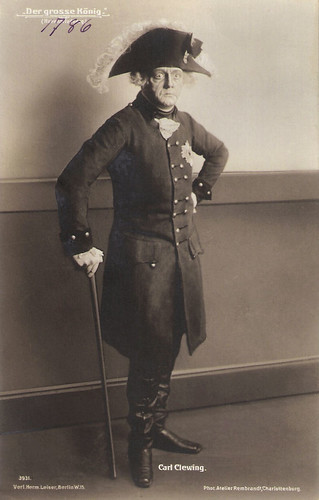
Carl Clewing in Der grosse König
German postcard by Verlag Hermann Leiser, Berlin-Wilm., no. 3931. Photo: Atelier Rembrandt, Charlottenburg. Publicity still for a stage production of 'Der grosse König' (The Great King).

Carl Clewing
German postcard by Verlag Hermann Leiser, Berlin W., no. 4529.

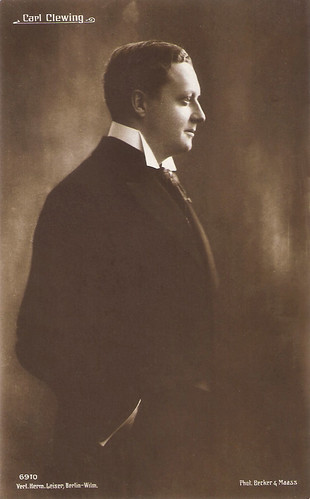
Carl Clewing
German postcard by Verlag Hermann Leiser, Berlin-Wilm., no. 6910. Photo: Becker & Maass.

Carl Clewing
German postcard by Verlag Hans Dursthoff, Berlin-W., no. 960. Photo: Karl Schenker, Berlin.

Carl Clewing, At Home
German postcard by NPG, no. 7027/8. Caption: "Künstler im eigenen Heim" (The artist at his own home).

Sources: Thomas Staedeli (Cyranos), Wikipedia (German), and IMDb.

This post was last updated on 29 September 2023.

25 July 2017

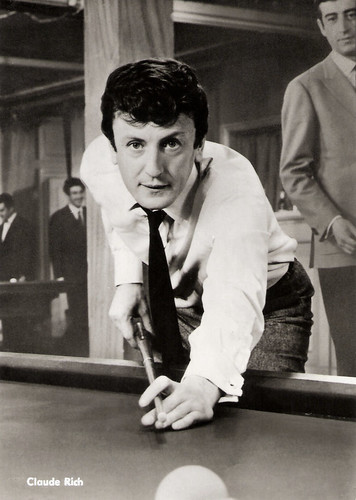
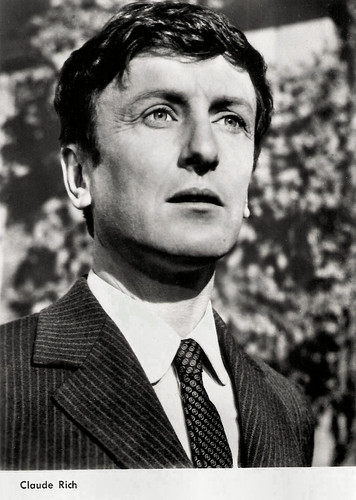
Claude Rich (1929-2017)

On Thursday 20 July 2017, French actor Claude Rich passed away. He played in at least fifty plays and around 80 films, among them the cult classic Les Tontons flingueurs/Crooks in Clover (1963) alongside Lino Ventura, and François Truffaut’s La mariée était en noir/The Bride Wore Black (1968). Over the course of his long career, he worked with some of the best known French film directors such as Jean Renoir, Julien Duvivier, Claude Chabrol, and Alain Resnais.

Claude Rich (1929-2017)
East-German postcard by VEB Progress Film-Vertrieb, Berlin, no. 154/71. Photo: publicity still for Un milliard dans un billard/Diamond Cue (Nicolas Gessner, 1965).

Neither Seen Nor Recognized


Claude Robert Rich was born in Strasbourg, eastern France, in 1929. He was the son of Roger Rich and Marguerite Labat. In 1935, after the death of his father, he moved with his mother and three brothers and sisters to Paris.

Later when he worked as a bank employee in order to bring money home to help his mother, he enrolled in evening classes drama by Charles Dullin at le Centre d'Art Dramatique de la rue Blanche. While working and studying, he decided to make a go of acting and entered a competition for a scholarship to the prestigious Conservatoire National Supérieur d'Art dramatique.

He won the scholarship and started studying acting full-time in 1953. At the Conservatoire, he met and befriended many who would also become well known actors, including Annie Girardot, Jean-Paul Belmondo, and Jean Rochefort.

Rich made his debut at the Renaissance Theater, and made his film debut in René Clair's Les Grandes Manœuvres/The Grand Maneuver (1955). He followed it with a part in the comedy Mitsou (Jacqueline Audry, 1956) starring Danièle Delorme, and based on the 1919 novella Mitsou by Colette.

In the comedy hit Ni vu, ni connu/Neither Seen Nor Recognized (Yves Robert, 1958), he appeared with Louis de Funès. Another hit at the box offices was the anthology film La française et l'amour/Love and the Frenchwoman (1960). In one of the segments he co-starred with Marie-José Nat.

Claude Rich (1929-2017)
East-German postcard by VEB Progress Film-Vertrieb, Berlin, no. 2722. Photo: publicity still for Mona, l'étoile sans nom/Nameless Star (Henri Colpi, 1966).

Claude Rich, Marina Vlady and Cristea Avram in Mona, l'étoile sans nom (1966)
East-German postcard by VEB Progress Film-Vertrieb, Berlin, no. 2723, 1966. Photo: publicity still for Mona, l'étoile sans nom/Nameless Star (Henri Colpi, 1966) with Marina Vlady and Cristea Avram.

Cult Classic


For much of the 1960s, Claude Rich took on secondary roles in such films as La chambre ardente/The Burning Court (Julien Duvivier, 1962), in a segment directed by Claude Chabrol in the anthology Les Sept péchés capitaux/The seven deadly Sins (1962) and Le Caporal épinglé/The Elusive Corporal (Jean Renoir, 1962) starring Jean-Pierre Cassel.

He acted alongside Lino Ventura in the cult classic Les Tontons flingueurs/Crooks in Clover (Georges Lautner, 1963). He played both Gen. Leclerc and Lt. Pierre de la Fouchardière in Paris brûle-t-il?/Is Paris Burning? (René Clément, 1966). The following year, he played with Louis de Funès in the comedy of errors Oscar (Edouard Molinaro, 1967).

He landed his first major role in Alain Resnais’s Science-Fiction film, Je t’aime, je t’aime/I Love You, I Love You (1968). He interpreted a man who tried to commit suicide and is selected by a secret organisation in order to experiment a very dangerous and quite hopeless voyage, a journey in his own past. Resnais chose him for the role because of the special timbre of his voice.

It was followed by La mariée était en noir/The Bride Wore Black (François Truffaut, 1968). Rich is one of the five men who is responsible for the death of Jeanne Moreau's fiancé. At a party being held in his high-rise apartment, the Bride pushes him off the balcony and he falls to his death.

Rich was also an impressive theatre performer. He was a five-time finalist for the Molière award, France’s national theatre award. He shined in the play Le Souper (The Supper) by Jean-Claude Brisville, where he played Talleyrand alongside actor Claude Brasseur, as Joseph Fouché. Both Rich and Brasseur would portray these characters once more for the film adaptation Le Souper/The Supper (Édouard Molinaro, 1992). In 1993, he received the Cesar for best actor with this performance.

Rich was nominated four times for best supporting actor, in La Fille d’Artagnan/Revenge of the Musketeers (Bertrand Tavernier, 1994), La Bûche/Season's Beatings (Danièle Thompson, 1999), Aide-toi le ciel t’aidera/With a Little Help from Myself (François Dupeyron, 2008) and Cherchez Hortense/Looking for Hortense (Pascal Bonitzer, 2012). Among his other awards were a Grammy Award in 1974, and a César d’Honneur in 2003.

Claude Rich died after a long illness in his home in Orgeval, France. He was 88. Since 1959, he was married to Catherine Rich born Renaudin and they had three children, Delphine, Natalie and Rémy Rich.


American trailer for La Bûche/Season's Beatings (1999). Source: Video Detective (YouTube).


Trailer Et si on vivait tous ensemble?/All Together (2011). Source: Movie Covfefe - Coverage (YouTube).

Sources: Montreal Gazette, RFI, Les Gens du Cinéma (French), Wikipedia (French and English), and IMDb.