
French photo card by Cinéma Pathé. Photo: Pathé Frères. Scene from Fidèle jusqu'à la mort (Romeo Bosetti, 1911). Romeo Bosetti also scripted the film. It is unknown who the actors in this drama are, but the dog's name is Barnum.
In Fidèle jusqu'à la mort, a jeweller, having received an order for a valuable pearl necklace, sends his employee Robert—in whom he has complete confidence—to deliver the order. Moustache (the dog Barnum), the boss’s dog, insists on following him despite the employee’s protests. On the way, some unsavoury encounters lead Robert astray. He allows himself to be lured into a cabaret, where the fumes of intoxication soon cloud his mind. The employee, stumbling back onto the road, loses the precious bag entrusted to him. The dog Moustache tries in vain to remind him of his duty. Robert, weary of the dog’s insistence, draws his revolver and fires point-blank at the poor animal. Moustache, wounded and stumbling with every step, still finds the strength to drag himself to the bag, which he covers with his body. Upon returning to his master’s home, the employee, suddenly sobering up, realises the mistake he has made. Panicked, he returns to search for the dog alongside his boss and finds the bag intact. But the good dog cannot survive his injuries. He dies in his master’s arms.

French photo card by Cinéma Pathé. Photo: Pathé Frères. Scene from Fidèle jusqu'à la mort (Romeo Bosetti, 1911). Romeo Bosetti also scripted the film. It is unknown who the actors in this drama are, but the dog's name is Barnum.

French photo card by Cinéma Pathé. Photo: MP (Modern Pictures), a subsection of Pathé Frères. Scene from the French silent comedy L'accord parfait (Camille de Morlhon, 1911), starring Georges Coquet.
While strolling through the streets, the painter Paul Bérier (Georges Coquet) in L'accord parfait witnesses an assault and comes to the victim’s defence against a pickpocket. After getting her reticule back for her, he realises that his protégée is charming and begins to follow her, his heart in turmoil. A nuisance who bumps into him in passing causes him to lose track of the young woman. Disappointed, the painter returns home. A piano next door plays an endless tune. Paul, annoyed, plugs his ears with cotton. But the muffled tune slips through the protective layer and haunts him relentlessly. Exasperated, the artist grabs a broom, pounds furiously against the shared wall, and fires off all the bullets in his revolver one after another. This time, it’s too much! The neighbour, furious, comes to demand an explanation. Things start to go awry when the pianist herself and her mother rush over at the sound of the argument. Paul, taken aback, recognises the young woman as the charming lady he met that afternoon. He is forgiven for his abrupt outburst, and soon, reconciled with the neighbour’s piano, notes, and kisses blend in… perfect harmony!

French photo card by Cinéma Pathé. Photo: MP (Modern Pictures), a subsection of Pathé Frères. Scene from the French silent comedy L'accord parfait (Camille de Morlhon, 1911), starring Georges Coquet.

French photo card by Cinéma Pathé. Photo: SCAGL (Société Cinématographique des Auteurs et Gens de Lettres), a subsection of Pathé. Scene from the French silent comedy Le rival dupé (Michel Carré, 1911). Michel Carré was also the screenwriter. Andrée Marly can be seen on this card, far right.
The charming romantic comedy Le rival dupé tells the story of the rivalry between two suitors: the Marquis d’Estiolle (Paul Numa), who is engaged to the lovely Estelle de Gabrillac (Amélie Diéterle), and a brilliant captain of the Musketeers (Georges Coquet), whom a chance lodging arrangement has brought to the Château de Gabrillac. The latter believes himself favoured, while the fiancé, furious at the idea of being supplanted, challenges his rival to a duel. The contest does not go his way, and the officer, believing himself rid of his adversary, hurries to his hostess in the hope of reaping the rewards of his exploits. But his eloquence is cut short by the appearance of the man he believed to be dead, who was in fact only slightly wounded. Estelle, regretting the distress she has caused the man she loves, dismisses the overly gallant musketeer. Additional actors were Sainrat, Fernand Tauffenberger, Emile André, and Andrée Marly.

French photo card by Cinéma Pathé. Photo: SCAGL (Société Cinématographique des Auteurs et Gens de Lettres), a subsection of Pathé. Amélie Diéterle and Paul Numa in Le rival dupé (Michel Carré, 1911). Michel Carré was also the screenwriter.
A little mystery: who was Dieudonné?
On their website, Fondation Jérôme Seydoux-Pathé identifies the actor Dieudonné in Le secret du passé (Georges Monca, 1911) and Pour les beaux yeux de la voisine (Georges Denola, 1911) as the French actor, author and director Albert Dieudonné.
Albert Dieudonné (1889-1976) became famous as the title character in Abel Gance’s epic film Napoléon (1927). During the 1910s, he worked with such directors as Albert Capellani at Le roi s’amuse / The King Enjoys Himself (1909) and La bouteille de lait / The Milk Bottle (1910), Georges Monca at Jim Blackwood, jockey / The Jockey (1910), and Alfred Machin at Le Diamant noir / The Black Diamond (1913).
In 1911, Albert was 22, but the actor in the Pathé films of our cards must have been a much older man. Was it his uncle, the actor Alphonse Dieudonné, who brought him in contact with the world of theatre, or maybe his father?
Albert Dieudonné also had a famous stage acting grandfather, Alfred or Alphonse Dieudonné. He would have been 87 in 1911.
Our guess is that the actor in these Pathé films was Alfred or the younger Alphonse Dieudonné. What do you think?

French photo card by Cinéma Pathé. Photo: Pathé Frères. Scene from Le secret du passé (Georges Monca, 1911) with Dieudonné and Pauline Patry. The name on the card is - as always - of the scriptwriter, Frontignan. The Fondation Pathé claims the script was co-written with Georges Monca.
In Le secret du passé, Mr. and Mrs. Rémy are a sweet elderly couple who have grown old in solitude. They regret that they have no children and spend long hours in the public gardens watching the toddlers play. However, in his youth, before he married, Mr. Rémy (Dieudonné) had known the joys of fatherhood. His son (Georges Coquet), whom he raised in secret from his wife, has grown into a man and become a father himself, and the kind old man is consumed by the desire to see his grandchildren, whom he has never met. One day, his wife (Pauline Patry) discovers the secret of his past through photographs and letters. The kind-hearted woman forgives him. Together with the grown son whom fate has brought her, she adopts the two dear little ones, whom she places in their grandfather’s arms. The other actors were Delmy, Carina, Madeleine Fromet, and Maria Fromet.

French photo card by Cinéma Pathé. Photo: Pathé Frères. Scene from Le secret du passé (Georges Monca, 1911) with Albert Dieudonné, Georges Coquet and Pauline Patry.

French photo card by Cinéma Pathé. Photo: Pathé Frères. Scene from the romantic comedy Le voisin de campagne (N.N., 1911).
Le voisin de campagne is set in the early 19th century. Two spinster sisters, Misses Agathe and Sophie Tricot, have taken in their niece, Simone, a charming orphan. Robert Charnier, a new neighbour in the countryside, comes to disturb the peace of these two spinsters with hearts that are far too young. Each of them asks the young man for a date so she can confess her love to him. While they wait for him… under the elm tree, Robert courts the young and pretty orphan who has won his heart. Sophie and Agathe discover their misfortune. Realising they are past the age of being loved, they bravely bid farewell to their shattered illusions and consent to the marriage of the two lovers.

French photo card by Cinéma Pathé. Photo: Pathé Frères. Scene from Le voisin de campagne (N.N., 1911).

French photo card by Cinéma Pathé. Photo: Pathé Frères. Scene from Deux filles d'Espagne (Albert Capellani, 1911). Script by Maurice Denêcheau.
In Deux filles d'Espagne, two Spanish girls, Señorita Mercedes and Conchita (Mlle California), the cigarette seller, bear an extraordinary resemblance to one another. By a chance coincidence, Mateo (Émile Milo), Mercedes’s fiancé, encounters Fernando (Charles Dechamps), Conchita’s lover, at her doorstep. The fiancé’s jealousy is aroused, and a flower that Mercédès wears on her bodice, confirming his suspicions, sets his anger ablaze. Upon returning home, Mateo thinks he sees his fiancée in Fernando’s arms. A bloody brawl breaks out between the two men in a posada where the cigar maker has just danced a frenzied bolero. Mercédès, learning that her fiancé is fighting over a woman she believes to be her rival, rushes over and finds herself face to face with her incredible doppelgänger. Everything is explained, and a happy reconciliation brings the adventure to a close just as it was about to turn tragic. Other actors were Darmody, Faivre, Léontine Massart, Maurice Luguet, and Nadia d'Angely.

French photo card by Cinéma Pathé. Photo: Pathé Frères. Scene from Le mensonge de Jean Le Manchot (Michel Carré, 1911). Michel Carré also scripted the film.
Le mensonge de Jean Le Manchot is set in a small village in the Oise region. A young schoolteacher, Jeanne Sabourée (Albane), is engaged to Captain Jacques Reynaud (Adrien Caillard). The two families often host a mutual friend, a poor cripple named Jean Le Manchot (Paul Capellani), who loves the schoolteacher silently and without hope. The peace of these good people is disrupted by Jacques’s call to arms. His regiment is sent to the Yunnan region, where the military forces are too thinly spread, making the captain’s post particularly perilous. A skirmish breaks out in which the small detachment is overwhelmed by a numerically superior enemy, and the young officer dies heroically. Back home, the return of his orderly, bearing the sad news, deals a cruel blow to the mother (Marie Ernestine Desclauzas) and fiancée, who hesitate to tell the elderly father (Charles Mosnier) — who has gone blind — the tragic truth. However, the old man has discovered his son’s canteen on the table. He believes his son has returned. How can he be dissuaded? Jean Le Manchot, yielding to an irresistible sense of compassion, allows himself to don the missing man’s uniform. The blind man’s joy, as he embraces the one he believes to be his son, rewards Jean for the sad charade he has been forced to play. And so that this white lie may continue — who knows — perhaps one day Jeanne will agree to take his hand and unite their fates, brought together by suffering.
The album before and after the restoration
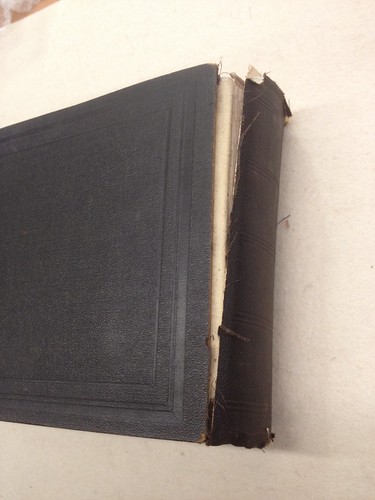
The album before the restoration. Collection: Ivo Blom.
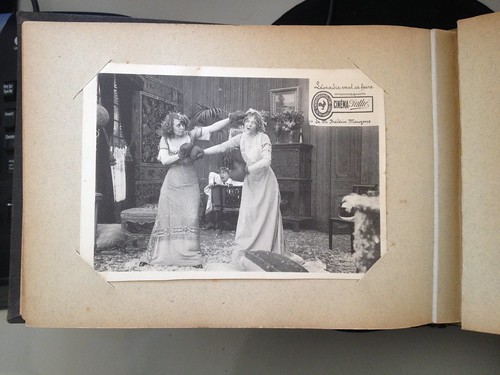
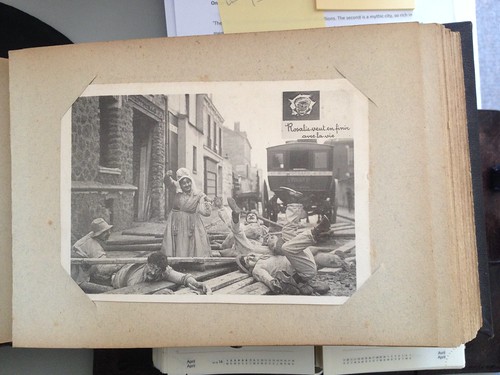
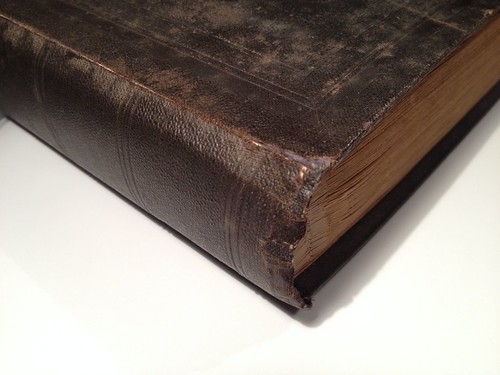
The album after the restoration. Collection: Ivo Blom.

French photo card by Cinéma Pathé. Photo: Pathé Frères. Scene from the comedy L'envieuse (Albert Capellani, 1911). The scriptwriter was Mévisto, but according to the Fondation Pathé, Albert Capellani was co-writer of the script.
André de Baudy (Adolphe Candé), an engineer at an industrial firm, earns an annual salary of 20,000 francs. His earnings are not enough to cover the expenses of his wife, Hélène (Léontine Massart), who, tempted by the luxury enjoyed by her wealthier friends, resents the simplicity of her wardrobe—no jewellery, no furs, no lace. One day, haunted by the desire to own a pearl necklace, she enters a jewellery store and has the shopkeeper show her various sets. But their prices far exceed her expectations. Was she to give up the jewel that had promised her so much joy? In a moment of madness, she slips one of the precious necklaces into her pocket and rushes out. The theft is soon discovered, and the thief is arrested. Her husband, upon learning of it, refuses to forgive her, and the unfortunate woman must serve her sentence: six months in prison. During her absence, their daughter, little Yvonne (Hacquard), falls seriously ill. Deprived of her mother’s tenderness and care, the child wastes away. The doctor hesitates to give a prognosis when the mother, finally released, returns to beg for forgiveness. André allows her to come and care for her child, and after overcoming the illness through long and devoted care, the guilty woman finally obtains his forgiveness. The other actors were Maurice Luguet, Dupont-Morgan, Camille Steyaert, and Andrée Marly.

French photo card by Cinéma Pathé. Photo: Pathé Frères. Scene from L'envieuse (Albert Capellani, 1911).

French photo card by Cinéma Pathé. Photo: SCAGL. Scene from L'illusion des yeux (Georges Denola, 1911). Script by Daniel Riche.
A mountain accident robs a young woman (Albane) of the fiancé she loved (Paul Capellani). Her sanity succumbs to her despair. Committed to an insane asylum, all the care she receives proves futile until a visit from a young doctor (Paul Capellani) strikes a chord in the patient’s mind due to his extraordinary resemblance to the deceased. The psychiatrist (Georges Tréville) takes advantage of this circumstance to attempt a decisive experiment. He does not disabuse the insane woman, who believes in the providential return of the one she thought lost forever. It is only when reason, under the influence of budding love, has gradually returned to the young woman’s mind that he decides to set her straight. Today’s tenderness will be stronger than yesterday’s despair. The other actors were Maurice Luguet, Jeanne Grumbach, Gabrielle Chalon, and Cécile Barré.

French photo card by Cinéma Pathé. Photo: SCAGL. Scene from L'illusion des yeux (Georges Denola, 1911). Script by Daniel Riche.

French photo card by Cinéma Pathé. Photo: Pathé Frères. Scene from Pour les beaux yeux de la voisine (Georges Denola, 1911). Script by Paul Landrin.
In Pour les beaux yeux de la voisine, Captain Michel (Paul Landrin) and Commander Raymond (Dieudonné), two old comrades-in-arms, live next door to each other. They are separated only by the house of their neighbour, Mrs. Angèle (Paule Andral). The old lady’s kindness — charming beneath her grey headbands — gently brightens the lives of the two old bachelors, who jeer at each other for her friendship. On her birthday, each of them comes with a large bouquet of violets to offer their best wishes, secretly hoping the other has forgotten the date. That day, their frenzied jealousy erupts; the friends decide to settle the matter in a fight. Both are injured, but Commander Raymond is more seriously hurt. Thanks to the devoted care of their dear old friend, they recover quickly. Captain Michel, who recovers first, sends a magnificent bouquet of thanks to Mrs. Angèle, which nearly causes another scandal. But a second bouquet arrives just then from the commander. The latter, still convalescing, had ordered nothing. What, then, is this mystery? The captain’s awkward demeanour points to him as the author of the deception, and this kind gesture of friendship finally reconciles the two rivals.

French photo card by Cinéma Pathé. Photo: Pathé Frères. Scene from Pour les beaux yeux de la voisine (Georges Denola, 1911). Script by Paul Landrin.

French photo card by Cinéma Pathé. Photo: Pathé Frères. Charles Prince in Rigadin est un galant homme (Georges Monca, 1911). Script by F. Mausens.
In Rigadin est un galant homme, Rigadin (Charles Prince), as always handsome and charming, has won the heart of a society woman (Jeanne Doë). He is in the midst of courting her when her husband (Paul Landrin) returns unexpectedly. The culprit hides behind a screen, where he has the unpleasant surprise of coming face to face with a fierce Apache (Georges Tréville) who, like him, has snuck in. Ordered to swap his elegant suit for the rags of his formidable neighbour, Rigadin obeys, trembling. Meanwhile, the outraged husband finds his rival’s hat. Furious, he sets out in pursuit and discovers our burglar, who flees without looking back. Rigadin, transformed into an Apache, is left alone to answer for the broken-in safe, as the couple has finally realised they’ve been robbed. The alleged culprit, taken to the police station and silenced by his own gallantry, sees his romantic adventure come to an end on the black straw of a prison cell. The other actors were Léontine Massart and André Simon.

French photo card by Cinéma Pathé. Photo: Pathé Frères. Charles Prince in Rigadin est un galant homme (Georges Monca, 1911). Script by F. Mausens.
Source for the plots: Fondation Jérôme Seydoux-Pathé.

No comments:
Post a Comment