06 February 2015

Robert Donat

Graceful and handsome Robert Donat (1905-1958) was the personification of an English gentleman who was neither haughty nor common. That made him something of a novelty in British films of the 1930s. Despite his Oscar-winning performance as Mr. Chips, he preferred to work in England and in the 1940s and 1950s he mainly appeared in the theatre.

Robert Donat
British postcard by Art Photo, no. 37-2. Photo: London Film Productions.
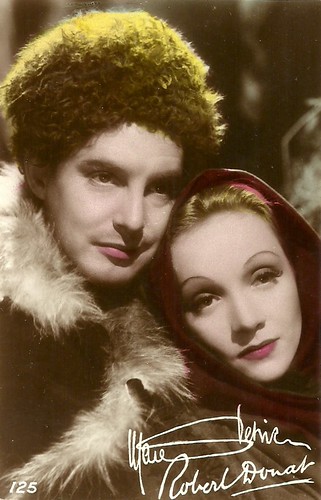
Marlene Dietrich and Robert Donat in Knight Without Armour
British postcard by Art Photo, no. 125. Marlene Dietrich and Robert Donat in the London Films production Knight Without Armour (Jacques Feyder, 1937). This historical drama set during the Russian Revolution and the Civil War was produced by Alexander Korda from a screenplay by Lajos Bíró adapted by Frances Marion from the 1933 novel of the same title by James Hilton.
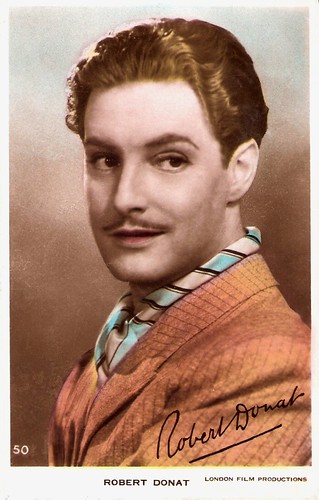
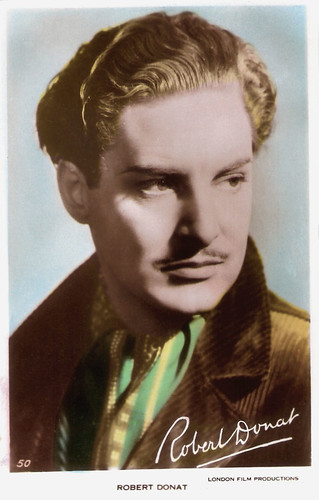
Robert Donat
British postcard, no. 50. Photo: London Film Productions.

Vocal embarrassment


Friedrich Robert Donath was born in 1905 in Manchester, England, to Ernst Emil Donath, a Polish clerk, and his wife Rose Alice née Green.

Robert's pleasant voice and somewhat neutral English accent were carefully honed as a boy because he had a stammer and took elocution lessons starting at age 11 to overcome the impediment. It was not too surprising that freedom from such a vocal embarrassment was an encouragement to act.

His other handicap, acute asthma, did not deter him. At the age of 16, he began performing William Shakespeare and other classic roles in some repertory and touring companies throughout Britain.

In 1924 he joined Sir Frank Benson's repertory company, and later he was with the Liverpool Repertory Theatre.

His work was finally noticed by director-producer Alexander Korda, who gave him a three-year film contract.
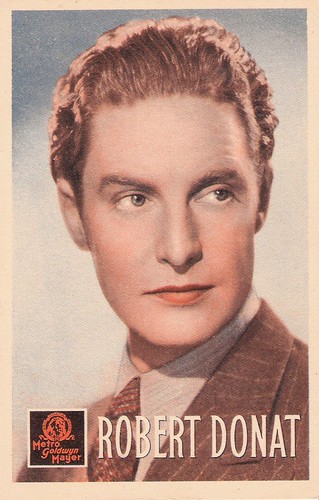
Robert Donat
Vintage postcard. Photo: Metro Goldwyn Mayer (MGM).
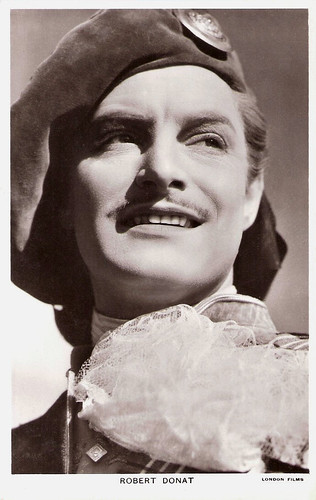
Robert Donat
British postcard in the Picturegoer Series, London, no. 1055. Photo: London Films. Publicity still for The Ghost Goes West (René Clair, 1935).

Top draw


Robert Donat made his film debut in Men of Tomorrow (Zoltan Korda, Leontine Sagan, 1932). His first great screen success came with The Private Life of Henry VIII (Alexander Korda, 1933), playing Anne Boleyn's lover, Thomas Culpeper.

Donat's style of acting, whether comic or dramatic, was usually reserved, with the subtleties of face and voice being his talents to complement the role. A top draw in Britain, he went to Hollywood for The Count of Monte Cristo (Rowland V. Lee, 1934).

Later Hollywood usually had to shoot in England if it wanted him badly enough. And that was not a problem after the box office reception given The 39 Steps (1935), the big hit for Alfred Hitchcock.

There was a hint of whimsy in Donat's face that worked especially well with the sophisticated comedic elements that crept into several of his dramatic roles. His portrayal of individualist Canadian Richard Hannay - which registered with North Americans both above and below the 49th parallel - in The 39 Steps was the first of such popular characters.

His most successful films included also The Ghost Goes West (René Clair, 1935), The Citadel (King Vidor, 1938), for which he received his first Oscar nomination, and Goodbye, Mr. Chips (Sam Wood, 1939) opposite Greer Garson. As Mr. Chips he is best known: the shy schoolmaster who blooms under love and becomes an institution for generations of schoolboys. As Brian McFarlane writes in the Encyclopaedia of British Cinema: "Class-ridden and sentimental perhaps, it remains extraordinarily touching in his Oscar-winning performance, and it ushers in the Donat of the post-war years."
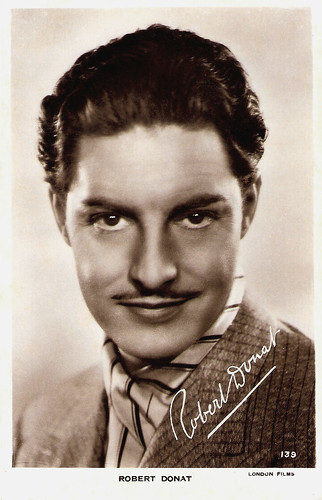
Robert Donat
British postcard, no. 139. Photo: London Films.
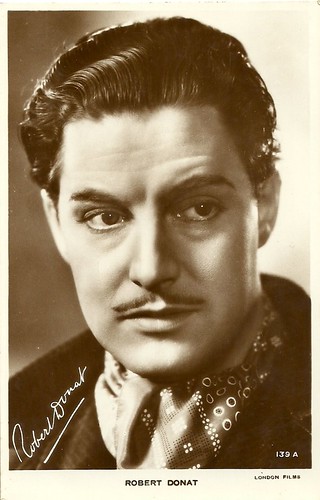
Robert Donat
British postcard, no. 139 A. Photo: London Films.
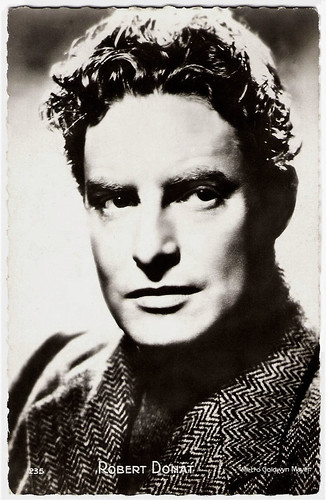
Robert Donat
French postcard for Editions P.I., Paris, no. 235. Photo: Metro-Goldwyn-Mayer.

Major theatre star


Alfred Hitchcock attempted to land Robert Donat for three other roles, Sabotage and Secret Agent in 1936 and Rebecca in 1940, but supposedly illness, commitments, and more illness, respectively, kept Donat from accepting each.

Hollywood would be treated in kind, for Donat was more dedicated to stage work. He was a major theatre star, noted for his performances on the British stage.

Well-known were his performances in G.B. Shaw's 'The Devil's Disciple' (1938) and 'Heartbreak House' (1942), 'Much Ado About Nothing' (1946), and especially as Thomas Becket in T. S. Eliot's 'Murder in the Cathedral' at the Old Vic Theatre (1952).

He lobbied hard to be cast in two film roles, neither of which he gained. He wanted to play the Chorus in Laurence Olivier's Henry V (1944), but the role went to Leslie Banks.

Donat longed desperately to be cast against type as Bill Sikes in David Lean's Oliver Twist (1948), but Lean thought him wrong for the part and cast Robert Newton instead.
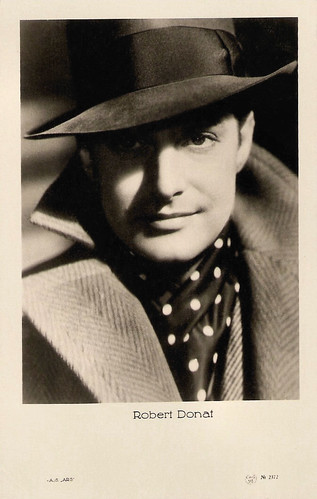
Robert Donat
Vintage postcard by A.S. 'Ars'. Photo: E. & G.R., no. 2317.
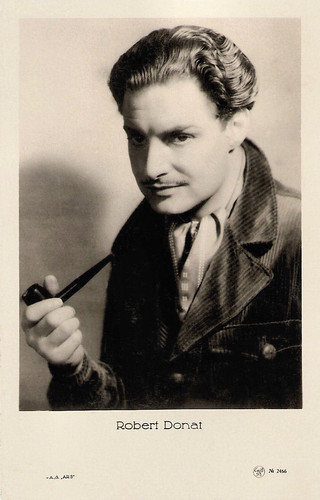
Robert Donat
Vintage postcard by A.S. 'Ars'. Photo: Em.G.R., no. 2466.
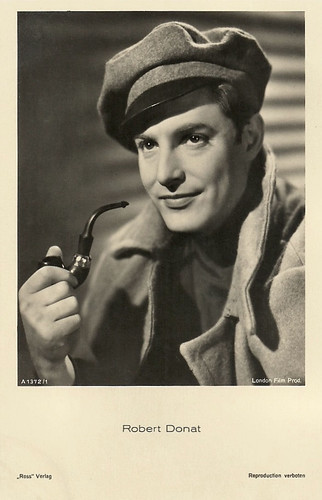
Robert Donat
German postcard by Ross Verlag, no. A 1372/1, 1937-1938. Photo: London Film Prod.

Suburban worm


Robert Donat suffered from chronic asthma which affected his career and limited him to appearing in only twenty films. Just six more films were allotted to Donat after the war and into the 1950s, all but one British productions.

He played the suburban worm who thrives during the war in the comedy Perfect Strangers (Alexander Korda, 1945), the charismatic 'turn' - Parnell in Captain Boycott (Frank Launder, 1947), and in The Winslow Boy (Anthony Asquith, 1948), the supercilious defence counsel who warms to the spectacle of unassailable right. He also starred, directed and co-wrote The Cure for Love (1950) and starred in The Magic Box (John Boulting, 1952), a well-crafted and delightful, fictionalised salute to the history of the British film industry.

By 1955, all of Donat's acting efforts required a bottle of oxygen kept off stage and at the ready as his health continued to turn toward the worse. Donat's final role was the Mandarin Yang Cheng in The Inn of the Sixth Happiness (Mark Robson, 1958) opposite Ingrid Bergman. His fragility was poignantly obvious on screen, and he died shortly after the film was finished, aged 53 in London, England.

His biographer Kenneth Barrow writes in 'Mr Chips: The Life of Robert Donat' (1985) on the cause of his death: "Perhaps asthma had weakened him but, in fact, it was discovered he had a brain tumour the size of a duck egg and cerebral thrombosis was certified as the primary cause of death."

Robert Donat was married twice, first to Ella Annesley Voysey (1929-1946), with whom he had three children, and subsequently to British actress Renée Asherson (1953-1958). His nephew is the actor Peter Donat. Robert Donat received a posthumous Special Citation from the USA National Board of Review and was nominated for a Best Actor Golden Globe. He also has a star on the Hollywood Walk of Fame. Donat's career should have gone on, yet it was filled with many notable film memories just the same.
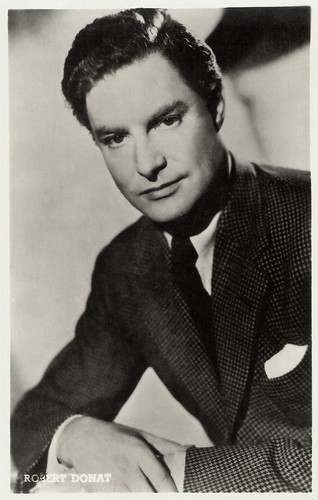
Robert Donat
Dutch postcard by J.S.A. Photo: Metro-Goldwyn-Mayer.


Trailer of The Count of Monte Christo (1934). Source: Weild1977 (YouTube).

Sources: Brian McFarlane (Encyclopedia of British Cinema), David Absalom (British Pictures), William McPeak (IMDb), Wikipedia, and IMDb.

This post was last updated on 17 January 2024.

05 February 2015

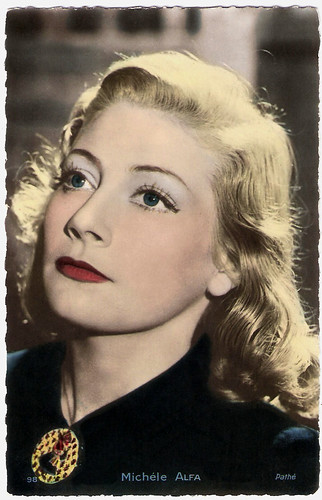
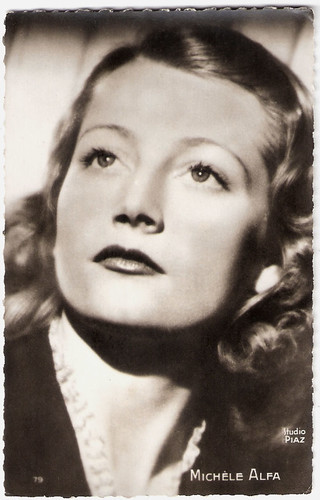
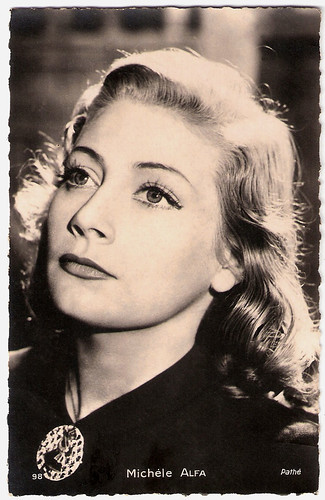
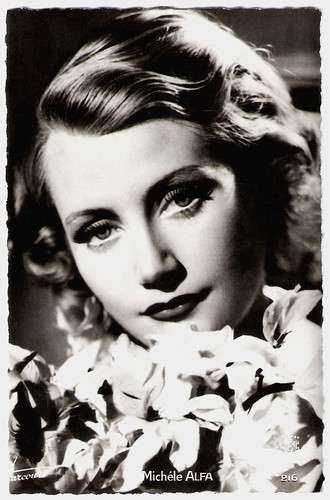
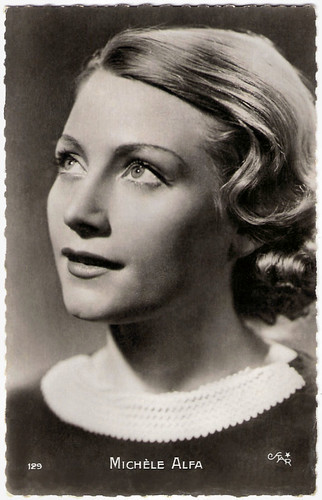
Michèle Alfa

Michèle Alfa (1911-1987) was one of the most beloved stars of the French cinema during the Second World War.

Michèle Alfa
French postcard by Greff Editeur, Paris, no. 57. Photo: Studio Harcourt.

Michèle Alfa
French postcard by Editions E.C., Paris, no. 98. Photo: Pathé.

A future on stage


Michèle Alfa was born as Josephine Blanche Alfreda Bassignot in Gujan Mestras, France, in 1911. Her stage name Alfa is short for one of her first names, Alfreda.

At the age of 15, she became smitten with the theatre when she attended the play Felix by Henri Bernstein at the Théâtre du Gymnase (Theatre Gymnasium). The play’s star was the popular Gaby Morlay.

When Alfa was refused permission to enter the Conservatoire, she tried to commit suicide. She was sure her future had to be on stage. Wisely, she applied for lessons from Raymond Rouleau.

At 20, she began with a stage tour of France. She participated in good plays including L'Héritière, a French adaptation of the play The Heiress by Louis Ducreux, Mademoiselle de Panama (Miss Panama) by Marcel Achard , La Machine à écrire (The Typewriter) by Jean Cocteau, and Huis Clos (Locked) by Jean Paul Sartre.

From 1932 on, she also appeared in films. Her debut, La Belle Aventure/The beautiful adventure (Reinhold Schünzel, Roger Le Bon, 1932) was the alternate-language version of the German comedy Das Schöne Abenteuer (Reinhold Schünzel, 1932), both starring Käthe von Nagy.

Her first leading lady part was in the dramatic comedy Lumières de Paris/Lights of Paris (Richard Pottier, 1938) opposite singer Tino Rossi. She also played the leading lady opposite Charles Boyer in Le Corsaire/The Corsican (Marc Allégret, 1939), but this film was never finished because of the Second World War.

Michèle Alfa
French postcard by Editions P.I., Paris, no. 79. Photo: Studio Piaz.

Michèle Alfa
French postcard by Ed. Chantal, Rueil, no. 98. Photo: Pathé.

Michèle Alfa
French postcard by EPC (Editions et Publications Cinematographiques), no. 216. Photo: Studio Harcourt.

Mistress of Goebbels' Nephew


Under the Occupation of France by the Nazis, Michèle Alfa became the mistress of Bernhardt Rademecker. This nephew of Josef Goebbels was appointed at the Propagandastaffel as head of the Paris theatres. Alfa knew him from before the war, when he had been a jazz trumpeter in Pigalle. During the war years, he would protect Jews like the actor Henry Murray, father of Anouk Aimée.

In the cinema, Alfa starred in 13 films, both comedies and dramas. These included L'homme qui vendit son âme/The Man Who Sold His Soul to the Devil (Jean-Paul Paulin, 1943) with André Luguet, and L'ange de la nuit/Angel of the night (André Berthomieu, 1943), in which she offers herself for a soldier (Jean-Louis Barrault) who returns blind from the war.

Her strange, sometimes sad face, her blonde hair and her talent, made her a darling of the public. Very popular was the two-parter Le comte de Monte Cristo/The Count of Monte Cristo (Robert Vernay, 1943), based on the famous novel by Alexandre Dumas. Alfa played Mercedes the fiancée of Edmond Dantes (Pierre Richard-Willm).

James Travers at French Films Site: “The Monte Cristo story has been adapted so many times for cinema (28 versions between 1907 à 1971) that some of the best adaptations have been almost overlooked. Vernay's film certainly deserves a higher profile than it has enjoyed to date, even if it lacks the star names which make some of the other versions more saleable.”

After the war Michèle Alfa starred in only four more films, including the drama Sombre dimanche/Gloomy Sunday (Jacqueline Audry, 1948). Her final film was the ensemble comedy Agence matrimonial/Matrimonial Agency (Jean-Paul Le Chanois, 1952). She continued to appear on stage till the mid-1960s.

From 1942 to 1946, Alfa was married to actor Paul Meurisse. In 1959, she married her second husband, corporate director Philippe Plouffe. Michèle Alfa died in 1987 in Le Vésinet, a suburb of Paris. She was 76.

Michèle Alfa
French postcard by Editions P.I., Paris, no. 129. Photo: Pathé-Cinema.

Michèle Alfa
French postcard by S.E.R.P., Paris, no. 57. Photo: Studio Harcourt.

Michèle Alfa
French postcard by Editions P.I., Paris, no. 129. Photo: Star.

Sources: Caroline Hanotte (CinéArtistes – French), Wikipedia (French) and IMDb.

04 February 2015

Klaus Collignon

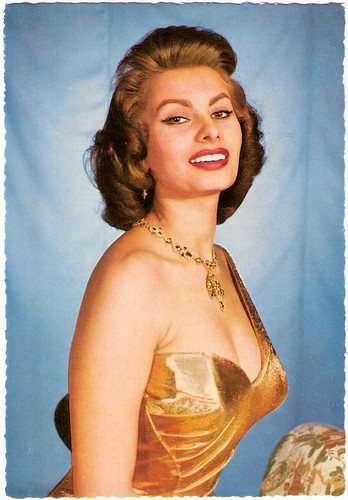
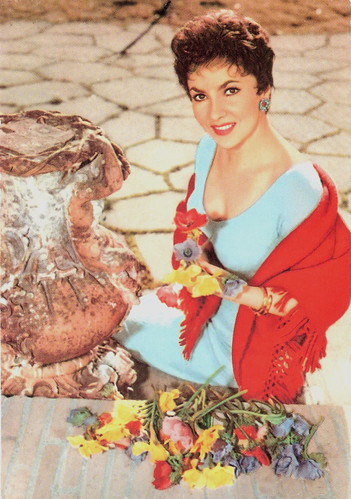
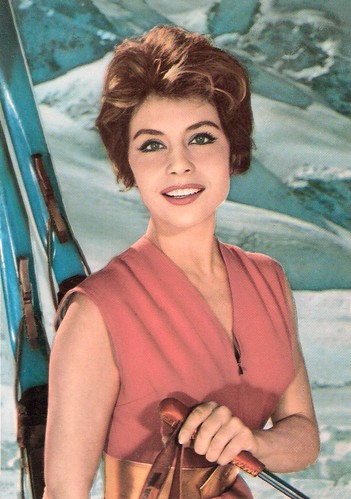
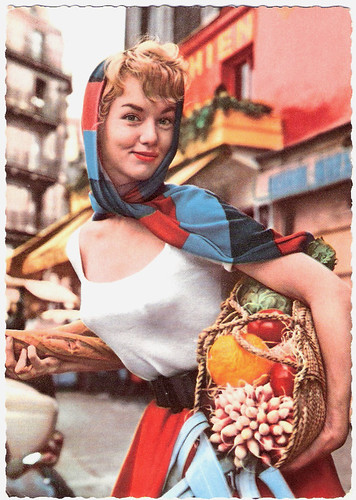
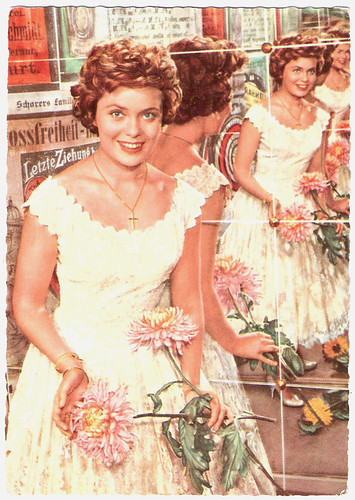
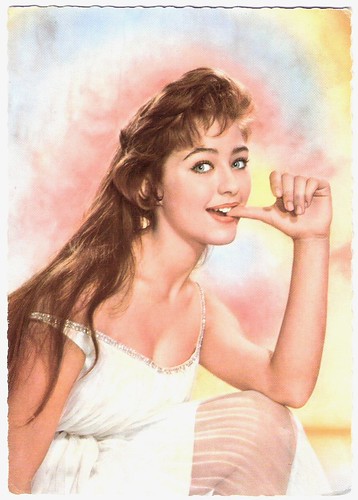
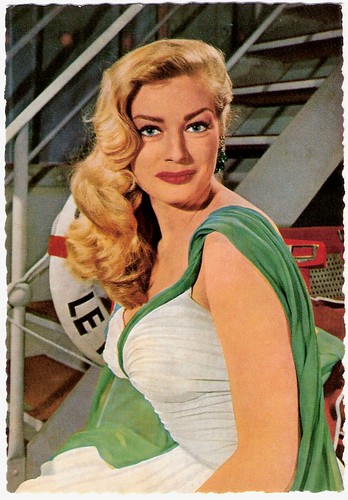
Germany was a frontrunner of film star postcards in colour. During the 1950s and 1960s, Klaus Collignon was one of the photographers whose colour studio portraits were often used for postcards by such German publishers as UFA and WS-Druck. He made highly polished portraits of the Italian sex goddesses Sophia Loren and Gina Lollobrigida, but also wonderful pictures of the innocent-looking German stars of the Heimatfilms like Sonja Ziemann.

Sophia Loren
Sophia Loren. German Postcard by WS-Druck, Wanne-Eickel, no. F 13. Photo: Klaus Collignon.

Gina Lollobrigida
Gina Lollobrigida. French postcard by Editions P.I., Paris, offered by Les carbones Korès 'Carboplane', no. 97. Photo: Klaus Collignon.

Sonja Ziemann
Sonja Ziemann. French postcard by Edition P.I., Paris, no. CK-238. P.I. was the French licency holder for UFA, Berlin-Tempelhof. Photo: Klaus Collignon / UFA.

La Loren


Klaus Collignon is most known for his highly polished studio portraits, which were used in international magazines like the German Neue Illustrierte and the French Paris Match, and for many postcards.

They are still often used today. An example is the recently published biography of Sophia Loren, Yesterday, Today And Tomorrow - My Life (2014), which contains a photo of her by the German photographer.

But Collignon was also a still photographer who worked on film sets, e.g. on the set of the popular German Western Der Schatz im Silbersee/The Treasure of the Silver Lake (Harald Reinl, 1962) and Sophia Loren's film Madame sans gêne (Christian Jacque, 1961)

On the site Flash Projects there is another wonderful picture of La Loren, at which Collignon captures her in a quiet moment on a set. Unaware of the camera, Loren absent-mindedly plays with her shoe under the table.

The style of this sweet image reveals the developing appetite in the 1960s for portraits of stars that were unposed and more realistic, depicting not only the subject’s public persona but also revealing their character outside of the public eye.

Klaus Collignon obviously was a master of both styles.

Mylène Demongeot
Mylène Demongeot. German postcard by Universum-Film Aktiengesellschaft (UFA), Berlin-Tempelhof, no. CK 150. Retail price: 30 Pfg. Photo: Klaus Collignon / UFA.

Ulla Jacobsson
Ulla Jacobsson. German postcard by Universum-film Aktiengesellschaft (UFA), Berlin-Templehof, nr. CK-247. Retail price: 30 Pfg. Photo: Klaus Collignon.

Christine Kaufmann
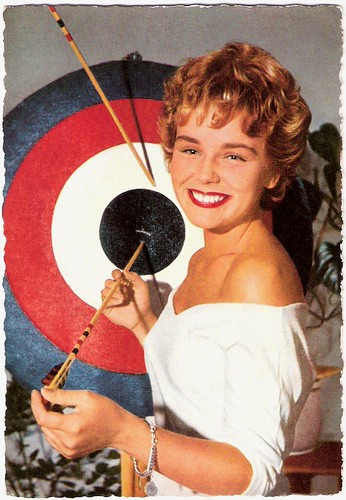
Christine Kaufmann. German postcard by Universum-Film Aktiengesellschaft (UFA), Berlin-Tempelhof, no. CK 302. Photo: Klaus Collignon / UFA.

Anita Ekberg
Anita Ekberg. German postcard by WS-Druck, Wanne-Eickel. Photo: Klaus Collignon.

Mara Lane
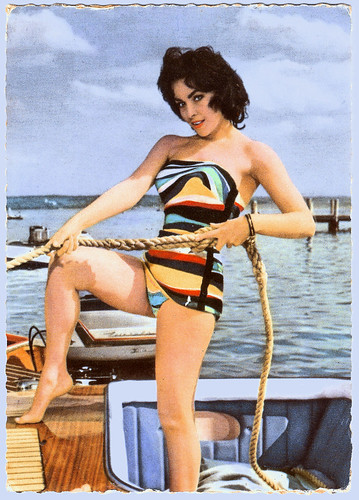
Mara Lane. German postcard by UFA, no. CK-200. Photo: Klaus Collignon / UFA.

Leni Riefenstahl's sister-in-law


But who was Klaus Collignon? It is not easy to find online information about him. But his pictures on the net lead to bits of information that give an indication of his life and career.

During the Second World War, Klaus Collignon was a war correspondent and cameraman. At the historical photo community V like Vintage, there is a 1942 photo of Collignon filming military action in the harbour of La Spezia in Italy.

On the same site, there is a photo he made of three young women on a sailing boat. One of them was Ilse Riefenstahl-Rehtmeyer, who had just divorced Leni Riefenstahl’s brother Heinz.

Klaus and Ilse married in 1943. After the war, they divorced but Ilse always kept his name.

In 2003, Ilse Collignon published the memoir Liebe Leni about her first husband Heinz Riefenstahl and his sister Leni, who she described as a ruthless careerist unscrupulously using her close Nazi contacts to enforce her will.

Klaus married his second wife, Rosemarie, and in 1951, their son Stefan Colin Collignon was born in Munich. Stefan is now professor of political economy at St Anna School of Advanced Studies, Pisa and president of the Scientific Committee of Centro Europa Ricerche (CER), Rome.

During the 1960s, Collignon once worked again as a cinematographer. He did the camera work for the short black and white film Vor der Kamera/Before the camera (Eberhard Hauff, 1964). According to both IMDb and Filmportal.de, it was his only film credit.

If you have more information about Klaus Collignon, please let us know.

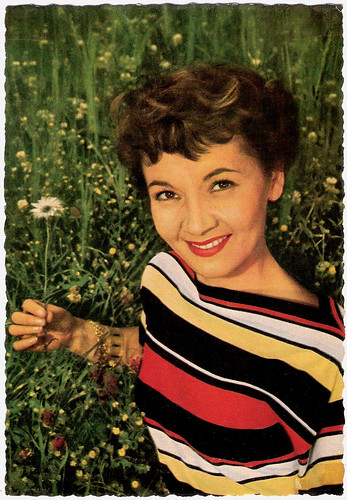
Susanne Cramer
Susanne Cramer. German postcard by WS-Druck, Wanne-Eickel, no. F 77. Photo: Collignon.

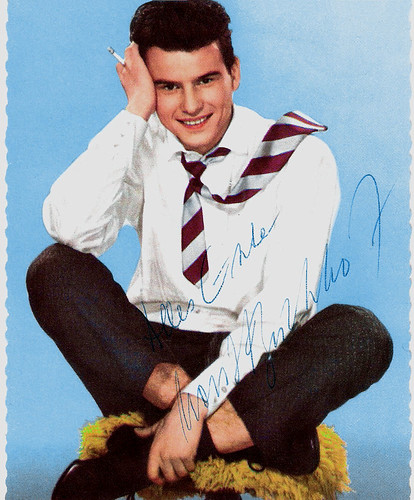
Gustav 'Bubi' Scholz
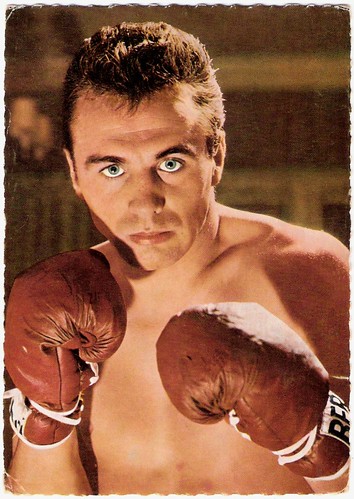
Gustav 'Bubi' Scholz. German postcard by UFA (Universum-Film Aktiengesellschaft), Berlin-Tempelhof, no. CK 342. Retail price: 30 Pfg. Photo: Klaus Collignon / UFA.

Barbara Rütting
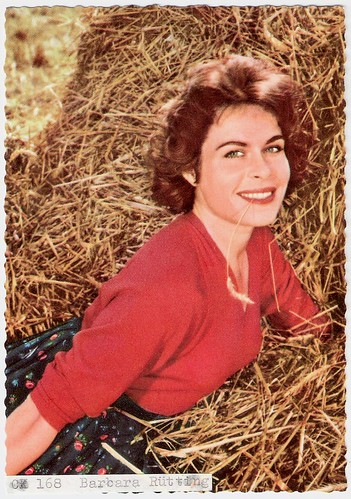
Barbara Rütting. German postcard by UFA (Universum-Film Aktiengesellschaft), Berlin-Tempelhof, no. CK-168. Retail price: 30 Pfg. Photo: Klaus Collignon / UFA.

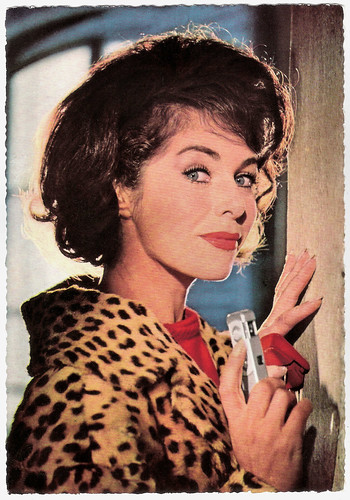
Liselotte Pulver
Liselotte Pulver. German postcard by WS-Druck, Wanne-Eickel, no. F 42. Photo: Collignon.

Horst Buchholz
Horst Buchholz. German postcard by UFA (Universal-Film Aktiengesellschaft), Berlin-Tempelhof, no. CK-145. Photo: Klaus Collignon / UFA. Top and bottom sides of the postcard were cut off.

Marianne Koch
Marianne Koch. German postcard by Krüger, no. 902/187. Photo: Klaus Collignon.

Check out our other posts on film star photographers. See the links at right under the caption 'The Photographers'.

Sources: Ilse Collignon (Liebe Leni), V like Vintage, Flash projects, The International Who's Who, Filmportal.de, and IMDb.

02 February 2015

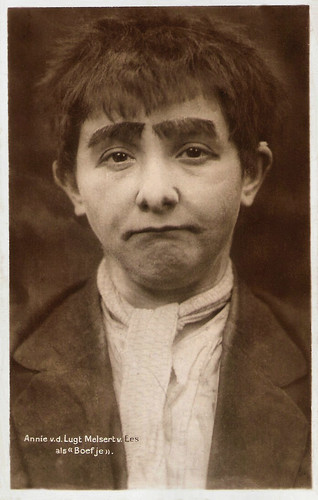
Annie van Ees

Dutch stage and film actress Annie van Ees (1893-1970) was famous for her cross-dressing role as Boefje (Little Rascal). She played Boefje 1500 times on stage and in 1939 in the film version by Douglas Sirk. It was her only film. She was also known as Annie van der Lugt Melsert-Van Ees through her marriage to noted stage director Cor van der Lugt Melsert.

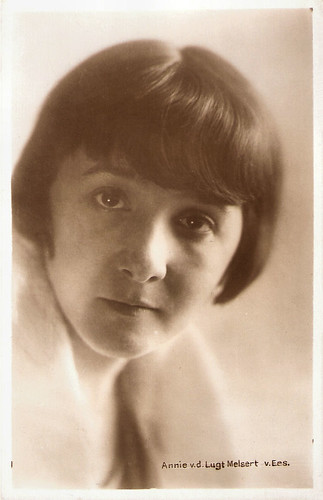
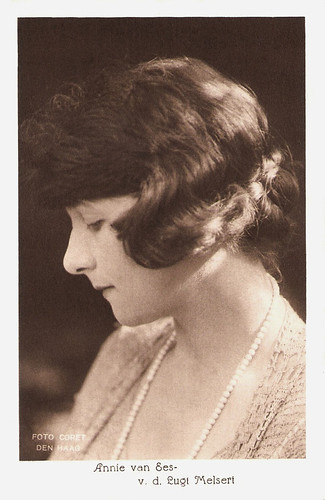
Annie van Ees
Dutch postcard by Weenenk & Snel, Den Haag. Photo: Willem Coret, Den Haag (The Hague).

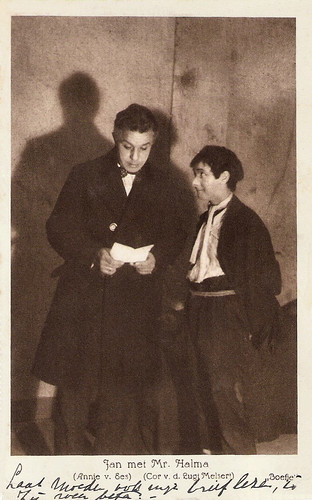
Annie van Ees, Boefje
Dutch postcard by Weenenk & Snel, Den Haag. Photo: Willem Coret. Still for the stage version of 'Boefje'.

Fashionable ladies and boys


Johanna Martina 'Annie' van Ees was born in Leiden in 1893. She was born into a family with five children. Her brothers, Henri van Ees and Jan van Ees, also became actors.

From early on, she knew that she wanted to be an actress, and she attended an acting school. At 17, she made her stage debut in the play 'Schakels' (Chains) by Herman Heijermans. She joined the theatre company Het Tooneel and appeared in plays like '‘t Cafétje' (The Little Café) (1912) by Tristan Bernard.

Later, she was discovered by the famous stage director Cor van der Lugt Melsert and she joined his renowned company Nederlandsch Tooneel. In 1919 the two married, and they would have one son, Cor jr. From 1922 to 1938, Annie worked for the theatre company Vereenigd Rotterdamsch-Hofstad Tooneel. She played fashionable ladies, young girls and even boys.

In 1923 she played thus the title role in the play that made her famous, 'Boefje'(Little Rascal) based on the novel by M.J. Brusse. She would appear more than 1500 times in this play. She also performed regularly in the Dutch Indies (now Indonesia). Another success was 'Leontientje', which premiered in 1926.

With her brother Jan van Ees, she appeared in the plays 'Men trouwt geen meisjes zonder geld' (Without Money One Doesn’t Marry Girls) (1929) by István Zagon, 'Mélo' (1930) by Henry Bernstein and 'De keizer van Amerika' (The Apple Cart) (1930) by George Bernhard Shaw.

Cor van der Lugt Melsert, Annie van Ees, Boefje
Dutch postcard by N.V. Vereenigd Rotterdamsch Hofstadtoneel, Rotterdam. Photo: Willem Coret. Still for the stage version of 'Boefje'.

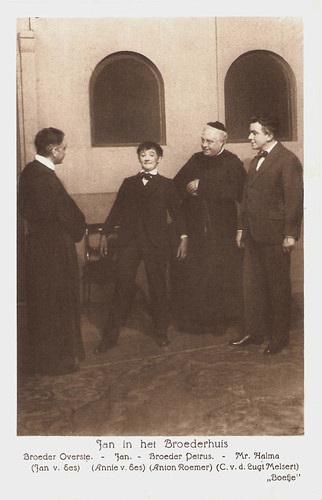
Annie van Ees, Jan van Ees, Anton Roemer, Cor van der Lugt Melsert in Boefje
Dutch postcard by Vereenigd Rotterdamsch Hofstadtooneel. Photo: Willem Coret, The Hague. Publicity still for the stage play 'Boefje' (1922). Caption: "Jan in the brother's house".

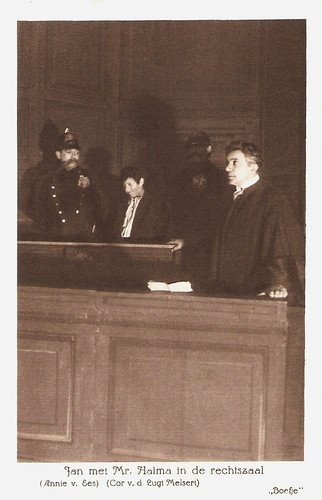
Annie van Ees and Cor van der Lugt Melsert in Boefje (1922)
Dutch postcard by Vereenigd Rotterdamsch Hofstadtooneel. Photo: Coret, The Hague. Publicity still for the stage play 'Boefje' (1922). Caption: "Jan with Mr. Halma in the courtroom".

Grande dame


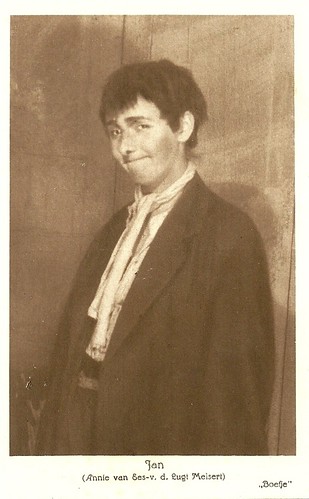
During the 1930s, Annie van Ees became one of the grande dames of the Dutch stage. After she left the Vereenigd Rotterdamsch-Hofstad Tooneel, she was offered the lead role in the film version of Boefje/Wilton's Zoo (Detlef Sierck a.k.a. Douglas Sirk, 1939).

At 45, Annie played twelve-year-old Jan Grovers a.k.a. Boefje, who spends more time in the alleys of Rotterdam than with his family. Occasionally he looks after his three younger sisters, all of whom are called Mientje. Together with his best friend and partner in crime Pietje Puk (Guus Brox), he plans to travel to America to get rich. When a local clergyman (Albert van Dalsum) takes pity on the boy and tries to teach him good manners, Boefje at first rebels. However, once he is sent to a strict boarding school, he takes an interest in music, specifically the pipe organ.

Douglas Sirk wrote the scenario himself together with Carl Zuckmayer, the scriptwriter of Der blaue Engel/The Blue Angel (Josef von Sternberg, 1930) and several other classics. Annie played the cigar-smoking street kid now with a shortcut, but Sirk later said that he would have preferred to work with real children.

Later, Annie van Ees appeared on stage in the title role of 'Madame Bovary' (1942), and in 1950 she retired from the theatre. In 1970, one year after the death of her husband, Annie van Ees died in Morges, Switzerland. She was 76. In the city of Heerhugowaard, a garden is named after her, and in Rotterdam, she is honoured with the 'Annie van Eesstraat' (Annie van Ees Street).

The film version of Boefje was actually chosen to compete in the very first Cannes Film Festival that was to be held in September of 1939, but the festival was cancelled when the war broke out. However, during the 55th edition held in 2002, it was decided to screen the 7 nominated films from 1939, pitting Boefje against The Wizard of Oz, Goodbye Mr. Chips and others. The award eventually went to Cecil B. DeMille's Union Pacific (1939).

Jan van Ees
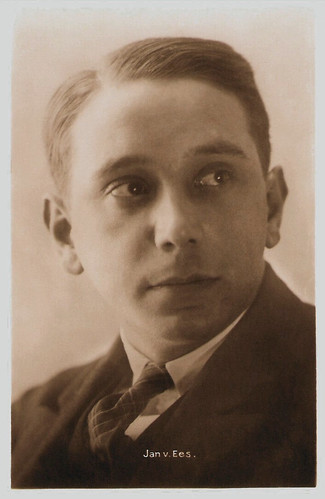
Annie's brother, Jan van Ees. Dutch postcard by Uitgave Weenenk & Snel, Den Haag. Photo: Willem Coret.

Annie van Ees
Dutch postcard. Photo: Willem Coret, Den Haag (The Hague).

Annie van Ees in Boefje
Dutch postcard by NV Vereenigd Rotterdamsch Hofstadtooneel. Photo: Coret, The Hague. Annie van Ees-van der Lugt Melsert in the stage play 'Boefje'.

Sources: Chip Douglas (IMDb), Guido Franken (Neerlands Filmdoek - Dutch), Wikipedia (Dutch) and IMDb.

This post was last updated on 9 February 2024.
01 February 2015

Owen Nares

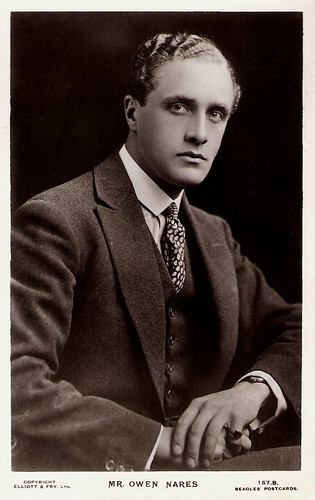
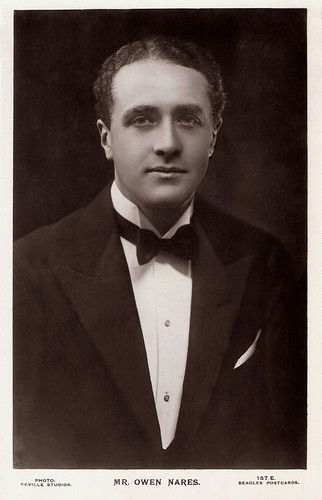
British actor Owen Nares (1888-1943) was the heartthrob actor of his generation, both in films and on stage in the West End. The late 1910s and early 1920s were his golden period and he romanced such British film stars as Isobel Elsom and Lilian Hall-Davis. During the 1930s, he became a character actor. Besides his acting career, he was the author of 'Myself, and Some Others' (1925).

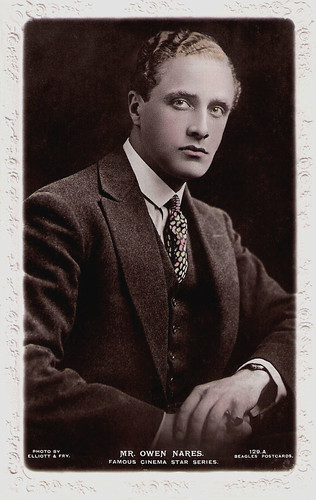
Owen Nares
British postcard in the Famous Cinema Star Series by J. Beagles & Co., London. Photo: Elliott & Fry.

Owen Nares
British or American postcard. Signed with an autograph.

Owen Nares
British postcard by Beagles Postcards in the Famous Cinema Star series, no. 129B. Photo: Elliott and Fry.

Blessed with good looks and a debonair manner


Owen Ramsay Nares was born in Maiden Erlegh, England, in 1888. He was educated at Reading School. Nares was encouraged by his mother to become an actor, and in 1908, he received his training from actress Rosina Filippi. The following year, he was playing bit parts in West End productions.

Blessed with good looks and a debonair manner, his reputation as a matinee idol grew in the following years. In 1915, he played Thomas Armstrong in Edward Sheldon's Romance at the Lyric Theatre, and in 1917, he starred with Lily Elsie at the Palace Theatre in the musical comedy Pamela.

His delicate health strengthened the romanticism that surrounded him. The silent production His Choice (Hubert von Herkomer, 1913) was the first of the 25 silent films in which Nares appeared. His film debut was followed by Danny Donovan, the Gentleman Cracksman (Walter Waller, 1914) with Thomas Meighan and Gladys Cooper, the drama Milestones (Thomas Bentley, 1916) with Isobel Elsom, the romance Just a Girl (Alexander Butler, 1916) featuring Daisy Burrell, and The Labour Leader (Thomas Bentley, 1917) with Fay Compton.

During the early 1920s, he acted as the handsome male lead opposite such popular film actresses as Isobel Elsom in the romantic drama For Her Father's Sake (Alexander Butler, 1921) and Lillian Hall-Davis in the romance Brown Sugar (Fred Paul, 1922) and in The Faithful Heart (Fred Paul, 1922).

His stage career also continued to flourish. He appeared opposite Meggie Albanesi in 'The First and the Last' for a long run during the 1920s. Nares continued to star in popular West End shows, almost without pause, until 1926, when he then took a break and set off with his own company for a tour of South Africa.

Owen Nares
British postcard by John Waddington Ltd., Leeds / London. Photo: publicity still for the stage production of Diplomacy in the New Theatre, Cardiff. Sent by mail in 1924.
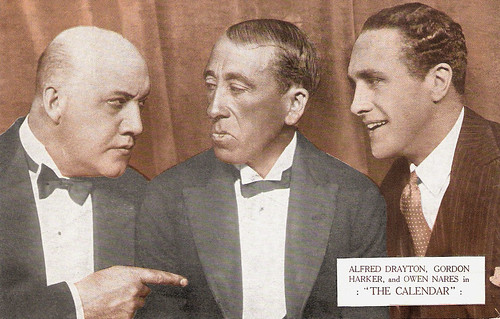
Gordon Harker, Alfred Drayton, Owen Nares
British postcard by S.C. Allen & Company, Ltd., Belfast and London for Wyndham's Theatre, London. Photo: publicity still for the play The Calendar (1931) with Gordon Harker, Alfred Drayton and Owen Nares.

Owen Nares
British postcard in the Famous Cinema Star Series by J. Beagles & Co., London. Photo: Elliott & Fry.

Still much in demand


With the advent of sound film, Owen Nares’ considerable stage experience kept him in high demand, and he starred in several early sound films. The first was the comedy The Middle Watch (Norman Walker, 1930) with Jacqueline Logan. It was made by British International Pictures at its Elstree Studios.

He appeared with Edna Best in the crime-drama Loose Ends (Norman Walker, 1930). A big hit was the musical Sunshine Susie (Victor Saville, 1931) starring Renate Müller, Jack Hulbert and Nares. The film established Müller as a star in Britain. An alternate German-language version, Die Privatsekretärin, was made, also starring Renate Müller but without Nares.

The Impassive Footman (Basil Dean, 1932) was a low-budget ‘quota quickie’ in which he co-starred with Betty Stockfeld. This drama was made at Ealing Studios and was also released under the alternative title Woman in Bondage. Nares co-starred with Winifred Shotter in the musical The Love Contract (Herbert Selpin, 1932). He appeared opposite Jessie Matthews in the comedy There Goes the Bride (Albert de Courville, 1932). He was, however, too mature to be the handsome star he had been a decade earlier.

In the last six films he made, he played supporting roles. Remarkable is the comedy-drama The Private Life of Don Juan (Alexander Korda, 1934) starring Douglas Fairbanks in his final film role as the ageing Don Juan. In the musical The Show Goes On (Basil Dean, 1937), he was the co-star of Gracie Fields. His final film was The Prime Minister (Thorold Dickinson, 1941) about the life and times of novelist Benjamin Disraeli (John Gielgud), who became Prime Minister of the United Kingdom.

In 1942, Nares appeared in a revival of Robert E. Sherwood’s 'The Petrified Forrest', and afterwards he went on tour with the play to Northern England and Wales. During a tour through Wales in 1943, he visited Brecon, the birthplace of actress Sarah Siddons. While he was in the very room where Siddons had been born, Nares had a heart attack and died shortly afterwards in 1943. He was 54. Since 1910, Owen Nares had been married to Anglo-Italian actress Marie Pollini. The couple had two sons, David and Geoffrey Nares. During the war, Geoffrey died in Egypt in 1942.
Owen Nares
British postcard in the Cinema Chat series. Photo: Elliott and Fry.

Owen Nares
British postcard by Beagles & Co., no. 157e. Photo: Reville Studios.

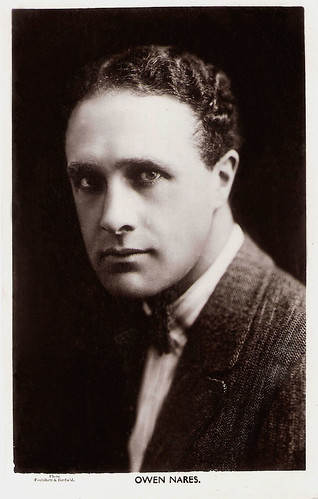
Owen Nares
British postcard in the Picturegoer Series, London, no. 84. Photo: Foolsham & Banfield.

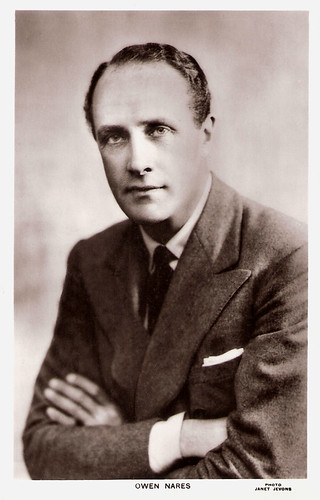
Owen Nares
British postcard in the Picturegoer Series, London, no. 84c. Photo: Janet Jevons.

Sources: Bridget Clarke (St. John’s Wood Memories), Thomas Staedeli (Cyranos), AllMovie (Page now defunct), Wikipedia, and IMDb.

This post was last updated on 6 December 2025.