Vitold Polonsky (1879-1919) was one of the most popular actors in pre-Revolutionary Russian cinema. He played several hero-lover roles in silent dramas by Yevgeni Bauer and Pyotr Chardynin.

Russian postcard, Moscow, 1916, no. 3. Design by K.F. Shvachunova.

Russian postcard, Moscow, 1916. Design by K.F. Shvachunova.

Russian postcard, Moscow, no 191br. Design by K.F. Shvachunova.

Russian postcard, no. 113, 1917. Collection: Didier Hanson.
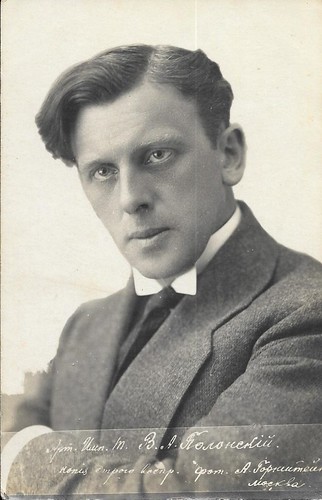
Russian postcard. Collection: Didier Hanson.
Vitold Alfonsovich Polonsky (Russian: Витольд Альфонсович Полонский) was born in Moscow in the Russian Empire in 1879.
The young Polonsky took drama courses in the Moscow theatre school and graduated in 1907. He acted in the Maly Theatre in Moscow until 1916.
His first film role was Prince Andrey Bolkonsky opposite Vera Karalli in Natasha Rostova (Pyotr Chardynin, 1915), based on the novel by Leo Tolstoy. He also appeared opposite the other diva of the Russian silent cinema, Vera Kholodnaya, in Pesn torzhestvuyushchey lyubvi / Song of Triumphant Love (Yevgeni Bauer, 1915).
He played several hero-lover roles, including Andrey Bargov in Posle smerti / After Death (Yevgeni Bauer, 1915); Prince Baratynsky in Zhizn za zhizn / A Life for a Life (Yevgeni Bauer, 1916), and Lanin in U kamina / By The Fireplace (Pyotr Chardynin, 1917). Polonsky became one of the most popular actors in pre-Revolutionary Russian cinema.
One of the most famous films of the era is the silent drama Molchi, grust... molchi / Be silent, sorrow ... be silent or Still, Sadness ... Still ... (Pyotr Chardynin, 1918) with a star-studded cast including Vera Kholodnaya, Ossip Runitsch, Vladimir Maksimov and Polonsky. This film consisted of two parts, but only the first (44 minutes in length) survives.

Russian postcard. Collection: Didier Hanson.
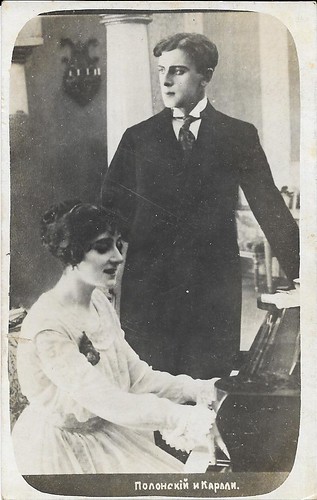
Russian postcard. Collection: Didier Hanson. Photo: publicity still for Vozmezdie / Retribution (Yevgeni Bauer, 1916) with Vera Karalli.
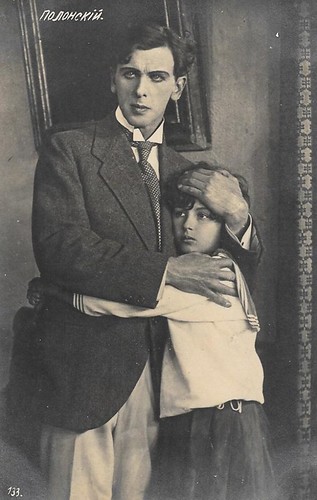
Russian postcard, no. 133. Collection: Didier Hanson.

Russian postcard, no. 40. Vera Kholodnaya, Vitold Polonsky, and Ossip Runitsch. Collection: Didier Hanson.

Russian postcard, no. 126. Photo: publicity still for U kamina / By the fireplace (Pyotr Chardynin, 1917). Collection: Didier Hanson.
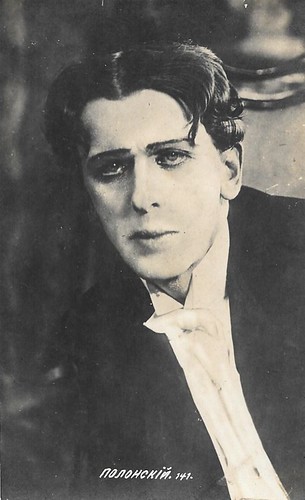
Russian postcard. Collection: Didier Hanson.
Vitold Polonsky was married twice. His first wife was the Maly Theatre actress Vera Nikolaevna Pashennaya, who became a National Artist of the USSR, a State Laureate and a Lenin Prize winner. They had one daughter, Irina Polonskaya.
His second wife was Maly Theatre actress Olga Gladkova. They had one daughter, Veronika Polonskaya, who also became an actress.
In the summer of 1918, the film director Pyotr Chardynin and the Moscow cinema entrepreneur Dmitry Kharitonov requested the State Commissar for Education, Lunacharsky, to aid a group of cinema workers to travel to Odessa to film. They received a permit, and the group travelled to Odessa. Polonsky was part of the group along with Vera Kholodnaya and Ivan Mozzukhin.
In 1918, he directed the film Pesn lyubvi nedopetaya / Love Song Nedopetaya (1918) together with Lev Kuleshov. In November 1918, however, Odessa was occupied by the Entente forces (the Allies of World War I).
A few months later, in January 1919, Vitold Polonsky died from food poisoning.

Russian postcard. Vera Kholodnaya and Vitold Polonsky. Collection: Didier Hanson.

Russian postcard, no. 174. Vitold Polonsky and Lidya Ryndina. Collection Didier Hanson.
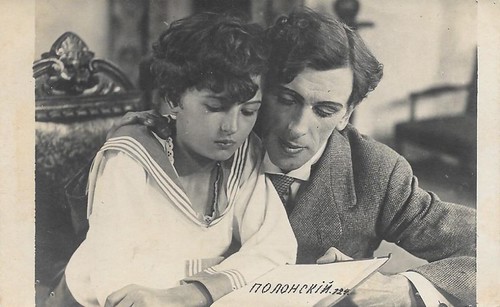
Russian postcard, no. 124. Collection: Didier Hanson.

Russian postcard. Collection: Didier Hanson. Photo: publicity still for Vozmezdie / Retribution (Yevgeni Bauer, 1916) with Lidia Ryndina and Vera Karalli.
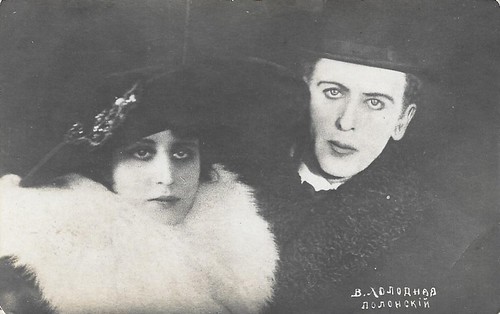
Russian postcard with Vera Kholodnaya. Collection: Didier Hanson.

Russian Postcard, no. 151. Lidiya Ryndina and Vitold Polonsky in Vozmezdie / Retribution (Yevgeni Bauer, 1916). Collection: Didier Hanson.

Russian postcard. A Who's Who of the Russian silent cinema. From left to right: Vitold Polonsky, Vladimir Maksimov, Vera Kholodnaya, Ossip Runitsch (in the back), Petr Cardynin, Ivan Khudoleyev, and Ivan Mozzhukhin. Collection: Didier Hanson.
Sources: Wikipedia and IMDb.
This post was last updated on 26 April 2026.
Russian postcard, Moscow, 1916, no. 3. Design by K.F. Shvachunova.
Russian postcard, Moscow, 1916. Design by K.F. Shvachunova.
Russian postcard, Moscow, no 191br. Design by K.F. Shvachunova.
Russian postcard, no. 113, 1917. Collection: Didier Hanson.
Russian postcard. Collection: Didier Hanson.
Hero-lover roles
Vitold Alfonsovich Polonsky (Russian: Витольд Альфонсович Полонский) was born in Moscow in the Russian Empire in 1879.
The young Polonsky took drama courses in the Moscow theatre school and graduated in 1907. He acted in the Maly Theatre in Moscow until 1916.
His first film role was Prince Andrey Bolkonsky opposite Vera Karalli in Natasha Rostova (Pyotr Chardynin, 1915), based on the novel by Leo Tolstoy. He also appeared opposite the other diva of the Russian silent cinema, Vera Kholodnaya, in Pesn torzhestvuyushchey lyubvi / Song of Triumphant Love (Yevgeni Bauer, 1915).
He played several hero-lover roles, including Andrey Bargov in Posle smerti / After Death (Yevgeni Bauer, 1915); Prince Baratynsky in Zhizn za zhizn / A Life for a Life (Yevgeni Bauer, 1916), and Lanin in U kamina / By The Fireplace (Pyotr Chardynin, 1917). Polonsky became one of the most popular actors in pre-Revolutionary Russian cinema.
One of the most famous films of the era is the silent drama Molchi, grust... molchi / Be silent, sorrow ... be silent or Still, Sadness ... Still ... (Pyotr Chardynin, 1918) with a star-studded cast including Vera Kholodnaya, Ossip Runitsch, Vladimir Maksimov and Polonsky. This film consisted of two parts, but only the first (44 minutes in length) survives.
Russian postcard. Collection: Didier Hanson.
Russian postcard. Collection: Didier Hanson. Photo: publicity still for Vozmezdie / Retribution (Yevgeni Bauer, 1916) with Vera Karalli.
Russian postcard, no. 133. Collection: Didier Hanson.
Russian postcard, no. 40. Vera Kholodnaya, Vitold Polonsky, and Ossip Runitsch. Collection: Didier Hanson.
Russian postcard, no. 126. Photo: publicity still for U kamina / By the fireplace (Pyotr Chardynin, 1917). Collection: Didier Hanson.
Russian postcard. Collection: Didier Hanson.
Food poisoning
Vitold Polonsky was married twice. His first wife was the Maly Theatre actress Vera Nikolaevna Pashennaya, who became a National Artist of the USSR, a State Laureate and a Lenin Prize winner. They had one daughter, Irina Polonskaya.
His second wife was Maly Theatre actress Olga Gladkova. They had one daughter, Veronika Polonskaya, who also became an actress.
In the summer of 1918, the film director Pyotr Chardynin and the Moscow cinema entrepreneur Dmitry Kharitonov requested the State Commissar for Education, Lunacharsky, to aid a group of cinema workers to travel to Odessa to film. They received a permit, and the group travelled to Odessa. Polonsky was part of the group along with Vera Kholodnaya and Ivan Mozzukhin.
In 1918, he directed the film Pesn lyubvi nedopetaya / Love Song Nedopetaya (1918) together with Lev Kuleshov. In November 1918, however, Odessa was occupied by the Entente forces (the Allies of World War I).
A few months later, in January 1919, Vitold Polonsky died from food poisoning.
Russian postcard. Vera Kholodnaya and Vitold Polonsky. Collection: Didier Hanson.
Russian postcard, no. 174. Vitold Polonsky and Lidya Ryndina. Collection Didier Hanson.
Russian postcard, no. 124. Collection: Didier Hanson.
Russian postcard. Collection: Didier Hanson. Photo: publicity still for Vozmezdie / Retribution (Yevgeni Bauer, 1916) with Lidia Ryndina and Vera Karalli.
Russian postcard with Vera Kholodnaya. Collection: Didier Hanson.
Russian Postcard, no. 151. Lidiya Ryndina and Vitold Polonsky in Vozmezdie / Retribution (Yevgeni Bauer, 1916). Collection: Didier Hanson.
Russian postcard. A Who's Who of the Russian silent cinema. From left to right: Vitold Polonsky, Vladimir Maksimov, Vera Kholodnaya, Ossip Runitsch (in the back), Petr Cardynin, Ivan Khudoleyev, and Ivan Mozzhukhin. Collection: Didier Hanson.
Sources: Wikipedia and IMDb.
This post was last updated on 26 April 2026.

No comments:
Post a Comment