Earlier this week, the Fries Museum in Leeuwarden opened its exhibition on exotic dancer and executed spy Mata Hari (1876-1917). From the local newspapers in Friesland to the New York Times, all critics were positive in their reviews. EFSP updates an earlier post on the Leeuwarden-born 'red dancer' who was an international society figure between 1905 and the First World War. EFSP contributor Ivo Blom is one of the researchers for the exhibition. About his research he wrote two fascinating articles on his personal blog, of which we post two excerpts in combination with postcards from the classic Hollywood biopic Mata Hari (George Fitzmaurice, 1931) starring Greta Garbo and Ramon Novarro.

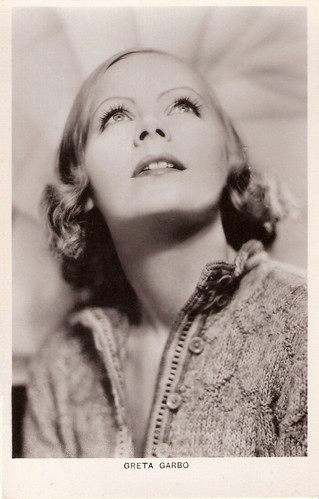
Mata Hari. French postcard by SIP (Société Industrielle de Photographie). Photo: Waléry, Paris. Collection: Marlène Pilaete.

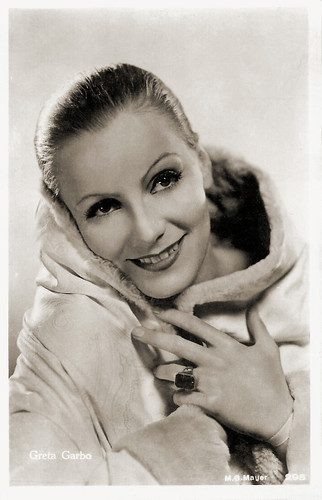
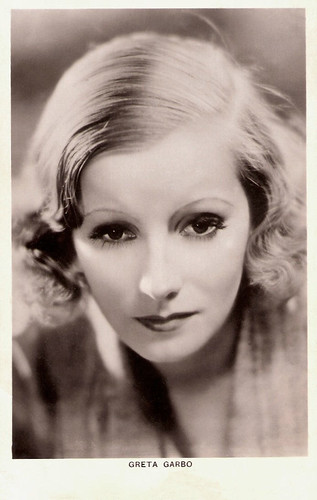
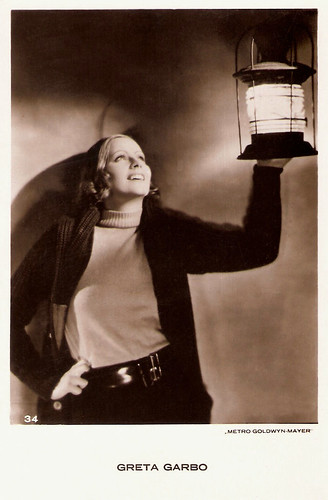
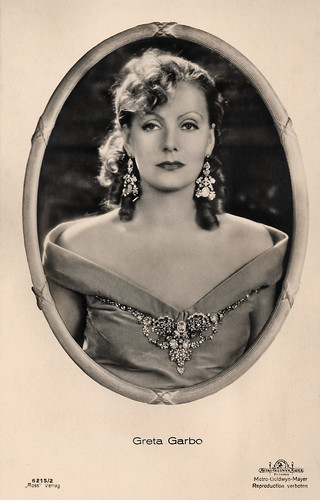
Dutch postcard by JosPe, no. 299. Photo: Clarence Sinclair Bull / Metro-Goldwyn-Mayer. Publicity still for Mata Hari (George Fitzmaurice, 1931).

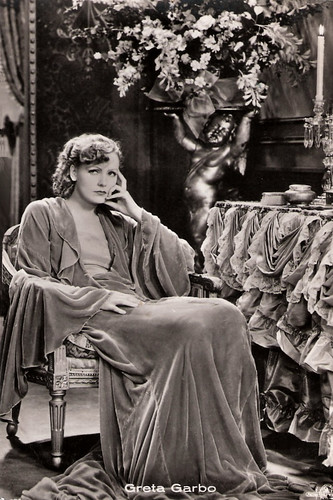
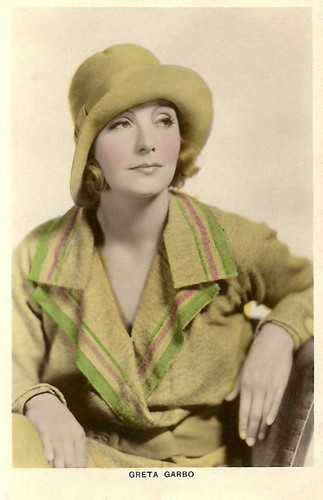
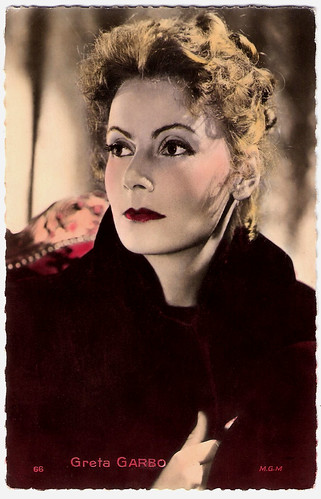
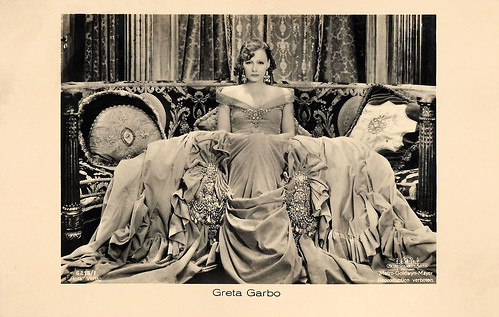
French postcard by EDUG, no. 1030. Photo: Metro-Goldwyn-Mayer / Clarence Sinclair Bull. Publicity still for Mata Hari (George Fitzmaurice, 1931) with Greta Garbo and Ramon Novarro.

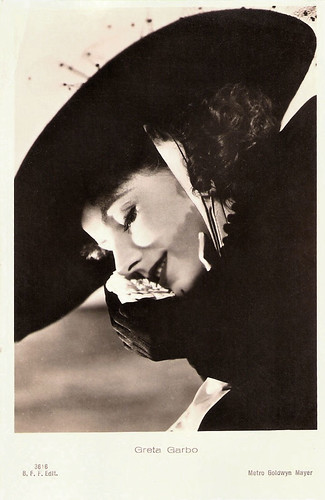
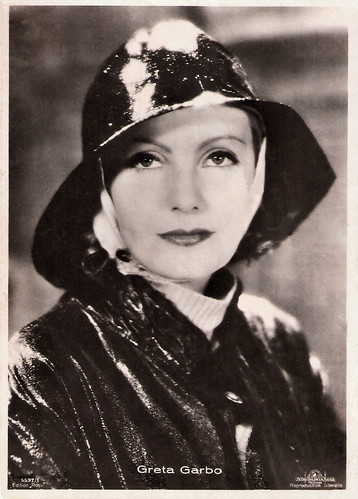
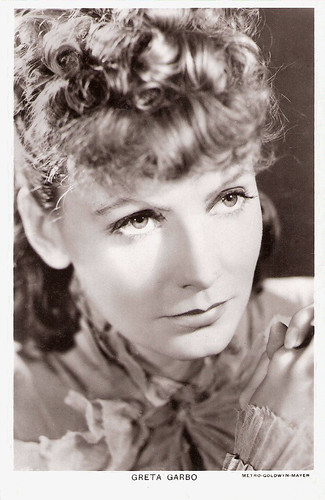
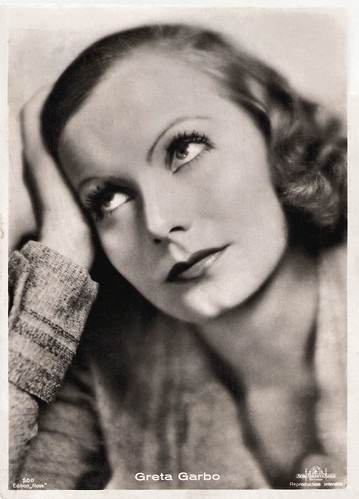
German postcard by Ross Verlag, no. 659. Photo: Metro-Goldwyn-Mayer / Clarence Sinclair Bull. Publicity still for Mata Hari (George Fitzmaurice, 1931) with Greta Garbo.
Ivo Blom: "Still materials of Mata Hari are abundant: gorgeous coloured postcards, studio photos by prominents such as Emilio Sommariva, actuality photos etc., but what lacked were moving images. With a woman who was such a society figure between 1905 and the First World War, one asks himself why Pathé, Gaumont or any other prominent company did not film this woman, whose oriental dances had caused such a stir in Paris and beyond, and who was the mistress of many a prominent figure in politics, finance and culture?
Thus in films on her life or compilation films on the First World War a clip persisted of a fashionable lady helped in her coat by a doorman. She afterwards steps into a luxurious car with chauffeur and is driven away. This clip, coined as being with Mata Hari, has been used over and again as real footage with Mata Hari.
Even the respectable site EFG1914, supported and replenished by various European Film Archives, including the Dutch EYE, holds a compilation film that contains the same clip. It may be well have been the original culprit of the massive reuse and mythologization of ‘real’ film footage with Mata Hari. The compilation film uploaded by LUCE is the Italian version of 14-18 (1963) by French filmmaker Jean Aurel. The commentary states we notice Mata Hari here, helped into a taxi. The image quality was too poor to recognize any person. So where did Aurel did take it from? Could I get a better image quality?
Researching this clip was quite an adventure. I first contacted the CNC (Centre National pour la Cinématographie) near Paris, where Béatrice Paste kindly indicated me the compilation 14-18 by Aurel was a Gaumont production and CNC had recently digitized the film. Paste advised me to contact the Cinémathèque Gaumont. So I contacted curator Manuela Padoan who referred me to Nathalie Sitko, who proved to be an avid documentalist and helpful researcher.
In the meantime I searched myself on the site of Pathé-Gaumont-Archives. There I found the compilation documentary Paris après 3 ans de guerre (1917) by Gaumont, which contained the same clip, but now without any indication of Mata Hari. The description on the Gaumont site just said: ”Au pied d’un escalier, une femme élégante (bourgeoise) enfile son manteau aidé d’un maître d’hôtel, elle attend son véhicule et monte dans l’automobile.”
The film had been uploaded in HD, so the image quality was really good. Still, I had my doubts whether this was really the famous Mata Hari. My doubts proved to be right. Read on at Ivo Blom's blog."

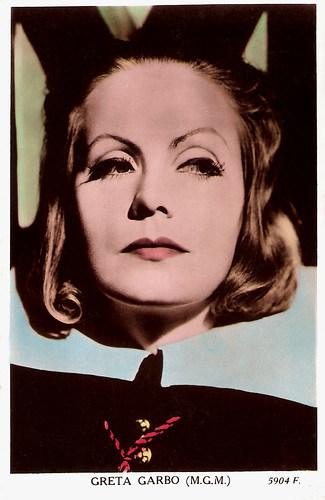
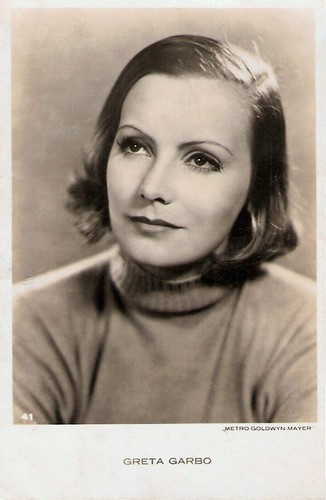
German postcard by Ross Verlag, no. 701. Photo: Metro-Goldwyn-Mayer / Clarence Sinclair Bull. Publicity still for Mata Hari (George Fitzmaurice, 1931).

German postcard by Ross Verlag, no. 6521/1, 1931-1932. Photo: MGM. Greta Garbo in Mata Hari (George Fitzmaurice, 1931).

German postcard by Ross Verlag, no. 6522/1, 1931-1932. Photo: Clarence Sinclair Bull / Metro-Goldwyn-Mayer. Publicity still for Mata Hari (George Fitzmaurice, 1931).

German postcard by Ross Verlag, no. 6522/4, 1931-1932. Photo: Metro-Goldwyn-Mayer / Clarence Sinclair Bull. Publicity still for Mata Hari (George Fitzmaurice, 1931).
Ivo Blom: "In many analogue and digital sources a film entitled Mata Hari/Die Spionin (Ludwig Wolf, 1920/1921), starring Asta Nielsen, is listed as the oldest biopic of the life of Mata Hari aka Lady MacLeod aka Margaretha Zelle. You will find this on the Internet Movie Database (IMDb), which in general for German silent cinema is quite unreliable.
But one also traces it in the English and Dutch Wikipedia, James Monaco’s The Movie Guide, David Thompson’s The New Biographical Dictionary of Film, James Robert Parish’s Prostitution in Hollywood films, Jerry Vermilye’s More films from the thirties, Georg Seeßlen’s Filmwissen: Thriller: Grundlagen des populären Films and several earlier publications by the same author, Léon Schirmann’s Mata-Hari: autopsie d’une machination, Michael R. Pitts’s The Great Spies Pictures, Valeria Palumbo’s Le figlie di Lilith: vipere, dive, dark ladies e femmes fatales : l’altra ribellione femminile, Rüdiger Dirk and Claudius Sowa’s Paris im Film: Filmografie einer Stadt, and many others. The English Wikipedia even indicates Mata Hari (1920) and Die Spionin (1921) as two separate films, both about Mata Hari.
Nevertheless, my suspicions arose when I could not find the film on the generally quite thorough German films site www.filmportal.de. When I launched a call for more information on the Facebook site of Domitor, the network for researchers dealing with early cinema, my suspicions increased.
Joseph Juenger, Artistic Director at Stummfilm-Festival Karlsruhe, asked if I was really sure about this film. He could‘t find a film with the title Die Spionin, neither on the FIAF-CD nor in the 2010 two-volume extensive monography on Asta Nielsen by Heide Schlüpmann and Karola Gramann, nor on filmportal.de. Juenger remarked there was only a film with the title Die Rache der Spionin (1921), but the director was Richard Eicherg and Nielsen lacked.
I therefore contacted Asta Nielsen expert Heide Schlüpmann, who kindly told me despite her thorough research she never found a film with Nielsen called either Mata Hari or Die Spionin. It just seemed that all the above mentioned authors had just copied each other without bothering to check any original sources." Read on at Ivo Blom's blog.

French postcard by Europe, no. 20. Photo: Metro-Goldwyn-Mayer / Clarence Sinclair Bull. Publicity still for Mata Hari (George Fitzmaurice, 1931).

French postcard by Europe, no. 391. Photo: Metro-Goldwyn-Mayer / Clarence Sinclair Bull. Ramon Novarro as Lt. Alexis Rosanoff in Mata Hari (George Fitzmaurice, 1931).

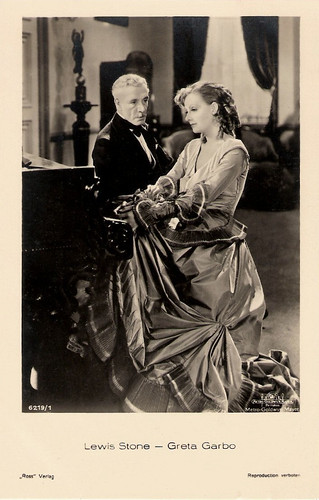
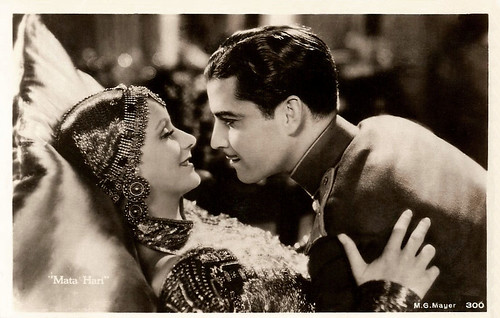
Dutch postcard, no. 300. Photo: Metro-Goldwyn-Mayer / Clarence Sinclair Bull. Publicity still for Mata Hari (George Fitzmaurice, 1931) with Greta Garbo and Ramon Novarro.
Thanks Ivo, for the permission to copy-cat your posts!
Mata Hari. French postcard by SIP (Société Industrielle de Photographie). Photo: Waléry, Paris. Collection: Marlène Pilaete.
Dutch postcard by JosPe, no. 299. Photo: Clarence Sinclair Bull / Metro-Goldwyn-Mayer. Publicity still for Mata Hari (George Fitzmaurice, 1931).
French postcard by EDUG, no. 1030. Photo: Metro-Goldwyn-Mayer / Clarence Sinclair Bull. Publicity still for Mata Hari (George Fitzmaurice, 1931) with Greta Garbo and Ramon Novarro.
German postcard by Ross Verlag, no. 659. Photo: Metro-Goldwyn-Mayer / Clarence Sinclair Bull. Publicity still for Mata Hari (George Fitzmaurice, 1931) with Greta Garbo.
Researching a clip of a fashionable lady
Ivo Blom: "Still materials of Mata Hari are abundant: gorgeous coloured postcards, studio photos by prominents such as Emilio Sommariva, actuality photos etc., but what lacked were moving images. With a woman who was such a society figure between 1905 and the First World War, one asks himself why Pathé, Gaumont or any other prominent company did not film this woman, whose oriental dances had caused such a stir in Paris and beyond, and who was the mistress of many a prominent figure in politics, finance and culture?
Thus in films on her life or compilation films on the First World War a clip persisted of a fashionable lady helped in her coat by a doorman. She afterwards steps into a luxurious car with chauffeur and is driven away. This clip, coined as being with Mata Hari, has been used over and again as real footage with Mata Hari.
Even the respectable site EFG1914, supported and replenished by various European Film Archives, including the Dutch EYE, holds a compilation film that contains the same clip. It may be well have been the original culprit of the massive reuse and mythologization of ‘real’ film footage with Mata Hari. The compilation film uploaded by LUCE is the Italian version of 14-18 (1963) by French filmmaker Jean Aurel. The commentary states we notice Mata Hari here, helped into a taxi. The image quality was too poor to recognize any person. So where did Aurel did take it from? Could I get a better image quality?
Researching this clip was quite an adventure. I first contacted the CNC (Centre National pour la Cinématographie) near Paris, where Béatrice Paste kindly indicated me the compilation 14-18 by Aurel was a Gaumont production and CNC had recently digitized the film. Paste advised me to contact the Cinémathèque Gaumont. So I contacted curator Manuela Padoan who referred me to Nathalie Sitko, who proved to be an avid documentalist and helpful researcher.
In the meantime I searched myself on the site of Pathé-Gaumont-Archives. There I found the compilation documentary Paris après 3 ans de guerre (1917) by Gaumont, which contained the same clip, but now without any indication of Mata Hari. The description on the Gaumont site just said: ”Au pied d’un escalier, une femme élégante (bourgeoise) enfile son manteau aidé d’un maître d’hôtel, elle attend son véhicule et monte dans l’automobile.”
The film had been uploaded in HD, so the image quality was really good. Still, I had my doubts whether this was really the famous Mata Hari. My doubts proved to be right. Read on at Ivo Blom's blog."
German postcard by Ross Verlag, no. 701. Photo: Metro-Goldwyn-Mayer / Clarence Sinclair Bull. Publicity still for Mata Hari (George Fitzmaurice, 1931).
German postcard by Ross Verlag, no. 6521/1, 1931-1932. Photo: MGM. Greta Garbo in Mata Hari (George Fitzmaurice, 1931).
German postcard by Ross Verlag, no. 6522/1, 1931-1932. Photo: Clarence Sinclair Bull / Metro-Goldwyn-Mayer. Publicity still for Mata Hari (George Fitzmaurice, 1931).
German postcard by Ross Verlag, no. 6522/4, 1931-1932. Photo: Metro-Goldwyn-Mayer / Clarence Sinclair Bull. Publicity still for Mata Hari (George Fitzmaurice, 1931).
Asta Nielsen and the Copy Cats
Ivo Blom: "In many analogue and digital sources a film entitled Mata Hari/Die Spionin (Ludwig Wolf, 1920/1921), starring Asta Nielsen, is listed as the oldest biopic of the life of Mata Hari aka Lady MacLeod aka Margaretha Zelle. You will find this on the Internet Movie Database (IMDb), which in general for German silent cinema is quite unreliable.
But one also traces it in the English and Dutch Wikipedia, James Monaco’s The Movie Guide, David Thompson’s The New Biographical Dictionary of Film, James Robert Parish’s Prostitution in Hollywood films, Jerry Vermilye’s More films from the thirties, Georg Seeßlen’s Filmwissen: Thriller: Grundlagen des populären Films and several earlier publications by the same author, Léon Schirmann’s Mata-Hari: autopsie d’une machination, Michael R. Pitts’s The Great Spies Pictures, Valeria Palumbo’s Le figlie di Lilith: vipere, dive, dark ladies e femmes fatales : l’altra ribellione femminile, Rüdiger Dirk and Claudius Sowa’s Paris im Film: Filmografie einer Stadt, and many others. The English Wikipedia even indicates Mata Hari (1920) and Die Spionin (1921) as two separate films, both about Mata Hari.
Nevertheless, my suspicions arose when I could not find the film on the generally quite thorough German films site www.filmportal.de. When I launched a call for more information on the Facebook site of Domitor, the network for researchers dealing with early cinema, my suspicions increased.
Joseph Juenger, Artistic Director at Stummfilm-Festival Karlsruhe, asked if I was really sure about this film. He could‘t find a film with the title Die Spionin, neither on the FIAF-CD nor in the 2010 two-volume extensive monography on Asta Nielsen by Heide Schlüpmann and Karola Gramann, nor on filmportal.de. Juenger remarked there was only a film with the title Die Rache der Spionin (1921), but the director was Richard Eicherg and Nielsen lacked.
I therefore contacted Asta Nielsen expert Heide Schlüpmann, who kindly told me despite her thorough research she never found a film with Nielsen called either Mata Hari or Die Spionin. It just seemed that all the above mentioned authors had just copied each other without bothering to check any original sources." Read on at Ivo Blom's blog.
French postcard by Europe, no. 20. Photo: Metro-Goldwyn-Mayer / Clarence Sinclair Bull. Publicity still for Mata Hari (George Fitzmaurice, 1931).
French postcard by Europe, no. 391. Photo: Metro-Goldwyn-Mayer / Clarence Sinclair Bull. Ramon Novarro as Lt. Alexis Rosanoff in Mata Hari (George Fitzmaurice, 1931).
Dutch postcard, no. 300. Photo: Metro-Goldwyn-Mayer / Clarence Sinclair Bull. Publicity still for Mata Hari (George Fitzmaurice, 1931) with Greta Garbo and Ramon Novarro.
Thanks Ivo, for the permission to copy-cat your posts!